



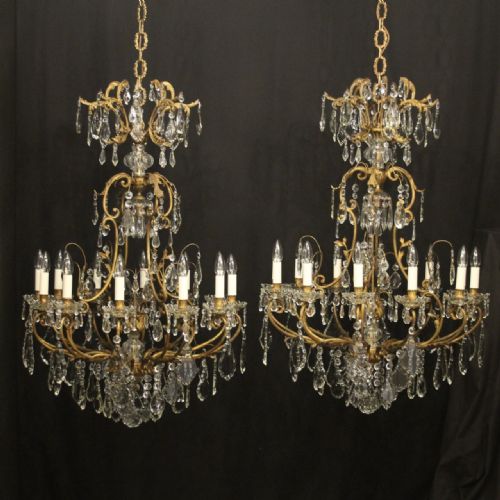


Antique Birdcage Chandelier
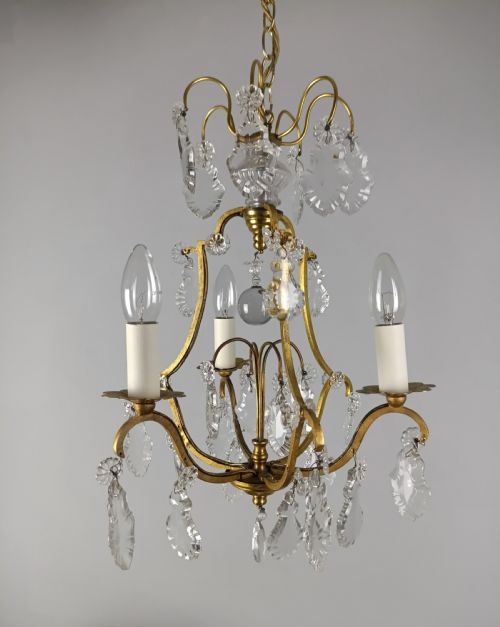
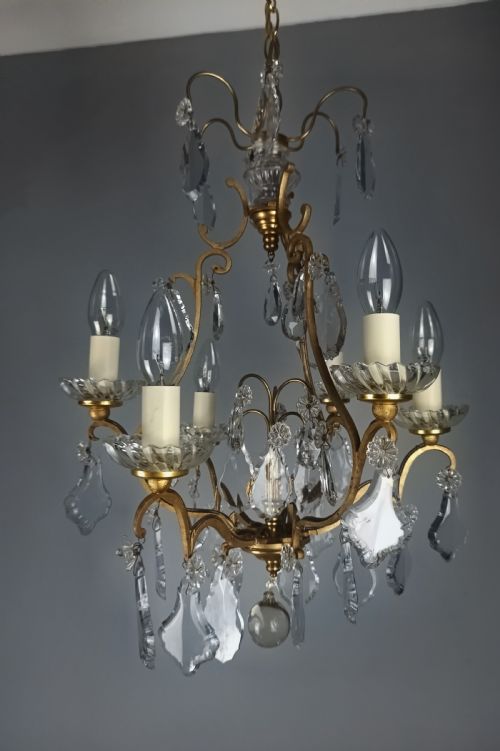
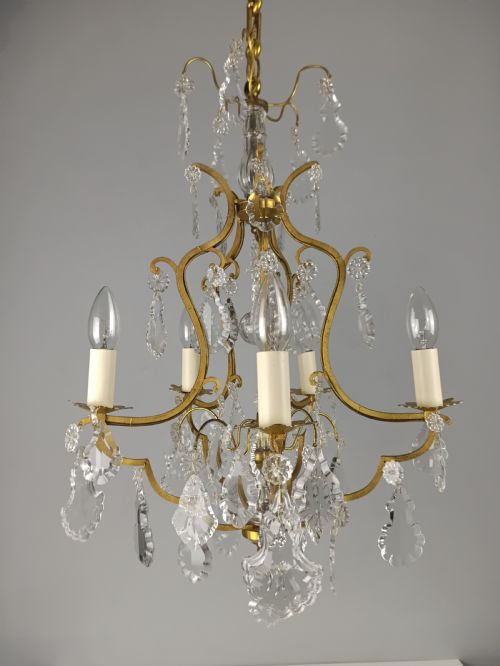
An antique birdcage chandelier brings brilliant French and Italian light to a room, framed in delicate metalwork and draped in cut crystal.
Antique Birdcage Chandelier
An antique birdcage chandelier takes its distinctive name from the curved metal armature that cages the internal lights much like an aviary, swelling outward before tapering toward a central drop. These fixtures emerge in styles such as French Rococo Revival, French Chateau, and Italian Classical, spanning the early decades of the twentieth century down to eighteen ninety.
Buyers meet triple light up to nine light versions on this page, predominantly of French origin alongside Italian examples. The metal frameworks carry gilt finishes or warm patinas, loaded with cascades of crystal drops that catch and refract the illumination from every angle.
How they were made
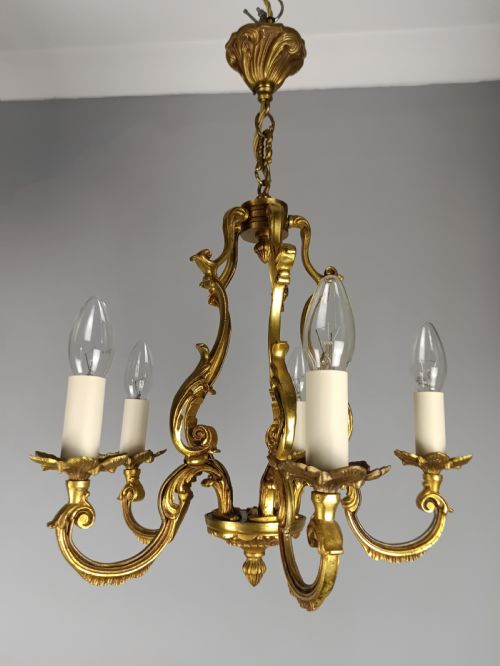
The structural framework relies on cast and chased gilded bronze, gilt metal, brass, or gilded bronze, forming the curved ribs and crown of the birdcage silhouette. Artisans pinned these metal sections together to support the heavy internal wiring and the downward pull of multiple candle arms.
Glass and crystal elements adorn the frames, incorporating cut crystal drops, pendants, and crystal glass components that dangle from the metal wires. The combination of heavy metallic casting with delicate glass pendeloques creates the characteristic sparkle.
Antique Birdcage Chandelier Retail Price Guide 2026
Typical asking prices for birdcage chandelier among the pieces listed under this phrase on Sellingantiques today, from the lower quarter to the upper quarter. They describe what is for sale here now, not the wider market.
Even without a canary inside, these gilded wire cages manage to fill an entire salon with singing light.
What varies in quality
The distinction between tiers rests upon the density and cut of the crystal work, alongside the crispness of the bronze or brass casting. Superior examples feature heavier metal frames with finely chased detailing and extensive cascades of sharp, high refractive crystal rather than simple pressed glass.
Scale and proportion also set pieces apart, with larger multi light configurations demanding more intricate armature engineering to maintain structural balance. The quality of the original gilding or the warmth of the polished brass finish dictates the visual presence of the fixture in a room.
The Antique Birdcage Chandelier Glossary
- Birdcage chandelier
- A lighting fixture featuring a curved metal framework shaped like an aviary, enclosing internal lights and hung with crystal drops. This profile defines the classic French and Italian styles seen across the decades.
- Gilt bronze
- Metal cast in bronze and treated with a gold leaf or mercury gilt surface layer. This material provides the golden structural sheen on many French examples.
- Cut crystal
- High clarity glass shaped by grinding and polishing facets to increase light refraction. These faceted drops drape from the metal armature.
- Rococo Revival
- A decorative style reviving the asymmetrical scrolls, C curves, and natural motifs of the eighteenth century. It heavily influences the ornamentation of these light fittings.
Antique Birdcage Chandelier: Frequently Asked Questions
What periods do these chandeliers come from?
The available pieces span the early twentieth century back to eighteen ninety. Dates recorded on this page include nineteen hundred, nineteen ten, nineteen twenty, and nineteen thirty.
French and Italian workshops produced these fixtures across these decades, maintaining traditional cage forms through changing interior fashions.
How many lights do they usually have?
The listings show variations ranging from three lights up to nine lights. Smaller rooms often suit triple light versions, while larger spaces accommodate six or nine light arrangements.
More lights generally correspond to a wider frame diameter and a heavier arrangement of crystal drops.
What materials make up the frame?
Frames are constructed from gilded bronze, gilt metal, brass, and gilded bronze. These metals form the arched ribs that give the fixture its cage silhouette.
Many surfaces carry a gilt finish, while others present polished brass or bronze patinas beneath the crystal cascades.
Where were these chandeliers made?
The pieces originate predominantly from French workshops, alongside Italian examples. Styles reflect regional aesthetics such as French Chateau and Italian Classical.
French pieces often incorporate Rococo Revival design elements executed in gilded bronze and crystal.