
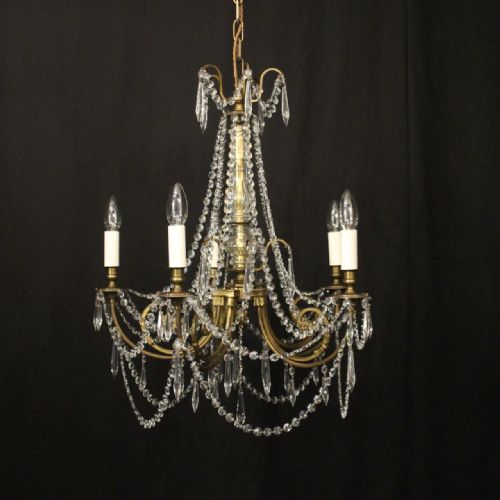


Antique Beaded Ceiling Light
An antique beaded ceiling light brings unmatched sparkle and historic character to a room, offering a brilliant focal point for any interior.
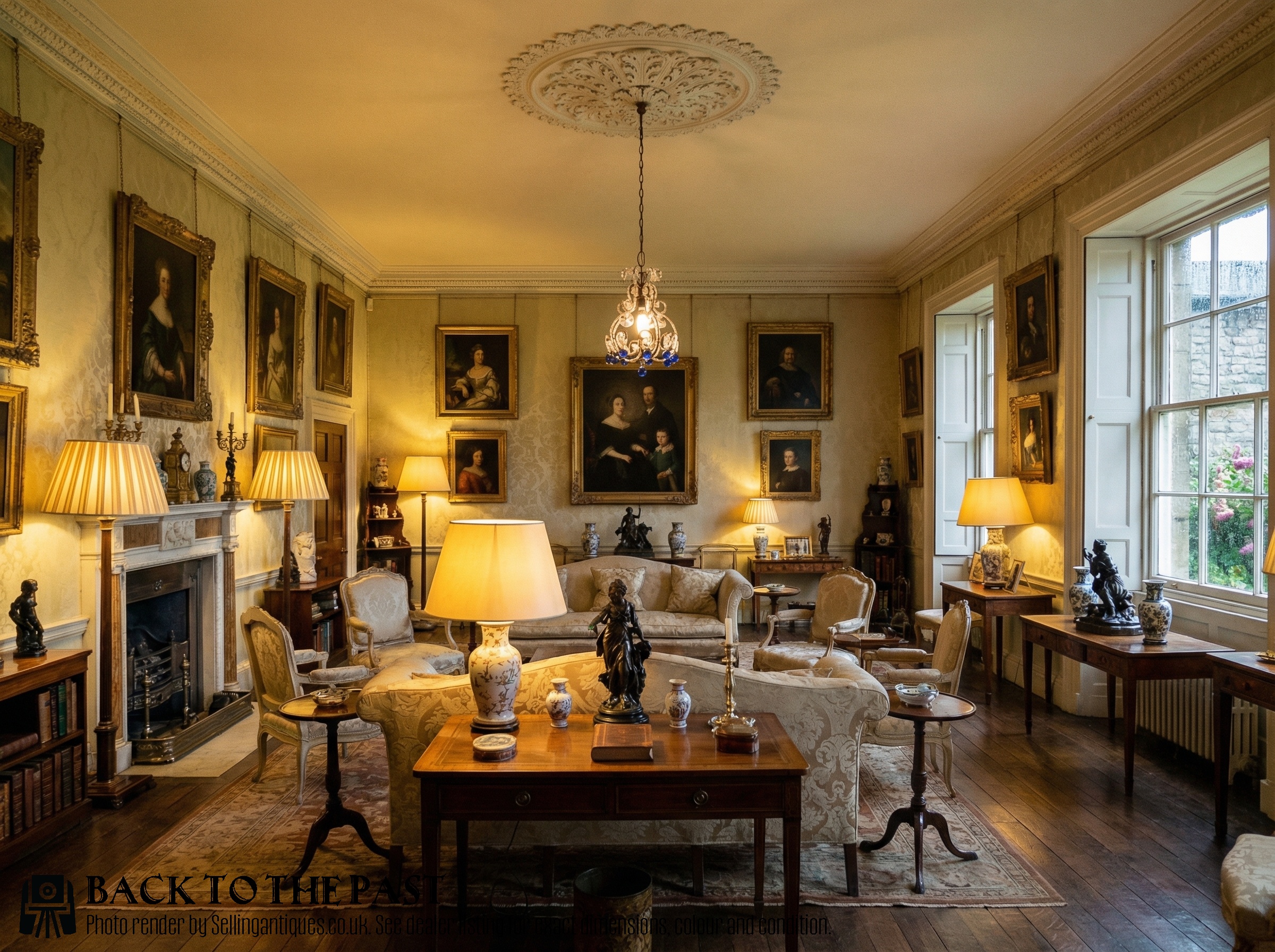
Antique Beaded Ceiling Light
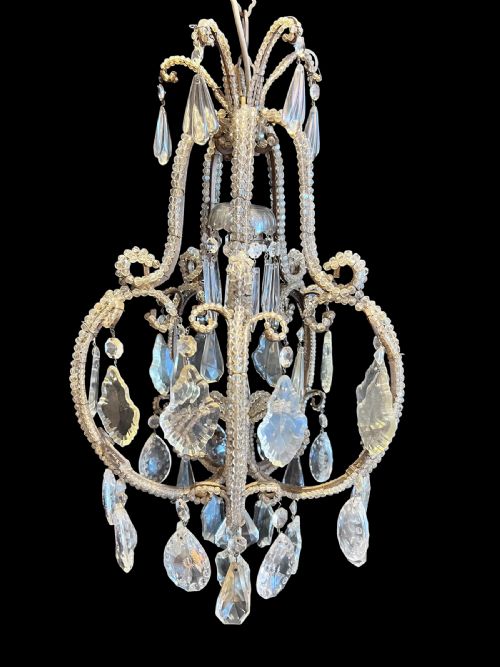
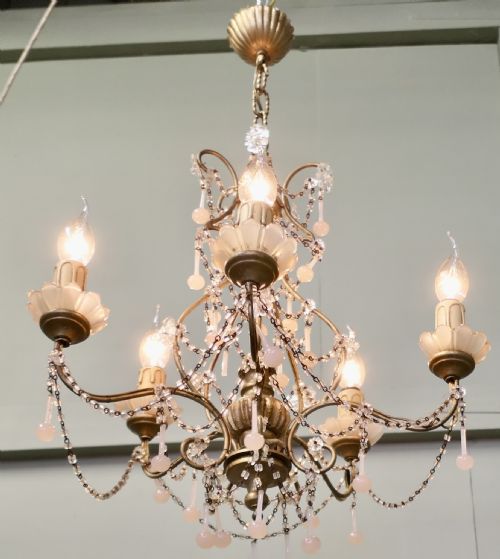
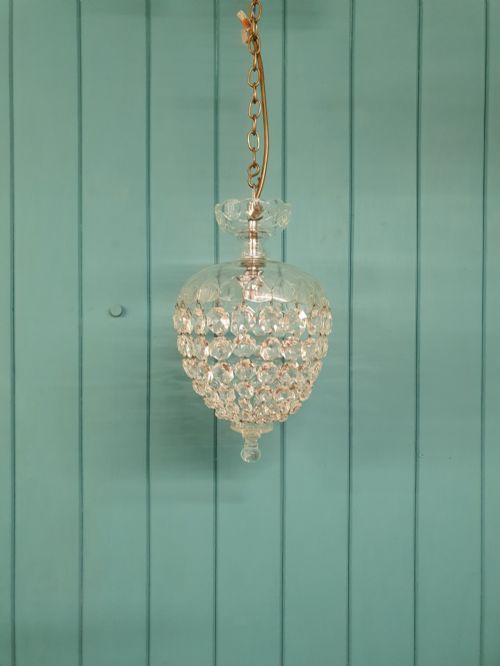
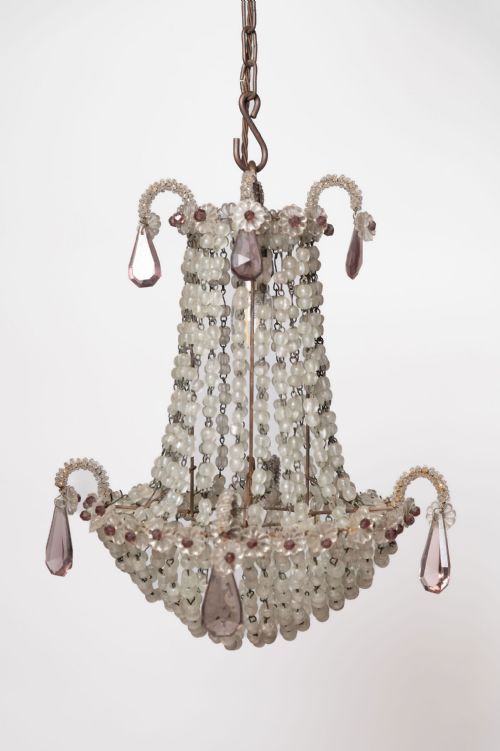
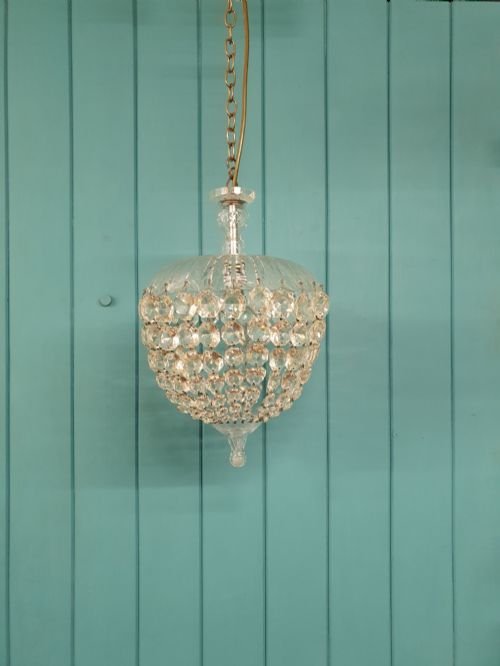
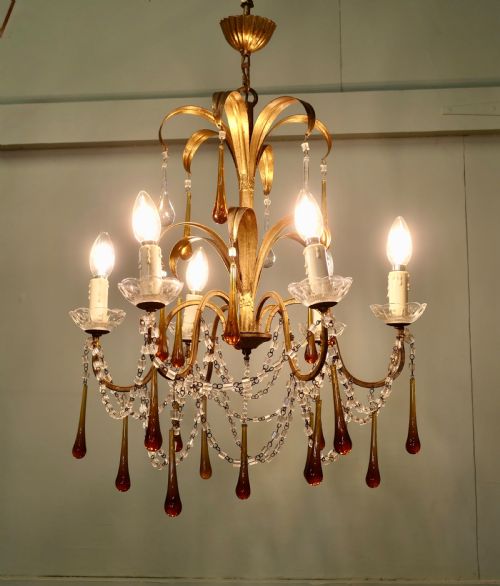
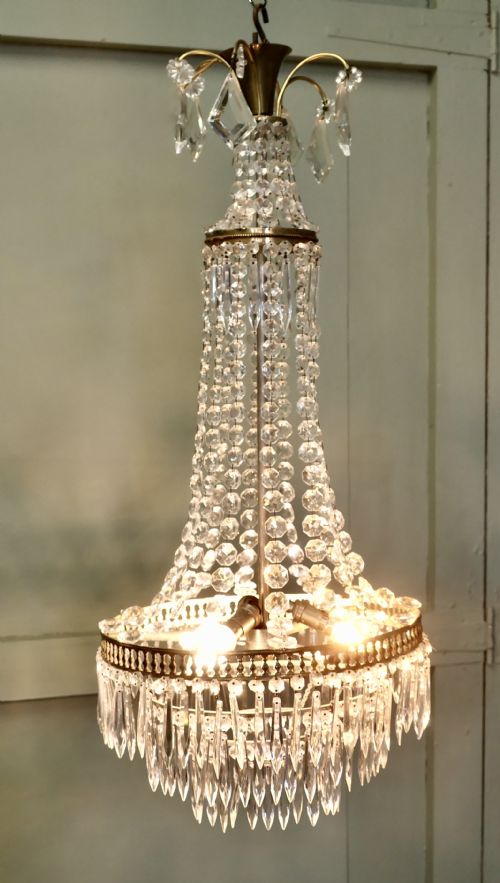
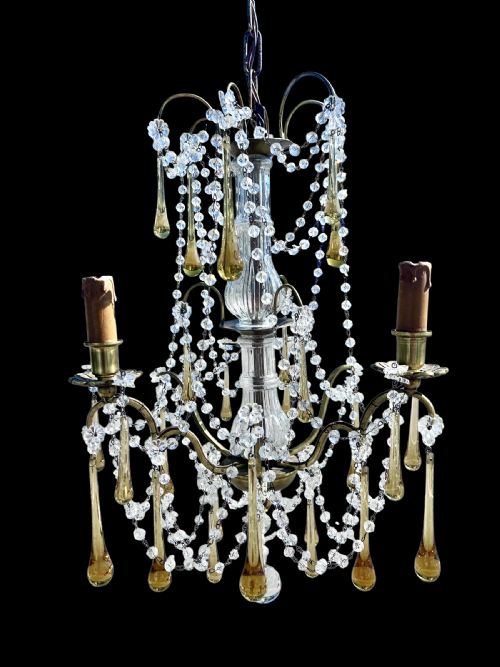
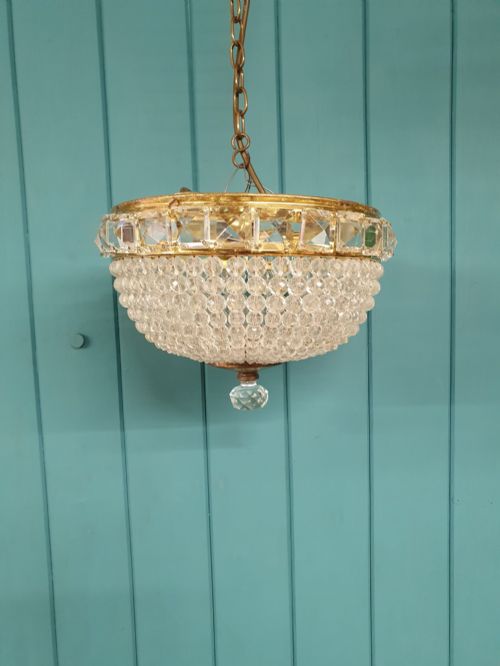
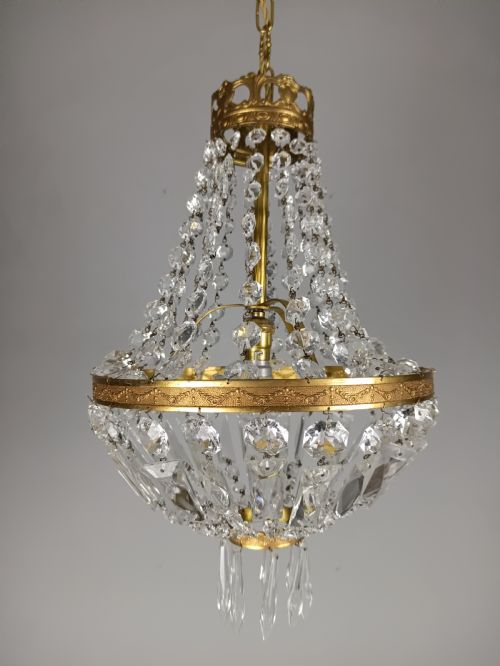
The most common versions met on this page date from the Edwardian era and the 1920s or 1930s, reflecting widespread popularity during the early twentieth century. These fixtures rely on glass and crystal elements suspended from brass, gilt metal, wrought iron, or standard metal frames to refract light across a space. Whether configured with a single light or branching into multiple arms, each piece utilises hanging beads, prisms, and drops to create an ornate visual display.
How they were made
Makers constructed these lighting fixtures by assembling metal frames out of brass, gilt metal, iron, or standard metal to support the weight of extensive glass components. Frameworks often took distinct shapes such as tents, waterfalls, tapered bags, or basket structures designed to hold dense layers of suspended elements. Workers wired these frames to accommodate single or multiple lights, integrating structural strength with decorative grace.
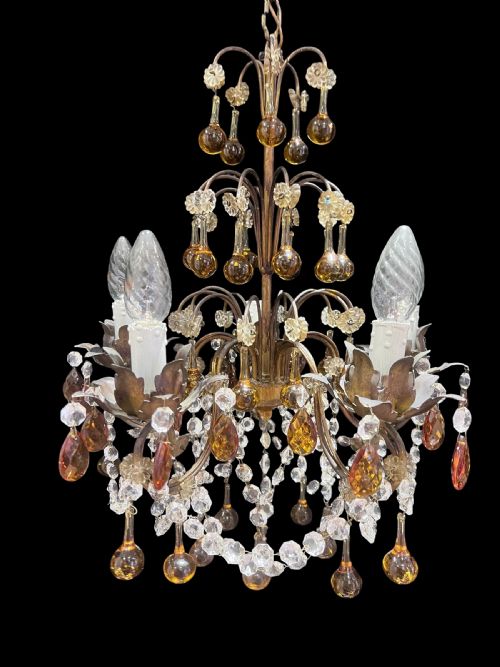
Artisans hung cut glass and crystal beads, drops, prisms, and fruit motifs from the metal armatures using fine wire or metal pins. Many pieces incorporated coloured crystals, pink Venetian glass, amber glass, cobalt elements, or red drips to add vibrant hues alongside clear glass. This combination of metallic framing and meticulous glass suspension produced the distinctive reflective quality inherent in these vintage fittings.
The listings span periods from the nineteenth century through the 1930s, featuring brass, gilt metal, wrought iron, and crystal glass.
What varies in quality
The sophistication of the metal framing and the density of the glass ornamentation determine the distinction between standard and superior pieces. Finer examples feature substantial brass or gilt metal structures, intricate frames such as Florentine gilt work, and complete arrangements of cut glass beads and crystal drops. Lesser variations often rely on simpler iron or basic metal skeletons with more restrained glass embellishments.
The complexity of the design and the inclusion of specialised coloured glass elements elevate certain pieces above others. Elaborate configurations like tent and waterfall structures, multi-light branches, and decorative glass fruit bunches demand greater craftsmanship than standard dome top or single light fixtures. The presence of undamaged coloured prisms, cobalt accents, or matched crystal components further separates exceptional lighting from basic examples.
Wedgwood
The Antique Beaded Ceiling Light Glossary
- Bag chandelier
- A lighting fixture featuring a flat top that tapers downward into a bag-like shape formed by numerous vertical strings of glass beads.
- Tent and waterfall
- A style where glass beads drape from a central crown to form a tent shape above a cascading waterfall of further crystals.
- Prism
- A geometric cut glass component designed to refract light into spectral colours when illumination passes through it.
- Basket chandelier
- A ceiling light enclosed in a rounded or hemispherical basket framework woven from glass beads or metal strips.
- Gilt metal
- Metal treated with a thin layer of gold paint or leaf to provide a decorative metallic surface finish.
Antique Beaded Ceiling Light: Frequently Asked Questions
How do I clean an antique beaded ceiling light?
Cleaning requires gentle handling of the glass beads and metal frames using a mild cleaning solution applied with a soft cloth. Technicians often clean delicate crystals in place to avoid damaging the historical wiring and suspension wire.
Harsh chemicals must be avoided to protect gilt metal finishes and coloured glass treatments. Regular dusting helps maintain the reflective brilliance of the crystal drops.
Can these lights be rewired for modern use?
Most antique fixtures require rewiring by a qualified electrician to meet current safety standards before installation in a home. Modern electrical components can be integrated carefully while preserving the historic external appearance of the lighting.
Original brass and metal lamp holders are often updated or repaired to ensure safe operation. Professional installation ensures the heavy metal frames and crystal assemblies are securely anchored to the ceiling.
What rooms suit an antique beaded ceiling light?
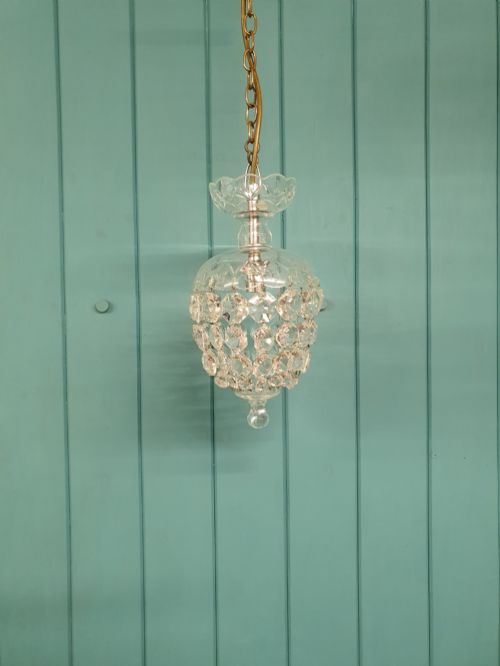
These fixtures suit dining rooms, hallways, and living spaces where ambient illumination and decorative presence are desired. Smaller dome top or bag styles work well in compact rooms or bedrooms.
Larger multi-branch chandeliers and tent and waterfall designs require higher ceilings and adequate space to display their proportions fully. The reflected light creates an atmospheric effect suited to traditional and eclectic interiors.
How do I identify the period of a ceiling light?
Period identification relies on examining the framing materials, the cut of the glass, and the stylistic attributes such as Art Deco symmetry or Edwardian simplicity. Fixtures from the nineteenth century often display heavier iron work and hand-cut elements.
Early twentieth-century pieces frequently incorporate brass bag structures, coloured crystal fruits, or distinctive Venetian glass arms. Comparing the construction methods with documented design styles helps narrow down the manufacturing decade.