



Anglo Indian Folding Stand
An anglo indian folding stand brings intricate colonial craftsmanship into a room, serving as a versatile piece for tea, books, or display.
Anglo Indian Folding Stand
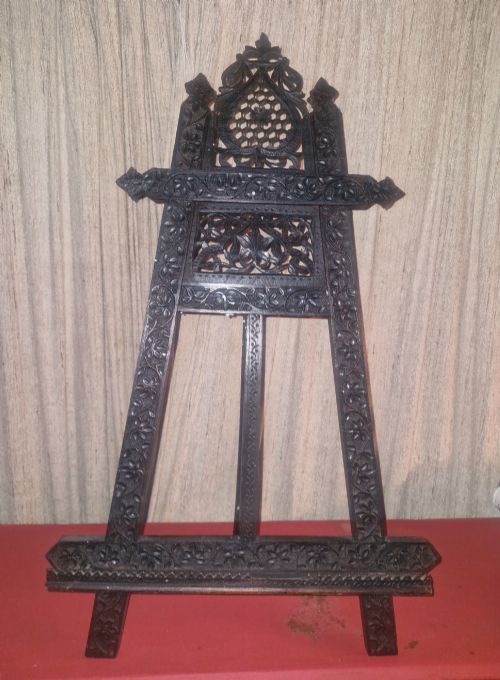
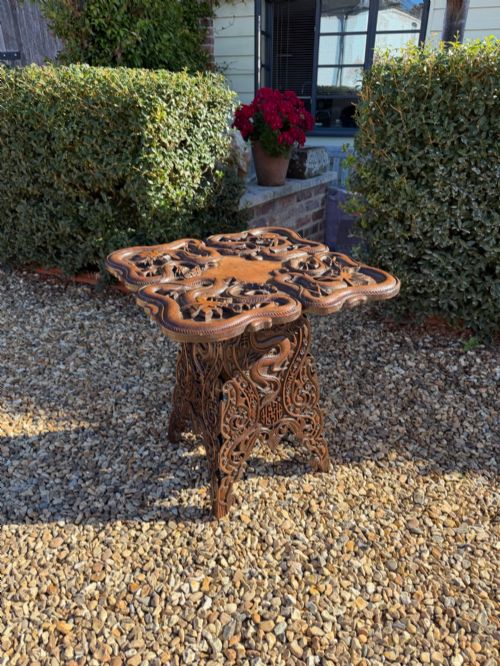
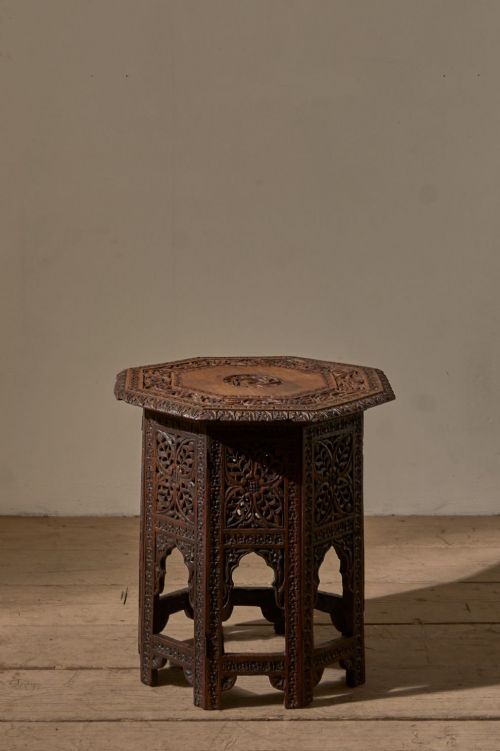
When you search for an anglo indian folding stand, you encounter portable occasional furniture designed for colonial life and export, spanning the Victorian era through the early twentieth century. The selections on this page heavily feature octagonal side tables, campaign tea tables, and folding book stands.
Most examples utilise a clever collapsible construction where the intricately carved base folds flat beneath a removable tray top. These range from small lamp tables to larger coffee tables originating from centres such as Hoshiarpur.
The aesthetic merges traditional British furniture forms with elaborate Eastern ornamentation. Alongside tables, the selection includes related folding items like display easels, folio stands, and reading pedestals.
Materials and Construction
Carvers typically worked in dense timbers like teak, padauk, and rosewood, which provided a stable foundation for deep relief work. Wood surfaces were frequently enriched with intricate bone inlay, mother-of-pearl, or hammered brass sheets.
The joinery relies on interlocking folding bases that require no metal hinges to collapse. Artisans employed dense floral and geometric carving motifs executed entirely by hand.
Anglo Indian Folding Stand Retail Price Guide 2026
Typical asking prices for anglo indian folding stand among the pieces listed under this phrase on Sellingantiques today, from the lower quarter to the upper quarter. They describe what is for sale here now, not the wider market.
Functional forms range from side tables and campaign tea tables to reading pedestals and folio stands.
Evaluating Quality and Detail
Quality rests upon the depth and crispness of the hand carving rather than plain surface decoration. Finer pieces maintain tight joints in their folding mechanism and retain all original inlay without missing elements.
The choice of primary wood also dictates standard, with dense hardwoods like padauk and teak representing superior construction compared to softer secondary timbers. The integration of contrasting materials like brass and bone elevates the complexity of the piece.
The Anglo Indian Folding Stand Glossary
- Hoshiarpur
- A region in Punjab renowned for intricate woodwork. Pieces from this centre typically feature dense geometric bone and brass inlay.
- Campaign furniture
- Portable furnishings designed for easy transport by military officers or colonial administrators. These items usually feature folding legs and removable tops.
- Folio stand
- An adjustable rack designed for holding newspapers, magazines, or large books. Victorian examples often incorporate folding frames for easy storage.
- Octagonal
- Having eight sides. This shape is particularly common for the removable tops of folding tables in this tradition.
- Padauk
- A heavy tropical hardwood valued for its rich reddish-brown colour and durability. It provides an ideal surface for detailed carving.
Anglo Indian Folding Stand: Frequently Asked Questions
How do these folding stands work?
The structural base consists of pierced wooden panels connected by interlocking joints that pivot flat. The top simply lifts off the support frame.
This portable design allowed colonial travellers to pack the furniture securely during relocation.
What rooms suit an occasional table?
These compact pieces function well beside armchairs or sofas as lamp and tea tables. Their folding nature also permits easy storage when space is required.
The intricate woodwork adds focal texture to eclectic or traditional interiors.
How do I identify Hoshiarpur work?
Hoshiarpur pieces are characterised by overall surface coverage using delicate bone and brass wire inlay. The background wood is densely packed with floral or geometric patterns.
This specific style became very popular during the late Victorian period.
Are all these stands from the Victorian era?
While many examples date from the Victorian period, production continued into the early twentieth century. Pieces span various decades from the mid-nineteenth century up to the 1930s.
Stylistic details and construction methods help distinguish the earlier examples from later ones.