

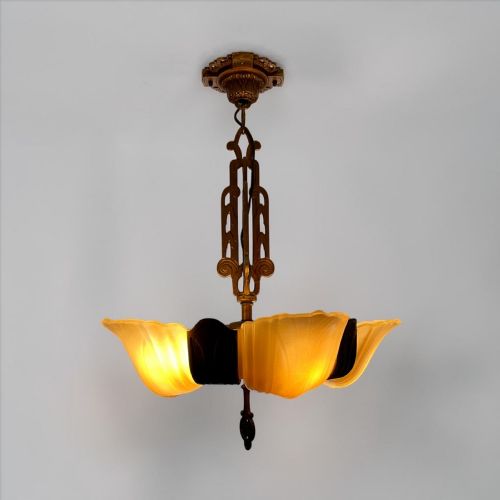
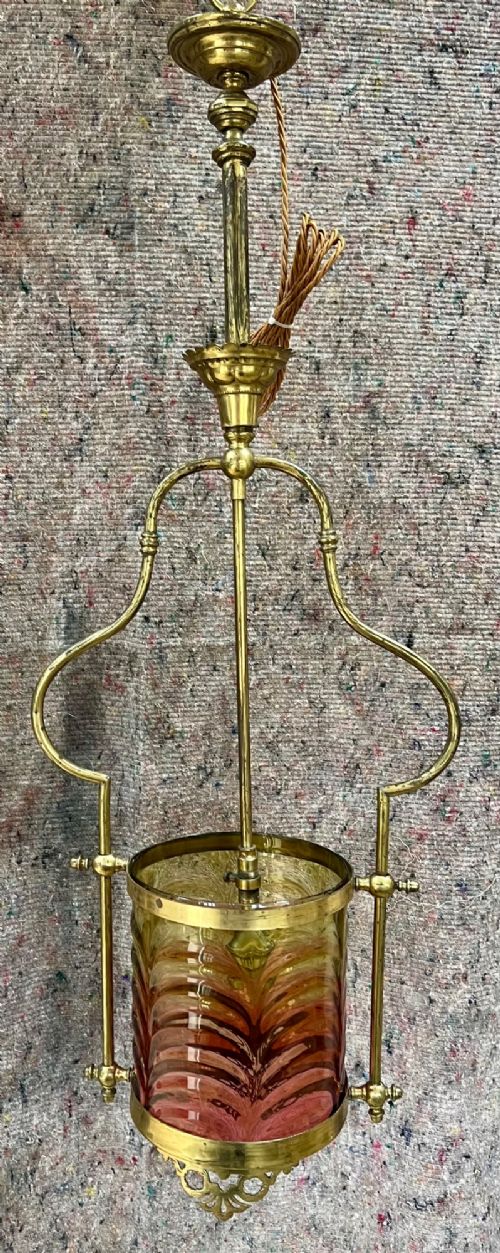
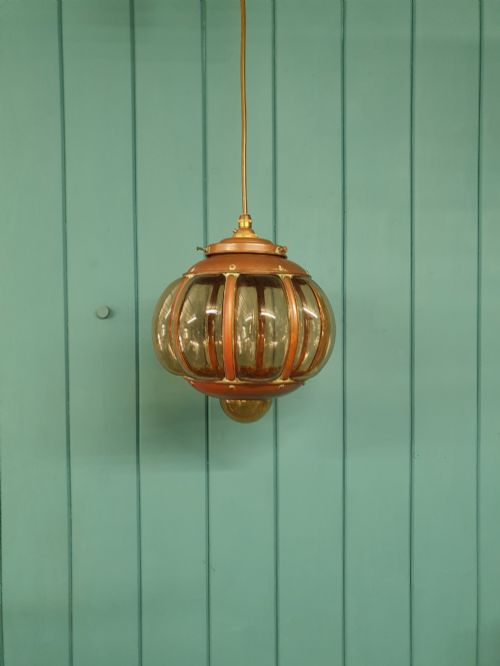
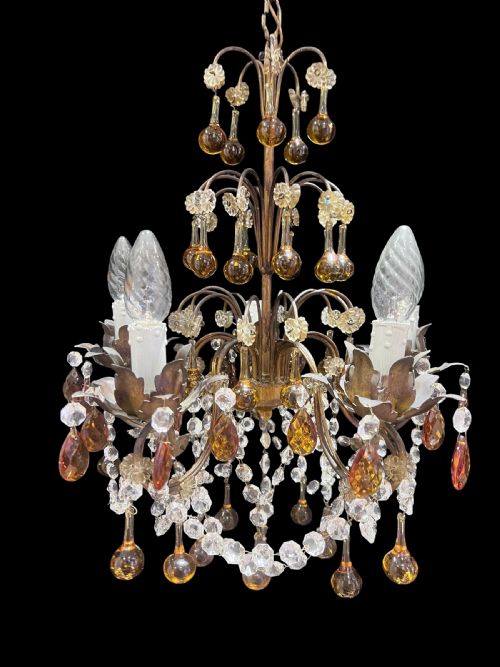
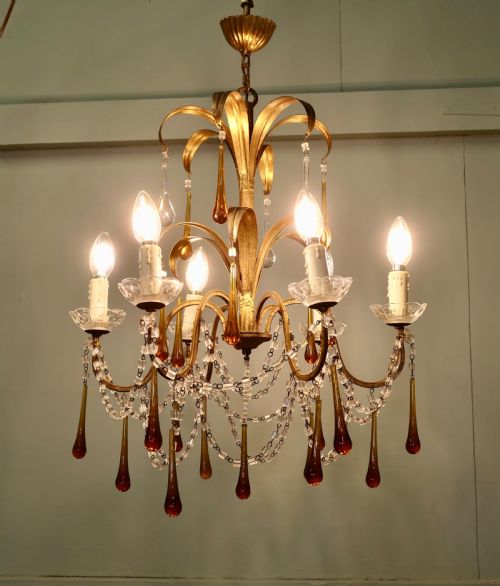


Amber Glass Ceiling Fixture
These amber glass ceiling fixture examples bring warm, golden illumination and period character to any room.
Amber Glass Ceiling Fixture
An amber glass ceiling fixture is a hanging source of interior illumination defined by its warm, honey-toned glass components, spanning forms from simple pendants to grand chandeliers. When you search for an amber glass ceiling fixture, you encounter diverse iterations ranging from early twentieth-century French designs to robust Art Deco installations.
The pieces on this page draw from periods including the Victorian era, the Edwardian period, and the 1930s, reflecting shifts in domestic interior design over several decades. Common configurations include hall lanterns, flush mounts, and multi-armed fixtures featuring coloured crystals or moulded shades.
Stylistic influences vary widely, incorporating Art Deco geometric lines, French Provincial elegance, nautical elements, and Art Nouveau organic motifs. This variety ensures that each fixture serves as a distinct focal point while maintaining the characteristic warm glow of amber glass.
Distinguishing quality and craftsmanship
The distinction between standard examples and finer pieces often lies in the weight and clarity of the glass, alongside the intricacy of the metal casting. Heavier brass frames, hand-etched glass, and well-cut crystal teardrops indicate a higher level of artisanal skill during manufacture.
Subtleties in colour saturation and the integration of specialised decorative elements, such as moulded fruit clusters or layered slip shades, elevate the overall presence of the fixture. The coherence of the design across the metalwork and the glass components ultimately determines the standing of an individual piece.
Amber Glass Ceiling Fixture Retail Price Guide 2026
Typical asking prices for amber glass ceiling fixture among the pieces listed under this phrase on Sellingantiques today, from the lower quarter to the upper quarter. They describe what is for sale here now, not the wider market.
Some Edwardian chandeliers come equipped with hanging glass bunches of grapes ready to catch the afternoon sun.
Verrerie Des Vosges
The Amber Glass Ceiling Fixture Glossary
- Amber glass
- Glass coloured by the addition of metallic impurities, typically iron or sulphur, yielding warm yellow-brown tones. This material diffuses light to create a soft, inviting atmosphere in domestic interiors.
- Slip shade
- A moulded glass shade designed to fit into a metal frame, commonly utilised in Art Deco lighting design. These pieces often feature geometric or stylised relief patterns.
- Toleware
- Lacquered or enamelled metalware, frequently painted and used in historical lighting fixtures for decorative frames and mounts. It offers a distinctive matte or satin finish.
- Flush ceiling light
- A fixture mounted directly against the ceiling surface without a suspension chain or rod, suited for rooms with lower ceiling heights.
- Hall lantern
- An enclosed hanging light traditionally utilised in entrance hallways, combining a metal frame with glazed panels to protect the internal burner or bulb.
Amber Glass Ceiling Fixture: Frequently Asked Questions
How do I clean an antique glass light?
Remove delicate glass components and crystals from the metal frame before washing them gently in lukewarm water with a mild, non-abrasive soap. Ensure every piece is thoroughly dried with a lint-free cloth prior to reassembly.
Polish the brass or metal framework using a suitable cloth, taking care to avoid getting cleaning agents directly onto the historical glass surfaces. Regular dusting helps maintain the clarity of the amber glass without risking moisture damage to older fixings.
Which rooms suit an amber glass fixture best?
Entrance hallways and dining spaces benefit greatly from the warm, welcoming illumination cast by amber glass and crystal pendants. The rich tones create an intimate atmosphere that complements traditional wood furniture and period interior schemes.
Smaller flush mounts and single-bulb pendants also function effectively in bedrooms or studies where gentle, diffused light is preferred over harsh overhead brightness. The choice of fixture size should correspond to the proportions of the room and the height of the ceiling.
How do I identify the period of a light?
Examine the fastening methods, metal types, and stylistic motifs, such as the geometric lines typical of 1930s Art Deco or the elaborate casting of Victorian brass work. Fasteners like slotted screws and hand-finished components often point towards earlier manufacturing dates.
Compare the glass moulding techniques and colour preferences against documented design eras, noting that Edwardian and Victorian pieces frequently feature etched or coloured crystal details. Consulting historical catalogues provides further context for specific design combinations.