
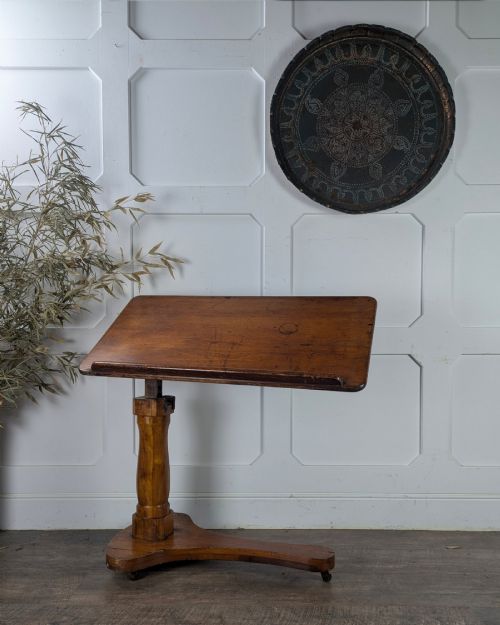
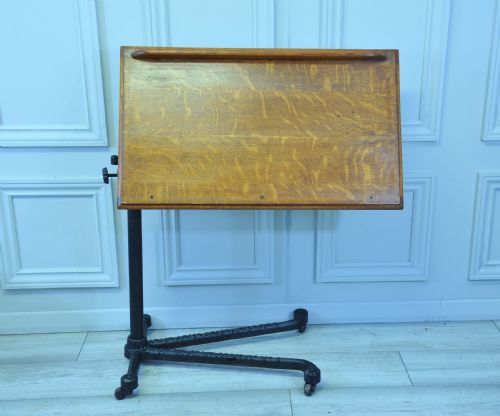


Adjustable Drafting Table
An adjustable drafting table offers mechanical ingenuity and architectural utility, combining solid timbers and brass fittings to serve the practical needs of draughtsmen and scholars alike.
Adjustable Drafting Table
When you search for an adjustable drafting table, you encounter workspace furniture designed for drawing, reading, and architectural planning across several centuries. These items serve as functional desks, reading tables, and lecterns that adapt to the user through mechanical movement.
The pieces meeting you on this page span the Georgian, Regency, and 19th Century periods, alongside later examples from 1900 and 1910. Most frequently, you will find mahogany and oak forms, often incorporating leather surfaces and brass or cast iron hardware.
Makers such as Gillows and Carters of London appear within the listings, representing cabinet-making traditions and specialised metamorphic furniture. Forms range from side tables and desks to tall riser desks intended for cartographers and architects.
How they were made
Cabinet makers constructed these tables primarily from dense timbers such as mahogany, oak, rosewood, and pine, frequently selecting figured grain for prominent surfaces. Boxwood often appears for finer inlay details.
Working mechanisms integrate brass ratchets, hinges, and cast iron framing to support the adjustable top surfaces. Many desks incorporate inset leather writing panels alongside the timber framework.
Listings feature woods including mahogany, oak, rosewood, pine, and boxwood, alongside brass and cast iron hardware.
What varies in quality
The sophistication of the mechanical adjustment mechanism dictates much of the distinction between standard examples and superior pieces. Robust brass ratchets and smooth metamorphic rises reflect higher standards of workshop execution.
Gillows·Carters Of London
The Adjustable Drafting Table Glossary
- Metamorphic
- Furniture designed to transform from one form or height into another through mechanical action. This ingenuity characterises many architect and drafting tables.
- Lectern
- A slanted reading stand or reading table designed to hold books or papers at an ergonomic angle. These appear frequently alongside flat-topped desks.
- Ratchet
- A mechanical device consisting of a gear wheel and pawl that allows reciprocal motion in only one direction. It is the primary component used to adjust the angle of a drafting surface.
- Neo-Jacobean
- A revival style popular in the nineteenth century that draws upon seventeenth-century English joinery motifs. Pieces in this style utilise heavy oak and carved details.
Adjustable Drafting Table: Frequently Asked Questions
How do adjustable drafting tables work?
These tables utilise internal or external mechanical ratchets, brass supports, and pivoting struts to raise and angle the top surface. Users can tilt the board for drawing or reading and lower it flat for writing.
Heavier industrial examples from the early twentieth century employ cast iron screw threads or heavy-duty iron ratchets to bear the weight of large drawing boards.
What is the difference between an architect desk and a reading table?
Architect desks generally feature larger working surfaces, enclosed drawers for instruments, and adjustable tops designed for drafting plans. Reading tables are typically lighter and smaller, intended primarily for holding open volumes.
Both forms utilise adjustable angles, blurring the line between furniture intended for drawing and furniture intended for study.
How do I identify a Georgian adjustable table?
Georgian and Regency examples rely heavily on solid mahogany, brass ratchets, and fine cabinet-making techniques without the heavy iron frames seen later. They often incorporate pull-out ledges, fitted drawer interiors, and subtle proportions suitable for domestic libraries.
By contrast, later nineteenth-century and Edwardian pieces frequently introduce oak, pine, and industrial cast iron elements.
Were these tables used standing or sitting?
Adjustable drafting tables catered to both postures depending on the specific mechanical design and height of the base. Tall riser desks allowed cartographers and architects to work comfortably while standing.
Smaller reading tables and adjustable desks functioned alongside standard chairs for seated study and drafting.