

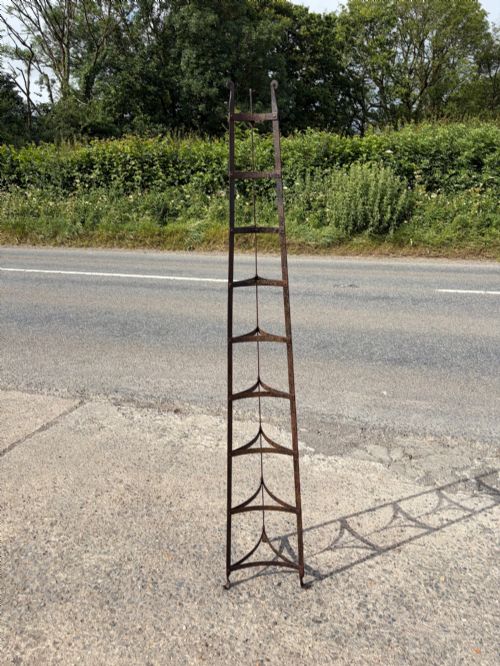
9 Tier Pot Stand
These 9 tier pot stand examples provide sturdy multi-level display for plants and cookware.
9 Tier Pot Stand
A 9 tier pot stand is designed to hold multiple items across several levels, originating primarily from the Victorian and later periods. These tiered structures serve both practical and display purposes in the home.
The evidence shows forms that include plant stands, pan stands, and saucepan racks spanning the nineteenth and early twentieth centuries. Iron and hardwood examples predominate among the multi-tiered designs on this page.
Buyers encounter pieces spanning various stylistic influences, from British Victorian metalwork to Chinese hardwood. Each version utilises its specific construction period to provide stepped or tiered surfaces.
Materials and Construction
Makers utilised durable materials such as wrought iron, brass, mahogany, and hardwood to construct these multi-tiered frames. Metal stands rely on forged iron or cast components to support weight across multiple levels.
Wooden variations employ traditional joinery in timbers like mahogany and pine, sometimes featuring hand-carved details or original painted finishes. The combination of sturdy metal frameworks and solid wood ensures stability for stacked display.
9 Tier Pot Stand Retail Price Guide 2026
Typical asking prices for 9 tier pot stand among the pieces listed under this phrase on Sellingantiques today, from the lower quarter to the upper quarter. They describe what is for sale here now, not the wider market.
Listings feature items from the Victorian period up to the 1920s, constructed from wrought iron, brass, mahogany, and pine.
Judging Quality and Finish
Quality rests upon the integrity of the tier connections and the stability of the frame under load. Finer examples display meticulous hand-forging in iron or precise carving in hardwood.
Original surface treatments, such as early green paint or patinated brass, elevate a piece above standard utilitarian examples. The harmony between the tiered structure and the chosen material dictates the overall merit.
Liberty of London·Royal Worcester
The 9 Tier Pot Stand Glossary
- Tier
- A single level in a series of stacked stages. In these stands, multiple tiers increase display capacity without expanding the floor footprint.
- Wrought iron
- Iron that has been heated and shaped with tools by a blacksmith. This material provides the rigid skeletal strength required for multi-level stands.
- Jardiniere
- An ornamental pot or stand for holding plants or flowers. These items often feature decorative pedestals or raised containers.
- Hardwood
- Dense timber derived from broad-leaved trees such as mahogany. Such wood offers the structural durability needed for freestanding display furniture.
9 Tier Pot Stand: Frequently Asked Questions
What are these stands used for?
These multi-level stands were historically built to hold heavy cookware, saucepans, or potted plants in domestic settings. The tiered design maximises vertical space in kitchens, halls, or living rooms.
Today, buyers utilise them primarily for displaying collections of houseplants or decorative ceramics. Each tier allows individual plants or items to receive adequate light and visibility.
How do I date a metal stand?
Dating relies on observing manufacturing techniques, such as hand-forged scrollwork versus machine-cut components. Surface finishes like early green or white paint provide additional clues to the era of production.
Victorian and late nineteenth-century pieces often display heavier iron gauges and hand-finished joints. Comparing construction methods to known period examples confirms the timeframe.
Are wooden tiers stable?
Hardwood and mahogany tiers are constructed using traditional joinery to distribute weight evenly across the base. Properly maintained wood withstands the daily demands of plant pots or display items.
Checking the joints where shelves meet the vertical supports ensures the structure remains firm. Solid timber construction prevents warping under normal household conditions.
Where should I place a multi-tier stand?
These freestanding pieces suit corners or bay windows where vertical height enhances spatial arrangement. Plant stands benefit from placement near natural light sources.
Kitchen or hallway placements work well for iron pan stands and trivet designs. The narrow footprint allows them to fit comfortably without obstructing walkways.