


19th Century Style Desk
When you search for a 19th century style desk, you encounter period writing tables and revival pieces built for study and correspondence.
19th Century Style Desk
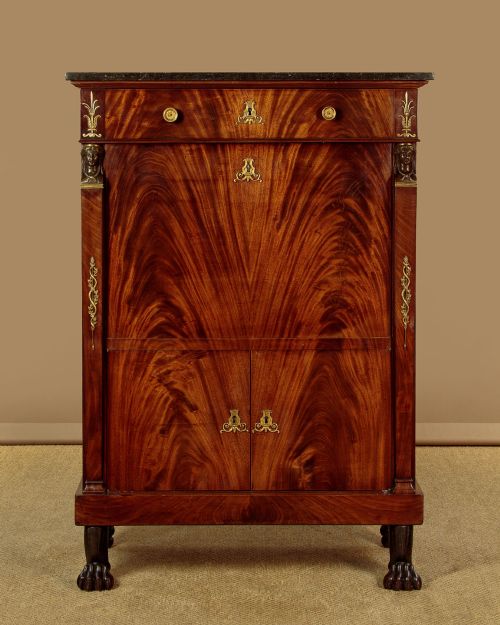
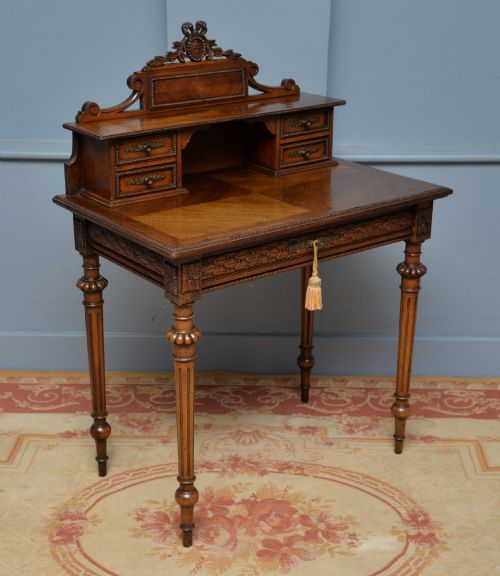
A 19th century style desk encompasses writing furniture spanning the Victorian era, William IV, and Regency periods, alongside continental revivals. Pieces range from French bureau plat tables and satinwood Carlton house desks to mahogany kneehole desks.
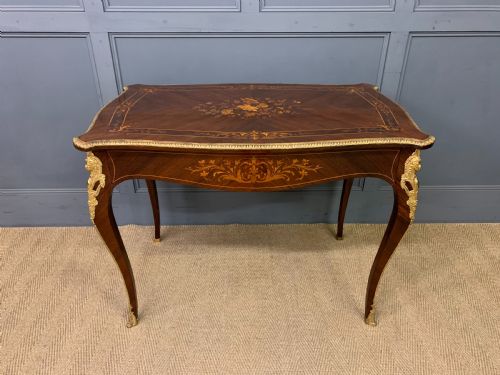
Buyers frequently encounter French walnut and kingwood pieces featuring serpentine fronts and marquetry inlay, alongside English mahogany library tables and Georgian styles adapted during the Victorian era.
How they were made
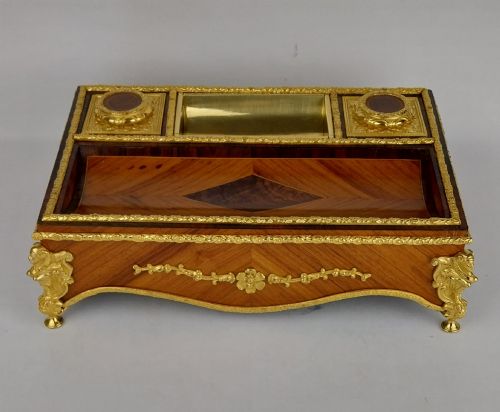
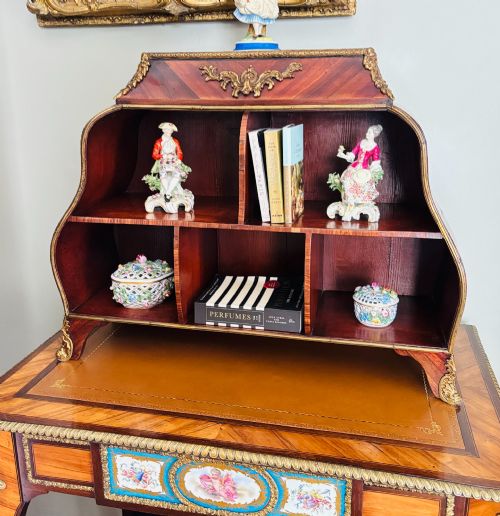
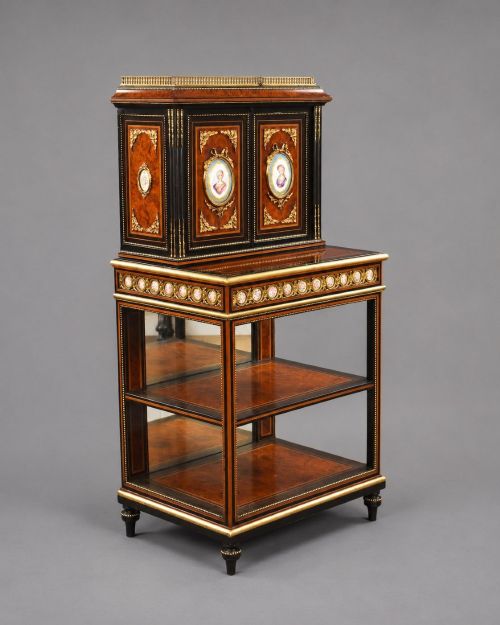
Cabinet makers utilised dense hardwoods such as mahogany, walnut, kingwood, and satinwood, often applying intricate parquetry and marquetry patterns across writing surfaces and drawers. Ormolu mounts, gilt bronze details, and brass hardware provide structural and decorative accents.
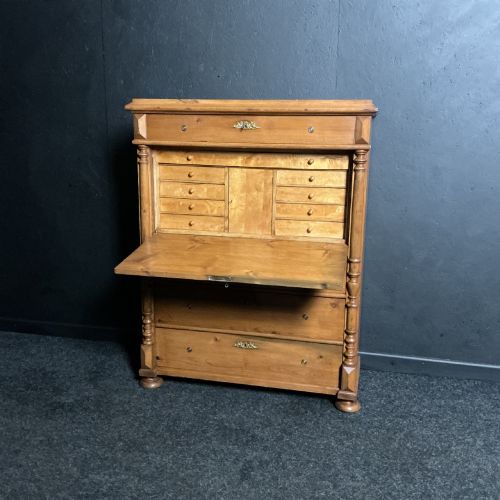
Leather inserts frequently define the writing surface, while desks such as the Carlton house model incorporate multi-tiered compartments and pigeonholes constructed from fine timber veneers.
19th Century Style Desk Retail Price Guide 2026
Typical asking prices for 19th century style desk among the pieces listed under this phrase on Sellingantiques today, from the lower quarter to the upper quarter. They describe what is for sale here now, not the wider market.
Several writing desks come equipped with hidden compartments designed for private correspondence.
What varies in quality
Quality rests in the precision of the marquetry inlay and the execution of the Ormolu or gilt bronze mounts, where finer pieces display crisp chiselling and seamless joinery. The selection of timber veneers, from burr walnut to figured mahogany, dictates the visual depth of the writing surface.
Structural integrity reveals itself in the smooth operation of drawers and the preservation of original leather writing inserts, distinguishing standard workshop output from exceptional cabinet work.
Gillows·Achille Brocot·Japy Freres·Edmé Samson
The 19th Century Style Desk Glossary
- Bureau plat
- A flat-topped freestanding writing desk, typically with drawers along the frieze, originating in France. These tables often feature ormolu mounts and leather writing surfaces.
- Ormolu
- Gilded bronze ornamentation applied to furniture and clocks during the eighteenth and nineteenth centuries. The technique involves a mercury gilding process on cast bronze.
- Marquetry
- Decorative veneer work arranged in pictorial or geometric patterns across furniture surfaces. Craftsmen utilise contrasting woods to create detailed designs.
- Carlton house desk
- A form of writing desk featuring a curved superstructure of drawers and compartments enclosing the rear and sides of the writing surface. This layout appeared in satinwood and mahogany.
- Parquetry
- Geometric wood inlay forming repeating patterns such as cubes or chequers on tabletops and desk fronts. It differs from marquetry through its strict geometric arrangement.
19th Century Style Desk: Frequently Asked Questions
What is a bureau plat desk?
A bureau plat is a freestanding table desk with a flat writing surface and frieze drawers, designed to sit away from the wall in a room.
Originating in France, these pieces often feature mounts of gilt bronze or ormolu and leather panels inset into the top.
How do I identify a 19th century desk?
Examination of the timber, construction methods, and hardware reveals the period of manufacture. Look for hand-cut dovetails in the drawer construction and characteristic revival styles such as Louis XV or Georgian.
Secondary woods and the style of brass or bronze mounts provide further clues to dating within the Victorian era or earlier decades.
Where should I place a partner desk?
Partner desks and large library tables are designed to stand centrally in a study or library rather than against a wall. Their dual-sided configuration allows two people to work opposite one another.
Ensure adequate clearance around the piece to access drawers on both sides and appreciate the finished back panels.
What woods were used for writing tables?
Cabinet makers utilised a variety of timbers including mahogany, walnut, satinwood, and kingwood. Exotic veneers were frequently chosen for their grain patterns and colour.
Secondary woods inside drawers often include oak or pine, depending on the origin and workshop traditions of the piece.