

19th Century Plates
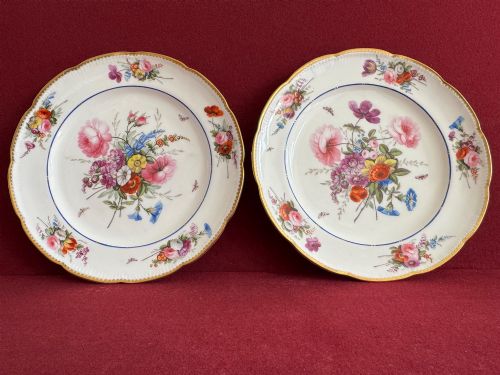
These 19th century plates bring handpainted scenes and traditional ceramic bodies from Staffordshire potteries and European factories straight to the table.
19th Century Plates
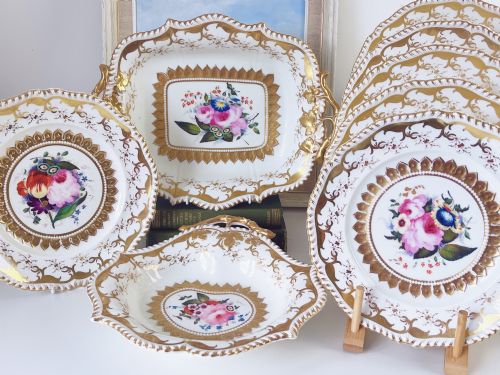
When browsing 19th century plates, buyers encounter a diverse selection ranging from dessert services and cabinet plates to blue and white transferware and armorial porcelain. These pieces span the Georgian, Regency, and Victorian eras, reflecting shifting domestic habits and dining customs.
The category encompasses earthenware, ironstone, creamware, and porcelain items produced by prominent English potteries like Spode, Wedgwood, and Minton, alongside continental manufacturers. Many examples survive as part of larger matching sets or smaller curated pairs.
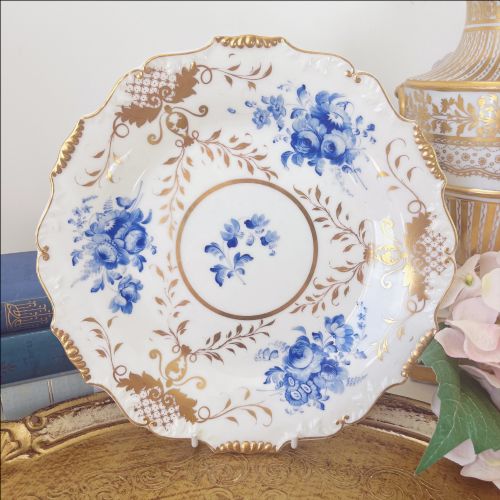
Beyond standard dining ware, the selection includes decorative chargers, meat plates, and specialised serving dishes adorned with floral motifs, landscape scenes, and Japanese Imari palettes.
Materials and production methods
Makers utilised ceramic compositions such as fine porcelain, durable ironstone, and refined earthenware, shaping them on wheels or pressing them into moulds. Surface decoration relied heavily on handpainting, cobalt blue transfer printing, and polychrome enamel applications.
Firing took place in traditional kilns, after which many ceramic bodies received a protective glaze, sometimes combined with gilding or enamel highlights. Specialised wares incorporated transfer-printed topographical views, botanical studies, or armorial crests before secondary firings fixed the pigments.
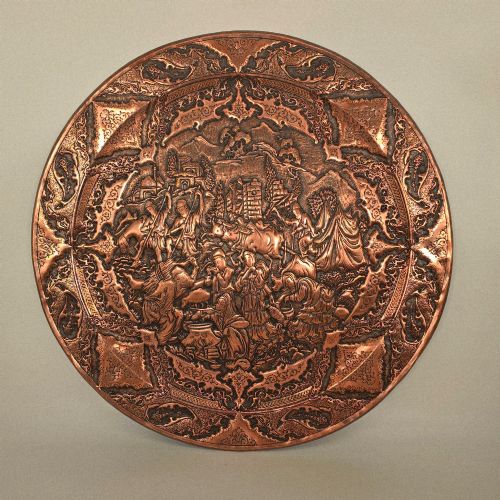
One plate records the likeness of Miguel De Cervantes hammered in metal relief, bringing a seventeenth-century author directly into the nineteenth-century dining room.
Differentiating factors in quality
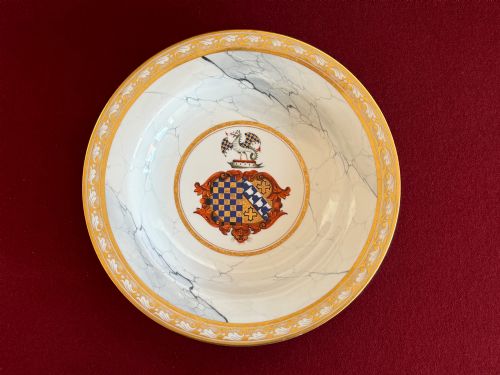
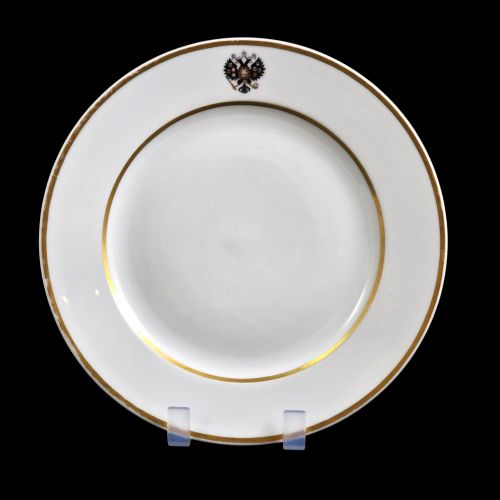
Quality in these ceramics rests upon the crispness of the transfer print or the precision of the handpainted brushwork across the surface. Pieces featuring finely rendered portraits, detailed botanical studies, or intricate armorial crests indicate superior workshop output.
The integrity of the ceramic body and the uniformity of the glaze application also distinguish finer items. Plates retaining clear factory marks, vibrant enamels, and minimal firing imperfections represent the upper tier of period production.
Grainger Lee & Co·Spode·H & R Daniel·Wedgwood·Royal Crown Derby·Meissen·Davenport·Minton·Samson
The 19th Century Plates Glossary
- Cabinet plate
- A decorative plate intended for display in a cabinet or on a wall rather than for practical dining use. These often feature elaborate handpainted scenes or gilding.
- Transferware
- Pottery decorated by applying a design from an engraved copper plate onto paper, which was then transferred to the unglazed or bisque ceramic body. This technique allowed for consistent mass production of complex blue and white landscapes.
- Ironstone
- A patented ceramic body developed to be exceptionally durable and heavy, bridging the gap between earthenware and porcelain. It resisted chipping and served as a sturdy base for dense enamel patterns.
- Creamware
- A refined earthenware with a pale yellowish-cream glaze, developed during the eighteenth century and widely produced throughout the nineteenth century. Its neutral tone provided a warm background for painted decoration.
- Imari
- A decorative style inspired by Japanese export porcelain, characterised by a distinctive palette of cobalt blue, iron red, and gold. European factories frequently adopted this aesthetic for their own ceramic lines.
19th Century Plates: Frequently Asked Questions
How do I identify a transferware plate?
Transferware plates display repeating, finely detailed monochromatic patterns applied mechanically rather than through freehand brushwork. Close inspection reveals a stippled or lined dot matrix pattern beneath the transparent glaze.
Most pieces carry impressed factory marks or printed backstamps on the reverse side. These marks often indicate the pattern name, the manufacturing pottery, and sometimes a date code.
Can I use these antique plates for dining?
While structurally sound, antique plates often feature softer glazes and delicate overglaze enamel or gold leaf that modern dishwashers and cutlery can damage. Hand washing in warm water with mild detergent helps preserve the painted surfaces.
Displaying them on walls or in cabinets prevents accidental chipping. Using them for dry foods on special occasions balances practical enjoyment with careful preservation.
What is the difference between earthenware and porcelain?
Earthenware is an opaque, porous ceramic body fired at lower temperatures, making it thicker and heavier. It includes utilitarian creamware and ironstone items intended for everyday service.
Porcelain is a dense, vitrified ceramic that remains impermeable even without glaze and often appears translucent when held to light. It typically forms the body for finer cabinet plates and dessert services.
How are different periods dated?
Dating relies on a combination of factory marks, stylistic evidence, ceramic body composition, and historical provenance. Early nineteenth-century pieces often feature distinct Regency border designs and deep cobalt blue transfer prints.
Later Victorian examples frequently incorporate Aesthetic Movement motifs, brighter polychrome enamels, or specific registry diamond marks. Comparing the backstamp against established pottery reference records confirms the production era.