

19th Century Carved Bookshelf
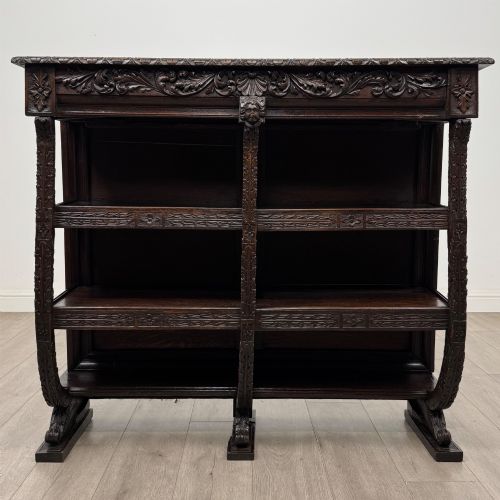
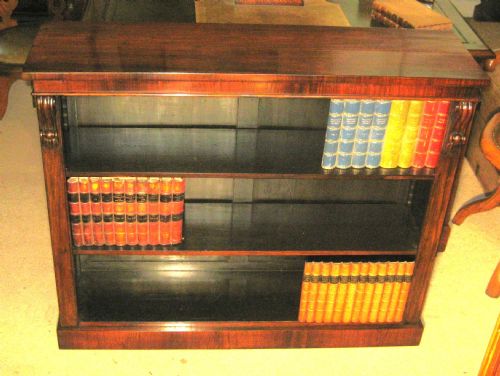
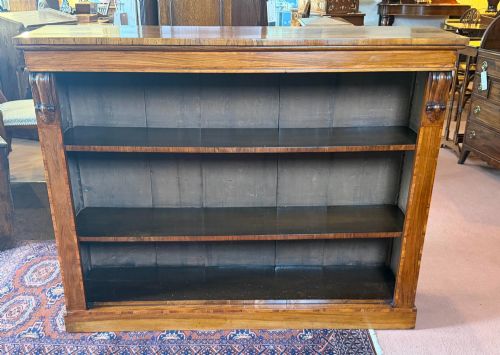
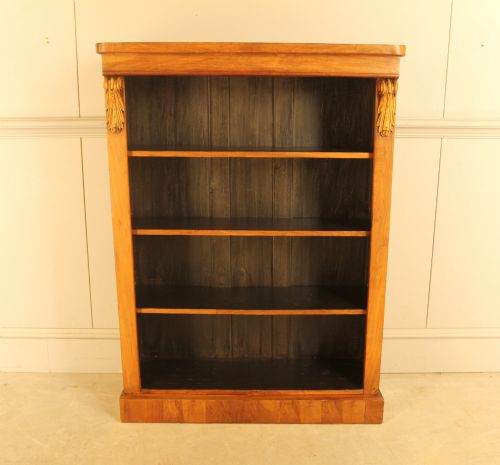
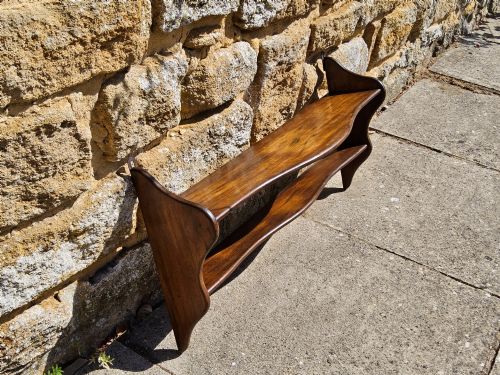
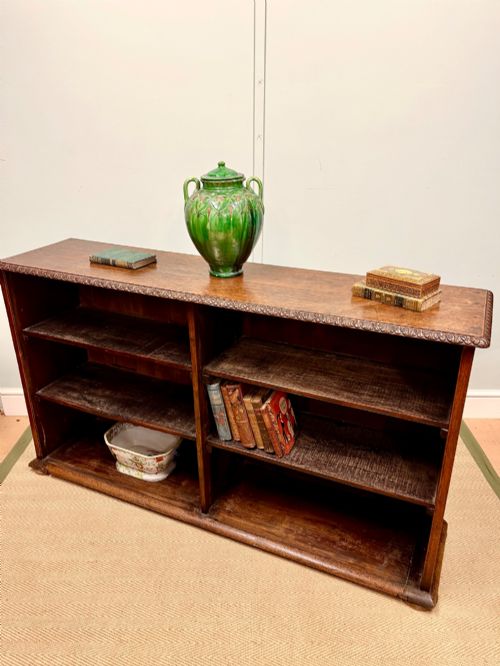
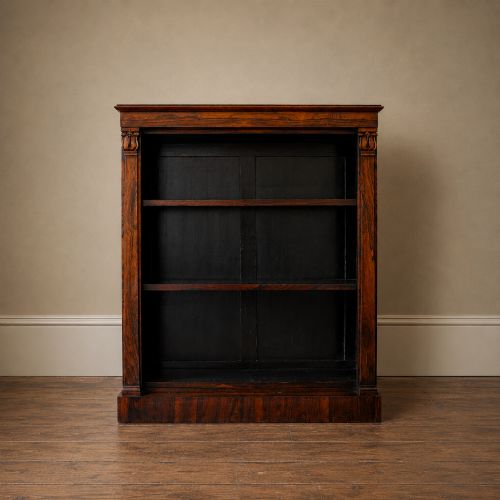
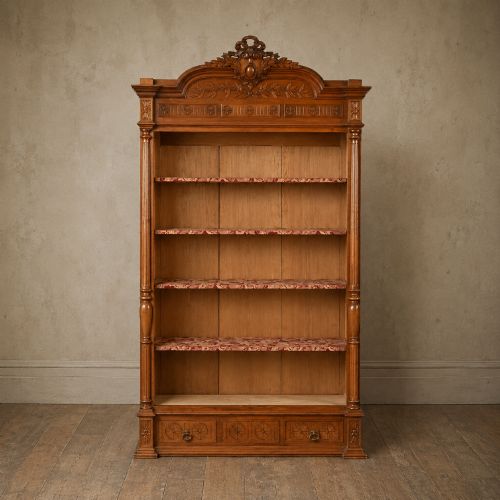
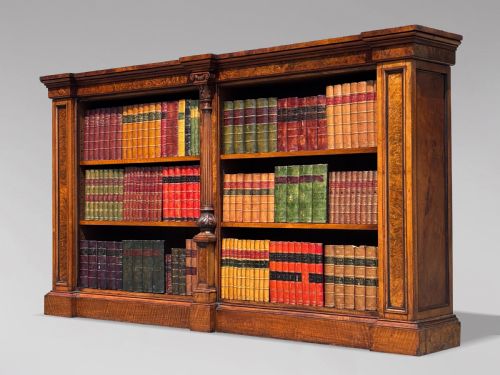
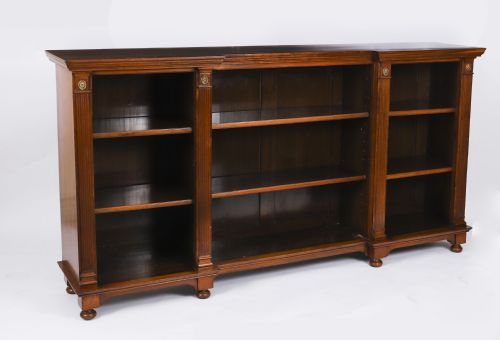
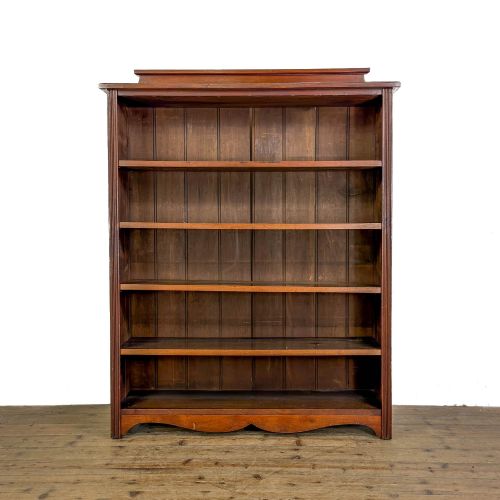
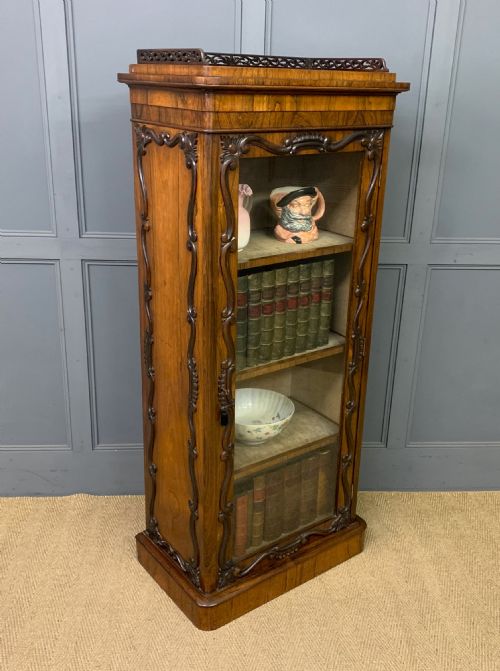
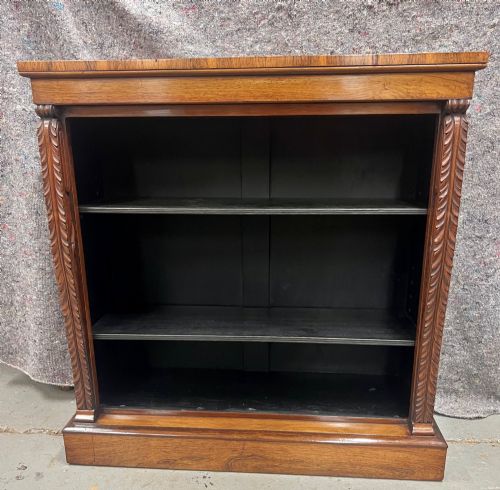
These a 19th century carved bookshelf provide sturdy utility while showing the rich grain of rosewood, walnut, and oak.
19th Century Carved Bookshelf
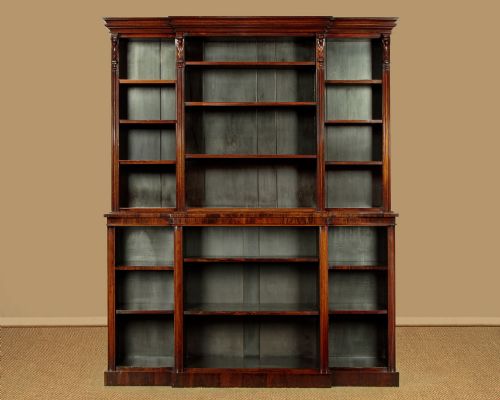
A 19th century carved bookshelf encompasses open bookcases, wall shelves, and whatnots designed to hold libraries and display objects. These domestic furnishings span periods from the Regency era through the Victorian period, incorporating styles such as Gothic Revival, Renaissance Revival, and Anglo-Indian.
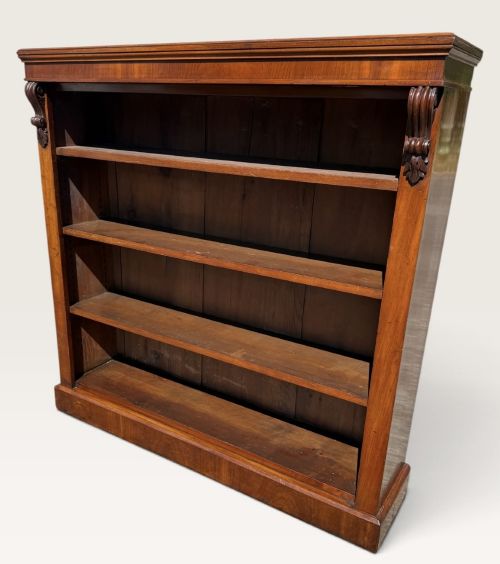
Buyers most frequently meet open bookcases and wall-mounted shelving units constructed from rich timbers like rosewood, walnut, mahogany, and oak. Many examples include adjustable shelving or carved corbels, reflecting both the practical needs of nineteenth-century readers and the decorative ambitions of cabinetmakers.
Materials and construction
Cabinetmakers constructed these shelves using solid woods and fine veneers, selecting dense hardwoods like rosewood, walnut, mahogany, and oak for their strength and decorative grain patterns. Secondary timbers such as pine or softwood appear in carcass backs and internal framing, while brass fixtures and ormolu mounts provide structural reinforcement and decorative contrast.
Joinery methods combined traditional framing with carved ornamentation, utilising solid wood mouldings, applied corbels, and detailed surface carving. Many pieces incorporated adjustable shelf mechanisms using wooden supports or brass pins, allowing owners to alter shelf heights for varying book sizes.
The listings feature timbers including rosewood, walnut, oak, mahogany, pine, and burr walnut across the Victorian, Regency, and Gothic Revival styles.
Qualities of distinction
The distinction between standard utility furniture and superior library pieces rests upon timber selection and the depth of the cabinetmaker's skill. Figured timbers such as burr walnut and richly grained rosewood elevate an ordinary bookcase, particularly when matched with fine surface polishing and crisp, hand-executed carving.
Structural integrity and original mechanisms also separate grades of manufacture, as demonstrated by smoothly operating adjustable shelf systems and substantial solid wood carcasses. The presence of period brass hardware and harmonious proportions further distinguishes better examples from simpler provincial work.
James Winter
The 19th Century Carved Bookshelf Glossary
- Open bookcase
- A shelving unit without doors, designed for easy access to books and frequently fitted with adjustable shelves. This form dominated nineteenth-century libraries and studies.
- Whatnot
- A multi-tiered piece of freestanding shelving used for displaying ornaments and small books. These items appeared in various woods including walnut and rosewood.
- Corbel
- A projecting bracket carved from wood, used to support upper shelves or cornices. They often display the scrolling leaf or gothic motifs characteristic of the period.
- Veneer
- A thin layer of decorative hardwood, such as rosewood or burr walnut, applied over a secondary timber base. This technique created striking grain patterns across flat surfaces.
- Breakfront
- A piece of furniture whose central section projects forward from the flanking wings. This configuration added architectural presence to larger library bookcases.
19th Century Carved Bookshelf: Frequently Asked Questions
What is a 19th century carved bookshelf?
A 19th century carved bookshelf is an open wooden shelving unit or bookcase produced during the eighteen-hundreds, featuring decorative carving and adjustable shelves.
These pieces served as functional library furniture in homes and institutions, utilising dense hardwoods like rosewood, walnut, and oak to support heavy volumes.
How do I identify a Regency bookcase?
Regency bookcases, dating from the early nineteenth century, typically exhibit cleaner classical lines, rosewood or mahogany construction, and simpler brass detailing.
They often reflect the earlier Regency and William IV aesthetic before the more ornate Victorian and Gothic Revival styles became dominant.
Were nineteenth-century shelves adjustable?
Many nineteenth-century open bookcases and shelving units feature adjustable shelves supported by wooden ratchets or brass pin systems.
This adaptability allowed owners to reconfigure the interior space for books of varying heights, a practical feature common in library furniture of the period.
How do I care for a wood bookshelf?
Caring for these wooden furnishings involves maintaining stable room humidity and avoiding direct sunlight to protect antique veneers and polished surfaces.
Regular dusting with a dry cloth preserves the finish without introducing moisture that could harm older timbers like rosewood or walnut.