

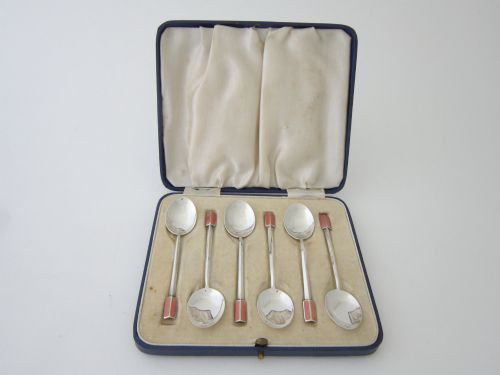


1930s Silver Cutlery Set
A 1930s silver cutlery set brings geometric elegance to the table, offering matched pieces that capture the spirit of Art Deco design.
1930s Silver Cutlery Set
A 1930s silver cutlery set comprises matched implements designed for dining and entertaining, frequently encountered in fitted canteens or presentation boxes. These groupings range from modest suites of coffee and teaspoons to substantial canteens containing over one hundred pieces.
The dominant aesthetic across these objects is Art Deco, though occasional examples reflect traditional motifs such as Chippendale Revival. Forms include specialist serving implements like grapefruit spoons, lobster and seafood picks, cake dessert servers, and bridge spoons.
Materials extend beyond standard metalwork to incorporate coloured vitreous enamel, polished Bakelite handles, and fitted interior linings of silk, velvet, and baize. Such provisions ensure that sets survive within their original protective storage.
Materials and construction methods
Manufacturing methods rely on solid sterling silver or silver plate over a base metal foundation, shaped to precise geometric contours. Workshops employed stamping, casting, and hand-finishing to achieve the characteristic clean lines of the period.
Surface ornamentation frequently integrates applied vitreous enamel panels in vibrant tones, contrasting against polished silver surfaces. Handles incorporate organic or synthetic materials like Bakelite, secured firmly to the metal shanks.
Storage housing utilises sturdy timber frameworks, notably oak, lined with protective textiles including silk, velvet, and baize to cushion individual implements within dedicated slots.
1930s Silver Cutlery Set Retail Price Guide 2026
Typical asking prices for 1930s silver cutlery set among the pieces listed under this phrase on Sellingantiques today, from the lower quarter to the upper quarter. They describe what is for sale here now, not the wider market.
Assessing quality and craftsmanship
Quality across a 1930s silver cutlery set depends upon the integrity of the materials and the completeness of the original suite. Solid sterling silver tiers above silver plate, while comprehensive canteens retaining every designated implement command greater regard than partial groupings.
The precision of decorative execution distinguishes finer examples, particularly where vitreous enamel remains unblemished and securely bonded to the metal. Superior sets also retain their original fitted cases with intact textile linings and functional hardware.
Suckling Ltd.·Elkington and Co·Walker and Hall
The 1930s Silver Cutlery Set Glossary
- Sterling silver
- An alloy consisting of 925 parts silver per thousand by weight. This standard metal forms the primary structural material for finer flatware.
- Silver plate
- A base metal foundation coated with a thin layer of pure silver. This technique provided a more accessible alternative to solid sterling wares.
- Vitreous enamel
- Glass fused to metal through high-temperature firing. It provides durable, colourful decoration on spoon handles and decorative implements.
- Bakelite
- An early synthetic plastic utilised for durable handles on specialist flatware. Its tactile finish defines many modernist dining accessories.
- Canteen
- A fitted box or cabinet designed specifically to store a complete cutlery service. These containers often feature multiple internal tiers lined with baize or velvet.
1930s Silver Cutlery Set: Frequently Asked Questions
What is included in a typical 1930s cutlery set?
These groupings vary from small quantities of specialist spoons to extensive canteens containing numerous dining implements. Common components include teaspoons, coffee spoons, and serving pieces.
Larger suites often incorporate specialised items like grapefruit spoons or seafood picks alongside standard dining implements, all organised within a fitted wooden case.
How do I identify Art Deco style in silver?
Art Deco design relies on geometric precision, clean lines, and stylised motifs rather than ornate floral carving. Implements often feature stepped terminals or angular handles.
Enamel accents in bold colours and contrasting materials like Bakelite further reinforce the modern industrial aesthetic typical of the 1930s.
How were these cutlery sets originally stored?
Complete sets were housed in purpose-built wooden canteens, frequently constructed from oak with hinged lids and lockable compartments. These enclosures kept the metal secure.
Interiors were lined with soft textiles such as velvet, silk, or baize, featuring individual slots or straps to prevent the silver pieces from scratching against one another.
Are solid silver and silver plate marked differently?
Solid sterling silver items typically bear distinct hallmarks indicating the standard of metal, the assay office, and the manufacturing maker. These stamps provide verifiable historical data.
Silver plated alternatives generally display manufacturer marks denoting plated wares rather than official government silver assay stamps.