



18th Century Gun
An 18th century gun brings tangible mechanical history into a room, offering collectors the tactile weight of flintlock, matchlock and snaphaunce mechanisms.
18th Century Gun
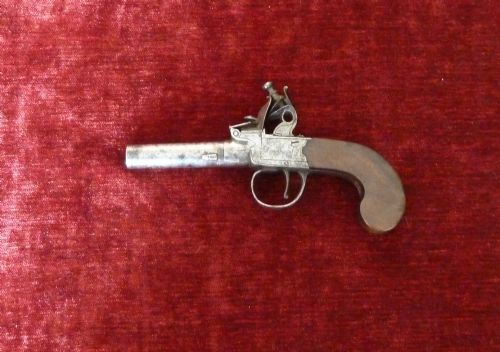
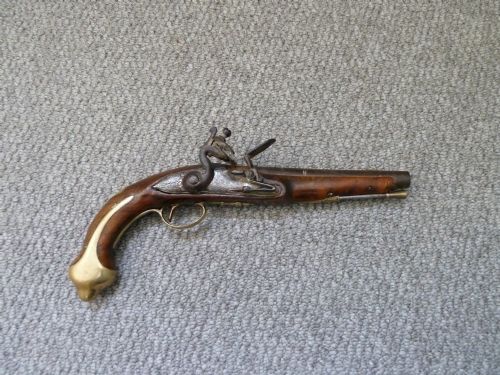
An 18th century gun encompasses both military arms and civilian sidearms, ranging from rugged service muskets to refined pocket pistols. The selections available on this page lean heavily toward flintlock pistols and longarms originating from British, European and Ottoman workshops.
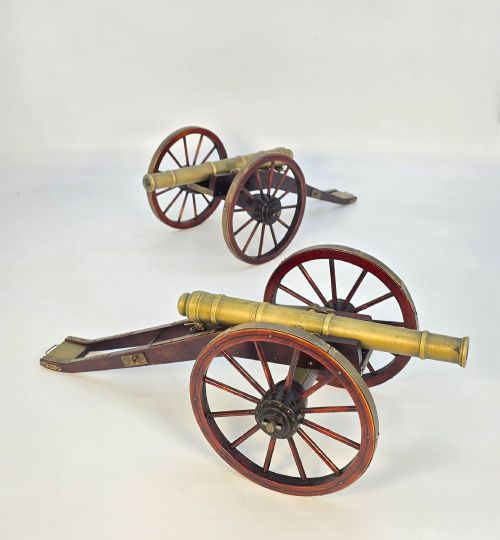
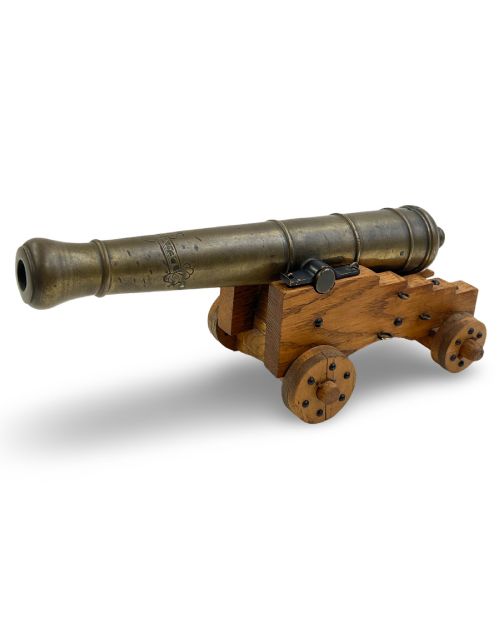
Buyers encounter distinct regional variations, including North Indian matchlocks with bone inlay and Balkan holster pistols featuring engraved brass furniture. Alongside functional firearms, the category extends to maritime signal cannons, scale models and household furniture incorporating related elements.
Service arms carry the marks of state arsenals and military contractors, while civilian pieces display sophisticated silver wire inlay and carved stocks. Each object reflects the specific tactical requirements and decorative tastes of its manufacturing centre.
Materials and Construction
The construction of an 18th century gun relies on the combination of forged steel for barrels and locks with dense hardwoods, principally walnut, for the stocks. Metal components frequently feature brass mounts, trigger guards and decorative side plates that contrast against the dark grain of the wood.
Craftsmen utilised intricate techniques such as silver wire inlay, bone appliqués and hand-engraved brass to embellish civilian and frontier arms. Lock mechanisms required precise blacksmithing and file work to ensure reliable sparks from the flint against the frizzen.
18th Century Gun Retail Price Guide 2026
Typical asking prices for 18th century gun among the pieces listed under this phrase on Sellingantiques today, from the lower quarter to the upper quarter. They describe what is for sale here now, not the wider market.
Pocket pistols from this era were frequently designed with screw-off cannon barrels, allowing owners to load the ball directly from the breech.
Quality and Execution
The distinction between standard military issue and bespoke workshop production lies in the crispness of the lock engraving and the finesse of the stock carving. Master makers such as those in London or Paris delivered tighter tolerances in the internal mechanism and superior balance in the hand.
Survival of original finish on both the metalwork and the wooden stock dictates the desirability of a piece. Guns retaining clear maker signatures, unpolished brass furniture and crisp proof marks represent the higher tier of survival.
Harrison of London·James Barber·Timothy Hughes·Barber of Newark
The 18th Century Gun Glossary
- Flintlock
- An ignition mechanism utilising a piece of flint held in a cock to strike a steel frizzen, creating sparks to ignite the priming powder. This system dominated European and British firearms throughout the period.
- Matchlock
- An early ignition system where a slow-burning match is lowered into the flash pan via a lever to fire the charge. This mechanism appears frequently on South Indian and North African longarms.
- Snaphaunce
- An early precursor to the flintlock featuring a spring-retained frizzen cover that opens independently as the cock falls. It offers an intermediate stage in the evolution of firearms technology.
- Frizzen
- The vertical steel plate struck by the flint to produce sparks and cover the priming pan. Its hardened surface is essential for consistent ignition.
- Bore
- The interior diameter of the barrel, often measured in gauge or pounds of lead per spherical ball. This metric determines the size of ammunition a weapon accepts.
18th Century Gun: Frequently Asked Questions
How do I maintain wood and steel?
Keep metal surfaces lightly oiled with a micro-crystalline wax or specialist gun oil to prevent active corrosion from moisture in the air. Treat the walnut or hardwood stocks sparingly with traditional furniture wax to nourish the grain without saturating old timber.
Avoid displaying firearms in direct sunlight or areas subject to rapid temperature fluctuations, which cause wood to split and metal to sweat. Routine gentle dusting preserves the historical surface patination accumulated over centuries.
Were these guns used in combat?
Many pieces on the market served active military roles, evidenced by government inspection stamps, arsenal markings and service wear on the stocks. Contract muskets and dragoon pistols saw deployment during major conflicts such as the Revolutionary Wars and Napoleonic campaigns.
Conversely, pocket pistols and officers' duelling arms were typically carried for personal defence or private disputes rather than general warfare. Their condition often reflects careful civilian carriage rather than the rigorous demands of the battlefield.
How are different regional styles identified?
Regional attribution relies heavily on lock construction, stock geometry and decorative motifs unique to specific manufacturing centres. Ottoman and Balkan arms frequently feature distinct rat-tail mechanisms, extensive brass mounts and geometric coral or bone inlays.
British and French pieces adhere to regulated military patterns or distinct urban workshop standards signed by metropolitan gunsmiths. Examining the shape of the butt cap and side plate usually reveals the geographic origin.
Can these antique firearms still be fired?
Most dealers and collectors treat these pieces as historical artefacts rather than operational weapons due to the degradation of age on metal and wood. Testing an antique mechanism risks catastrophic failure of weakened steel barrels and brittle internal springs.
Owning an 18th century gun focuses on appreciating the mechanical ingenuity, hand-chiseled engraving and historical associations. Enjoying the piece safely involves display and study rather than live discharge.