



17th Century Style Seating
When seeking 17th century style seating, you acquire robust timber frames and rich upholstery that echo centuries of domestic heritage.
17th Century Style Seating
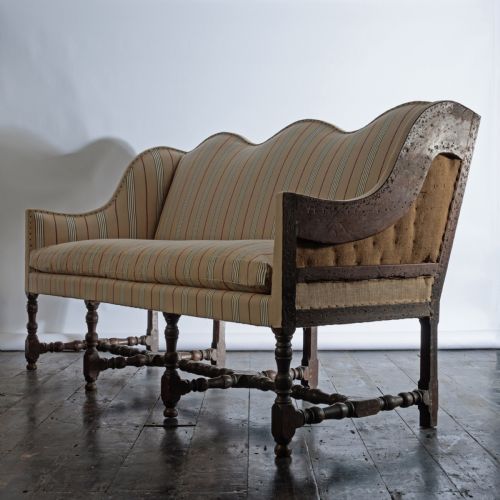
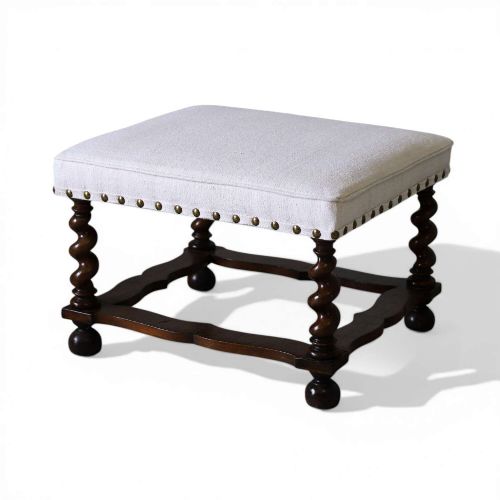
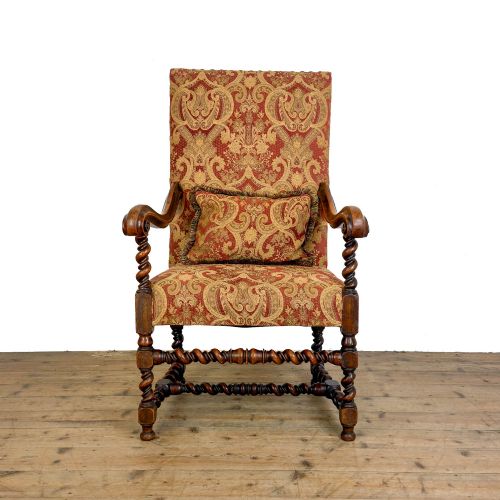
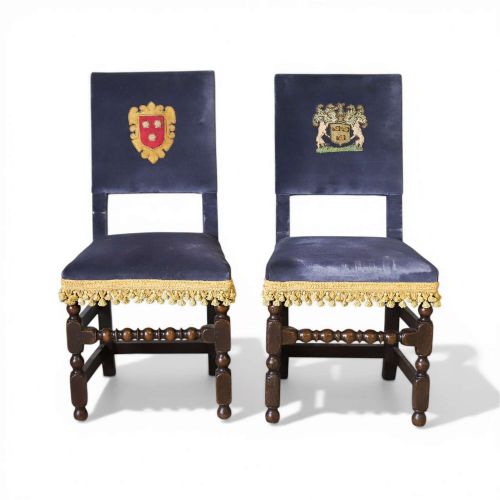
These pieces encompass armchairs, side chairs, dining chairs, stools, settles, and settees that emulate the sturdy forms of the 17th century. Many examples on this page date from later revivals in the 19th and early 20th centuries, alongside genuine period survivals.
Buyers encounter heavy oak frames, high backs, and turned supports designed for formal halls and dining spaces. Derbyshire chairs, Carolean models, and Jacobean styles dominate the selection.
The assortment ranges from single side chairs with central splats to matched sets of dining chairs and grand armorial armchairs. Each form reflects the structural priorities of early domestic life.
Materials and Construction
Joinery relies heavily on solid oak and walnut, fashioned through traditional framing methods that ensure enduring stability. Fruitwood also appears in vernacular seating forms.
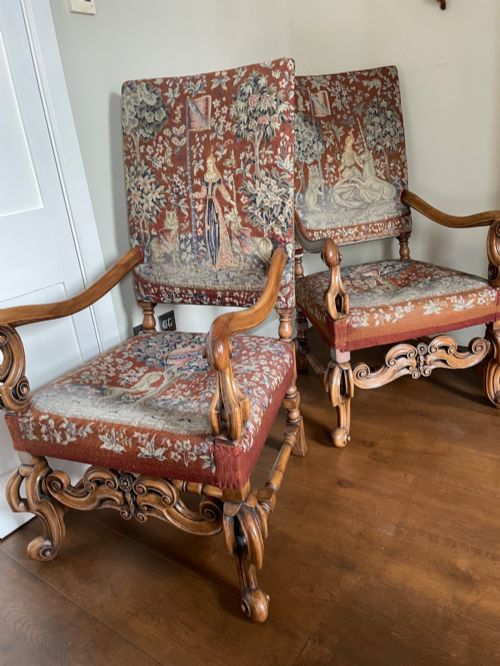
Cane panels, leather, linen, fabric, and velvet provide the primary surfaces for seats and backs, often secured with brass tacks and trimmed with metallic fringe. Carved ornamentation defines the wooden components.
17th Century Style Seating Retail Price Guide 2026
Typical asking prices for 17th century style seating among the pieces listed under this phrase on Sellingantiques today, from the lower quarter to the upper quarter. They describe what is for sale here now, not the wider market.
Periods represented span from the 17th century through the 1880s, 1900, 1920, and 1930 revivals.
Understanding Quality
The depth and crispness of hand-carved details separate standard production from superior craftsmanship. Sharp mouldings and well-proportioned turned legs indicate greater maker skill.
The integrity of the timber frame and the authenticity of period materials, such as aged cane or hand-stitched upholstery, dictate the overall stature of the piece.
The 17th Century Style Seating Glossary
- Jacobean style
- Design aesthetic spanning the early 17th century, characterised by rigid symmetry and strapwork carving. It reappeared frequently in later revival furniture.
- Carolean
- Pertaining to the reign of Charles II, featuring opulent scrolls, canework, and dynamic carved motifs. This style heavily influenced later seventeenth-century seating.
- Wainscot chair
- A heavy wooden armchair constructed primarily of oak with panelled backrests. These early forms inspired many subsequent revival seating pieces.
- Joint stool
- A low wooden stool built with pegged mortise and tenon joints rather than turned legs. They served versatile seating and utility roles in early households.
- Derbyshire chair
- A type of regional English chair featuring an open carved back and wooden seat. They emerged in the seventeenth century and inspired later Victorian sets.
- Baroque
- Artistic style marked by grand scale, exuberant curves, and ornate detailing. It manifested in European and British seating designs of the period.
17th Century Style Seating: Frequently Asked Questions
How do I identify a revival piece?
Examine the tooling marks on the timber and the overall seasoning of the wood. Later revivals often display machine-assisted cuts or uniform wear patterns.
Compare the construction methods against known period exemplars to determine whether the piece originates from the seventeenth century or a nineteenth-century workshop.
Where should I place these chairs?
These robust items anchor formal dining rooms, hallways, and studies with historical weight. Pair oak dining chairs around a sturdy timber table for a cohesive interior scheme.
Keep upholstered armchairs and settees away from direct heat sources to protect delicate fabrics, leather, and cane components from drying out.
How do I care for cane and oak?
Wipe solid oak surfaces gently with a dry or barely damp cloth to remove dust without stripping the natural patina. Avoid harsh chemical polishes.
Maintain cane panels by wiping them lightly with water to keep the plant fibres supple and prevent snapping under normal seating pressure.
What defines a Carolean chair?
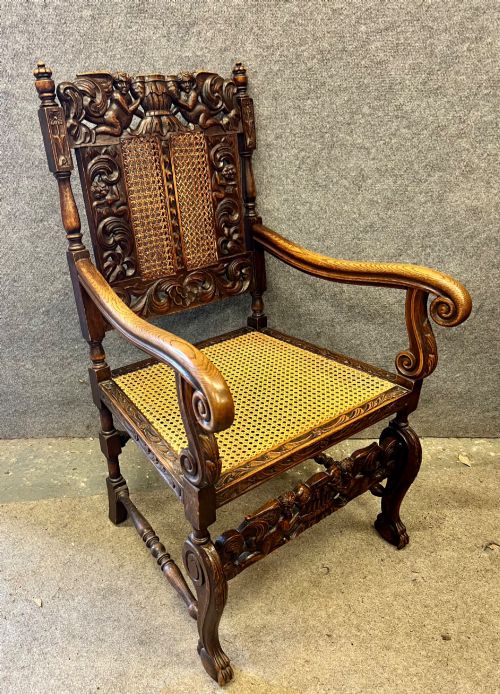
Carolean chairs feature elaborate crown and scroll carvings, often accompanied by woven cane backs and seats. Their dynamic silhouettes reflect Restoration-era tastes.
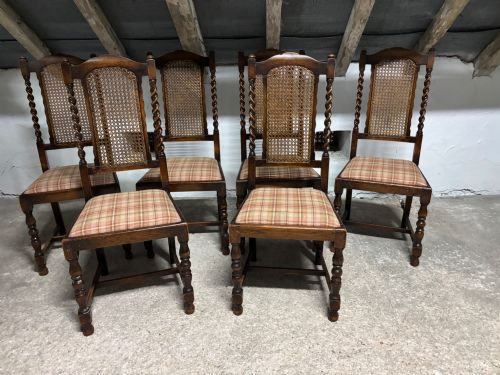
Turned woodwork, including spiral or barley-sugar legs, frequently supports these ornate upper structures.