N Wilson Antiques Clocks has dated this piece to the 18th Century.
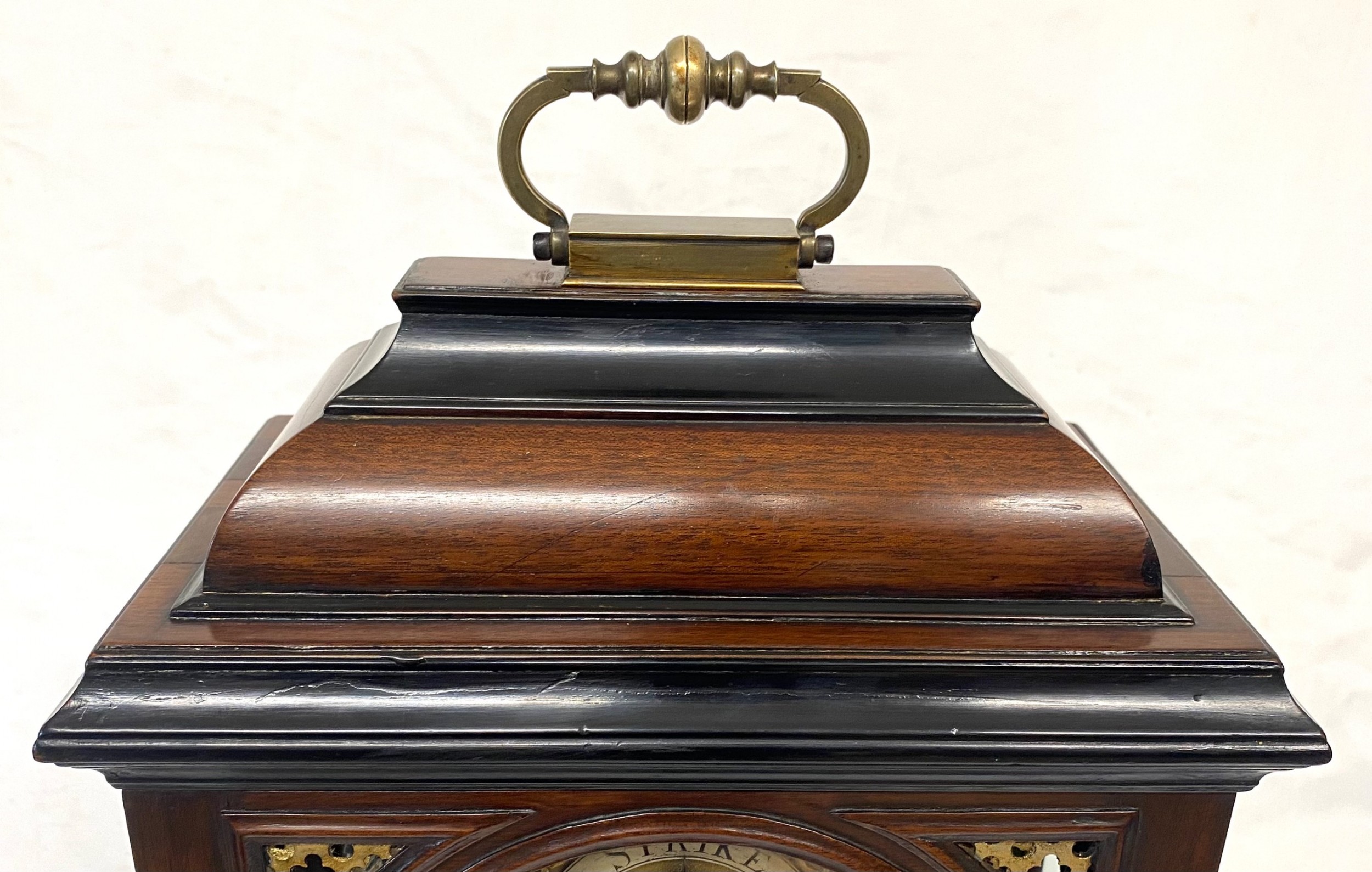
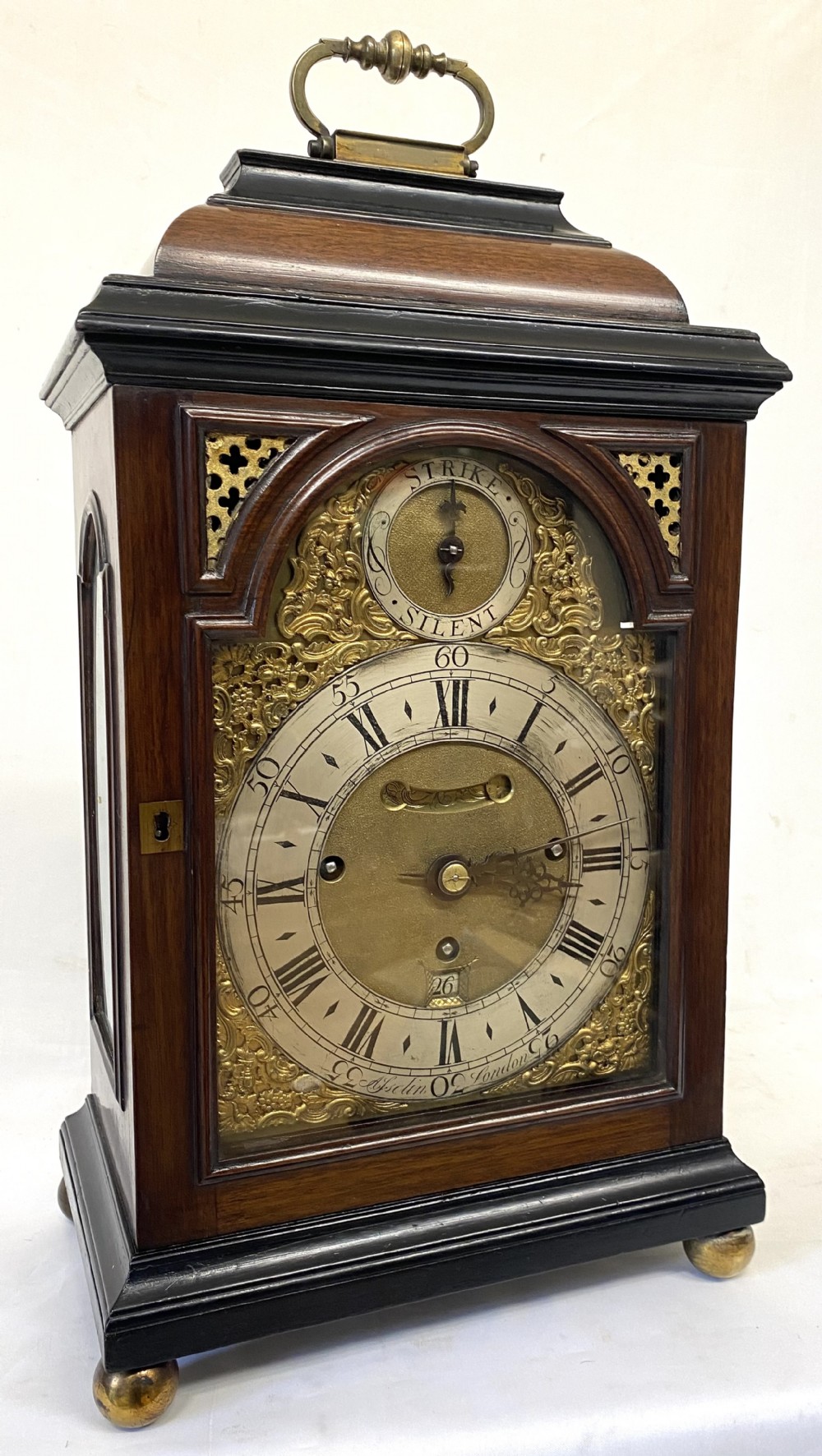
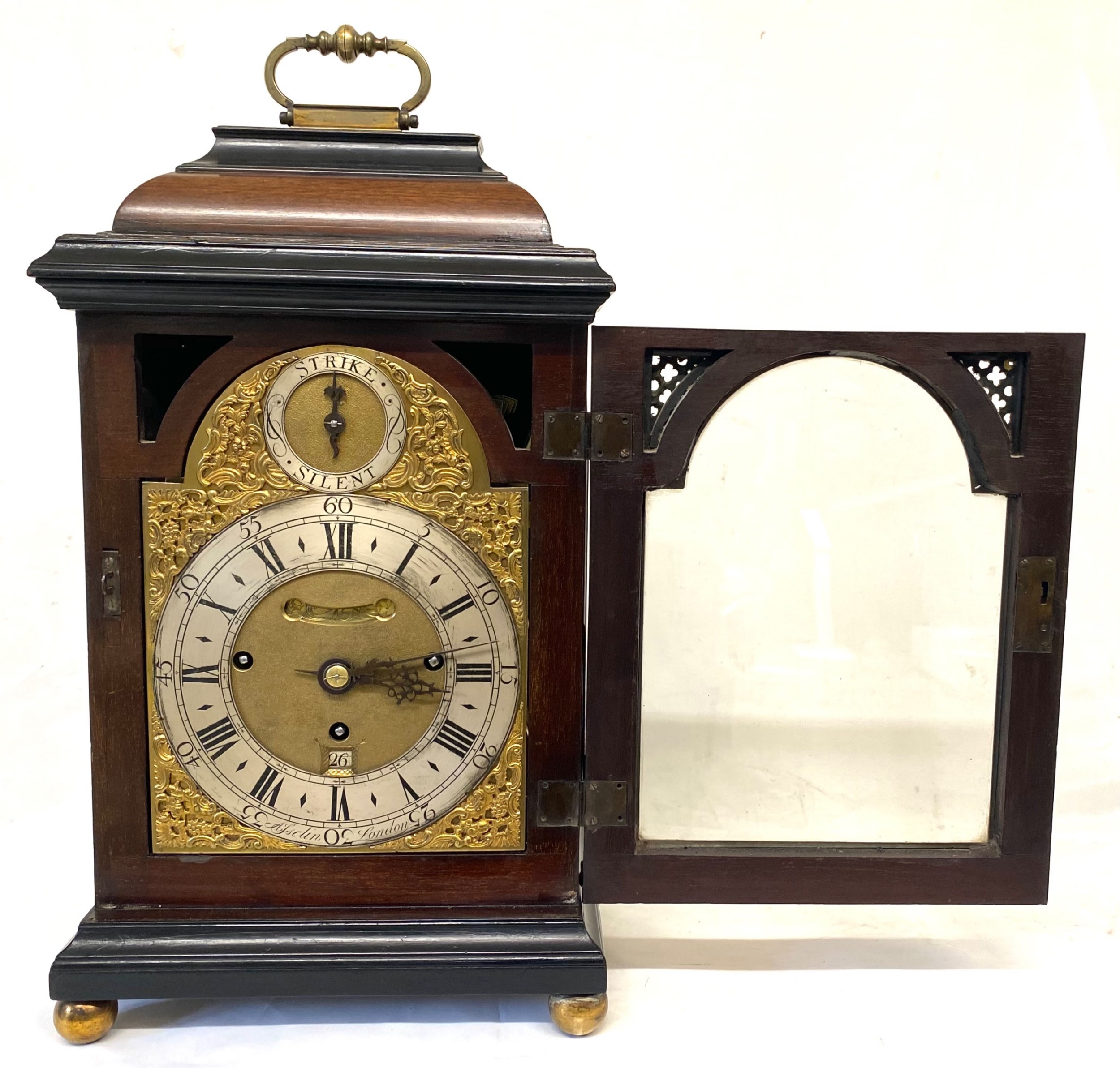
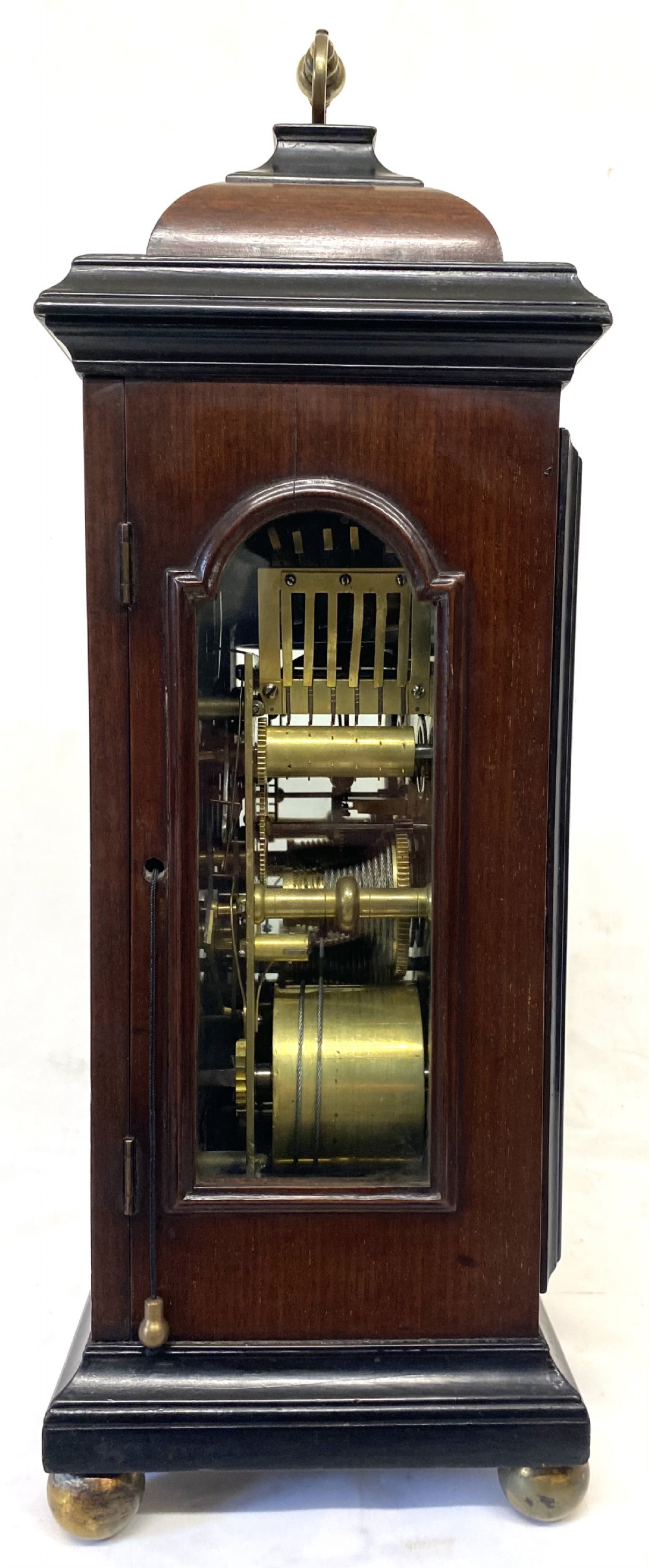
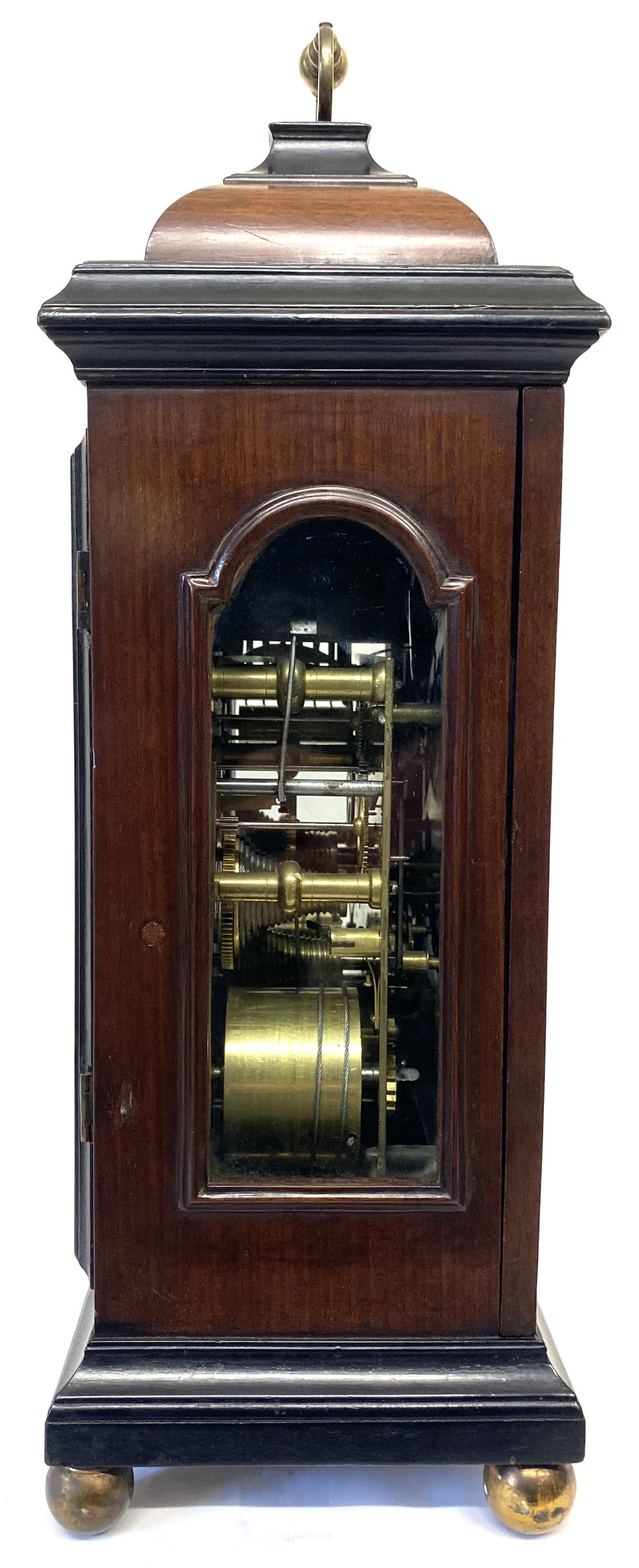
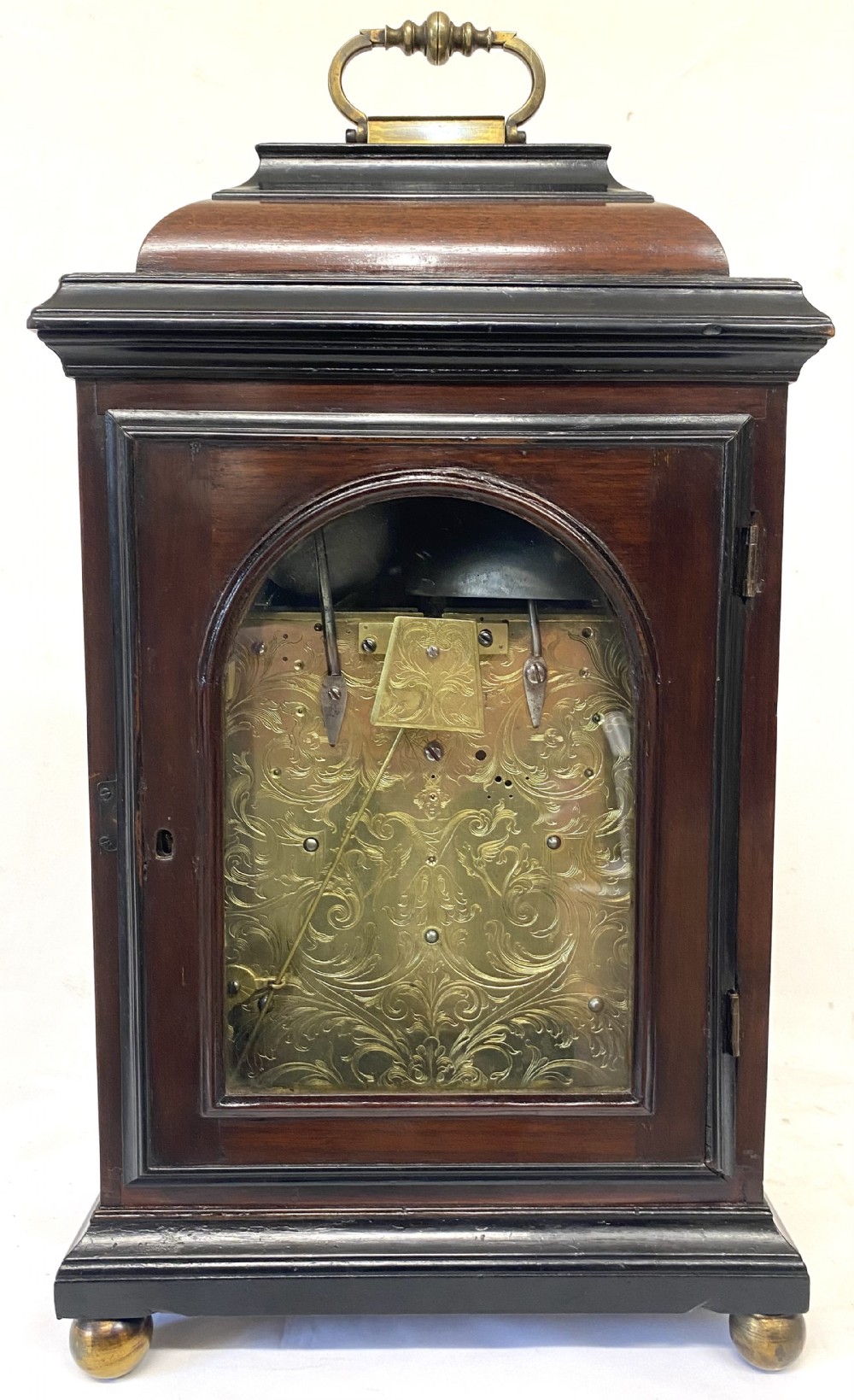
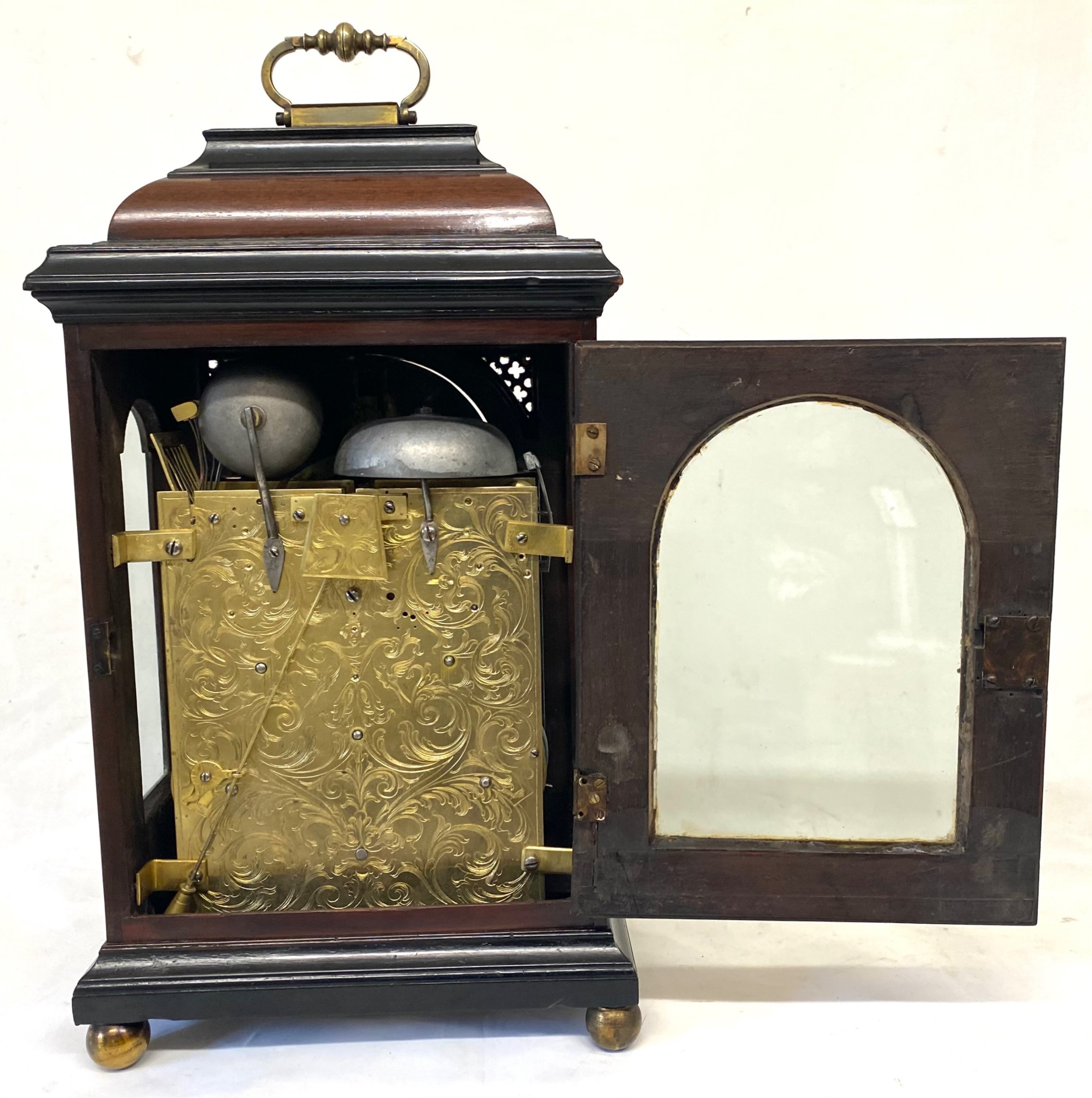
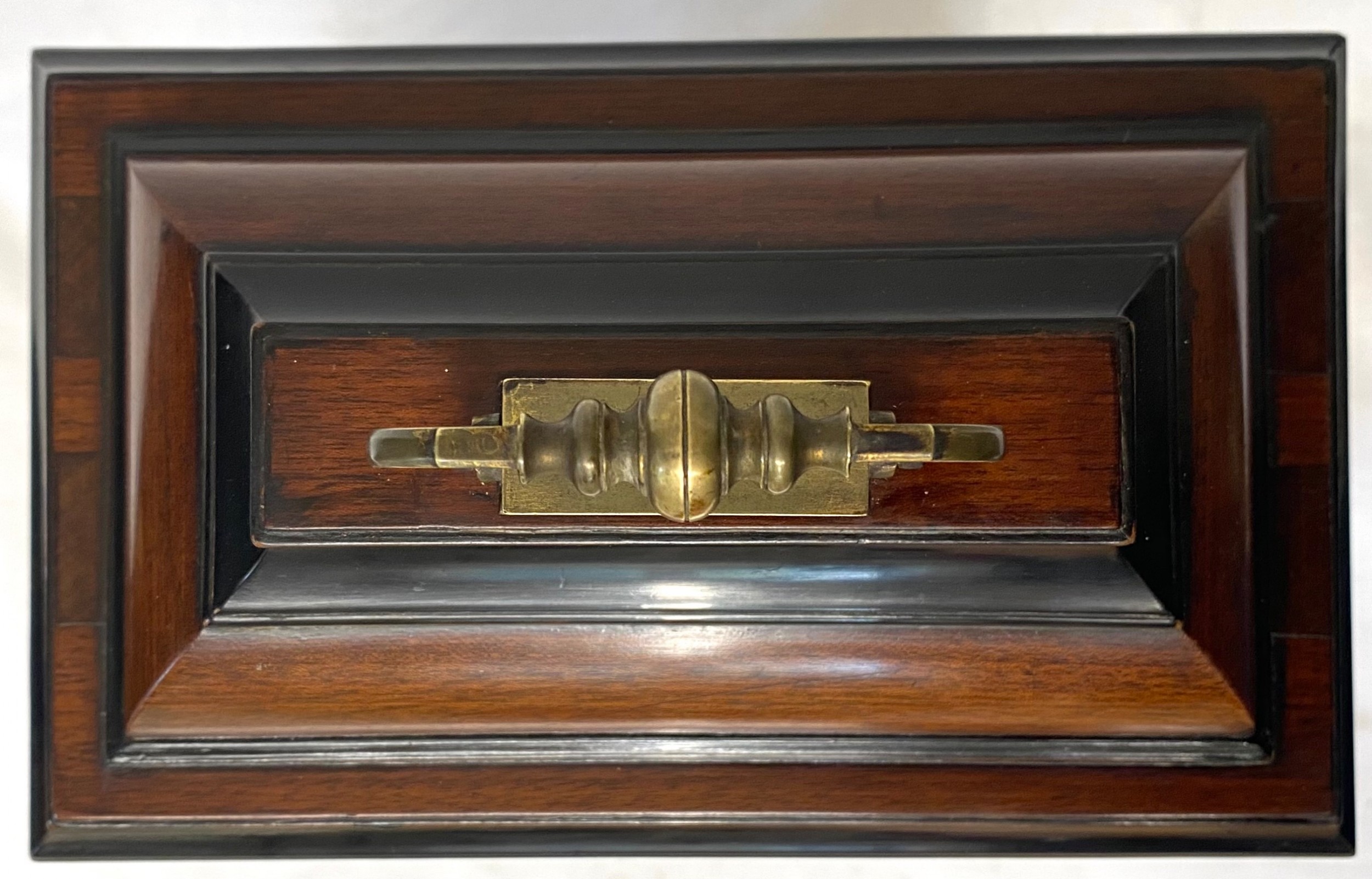
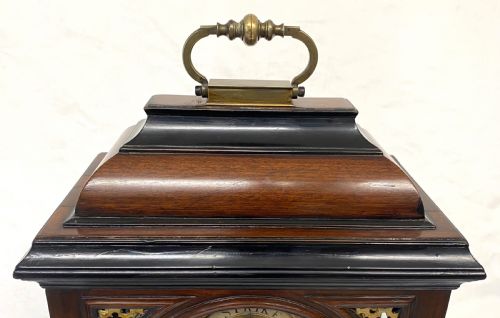
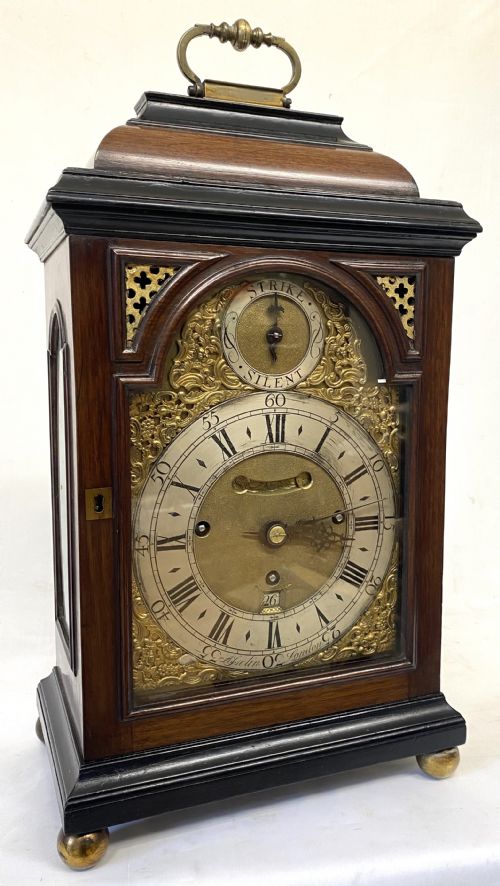
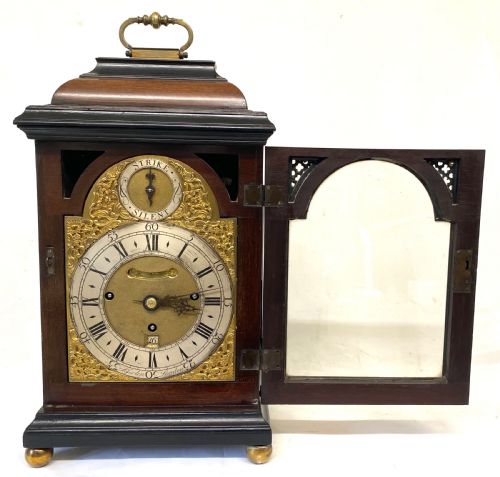
The case then has a lovely bell top with a beautiful shaped brass carry handle. There is then a lovely this moulding to the top edge which leads to the main body. The main body of the case then has a rectangular shaped with shaped viewing windows to the sides and back which are each framed nicely with a thin, shaped moulding. The front of the case then has two framed fretwork panels to the top edge as well as the front, shaped glass also being framed with mouldings. Finally there is a final moulding to the bottom edge as well as the clock being finished by four round brass feet.
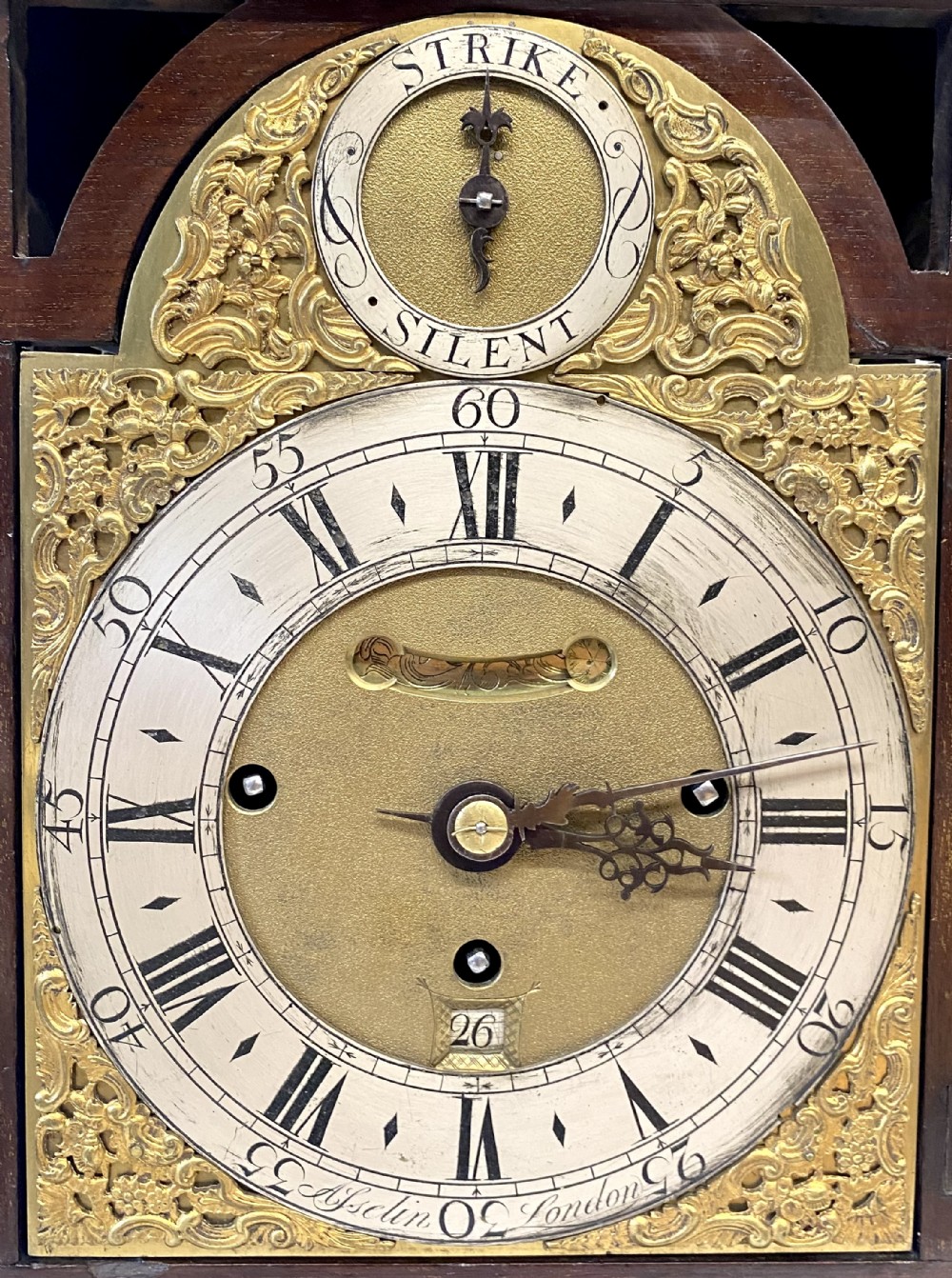
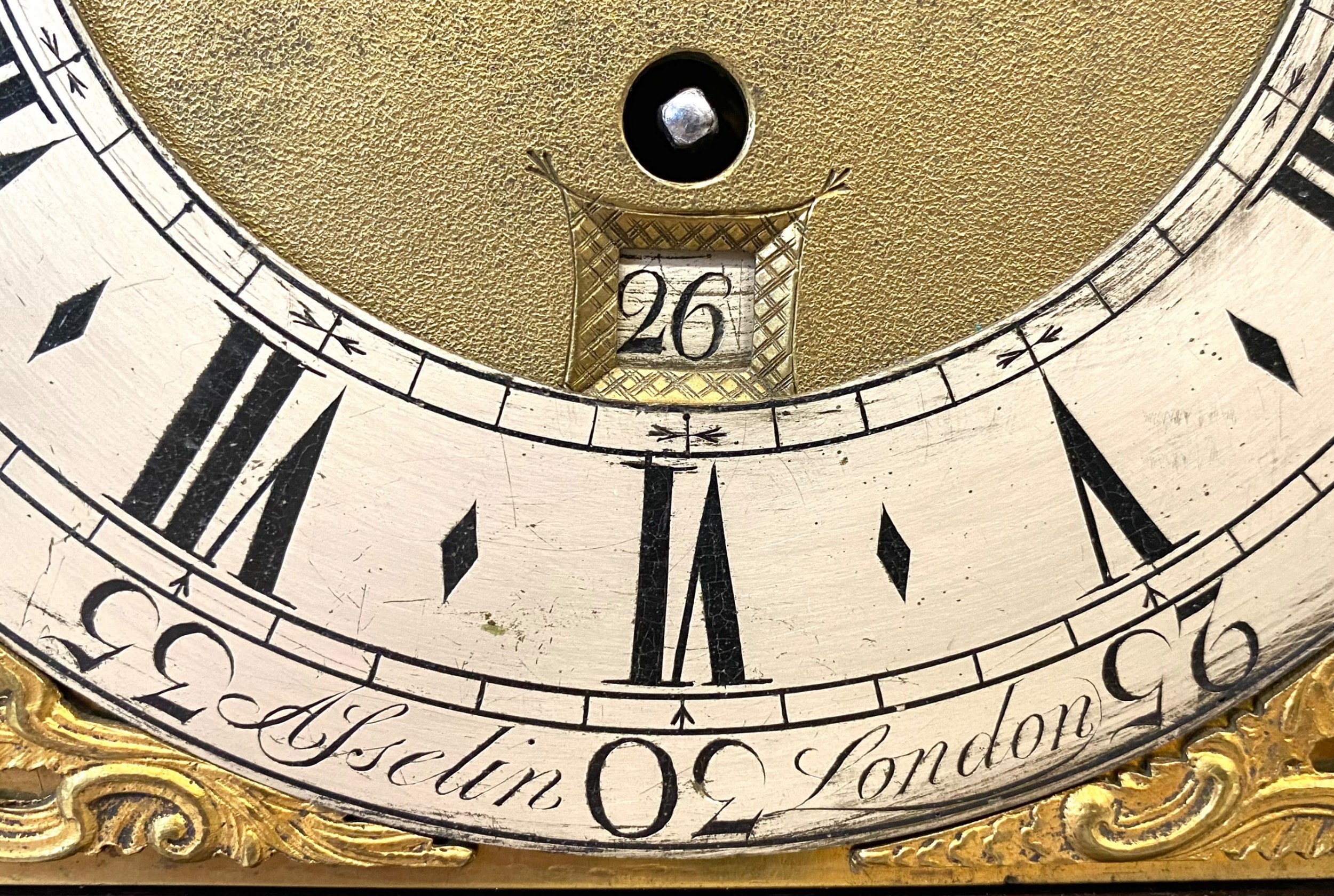
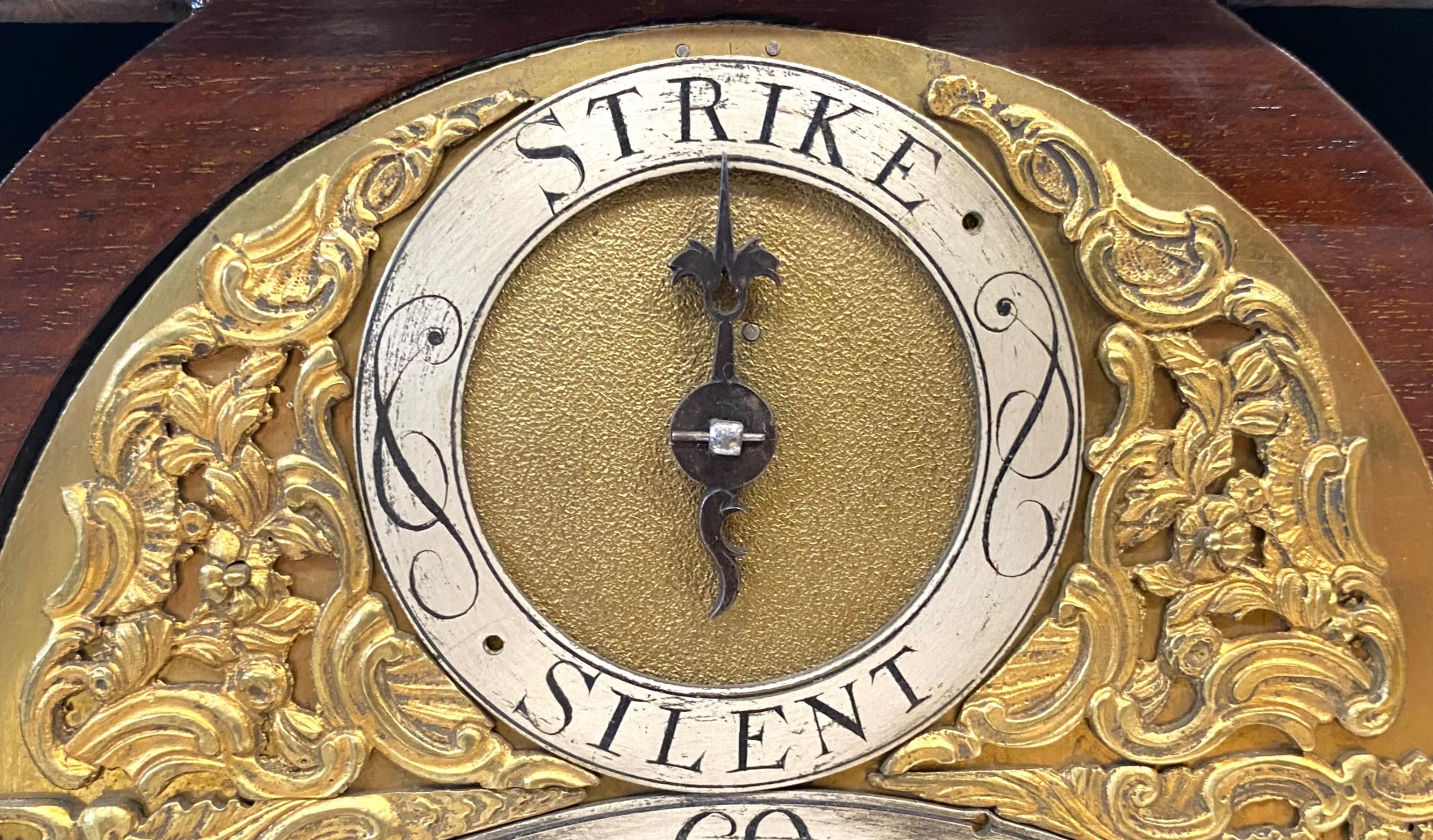
The dial is then arched and brass. The dial then has a silvered chapter ring set out in black Roman numerals with a two thin rings marking each minute and every five minutes being marked in Arabic numerals. The dial then has a further silvered ring to the arch marked “STRIKE SILENT” so that the chimes can be turned on and off. There are then a total of six intricately shaped spandrils then set the dial off wonderfully. Finally the dial is finished by three beautifully shaped hands as well as the chapter ring being signed by the maker “Asselin London”.
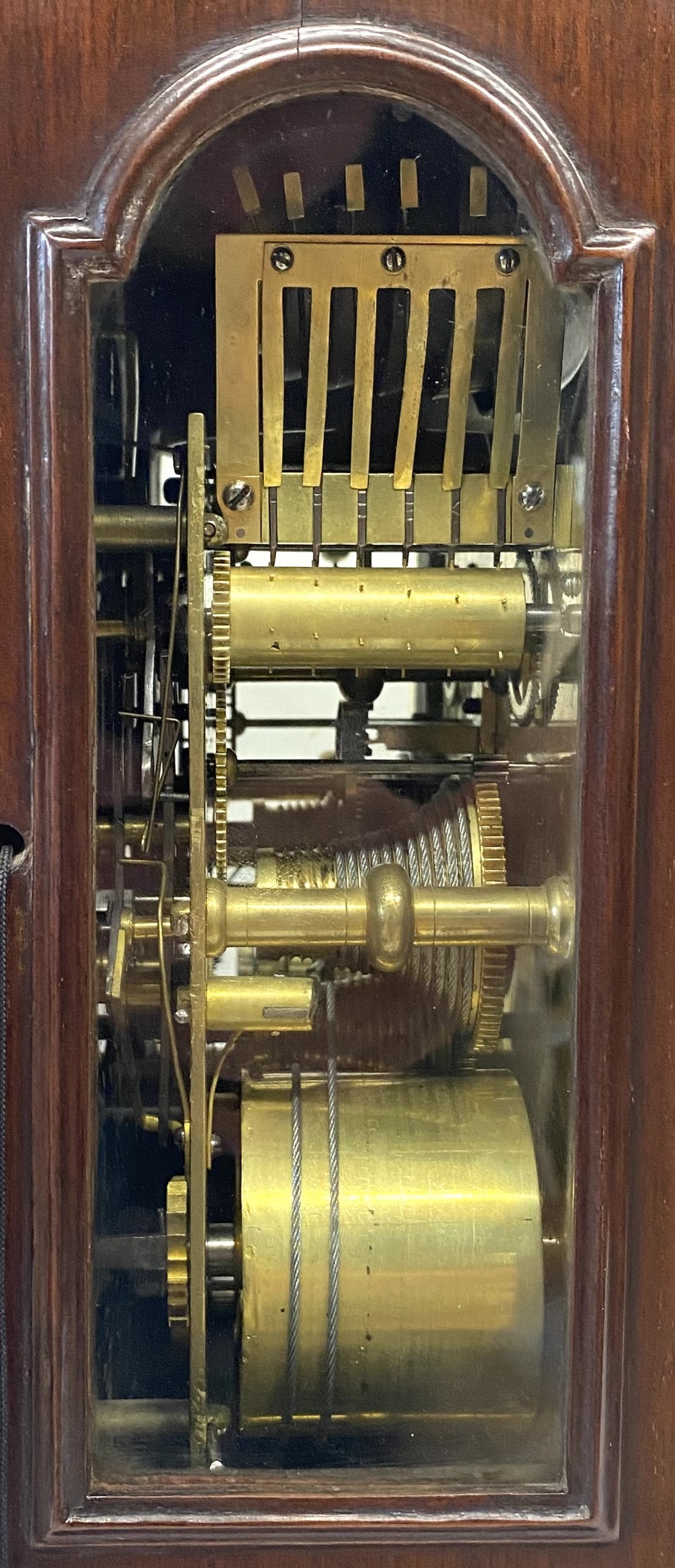
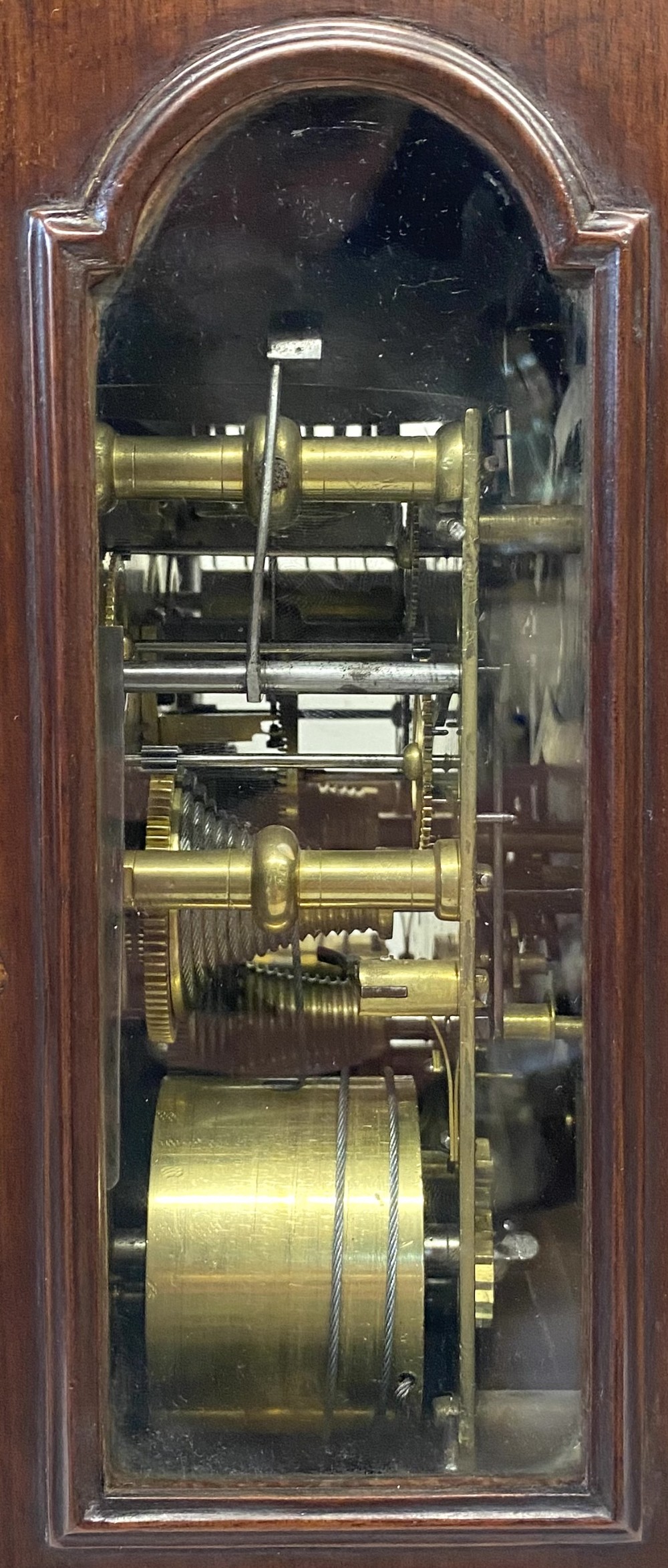
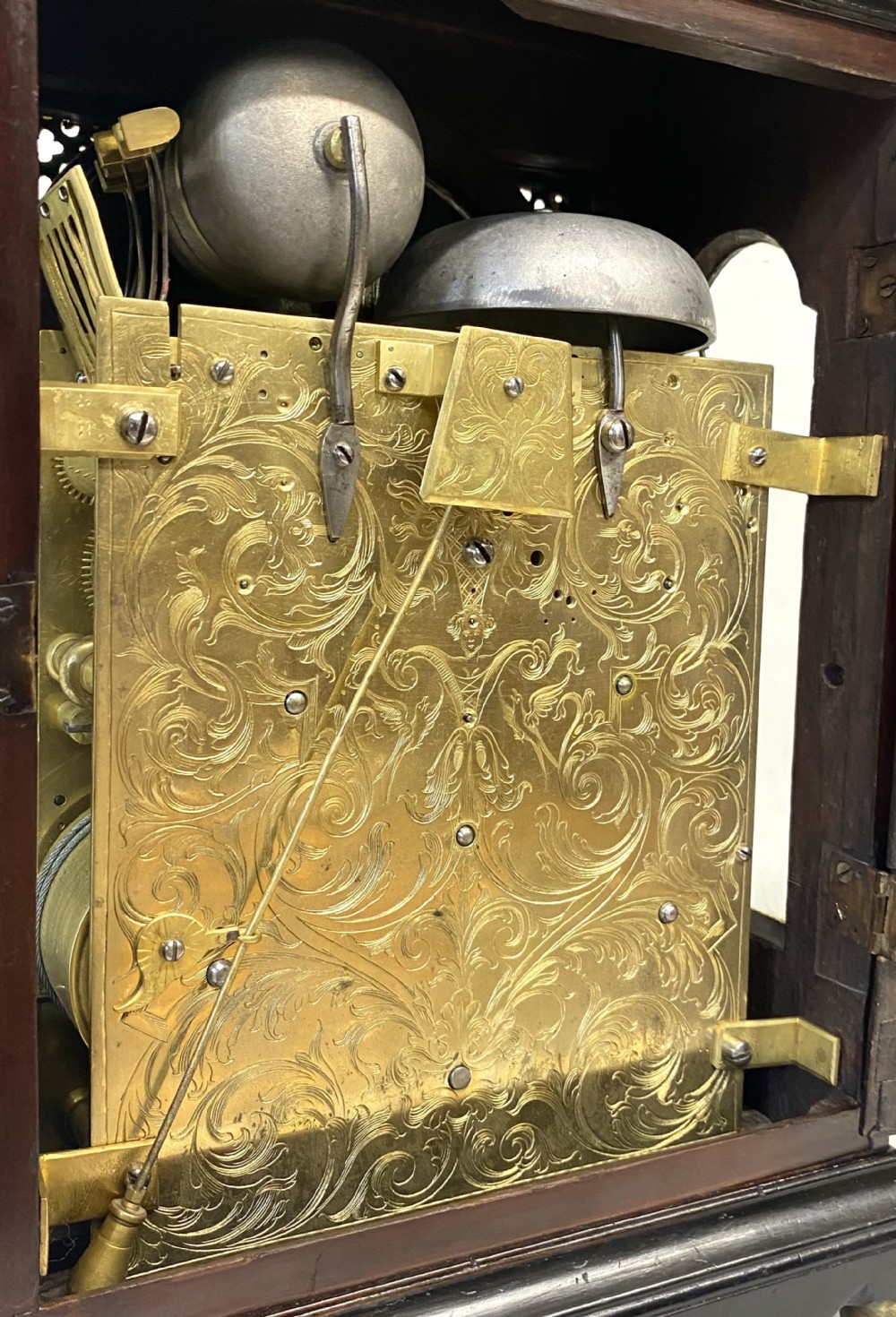
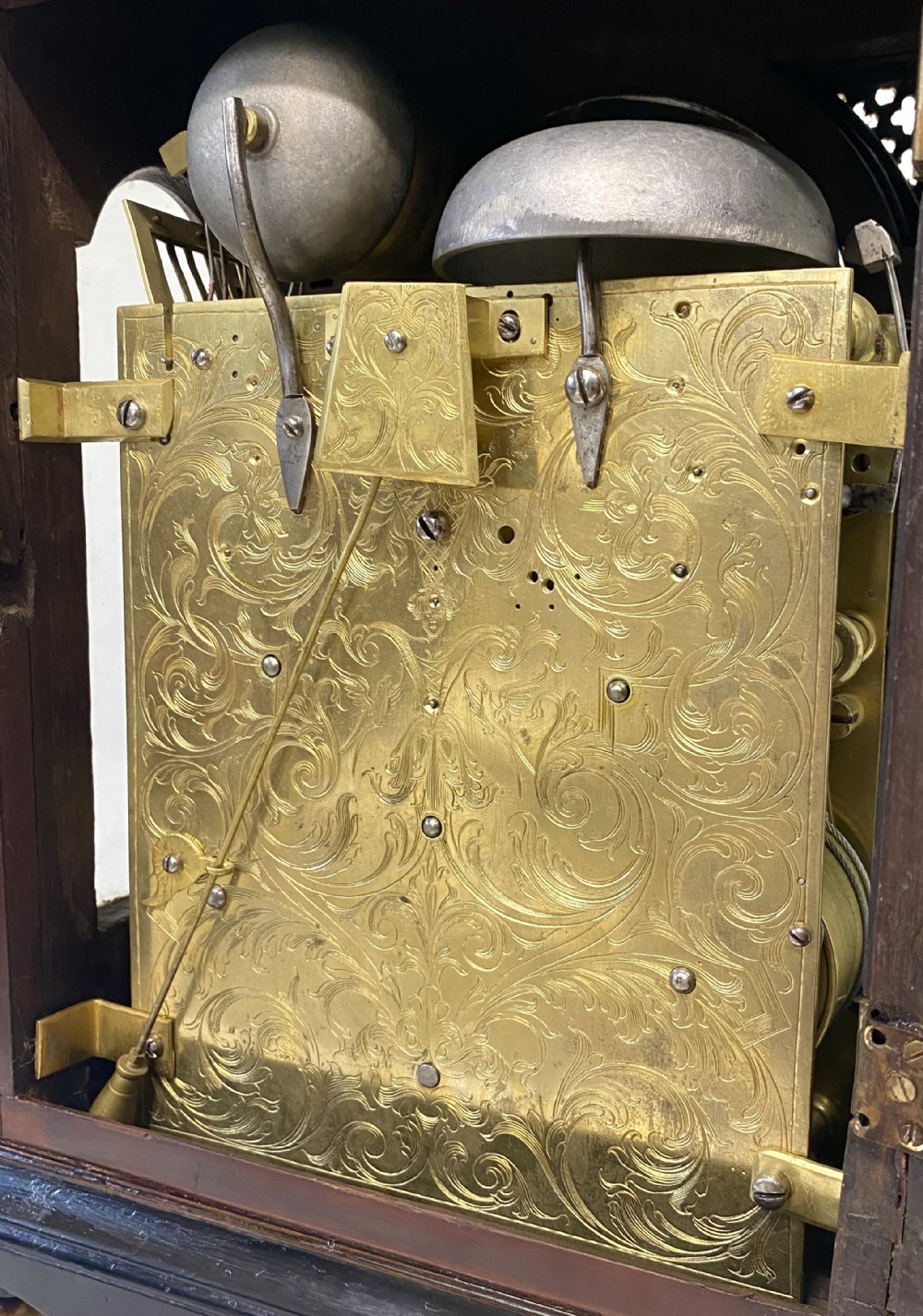
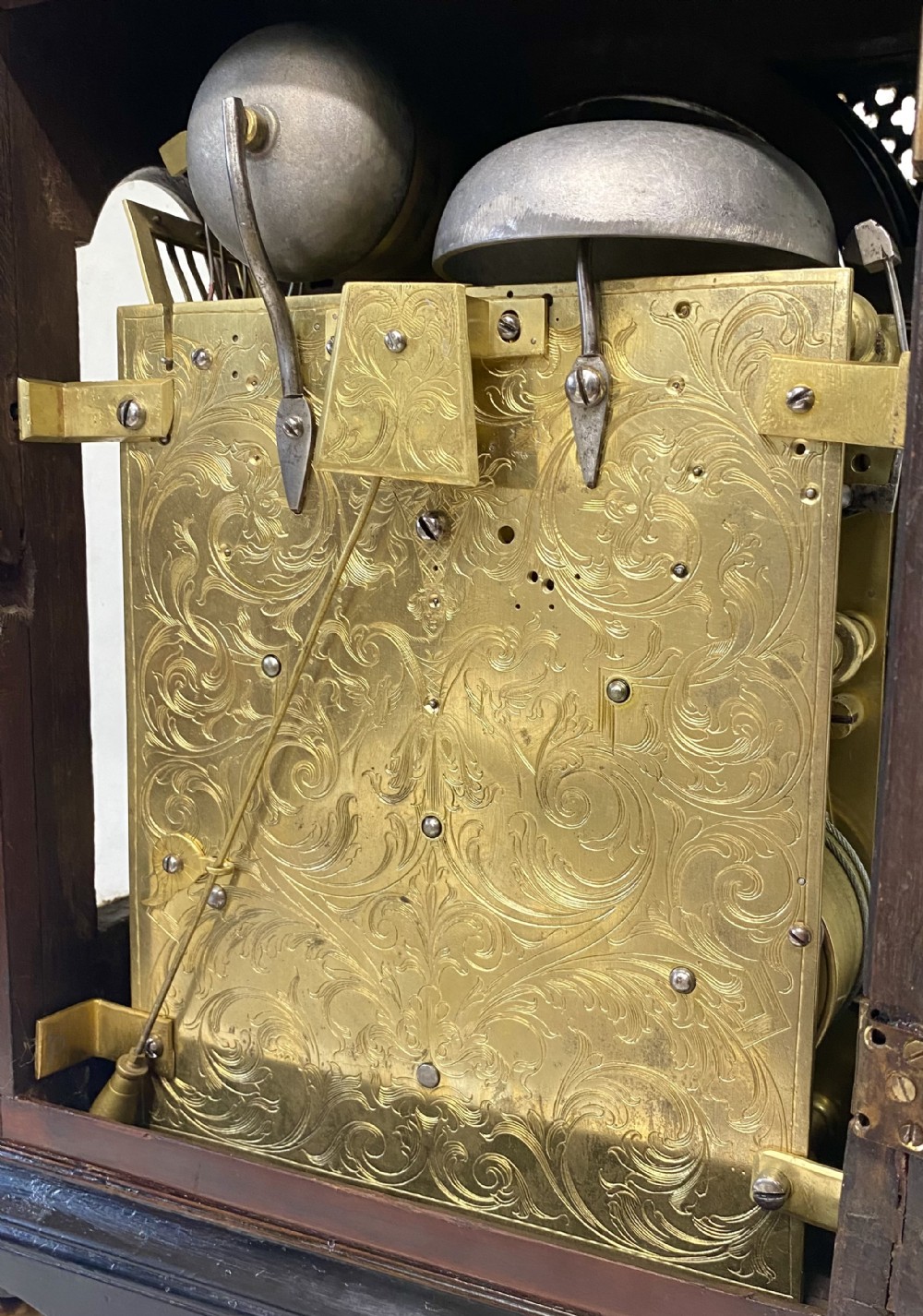
The movement is then wound from the front and accessed from the back. It is a triple fusee verge example of the upmost quality and is an extremely rare movement. The clock ticks away as it should and has a wonderful sound. The clock then strikes once on the quarter past, twice on the half past, three times on the quarter to and 4 times on the hour musically as well as the number of hours on the hour. The clock also has a pull repeat feature for the number of hours to the right side. A truly stunning, quality movement as can be seen from the engraving to the back plate and the fact that it is five pillar.
The maker “Steven Asselin London” is recorded in Baillie’s Clockmakers of the world as making Circa 1700 which mean that this particular example dates to Circa 1715.
It measures approximately:
19” / 48cm Tall With The Handle Up.
10” / 25.5cm Wide.
6.25” / 16cm Deep.
N Wilson Antiques Clocks has dated this piece to the 18th Century.
You can view the stock and full dealer information on the N Wilson Antiques Clocks Profile Page

Antique Triple Fusee Verge Quarter Striking Musical Bracket Clock Asselin London