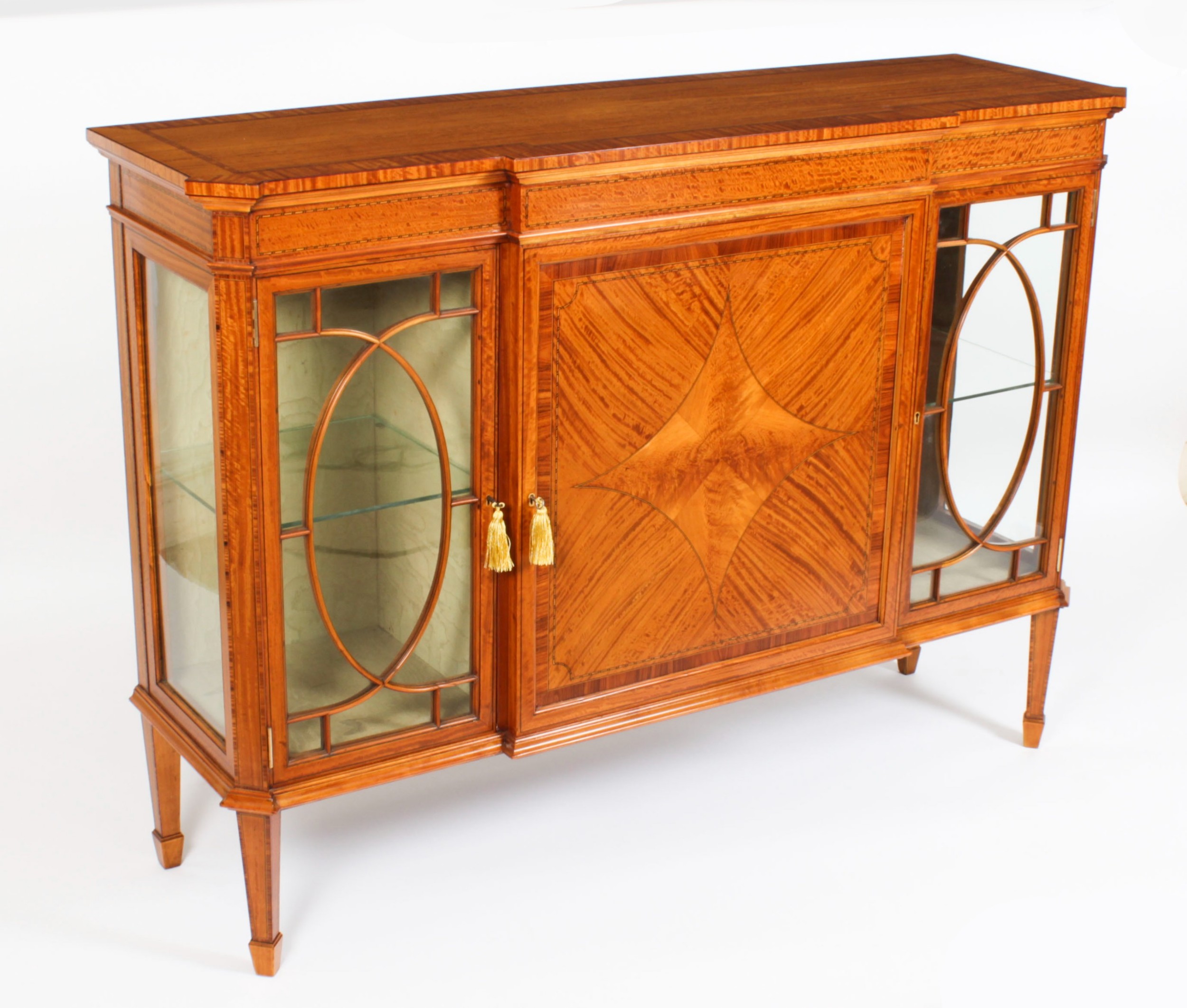
Regent Antiques has dated this piece to the Victorian era.
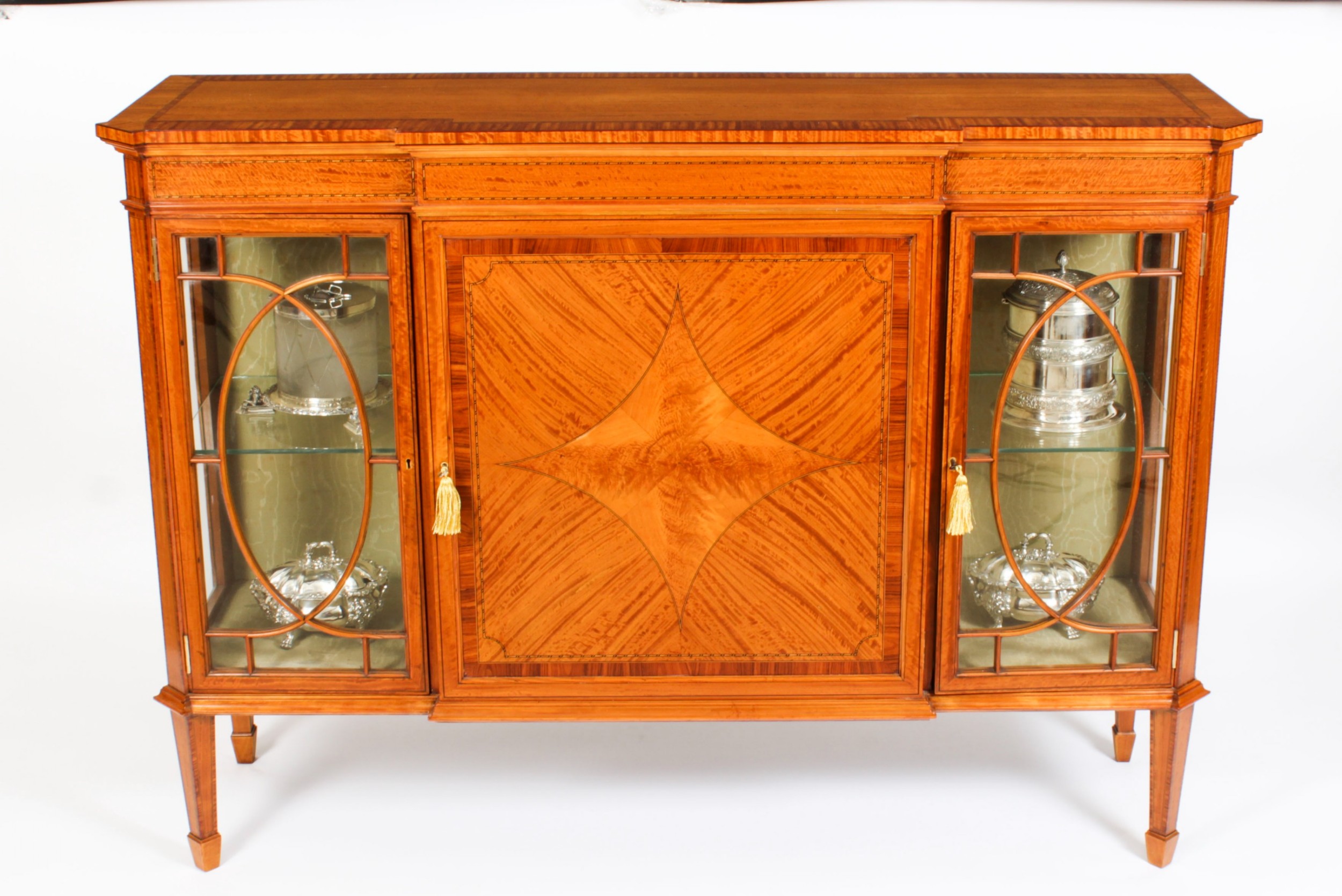
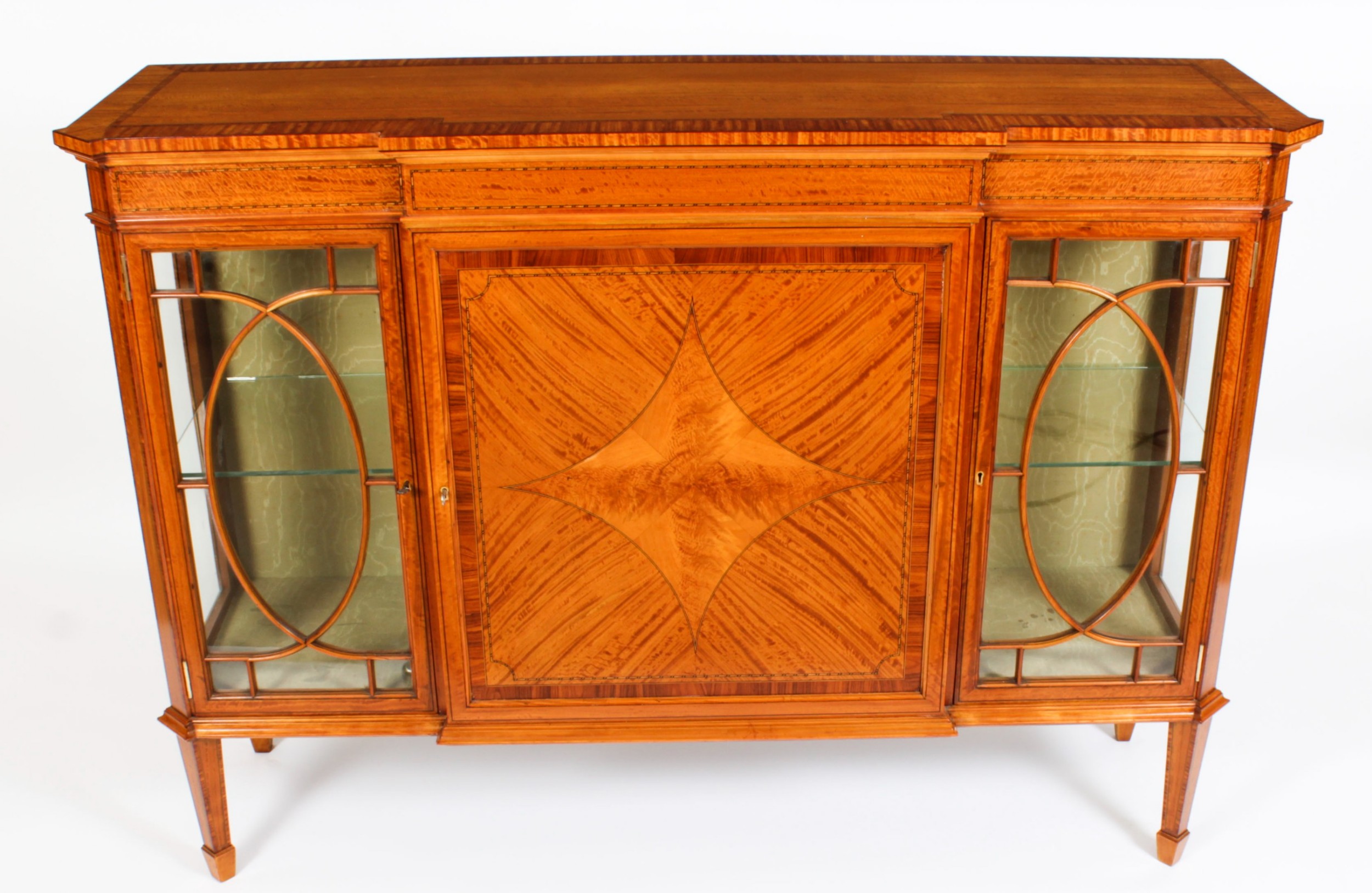
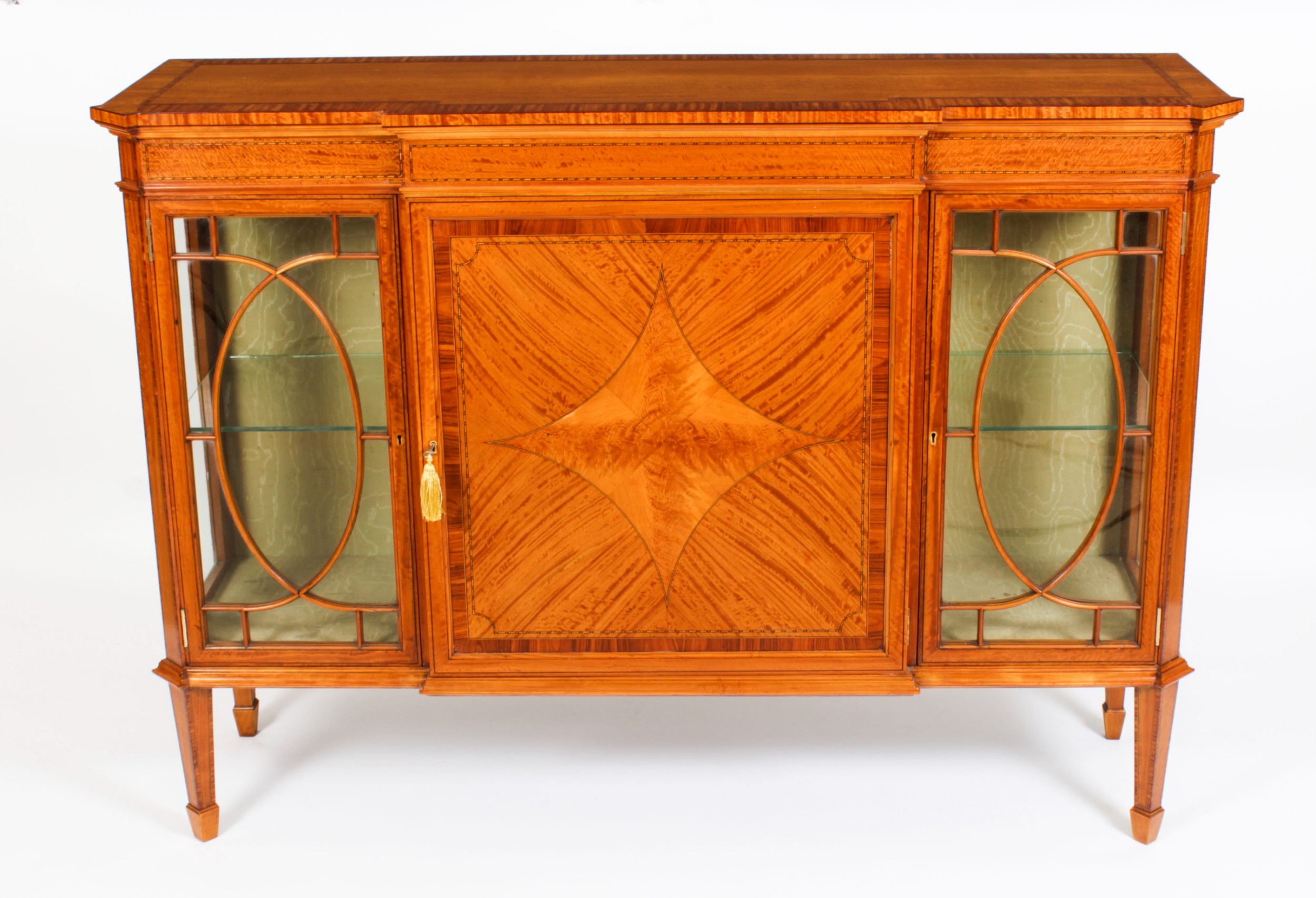
Oozing sophistication and charm, this cabinet is the absolute epitome of Victorian high society.
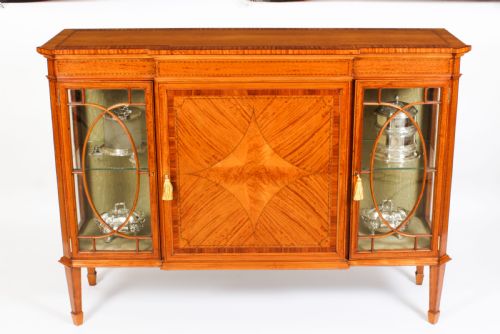
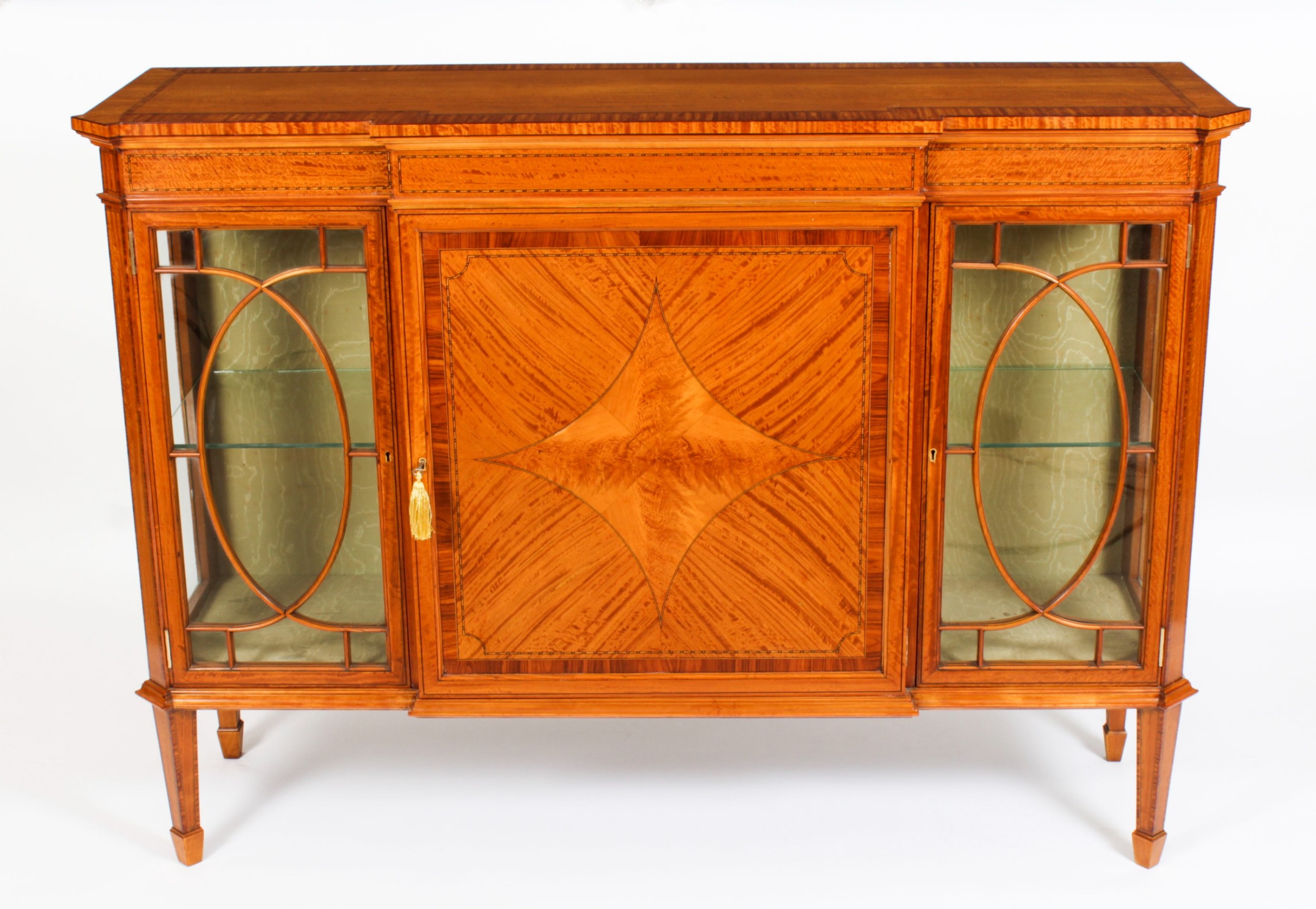
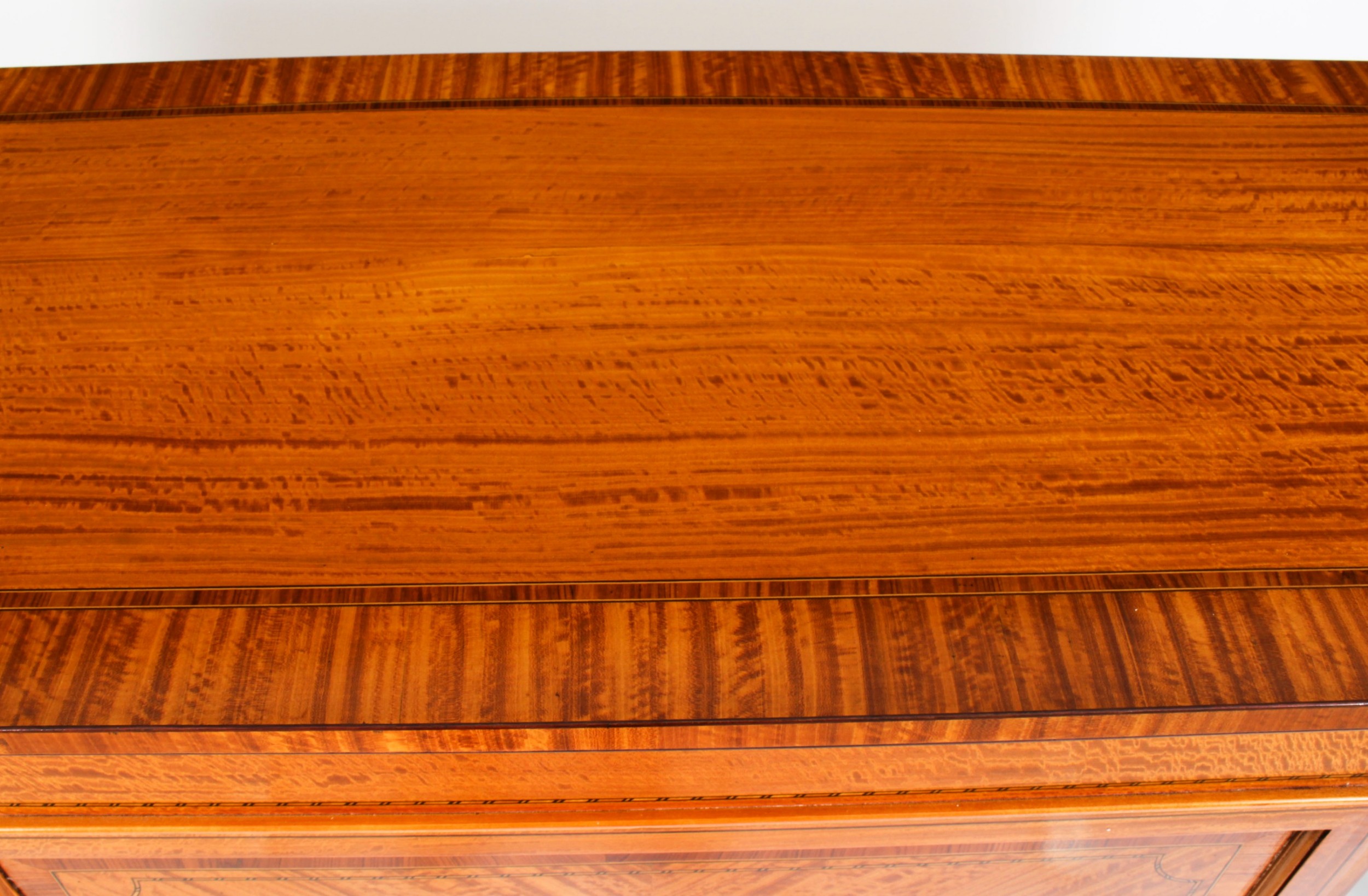
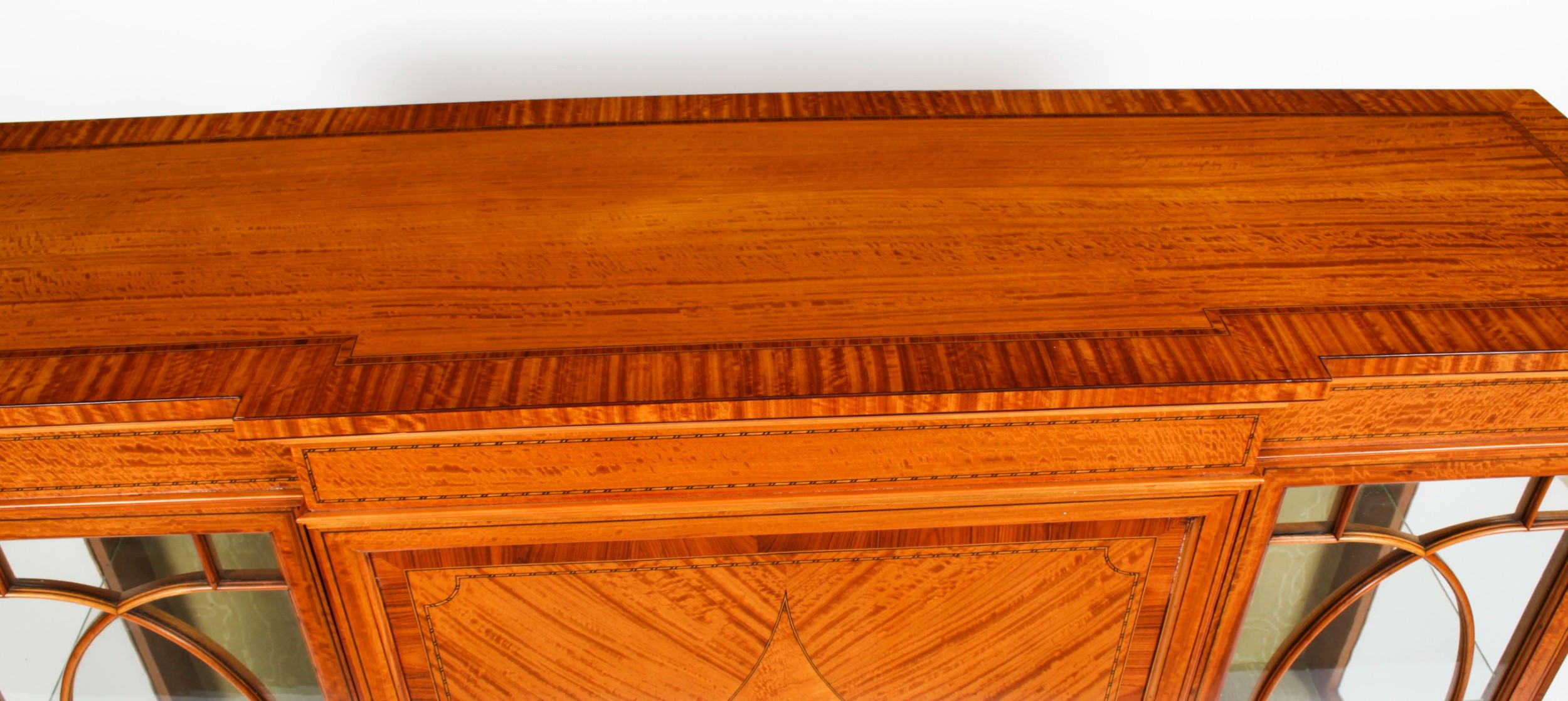
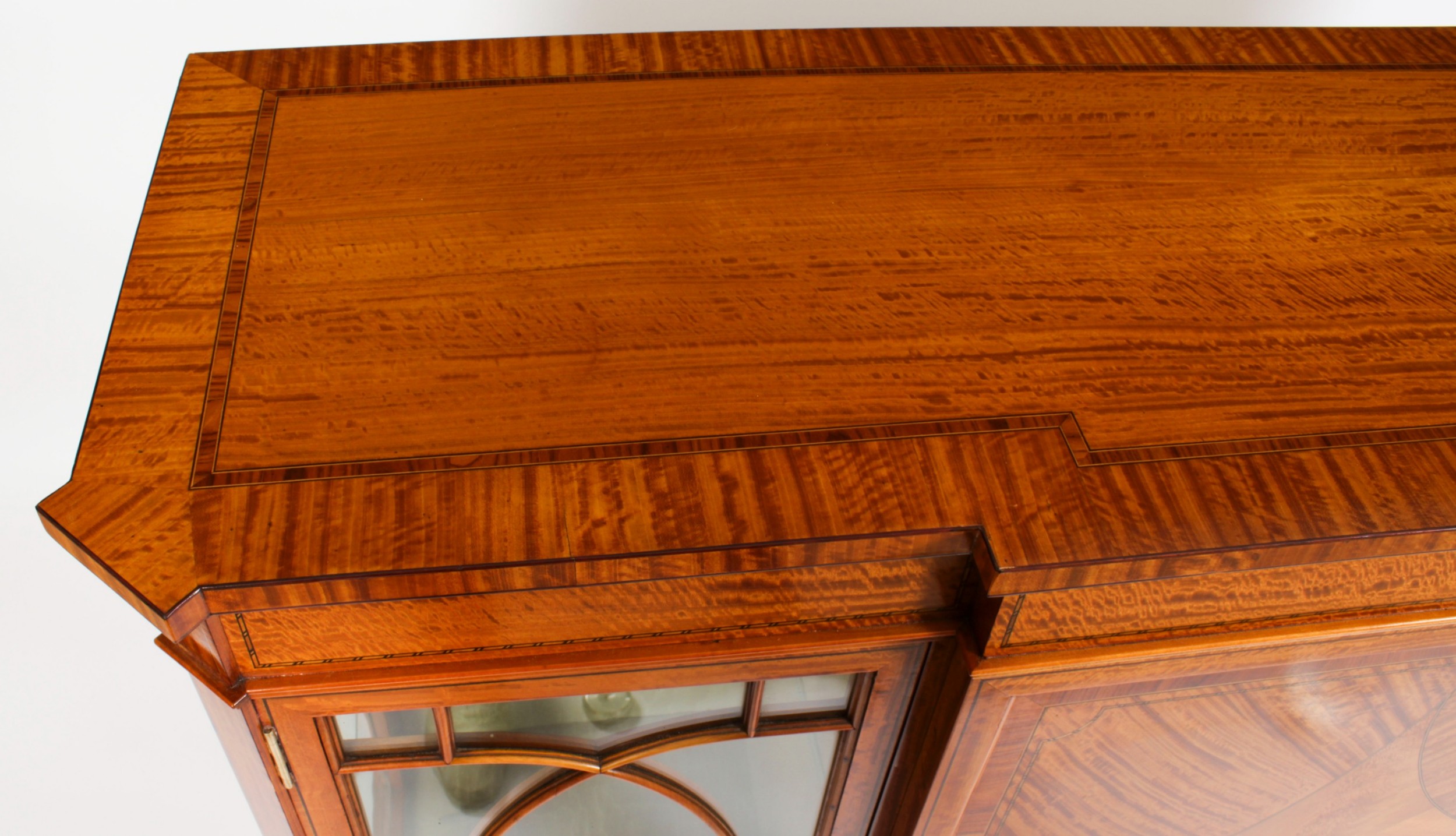
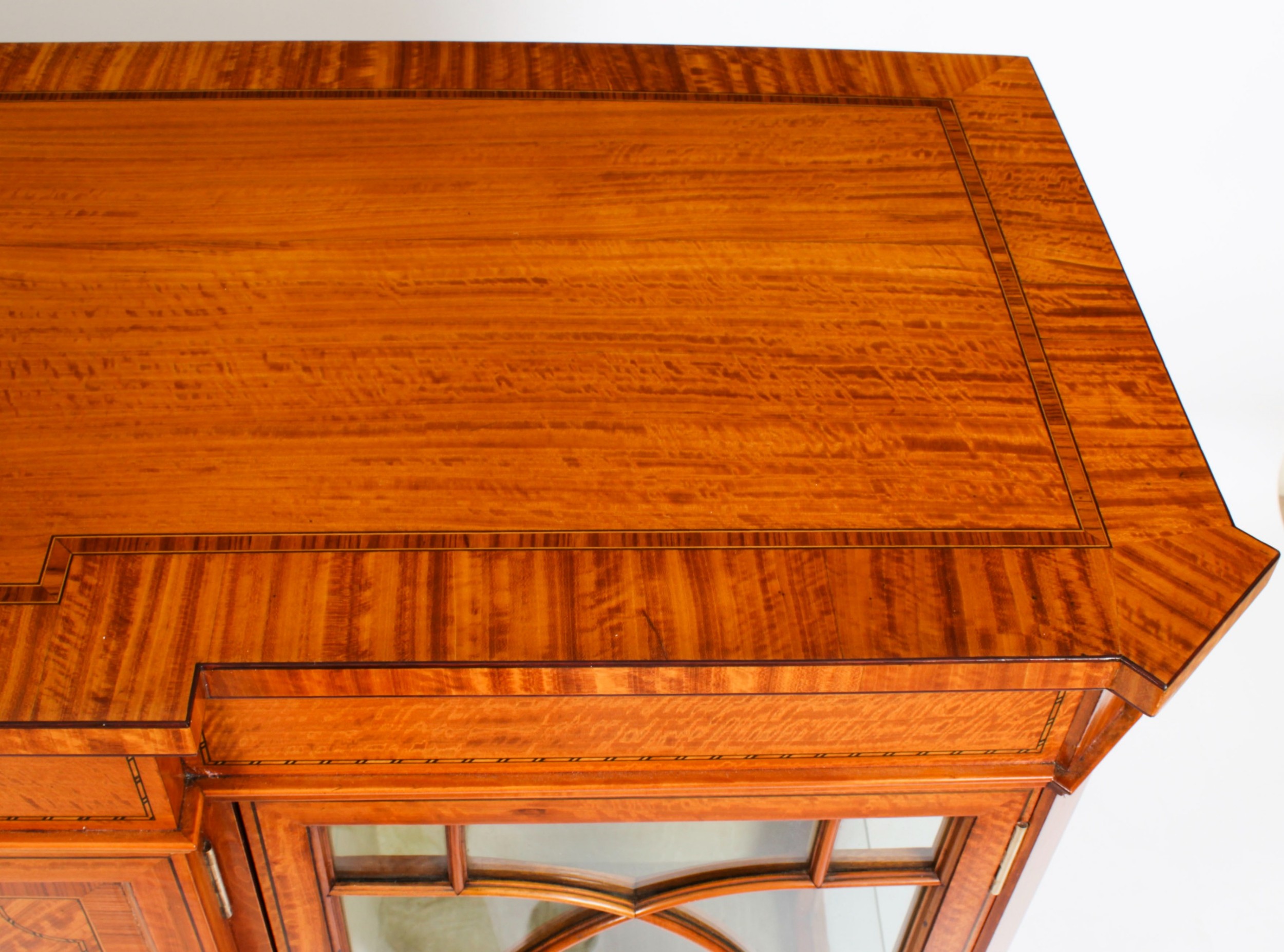
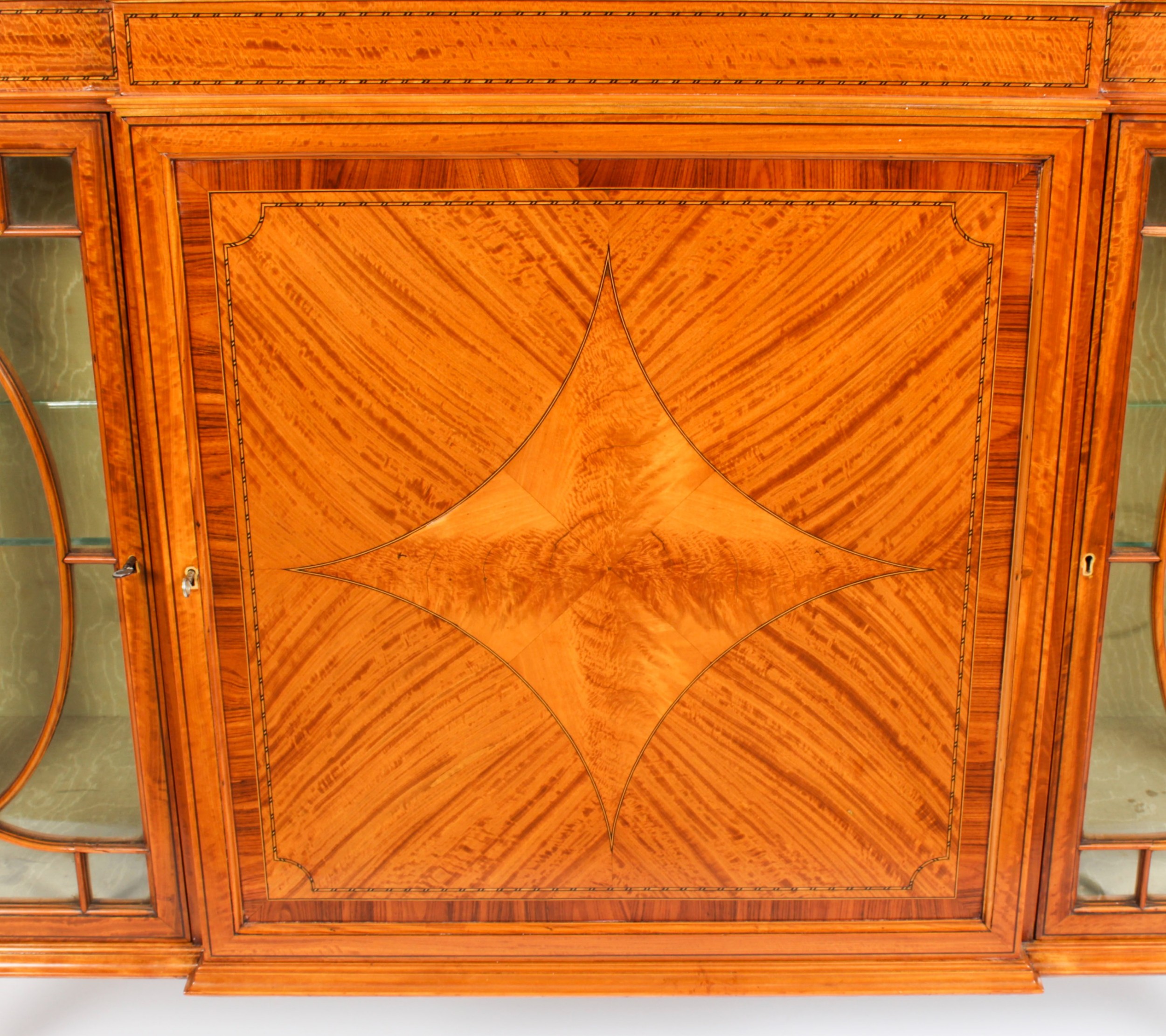
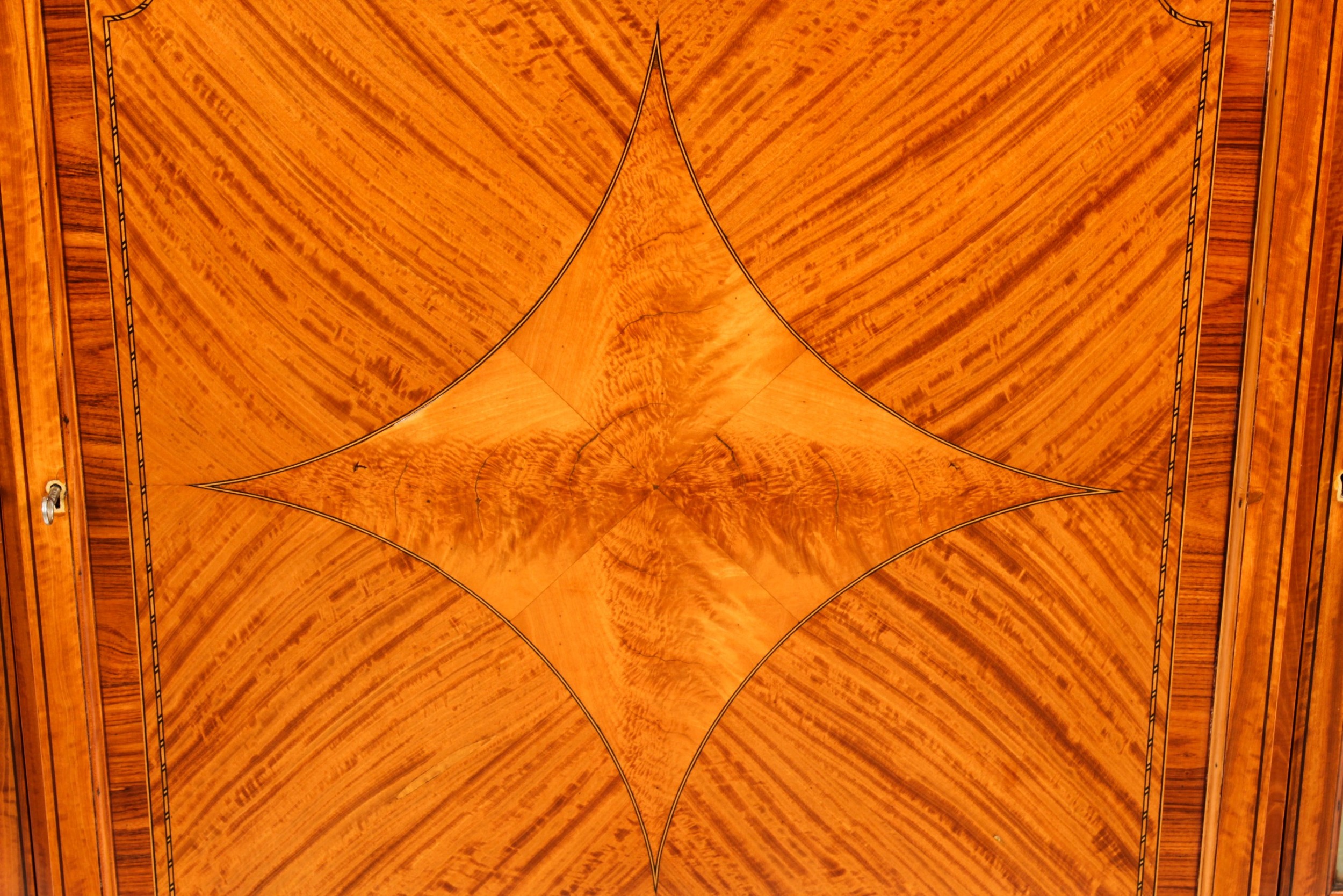
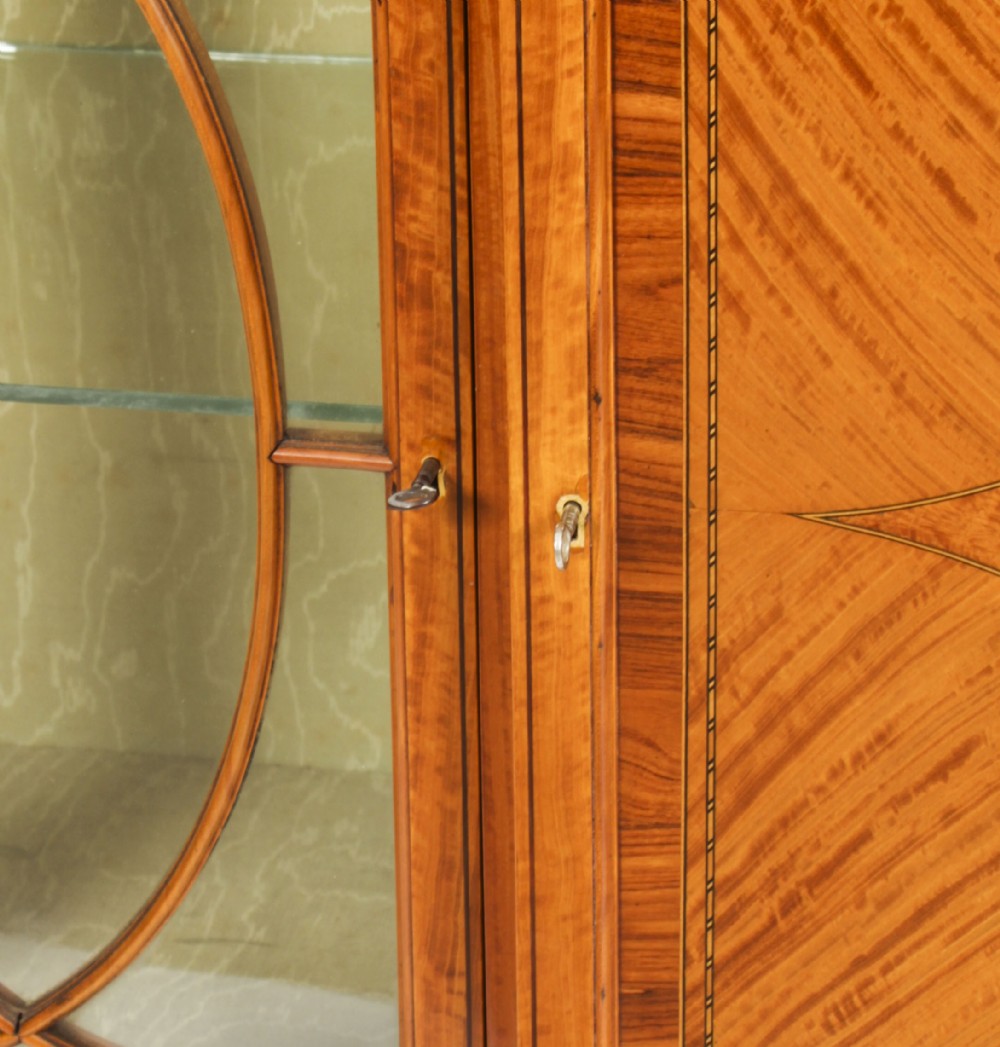
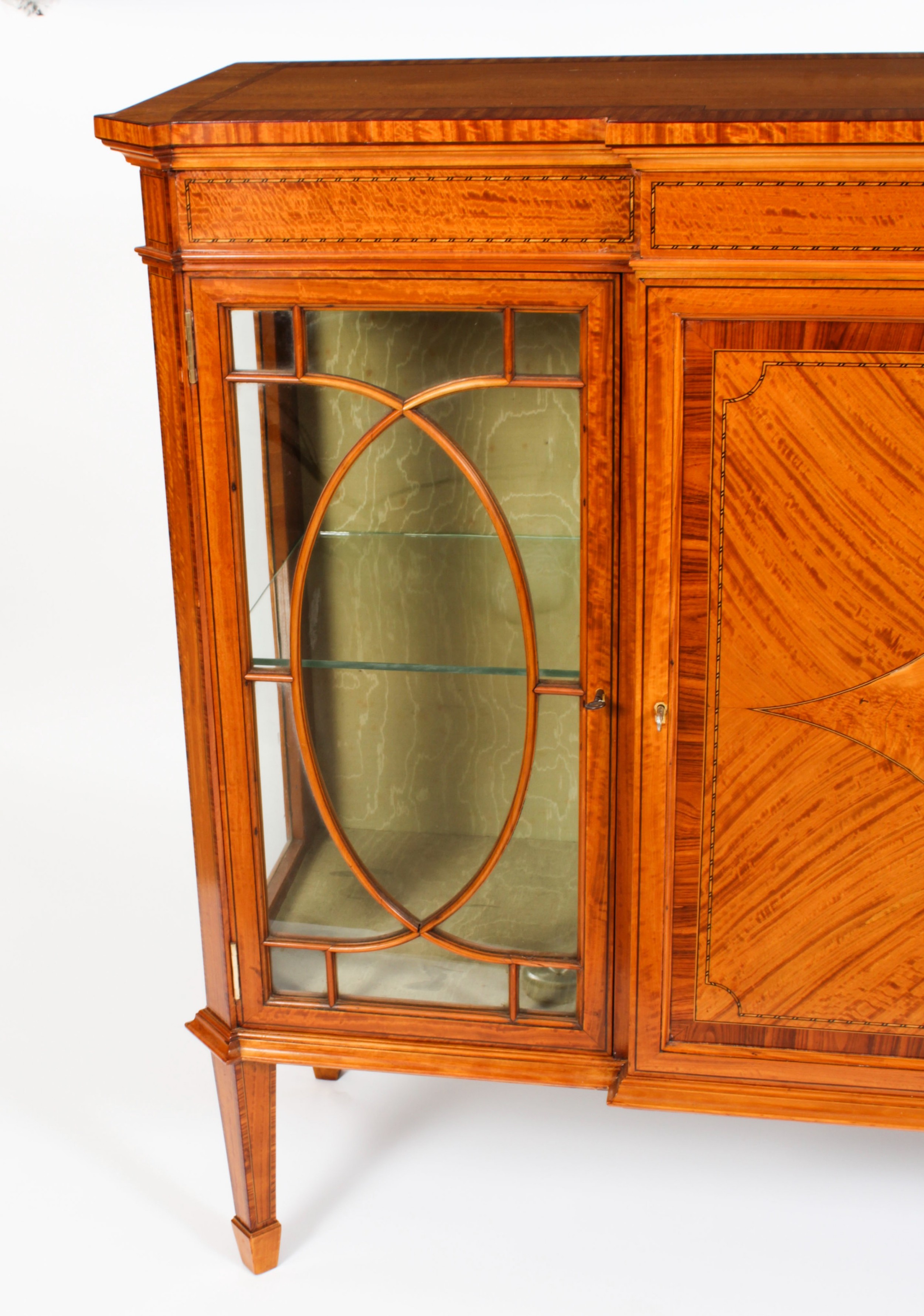
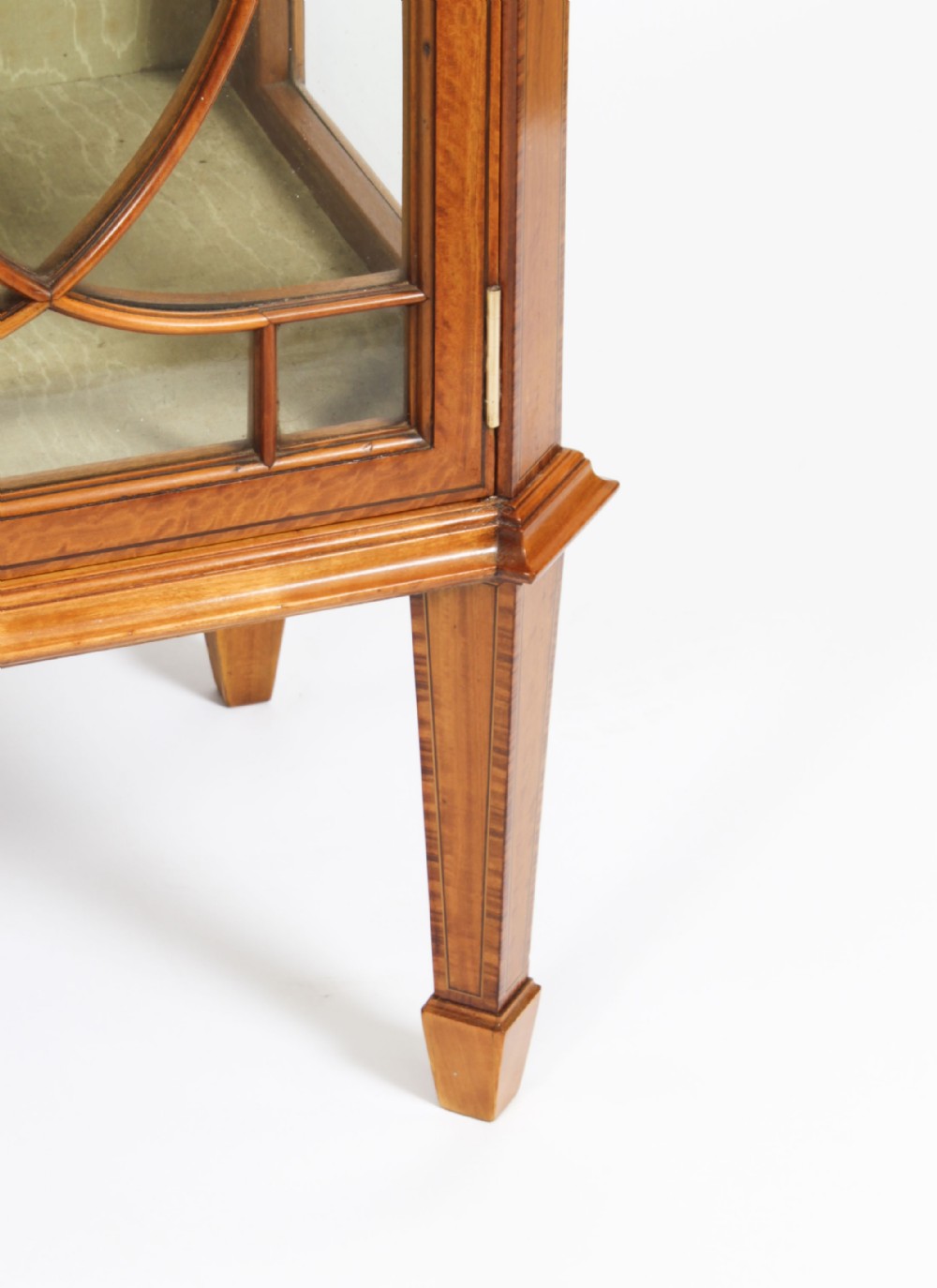
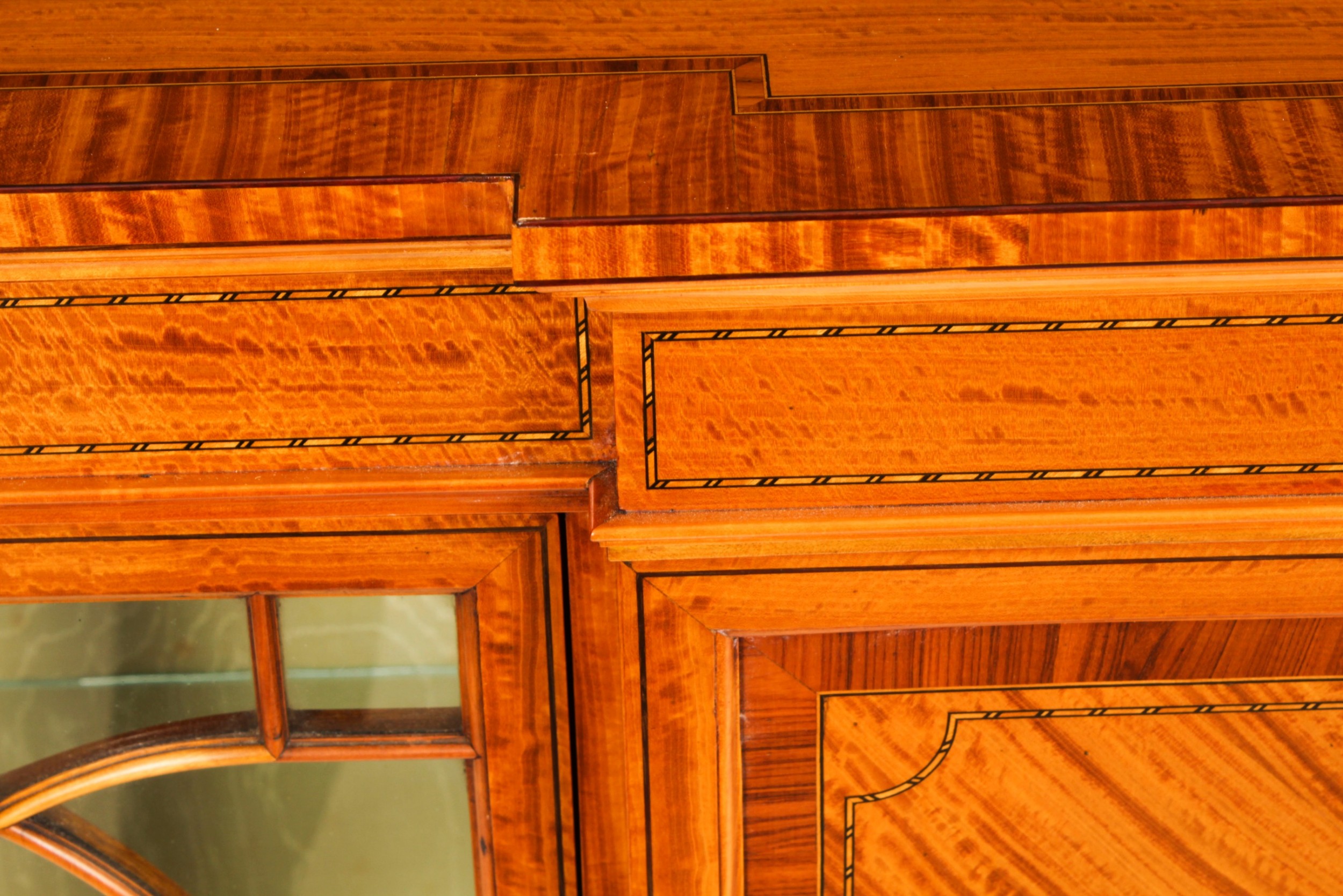
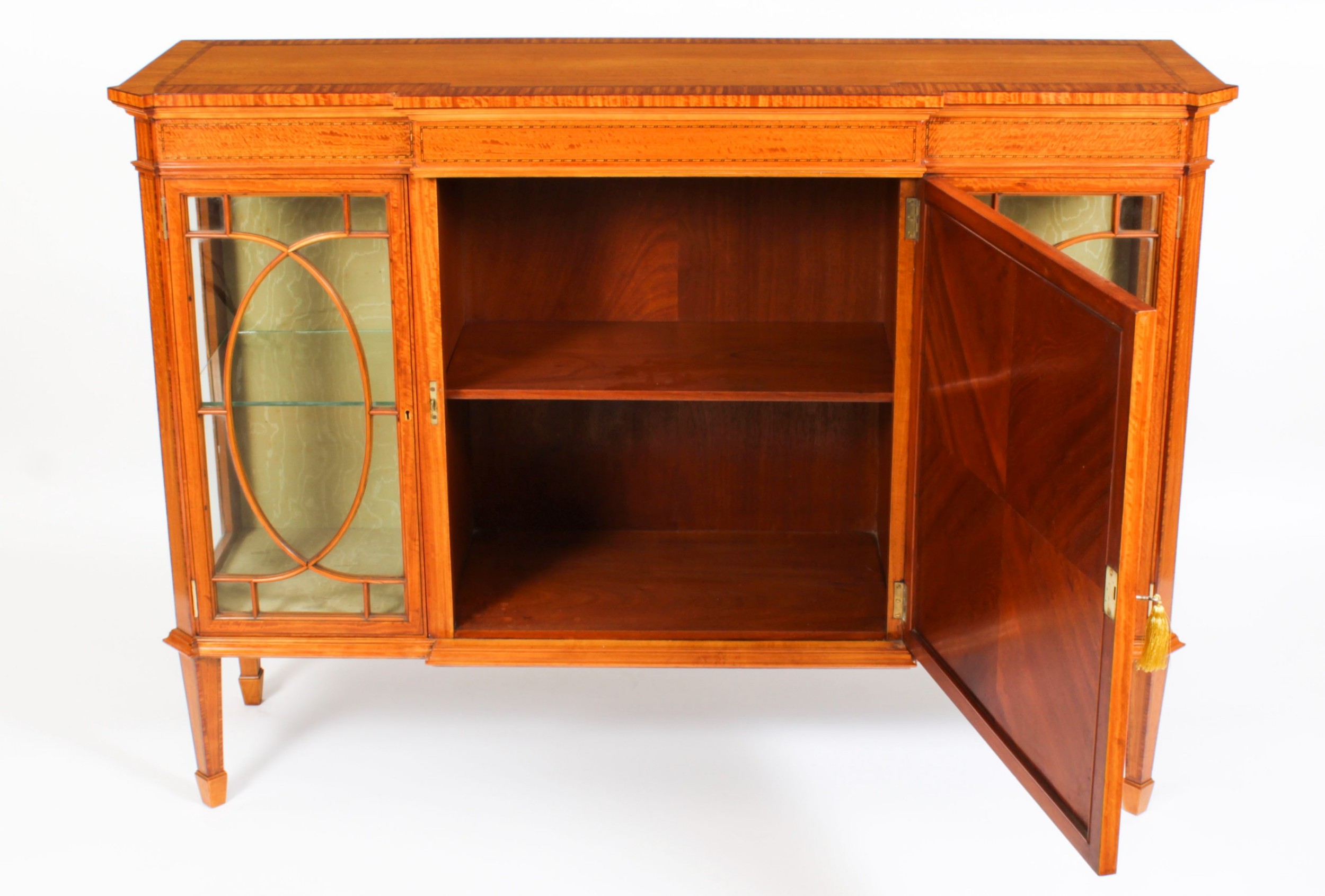
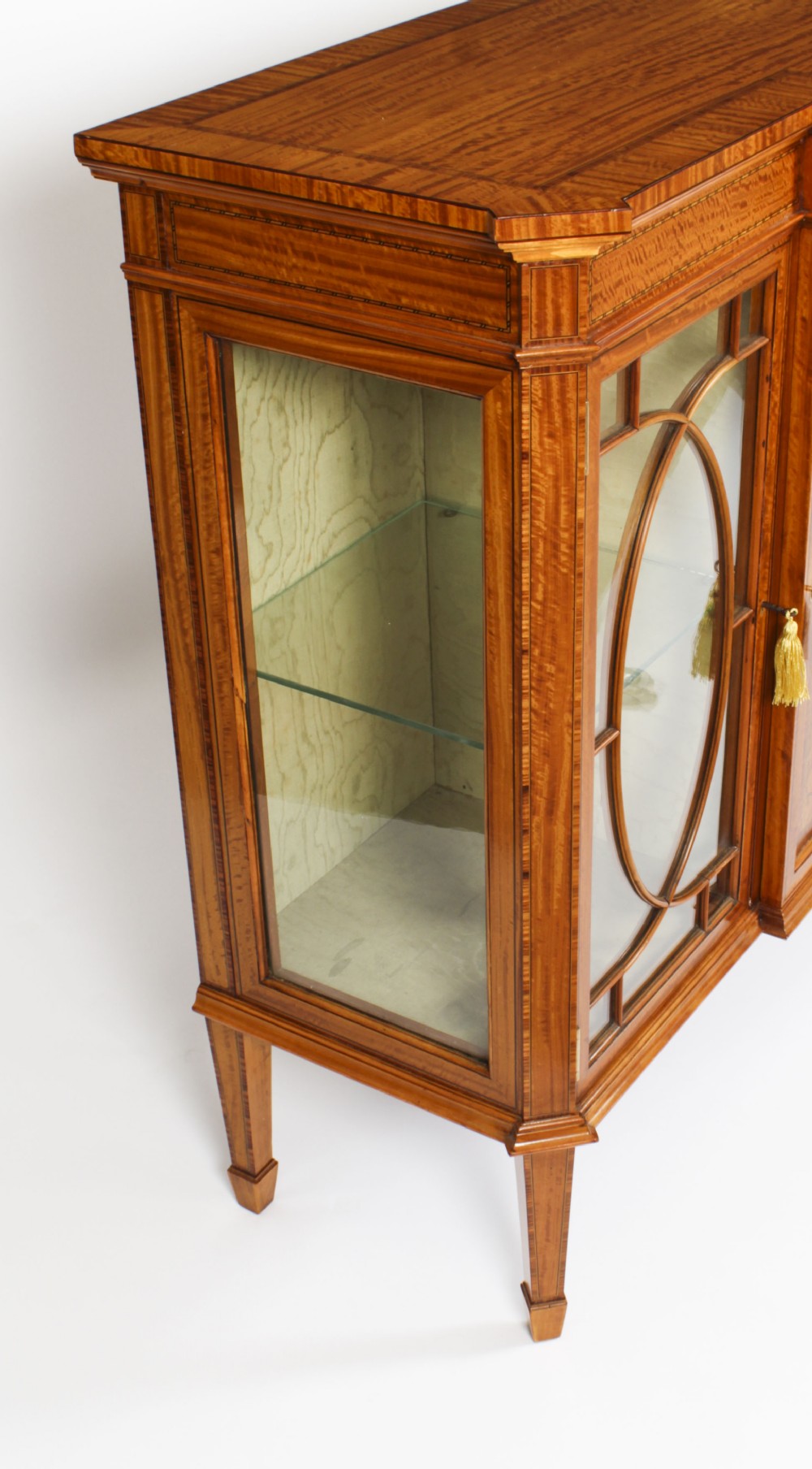
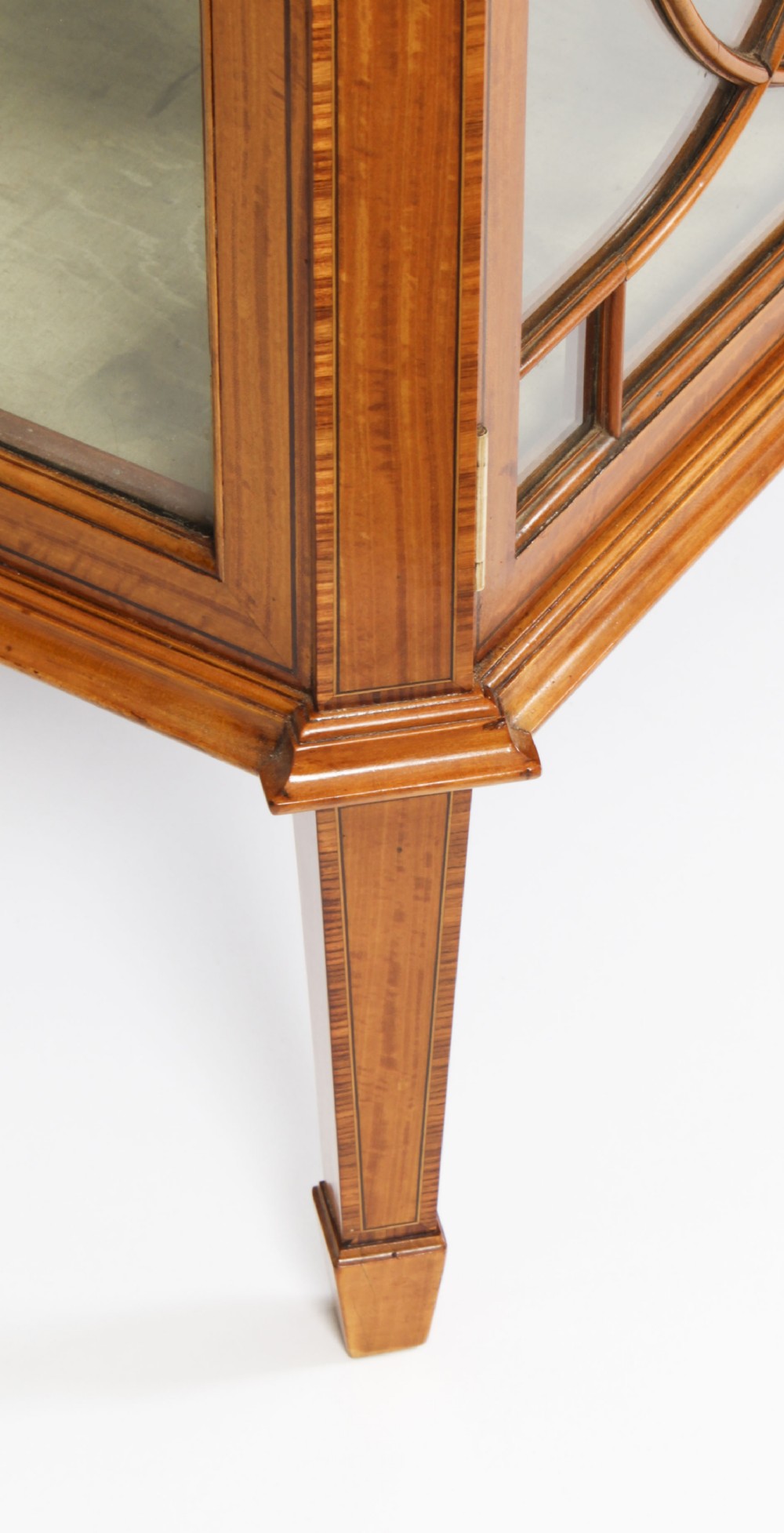
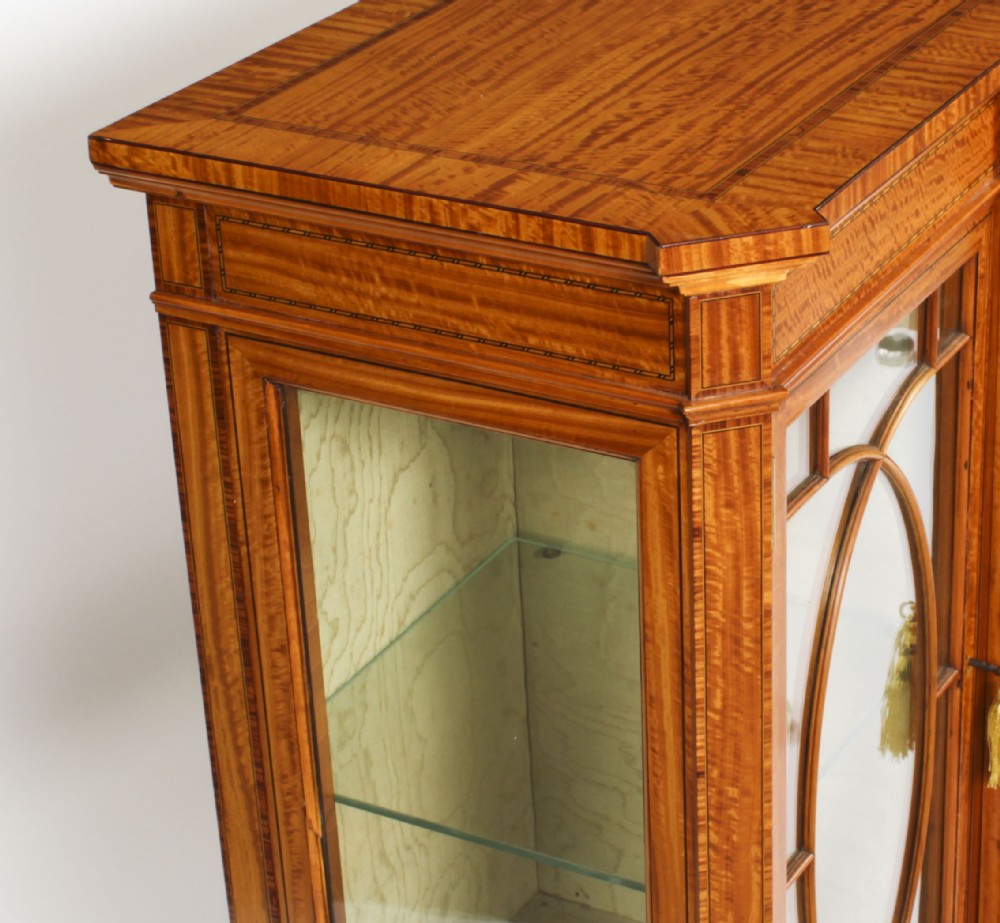
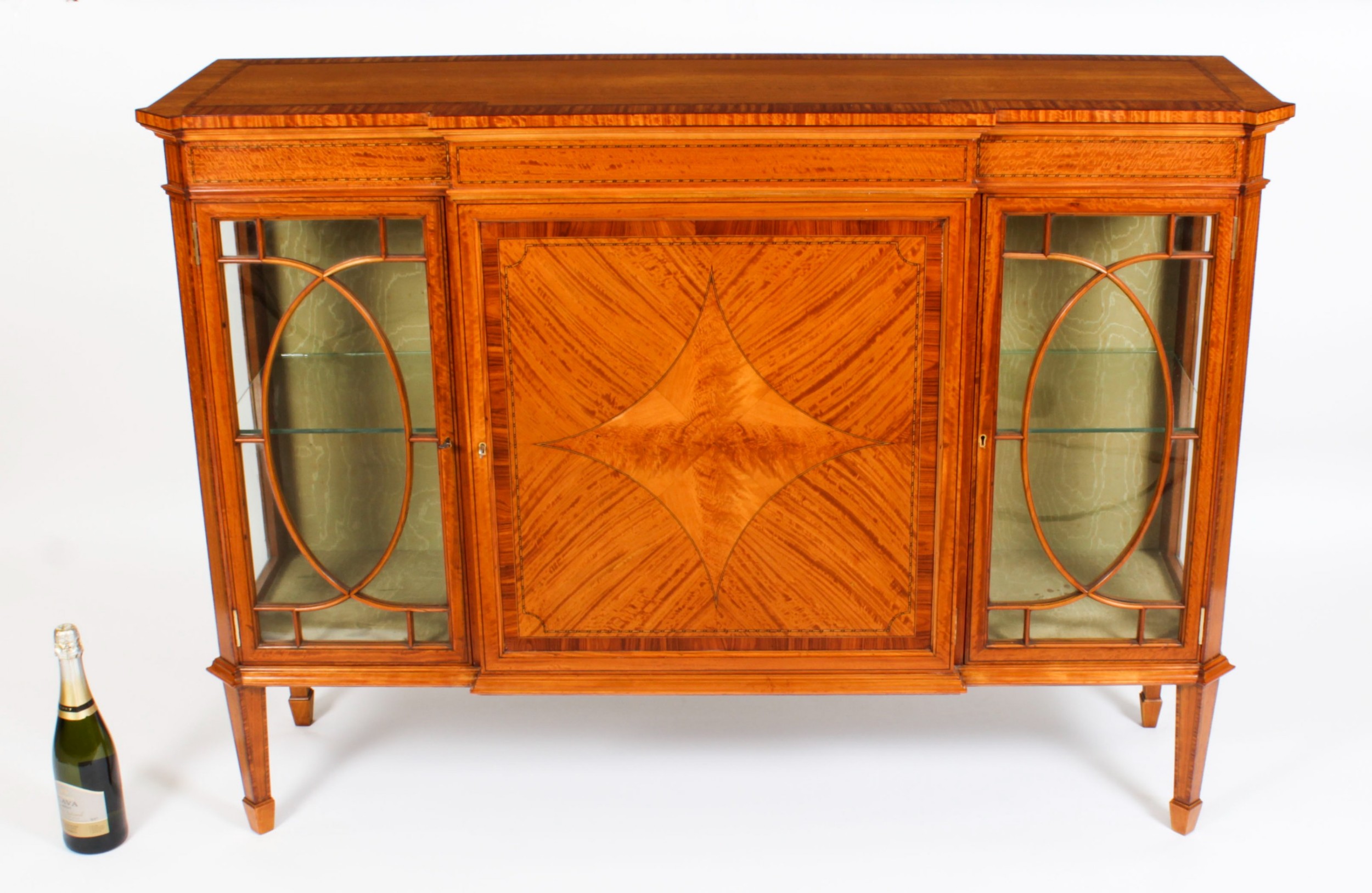
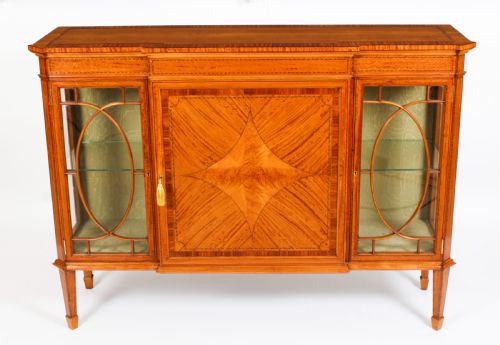
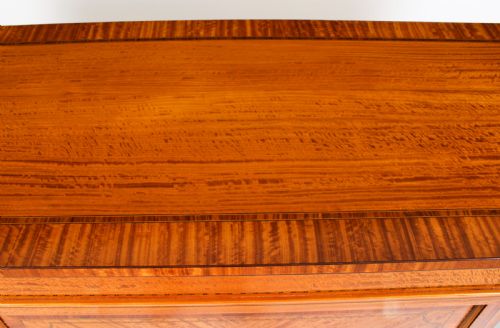
The entire piece highlights the unique and truly exceptional pattern of the satinwood extremely well. It has masterfully executed walnut crossbanding and line inlaid decoration.
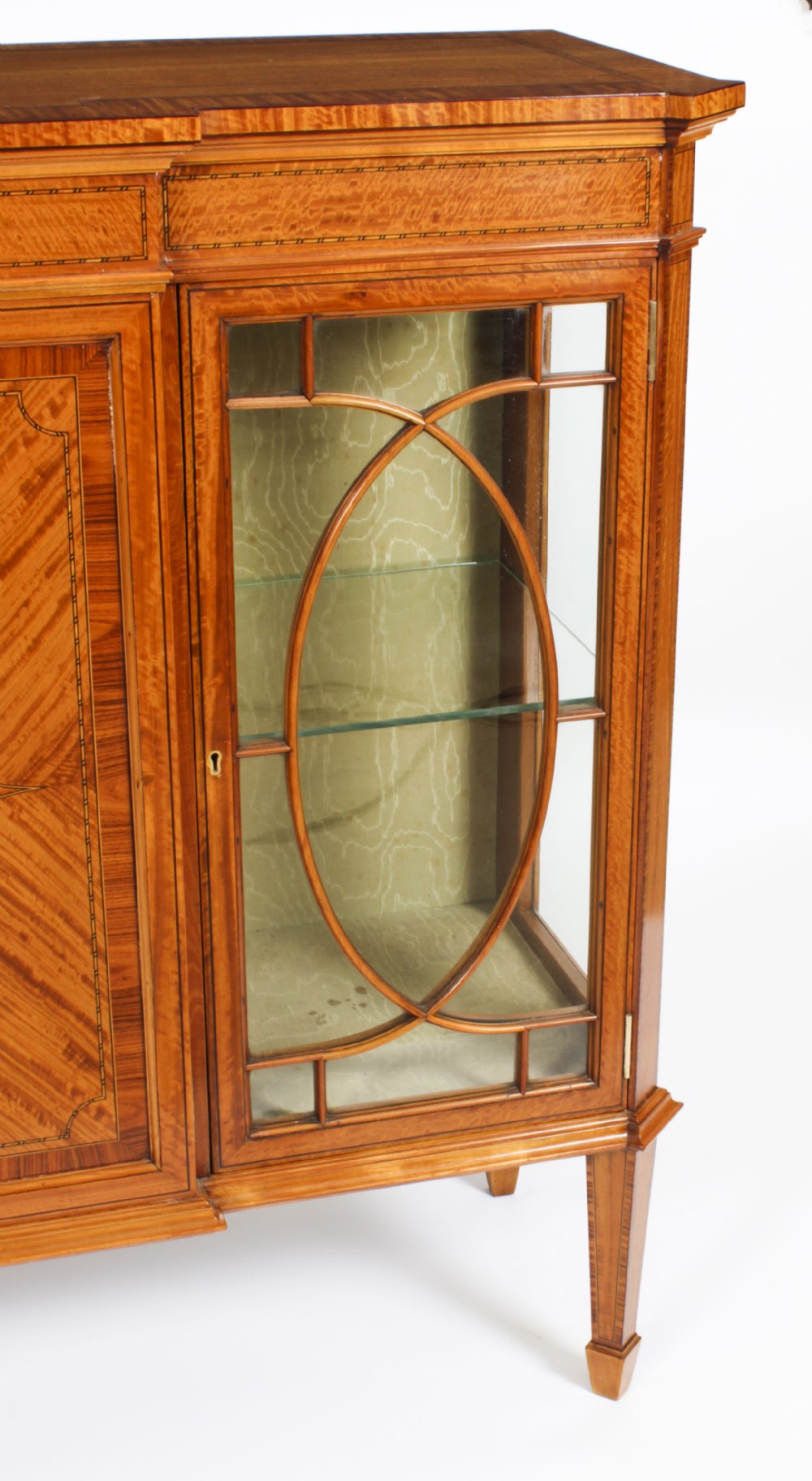
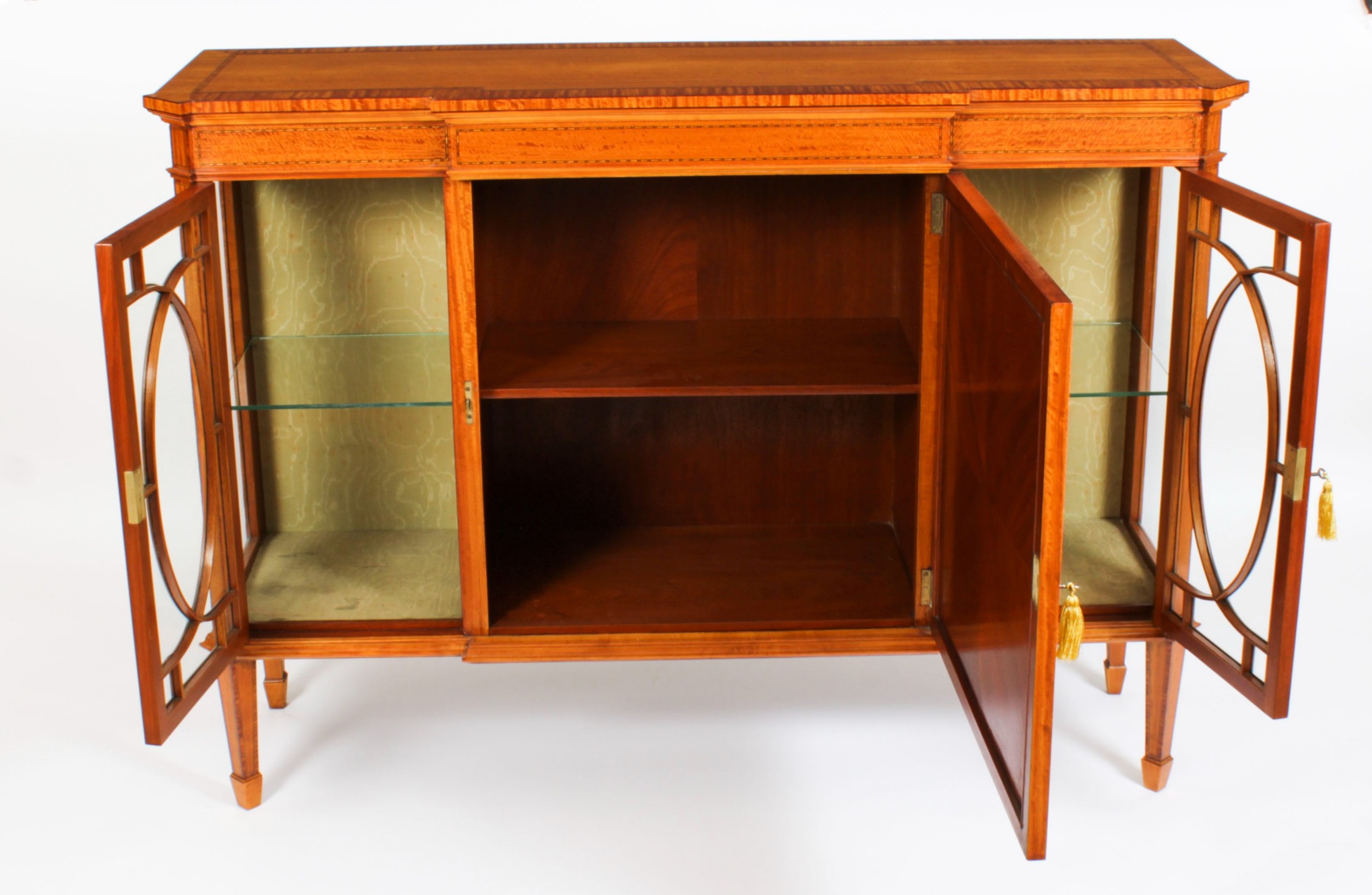
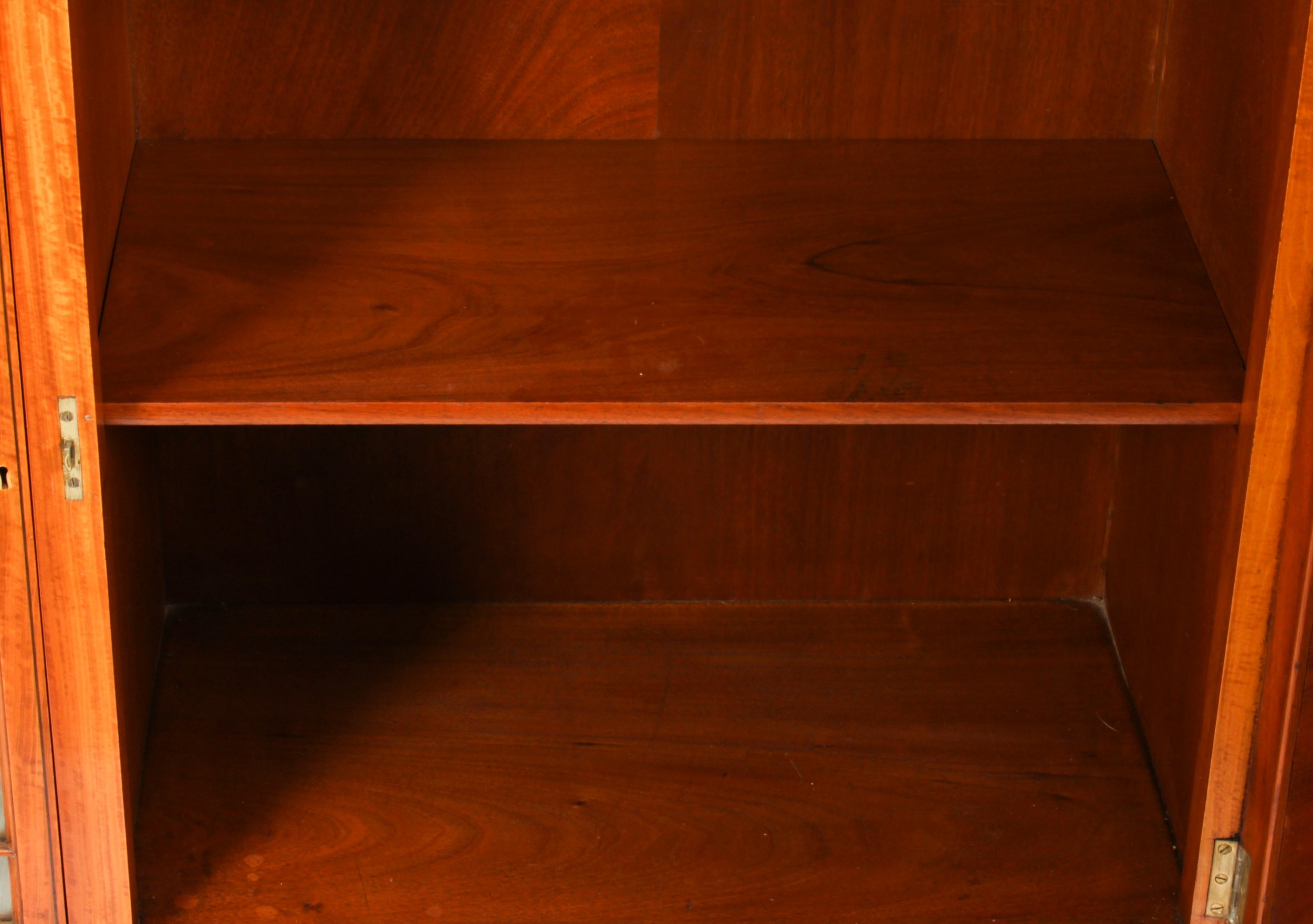
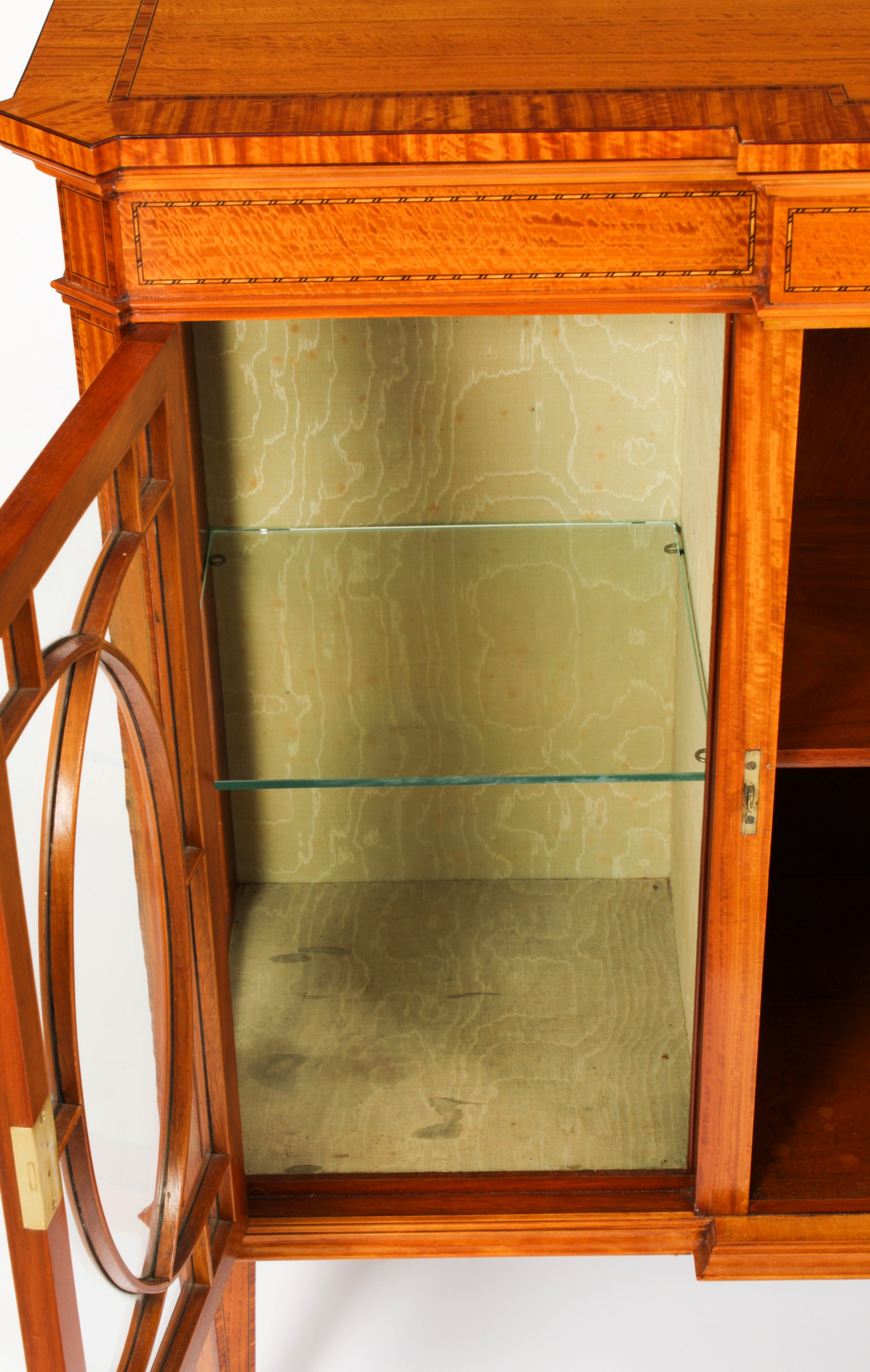
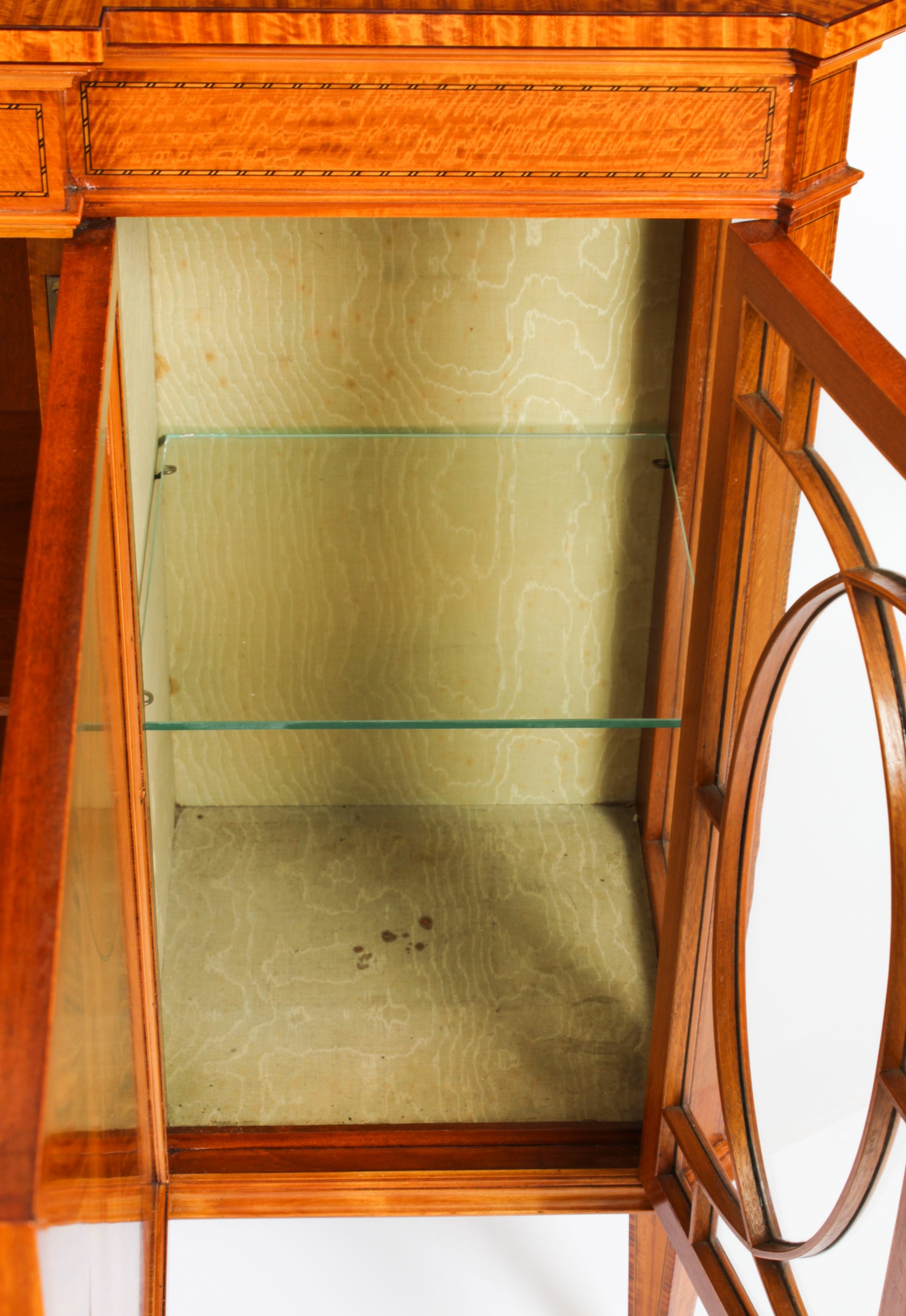
The central door opens to reveal a spacious cupboard with a central shelf, the astragal glazed end doors each open to reveal a glass shelf.
It has a printed paper label to the verso for Sirl Depositories, Windsor and Ascot.
Complete with working locks and key.
Condition:
In excellent condition having been beautifully restored in our workshops, please see photos for confirmation.
Dimensions in cm:
Height 98 x Width 136 x Depth 40.5
Dimensions in inches:
Height 3 foot, 3 inches x Width 4 foot, 5 inches x Depth 1 foot, 4 inches
Satinwood
is a hard and durable wood with a satinlike sheen, much used in cabinetmaking, especially in marquetry. It comes from two tropical trees of the family Rutaceae (rue family). East Indian or Ceylon satinwood is the yellowish or dark-brown heartwood of Chloroxylon swietenia.
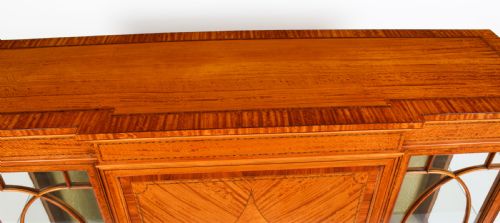
The lustrous, fine-grained, usually figured wood is used for furniture, cabinetwork, veneers, and backs of brushes. West Indian satinwood, sometimes called yellow wood, is considered superior. It is the golden yellow, lustrous, even-grained wood found in the Florida Keys and the West Indies.
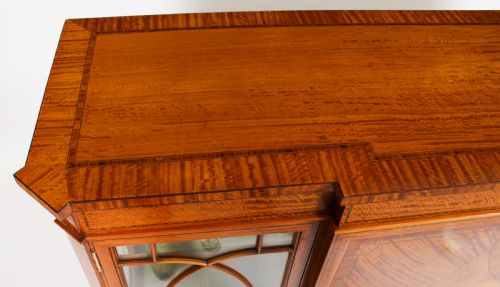
It has long been valued for furniture. It is also used for musical instruments, veneers, and other purposes. Satinwood is classified in the division Magnoliophyta, class Magnoliopsida, order Sapindales, family Rutaceae.
Our reference: A3207
Regent Antiques has dated this piece to the Victorian era.
We specialise in english and continental furniture, silver, porcelain and decorative items.
You can view the stock and full dealer information on the Regent Antiques Profile Page
Regent Antiques is a registered member of LAPADA CINOA
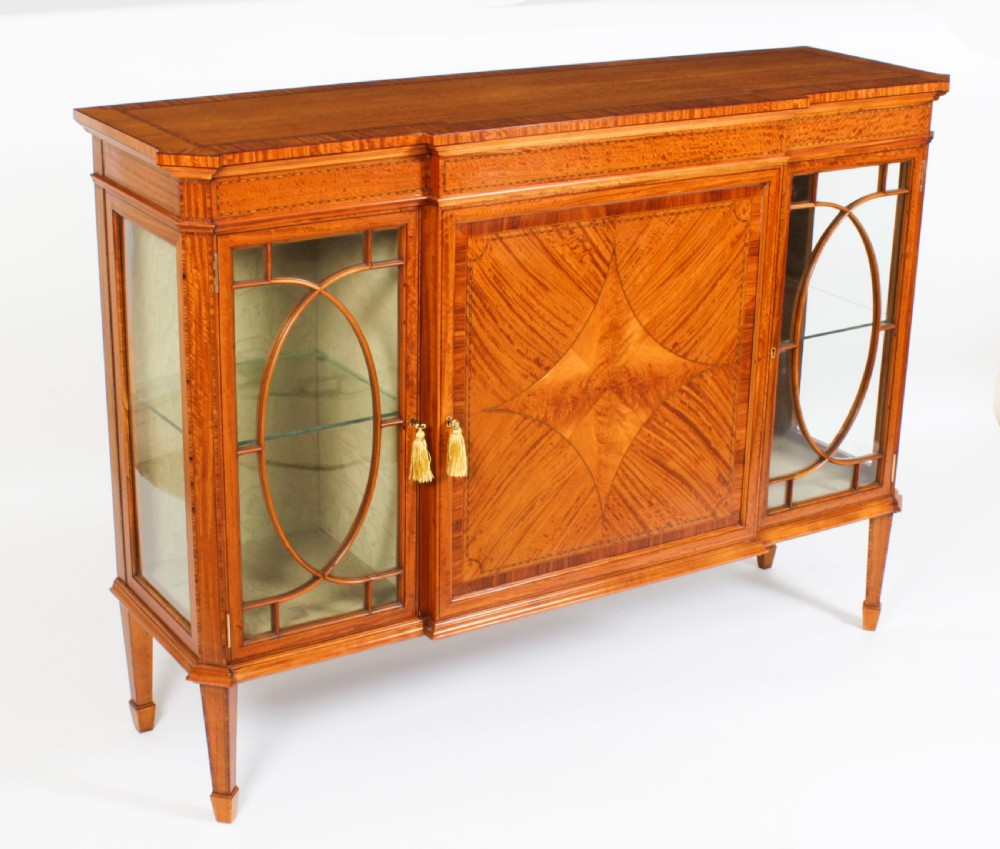
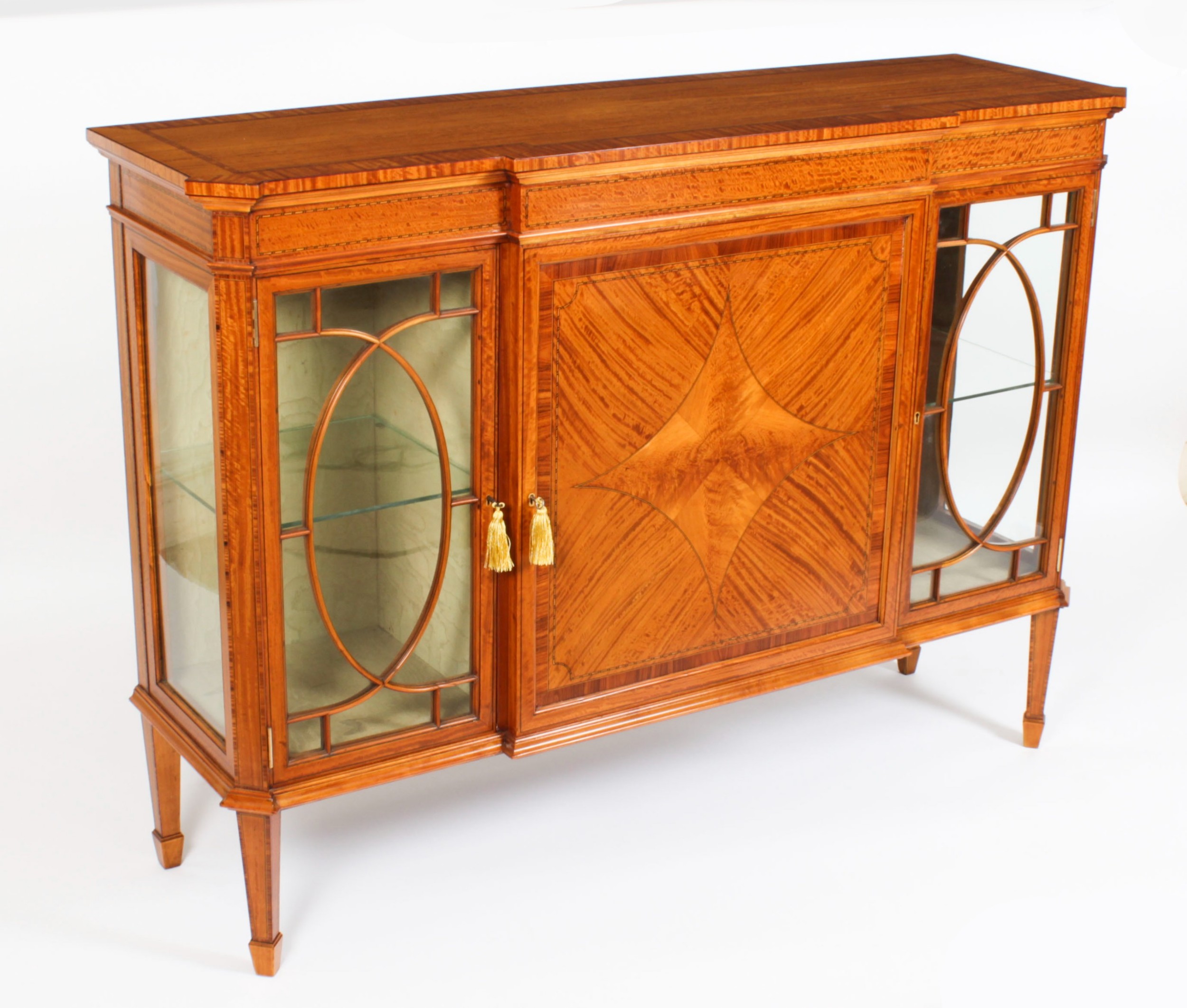
Antique Victorian Satinwood Breakfront Display Cabinet 19th C