35,597  PAGES BROWSED TODAY PAGES TODAY 90  ANTIQUES UPLOADED TODAY NEW ARRIVALS
ID #SA982322
FOR SALE
£2,800
Email
Save
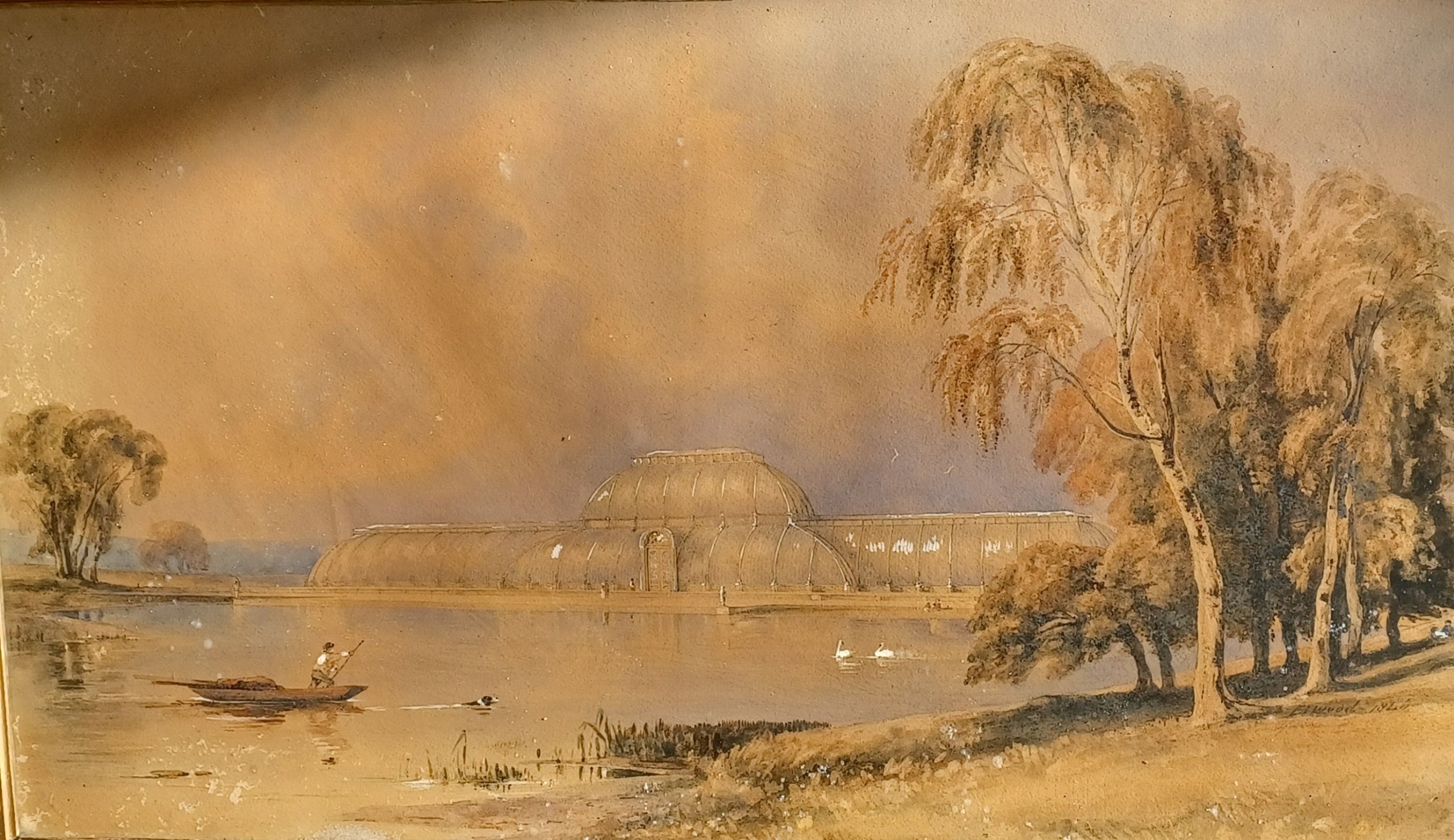
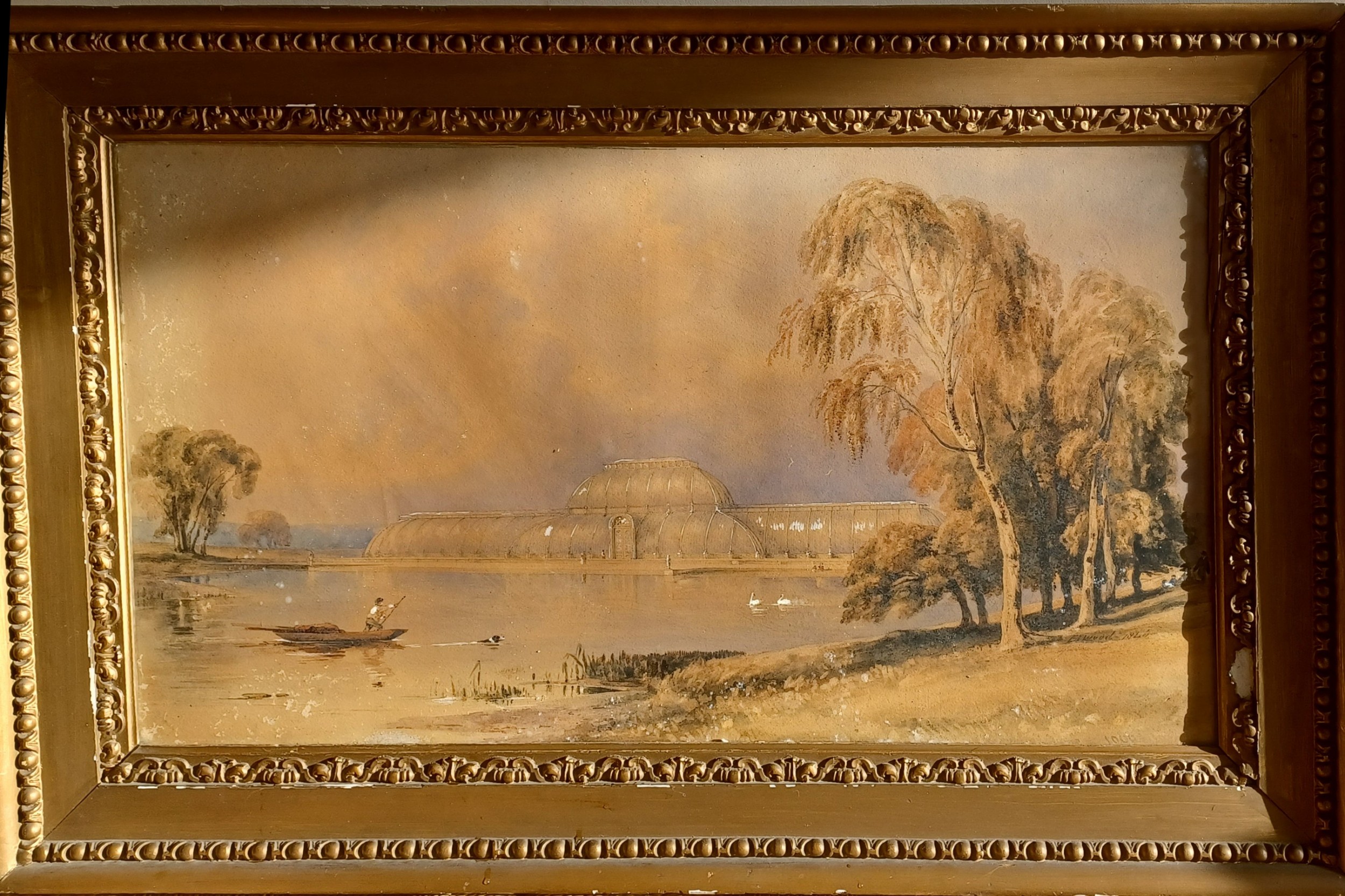
English School 19th Century the Palm House, from the Pond, Kew Gardens London
Artware Fineart
for sale €3,276     $3,556
£2,800

Artware Fineart

Sellingantiques Verified Since Sep 2008
View Dealers Stock Page
Id #SA982322
PDF SHARE
SAVE

English School 19th Century the Palm House, from the Pond, Kew Gardens London

19th century
For Sale by Artware Fineart
Description

English School 19th Century

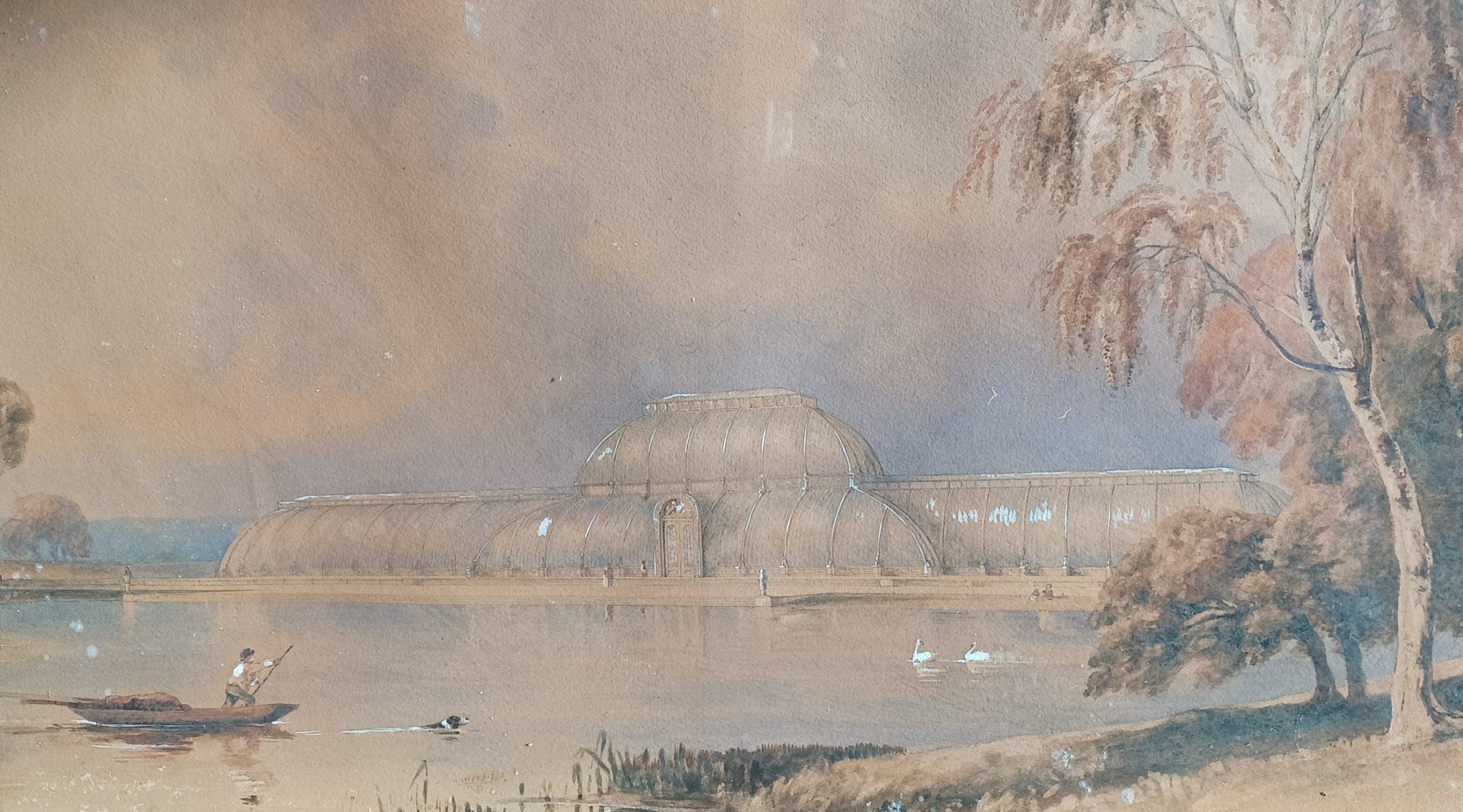
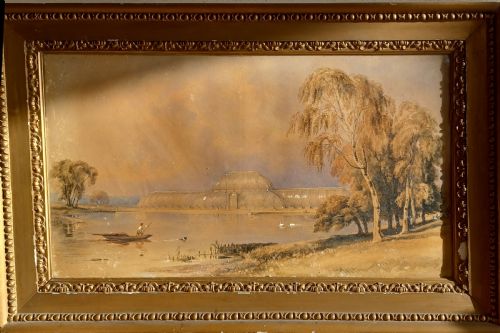
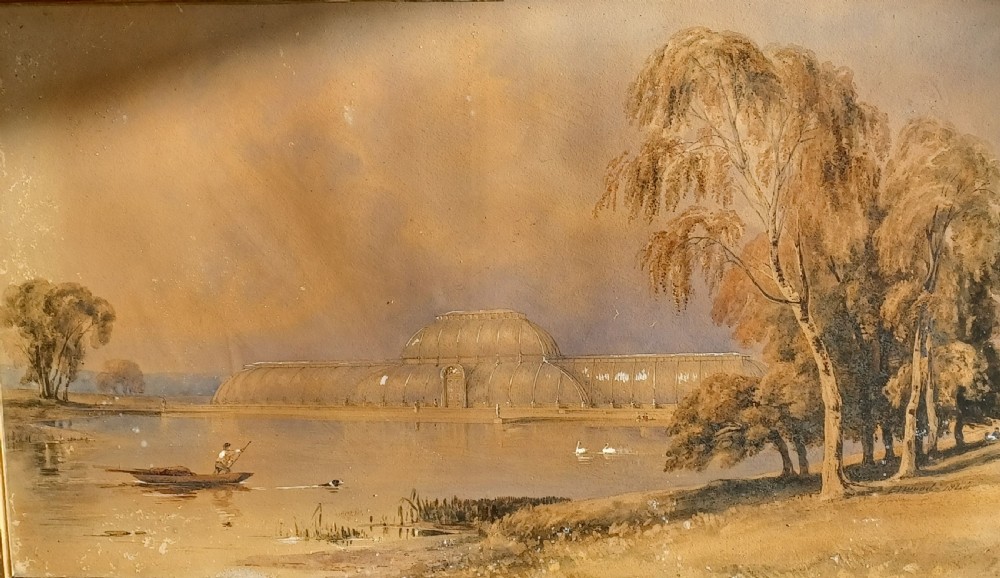
The Palm House, from The Pond, Kew Gardens London

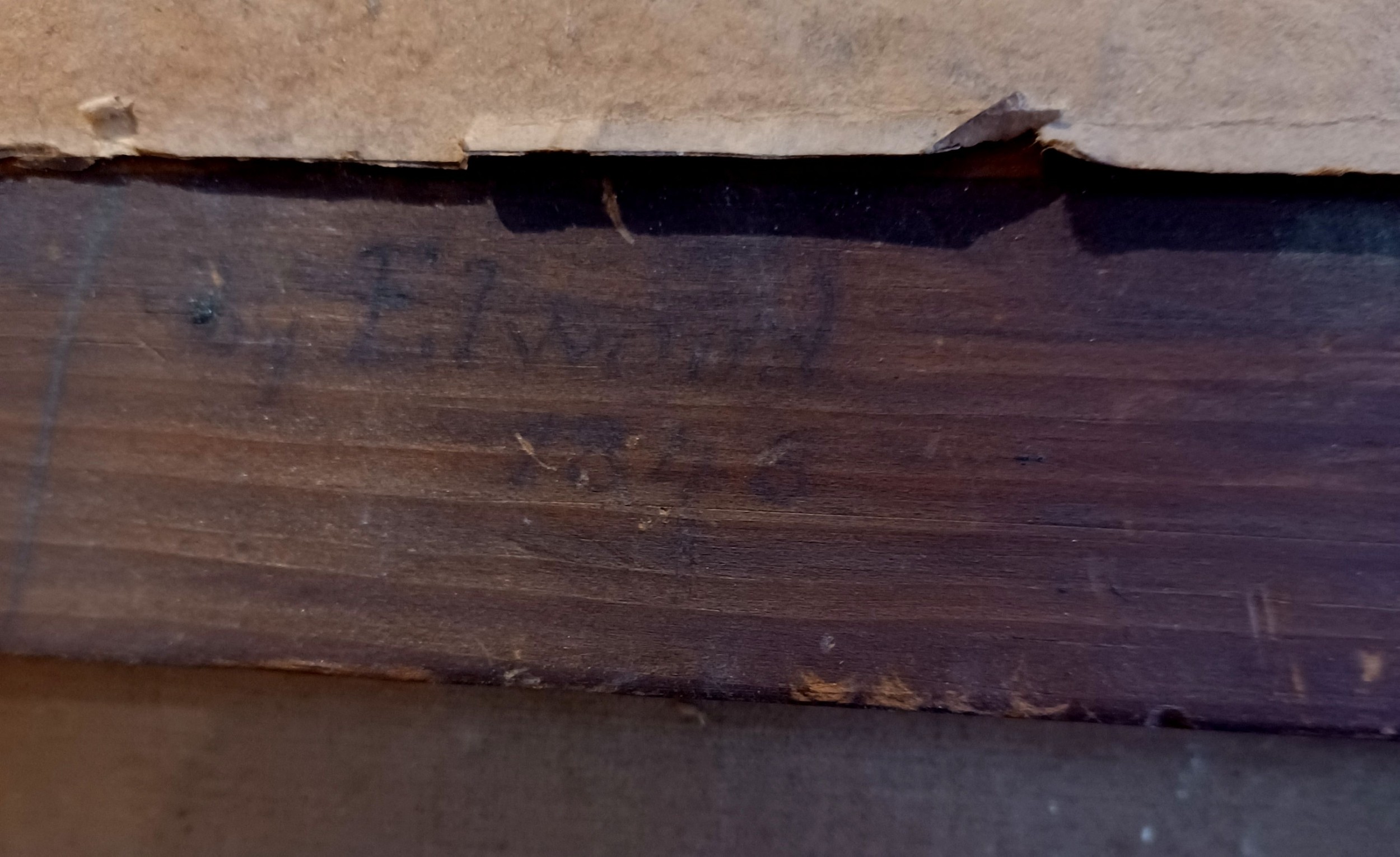
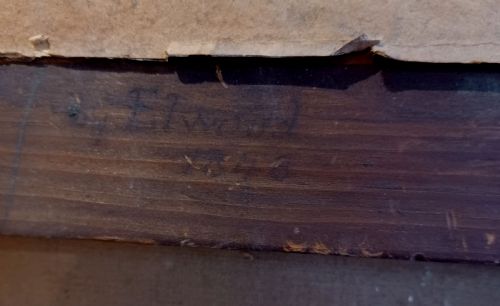
signed and dated "ELWOOD 1846" and further signed and inscribed on the reverse "by Elwood / 1846"

pencil and watercolour

58 x 88 cm.

Palm house is a term sometimes used for large and high heated display greenhouses that specialise in growing palms and other tropical and subtropical plants. In Victorian Britain, several ornate glass and iron palm houses were built in botanical gardens and parks, using cast iron architecture. Especially in English-speaking countries outside the British Isles, these are often called conservatories, in the UK mainly a term for small glass structures attached to houses. The large example, completed in 1848, in Kew Gardens, London was arguably the first greenhouse to be built on this scale. It was also the first large-scale structural use of wrought iron. The later Temperate House at Kew is in fact even larger. Other British examples are at Liverpool's Sefton Park and Stanley Park. Elsewhere there are the Franklin Park Conservatory in Columbus, Ohio, the Royal Greenhouses of Laeken in Brussels, the Palmenhaus Schönbrunn in Vienna, and many others.
The rounded shapes of Kew were often followed in the 19th century. Parts of the iron technology there were borrowed from shipbuilding, so the resemblance of many designs to upturned ships in not entirely coincidental. In the 20th century some pyramidal designs and geodesic domes were adopted. The "Tropical Pyramid" at the Muttart Conservatory in Alberta (c, 1976) and Eden Project in England are respectively examples of these shapes. The term "palm house" tends not to be used, though the function of the buildings remains the same.
The palm house was a stage in the 19th-century development of glass and iron architecture, which was also widely used in railway stations, markets, exhibition halls, and other large buildings needing a large and open internal area. The Anthaeum, Hove was a very ambitious example, with a huge cupola-topped dome covering more than 1.5 acres (0.61 ha). It was planned by Henry Phillips as a visitor attraction by itself, with Amon Henry Wilds as the architect; both were local men from Brighton and Hove. However, it collapsed the day before its official opening in 1830. One of the earliest examples of a palm house is located in the Belfast Botanic Gardens. Designed by Charles Lanyon, the building was completed in 1840. It was constructed by iron-founder Richard Turner, who would later build the Palm House at Kew in 1848, to a design by Decimus Burton; this is 62 feet high and 362 long. This came shortly after the Chatsworth Great Conservatory (1837-40; 67 feet high and 277 long, demolished in 1920) and shortly before The Crystal Palace (1851), both designed by Joseph Paxton, and both now lost.
The Palm House is a large palm house in the Royal Botanic Gardens, Kew, in London, that specialises in growing palms and other tropical and subtropical plants. It was completed in 1848. Many of its plants are endangered or extinct in the wild. Features include an upper walkway, taking the visitor into the branches of the larger plants. Kew also has the even larger "Temperate House", kept at lower temperatures.
Initially built as status symbols in Victorian Britain, several examples of ornate glass and iron greenhouses, often but not always called "the Palm House", can still be found in botanical gardens and parks such as Liverpool's Sefton Park and Stanley Park, and in other countries.
The Palm House was the first greenhouse to be built on this scale. It was also the first large-scale structural use of wrought iron. One of the earliest examples of a palm house is located in the Belfast Botanic Gardens. Designed by Charles Lanyon, the building was completed in 1840. It was constructed by the iron-maker Richard Turner, who would later build the Palm H

Physical Dimensions
Height
58cm (22.83")
Width
88cm (34.65")
Depth
2cm (0.79")
Declaration

Artware Fineart has dated this Victorian Kew Gardens Watercolour to the 19th Century.

Reference Numbers
Sellingantiques Reference
SA982322
Dealers Internal Reference
4779
Description
English School 19th Century

The Palm House, from The Pond, Kew Gardens London

signed and dated "ELWOOD 1846" and further signed and inscribed on the reverse "by Elwood / 1846"

pencil and watercolour

58 x 88 cm.

Palm house is a term sometimes used for large and high heated display greenhouses that specialise in growing palms and other tropical and subtropical plants.
Artware Fineart

In Victorian Britain, several ornate glass and iron palm houses were built in botanical gardens and parks, using cast iron architecture. Especially in English-speaking countries outside the British Isles, these are often called conservatories, in the UK mainly a term for small glass structures attached to houses. The large example, completed in 1848, in Kew Gardens, London was arguably the first greenhouse to be built on this scale. It was also the first large-scale structural use of wrought iron. The later Temperate House at Kew is in fact even larger. Other British examples are at Liverpool's Sefton Park and Stanley Park. Elsewhere there are the Franklin Park Conservatory in Columbus, Ohio, the Royal Greenhouses of Laeken in Brussels, the Palmenhaus Schönbrunn in Vienna, and many others.

fig 1. A 19th-century sepia watercolour painting depicting the Palm House at Kew Gardens across a body of water with trees and a figure in a small boat.
fig 1. English School 19th Century the Palm House, from the Pond, Kew Gardens London

The rounded shapes of Kew were often followed in the 19th century. Parts of the iron technology there were borrowed from shipbuilding, so the resemblance of many designs to upturned ships in not entirely coincidental. In the 20th century some pyramidal designs and geodesic domes were adopted. The "Tropical Pyramid" at the Muttart Conservatory in Alberta (c, 1976) and Eden Project in England are respectively examples of these shapes. The term "palm house" tends not to be used, though the function of the buildings remains the same.

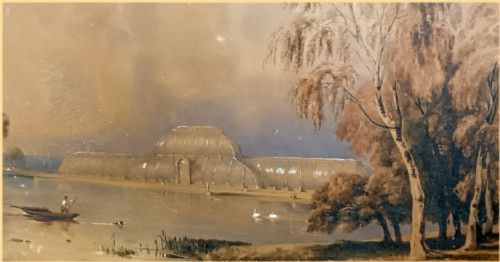
fig 2. A 19th-century sepia watercolour painting depicting the Palm House at Kew Gardens across a body of water with trees and a figure in a small boat.
fig 2. English School 19th Century the Palm House, from the Pond, Kew Gardens London

The palm house was a stage in the 19th-century development of glass and iron architecture, which was also widely used in railway stations, markets, exhibition halls, and other large buildings needing a large and open internal area. The Anthaeum, Hove was a very ambitious example, with a huge cupola-topped dome covering more than 1.5 acres (0.61 ha). It was planned by Henry Phillips as a visitor attraction by itself, with Amon Henry Wilds as the architect; both were local men from Brighton and Hove. However, it collapsed the day before its official opening in 1830. One of the earliest examples of a palm house is located in the Belfast Botanic Gardens. Designed by Charles Lanyon, the building was completed in 1840. It was constructed by iron-founder Richard Turner, who would later build the Palm House at Kew in 1848, to a design by Decimus Burton; this is 62 feet high and 362 long. This came shortly after the Chatsworth Great Conservatory (1837-40; 67 feet high and 277 long, demolished in 1920) and shortly before The Crystal Palace (1851), both designed by Joseph Paxton, and both now lost.

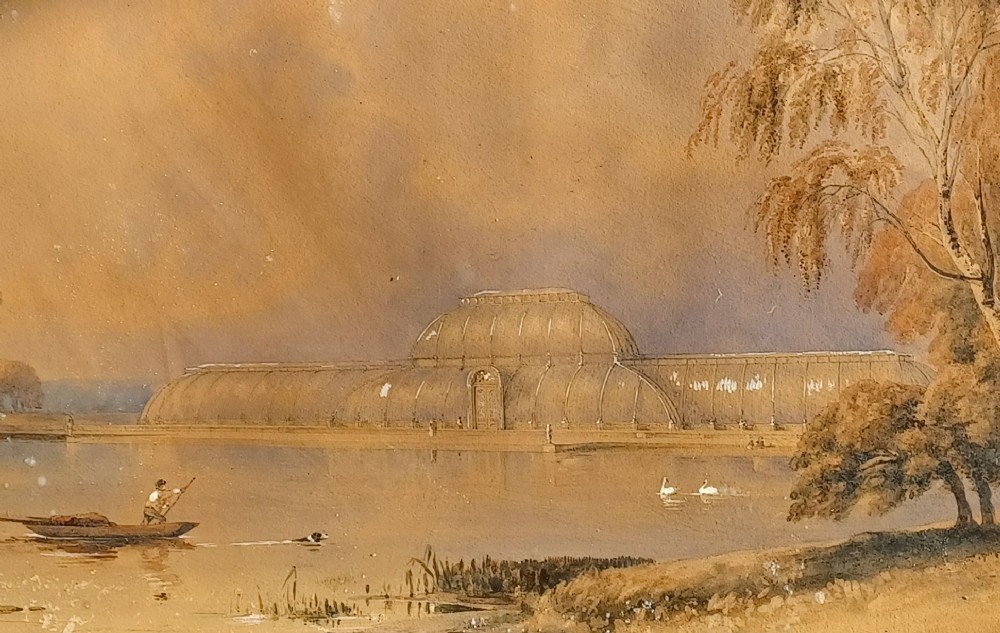
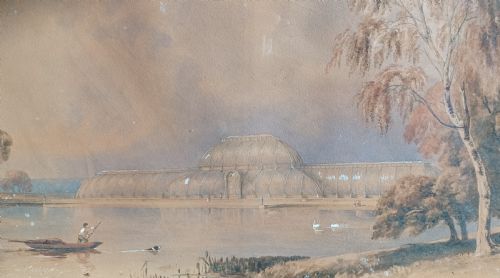
fig 3. A 19th-century sepia watercolour painting depicting the Palm House at Kew Gardens across a body of water with trees and a figure in a small boat.
fig 3. English School 19th Century the Palm House, from the Pond, Kew Gardens London

The Palm House is a large palm house in the Royal Botanic Gardens, Kew, in London, that specialises in growing palms and other tropical and subtropical plants. It was completed in 1848. Many of its plants are endangered or extinct in the wild. Features include an upper walkway, taking the visitor into the branches of the larger plants. Kew also has the even larger "Temperate House", kept at lower temperatures.

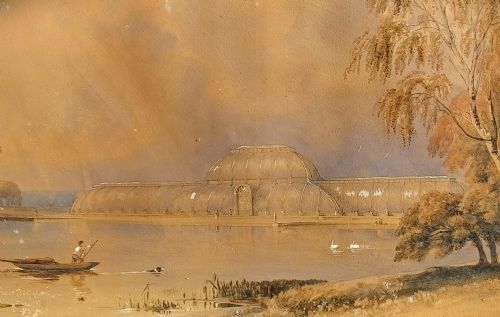
fig 4. A 19th-century sepia watercolour painting depicting the Palm House at Kew Gardens across a body of water with trees and a figure in a small boat.
fig 4. English School 19th Century the Palm House, from the Pond, Kew Gardens London

Initially built as status symbols in Victorian Britain, several examples of ornate glass and iron greenhouses, often but not always called "the Palm House", can still be found in botanical gardens and parks such as Liverpool's Sefton Park and Stanley Park, and in other countries.

fig 5. A 19th-century sepia watercolour painting depicting the Palm House at Kew Gardens across a body of water with trees and a figure in a small boat.
fig 5. English School 19th Century the Palm House, from the Pond, Kew Gardens London

The Palm House was the first greenhouse to be built on this scale. It was also the first large-scale structural use of wrought iron. One of the earliest examples of a palm house is located in the Belfast Botanic Gardens. Designed by Charles Lanyon, the building was completed in 1840. It was constructed by the iron-maker Richard Turner, who would later build the Palm H

Height
58cm (22.83")
Width
88cm (34.65")
Depth
2cm (0.79")
Date of Manufacture

Artware Fineart has dated this Victorian Kew Gardens Watercolour to the 19th Century.

Reference Numbers
Sellingantiques Ref
SA982322
Dealers Internal Ref
4779
Artware Fineart
Sellingantiques verified Since Sep 2008
Dealer Profile

You can view the stock and full dealer information on the Artware Fineart Profile Page
PDF SHARE
SAVE
A 19th-century sepia watercolour painting depicting the Palm House at Kew Gardens across a body of water with trees and a figure in a small boat.
1 / 6
Archive I A 19th-century sepia watercolour painting depicting the Palm House at Kew Gardens across a body of water with trees and a figure in a small boat.

English School 19th Century the Palm House, from the Pond, Kew Gardens London
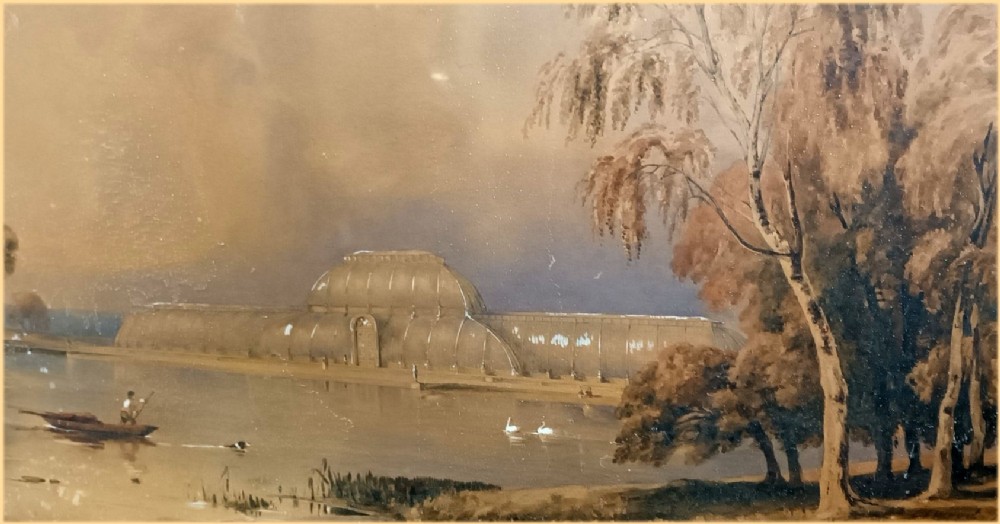
Archive II A 19th-century sepia watercolour painting depicting the Palm House at Kew Gardens across a body of water with trees and a figure in a small boat. View II
Archive III A 19th-century sepia watercolour painting depicting the Palm House at Kew Gardens across a body of water with trees and a figure in a small boat. View III
Archive IV A 19th-century sepia watercolour painting depicting the Palm House at Kew Gardens across a body of water with trees and a figure in a small boat. View IV
Archive V A 19th-century sepia watercolour painting depicting the Palm House at Kew Gardens across a body of water with trees and a figure in a small boat. View V
Archive VI A 19th-century sepia watercolour painting depicting the Palm House at Kew Gardens across a body of water with trees and a figure in a small boat. View VI
Enlarged Archival View
Telephone 07958 699 645
Location
18 La Gare
51 Surrey Row
London
SE1 0BZ
United Kingdom
Verified Since Sep 2008
Items For Sale 243
Items Sold 223
Artware Fineart
Verified Since Sep 2008
View Dealer Info
Location: 18 La Gare , 51 Surrey Row , London , SE1 0BZ , United Kingdom
Verified
Sep 2008
For Sale
243
Sold
223
A 19th-century sepia watercolour painting depicting the Palm House at Kew Gardens across a body of water with trees and a figure in a small boat.
English School 19th Century The Palm House, from The Pond, Kew Gardens London
Ref: SA982322
A 19th-century sepia watercolour painting depicting the Palm House at Kew Gardens across a body of water with trees and a figure in a small boat.
Detail View 1
Detail View 2
Detail View 3
Detail View 4
Detail View 5
Archival Detail
Every single antique dealer on our platform is individually approved by our internal team. We verify their professional trade history, ethical standards, and photographic quality to ensure a secure, high-standard buying environment. Upon joining, every dealer agrees to a strict 9-point code of conduct. While issues can occasionally arise, our dealers typically resolve them swiftly and directly with the buyer. In fact, since our founding in 2002, Sellingantiques has only had to step in to help resolve an issue on roughly five occasions—a true testament to the quality of our dealers and their dedication to your happiness.
Our dealers are highly experienced in packing and shipping fragile, high-value antiques. Because you are in direct contact with the dealer, you will be able to easily go through all available shipping and insurance options together to ensure your item arrives safely.
Antiques are the ultimate green purchase. By choosing historical pieces over newly manufactured goods, you completely eliminate the carbon footprint of modern mass production while preserving exceptional, timeless craftsmanship.

Nineteenth-century British School landscapes often focused on topographical accuracy, atmospheric light, and architectural monuments within natural environments, frequently rendered in watercolour or oil.

Artists during this era typically painted on rag paper using natural earth pigments mixed with gum arabic, applying layered washes and ink details for tonal depth.

Authentic period watercolours generally display natural age-related toning or foxing on heavy wove paper, subtle draft pencil lines, and period-appropriate artist signatures or inscriptions.

Position the picture within a understated frame above a console table or sideboard to create a focused historical accent within contemporary or traditional rooms.

Display watercolours away from direct sunlight using UV-filtering glass and acid-free archival mount boards to prevent fading and deterioration of the paper fibres.
items
Add keywords to the filter
Price
£100
£250000
Era
Movements
Material
Origin
Stock Location
Freshness
Online Payments
Categories