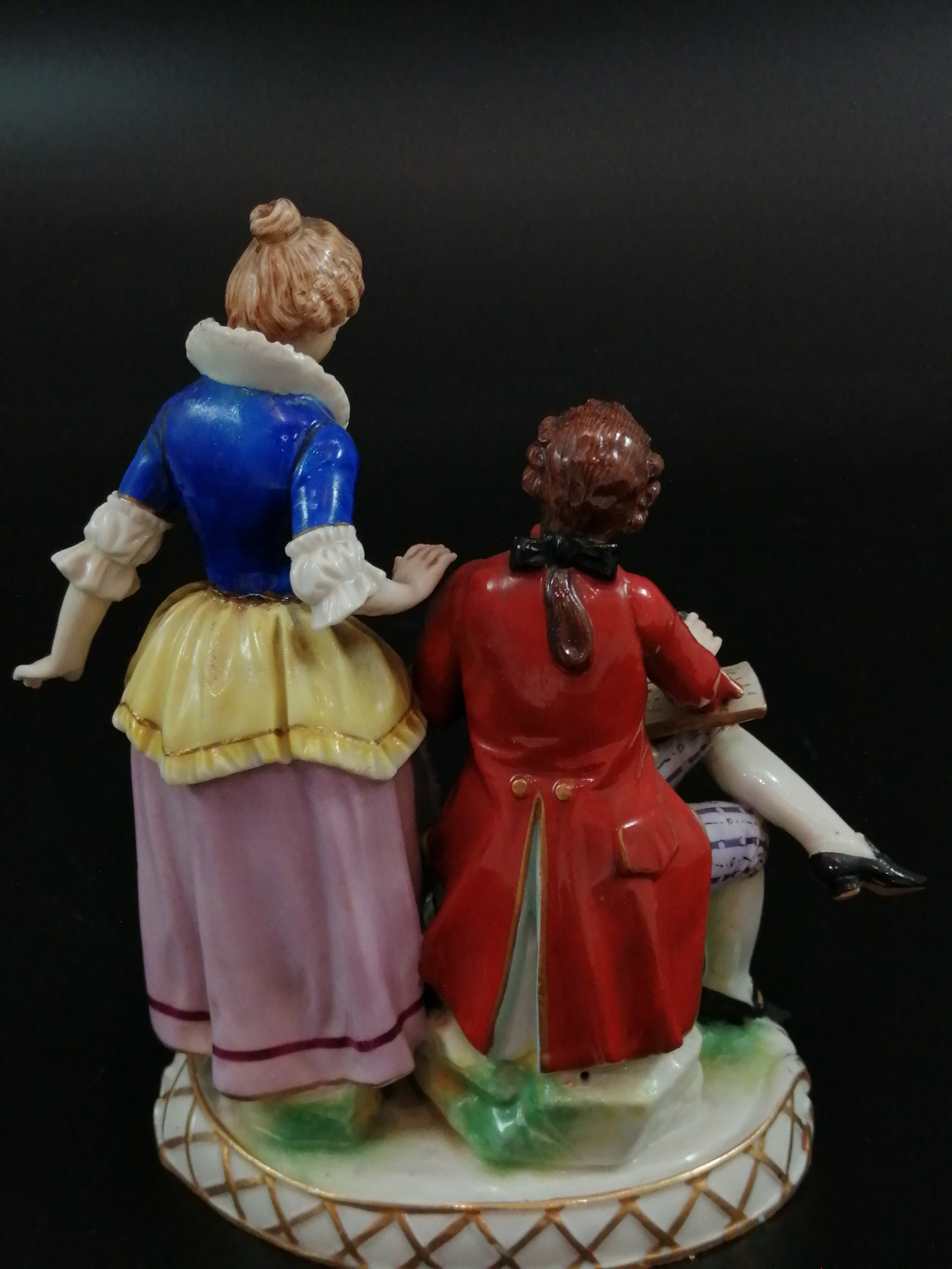
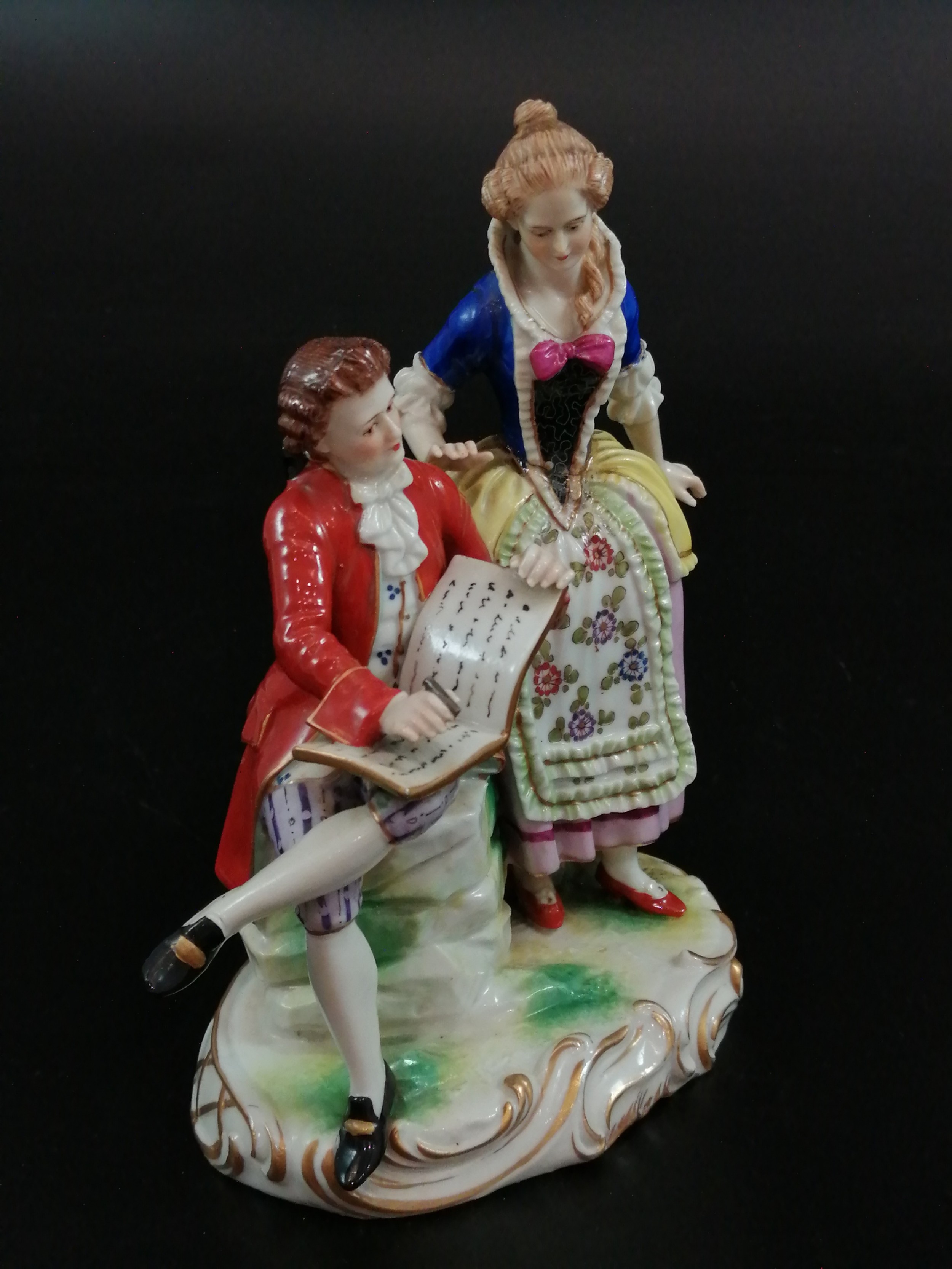
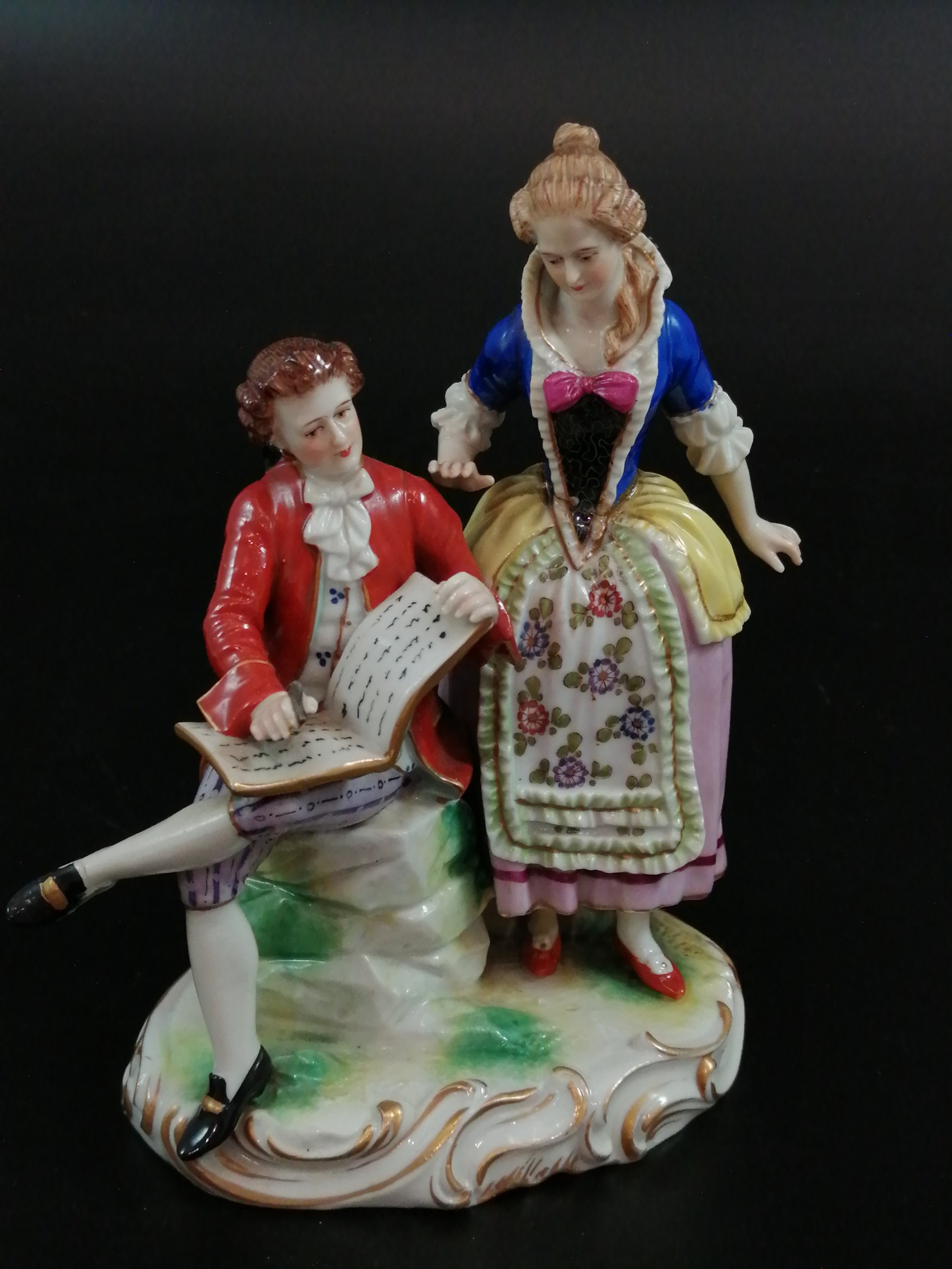
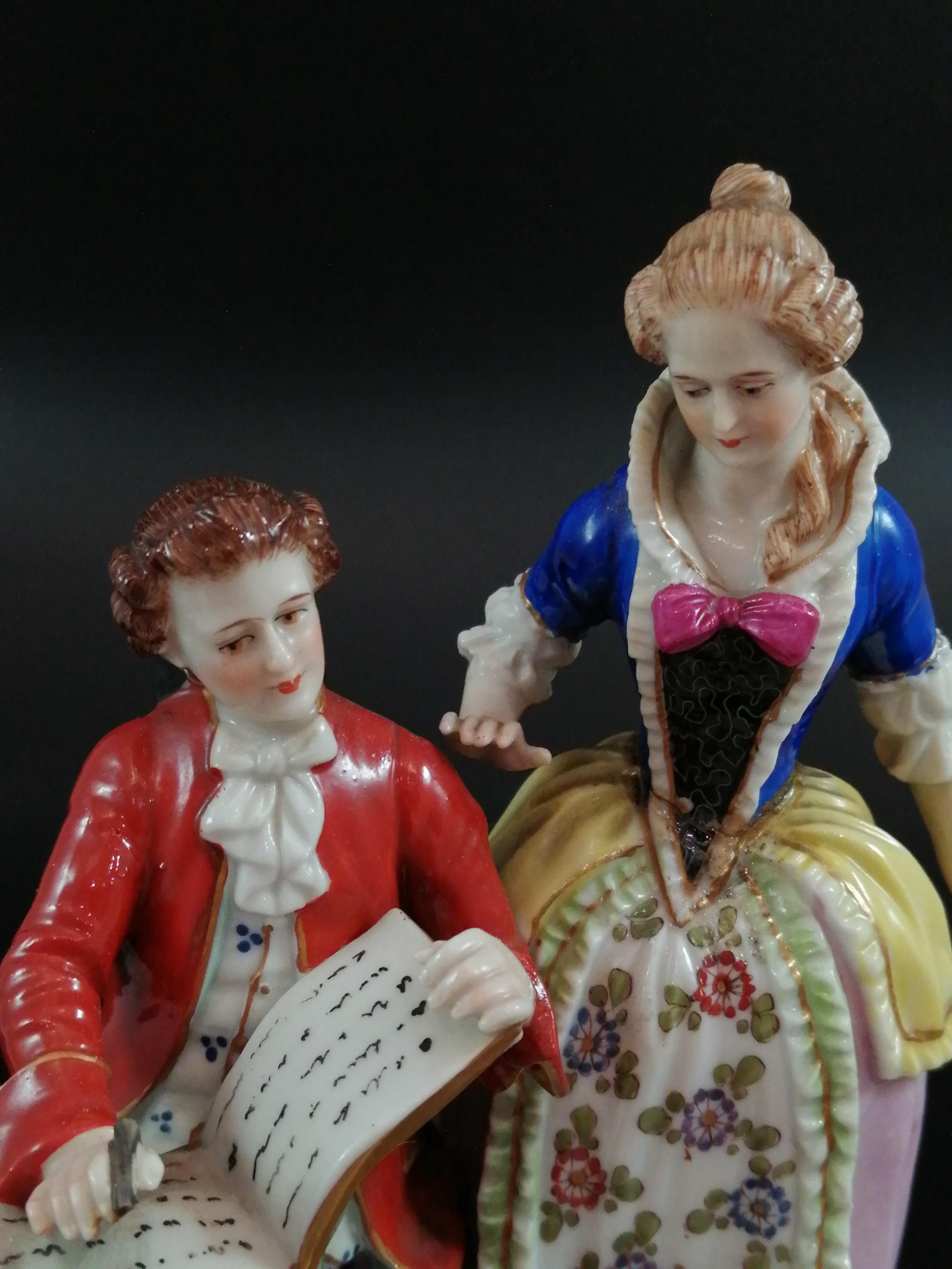
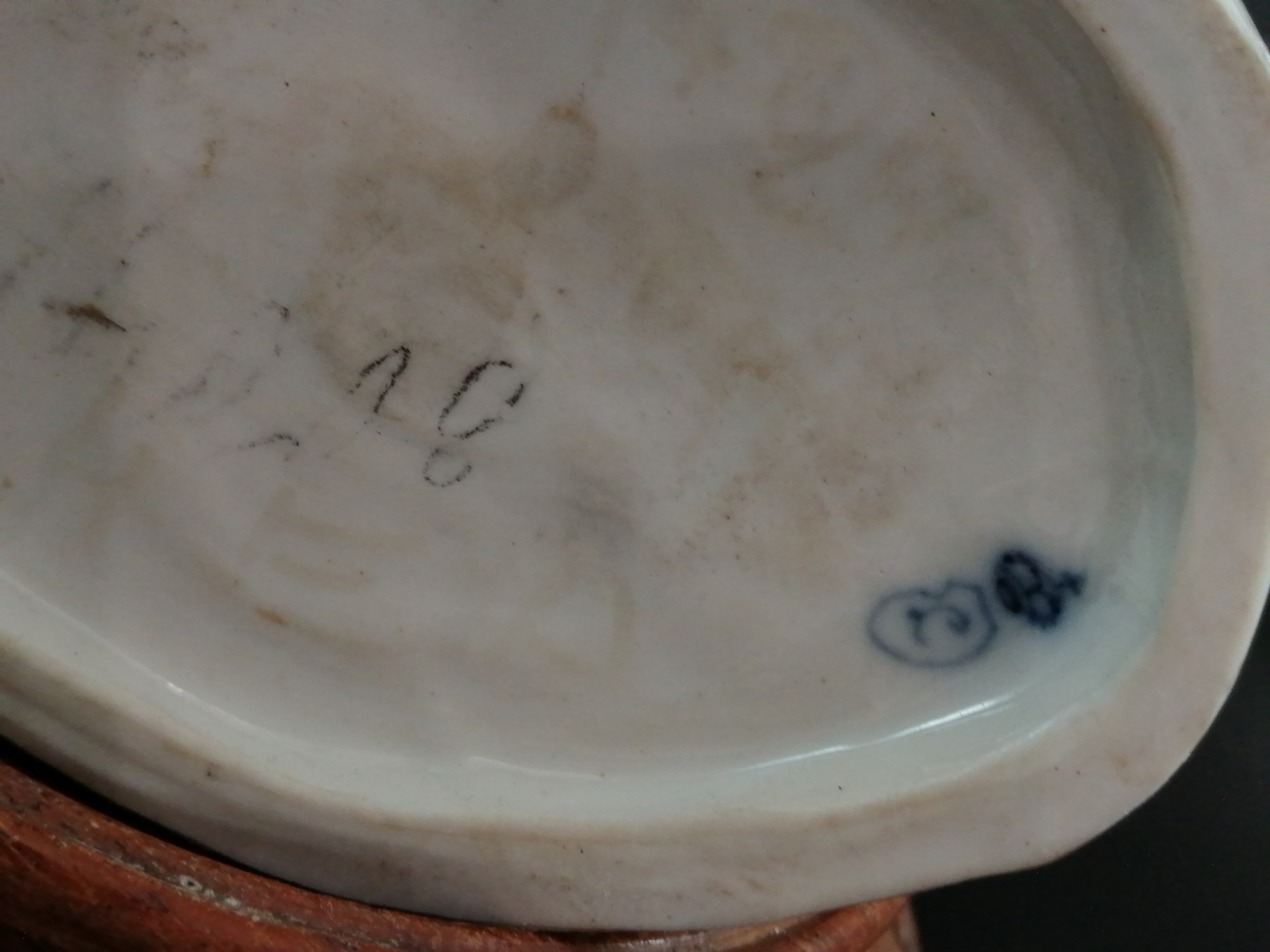
Gillers Antiques Ltd has dated this piece to the 18th Century.
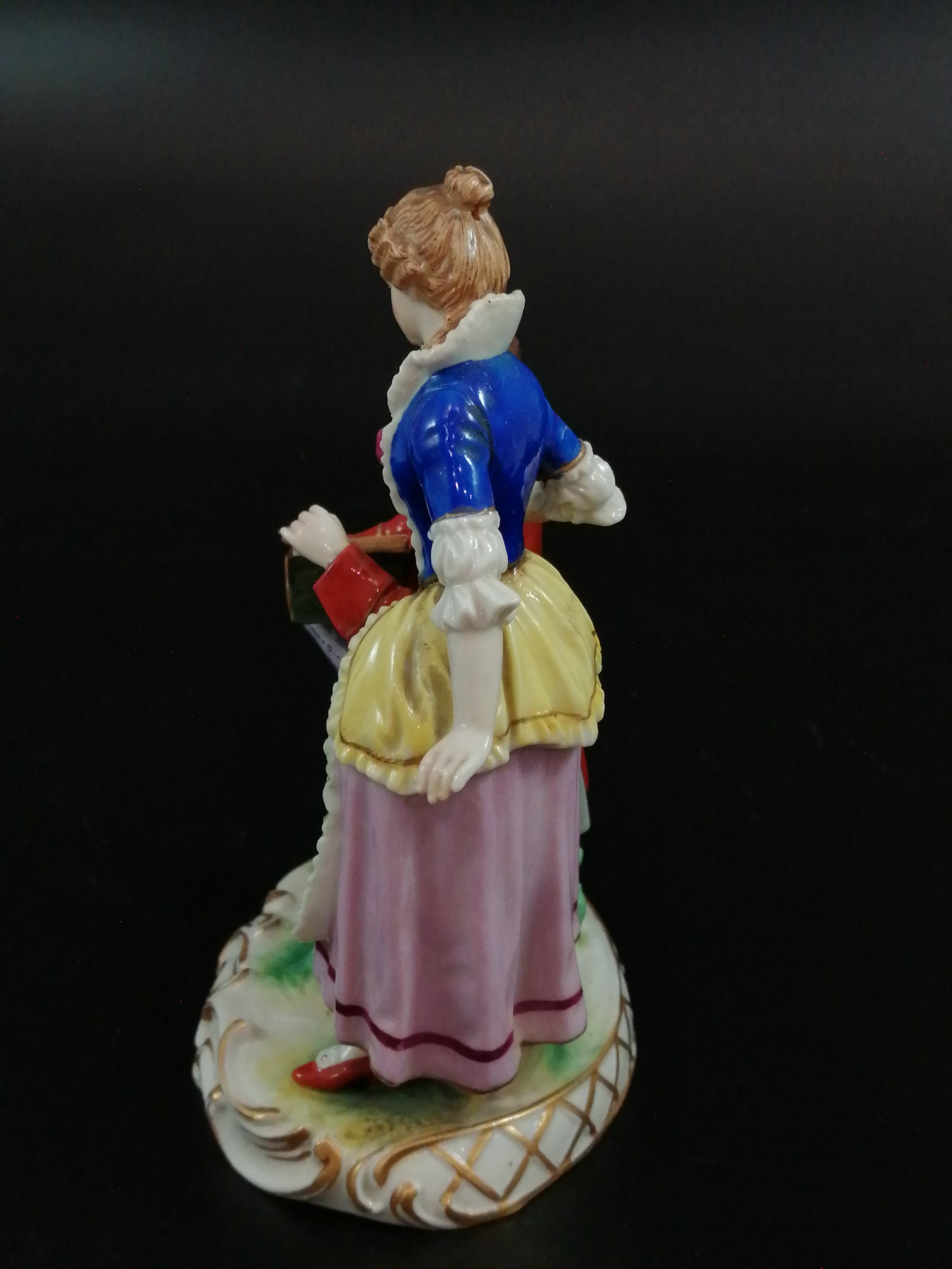
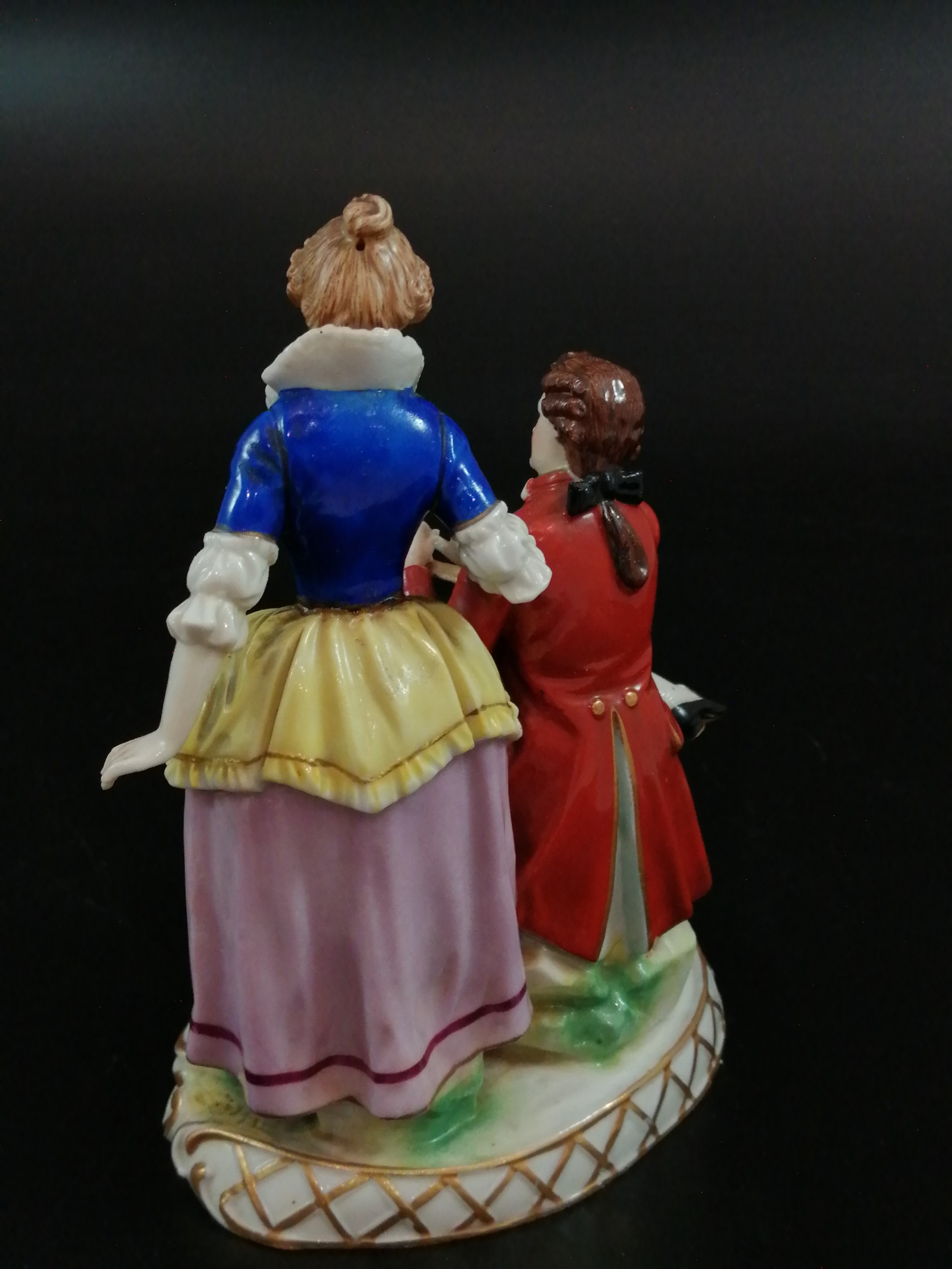
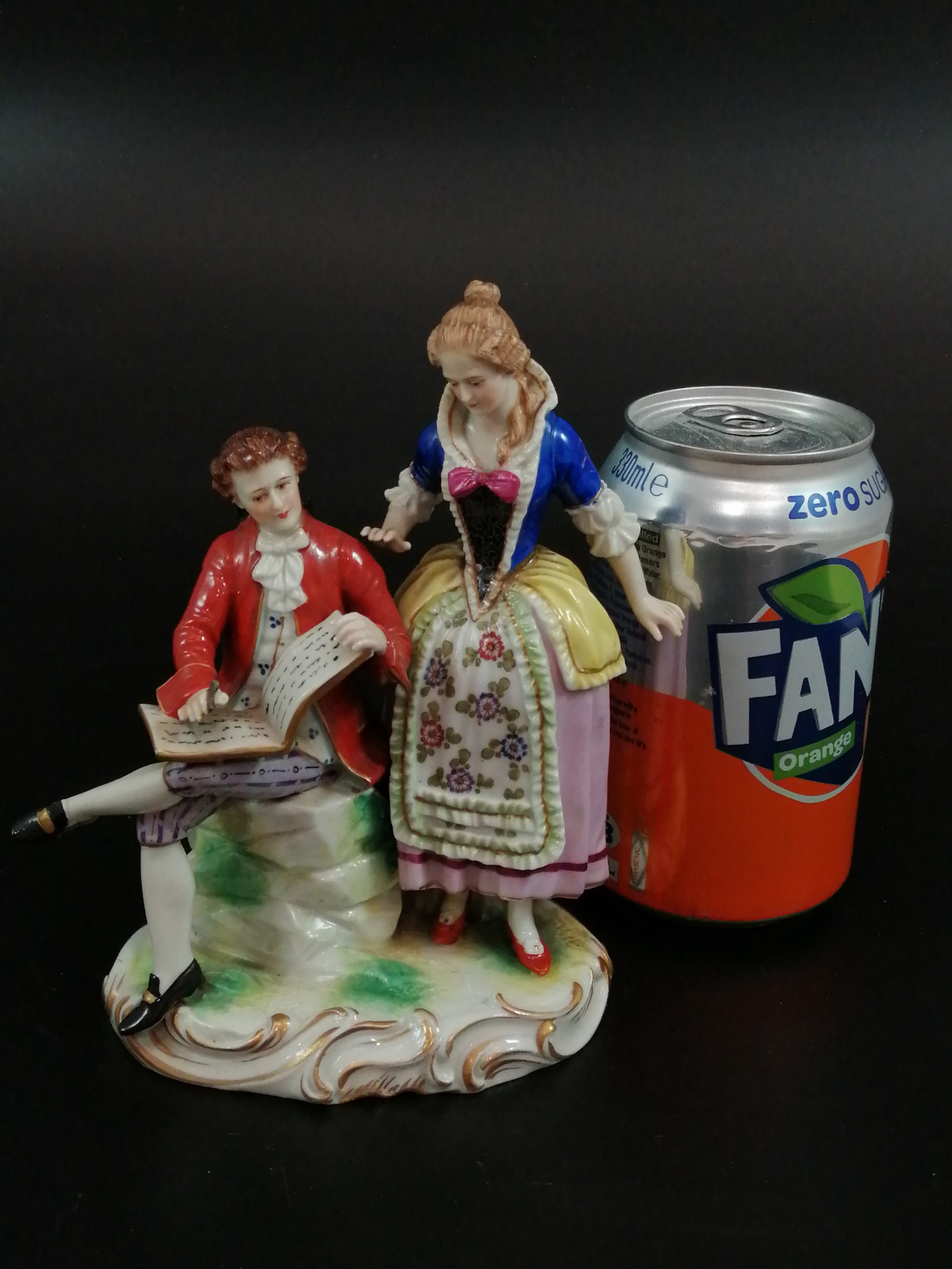
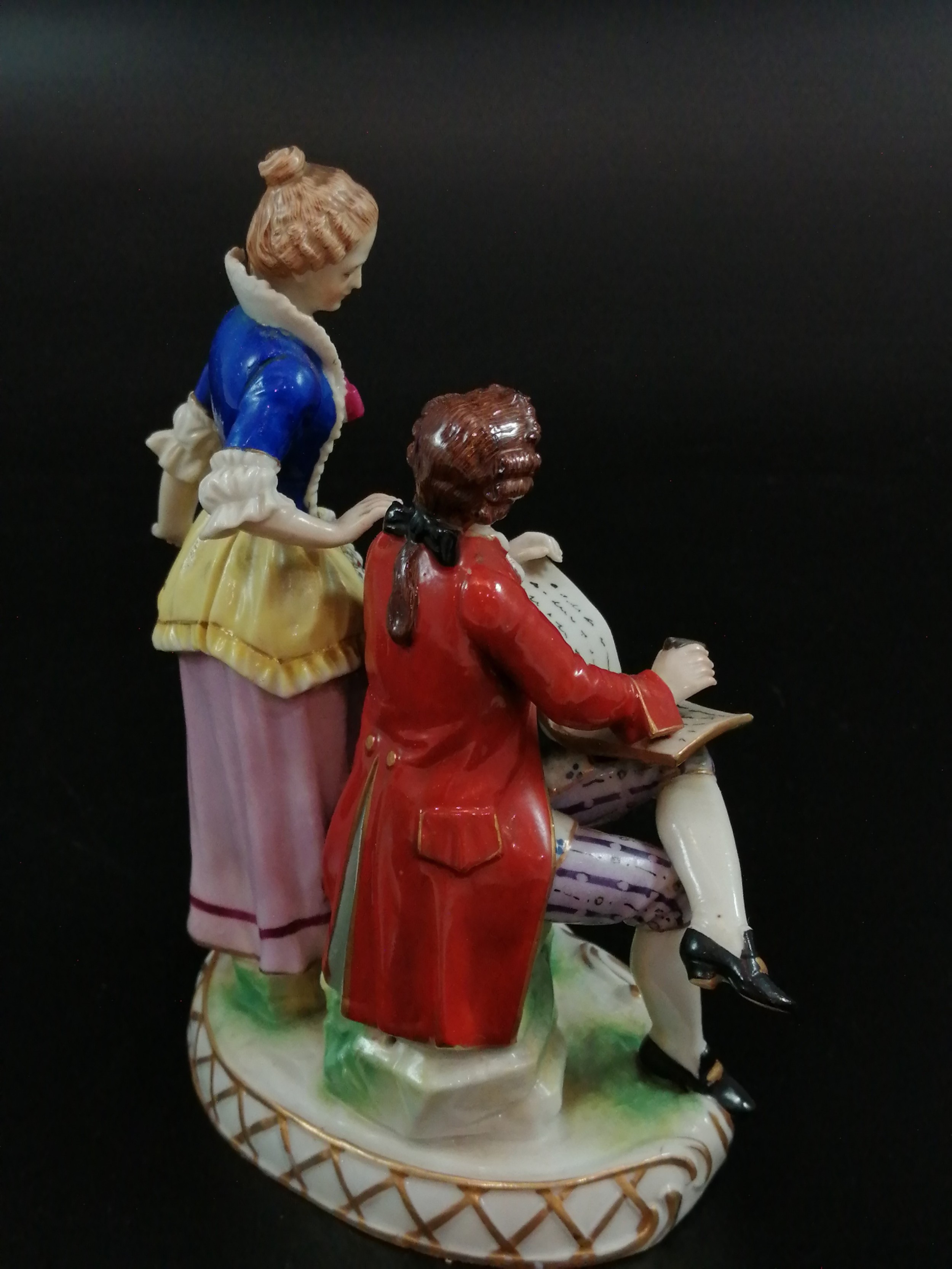
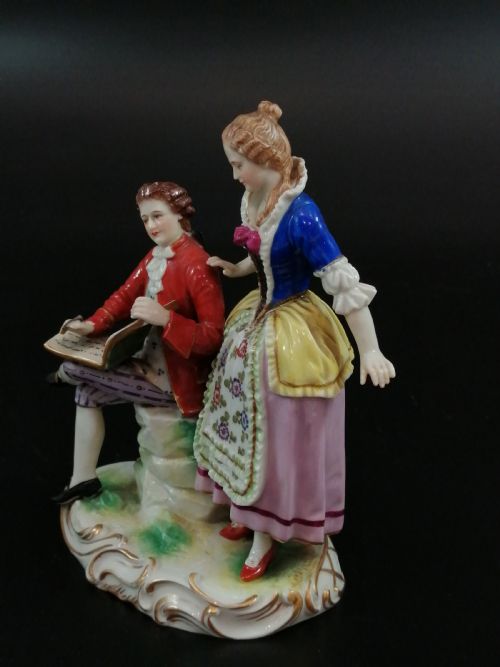
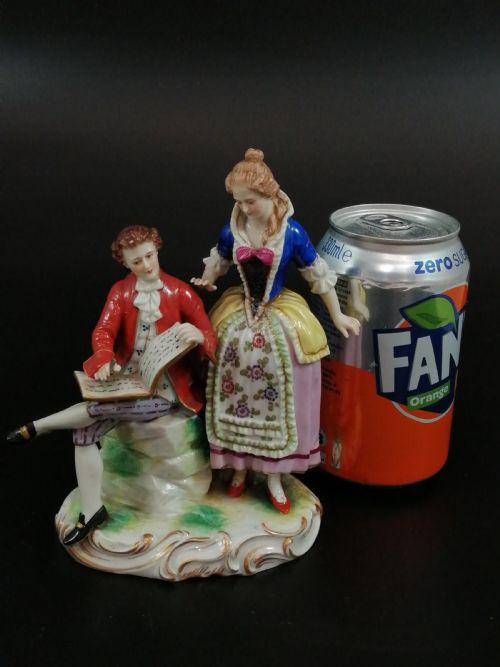
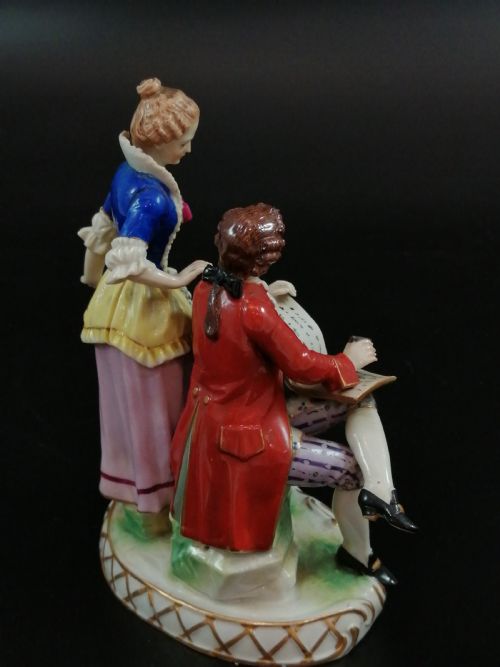
The attire depicted corresponds to the period of production—the 18th century.
In 1729 Elias Vater, manufacturer of mirrors and glass products, offered Duke Eberhard Ludwig the idea of own porcelain factory, which was turned down as it simply seemed absurd at that time. The succeeding Duke Carl Alexander later heard from the idea and in 1736 ordered that 2000 Gulden were to be set aside as funds for experiments under Johann Philipp Weißbrodt. Initial experiments failed and further research had to be aborted after the Duke had passed away.
Carl Alexander was succeeded by his son, Duke Carl Eugen, who in 1751 passed a decree which allowed the Calwer Handelscompagnie von Zahn und Dörtenbach to restart research with full access to the previously filed records. This privilege was in 1857 transferred to Bonifatius Christoph Häcker; both however failed due to technical setbacks and insufficient funding. The previous situation changed on April 5th 1758 when Duke Carl Eugen per decree declared the founding of the Ludwigsburger Porzellan-Fabrik, increasing pressure on the involved people.
Next to the processing of raw materials which created many problems, initial progress was hindered by a heavy discussion on possible kiln types of which various were still undergoing test. Under the experienced Josef Jacob Ringler however, who became second director on February 16th 1759, the factory soon took up commercial production and in March already had 21 employees. Ringler, late of Strassburg and a number of other factories, was to run the Ludwigsburg factory for the next forty years. Because he had worked in other factories, he knew who to recruit to Duke Carl Eugen's new works, including the well-known painter Gottlieb Friedrich Riedel (employed May 15th 1759) from Meissen and the sculptor Johann Christian Wilhelm Beyer (employed 1759 until 1767).
Needless to say, the first years were very successful and the number of employees steadily rose up to 179. During the period between 1760 to 1775, Ludwigsburg was one of the leading European manufacturers. Ludwigsburg porcelain had a grey-brown color, unlike the white of other German porcelains. The kaolin used was brought in from Hornberg and produced a very malleable body clay, well-suited to the figural work Ludwigsburg produced (and Duke Carl Eugen preferred). Riedel designed the forms and ornaments and often incorporated birds and insects in the painted decoration. The painter Steinkopf, in contrast, preferred to decorate in landscapes and equine subjects. After 1780, designs moved from classical forms towards the popular and elegant Louis XVI style.
The factory overreached its income regularly and Duke Carl Eugen until his death in 1793 invested great amounts from his Privy Purse, even if he had abandoned Ludwigsburg as residence in 1775 and moved to Stuttgart. His successor Duke Ludwig Eugen reorganized the factory and paid all its debts, however business was slowly declining as Riedel simply could not let go of his classic Rococo designs and decorations. Even so, the factory was supported by Duke Friedrich Wilhelm Karl from 1797 onwards.
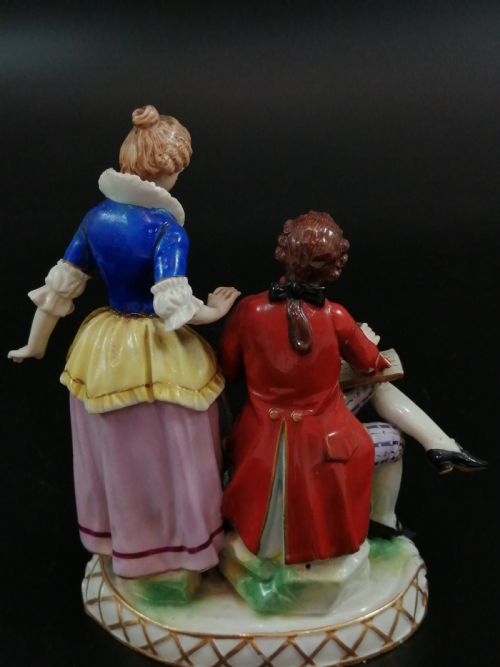
Height 16 cm
Width 14 cm
Depth 11 cm
Weight 343 grams
Condition :
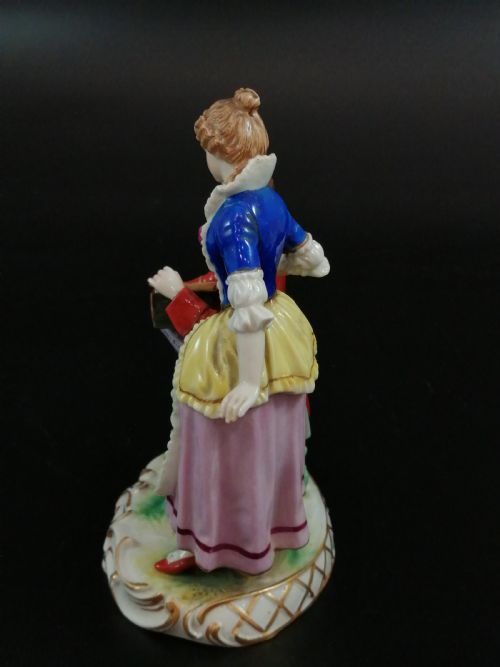
Female figurine is glued in the middle
The tip of the handle the gentleman is holding in his right hand is broken off
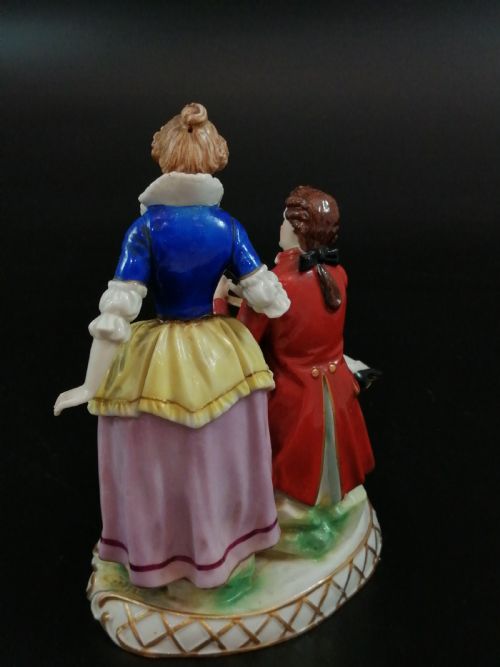
Otherwise a superb condition, enamel and gilding in excellent antique condition.Please carefully regard all photos
The item will be sent with full tracking and insurance. Please note that shipping costs include labour, packing and postage.
Gillers Antiques Ltd has dated this piece to the 18th Century.
You can view the stock and full dealer information on the Gillers Antiques Ltd Profile Page
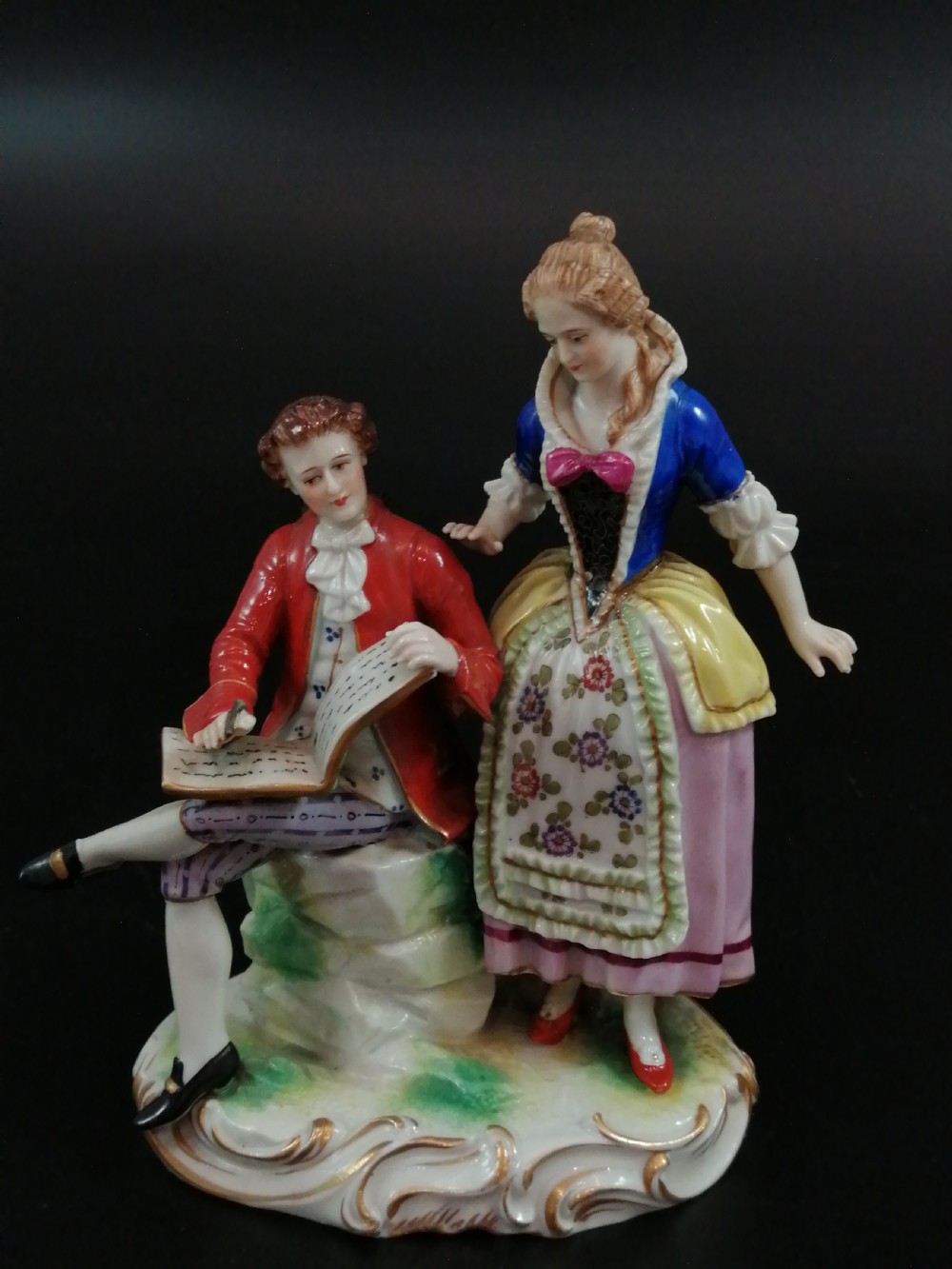
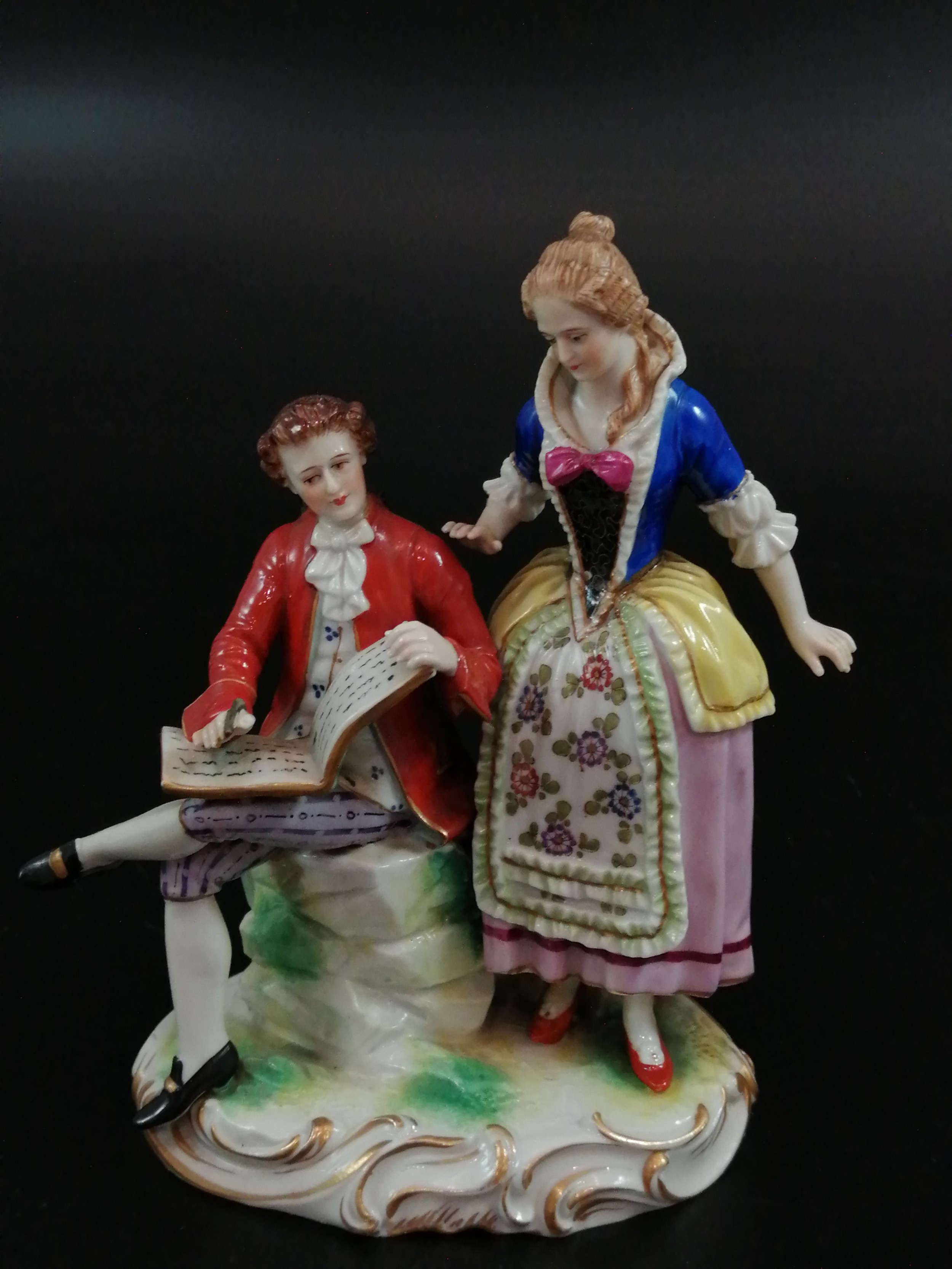
18th Century Antique Ludwigsburg Porcelain Figurine: Lady and Cavalier with an Album