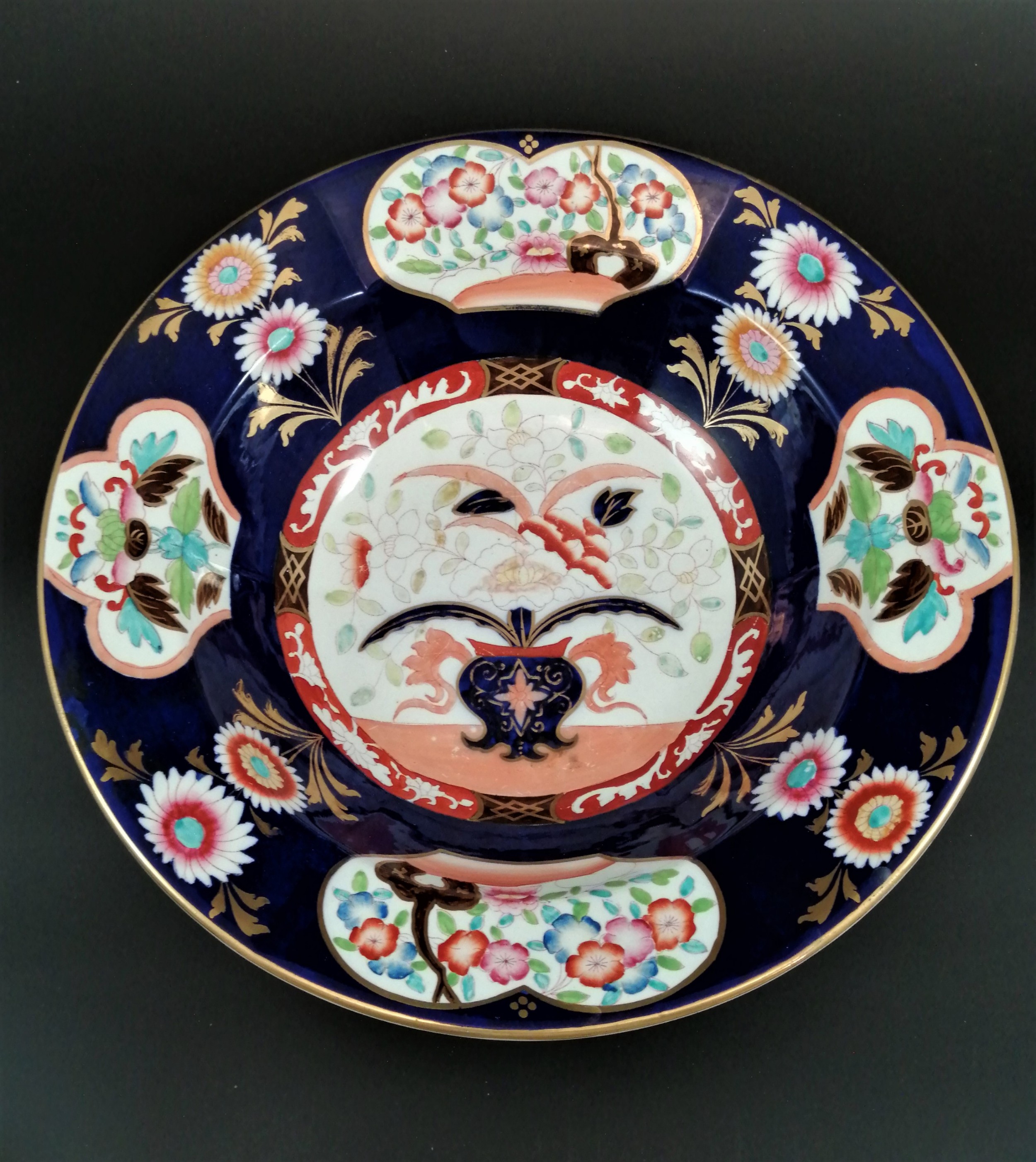
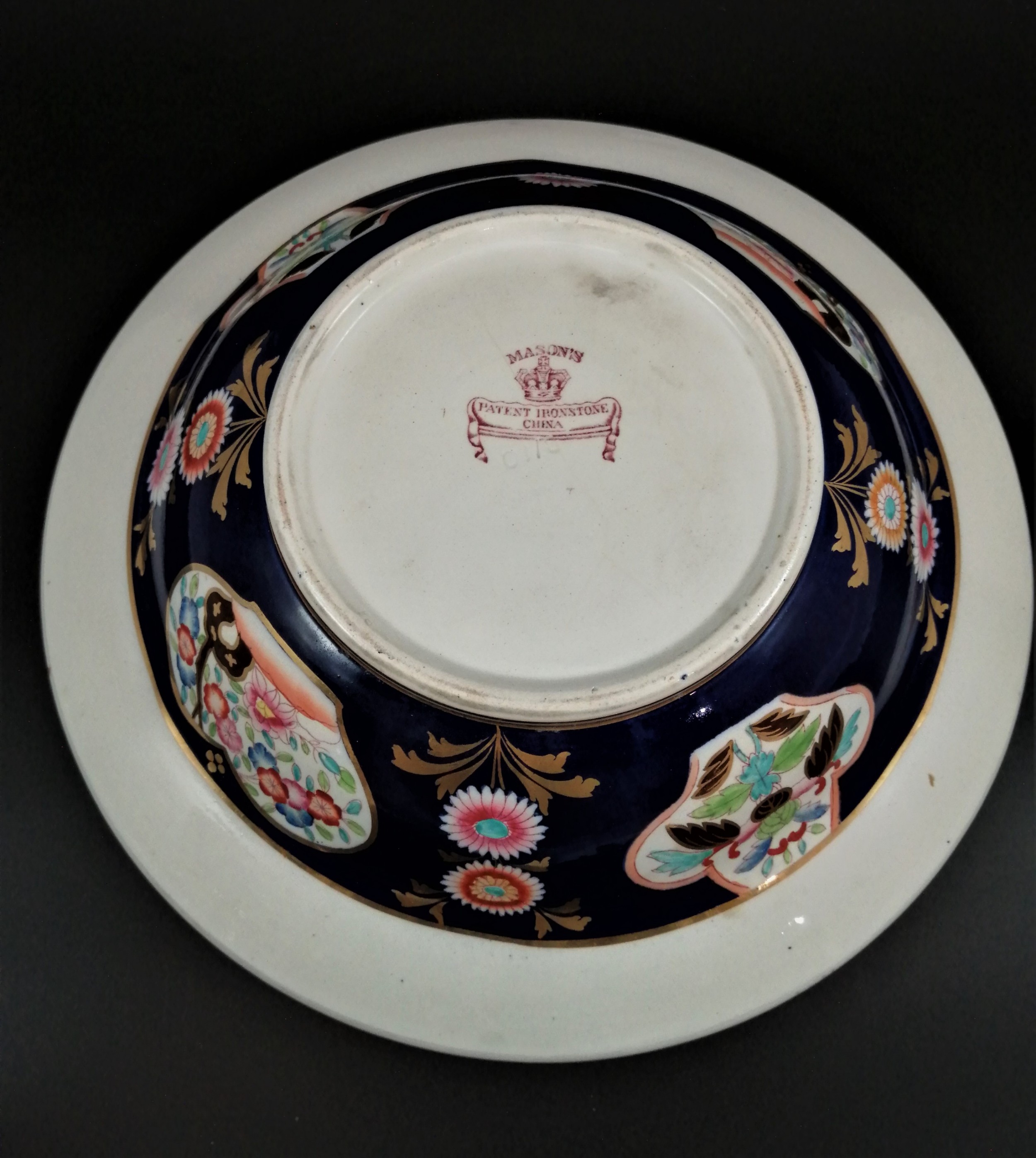
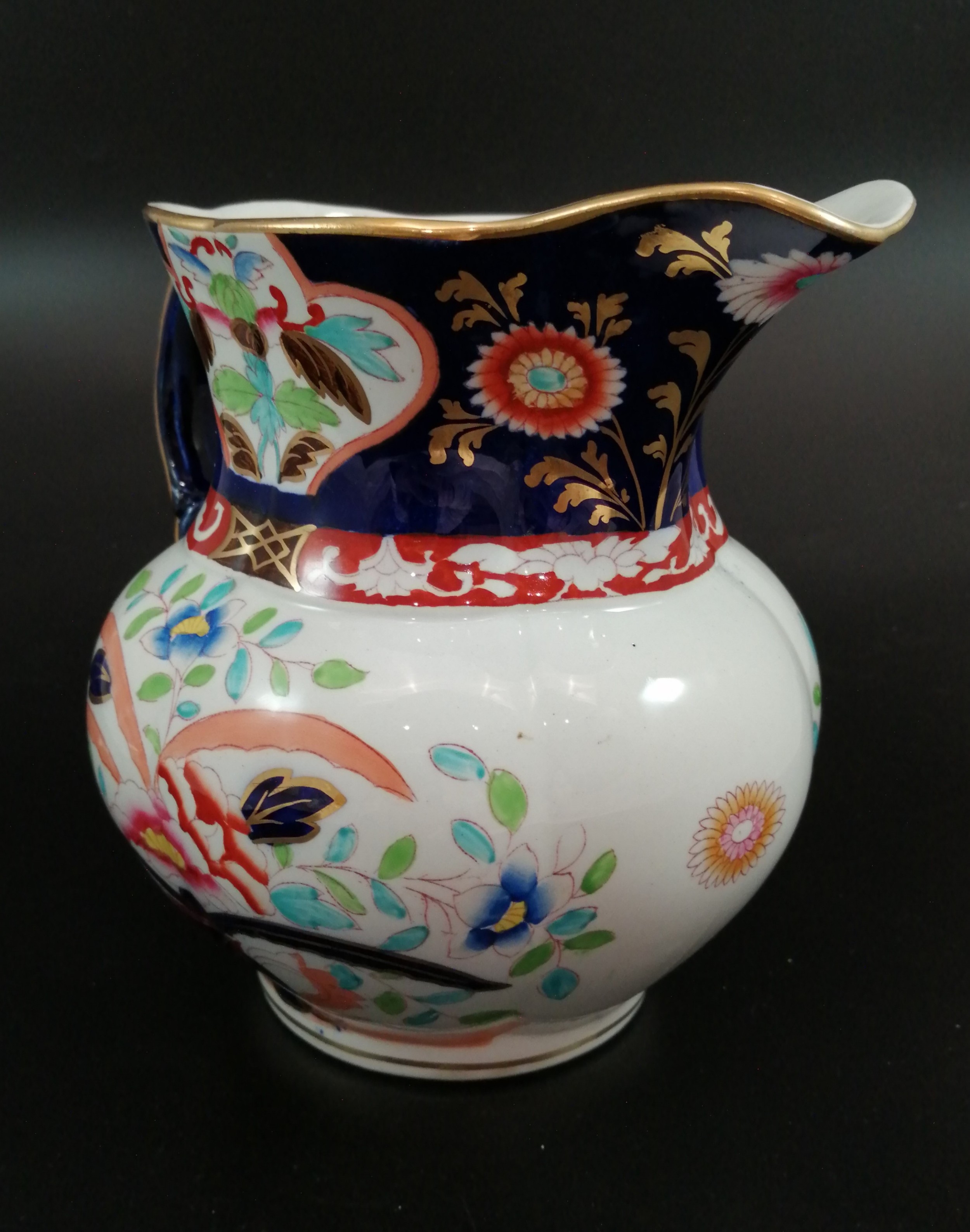
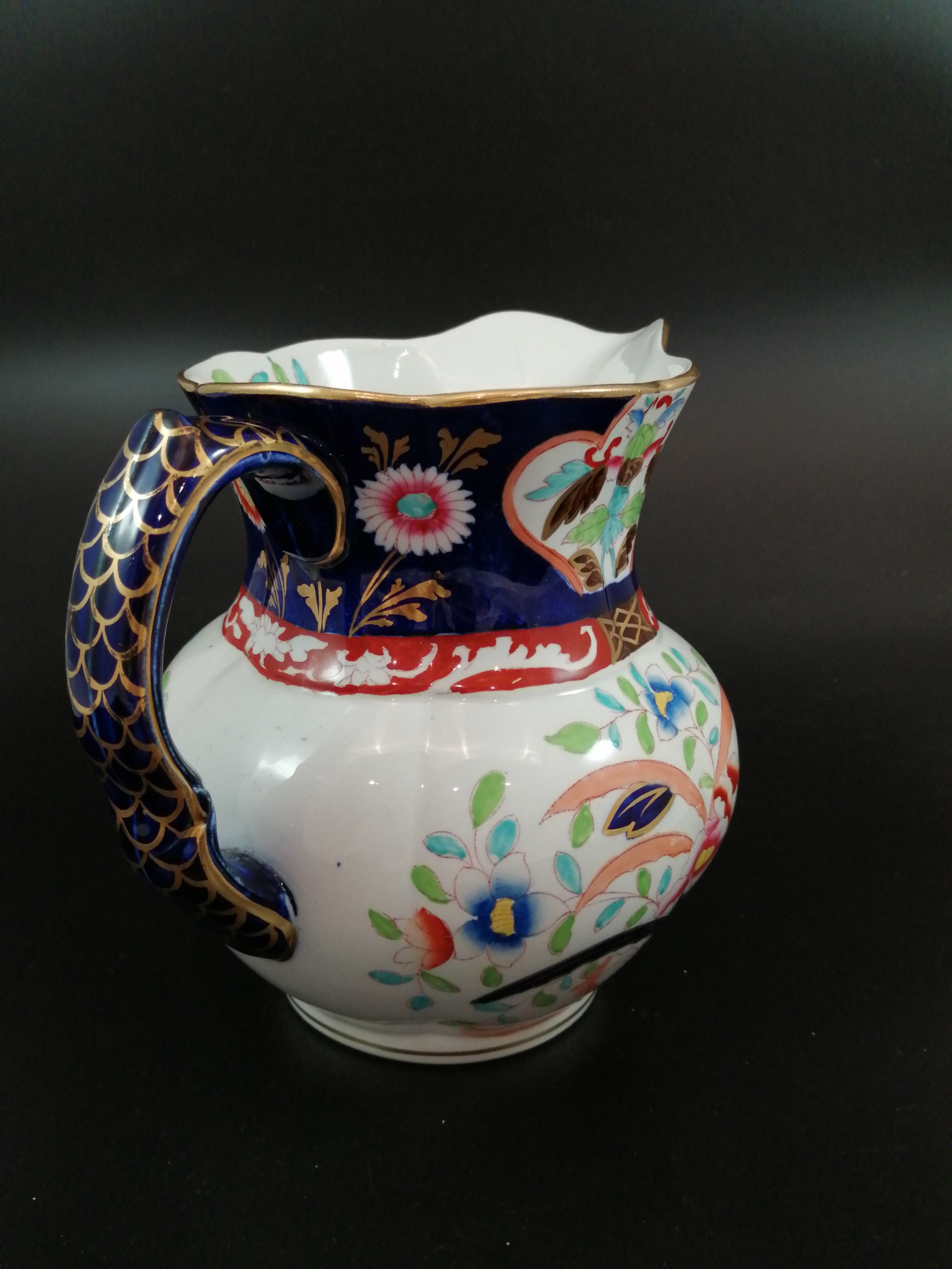
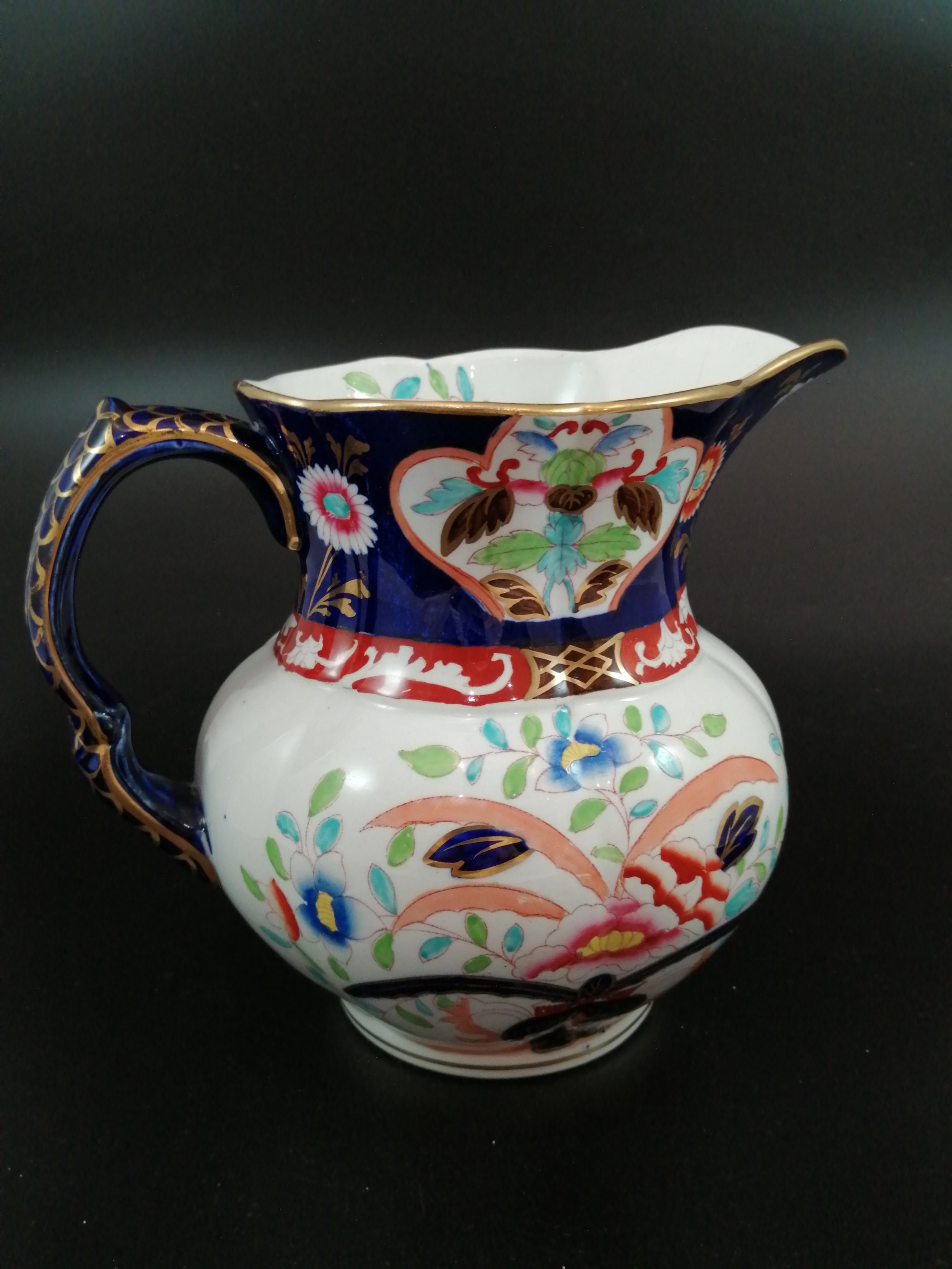
Gillers Antiques Ltd has dated this piece to the 19th Century.
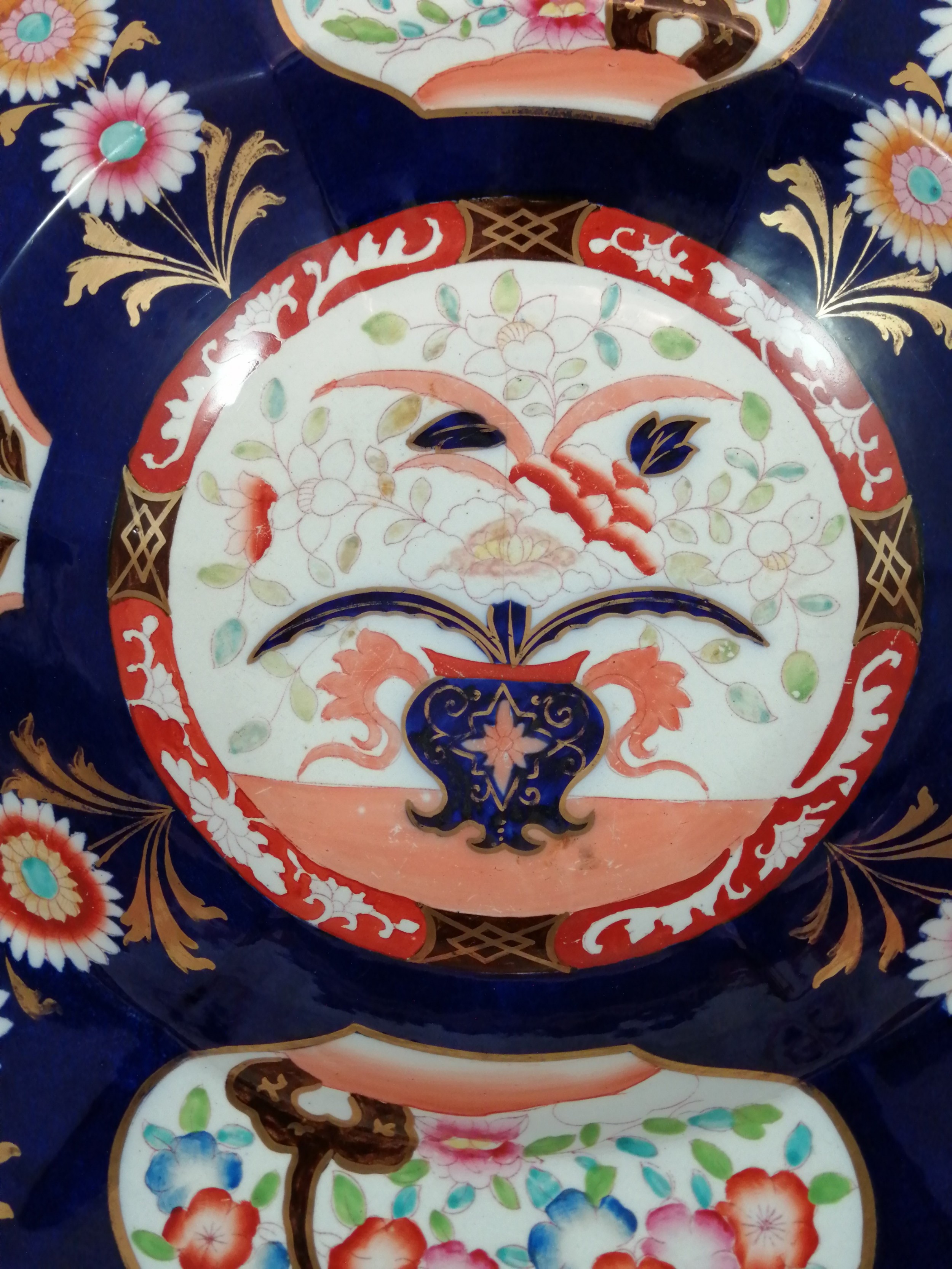
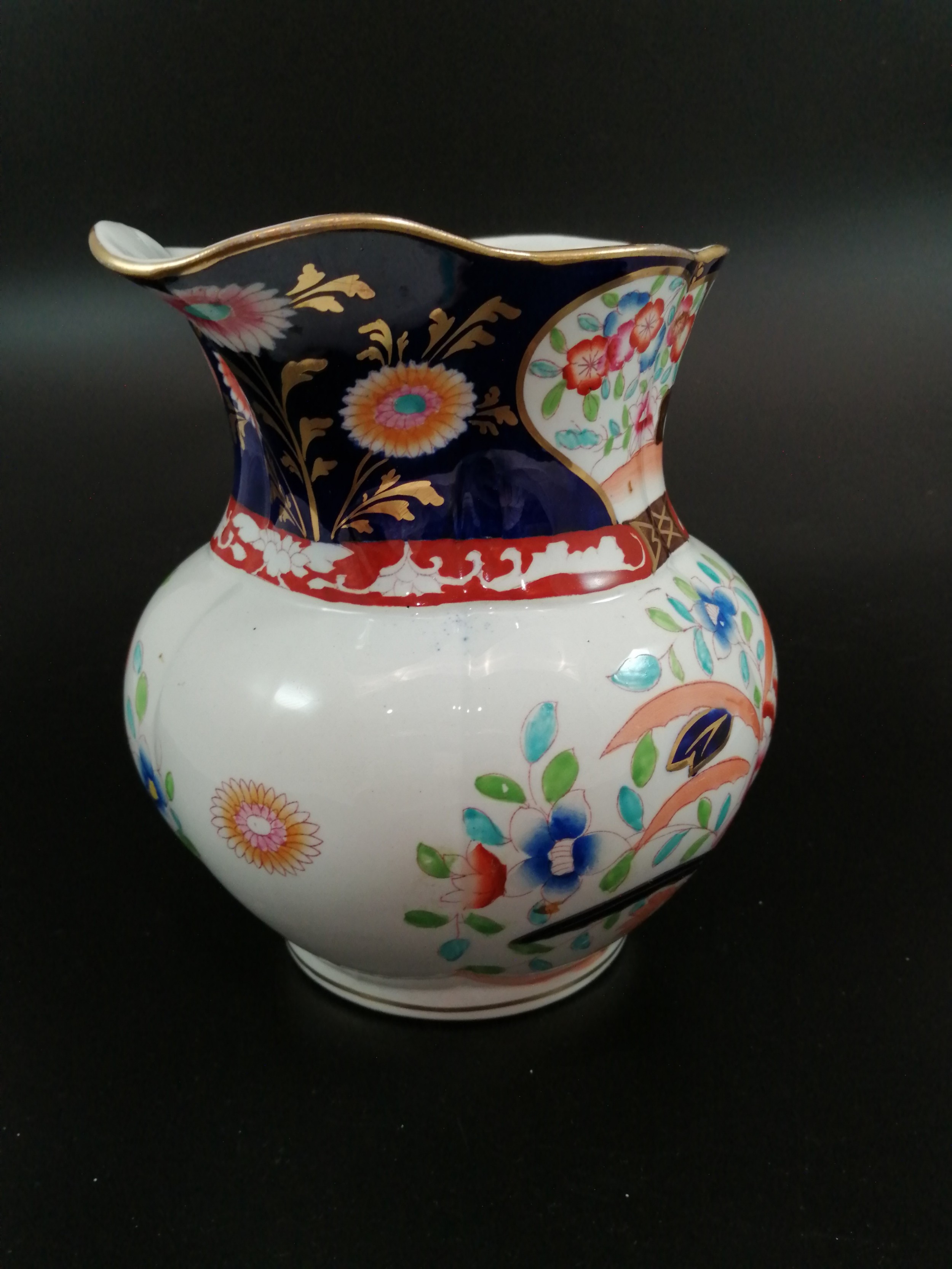
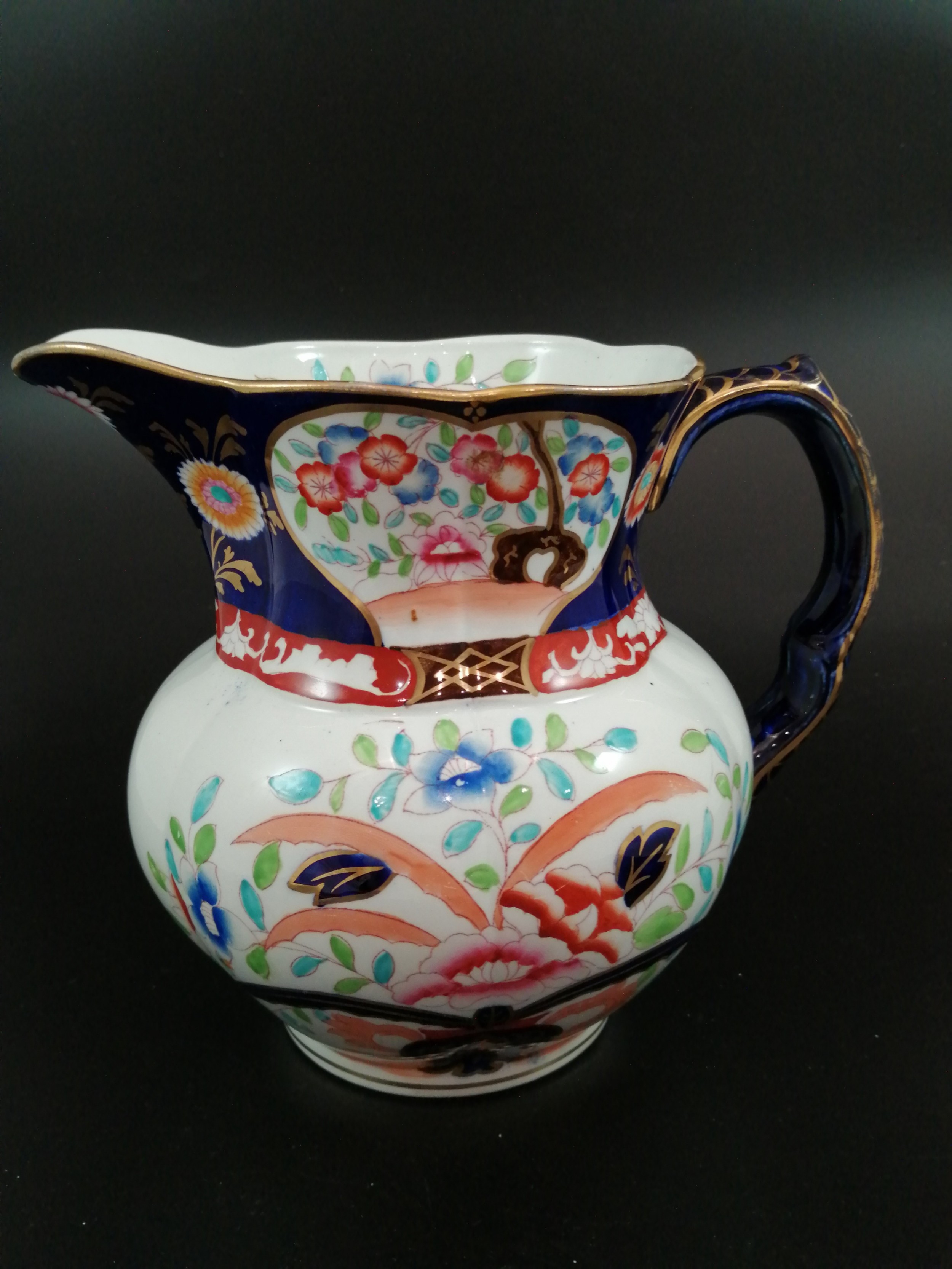
The exquisite floral pattern suggests that these were items intended for the well-to-do.
In 1791 the East India Company stopped importing porcelain en masse from the East, forcing Miles to look elsewhere for wares. His first manufacturing venture in 1792 was a partnership with Thomas Wolfe and John Lucock in Liverpool, and he later formed a partnership with George Wolfe to produce pottery in Staffordshire. These partnerships ended in 1800, but Miles retained the Victoria Pottery at Lane Delph (Fenton), where he began to make his own wares.
Attempts to replicate the much-coveted and expensive imported porcelain from China had been made in Europe since the 15th century, but its composition was poorly researched and the Chinese guarded it closely. So-called 'soft porcelain' was being produced in Europe as early as the end of the 16th century, but despite its many improvements, it suffered from kiln slump, was uneconomical for mass use, and was weak and prone to chipping.
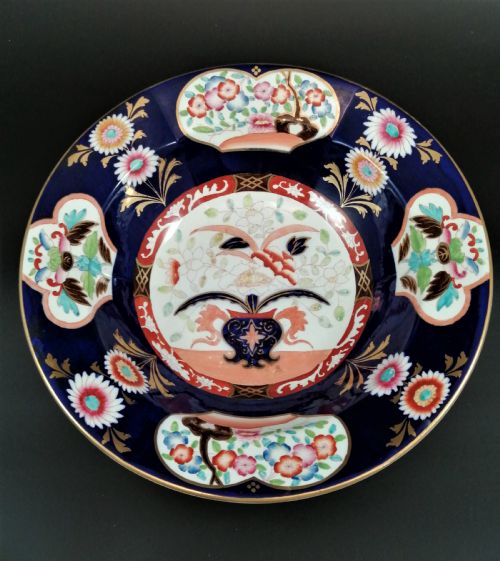
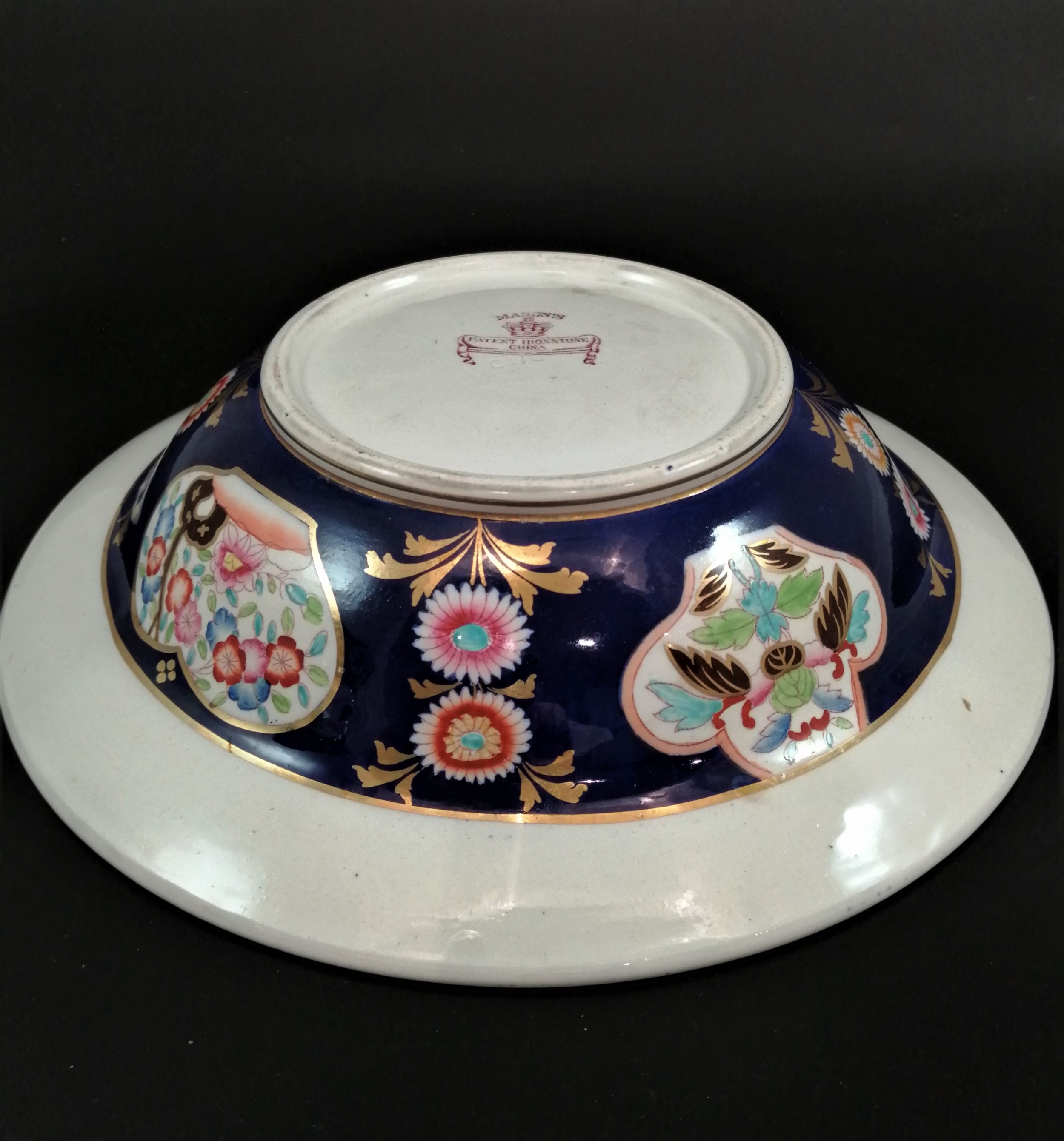
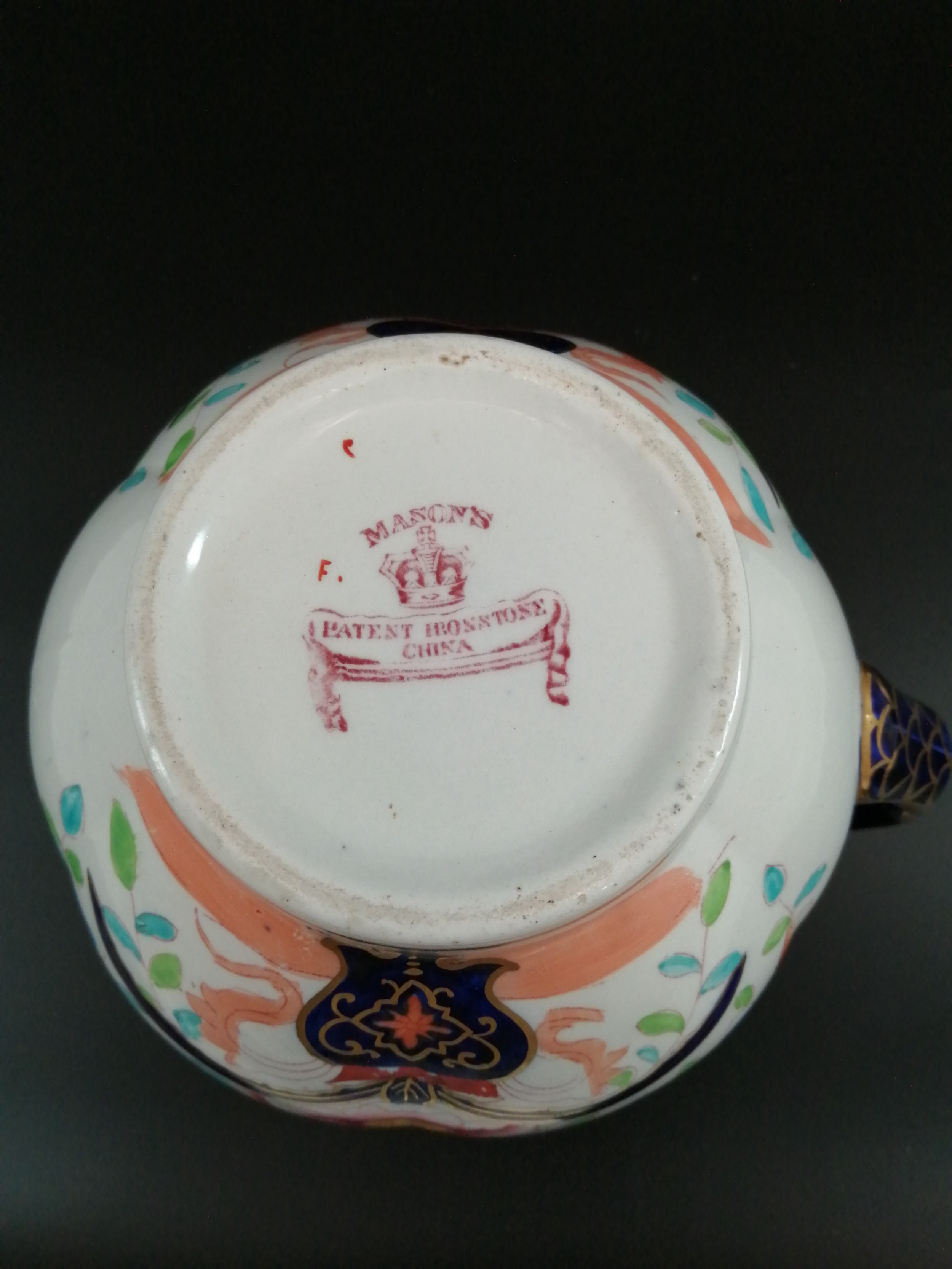
The cessation of mass imports of porcelain from China prompted English potters to accelerate experimentation with various clays. One of these, 'ironstone', was being produced by various potters by the early 19th century, including Spode, who was already known to be making ironstone products, which he exported in large quantities to Europe in 1805. However, it was Mile Mason's third son, Charles Mason, who patented his "Ironstone China" in 1813 - a name that became synonymous with Mason's company. The advantage of ironstone was that it was easier to produce and also much more durable.
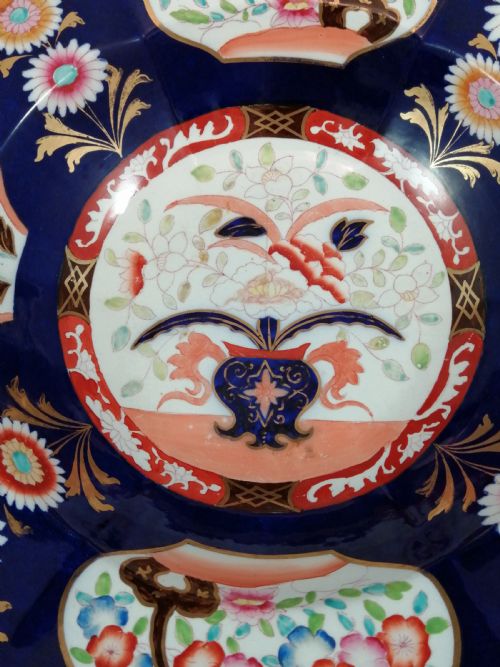
In an attempt to copy Chinese porcelain, Mason's applied transfer-printed designs to the ironstone. The main decoration was applied to the body of the piece and then covered with a protective glaze. The decoration was then applied by hand (overglaze) and the pieces were fired.
But the development of British porcelain production followed its own course - in 1822 Spode launched its Felspar porcelain. This marked the start of the decline of ironstone as the more refined and durable bone china grew in popularity. By 1861 Mason's was bought by Ashworth Brothers Ltd, which continued to produce Mason's Ironstone (sometimes reusing the Mason's stamp) but never regained the popularity it had enjoyed in the first half of the 19th century.
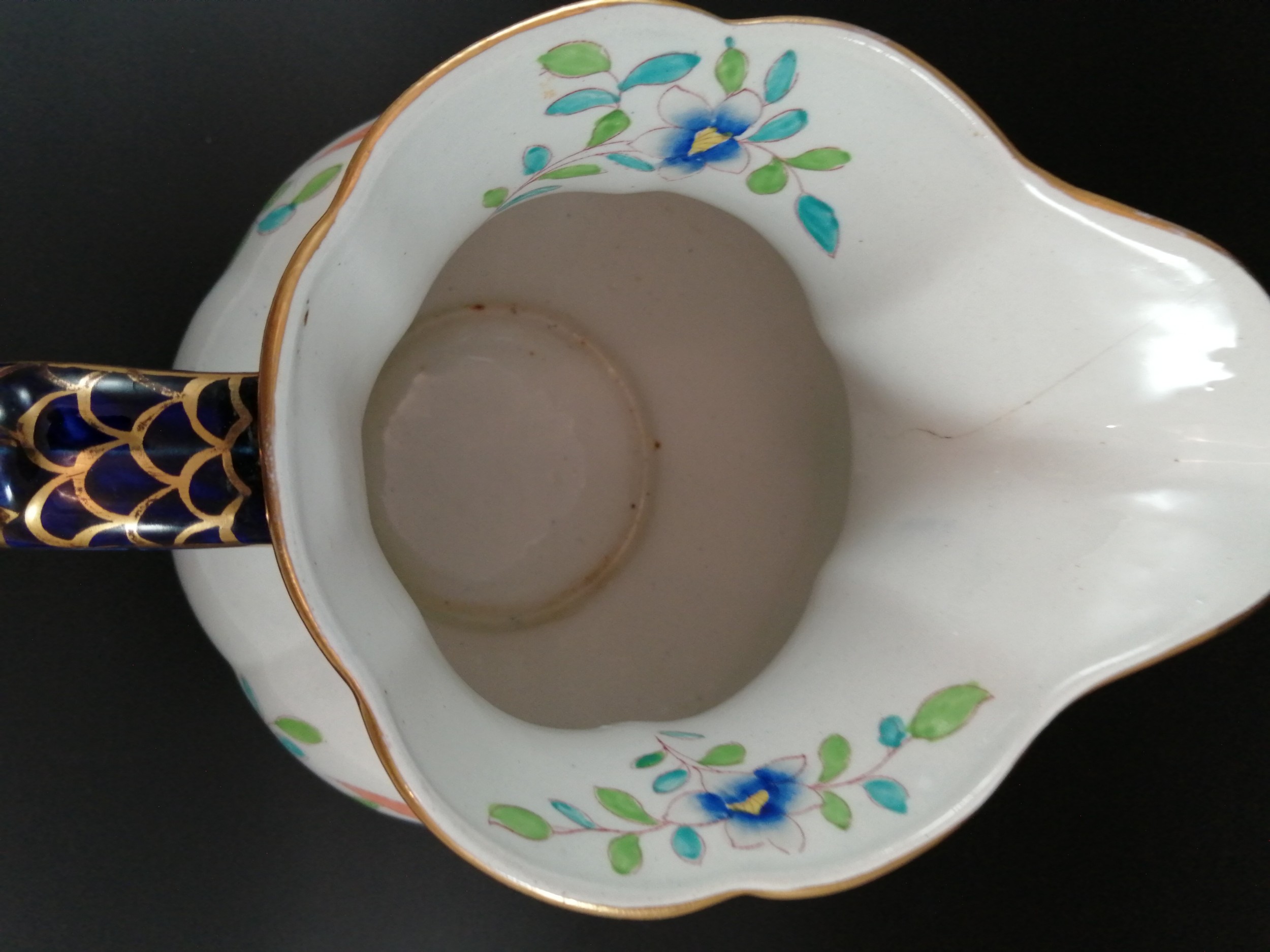
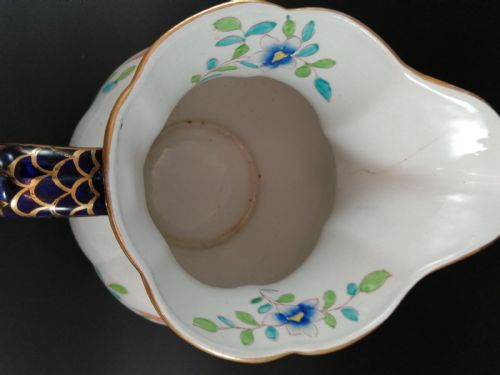
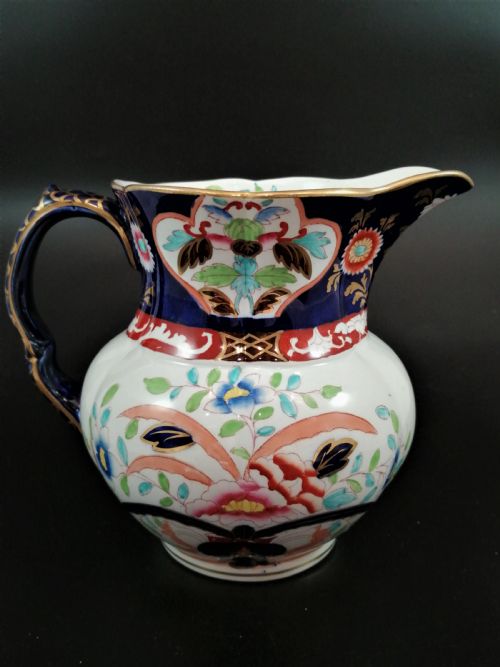
Pitcher
Height 18 cm
Distance from the edge of the spout to the handle 23 cm
Diameter of the base 9,5 cm
Body diameter 16.2 cm
Weight 728 grams
Condition : Hairline crack on the spout, visible only from the inside.
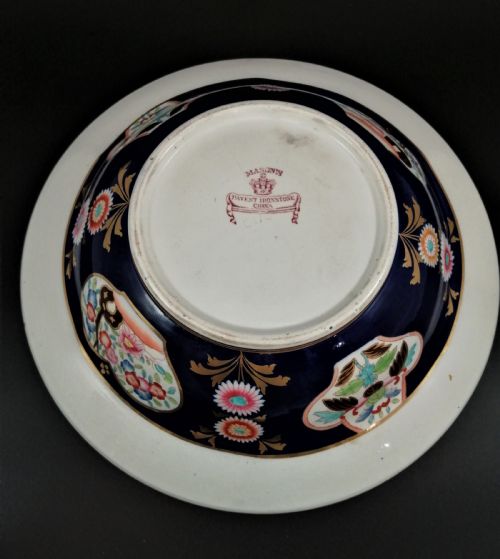
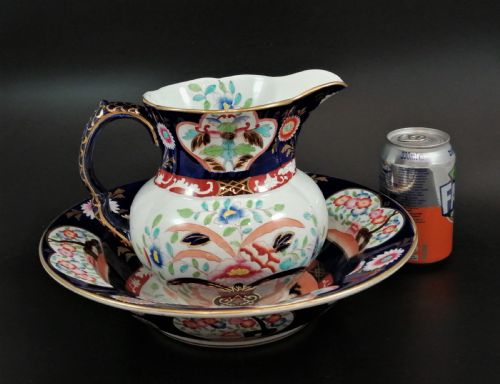
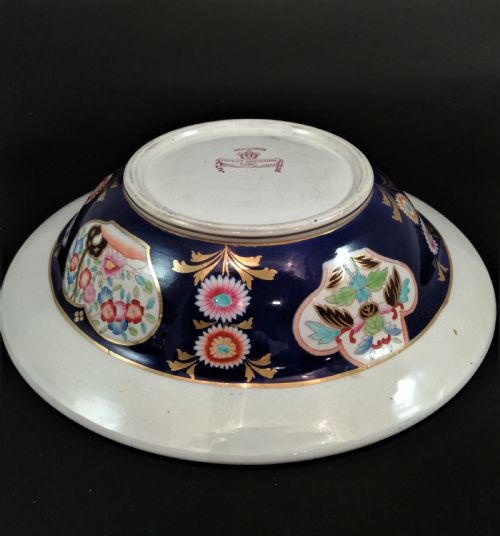
Basin
Height 7.5 cm
Top diameter 30 cm
Lower diameter 14 cm
Weight 1077 grams
Condition: One small hairline crack, hardly noticeable
Otherwise a superb condition, enamel and gilding in excellent antique condition.Please carefully regard all photos
The item will be sent with full tracking and insurance. Please note that shipping costs include labour, packing and postage.
UK delivery is £20
Upon request, we are willing to provide a quote for shipping outside of UK
Gillers Antiques Ltd has dated this piece to the 19th Century.
You can view the stock and full dealer information on the Gillers Antiques Ltd Profile Page
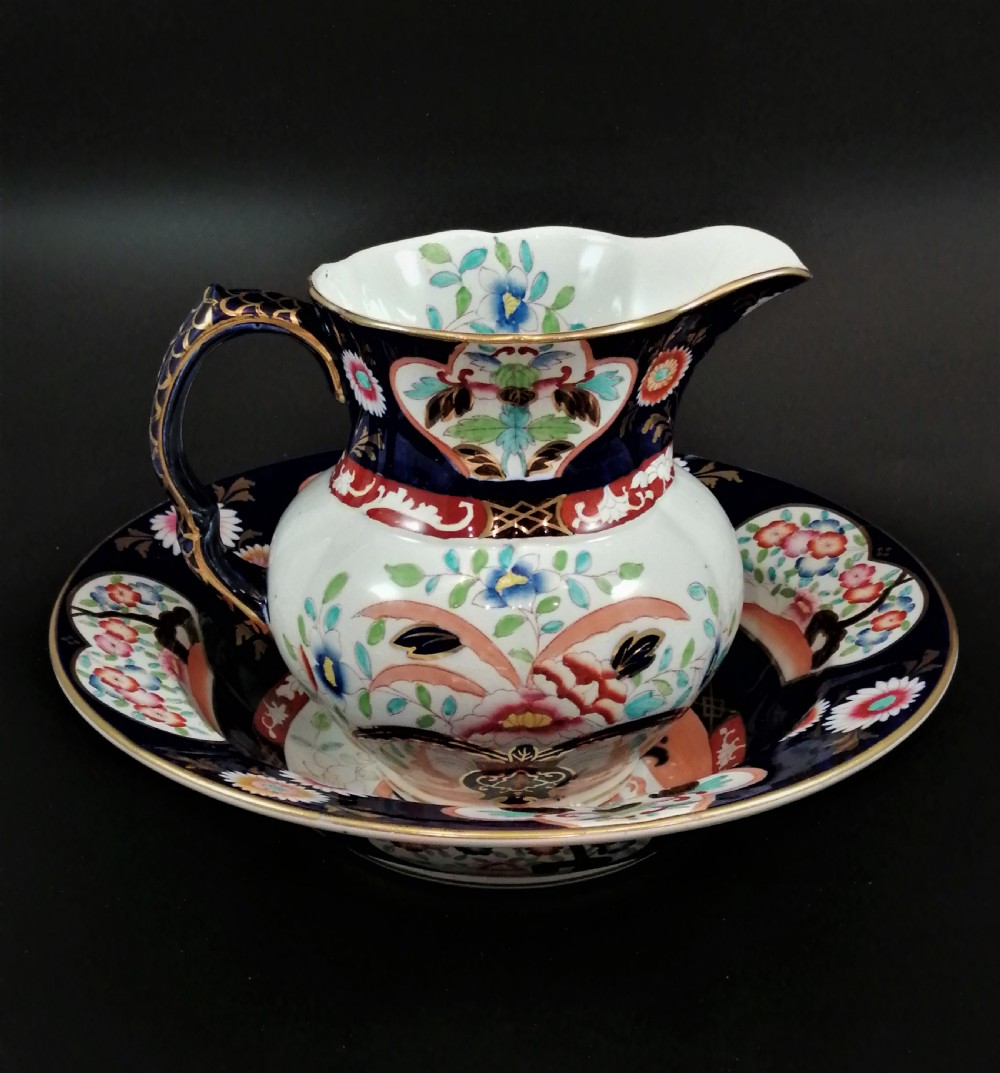
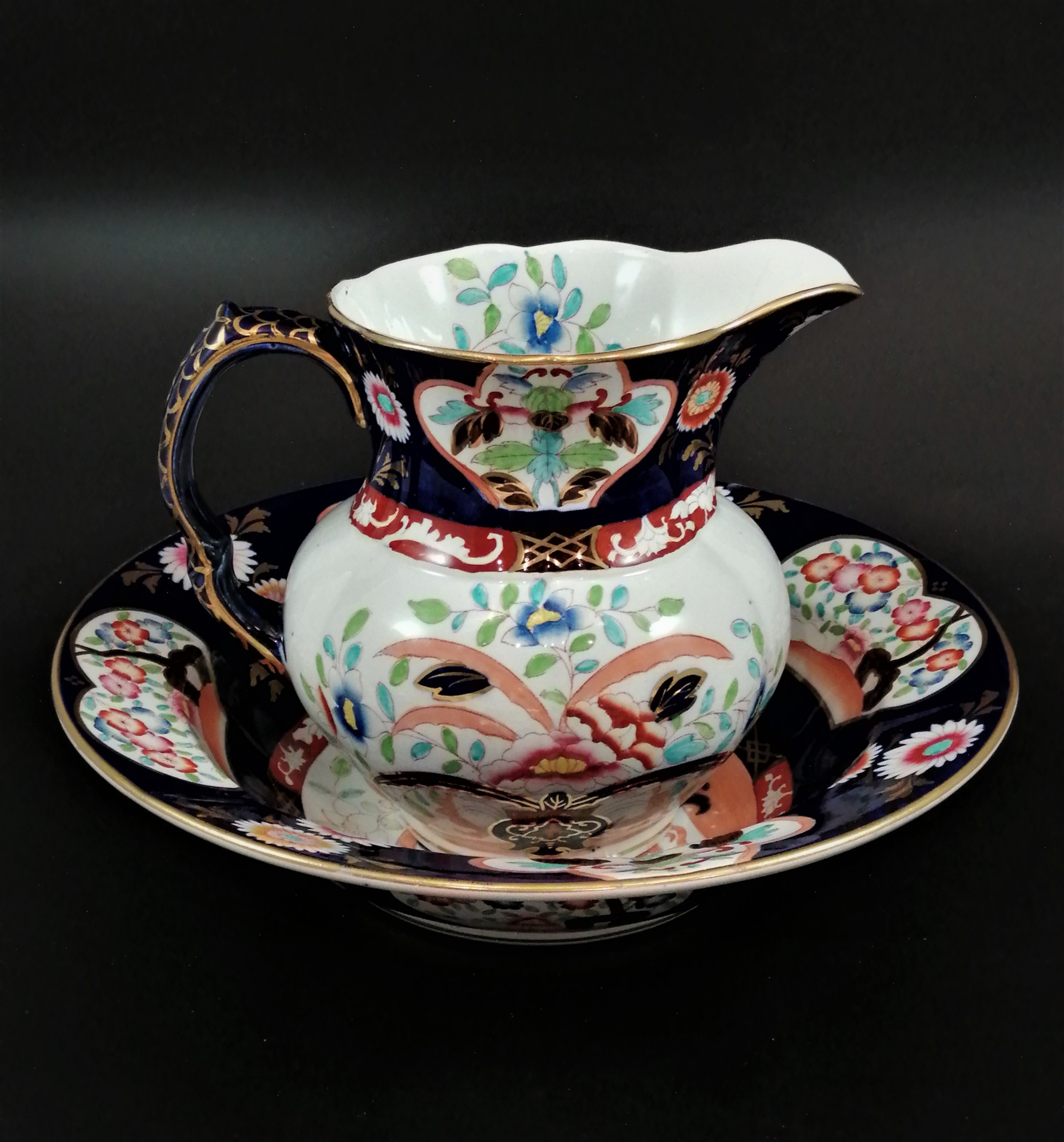
Antique Masons Ironstone Pitcher & Basin,circa 1840