Brian MacDonald Antique Rugs & Carpets has dated this piece to the 1870s.
She asked the young girl, who was a member of that household, what her little rug was to be used for. She didn't answer! She asked again but received no reply from the girl. When Mugul insisted, the young girlk put her finger to her lips as a sign to keep quiet. At breakfast the next day, the young girl volunteered that the rug she was weaving was to be used at her wedding. She explained that it was a highly-prized rug where she will sit on it as though it were her throne and take her marriage vows. After the wedding, she and her husband will sit on it together alone and drink the sherbet brought to them and break bread together. They will make each other a promise to be faithful. A few days later, the young girl will take the rug under her arm and go to her mother-in-law when she will kiss her hand. On returning to the marriage yurt, the rug will not be used agaiun except for guests to sit on.
She added that for such an important rug, she shouldn't talk while weaving it as the smallest piece of gossip, a lie or bad talk could ruin its cleanliness. As a symbol of her wedding, it had to be knotted under very special conditions.
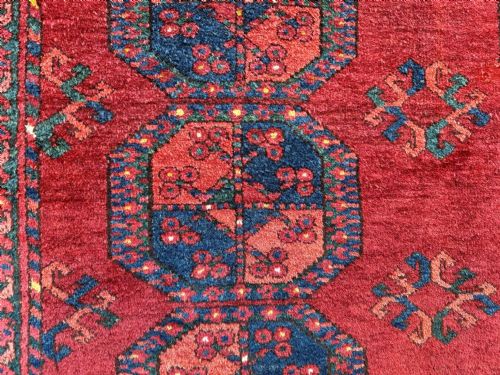
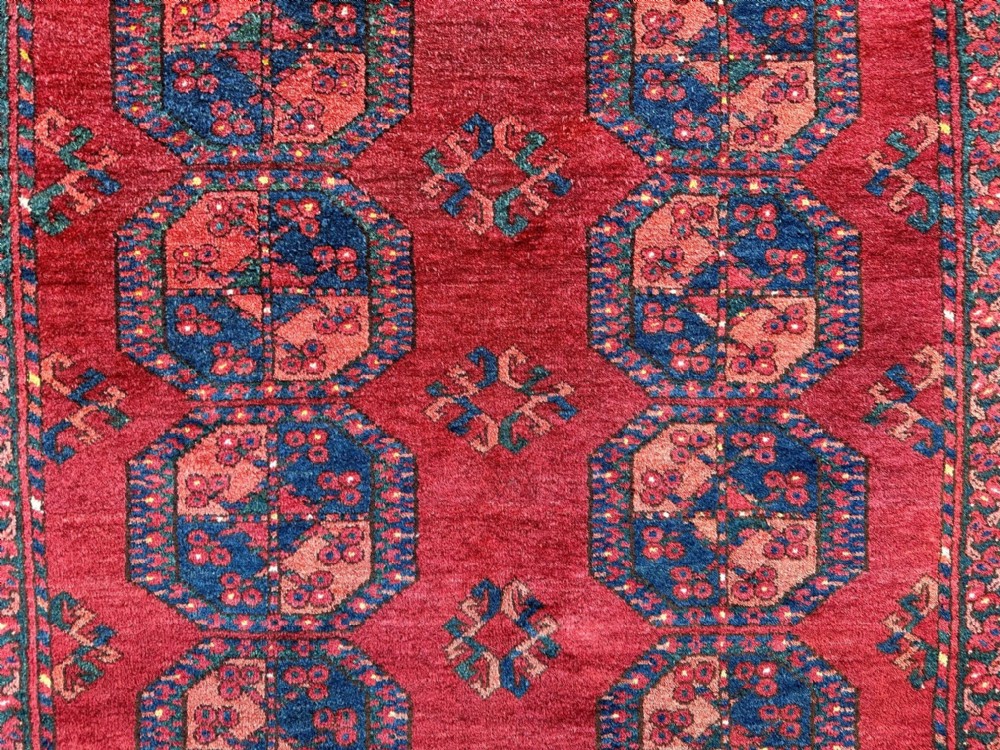
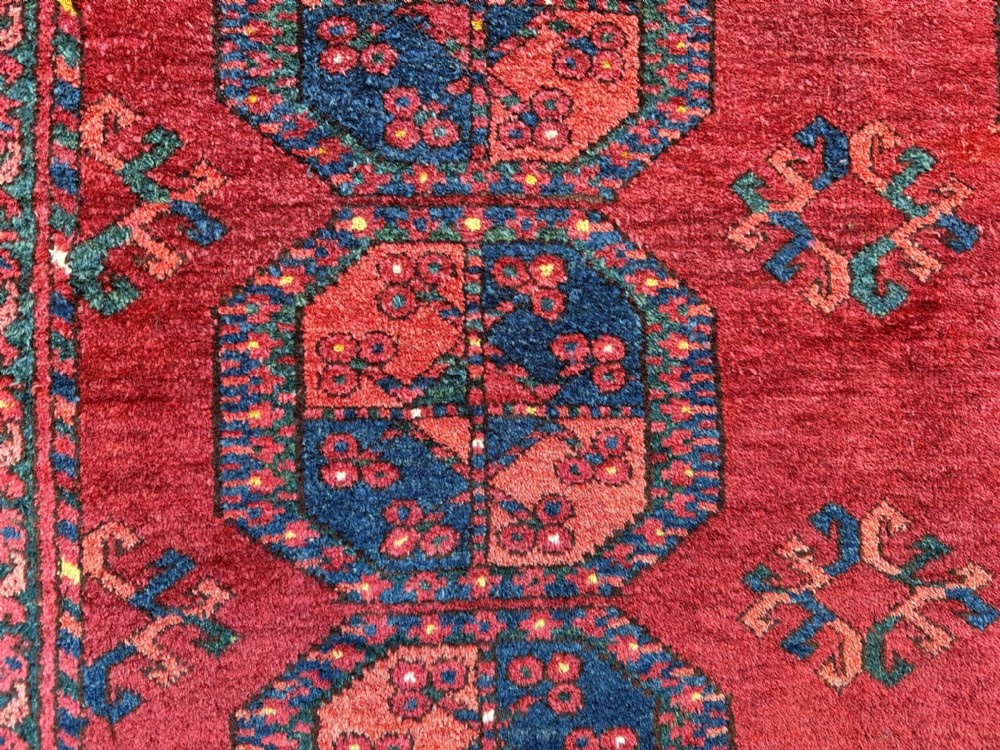
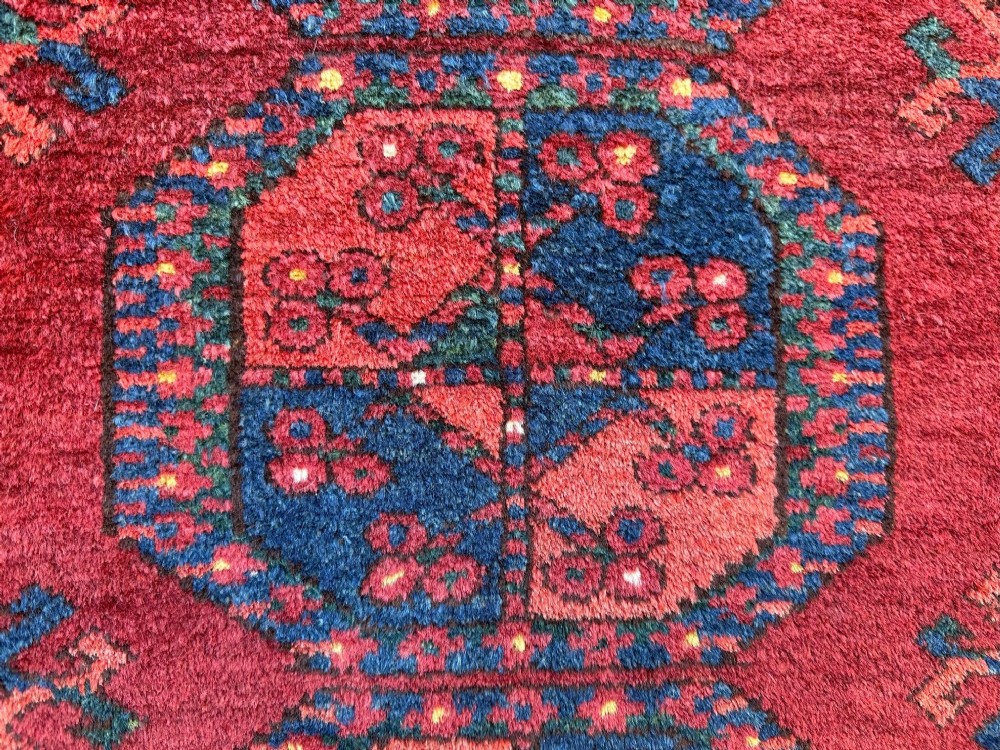
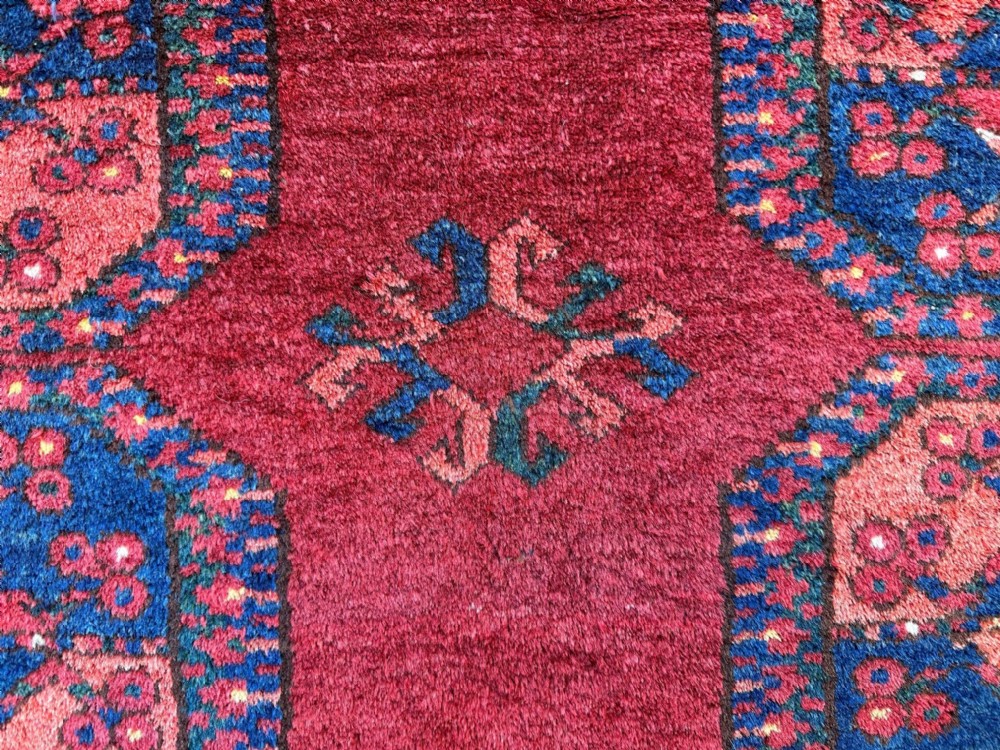
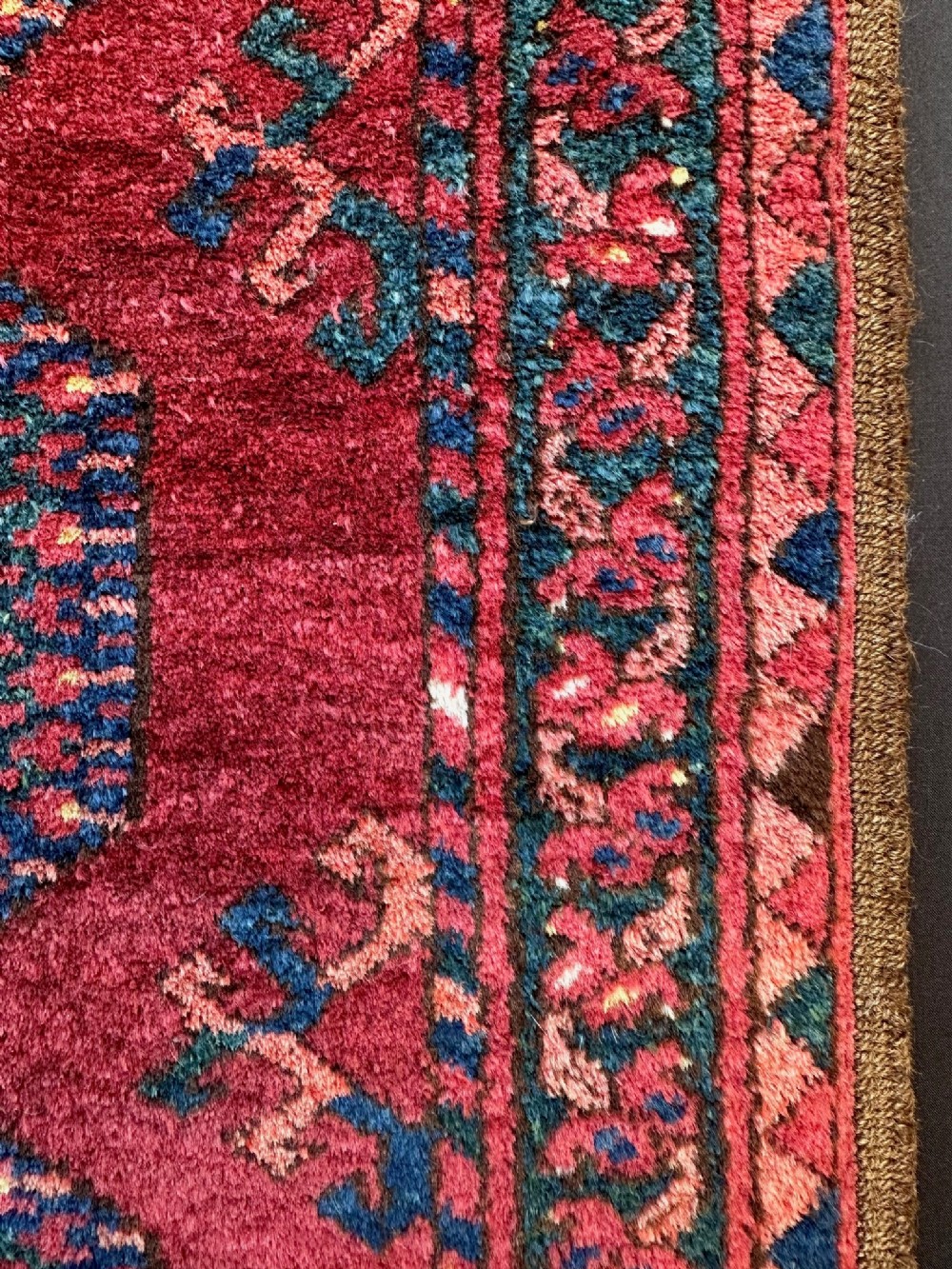
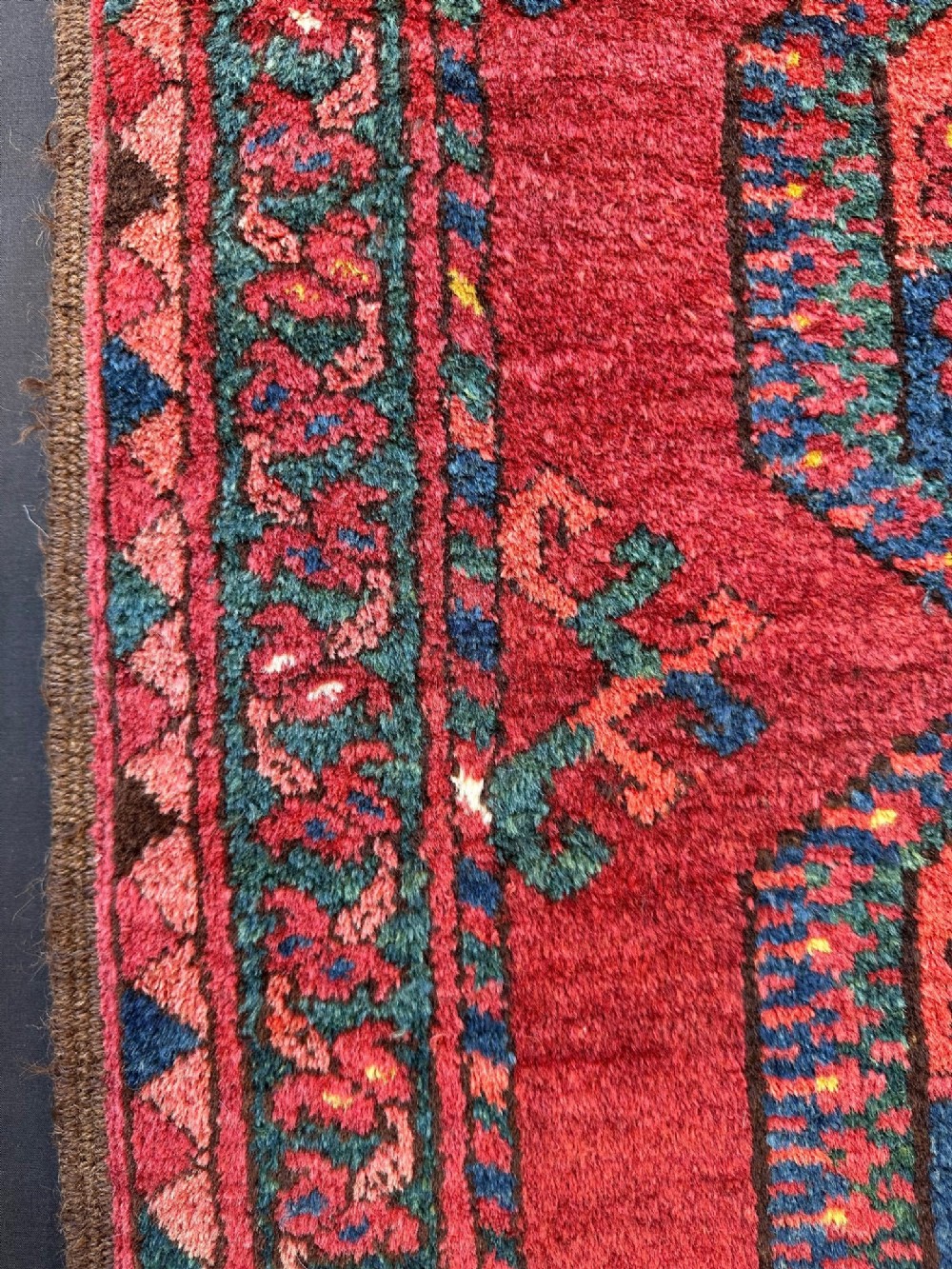
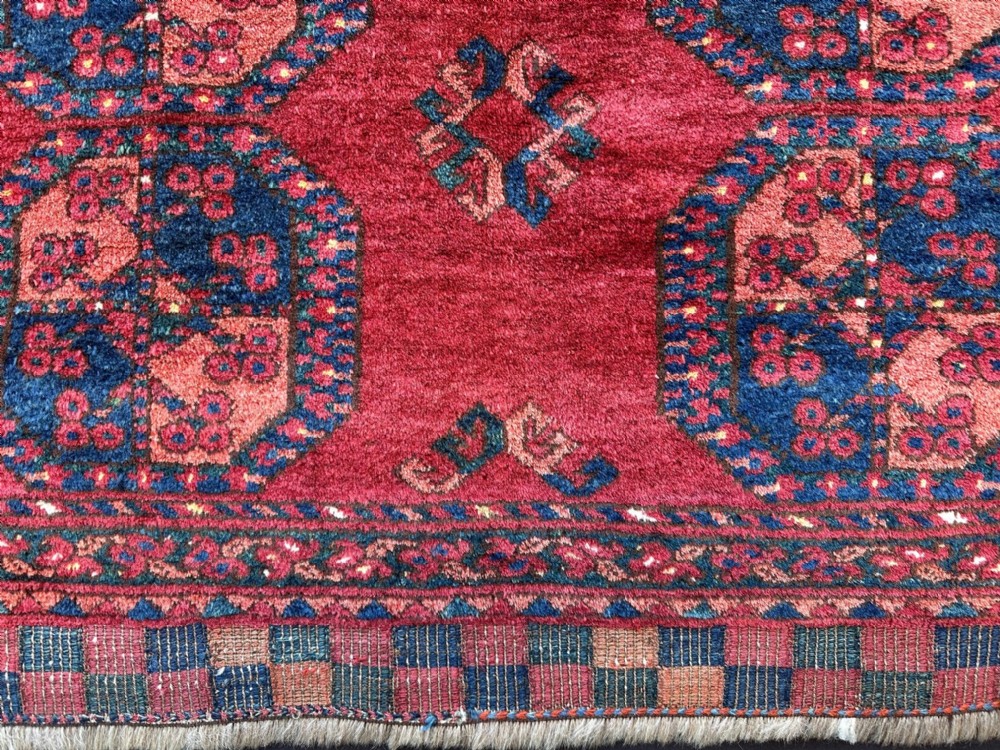
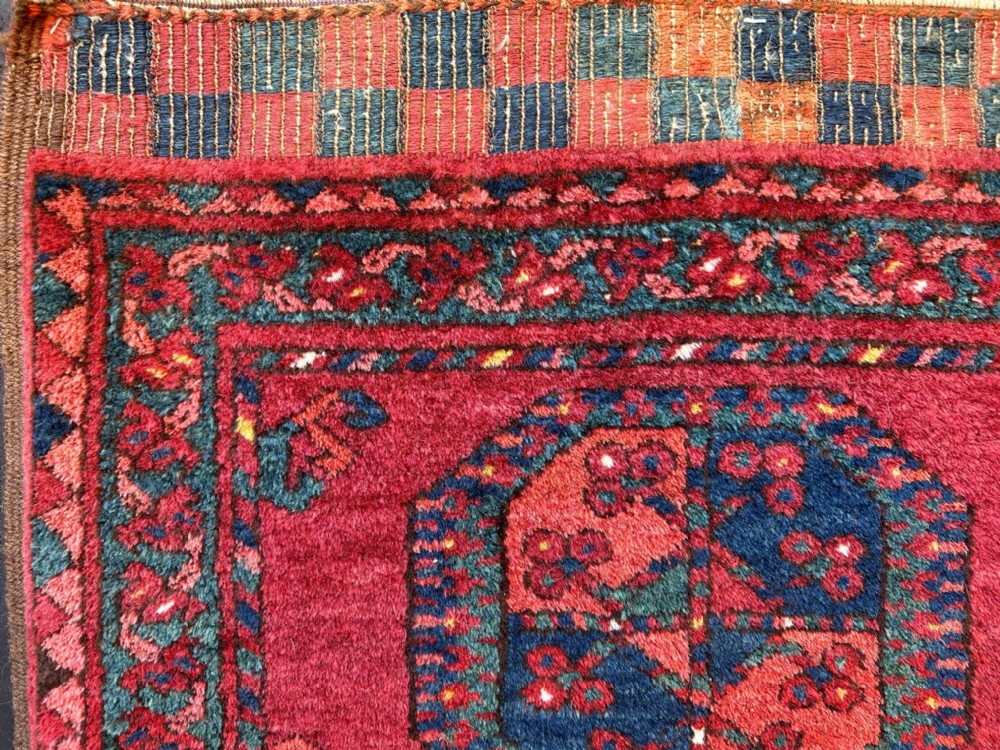
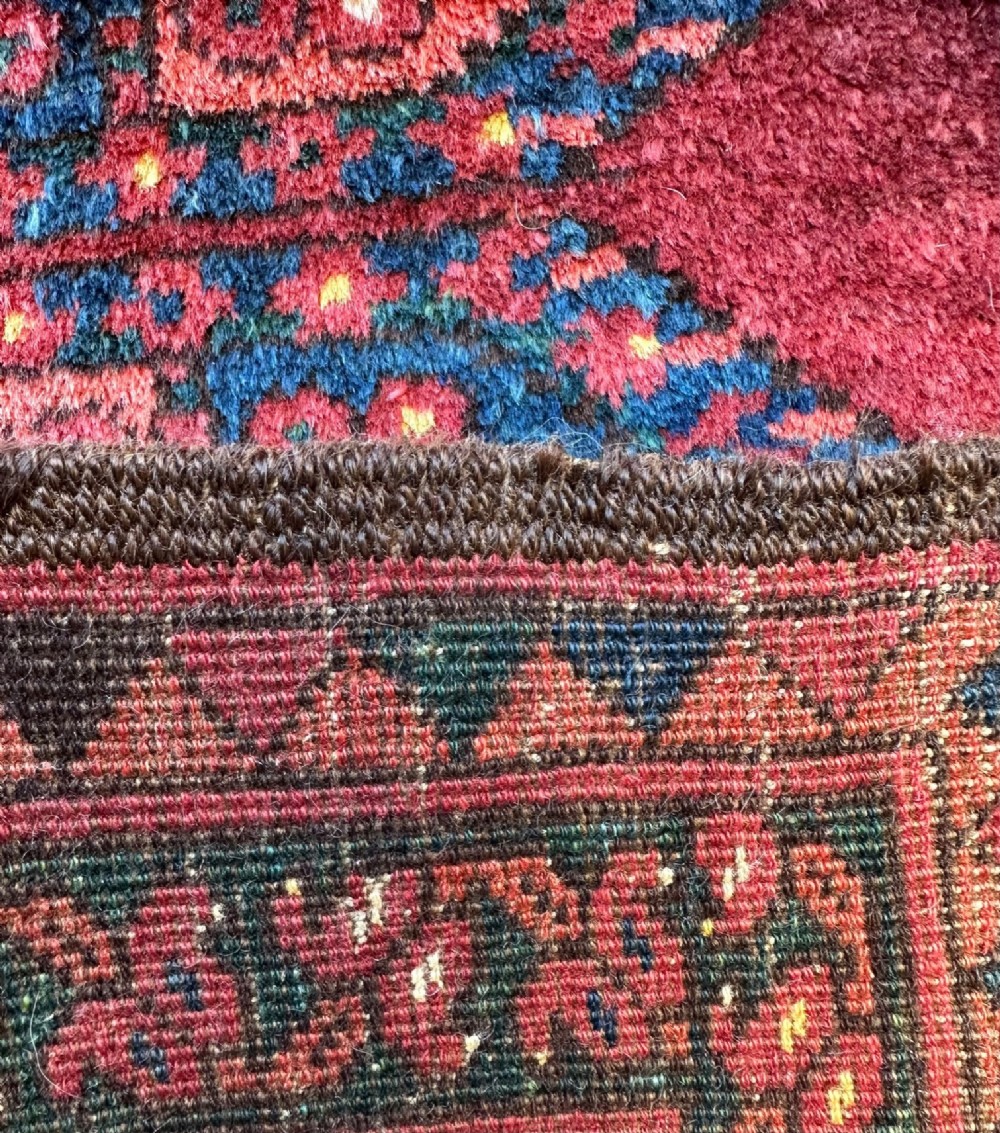
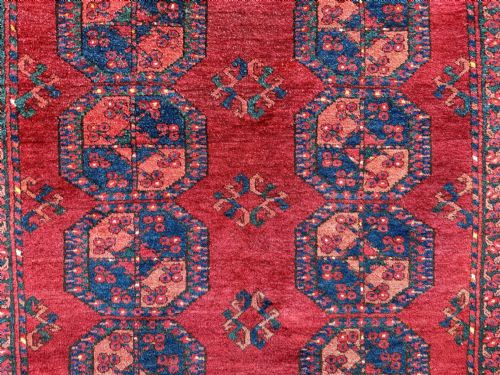
The wedding rug illustrated here was made by Ersary Turkmen in the Middle Amu Darya region of Turkmenistan circa 1860-1870. It has the most beautiful glossy madder-red ground depicting two vertical rows of five Ersary 'guls' (tribal crests) in full pile. The checkerboard flatweave skirts remain at both ends and the rug has no repairs whatsoever. A truly magnificent and rare example of an Ersary tribal wedding rug.
Size: 1.42m x 1.07m (4' 8" x 3' 6").
Brian MacDonald Antique Rugs & Carpets has dated this piece to the 1870s.
Dealing in antique and old tribal rugs, dowry weavings and decorative carpets from the near east and central asia since 1979.
You can view the stock and full dealer information on the Brian MacDonald Antique Rugs & Carpets Profile Page
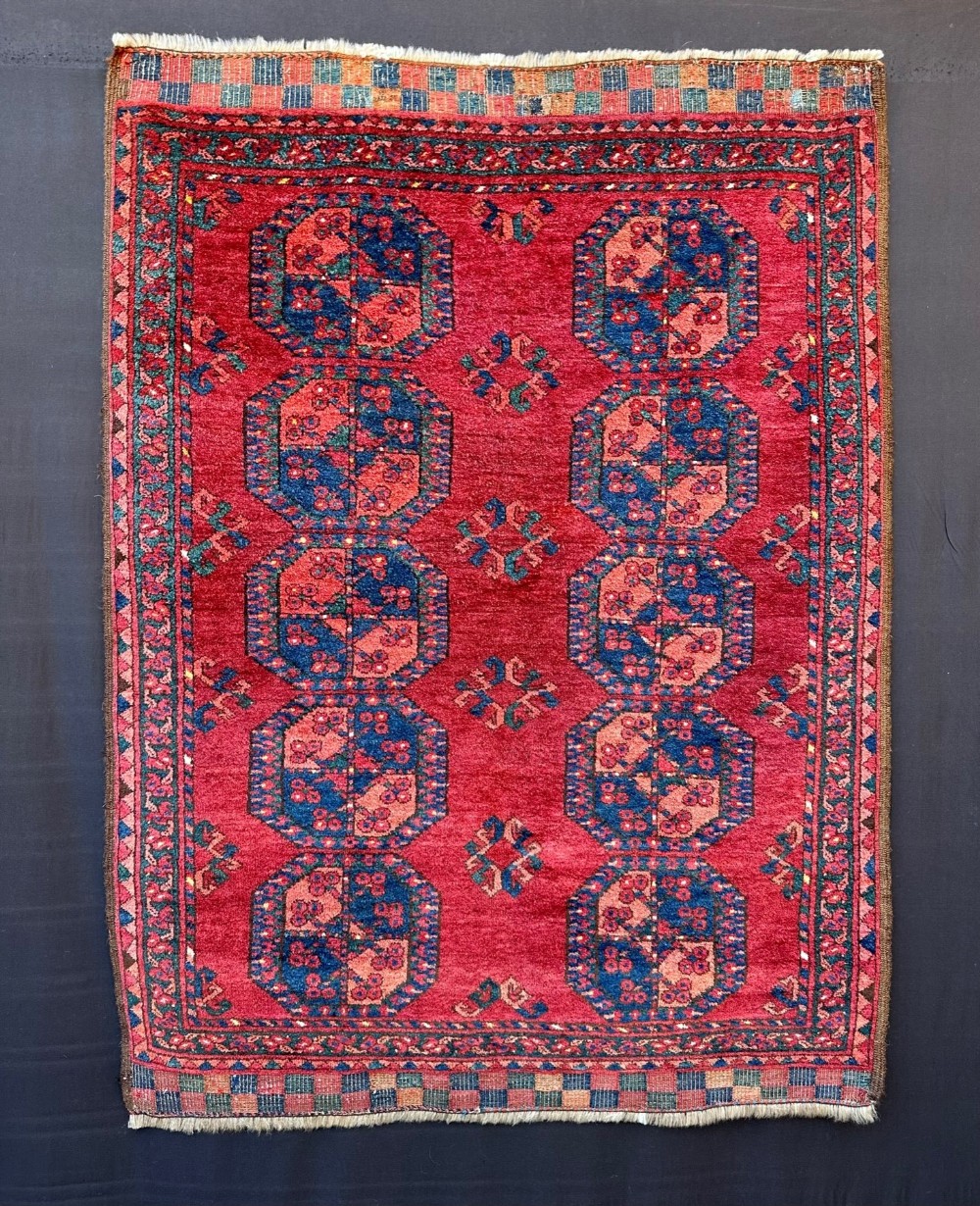
Antique Turkmen Wedding Rug, Ersary Tribes, Middle Amu Darya Region, Turkmenistan, Central Asia.