45,459  PAGES BROWSED TODAY PAGES TODAY 103  ANTIQUES UPLOADED TODAY NEW ARRIVALS
ID #SA976487
SOLD
Email
Save
Early Derby, Patch Period, Diana Figurine, William Duesbury & Co., Ca. 1765
Gillers Antiques Ltd
sold SA976487
Sorry, but this item has been sold.
Gillers Antiques Ltd

Gillers Antiques Ltd

Sellingantiques Verified Since Mar 2023
View Dealers Stock Page
Id #SA976487
PDF SHARE
SAVE

Early Derby, Patch Period, Diana Figurine, William Duesbury & Co., Ca. 1765

18th century
Description

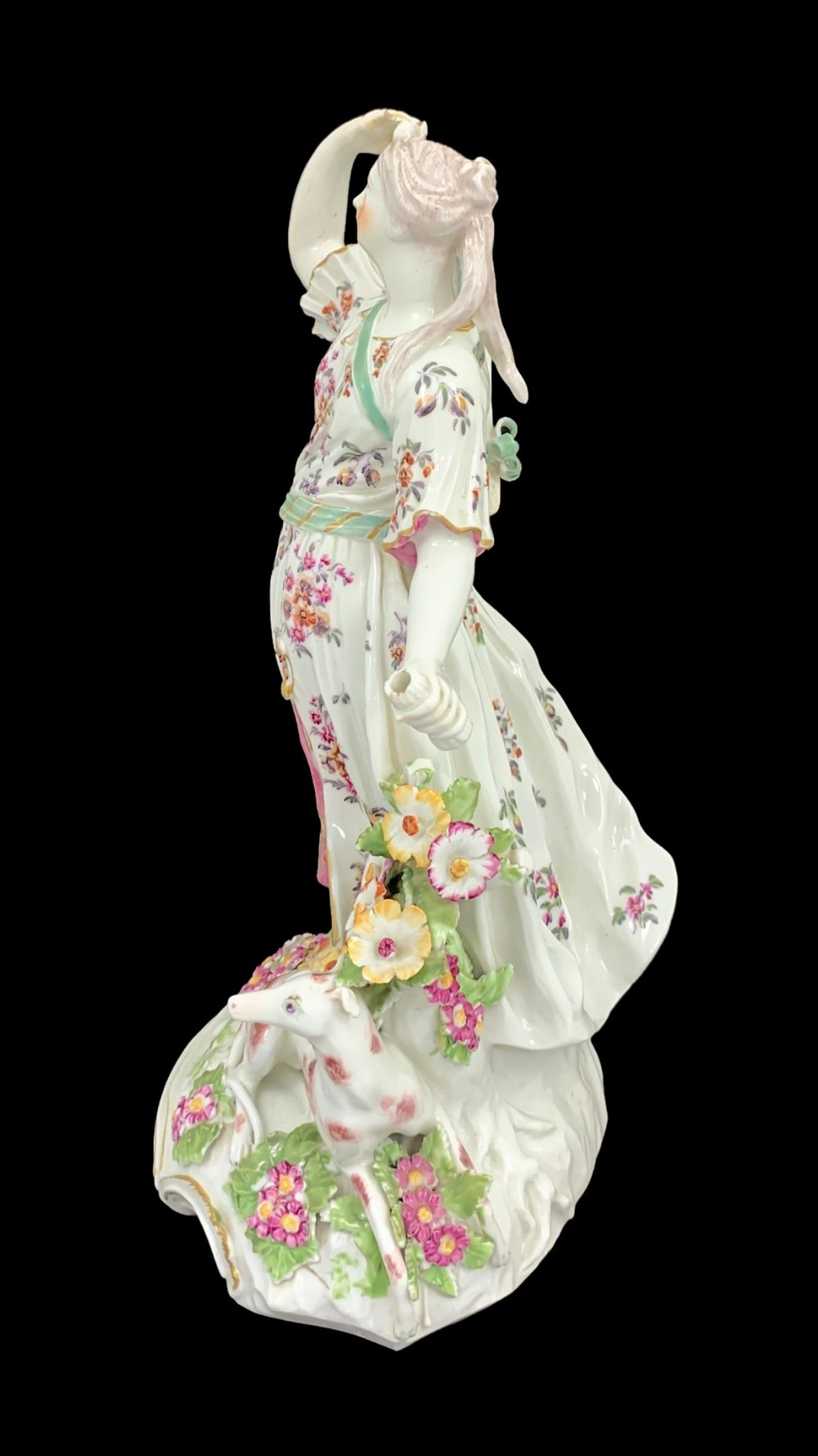
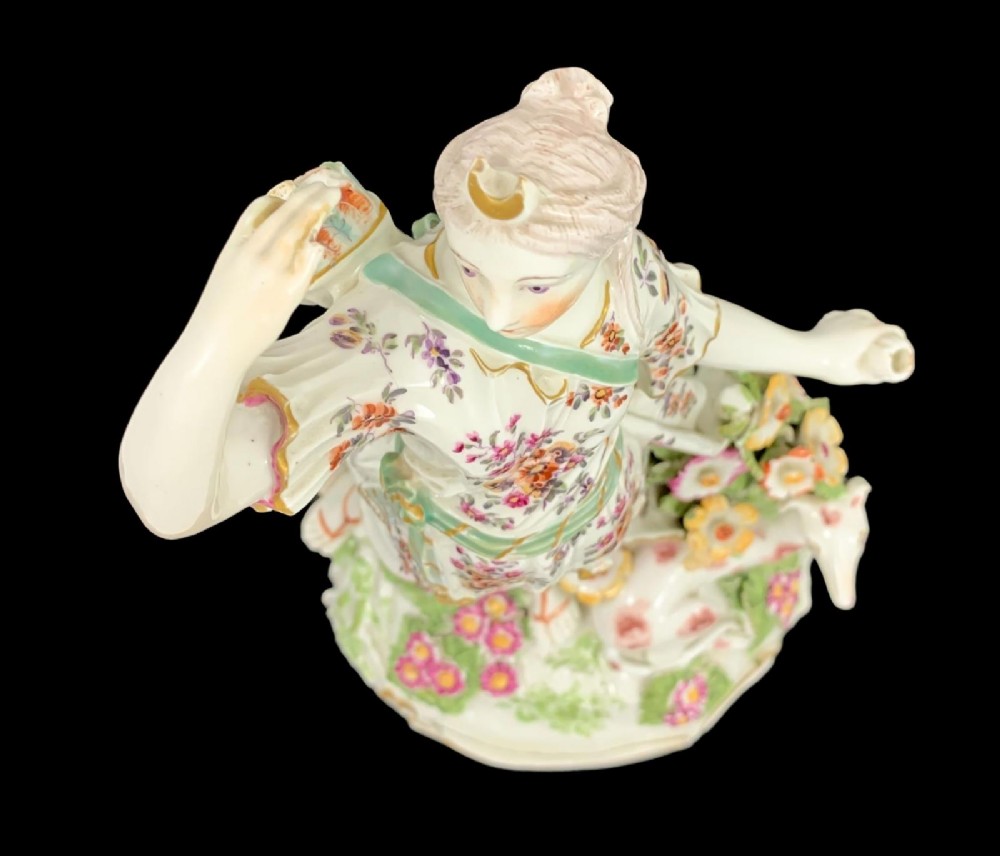
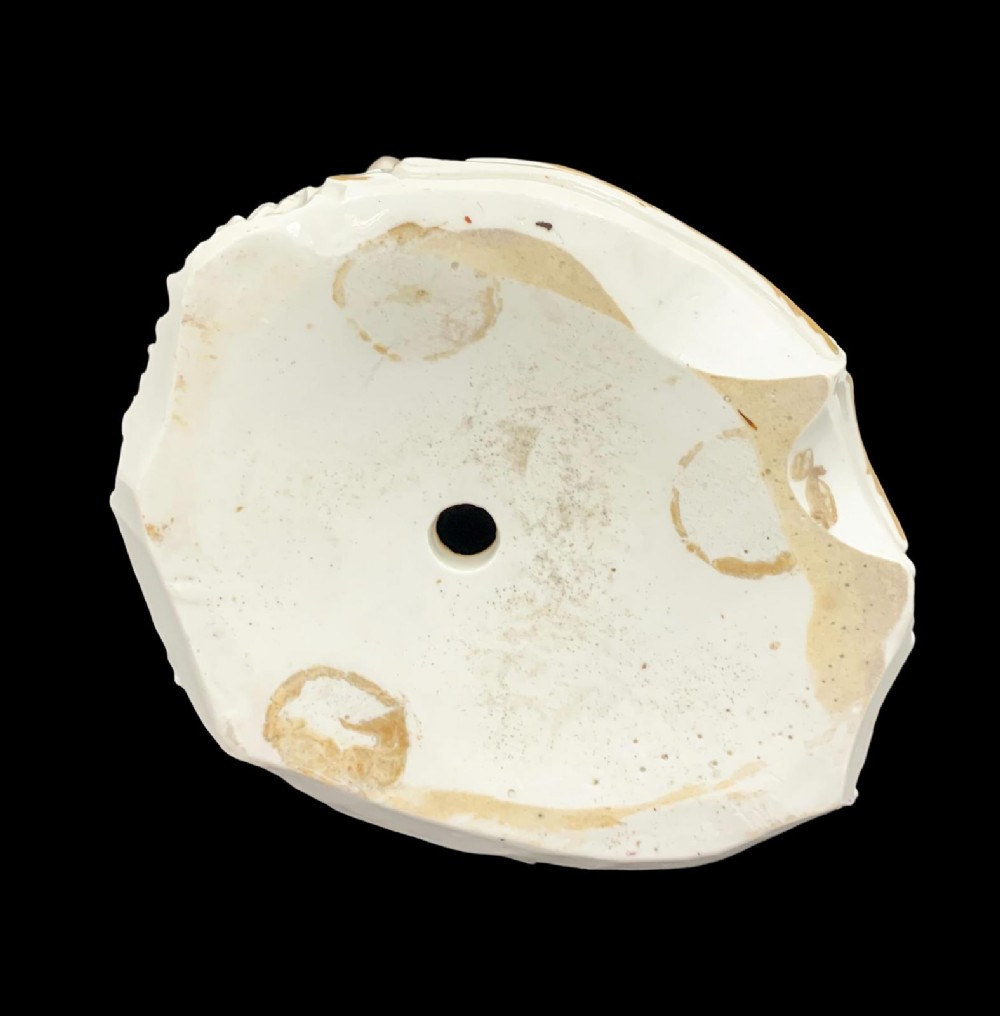
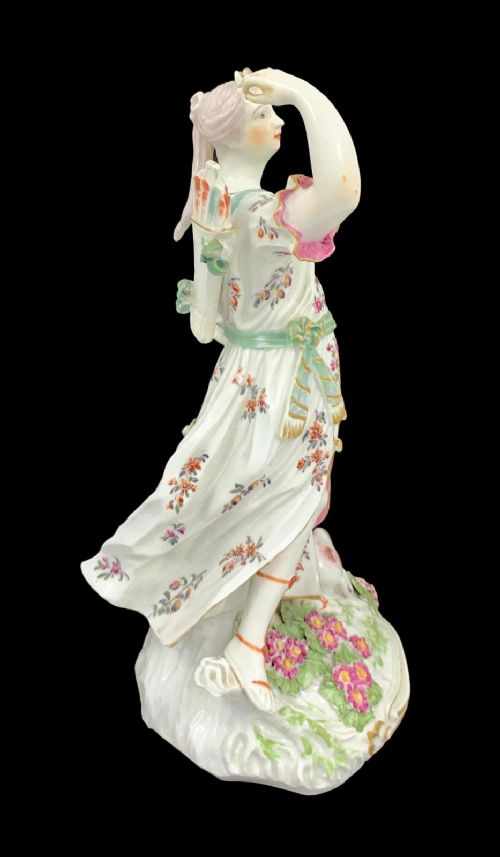
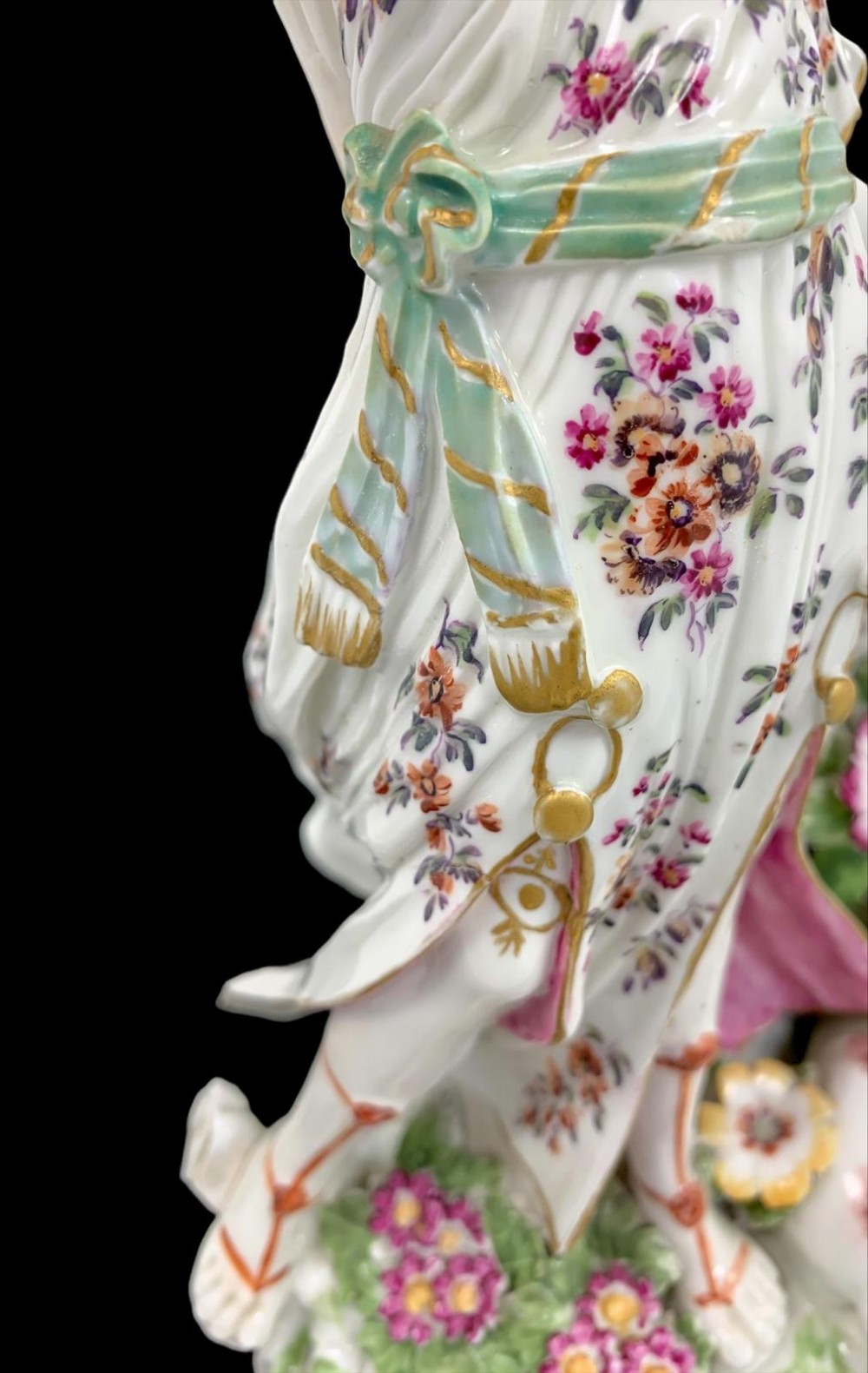
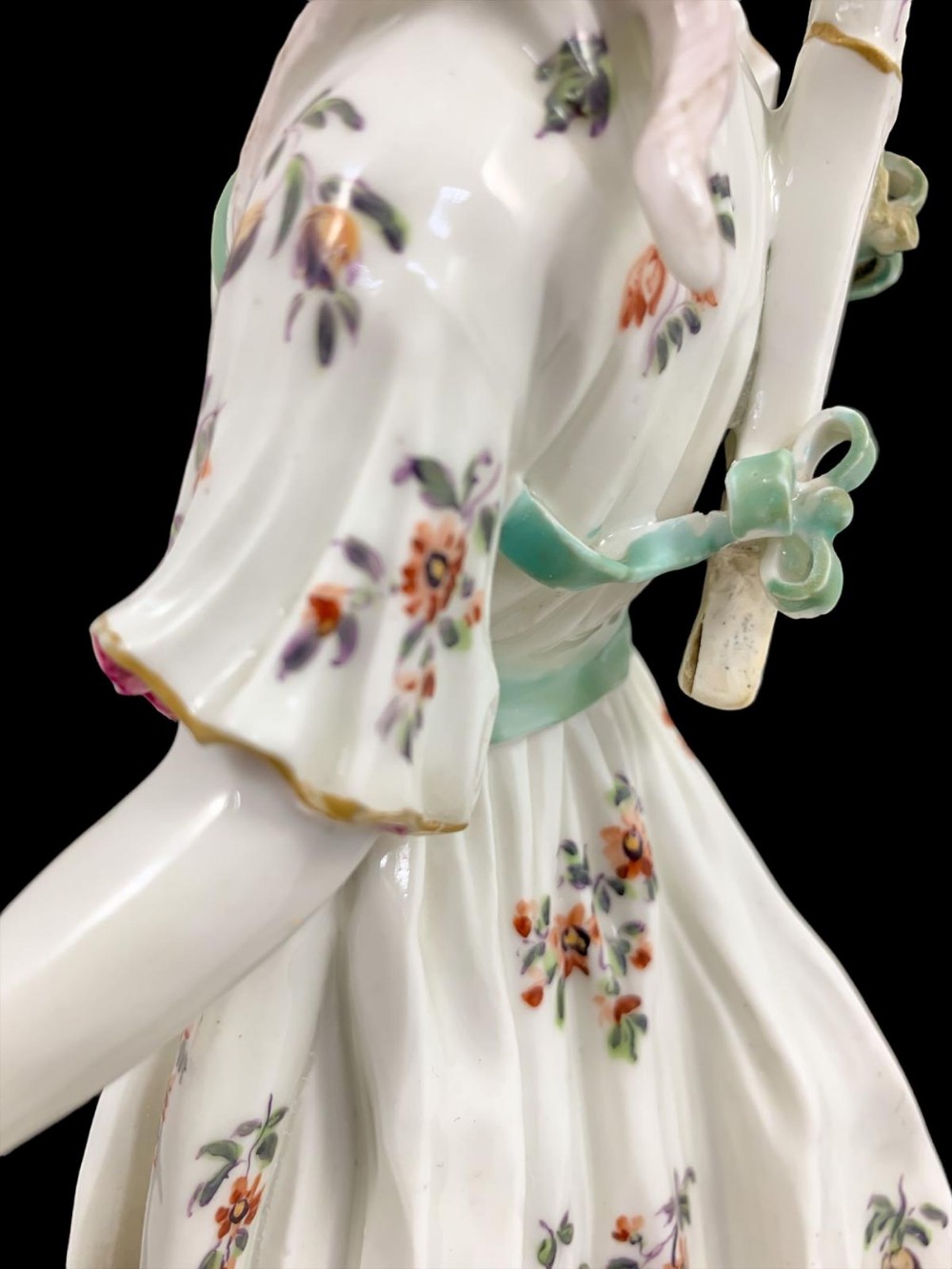
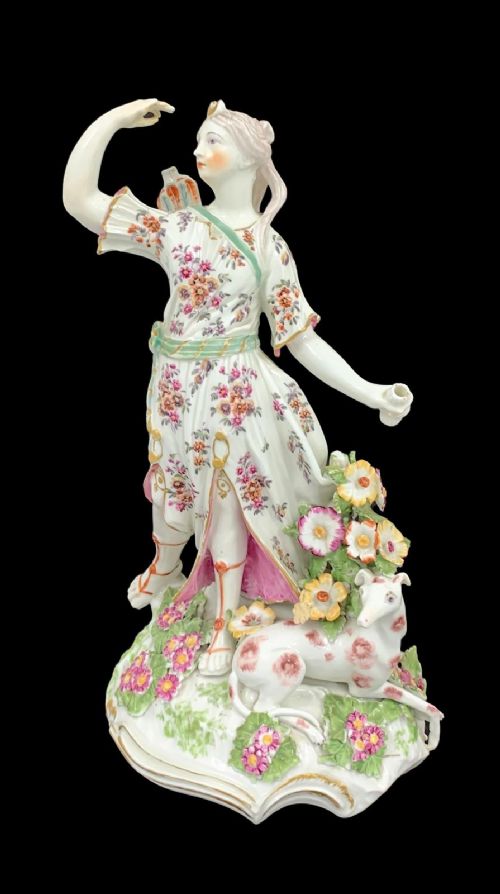
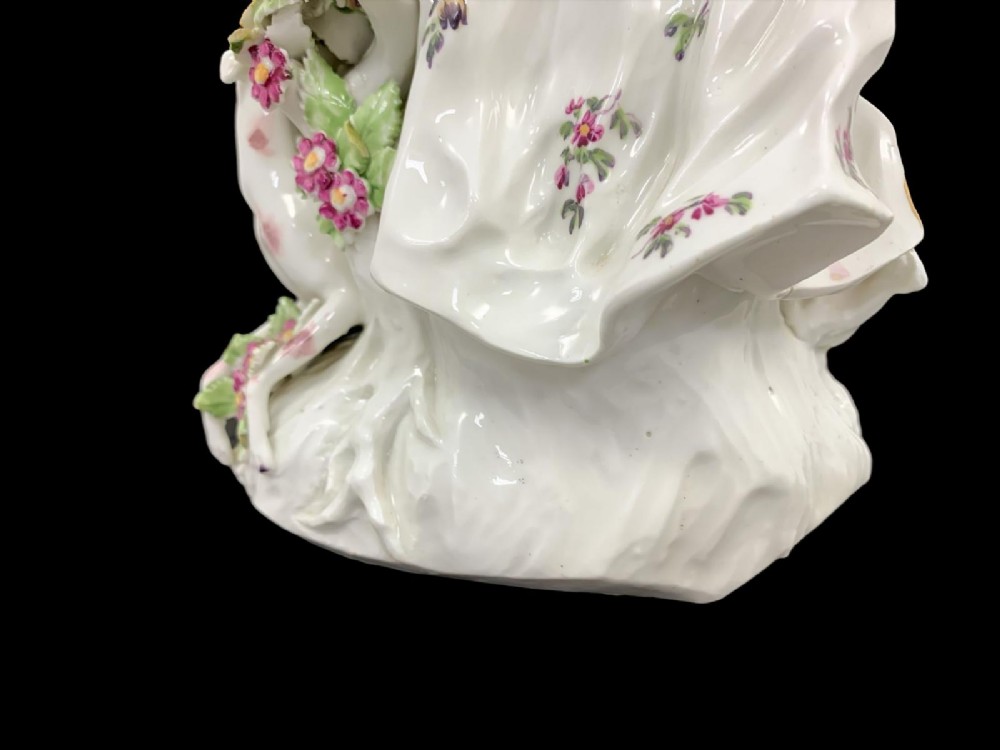
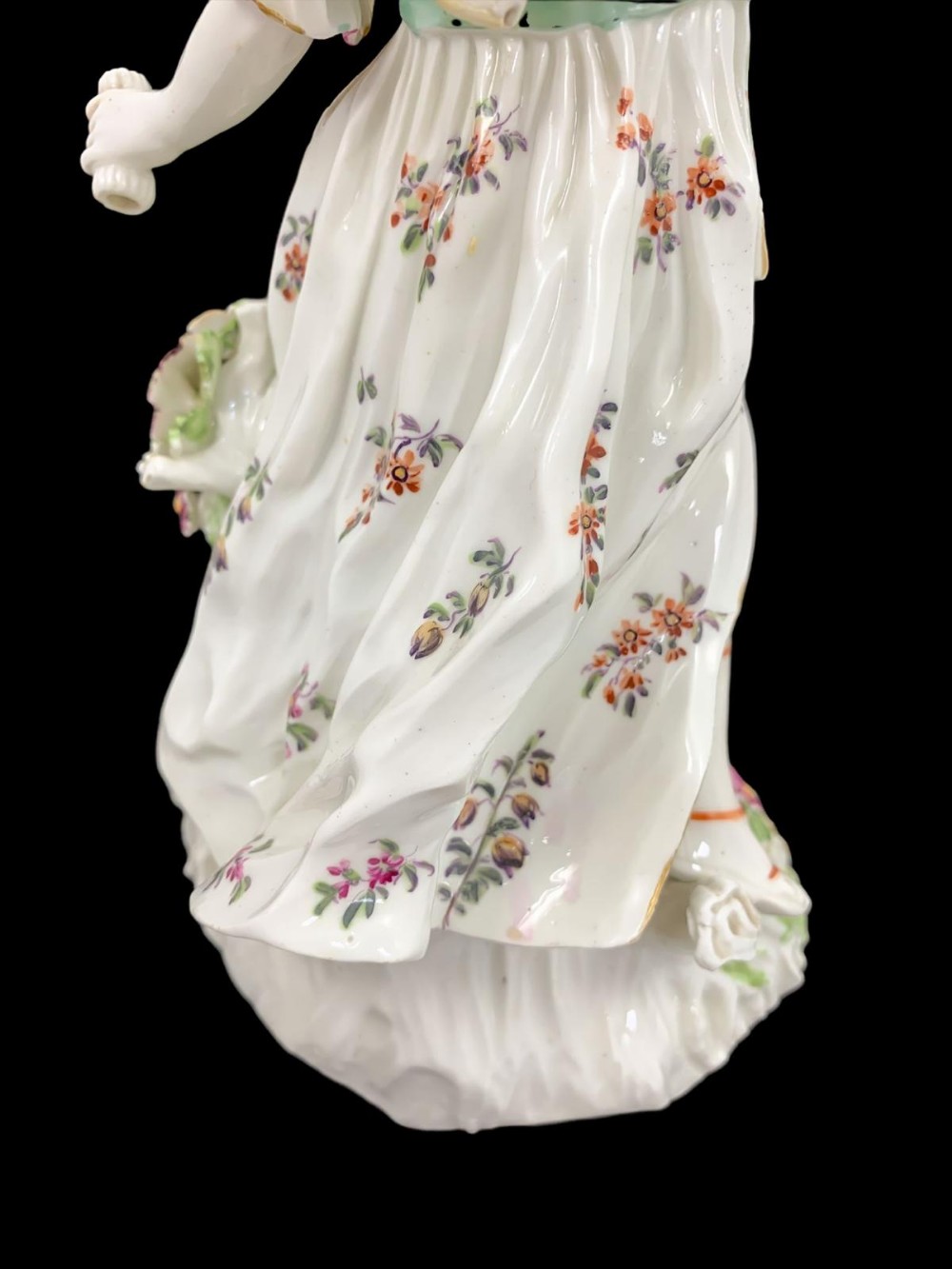
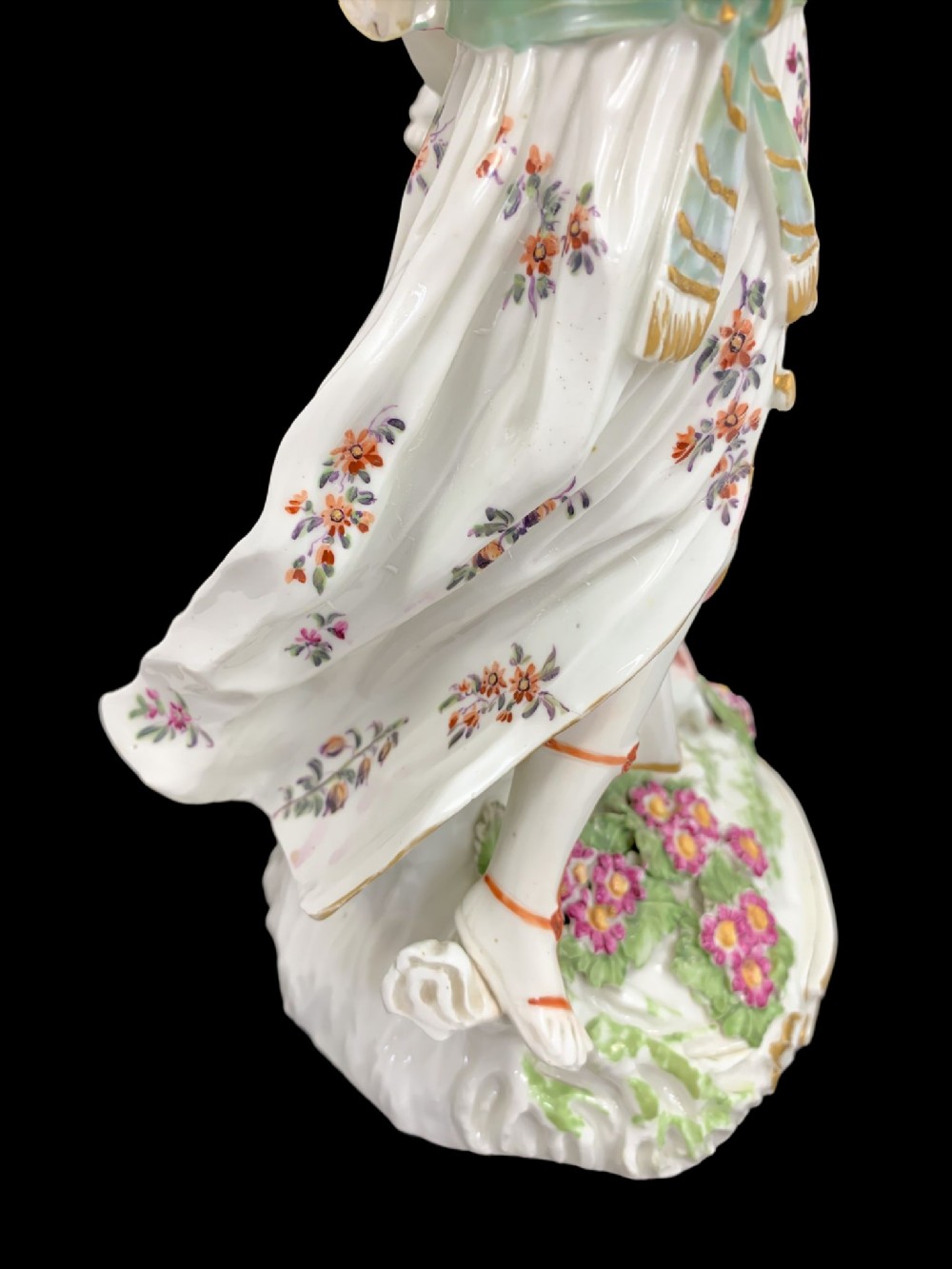
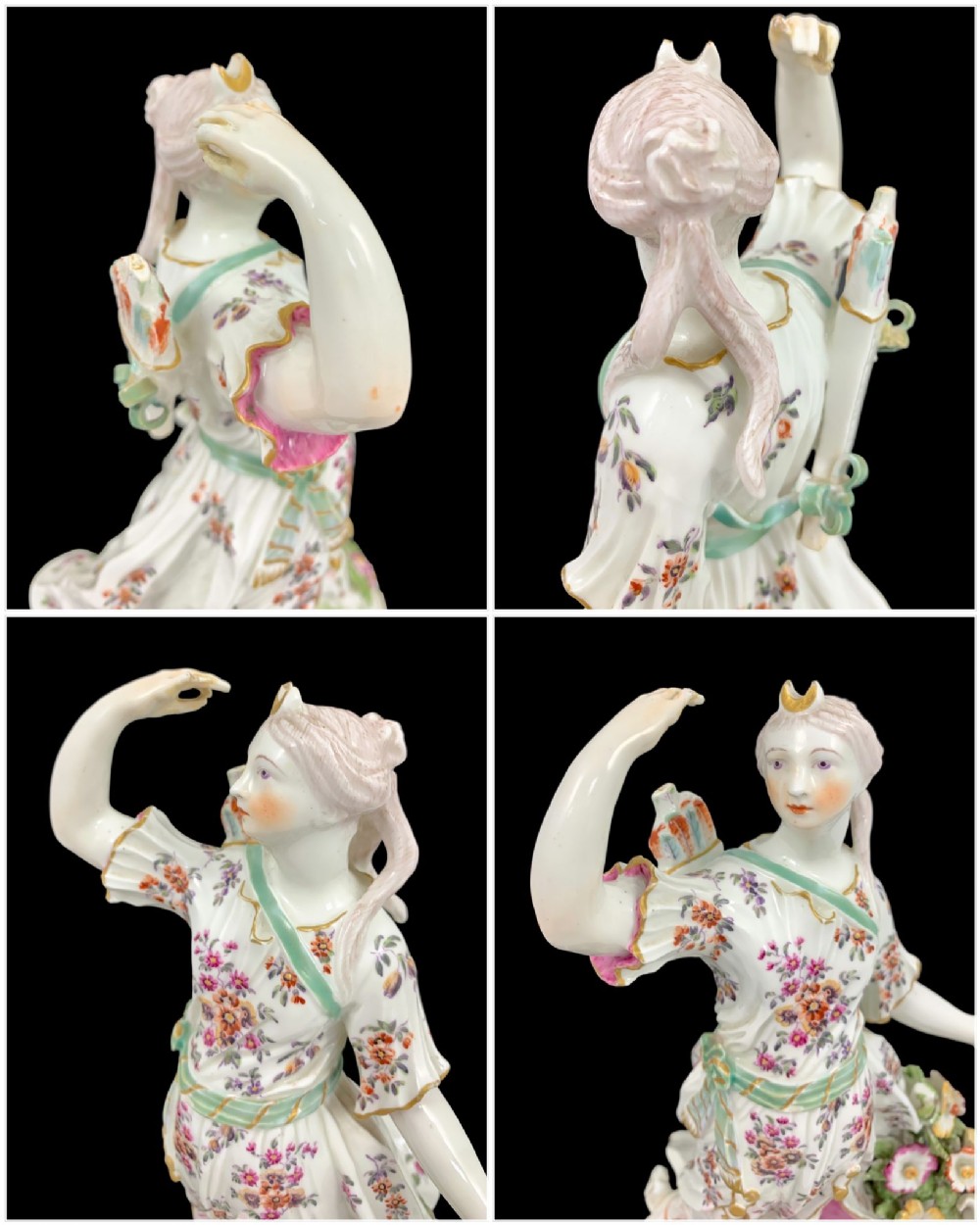
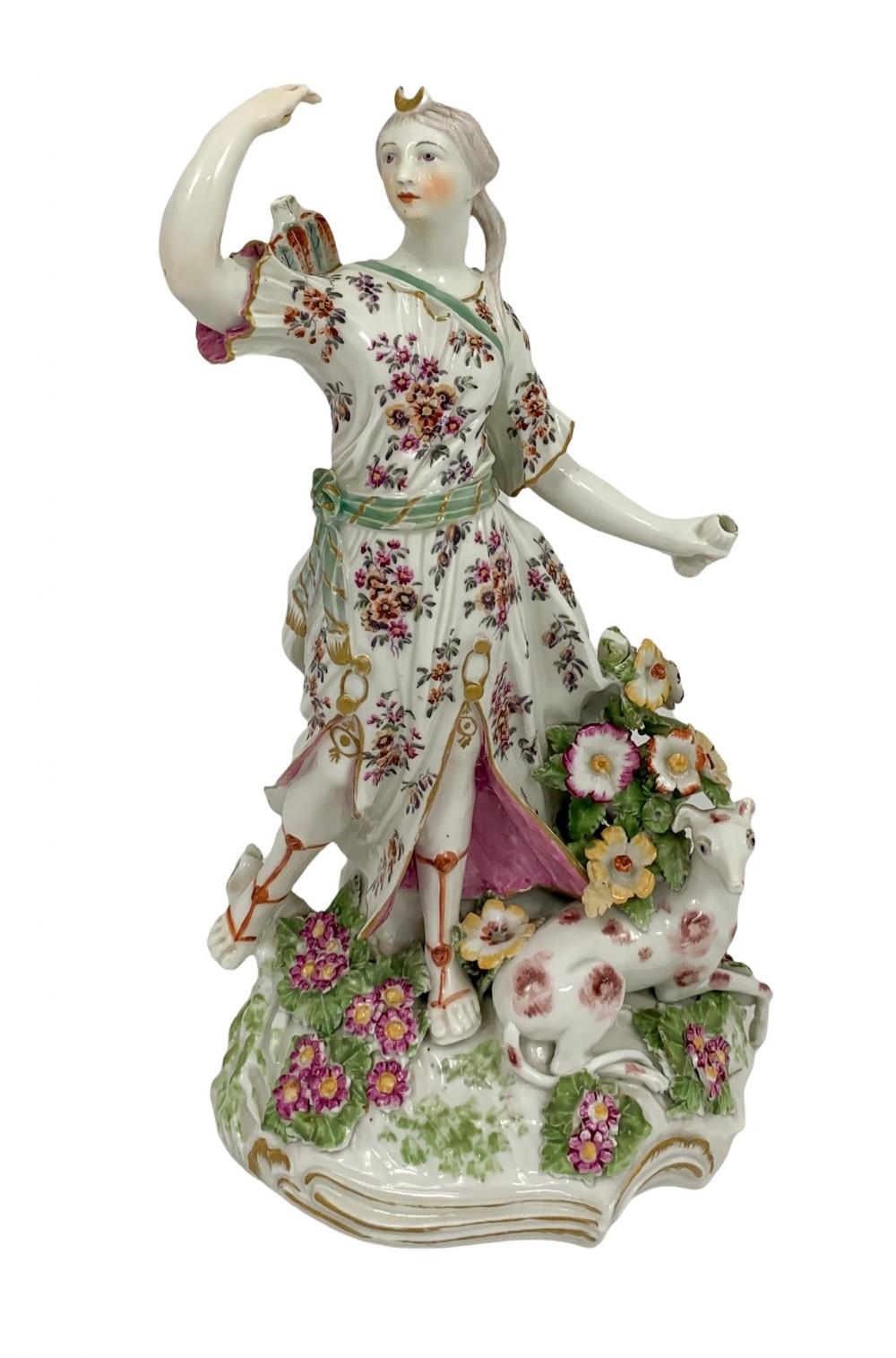
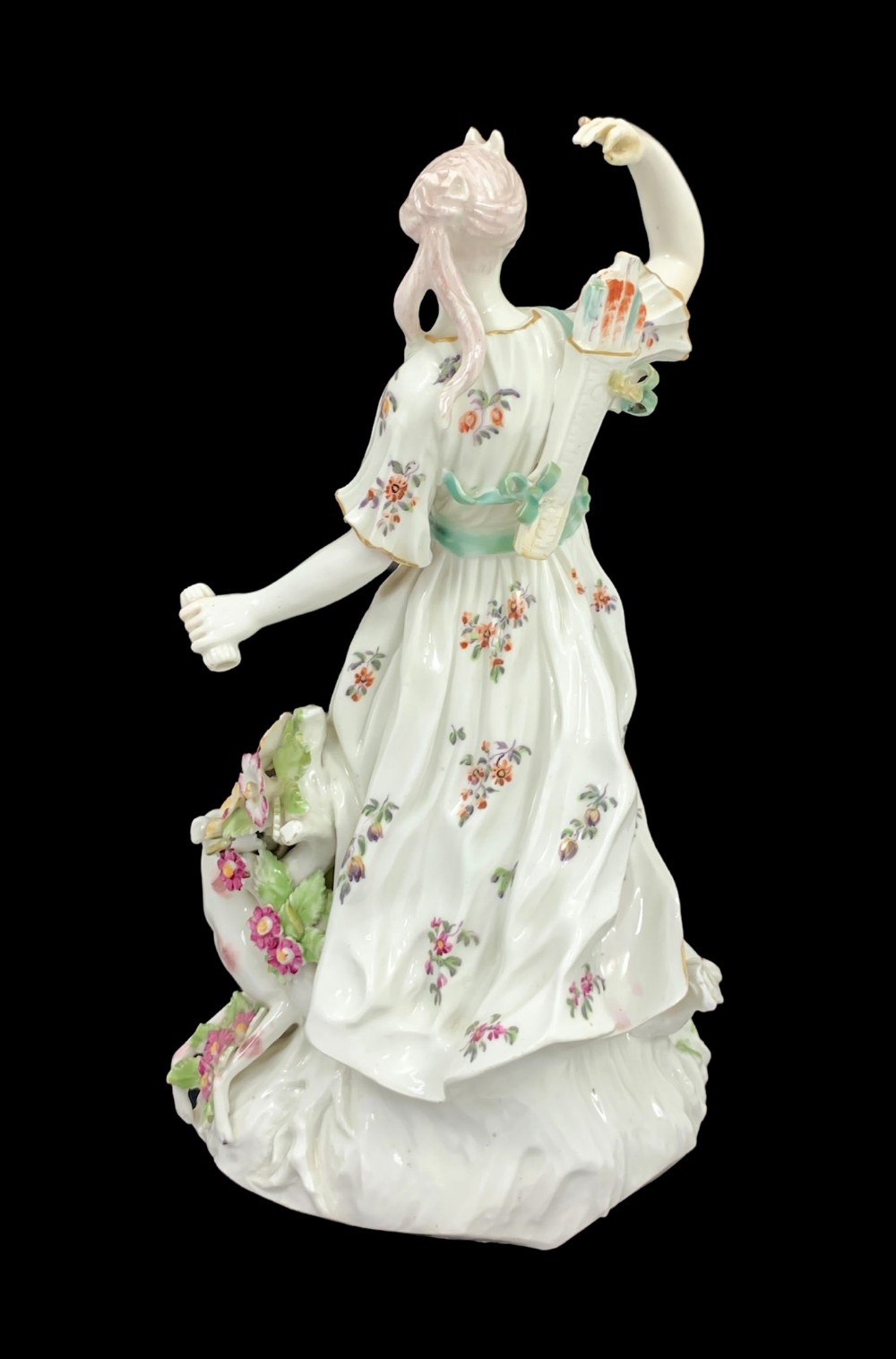
Figure of Diana in soft-paste porcelain painted in enamels and gilded. She appears ready for action, her right arm raised to take an arrow from a quiver on her back. In her left hand, which is at her side, she had a porcelain fitting for a bow. In her hair she wears a crescent, emblematic of the moon. She wears thonged sandals and a sash at her waist, while her loyal greyhound sits by her feet. The base, of swirled rococo scrollwork. Three 'patch marks' on the base.

The Derby Porcelain factory has its roots in the late 1740s, when Andrew Planché, a Walloon Huguenot refugee, started making simple porcelain toys shaped like animals in his back yard. In 1756 Staffordshire enameller William Duysbury and banker John Heath started a new porcelain factory with Planché and this was to grow out to the largest factory of its time, buying up the bankrupted Chelsea and Bow factories, as well as the stock of several other workshops including that of James Giles. The combination of various traditions, porcelain making skills and sophisticated clients enabled Duesbury to create one of the best porcelain factories of the 18th and 19th Centuries, which after many ups and downs is still operative today.
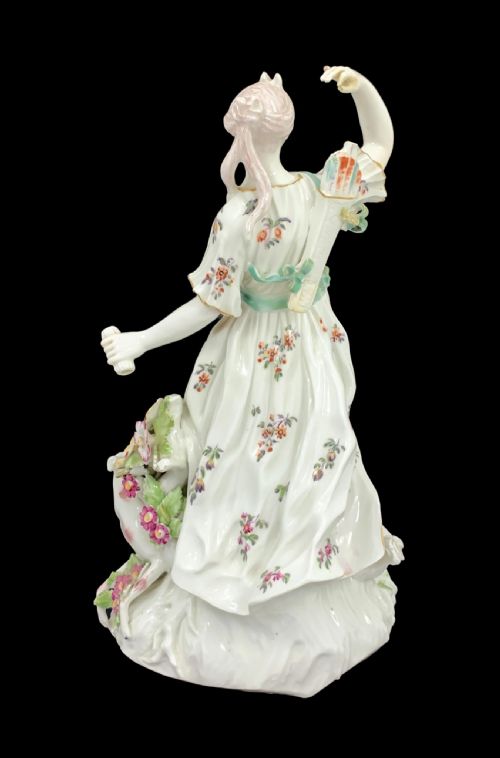
The reputation of the factory’s output was at its 18th century peak and in self-published advertising material, the “Derby Porcelain Manufactory” was proclaiming itself to be “the second Dresden”.

Duesbury maintained what would now be termed “retail space” independent of the Chelsea works, at a former pub – The Castle Tavern – in Bedford Street, Covent Garden. This was both a warehousing facility and an exhibition area, and was the shopfront for what had by now become “a very thriving and lucrative trade”. Derby porcelain was hand painted, some with with imari patterns, in London at the Chelsea pemises and the output from this dual operation is Chelsea Derby. Ultimately, the Chelsea site was closed down and the name Derby continued in increasingly splendid isolation, to the point where continued Royal patronage afforded Duesbury license to append a crown to his trademark, Royal Crown Derby Porcelain was born. It’s worth noting that Duesbury also used representations of the marks used on Sevres, Dresden and Berlin-made porcelain, as he considered his own wares to be superior to every other source other than those three.
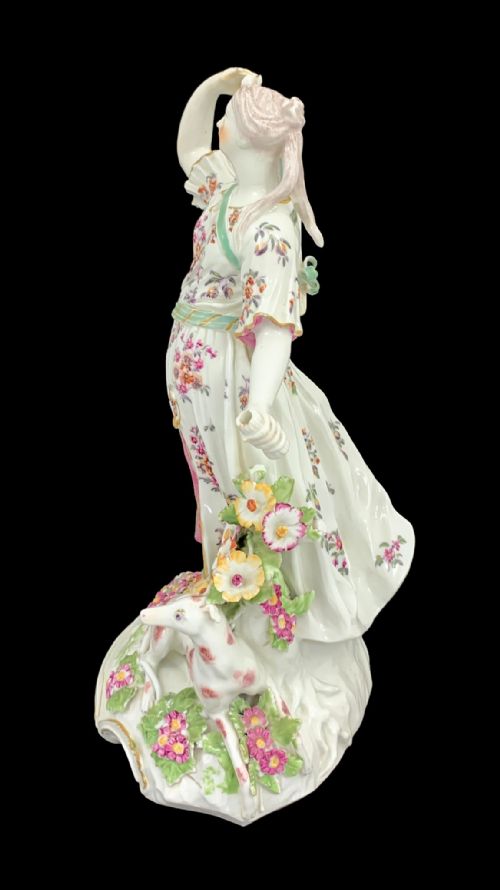
Antique British porcelain is never perfect. Kilns were fired on coal in the 1800s, and this meant that china from that period can have some firing specks from flying particles. British makers were also known for their experimentation, and sometimes this resulted in technically imperfect results. Due to the shrinkage in the kiln, items can have small firing lines or develop crazing over time, which should not be seen as damage but as an imperfection of the maker's recipes, probably unknown at the time of making. Items have often been used for many years and can have normal signs of wear, and gilt can have signs of slight disintegration even if never handled. Some minor scratches, nicks, stains and gilt disintegration can be normal for vintage items and need to be taken into account.
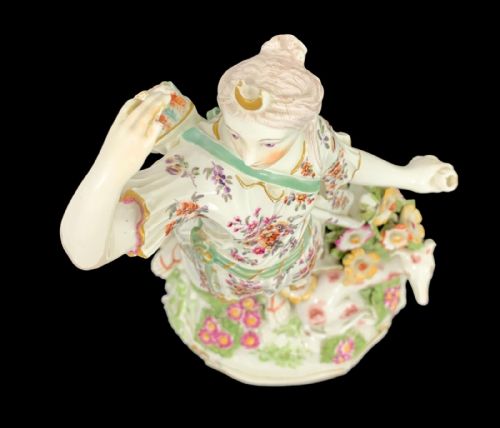
Height: 28 cm

1543 g

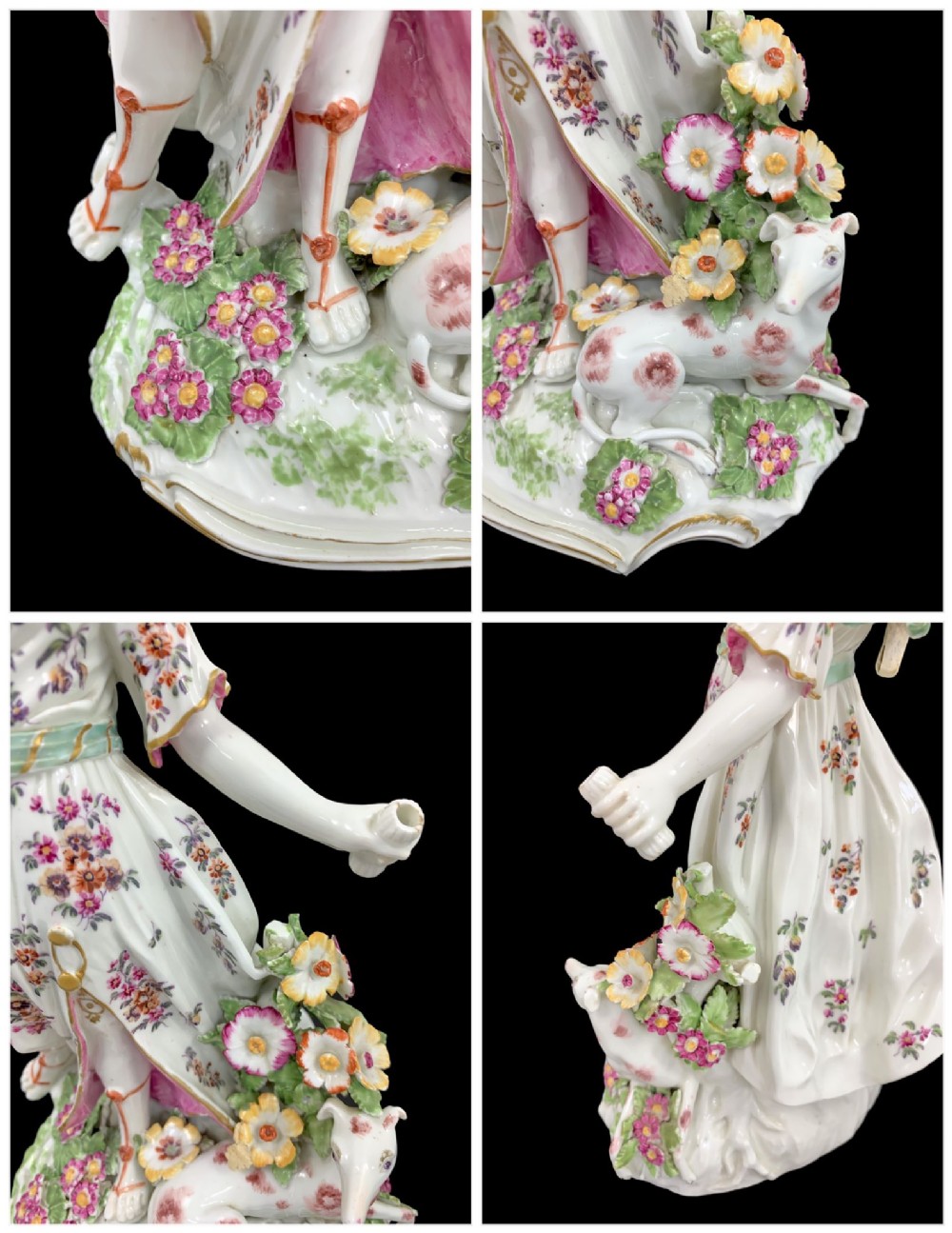
Some wear to gilt; small losses to leaves and petals; losses and restoration to right hand; light purple staining to bottom of dress on reverse and a crack near the same place – it extends into the plant’s stalk, so is not easily visible; restoration to one flower; possible restoration to neck – very faint white line visible; restoration to bottom of quiver and losses to the green bows on quiver; losses to top of quiver; small losses to dog’s left ear.
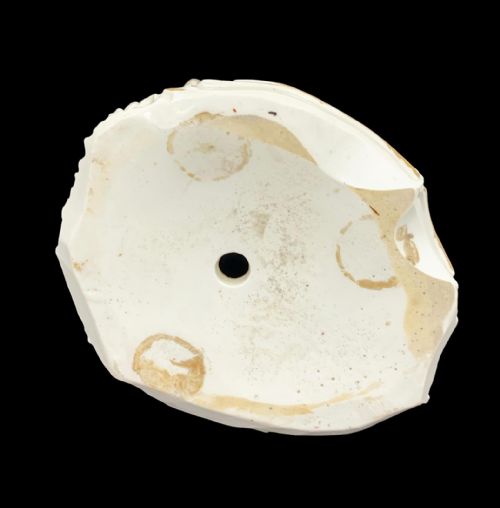
This figurine appears to be part of a unique collection of porcelain Derby figurines, which has been meticulously gathered over many years

We must note that the 28cm of size is very rare, more common on the antique market are figurines of Diane 19.5 cm in siz

Physical Dimensions
Height
28cm (11.02")
Declaration

Gillers Antiques Ltd has dated this piece to the 18th Century.

Reference Numbers
Sellingantiques Reference
SA976487
Description
Figure of Diana in soft-paste porcelain painted in enamels and gilded. She appears ready for action, her right arm raised to take an arrow from a quiver on her back. In her left hand, which is at her side, she had a porcelain fitting for a bow. In her hair she wears a crescent, emblematic of the moon. She wears thonged sandals and a sash at her waist, while her loyal greyhound sits by her feet. The base, of swirled rococo scrollwork. Three 'patch marks' on the base.
The Derby Porcelain factory has its roots in the late 1740s, when Andrew Planché, a Walloon Huguenot refugee, started making simple porcelain toys shaped like animals in his back yard.
Gillers Antiques Ltd

In 1756 Staffordshire enameller William Duysbury and banker John Heath started a new porcelain factory with Planché and this was to grow out to the largest factory of its time, buying up the bankrupted Chelsea and Bow factories, as well as the stock of several other workshops including that of James Giles. The combination of various traditions, porcelain making skills and sophisticated clients enabled Duesbury to create one of the best porcelain factories of the 18th and 19th Centuries, which after many ups and downs is still operative today.

fig 1. Early Derby, Patch period, Diana figurine, William Duesbury & Co., ca. 1765
fig 1. Early Derby, Patch Period, Diana Figurine, William Duesbury & Co., Ca. 1765

The reputation of the factory’s output was at its 18th century peak and in self-published advertising material, the “Derby Porcelain Manufactory” was proclaiming itself to be “the second Dresden”.

Duesbury maintained what would now be termed “retail space” independent of the Chelsea works, at a former pub – The Castle Tavern – in Bedford Street, Covent Garden. This was both a warehousing facility and an exhibition area, and was the shopfront for what had by now become “a very thriving and lucrative trade”. Derby porcelain was hand painted, some with with imari patterns, in London at the Chelsea pemises and the output from this dual operation is Chelsea Derby. Ultimately, the Chelsea site was closed down and the name Derby continued in increasingly splendid isolation, to the point where continued Royal patronage afforded Duesbury license to append a crown to his trademark, Royal Crown Derby Porcelain was born. It’s worth noting that Duesbury also used representations of the marks used on Sevres, Dresden and Berlin-made porcelain, as he considered his own wares to be superior to every other source other than those three.

fig 2. Early Derby, Patch period, Diana figurine, William Duesbury & Co., ca. 1765
fig 2. Early Derby, Patch Period, Diana Figurine, William Duesbury & Co., Ca. 1765

Antique British porcelain is never perfect. Kilns were fired on coal in the 1800s, and this meant that china from that period can have some firing specks from flying particles. British makers were also known for their experimentation, and sometimes this resulted in technically imperfect results. Due to the shrinkage in the kiln, items can have small firing lines or develop crazing over time, which should not be seen as damage but as an imperfection of the maker's recipes, probably unknown at the time of making. Items have often been used for many years and can have normal signs of wear, and gilt can have signs of slight disintegration even if never handled. Some minor scratches, nicks, stains and gilt disintegration can be normal for vintage items and need to be taken into account.

fig 3. Early Derby, Patch period, Diana figurine, William Duesbury & Co., ca. 1765
fig 3. Early Derby, Patch Period, Diana Figurine, William Duesbury & Co., Ca. 1765

Height: 28 cm

1543 g

Some wear to gilt; small losses to leaves and petals; losses and restoration to right hand; light purple staining to bottom of dress on reverse and a crack near the same place – it extends into the plant’s stalk, so is not easily visible; restoration to one flower; possible restoration to neck – very faint white line visible; restoration to bottom of quiver and losses to the green bows on quiver; losses to top of quiver; small losses to dog’s left ear.

fig 4. Early Derby, Patch period, Diana figurine, William Duesbury & Co., ca. 1765
fig 4. Early Derby, Patch Period, Diana Figurine, William Duesbury & Co., Ca. 1765

This figurine appears to be part of a unique collection of porcelain Derby figurines, which has been meticulously gathered over many years

We must note that the 28cm of size is very rare, more common on the antique market are figurines of Diane 19.5 cm in siz

Height
28cm (11.02")
Date of Manufacture

Gillers Antiques Ltd has dated this piece to the 18th Century.

Reference Numbers
Sellingantiques Ref
SA976487
Gillers Antiques Ltd
Sellingantiques verified Since Mar 2023
Dealer Profile

You can view the stock and full dealer information on the Gillers Antiques Ltd Profile Page
PDF SHARE
SAVE
Early Derby, Patch period, Diana figurine, William Duesbury & Co., ca. 1765
1 / 14
Archive I Early Derby, Patch period, Diana figurine, William Duesbury & Co., ca. 1765

Early Derby, Patch Period, Diana Figurine, William Duesbury & Co., Ca. 1765
Archive II Early Derby, Patch period, Diana figurine, William Duesbury & Co., ca. 1765 View II
Archive III Early Derby, Patch period, Diana figurine, William Duesbury & Co., ca. 1765 View III
Archive IV Early Derby, Patch period, Diana figurine, William Duesbury & Co., ca. 1765 View IV
Archive V Early Derby, Patch period, Diana figurine, William Duesbury & Co., ca. 1765 View V
Archive VI Early Derby, Patch period, Diana figurine, William Duesbury & Co., ca. 1765 View VI
Archive VII Early Derby, Patch period, Diana figurine, William Duesbury & Co., ca. 1765 View VII
Archive VIII Early Derby, Patch period, Diana figurine, William Duesbury & Co., ca. 1765 View VIII
Archive IX Early Derby, Patch period, Diana figurine, William Duesbury & Co., ca. 1765 View IX
Archive X Early Derby, Patch period, Diana figurine, William Duesbury & Co., ca. 1765 View X
Archive XI Early Derby, Patch period, Diana figurine, William Duesbury & Co., ca. 1765 View XI
Archive XII Early Derby, Patch period, Diana figurine, William Duesbury & Co., ca. 1765 View XII
Archive XIII Early Derby, Patch period, Diana figurine, William Duesbury & Co., ca. 1765 View XIII
Archive XIV Early Derby, Patch period, Diana figurine, William Duesbury & Co., ca. 1765 View XIV
Enlarged Archival View
Telephone 07738 009924
Location
Buckland House
Buntingford
Hertfordshire
SG9 0PY
United Kingdom
Verified Since Mar 2023
Items For Sale 401
Items Sold 564
Gillers Antiques Ltd
Verified Since Mar 2023
View Dealer Info
Location: Buckland House, Buntingford, Hertfordshire, SG9 0PY, United Kingdom
Verified
Mar 2023
For Sale
401
Sold
564
Early Derby, Patch period, Diana figurine, William Duesbury & Co., ca. 1765
Ref: SA976487
Early Derby, Patch period, Diana figurine, William Duesbury & Co., ca. 1765
Detail View 1
Detail View 2
Detail View 3
Detail View 4
Detail View 5
Detail View 6
Detail View 7
Detail View 8
Detail View 9
Detail View 10
Detail View 11
Detail View 12
Detail View 13
Archival Detail
Every single antique dealer on our platform is individually approved by our internal team. We verify their professional trade history, ethical standards, and photographic quality to ensure a secure, high-standard buying environment. Upon joining, every dealer agrees to a strict 9-point code of conduct. While issues can occasionally arise, our dealers typically resolve them swiftly and directly with the buyer. In fact, since our founding in 2002, Sellingantiques has only had to step in to help resolve an issue on roughly five occasions—a true testament to the quality of our dealers and their dedication to your happiness.
Our dealers are highly experienced in packing and shipping fragile, high-value antiques. Because you are in direct contact with the dealer, you will be able to easily go through all available shipping and insurance options together to ensure your item arrives safely.
Antiques are the ultimate green purchase. By choosing historical pieces over newly manufactured goods, you completely eliminate the carbon footprint of modern mass production while preserving exceptional, timeless craftsmanship.
items
Add keywords to the filter
Price
£100
£250000
Era
Movements
Material
Origin
Stock Location
Freshness
Online Payments
Categories