P A Oxley Antique Clocks & Barometers has dated this piece to the 17th Century.
Featuring a Month duration movement, six fully latched pillars, seconds and date.
Alexander Hewitt was apprenticed to Benjamin Bell in 1685. This accomplished horologist and toolmaker had close associations with both Thomas Tompion and Robert Hooke.
Its entirely possible that this case did originate from the Tompion workshops and that Mr Tompion saw a talent in Mr Hewitt, perhaps he was unofficially his apprentice for a period of time? The movement certainly displays many Tompion features, as does the dial.
The month duration movement strikes the hours on a very unusual internal rack striking mechanism. The whole movement is of substantial quality with 6 latched pillars and latches to the dial. It also retains its original brass bound month duration weights which are thing of beauty in themselves.
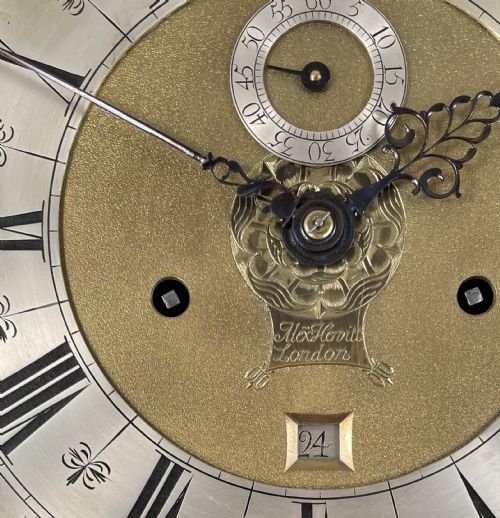
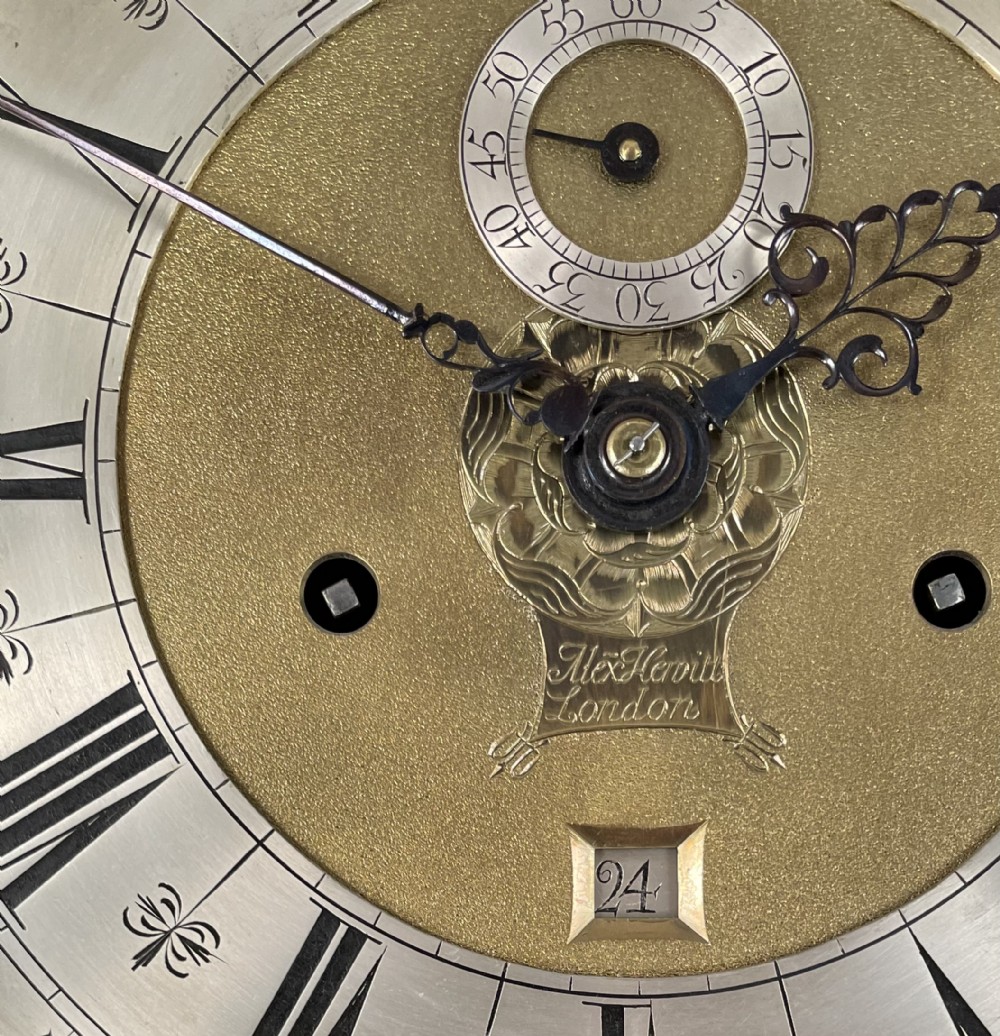
The dial is typical of the period with a separate silvered brass chapter ring, brass spandrels to the corners and seconds and date to the centre. The makers name Alexander Hewitt, London is engraved to the centre on an elaborate cartouche. The matting to the centre is of exceptional quality and craftsmanship and with the lack of ringed winding holes, this also points towards an influence from Tompion. The exquisite blued steel hands have been executed in the finest manner.
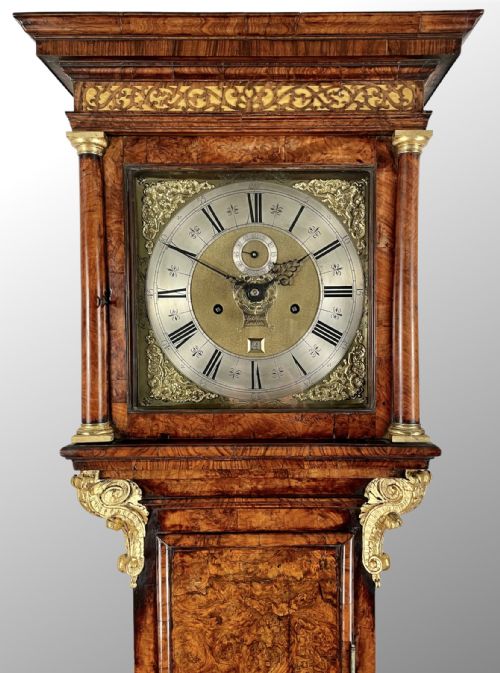
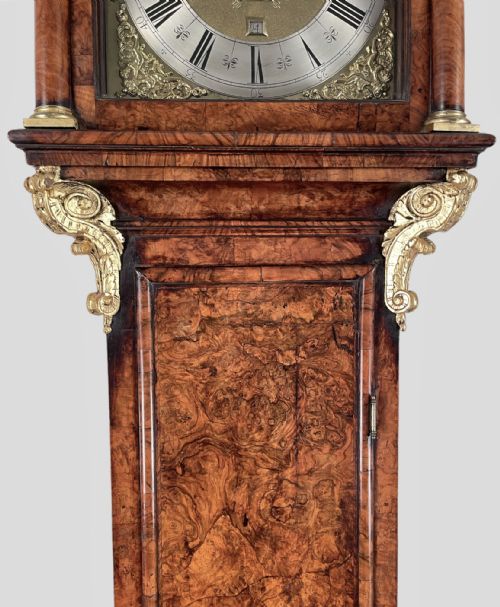
The style and high quality workmanship within the cabinetwork is exceptional. The burr walnut veneers have been specifically selected for each individual panel and. The trunk door is indeed one entire piece of burr veneer and not bookmatched.
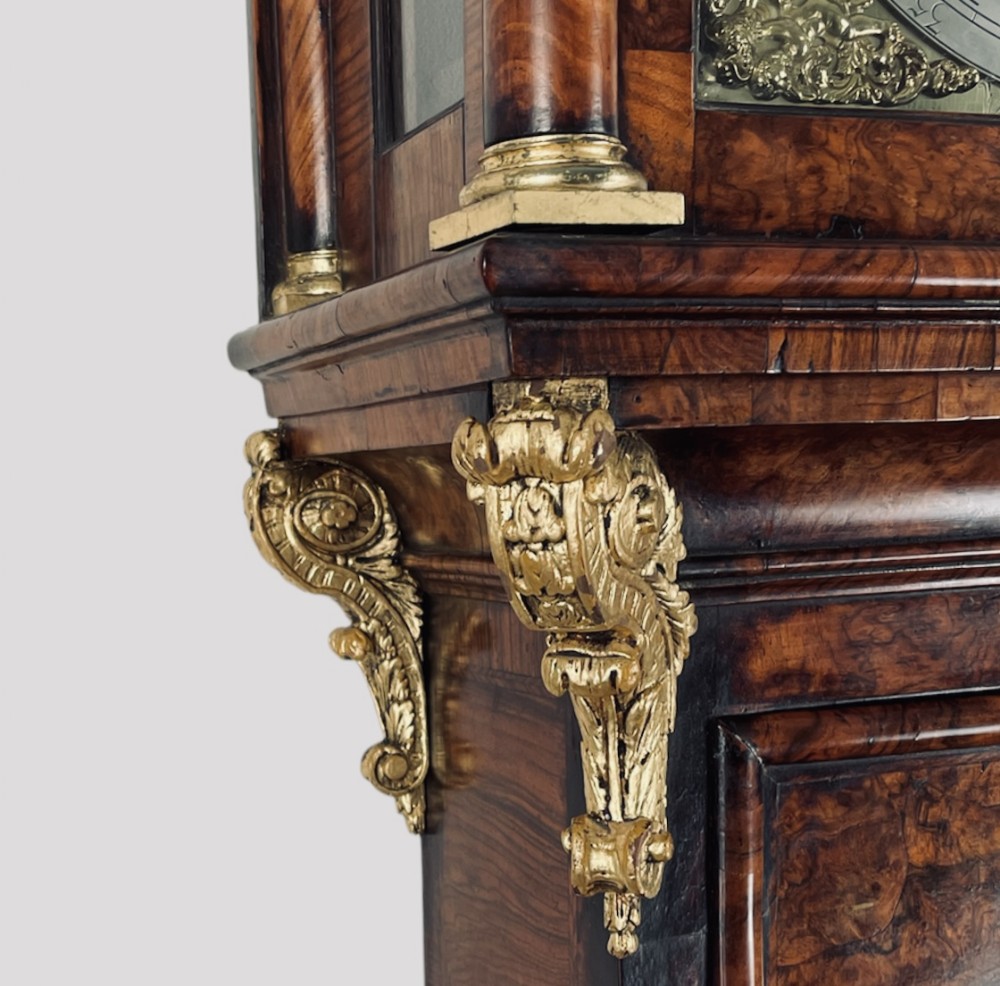
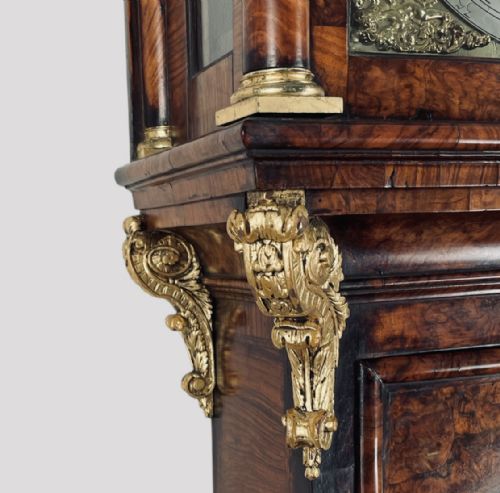
The unusual stepped plinth to the base is very similar in design to several of the Tompion longcase clocks that were made for the Royal Family in the late 17th century. As displayed here, many of these Royal clocks also featured gilt wooden corbels below the hood. An extremely rare feature which is only seen or used on the highest quality longcase clocks of the period.
The hood again displays many Tompion characteristics such as the walnut veneered pillars, the large gilded Doric capitals and sound frets to each side.
A rare survivor from the Golden Age of English Clockmaking.
Note: This clock has some rather interesting historical provenance. Please contact us for further information.
P A Oxley Antique Clocks & Barometers has dated this piece to the 17th Century.
You can view the stock and full dealer information on the P A Oxley Antique Clocks & Barometers Profile Page
P A Oxley Antique Clocks & Barometers is a registered member of LAPADA

Rare Burr walnut longcase clock with Tompion influence.