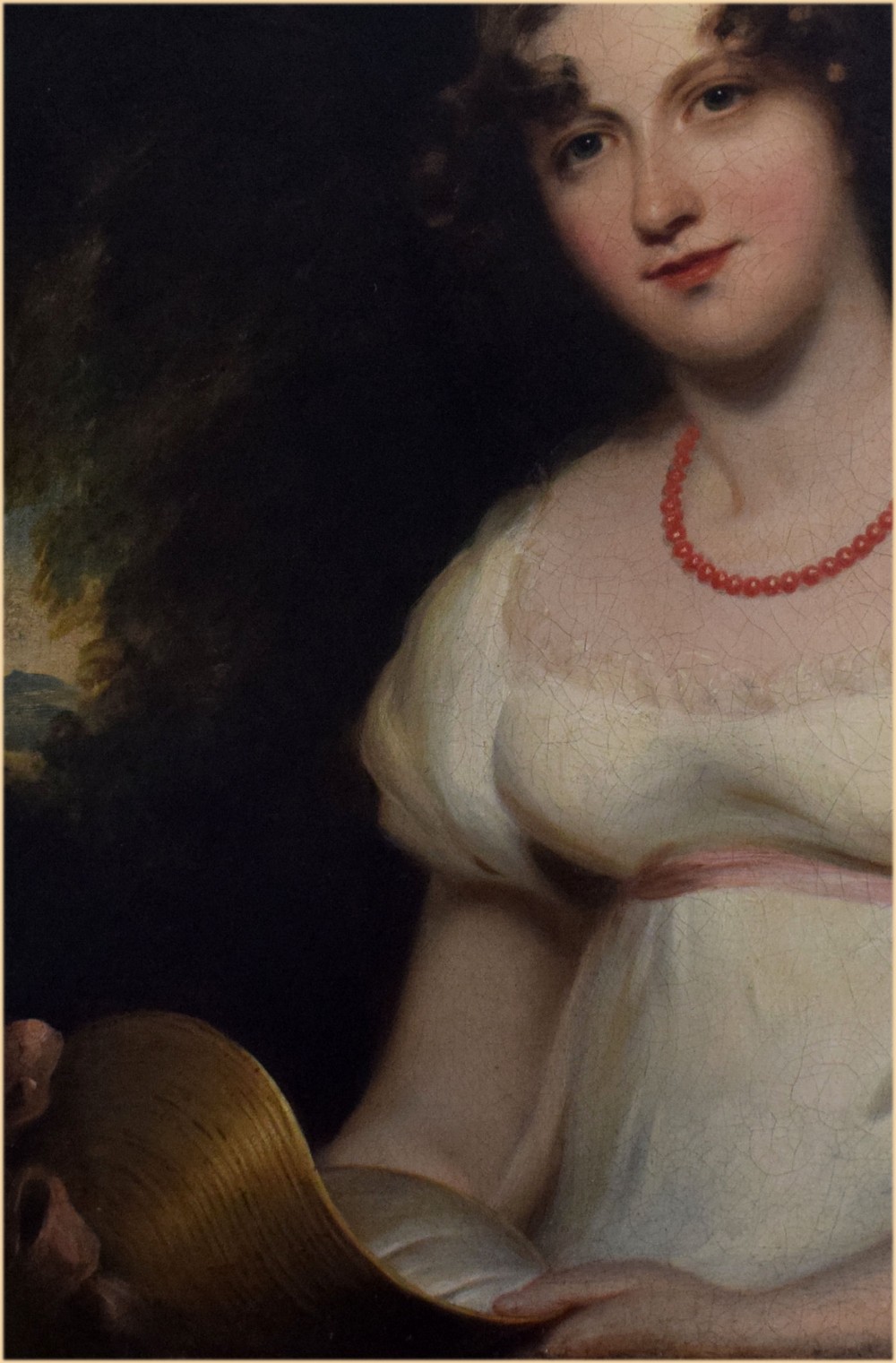
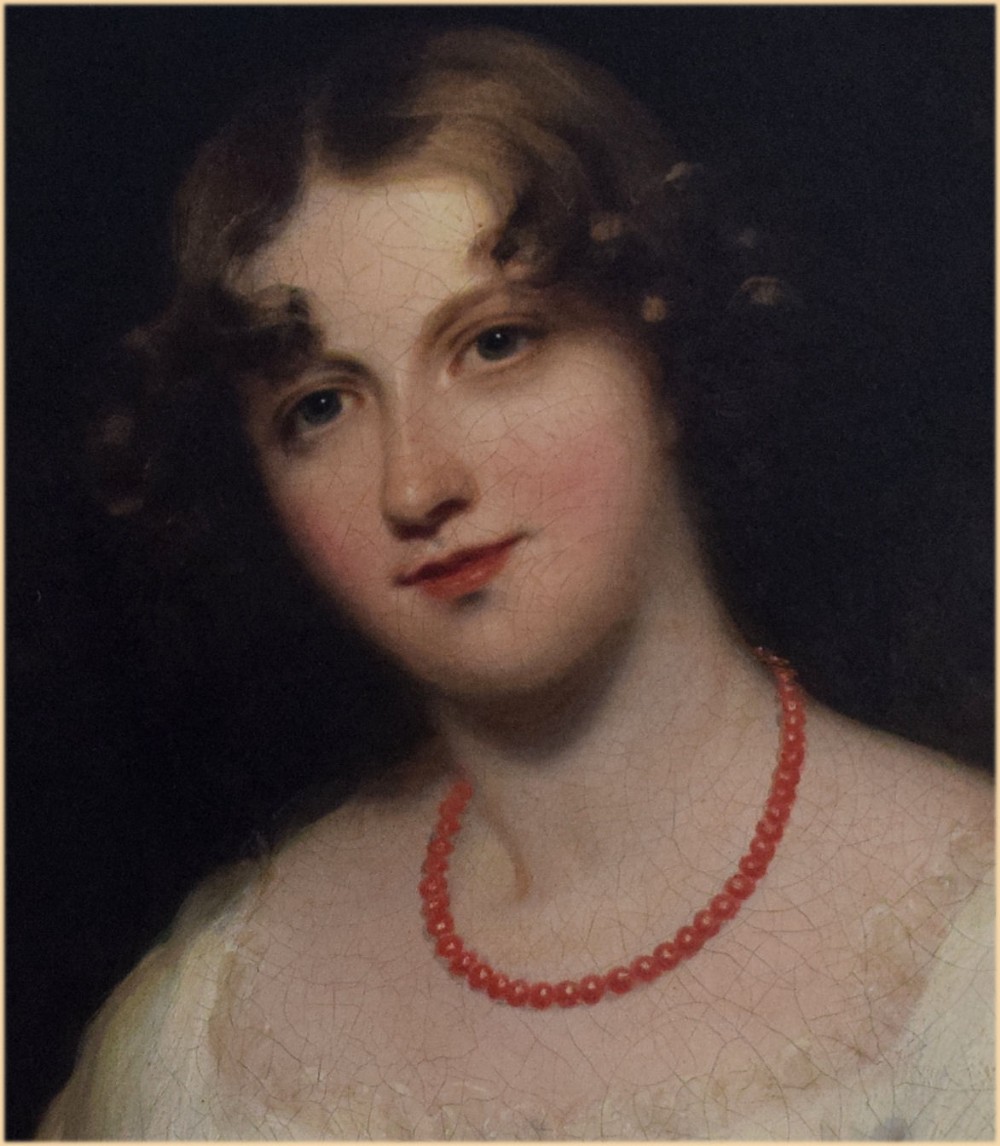
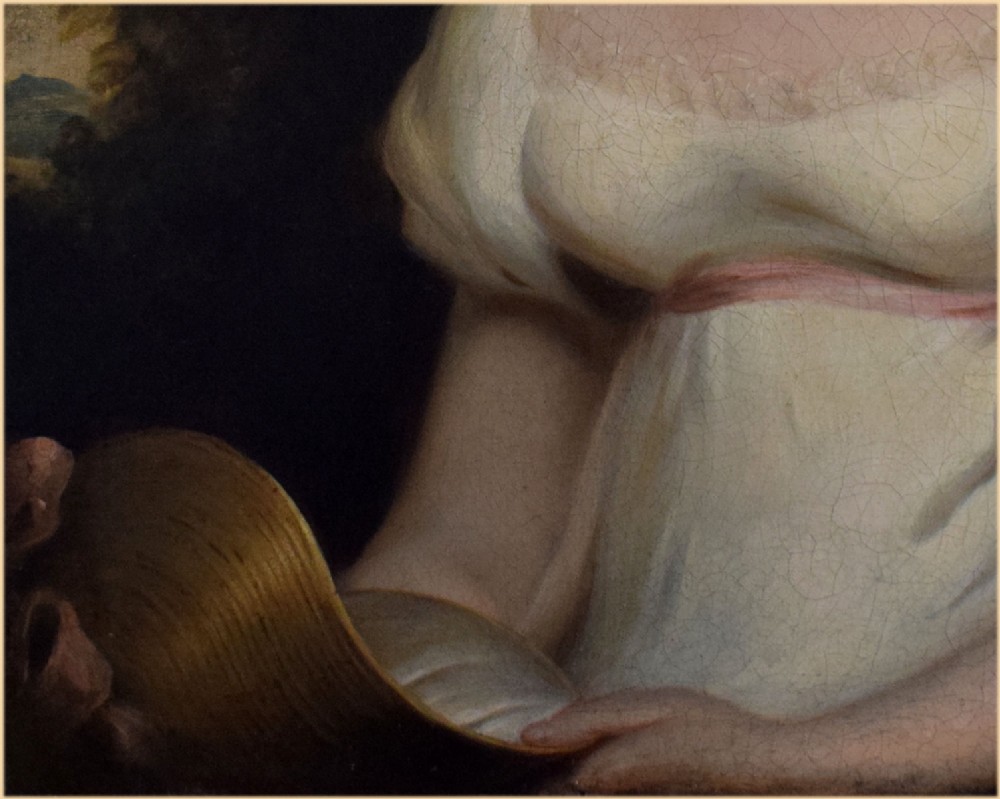
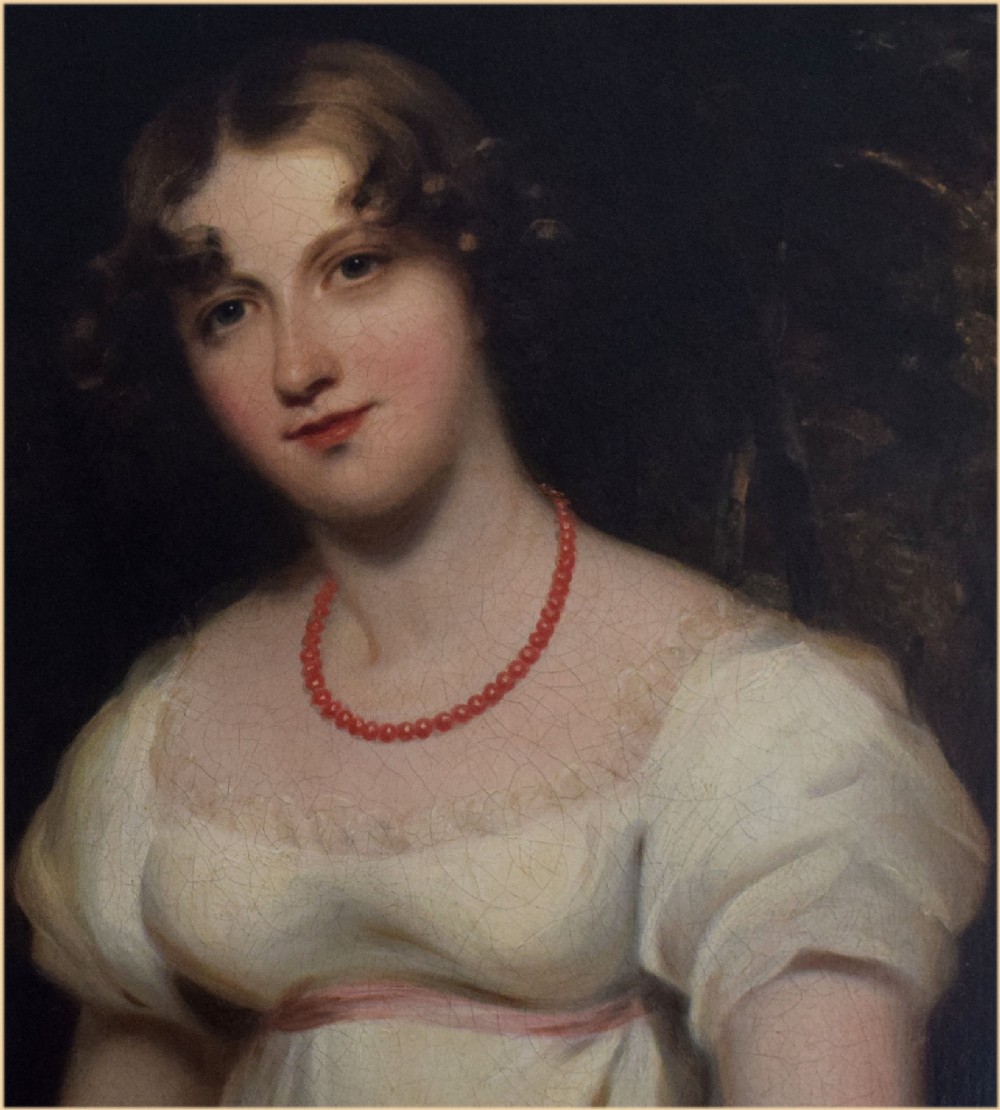
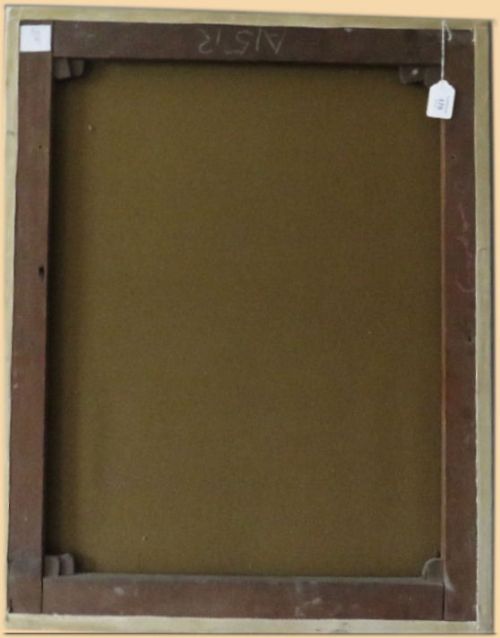
Artware Fineart has dated this Regency Lady Oil Portrait to the 19th Century.
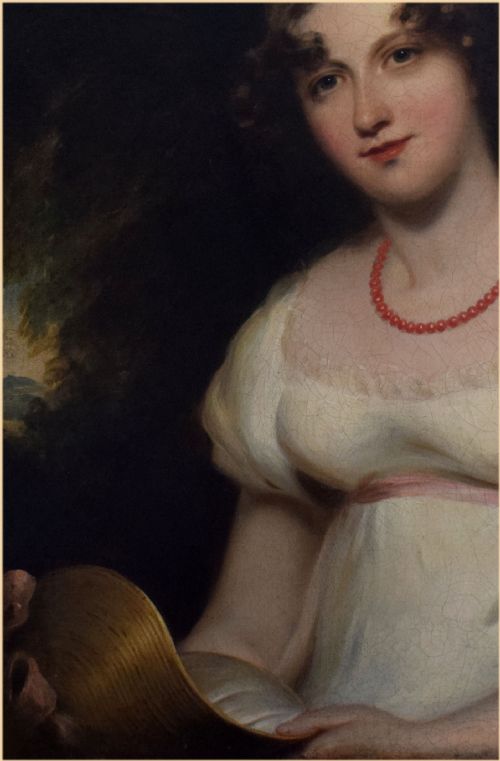
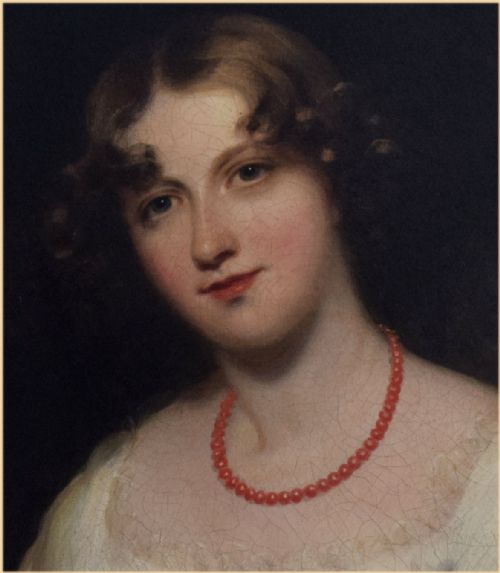
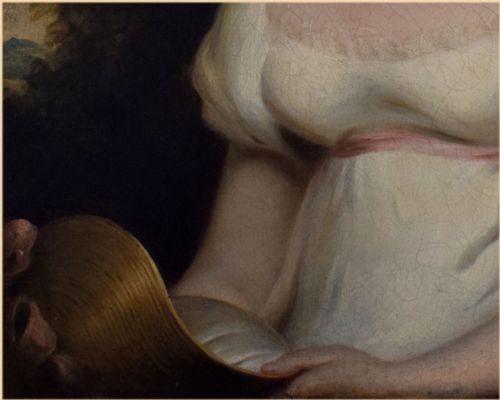
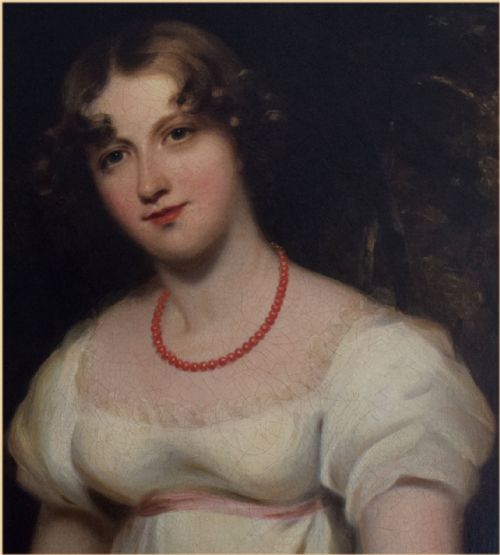
Portrait of a Young Lady seated in a Landscape in a white dress and Coral Necklace holding her Hat
oil on canvas
76.20 x 63.50 cm.
Mostly found in the Mediterranean Sea, coral grows 4-100 meters from the surface. It is composed mostly of calcium carbonate, colored red by carotenoid pigments (Wiki). The stone must be polished, as it usually matte-colored.
The deeper meaning of coral leads back to ancient Romans. The story of Perseus, the sea monster, tells that coral the petrified seaweed covered in the blood of Medusa's head. Poseidon used the stone in his palace as well, making coral a prominent component of mythology. The Romans believed in the luck of coral, a sentiment revived by the Victorian era. Children often wore the stone, with the belief that it could cure snake bites or poison. The Etruscan revival in the 19th century brought coral front and center in jewelry, especially from 1845 Italy. Honestly, it had not gone anywhere; the Georgian and Regency eras show a propensity towards the stone that cannot be missed in paintings. Dark reds and pale pinks were most common, even a dyed white coral was not remiss. "But even more prized were ornamented of finely carved coral, in the shape of crosses, roses, hands, cameos, and the like" (Flower and Moore). A coral parure for a young lady would have been considered a prized gift!
BOARDING-SCHOOL EVILS, Godey's Lady's Book. February, 1860.
We well know that there can be but one ruling passion, and as vanity and all that goes to feed it, dress and jewelry especially, is the besetting sin of a school-girl's life, we can but wonder at the blindness that ministers to it deliberately, instead of uprooting any weed of temptation from the path. The rivalries of dress, furniture, and equipage, that make up so much of our social life, begin in the school-room with Eliza's Christmas set of pink coral and Lucy's ill-gotten flounced silk— ill-gotten, since it was purchased with the sum that should have given her mother a comfortable shawl or the children their bird's-eye aprons.
NATURAL ORNAMENTS, Godey's Lady's Book. June, 1860.
“THE month of roses” reminds us how few ladies make use of the most charming of all ornaments for the hair and dress, natural flowers. They load themselves with impossible clusters of muslin roses and jessamine, with dangling pendants of glass and wax, called jet and coral by courtesy; they flash bugles and spangles into your eyes with every turn of the head, while the pendant wreaths of the Spiera Reevesi, and the graceful racemes of the laburnum and the “bleeding heart,” or the perfumed cups of the valley lily, are perishing, unnoticed, in the lawn and garden.
MARY GREY, Godey's Lady's Book, June, 1860
Florrie, too, looked very lovely, in her little white dress and coral armlets and necklace, her golden hair curling in little short ringlets all over her head, and her cheeks the color of a May rose.
CHITCHAT UPON NEW YORK AND PHILADELPHIA FASHIONS, FOR JULY, Godey's Lady's Book, July 1860
Dress for evening, of perfectly plain white grenadine. The under skirt has three flounces of moderate width; the upper one is perfectly plain. There is no pattern, no edge of any description, to the flounces, sleeves, or waist—the richness of the material obviates it— with the exception of a rich satin ribbon, also of plain white, which forms the heading of the berthe, and has a bow on each shoulder and in the centre of the corsage, bracelets and belt-clasp of gold, set with red coral
MISCELLANEOUS, Godey's Lady's Book. August, 1860.
ARTIFICIAL CORAL .— This may be employed for forming grottos and for similar ornamentation. To two
Artware Fineart has dated this Regency Lady Oil Portrait to the 19th Century.
You can view the stock and full dealer information on the Artware Fineart Profile Page
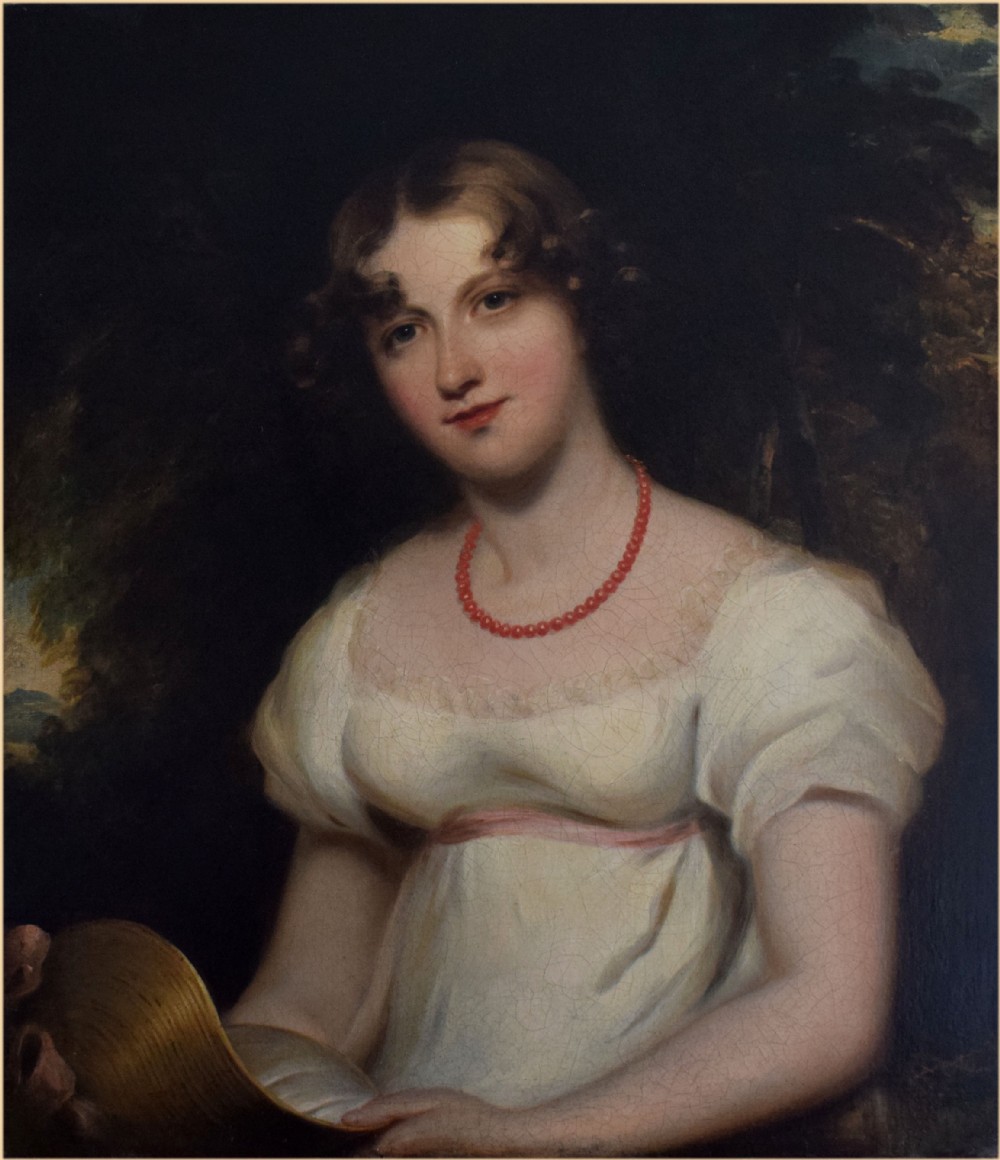
William Owen Ra 1769-1825 Portrait of a Young Lady Seated in a Landscape in a White Dress and Coral Necklace Holding Her Hat