N Wilson Antiques Clocks has dated this piece to the 19th Century.
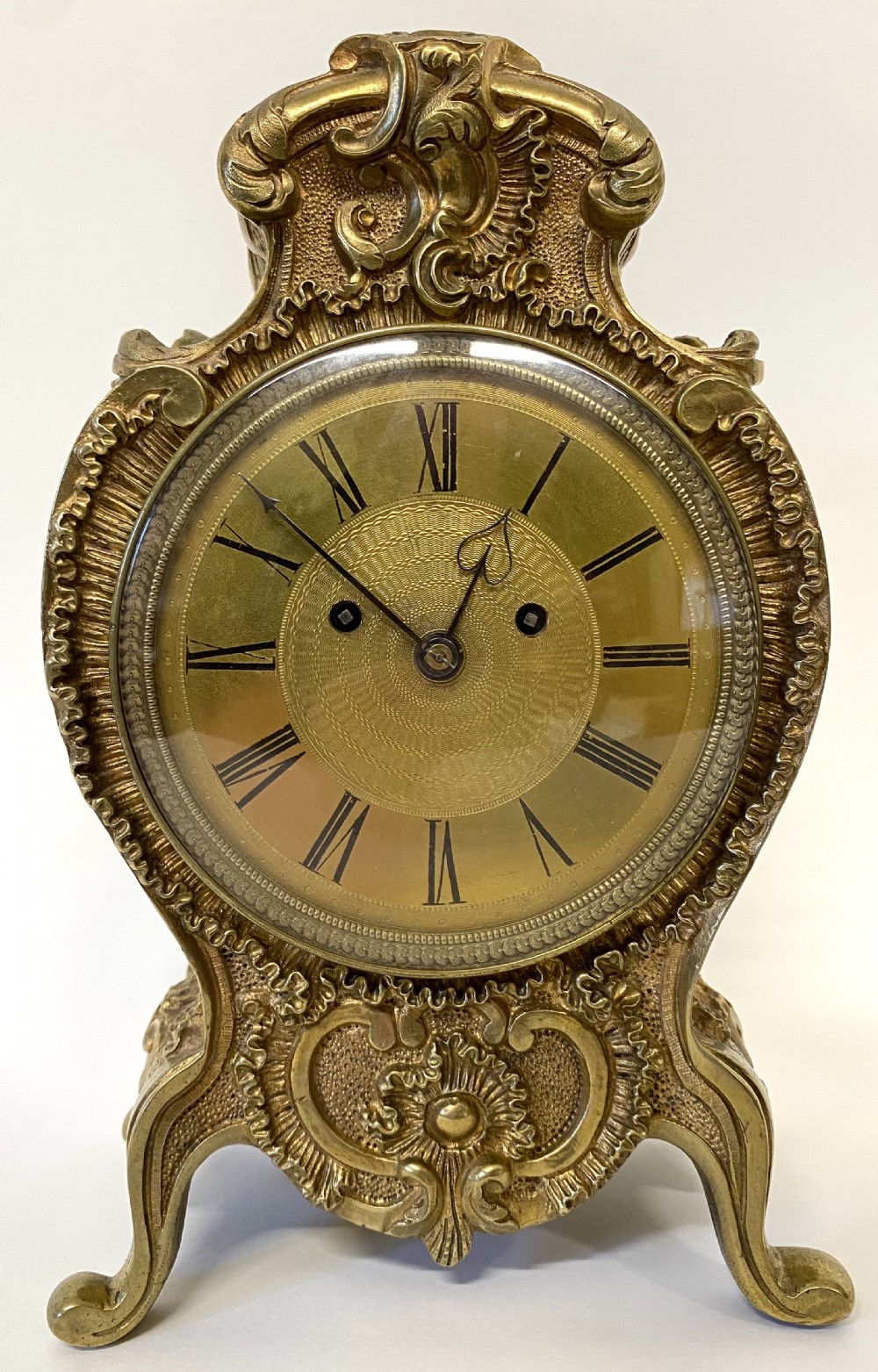
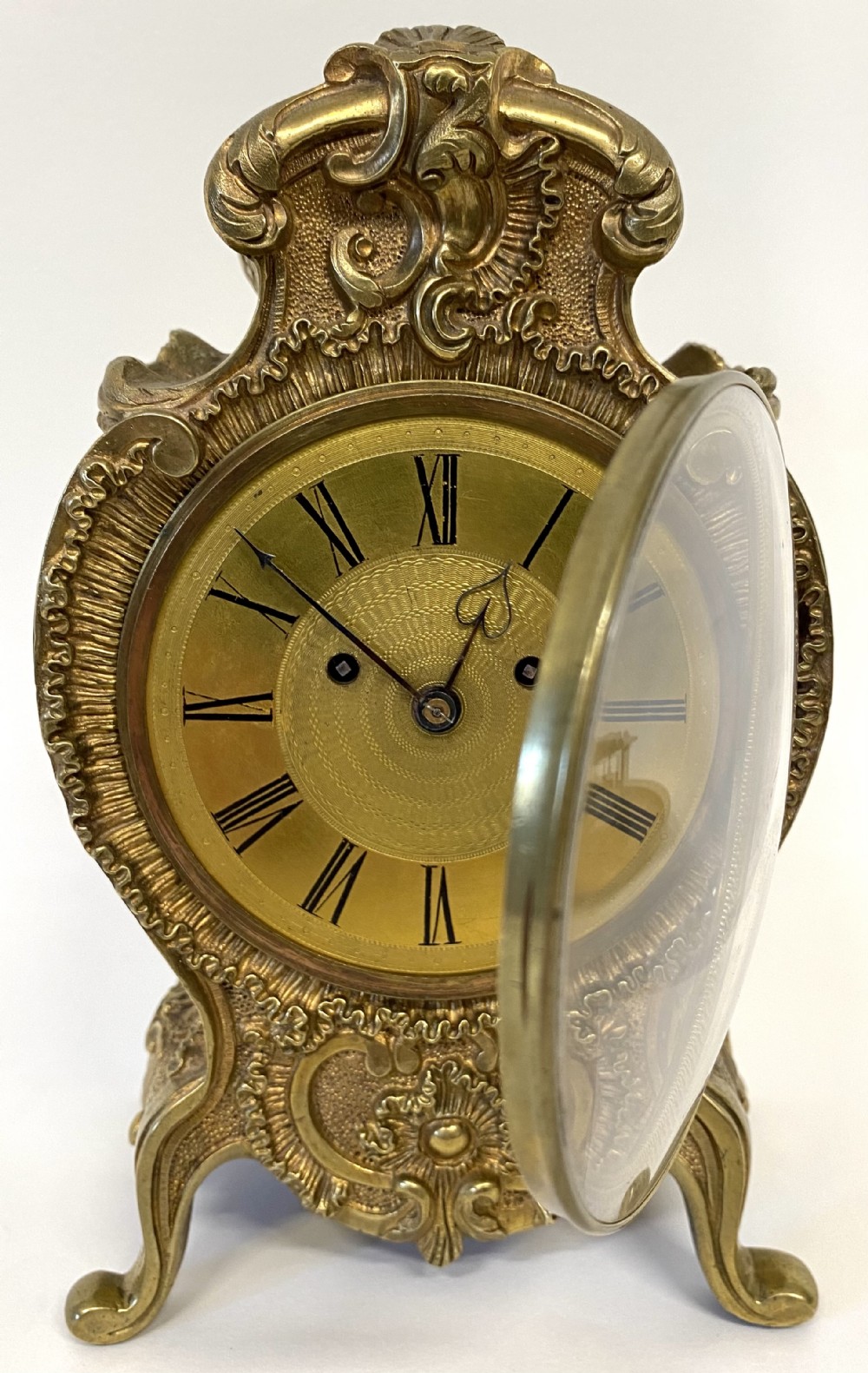
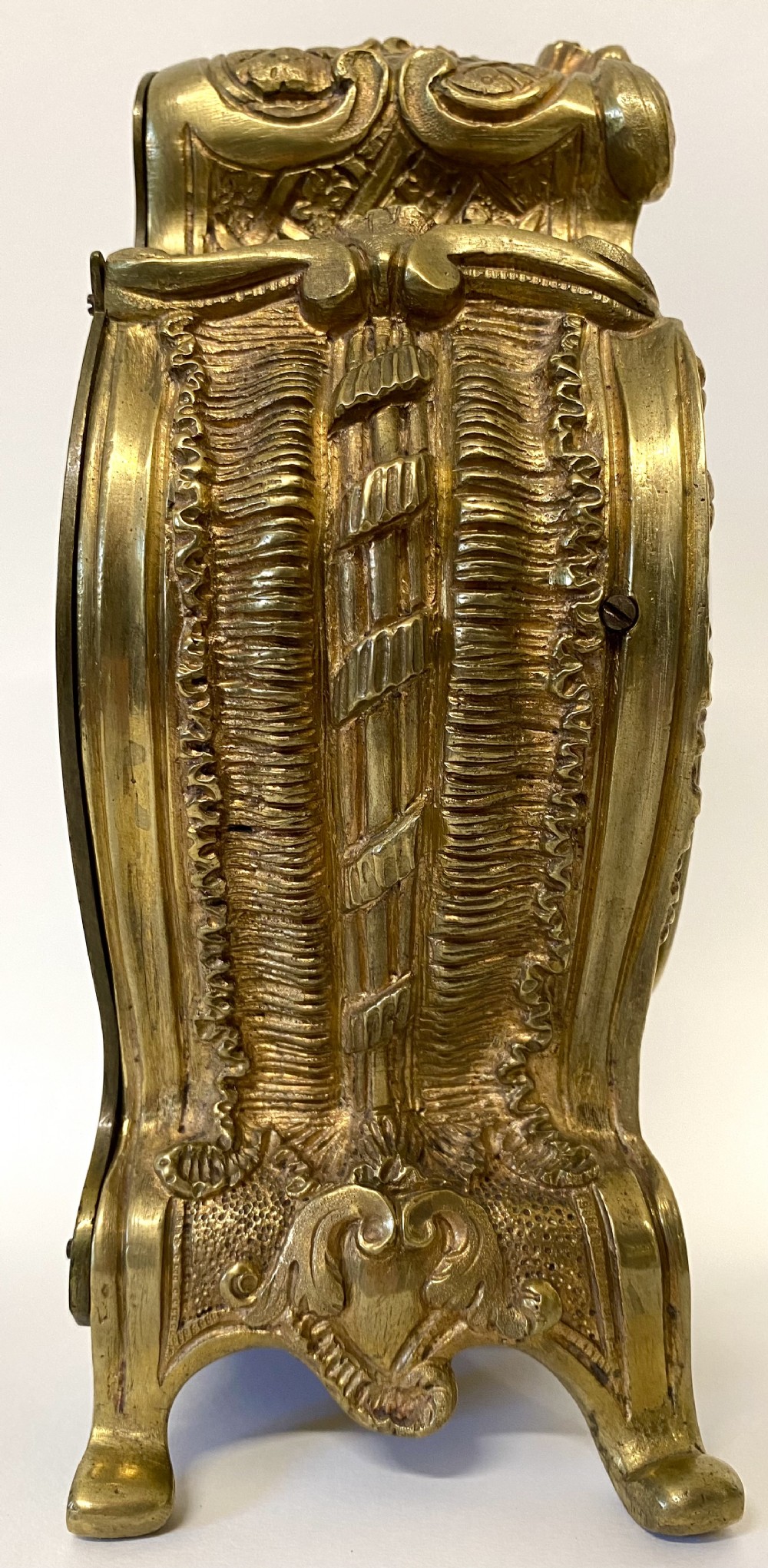
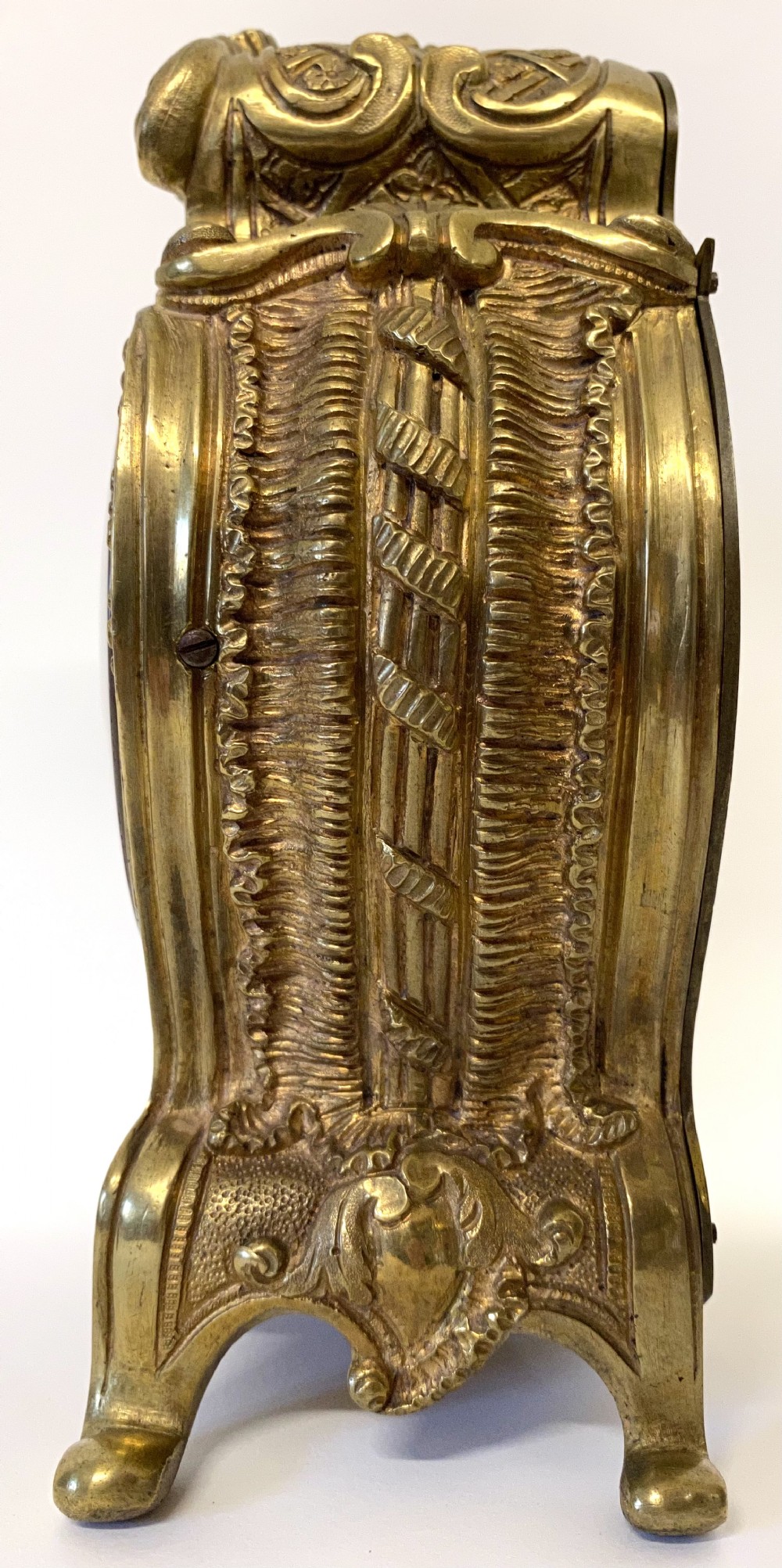
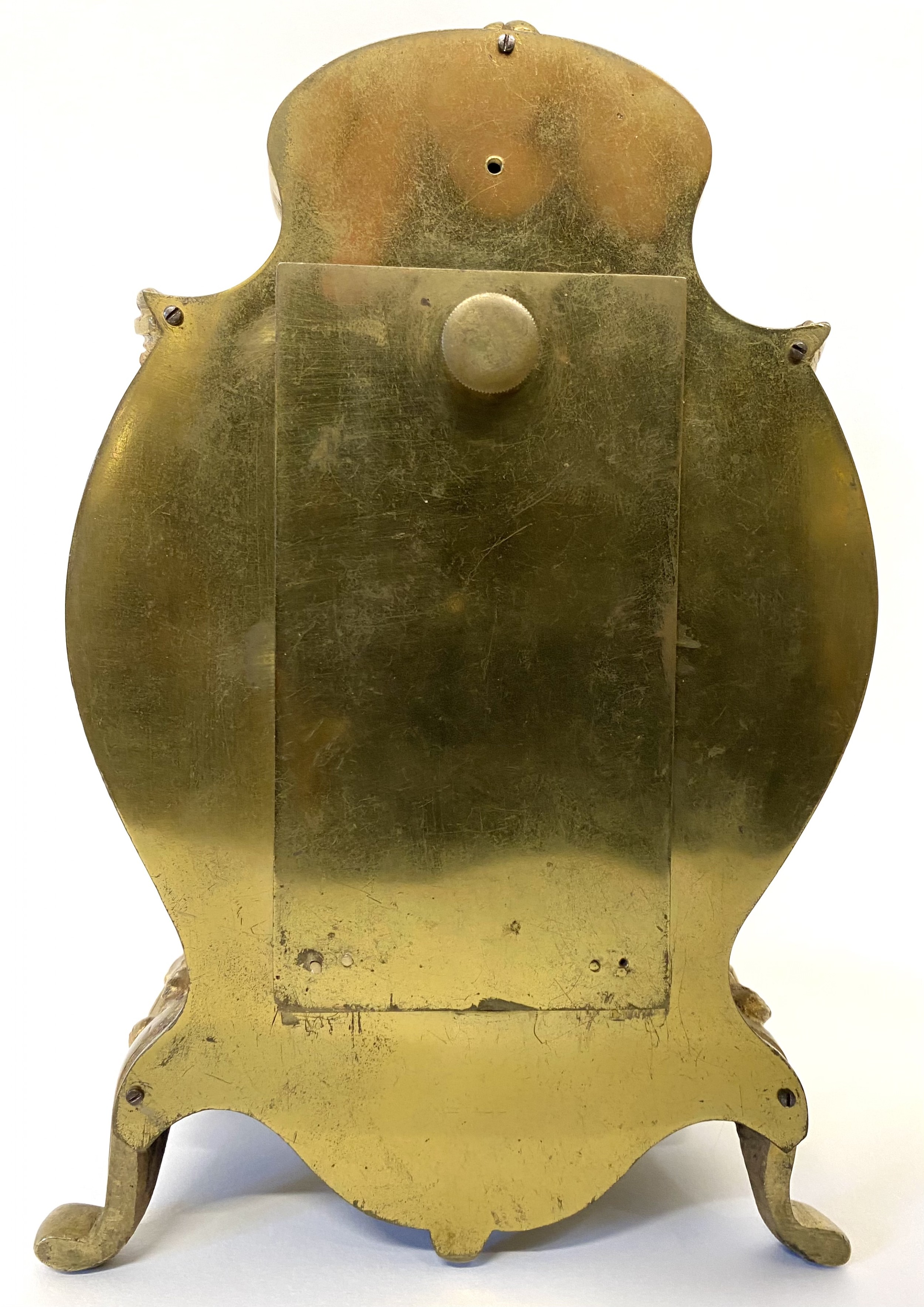
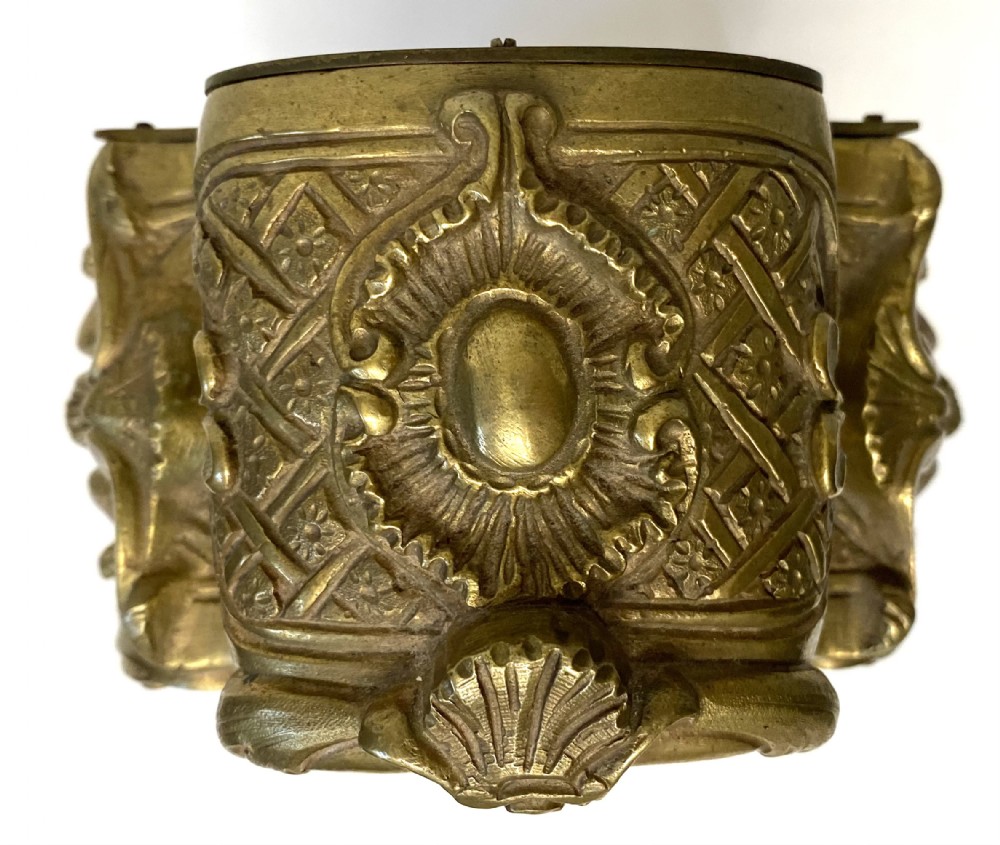
The case has a lovely shaped top with decorative shaping to the top, sides, and front. This wonderful shaping is then continued in the main body of the case with the sides also having intricate patterns. The case is then finished by four lovely legs to the bottom which finish it off beautifully. A truly lovely case of unusually small proportions.
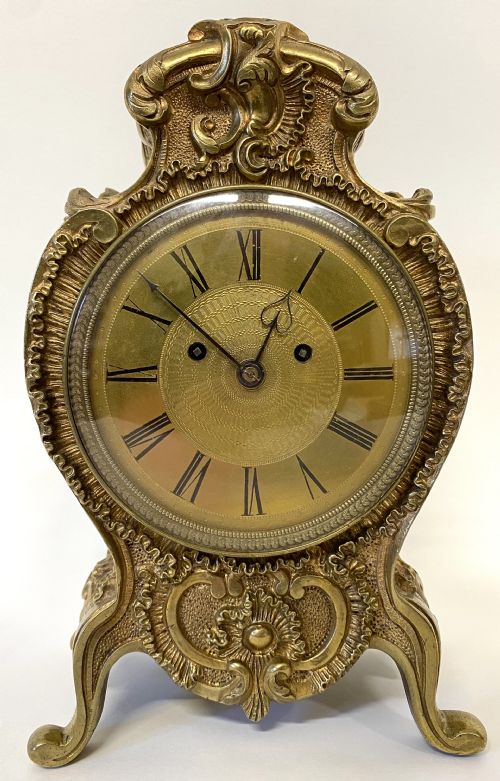
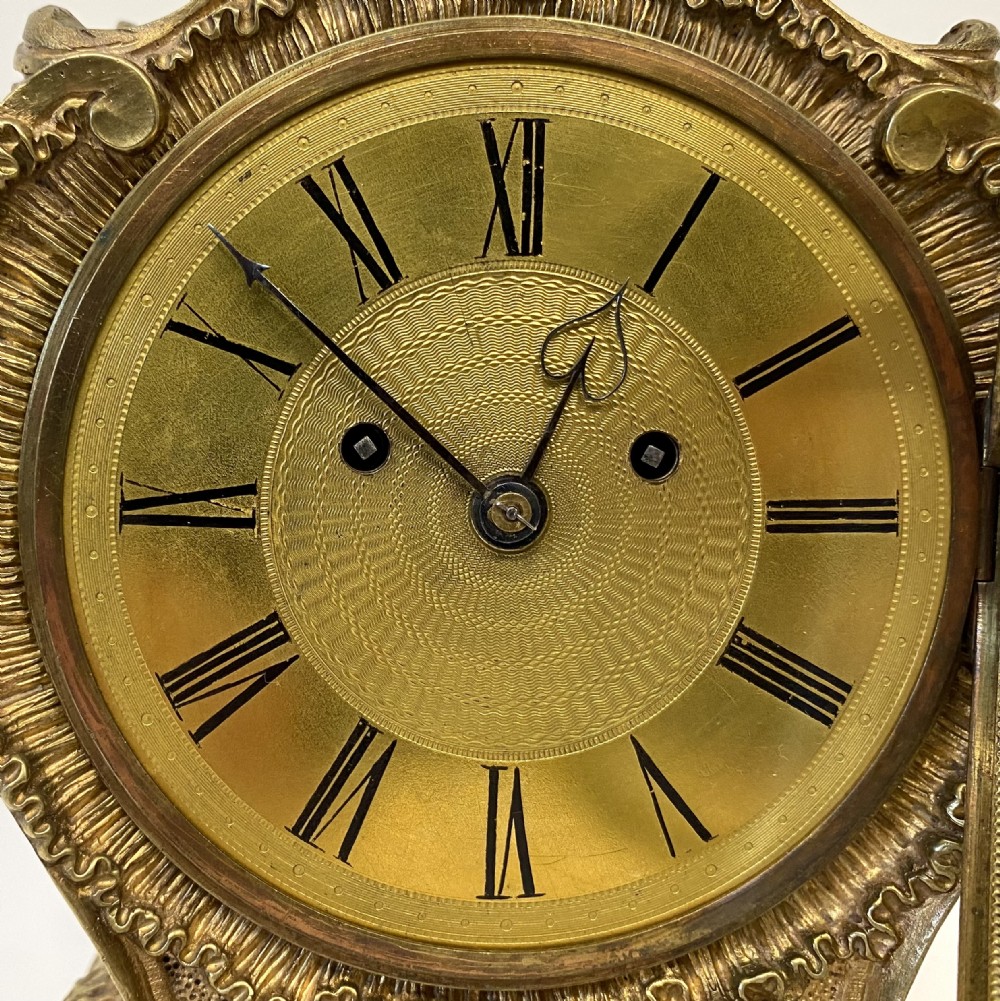
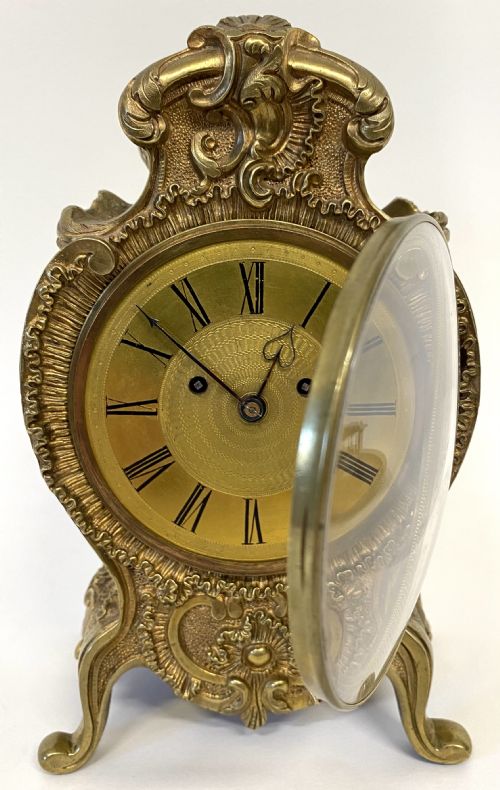
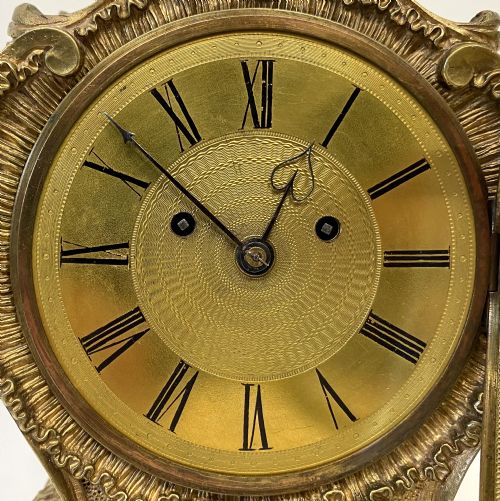
The dial is then also gilt and set out in Black Roman numerals with a thin ring of dots marking the minutes. The dial then has a beautiful, fine, engine turned pattern to the centre. The dial is then finished by two nicely shaped hands as well as a domed, protective glass set into a brass bezel.
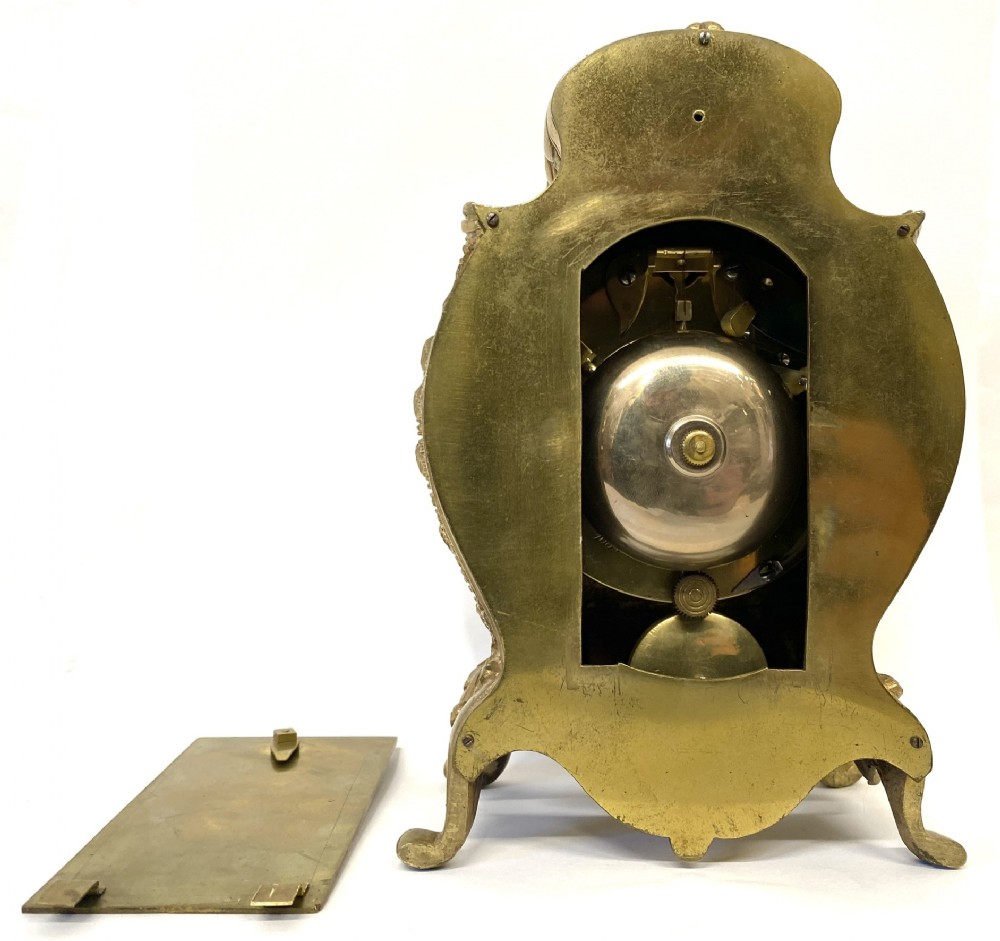
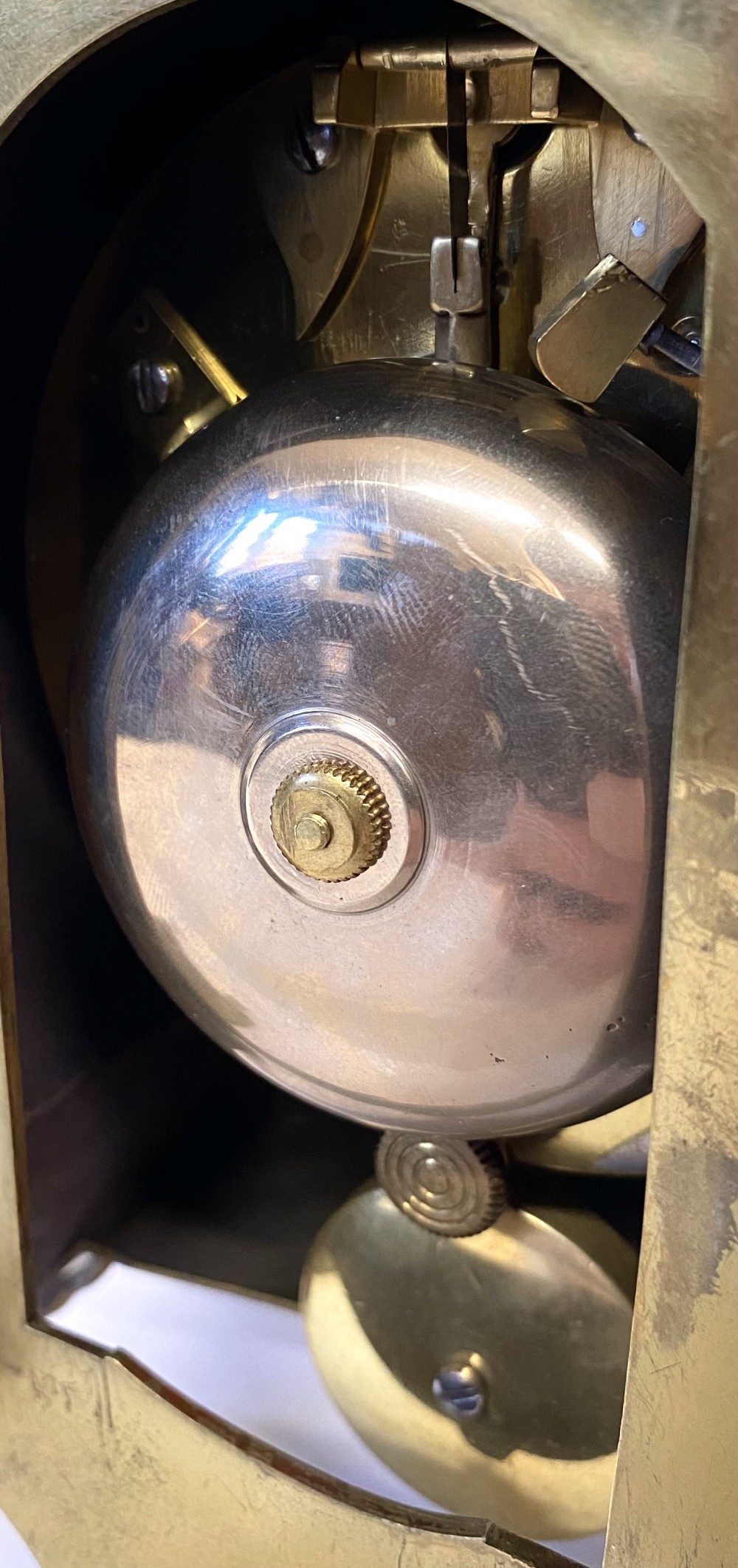
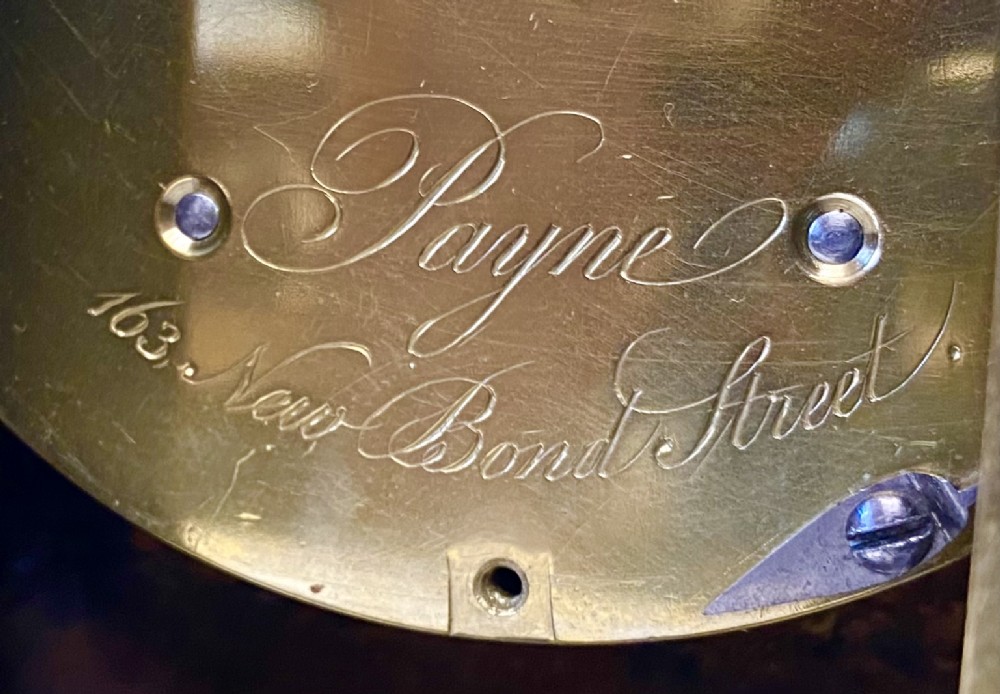
The movement is then wound from the front and adjusted from the back. It is a double fusee example of the upmost quality and it is extremely unusual to see a double fusee example in a clock this size. The movement is then fully working as it should and chimes once on the half past as well as the number of hours on the hour. The clock is complete with its regulating pendulum, travel nut, and winding key. Finally the movement is engraved by the maker “Payne 163 New Bond Street London”.
“William Payne is first recorded at 62 South Moulton Street London in 1816. By 1825 he has moved to 163 New Bond Street where the company remains until the 20th century. William Payne & Company, watch, clock and pedomater makers are first recorded there in 1852.”
It measures approximately:
8” / 20.25cm Tall.
5” / 12.75cm Wide.
3.5” / 9cm Deep.
N Wilson Antiques Clocks has dated this piece to the 19th Century.
You can view the stock and full dealer information on the N Wilson Antiques Clocks Profile Page

Antique Miniature Double Fusee Mantel Clock in Gilt Bronze Case by Payne London