Quiet Street Antiques of Bath has dated this piece to the 18th Century.
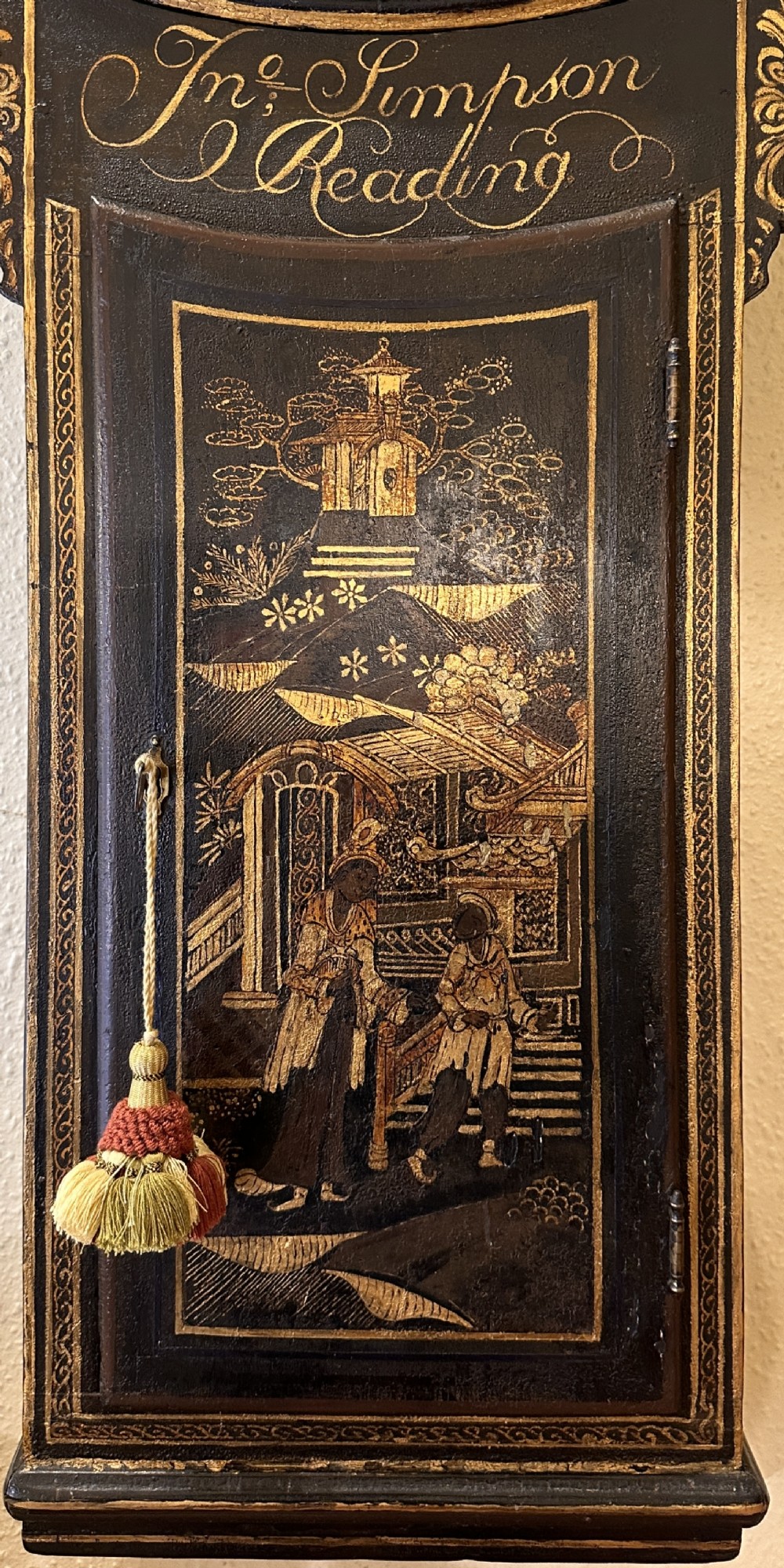
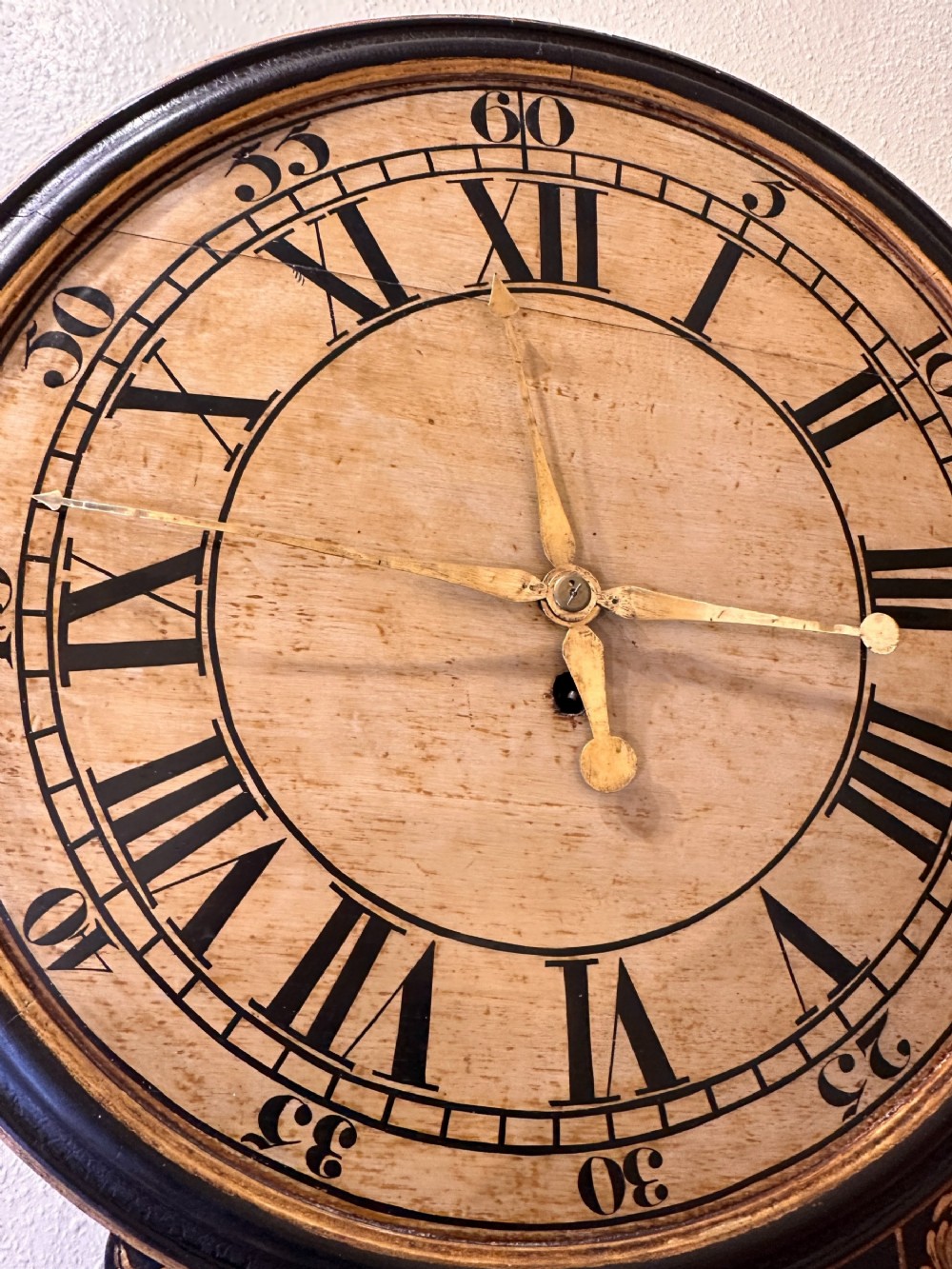
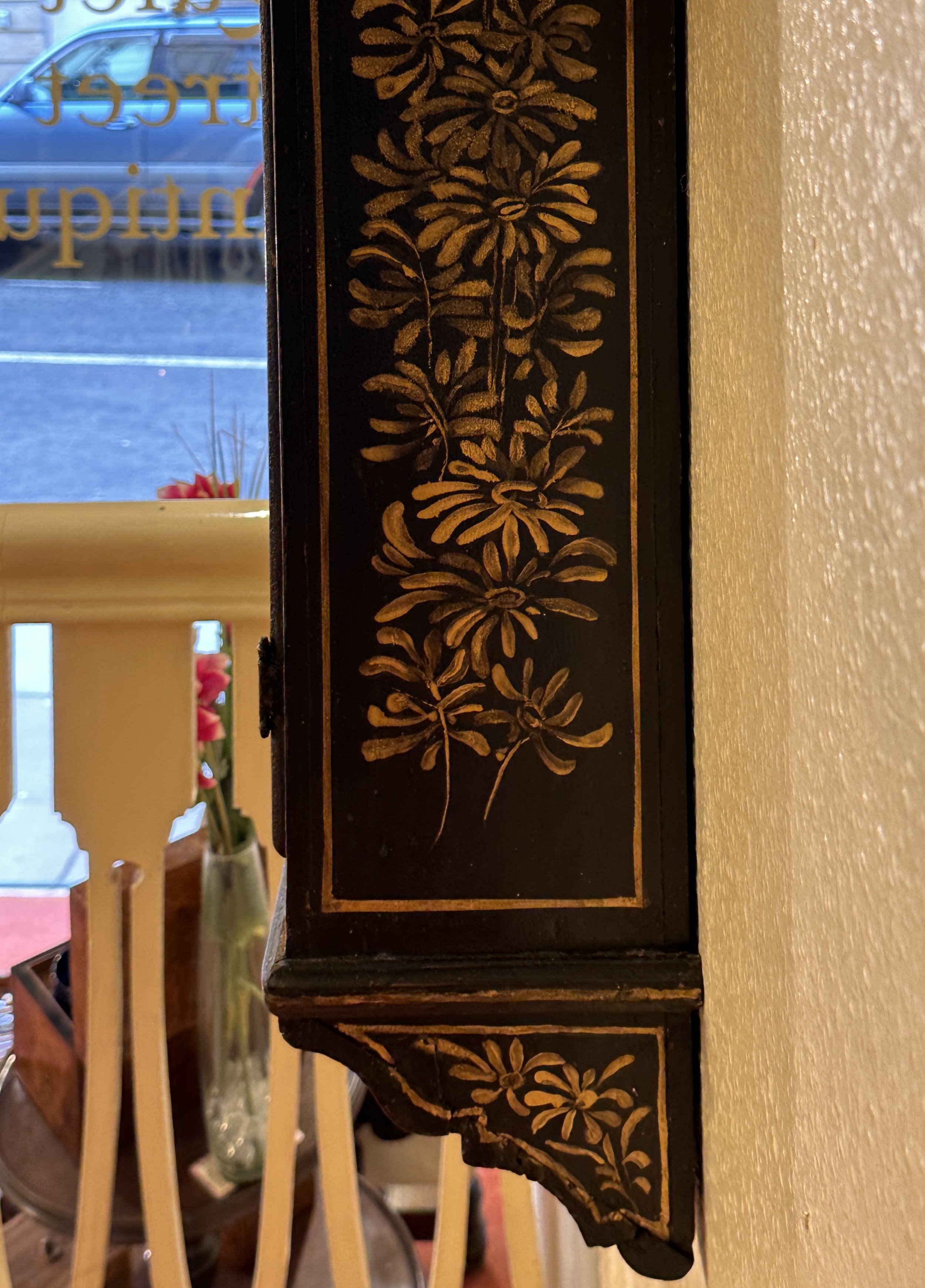
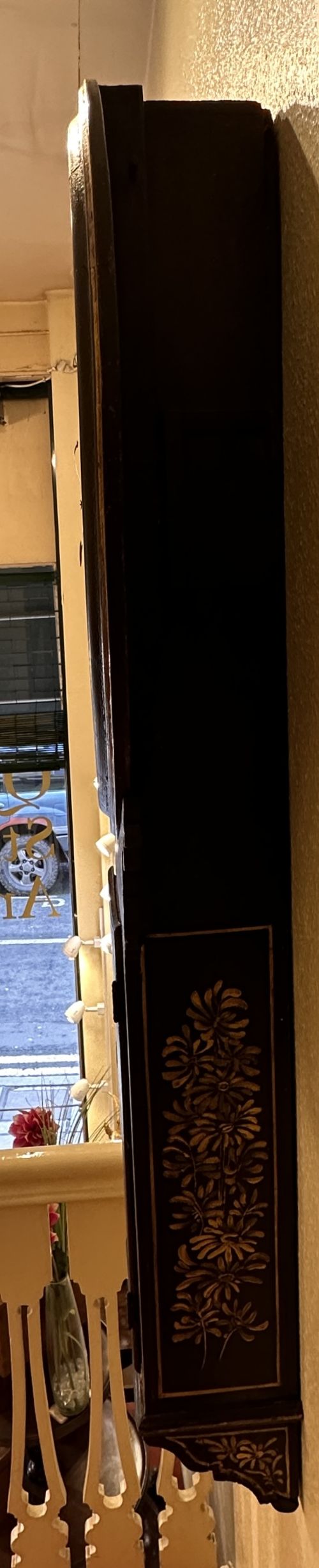
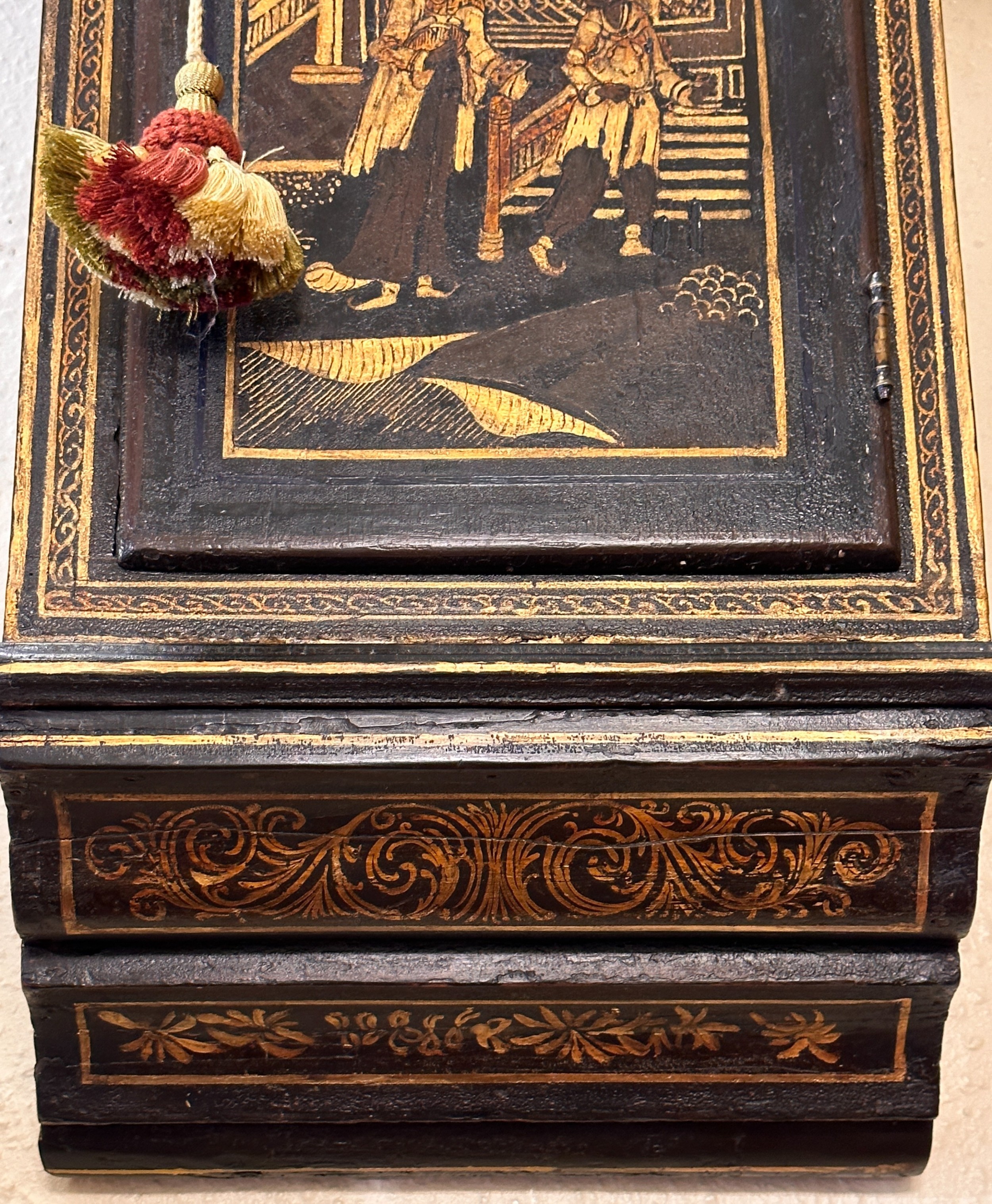
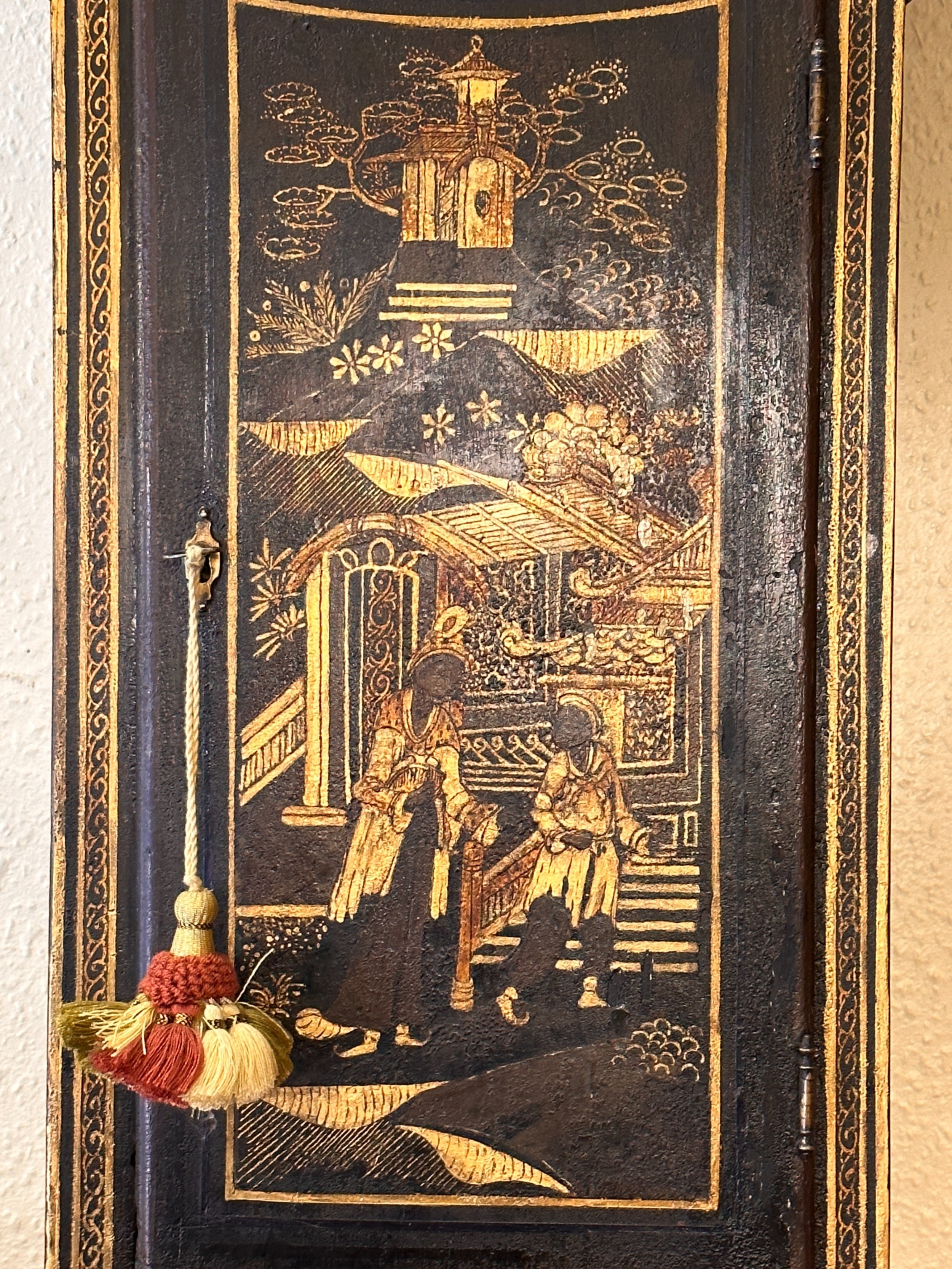
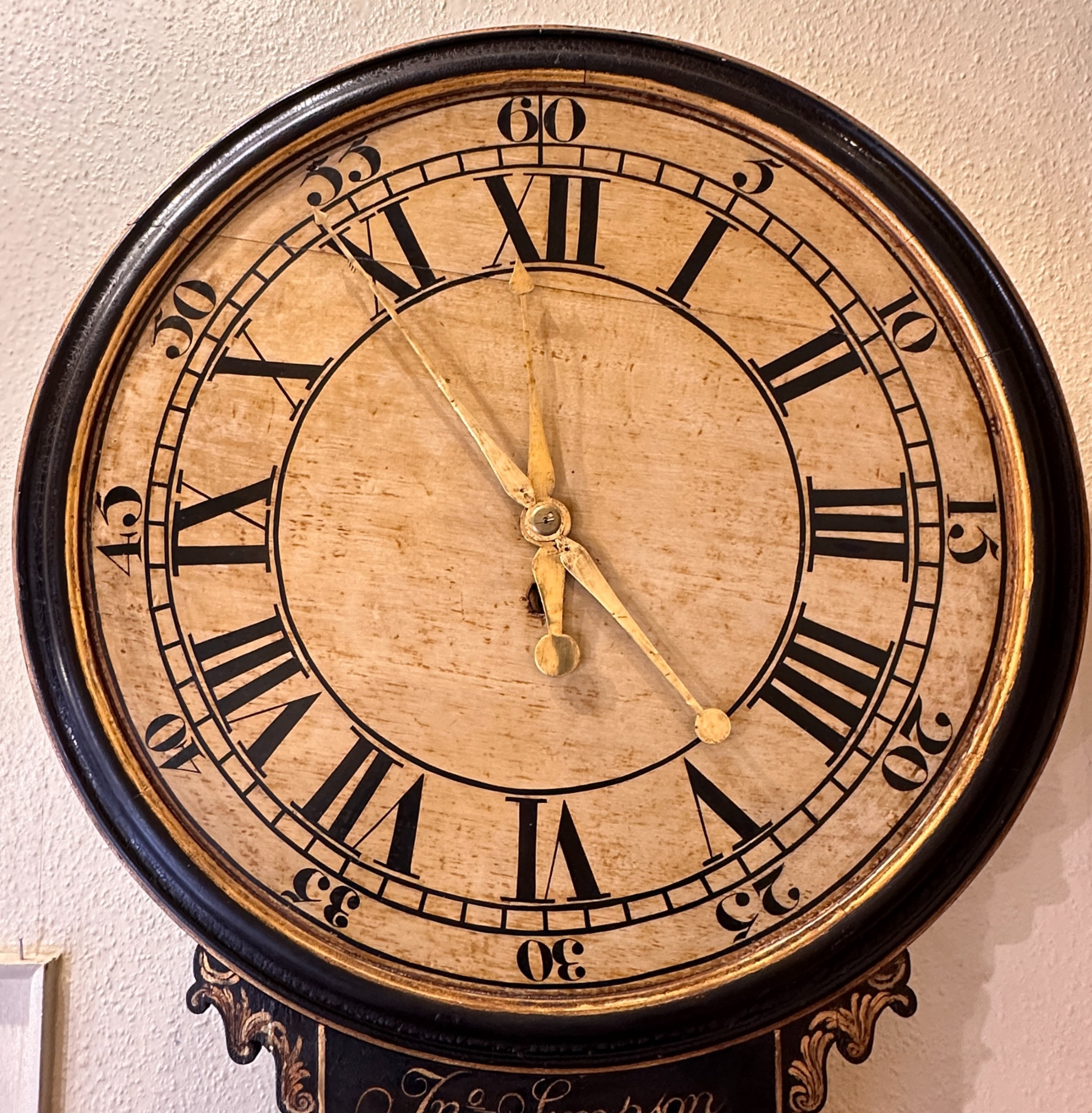
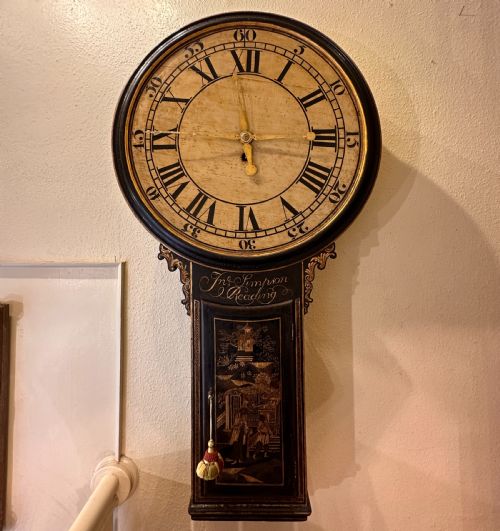
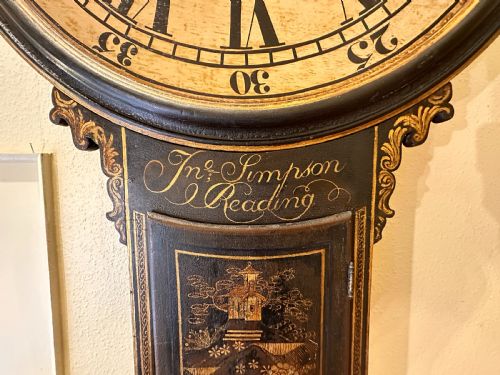
This fine ebonised example has a large (29 inch diameter) cream painted 2-piece wooden dial with Roman numerals; Arabic outer 5-minute markers and features beautiful counter-weighted polished brass hands. The case is black with gold 'Chinoisserie' painted decoration. Featuring people; houses; a Temple; trees, bushes and flowers. There is further gold painted floral decoration to the sides and underside.
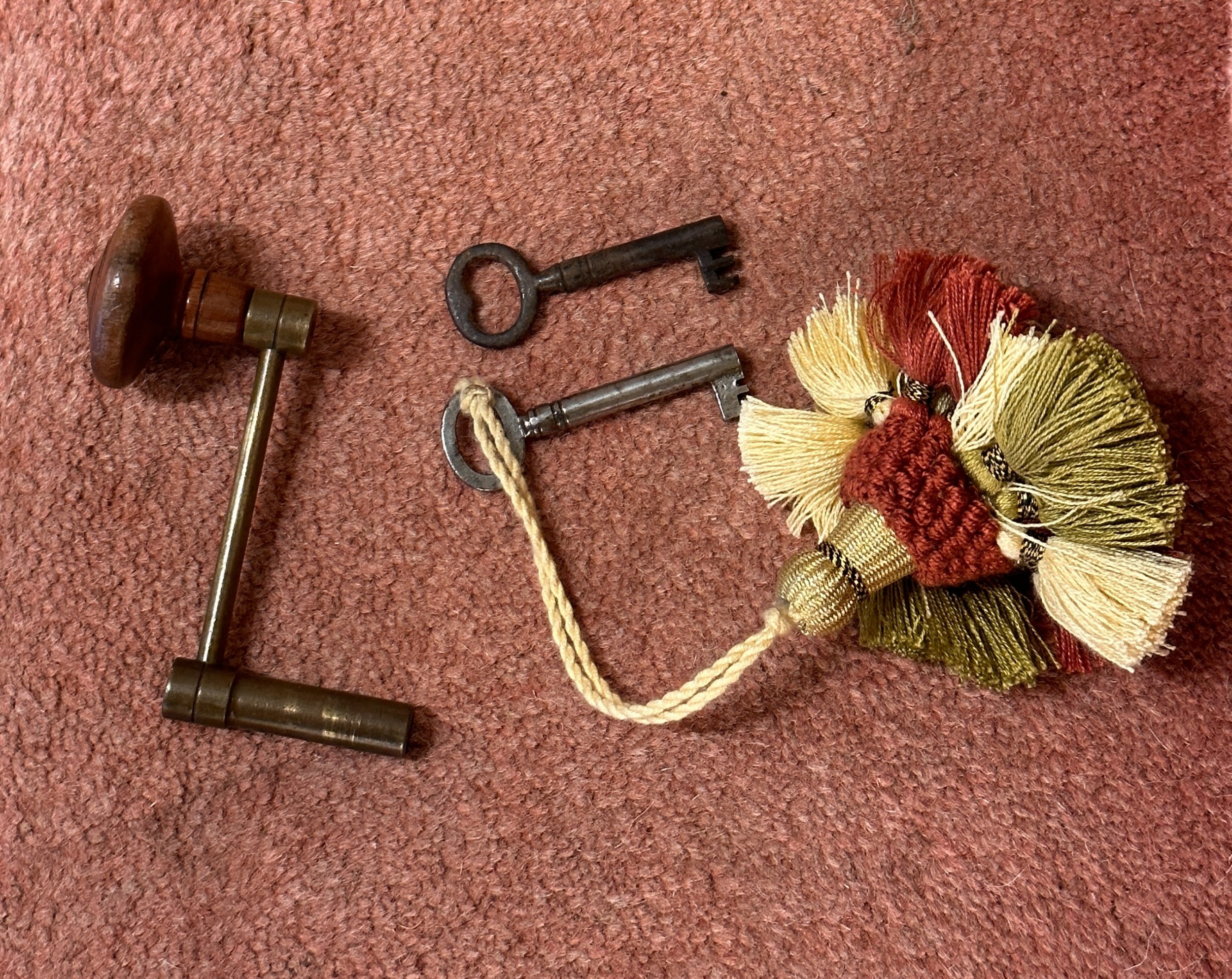
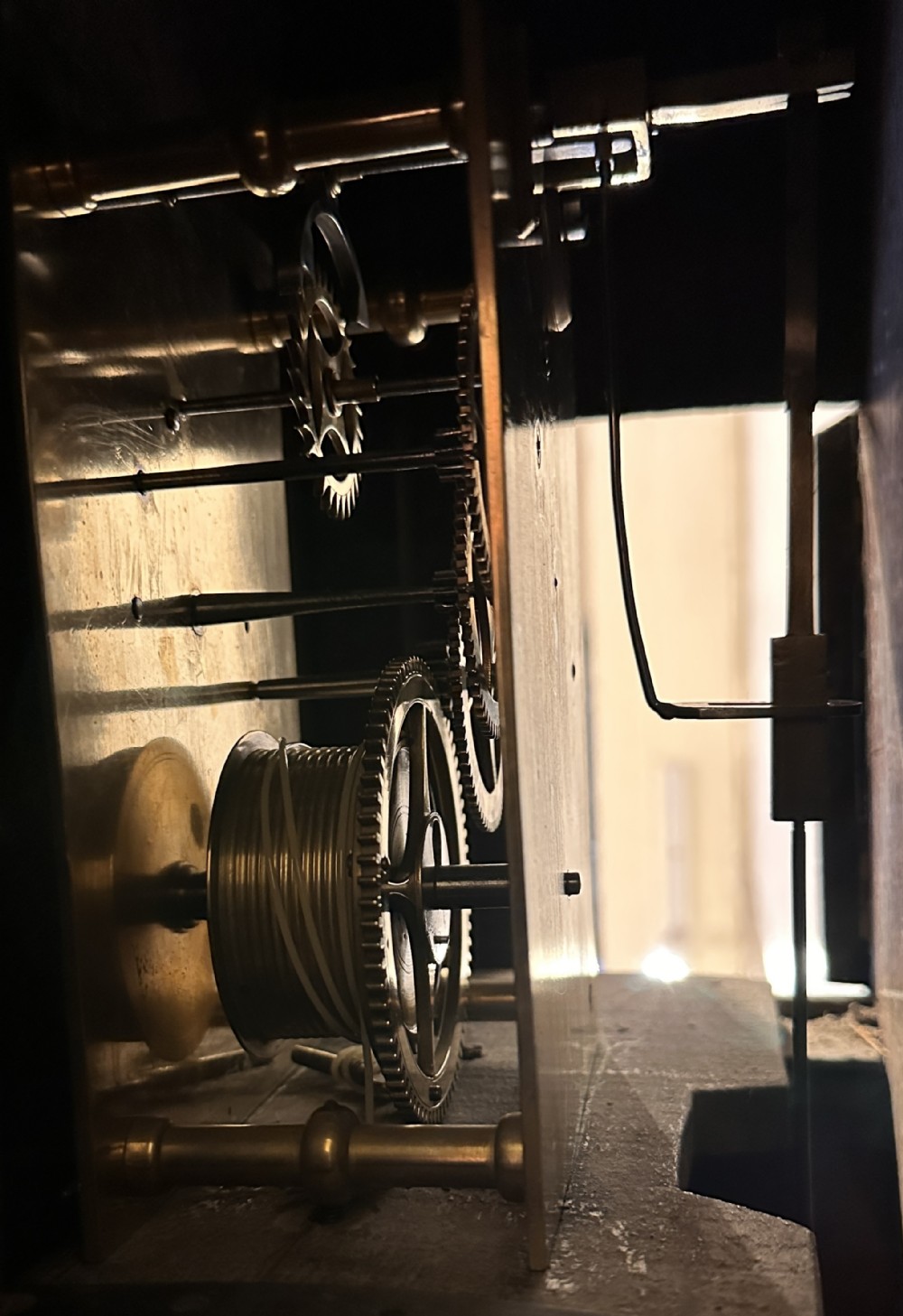
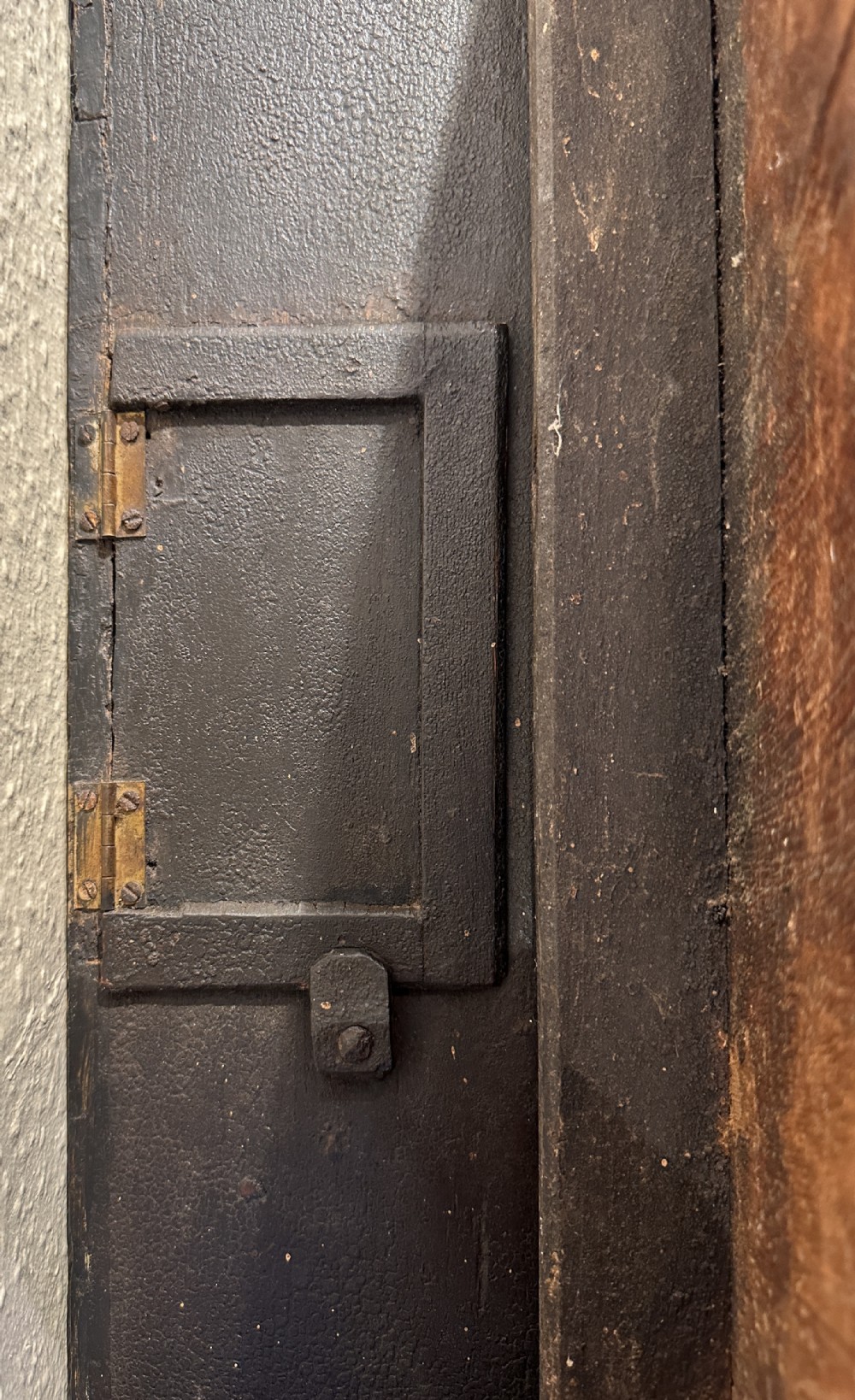
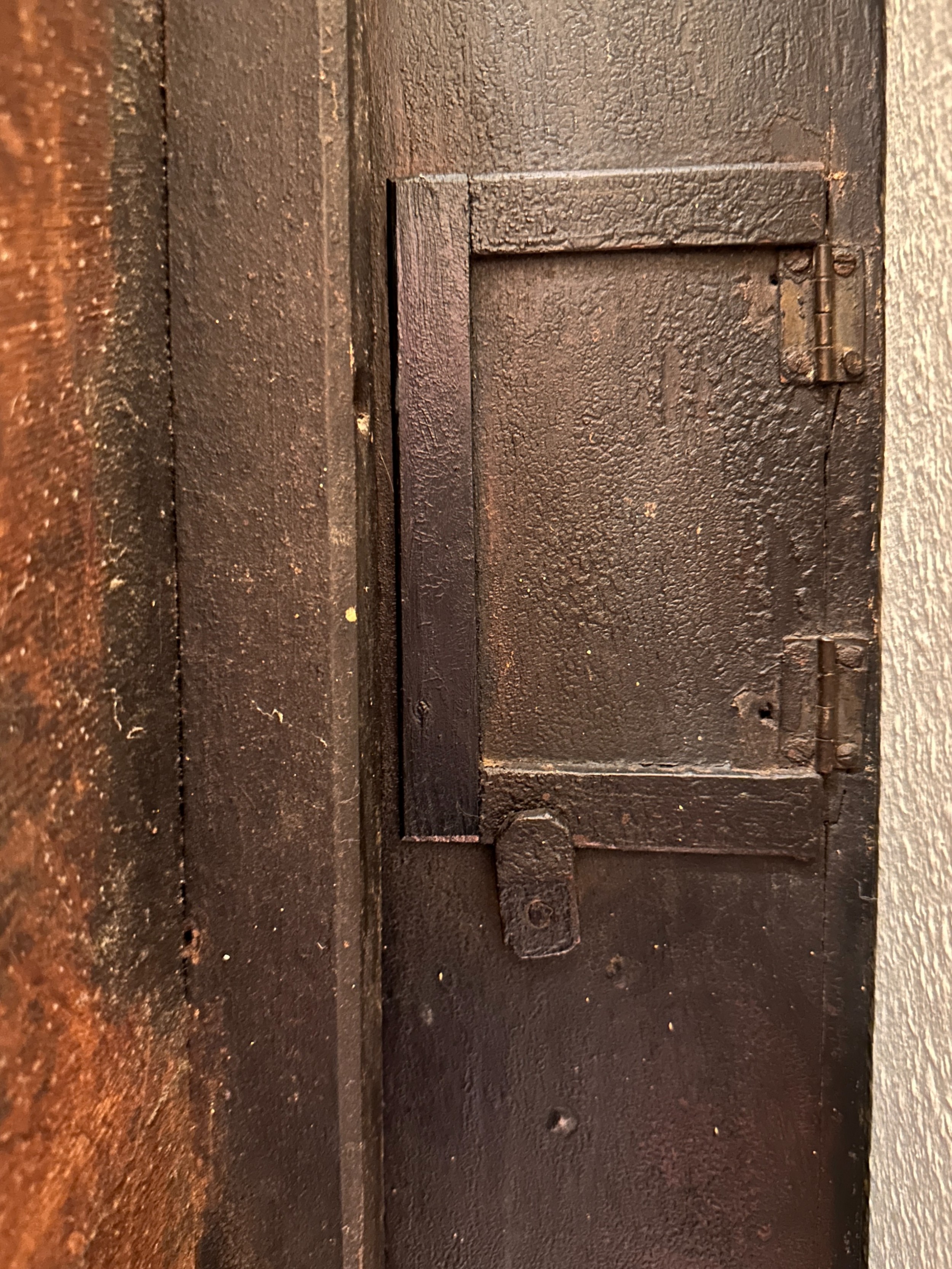
This splendid Tavern clock comes complete with two door-keys and a winding key.
It is sold in full working order and guaranteed for 12 months from date of purchase.
The maker John Simpson is a 'known' maker, working in Reading (Berkshire) from 1775. Ref: Brian Loomes - "Watch and Clockmakers of the World", (complete 21st century edition, p.711).
Act of Parliament Clocks, more commonly known as Tavern Clocks, were displayed in Inns and Taverns throughout the United Kingdon beginning in the mid-18th century. Such clocks were plain in design, the faces were round, two to five feet in diameter, and hung on a wall. The term Act of Parliament Clock came about long after these clocks were already in existence. In 1797, a tax against clocks (of 5 shillings) was introduced by the then Prime Minister William Pitt. The tax was very unpopular among clockmakers and was repealed after nine months. The large clocks in Inns and Taverns were later widely (though incorrectly) said to have been developed as a response to this tax. They were however used by Landlords as the definitive time for 'last orders' and 'opening/closing times'. Large enough for anyone (whatever state they may be in) to see the time from a distance. Inns and Taverns were regular and scheduled stopping points for stagecoaches travelling between towns and cities, so these clocks helped people follow timetables ensuring they would not miss their ongoing connections.
Dimensions: Dial diameter: 29 inches (74 cm). Height: 59 inches (150 cm); Depth: 8 inches (20 cm)
Dated: c.1775 - 1780.
Quiet Street Antiques of Bath has dated this piece to the 18th Century.
Fine antiques at sensible prices
You can view the stock and full dealer information on the Quiet Street Antiques of Bath Profile Page

A Fine Quality 18th Century Tavern Clock by John Simpson, Reading.