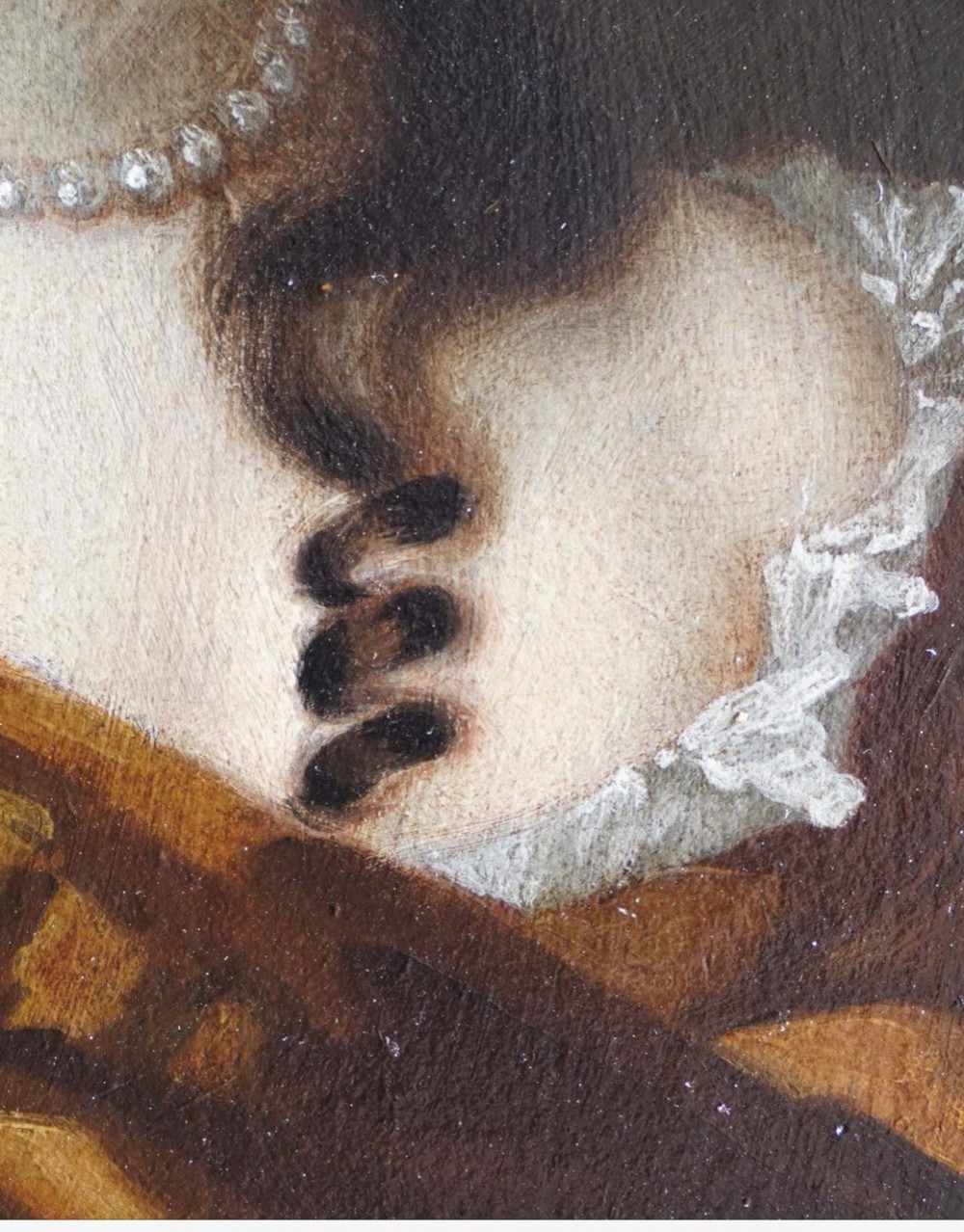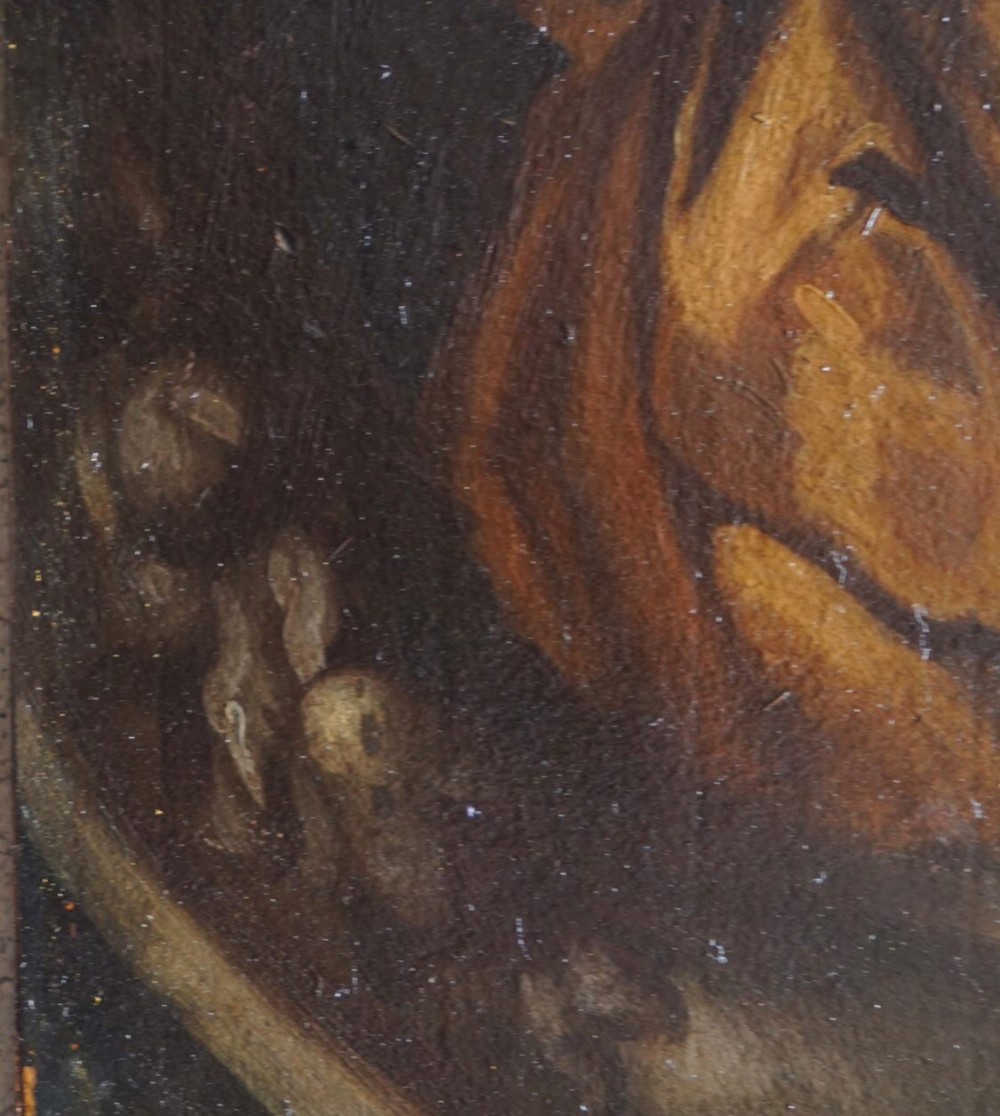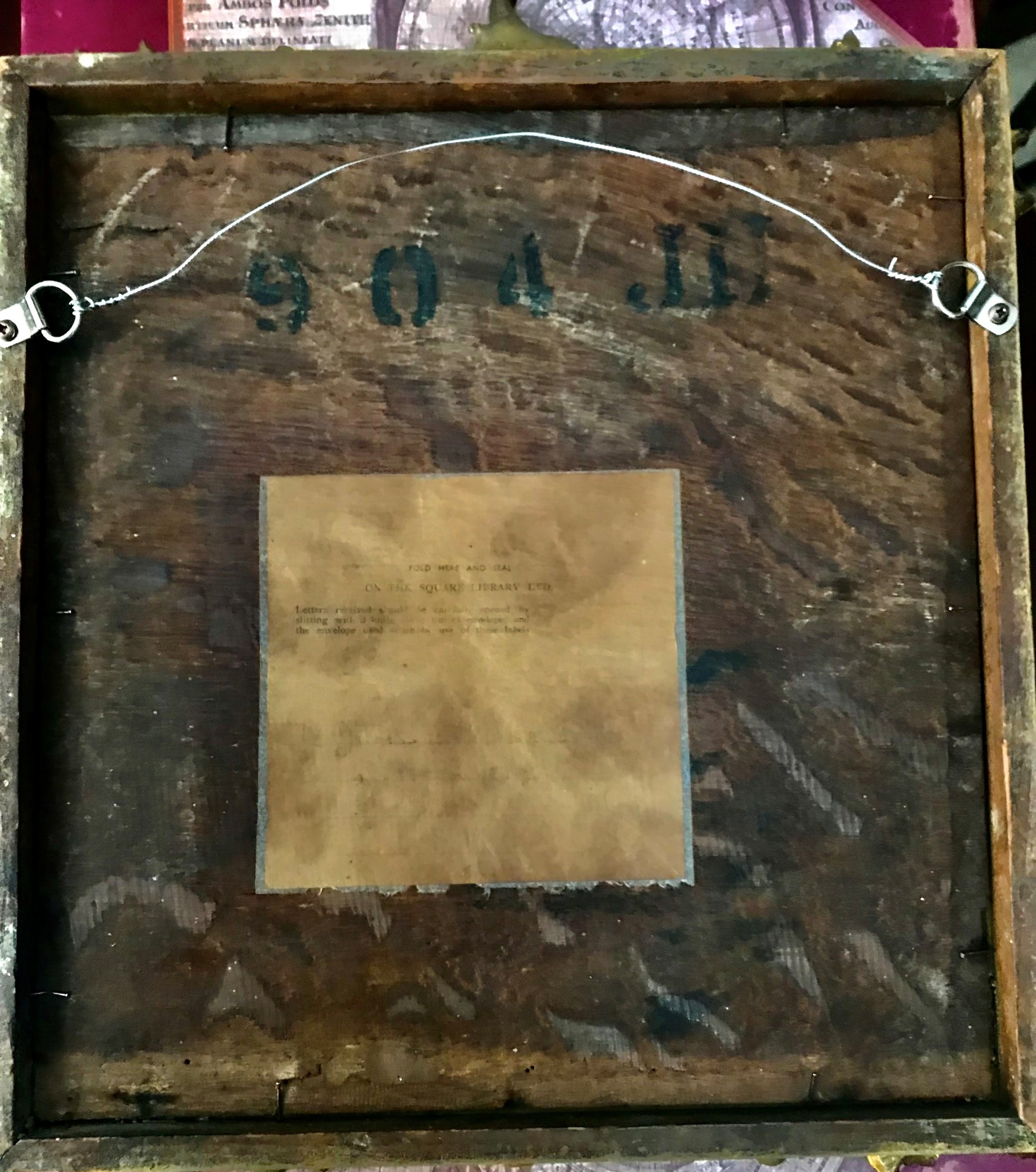
Roy Precious - Antiques & Fine Art has dated this piece to the 17th Century.
Barbara regards the viewer with a knowing and rather mischievous look.
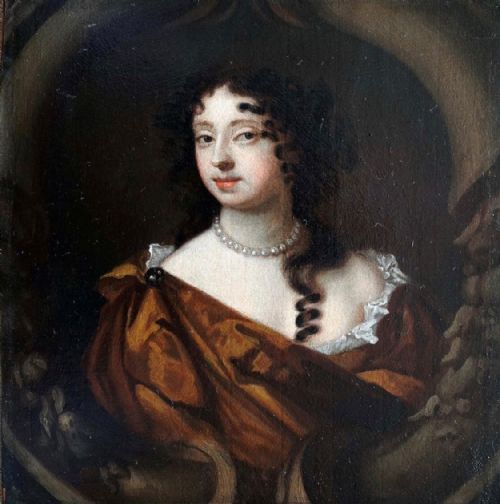
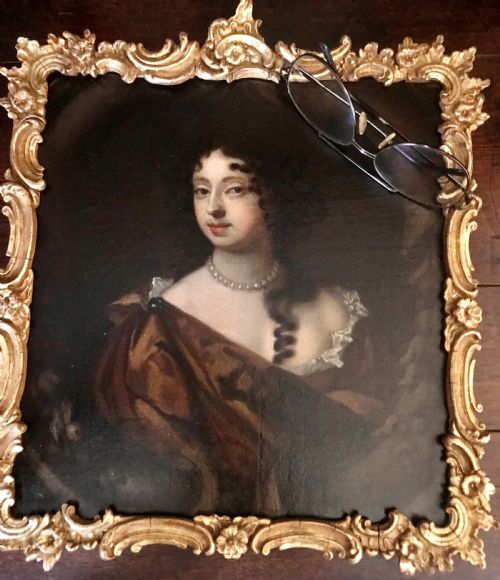
(The final image is shown with pair of spectacles as an indicator of size)
As the most notorious and most frequently painted of King Charles II's mistresses, BARBARA VILLIERS Duchess of Cleveland (1622-1681) remains one of the most enduring symbols of the indulgences and excesses of the Restoration Court. This portrait derives from works by Sir Peter Lely, who painted her many times.
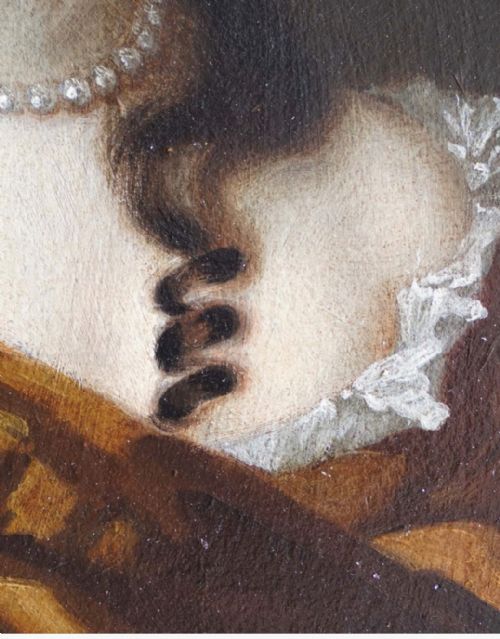
At the Restoration Villiers was established as the king's favourite mistress and despite his marriage to Catherine of Braganza and the jealousy of other courtiers, she maintained a powerful influence at Court. At least three of her children were acknowledged as his by the king and by 1665 she was termed the 'maitresse en titre'. Among her various liaisons was one in 1668 with the actor Charles Hart in retaliation for the king's growing attraction for actresses such as Moll Davis and Nell Gwyn.
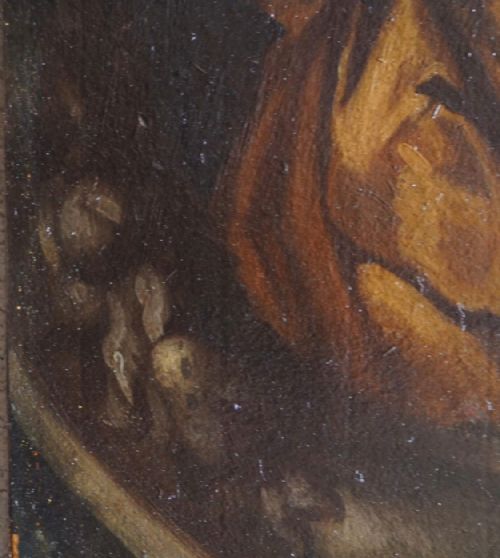
In 1670 she was created Baroness Nonsuch, Countess of Southampton and Duchess of Cleveland. This was a reward for her services but also a compensation for retirement. By the early 1670s her influence had been entirely supplanted by Louise de Kéroualle, Duchess of Portsmouth. After this she spent some time in Paris before returning to England a few months before Charles II's death in 1685. On the death of her husband Roger, Earl of Castlemaine in 1705 she married Major-General Robert Fielding, a bigamist who was jailed for threatening and maltreating his wife. She died at Chiswick on 9th October 1709. Among her various illegitimate children by the King were the Duke of Grafton, the Duke of Southampton and Lady Charlotte Fitzroy, Countess of Lichfield.
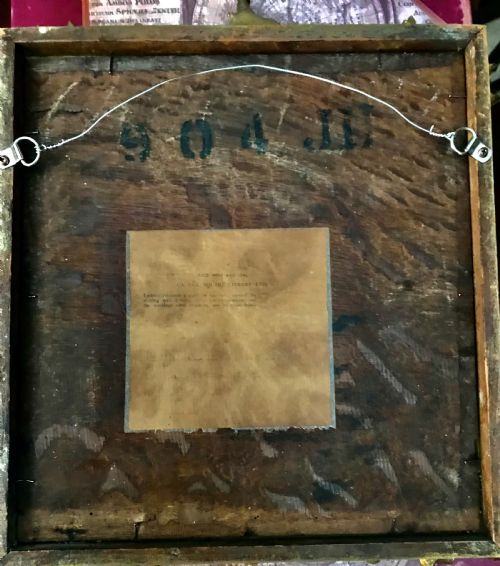
Portraits of Villiers, and other of the king's mistresses, were much in demand and many copies were produced to satisfy this market. They were not cheap; Samuel Pepys could not afford one and had to settle for a print.
MARY BEALE (1633-1699) was born in Barrow, Suffolk, She became a semi-professional portrait painter in the 1650s and 1660s, working from her home, first in Covent Garden and later in Fleet Street. Mary Beale was not the only female painter in England, but her name has survived as that of the woman to make the most successful living, and to enjoy a flourishing practice as a portraitist.
She became reacquainted with Sir Peter Lely, now Court Artist to Charles II. Her later work is heavily influenced by Lely, being mainly small portraits. He was Beale’s strongest artistic supporter. The friendship between Lely and Mary Beale enabled her, famously, to observe the master in the act of painting – a remarkable privilege – in order to study his technique. It is perhaps not surprising, therefore, that many of her portraits have been misattributed to Lely or his Studio .She was widely reckoned to be Van Dyck's most accomplished copyist.
SIZE: 13.75 x 11.75 inches including the frame.
PROVENANCE: Old Norfolk Private Collection.
Roy Precious - Antiques & Fine Art has dated this piece to the 17th Century.
Roy and nadine precious: specialists in portraiture from the 16th to the 20th century. Established in 1972.
You can view the stock and full dealer information on the Roy Precious - Antiques & Fine Art Profile Page
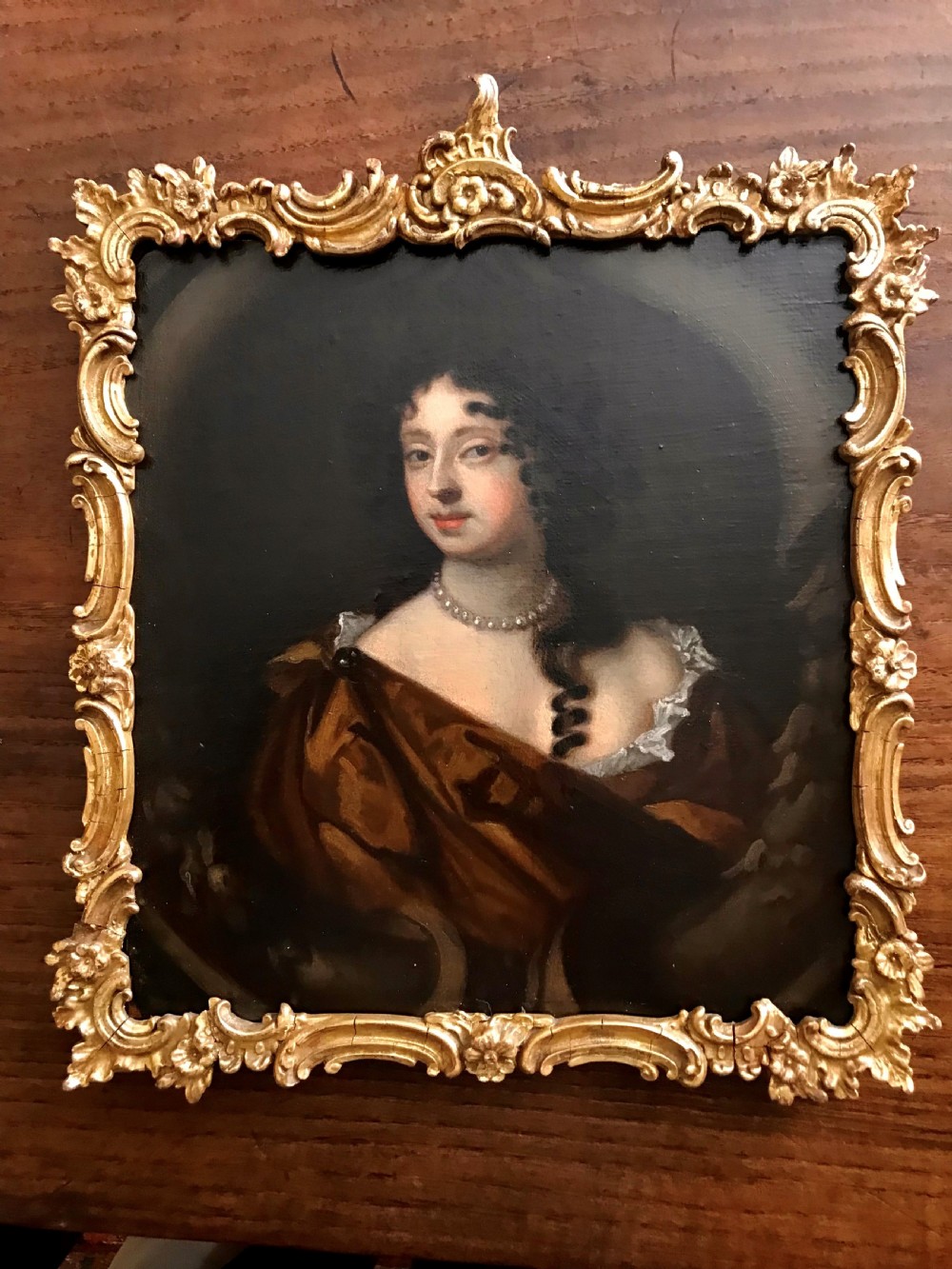
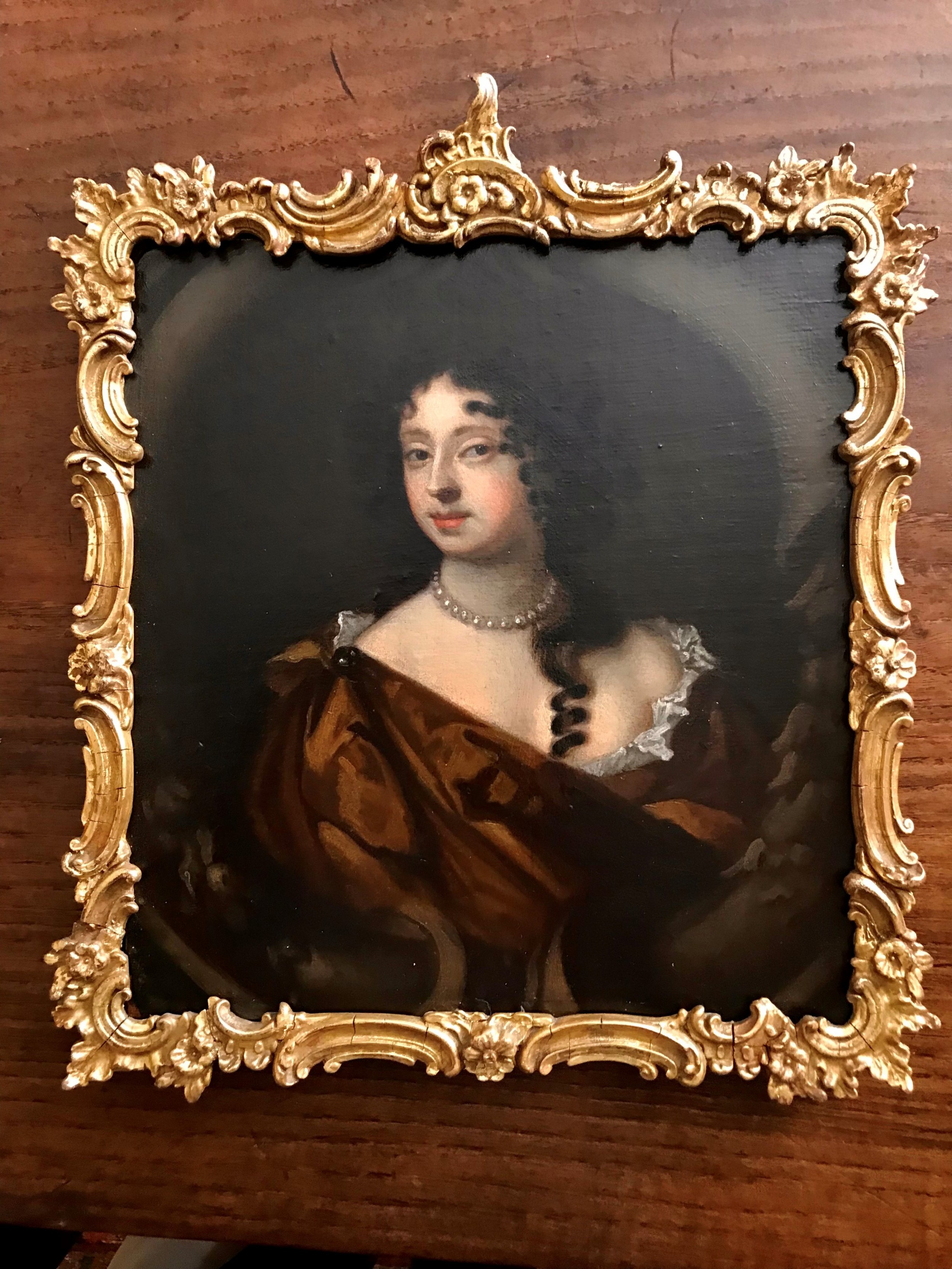
Small Portrait of Barbara Villiers C. 1665; Attributed to Mary Beale.