Roy Precious - Antiques & Fine Art has dated this piece to the 18th Century.
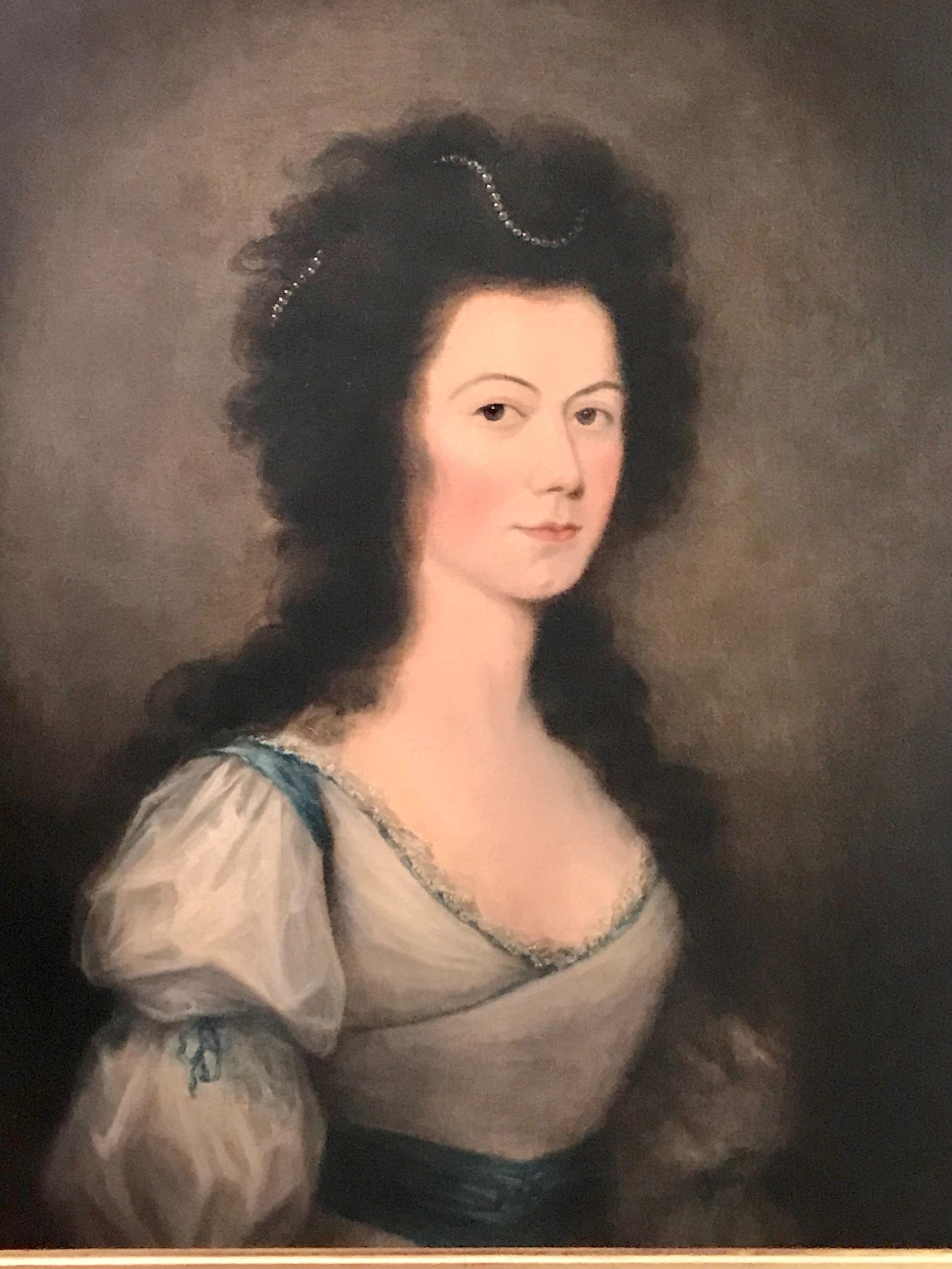
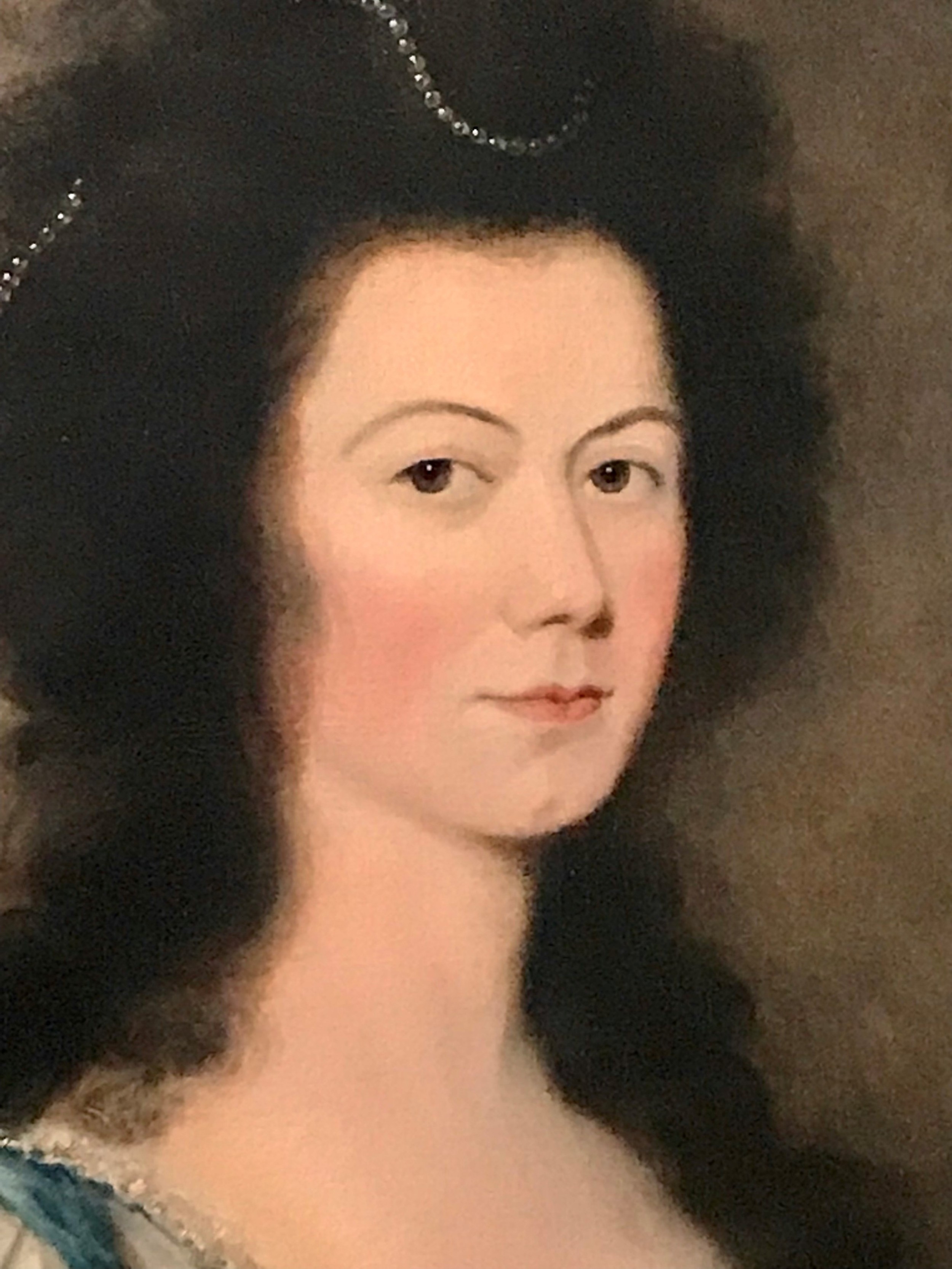
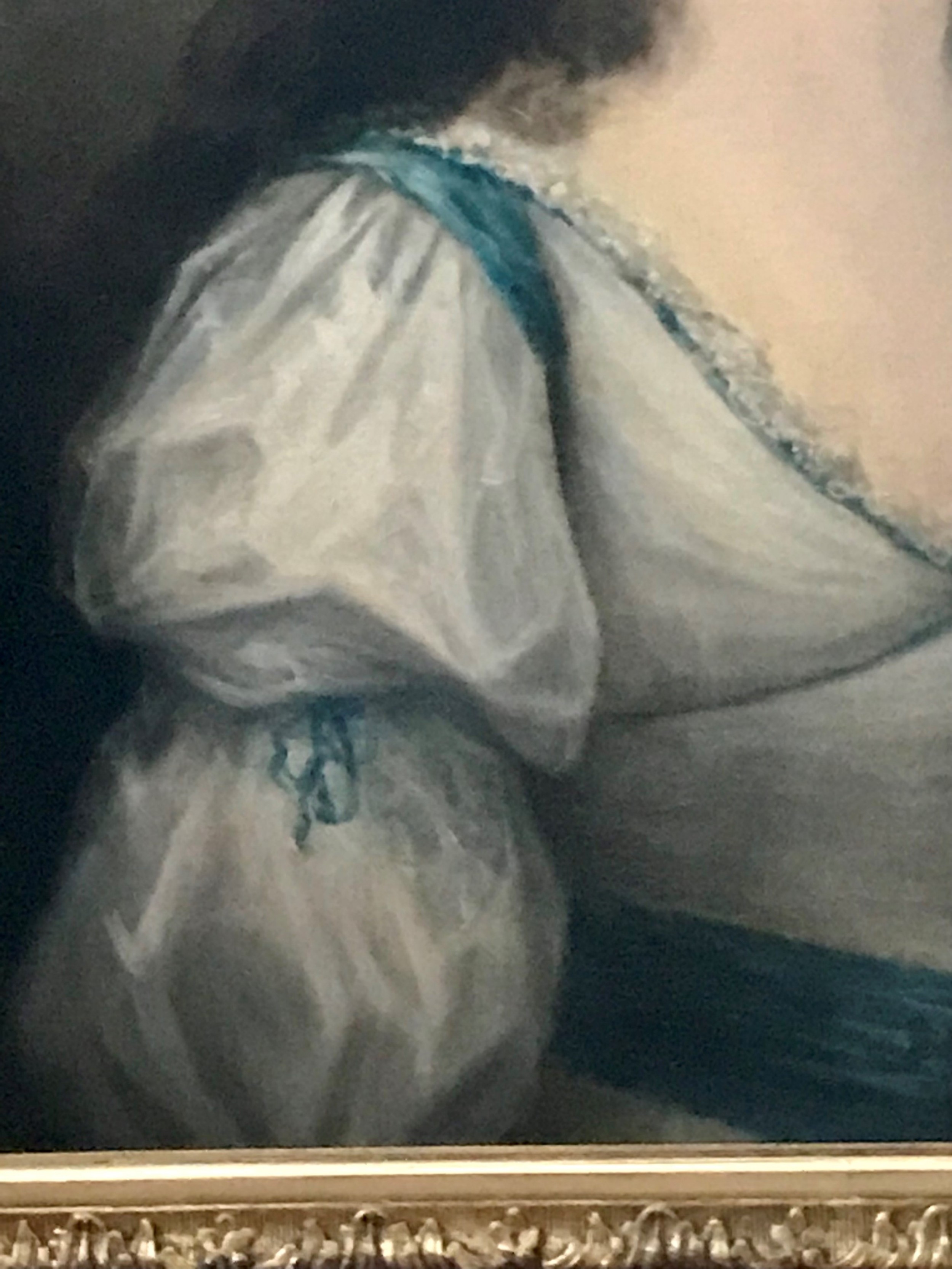
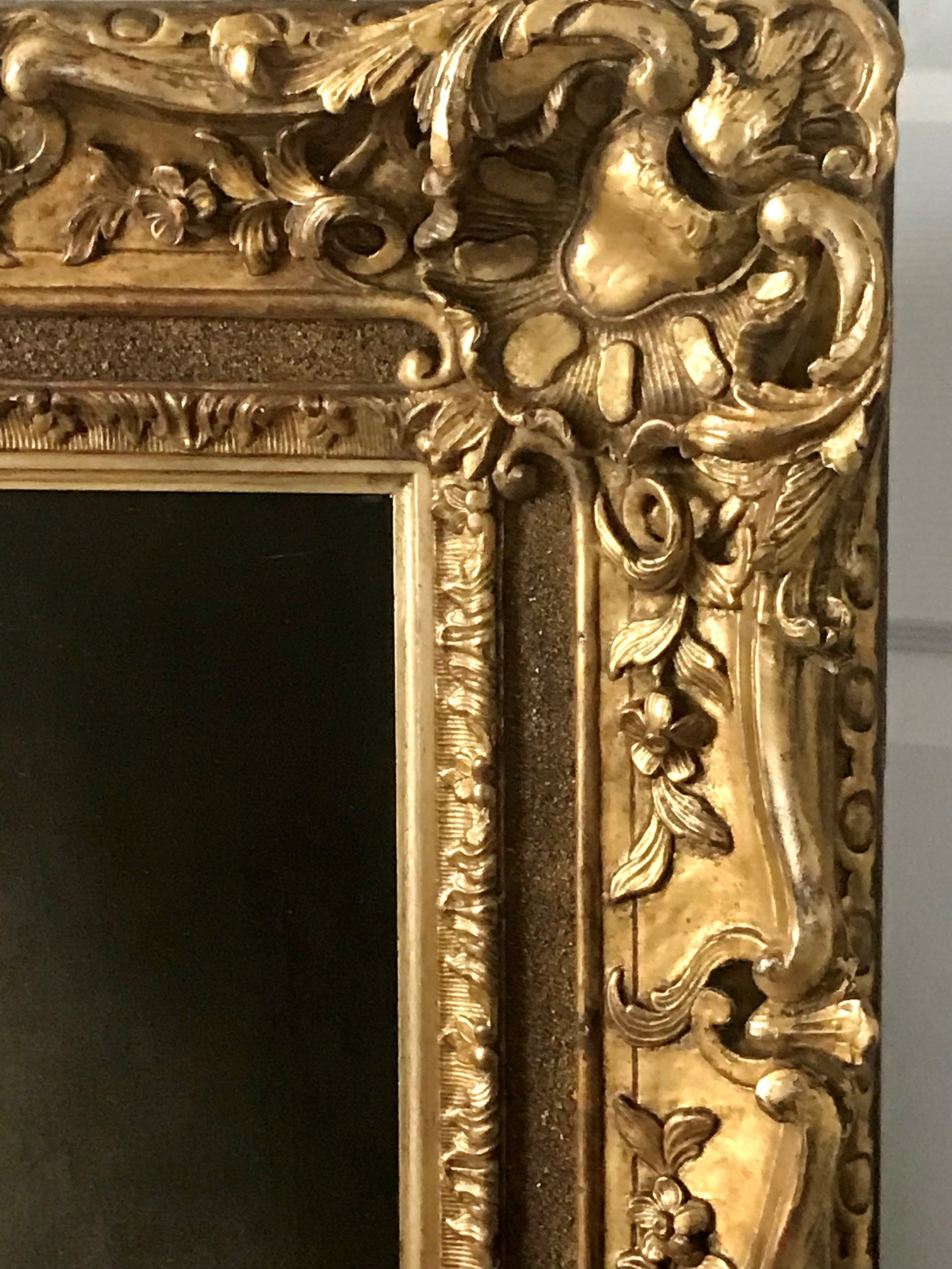
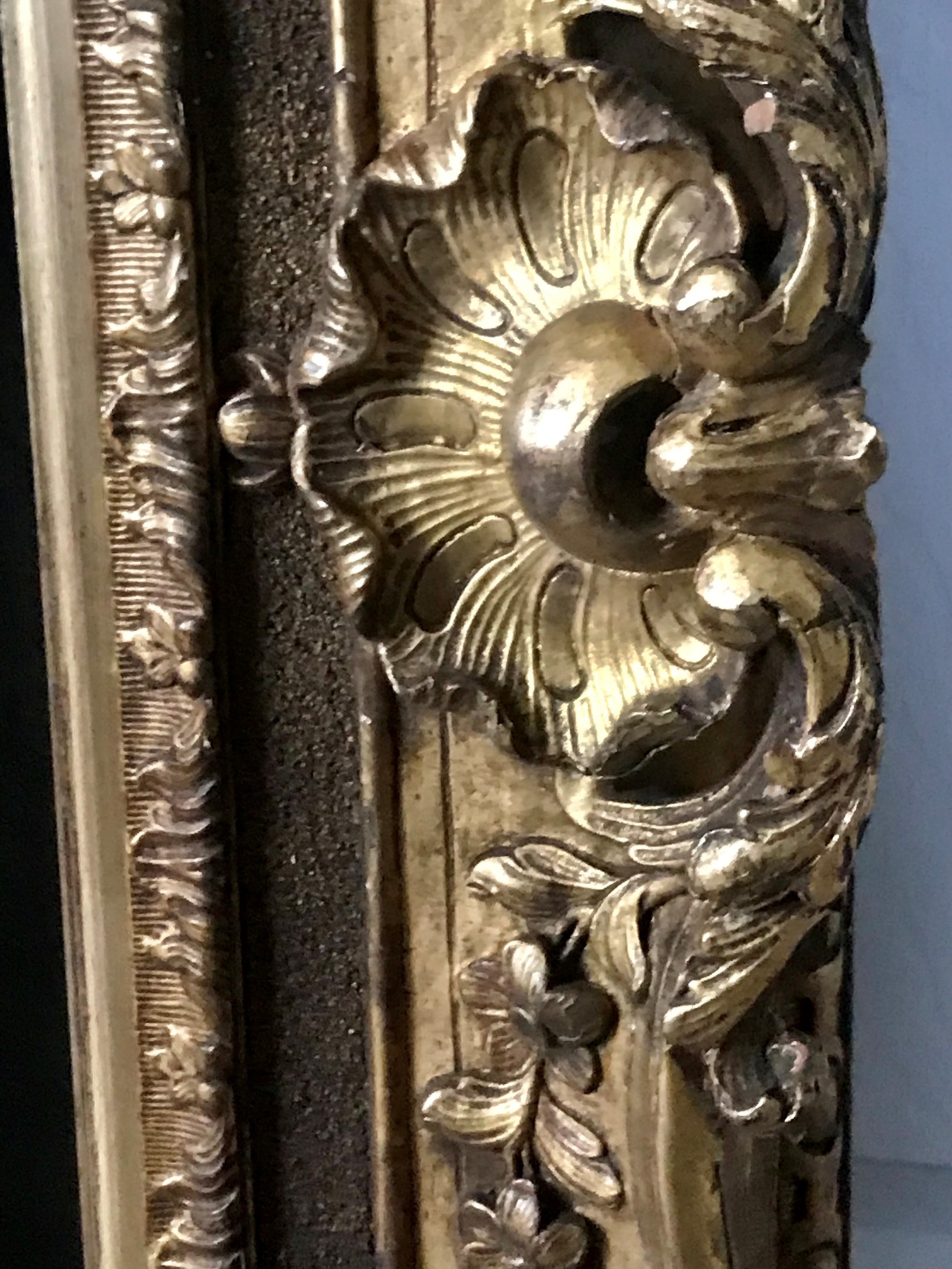
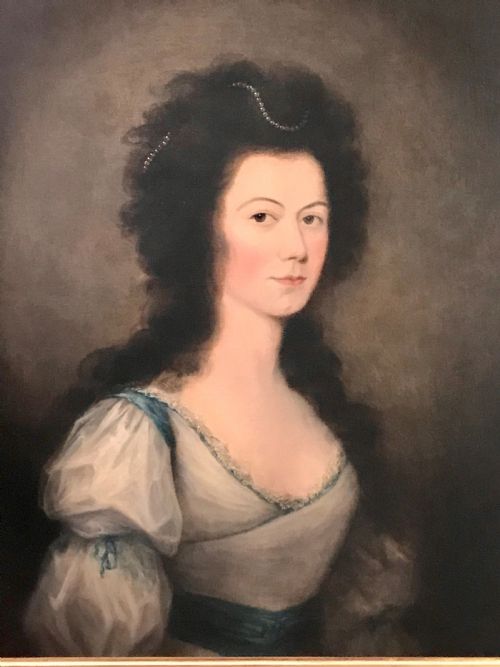
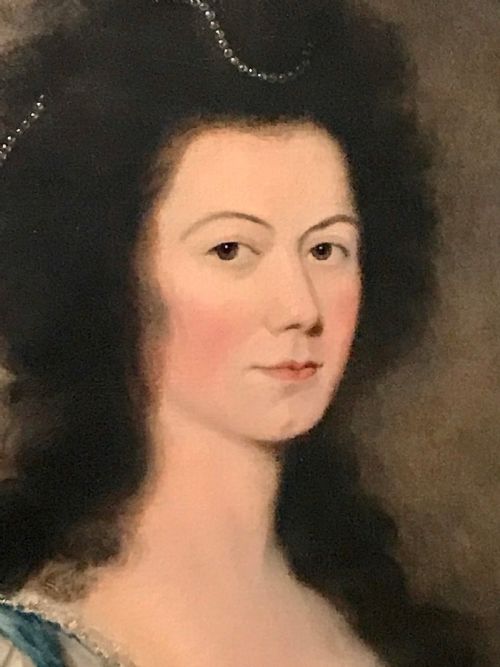
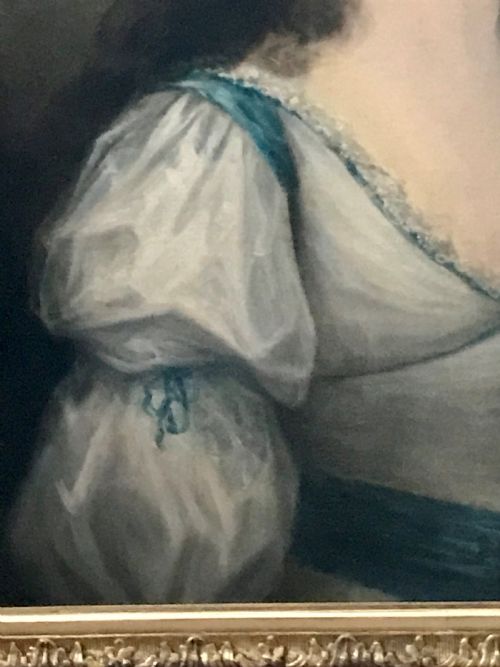
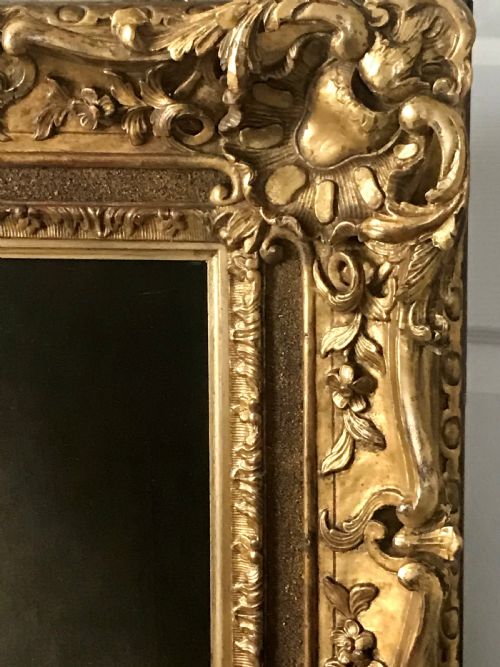
The modest, almost serene, image of Ann Bosquet is in exciting contrast to the richness of the costly frame. Ann wears very fashionable clothing and pearls in her hair.
Recorded as Bosket, Boscott, Boskett, but ultimately BOSQUET, this is a French Huguenot refugee surname. It is a very good example of these surnames which formed such an important part of the changing social and industrial scenes of the late 17th and all of the 18th century. Up to this time France had been rivalled only by Spain for the world leadership, but after about the year 1705 the picture changed completely, and the power swung to the British. The Huguenots were Protestants in Catholic France. They were also the skilled merchants and artisans of France and, perhaps surprisingly, their most effective military leaders. However religious fundamentalism took over, and some fifty thousand Protestants were driven from the country, most coming to Britain. They arrived just in time for the coming of the Industrial Revolution, in which they played a major part, as well as in Imperial Britain. Some changed their name spelling, so that they sounded much the same as previously, but were British in appearance. Bosquet means "Little wood," with bos being a short form of bois. Examples of recordings in the surviving church registers of the city of London include Nicolas Bosquet at Threadneedle Street French church, on October 3rd 1709, and Thomas Bosket at St Giles Cripplegate on August 17th 1777. Many of these refugees made huge fortunes in this country, the Courtaulds for example. (Surname Data Base)
RICHARD COSWAY 1742–1821.
Although remembered primarily as a miniaturist, Cosway also painted oil portraits and, occasionally, subject pictures. Christened at the parish church of Oakford, near Tiverton in Devon, he was a child prodigy. He came to London in 1754, where he studied for a few months with Hudson and then at Shipley's Drawing School, winning a series of prizes for drawing from the Society of Arts between 1755 and 1760. He exhibited at the Society of Artists in 1760 and from 1767 to 1769, then at the Free Society of Artists from 1761 to 1766. He entered the Royal Academy Schools in 1769, becoming an Associate in 1770 and a Royal Academician in 1771.
He exhibited at the Academy from 1770 to 1806. He became increasingly successful and fashionable as a painter of miniatures during the 1760s. His most notable portrait miniature of this period was that of Miss Elliot in the Character of Pallas (Fondazione Cosway, Lodi), which was exhibited at the Society of Artists in 1769.
He produced several notable life-sized portraits of the Courtenay family at Powderham Castle, including William, 3rd Viscount Courtenay (1791, Coll. Lord Courtenay). In addition, Cosway was an important collector of old master paintings, drawings and prints, sculpture and objets d'art. He died in London.
SIZE: 40 x 35.25 inches including the frame
PROVENANCE: Country House Collection, Wiltshire.
Roy Precious - Antiques & Fine Art has dated this piece to the 18th Century.
Roy and nadine precious: specialists in portraiture from the 16th to the 20th century. Established in 1972.
You can view the stock and full dealer information on the Roy Precious - Antiques & Fine Art Profile Page
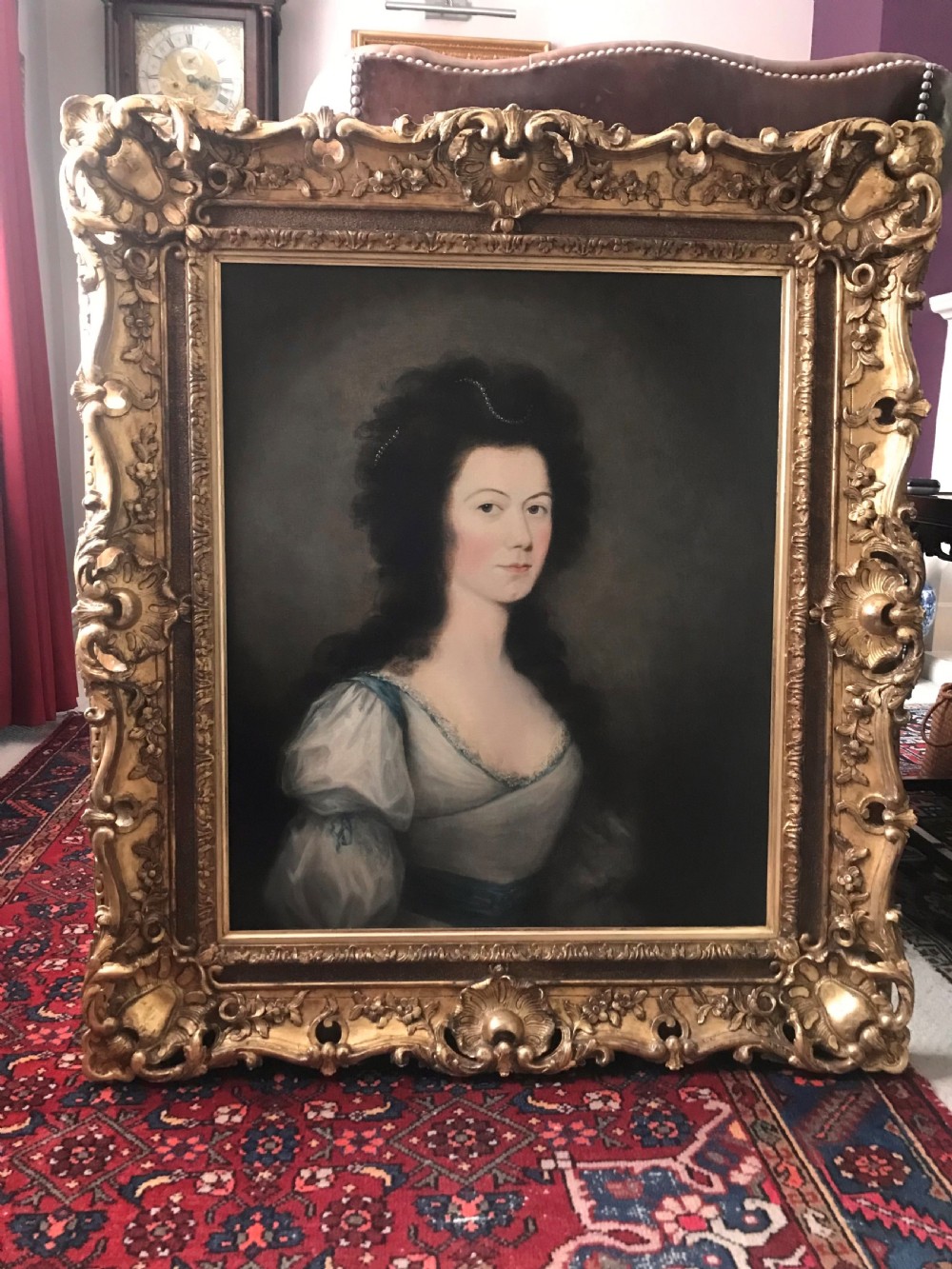

Portrait of Ann Bosquet C.1785, Studio or Circle of Richard Cosway.