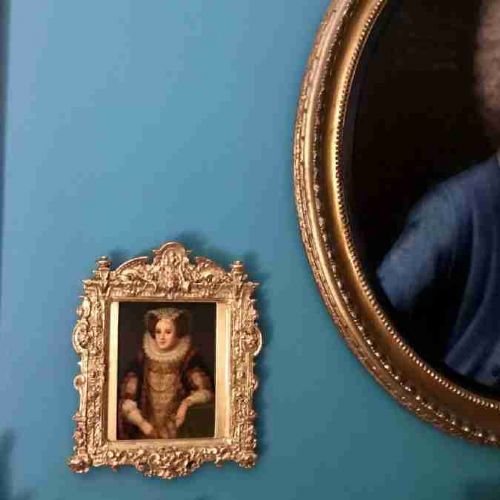
Roy Precious - Antiques & Fine Art has dated this piece to the 18th Century.
.. very appropriate for the Elizabethan period.
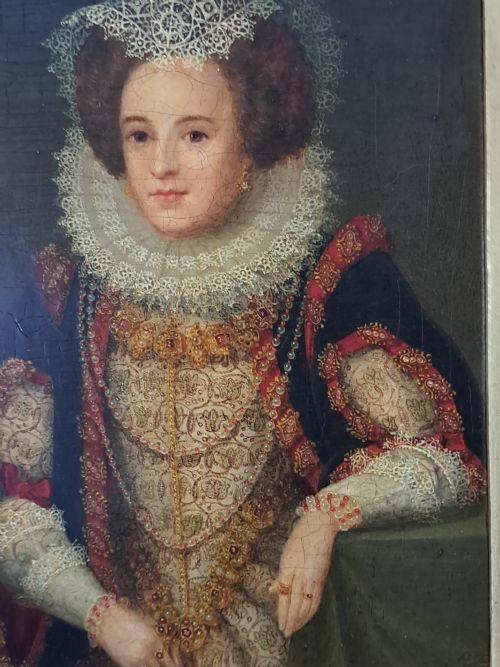
ARABELLA STUART, LADY LENNOX (1575-1615), was the daughter of Charles Stuart, Earl of Lenox, younger brother of Lord Darnley. This earl was, through his mother, the grandson of Margaret, the eldest sister of Henry VIII, by her second husband, Archibald Douglas, Earl of Angus.
Arabella stood in the line of succession to the English throne next to her first cousin James. When Elizabeth's age made a speedy vacancy probable, there were some persons in England who argued that her title was preferable even to that of James, as she was born on English soil, whereas he, being an alien, and therefore disqualified for possessing land in England, was also disqualified for wearing the crown. A little before Elizabeth's death Arabella was arrested by the queen's orders in consequence of a rumour that a marriage was planned between her and William Seymour, the grandson of Catherine Grey, the heiress of the Suffolk line.
James, however, succeeded peaceably, and treated Arabella with favour as a kinswoman, disbelieving the idle rumours which accused her of taking part in the plots of Cobham and Raleigh.
On 2 Feb. 1610, Arabella became actually engaged to William Seymour, whose descent from the Suffolk line made him specially an object of jealousy to James. She and Seymour were summoned before the Privy Council, and declared that he would never marry her without the king's consent. On this Arabella was again taken into favour. Early in July the couple were privately married. The secret was not kept, and on the 9th Arabella was committed to the custody of Sir Thomas Parry, and her husband to the Tower.
On 13 March 1611, she was put under the charge of the Bishop of Durham, to be carried by him to Durham. On 16 March she was removed in a condition of physical prostration, and was allowed to rest at Barnet for a month. When the month was over, she protested she could not travel. On 4 June she escaped in man's apparel, got on board a French vessel in the Thames, and sailed for Calais. She was captured in the Straits of Dover, brought back, and lodged in the Tower. Seymour was more successful, and landed safely at Ostend. Arabella remained a prisoner in the Tower till her death on 25 Sept. 1615. It is thought she starved herself to death.
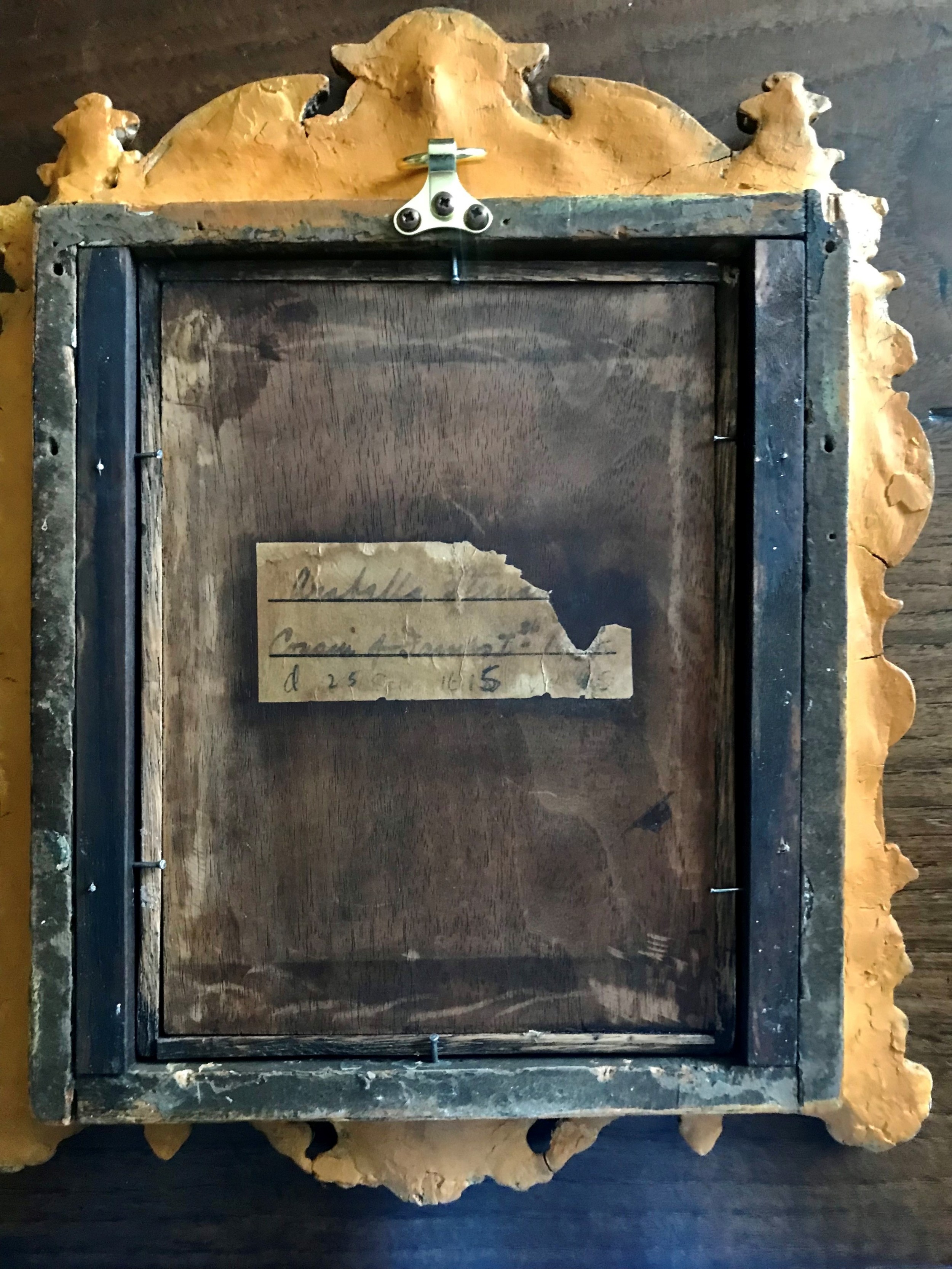
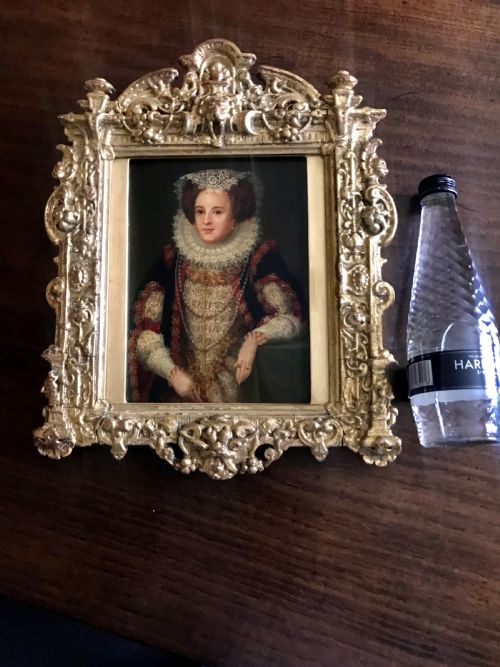
SIZE: 13 x 11 inches including the frame. Panel size: 7.5 x 5.5 inches.
PROVENANCE: From an old collection of an illustrious well-connected family, the surviving member now in a care home.
Roy Precious - Antiques & Fine Art has dated this piece to the 18th Century.
Roy and nadine precious: specialists in portraiture from the 16th to the 20th century. Established in 1972.
You can view the stock and full dealer information on the Roy Precious - Antiques & Fine Art Profile Page

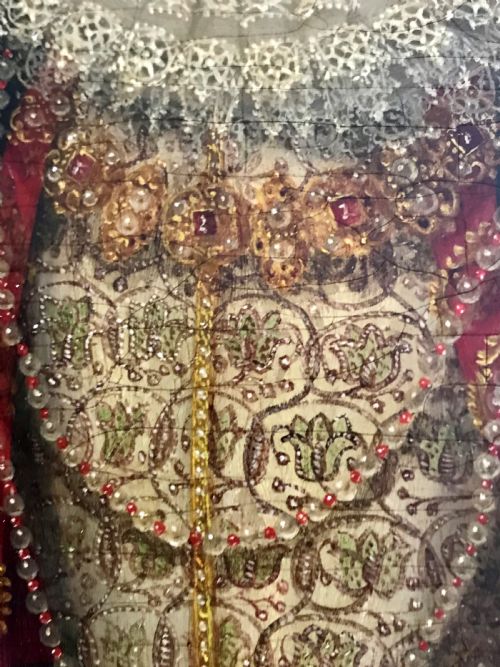
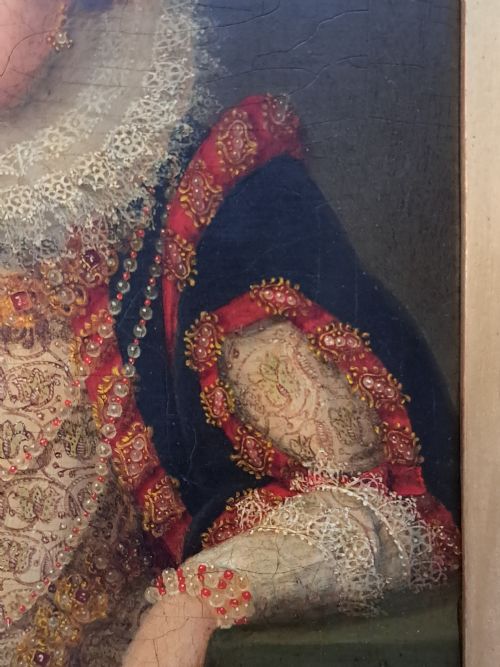
Portrait Traditionally Called Lady Arabella Stuart, 18th Century.