P A Oxley Antique Clocks & Barometers has dated this piece to the Georgian era.
The movement is of 8 day duration and strikes the hours on a bell.
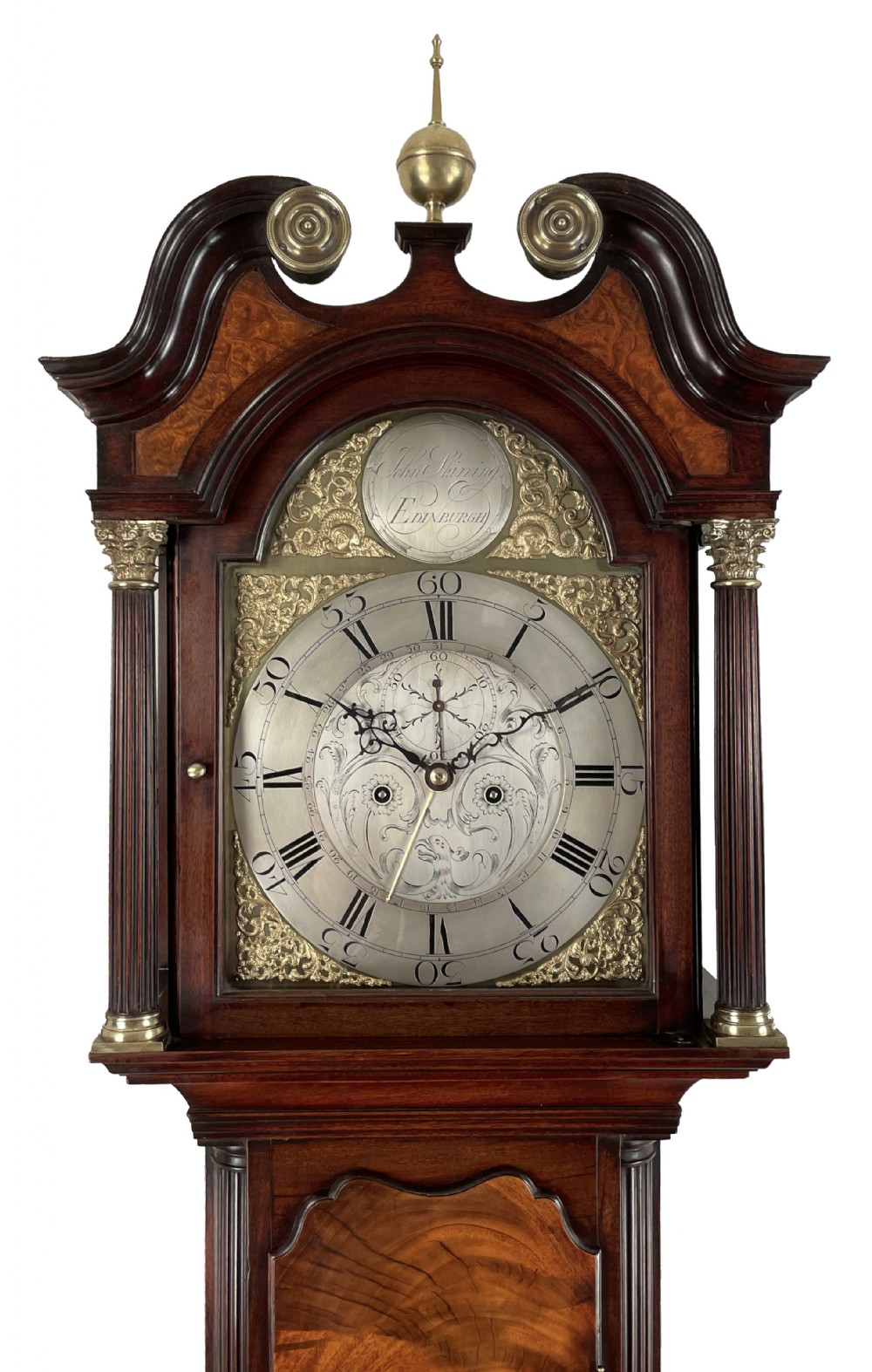
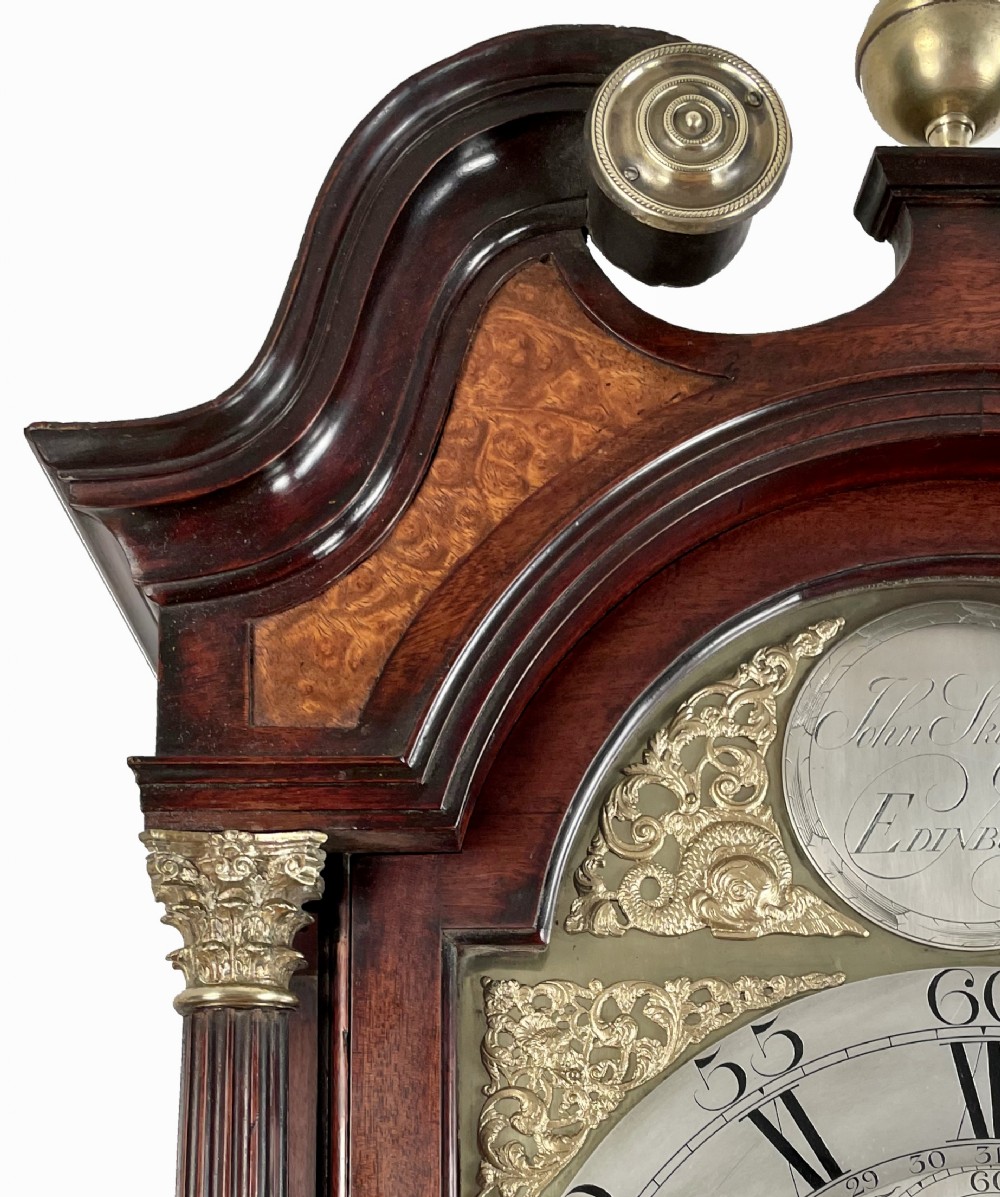
The makers name and place of work is engraved on a silvered brass cartouche to the arch of the dial and framed with finely chased brass spandrels depciting sea creatures. The centre of the dial with elaborate scrolls, foliage, flowers and a mythical Griffin above the number VI. Also with blued steel hands and a brass pointer displaying the date of the month. The corners are also decorated with applied spandrels.
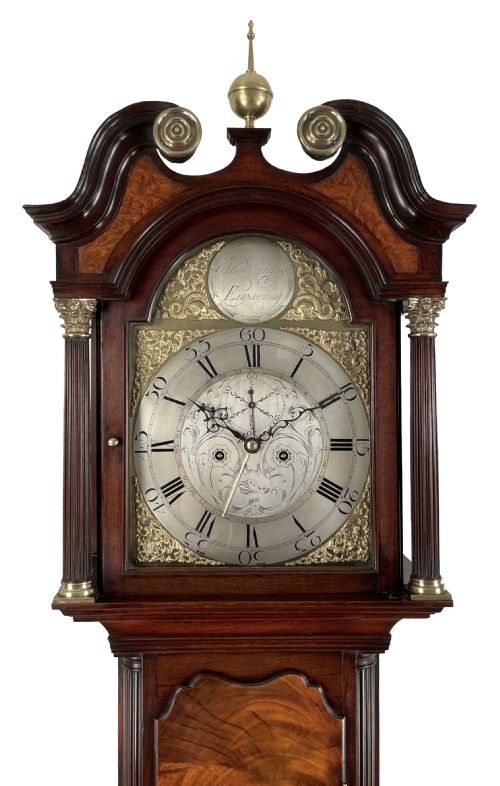
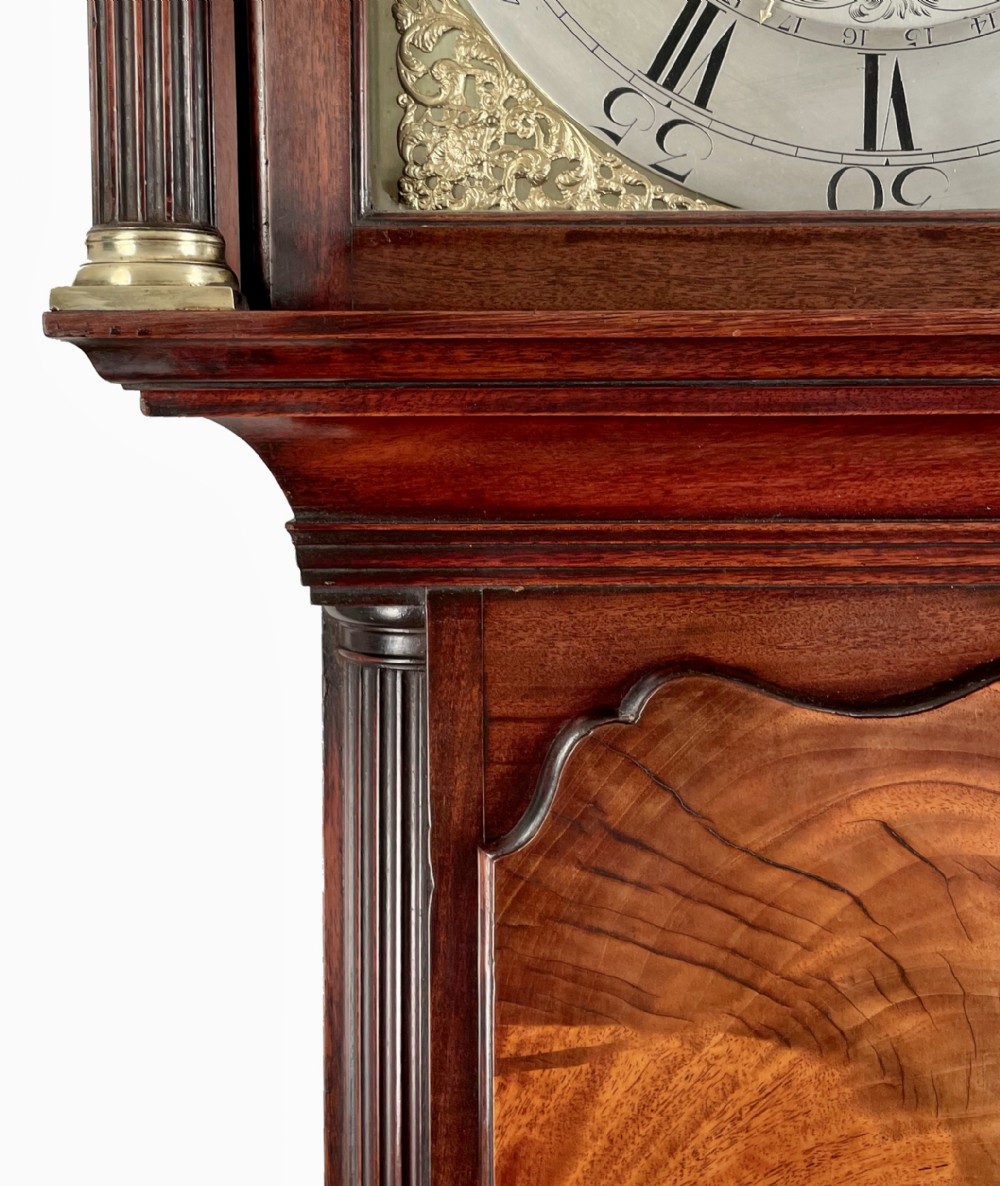
The exceptional cabinet work displays a superb flame veneered trunk door of exquisite colour. This is flanked by reeded quarter columns finishing with solid mahogany capitals. The base is similarly veneered with and standing on small bracket feet. The hood also displays reeded pillars terminating with brass Doric capitals to the base and elaborate Corinthian capitals to the top of each column. The typical swan neck pediment is finished with a central brass finial, brass paterea, unusual birds eye maple veneered blind sound frets and inspection windows to the sides.
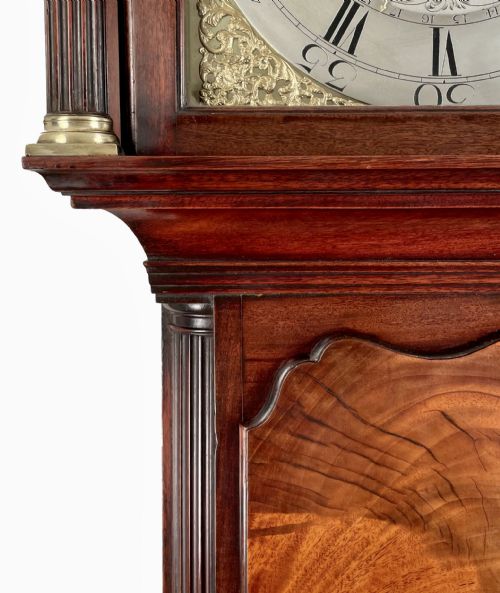
An extremely high quality example which are now becoming increasingly difficult to obtain.
Note: The combination of the elegant cabinetwork, the beautifully faded flame mahogany veneers and the full brass dial results in an extremely desirable longcase clock made during the latter part of the 18th century in the City of Edinburgh. John Skirving was a prolific Clockmaker and is known to have made a number of unusual clocks and watches.
P A Oxley Antique Clocks & Barometers has dated this piece to the Georgian era.
You can view the stock and full dealer information on the P A Oxley Antique Clocks & Barometers Profile Page
P A Oxley Antique Clocks & Barometers is a registered member of LAPADA
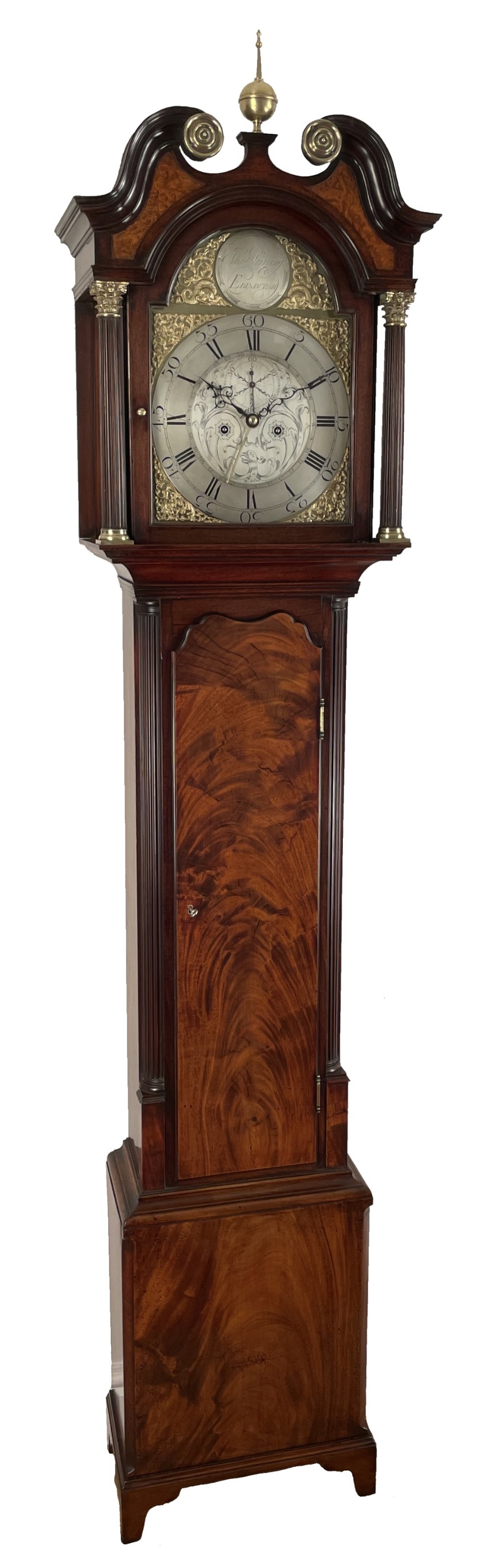
Excellent Georgian longcase clock by Skirving of Edinburgh