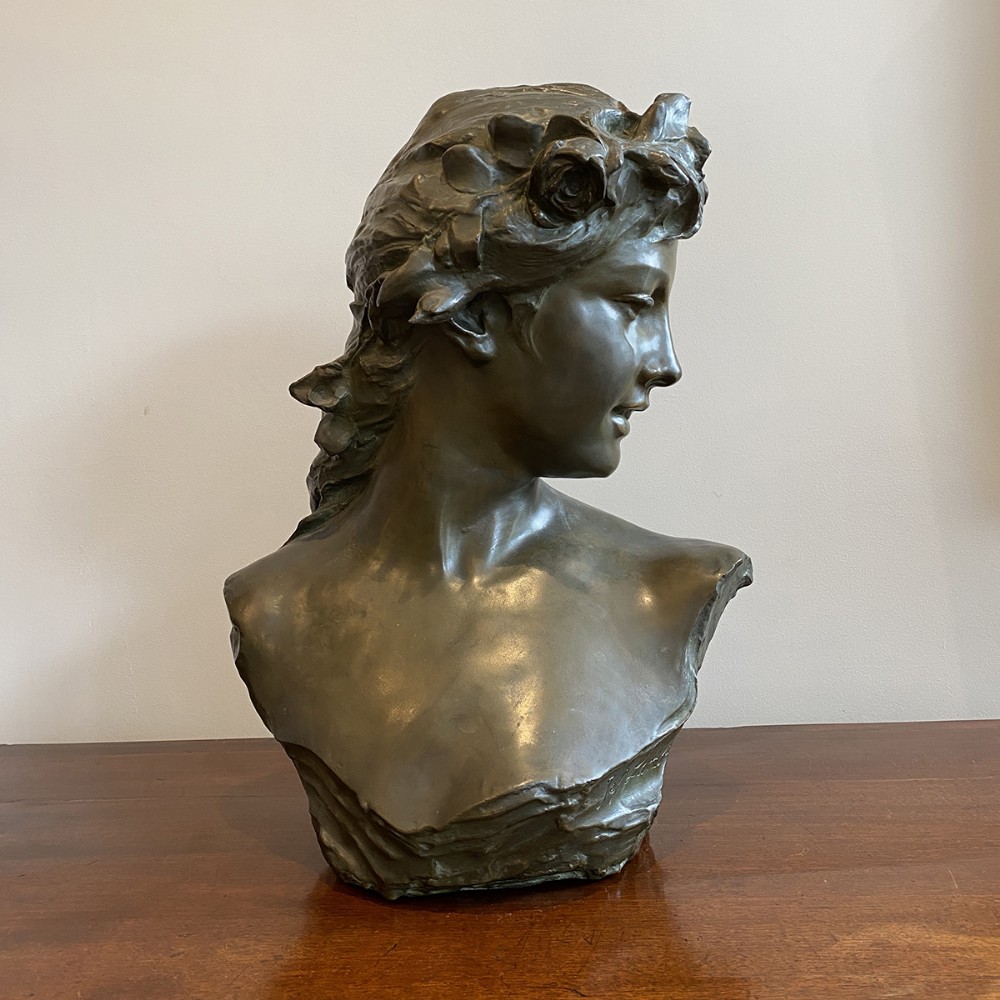
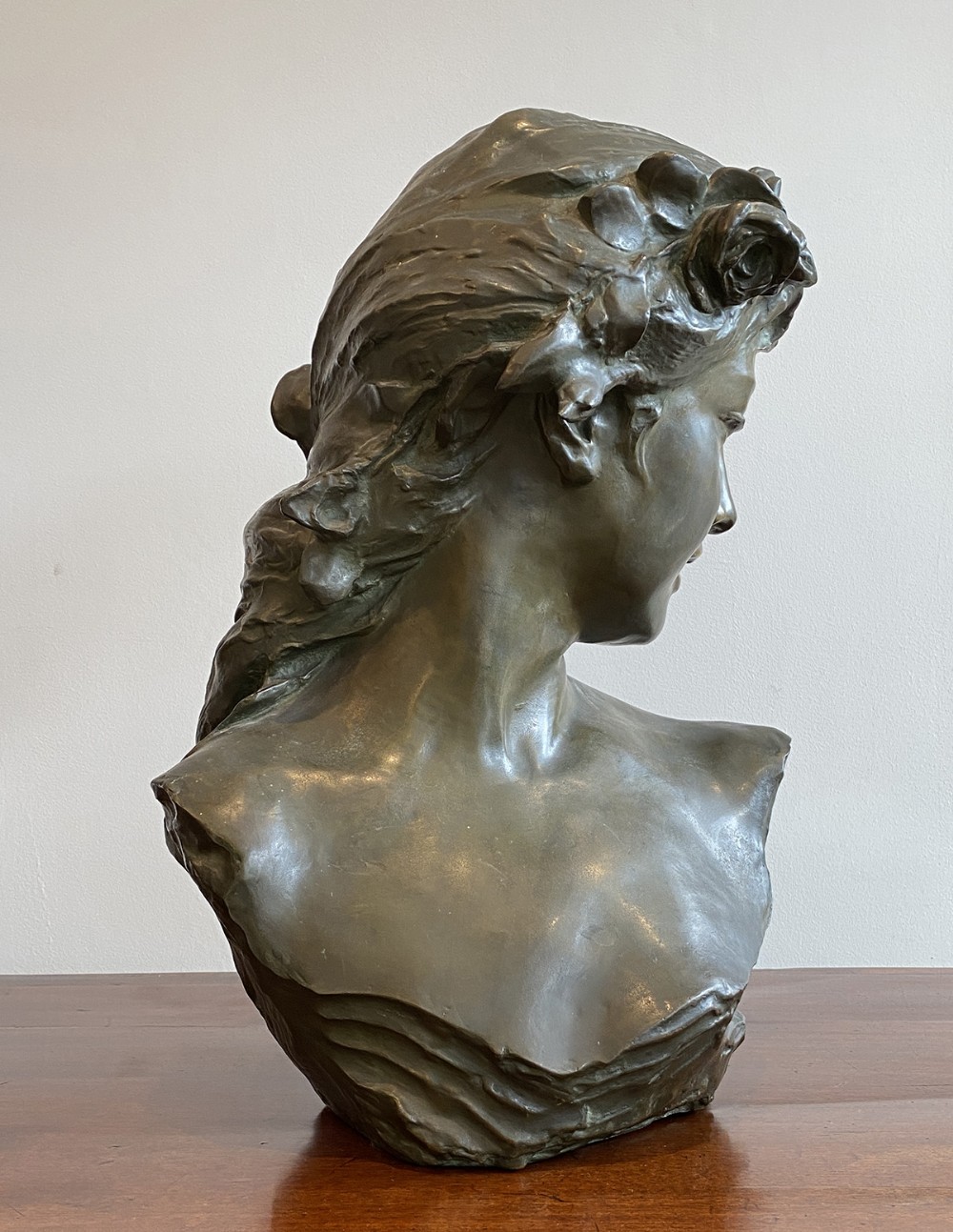
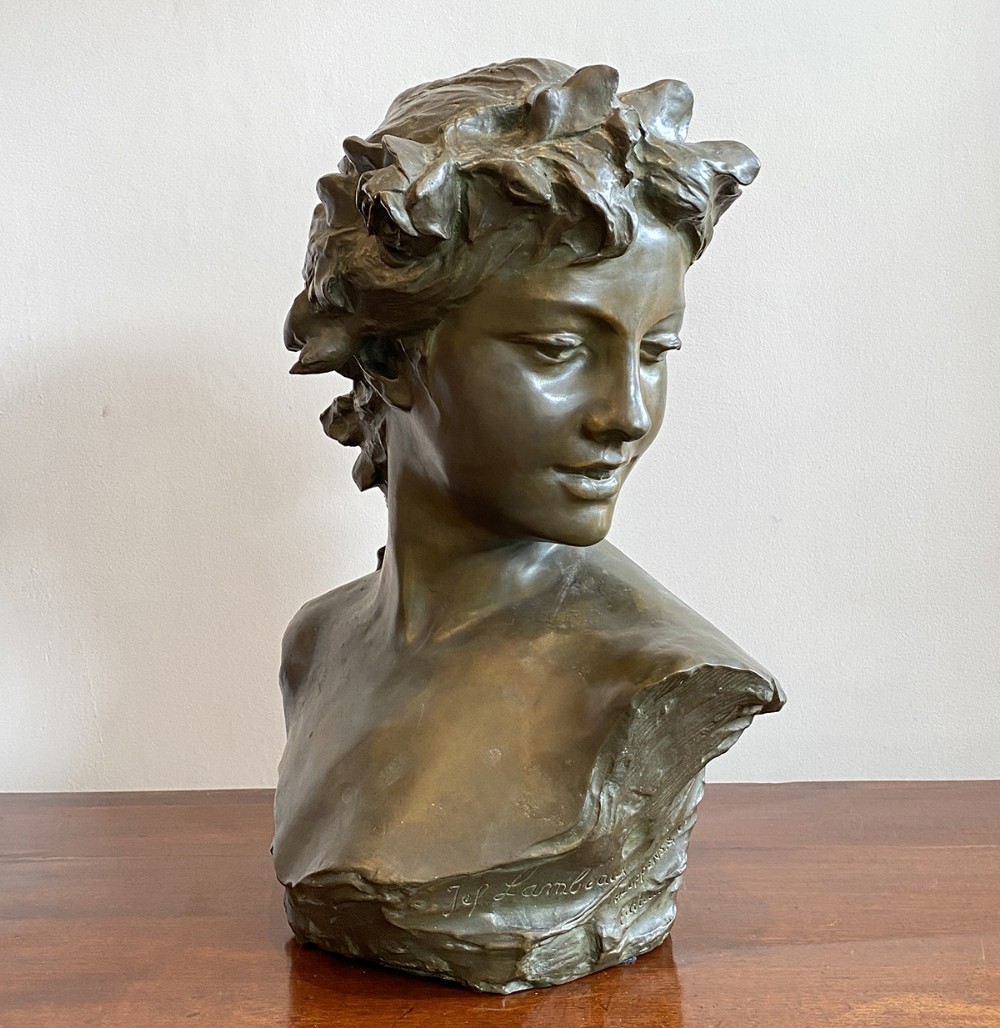
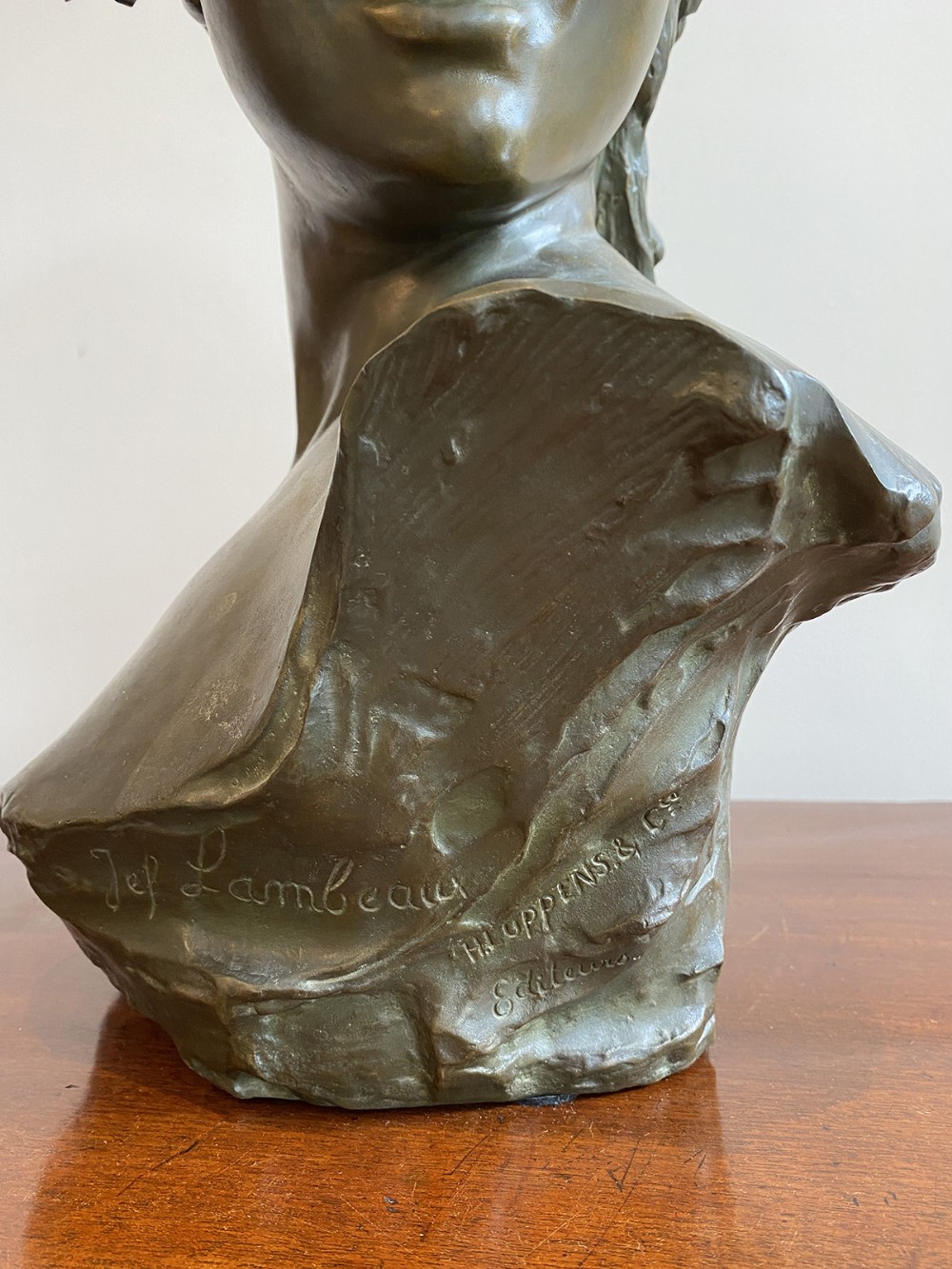
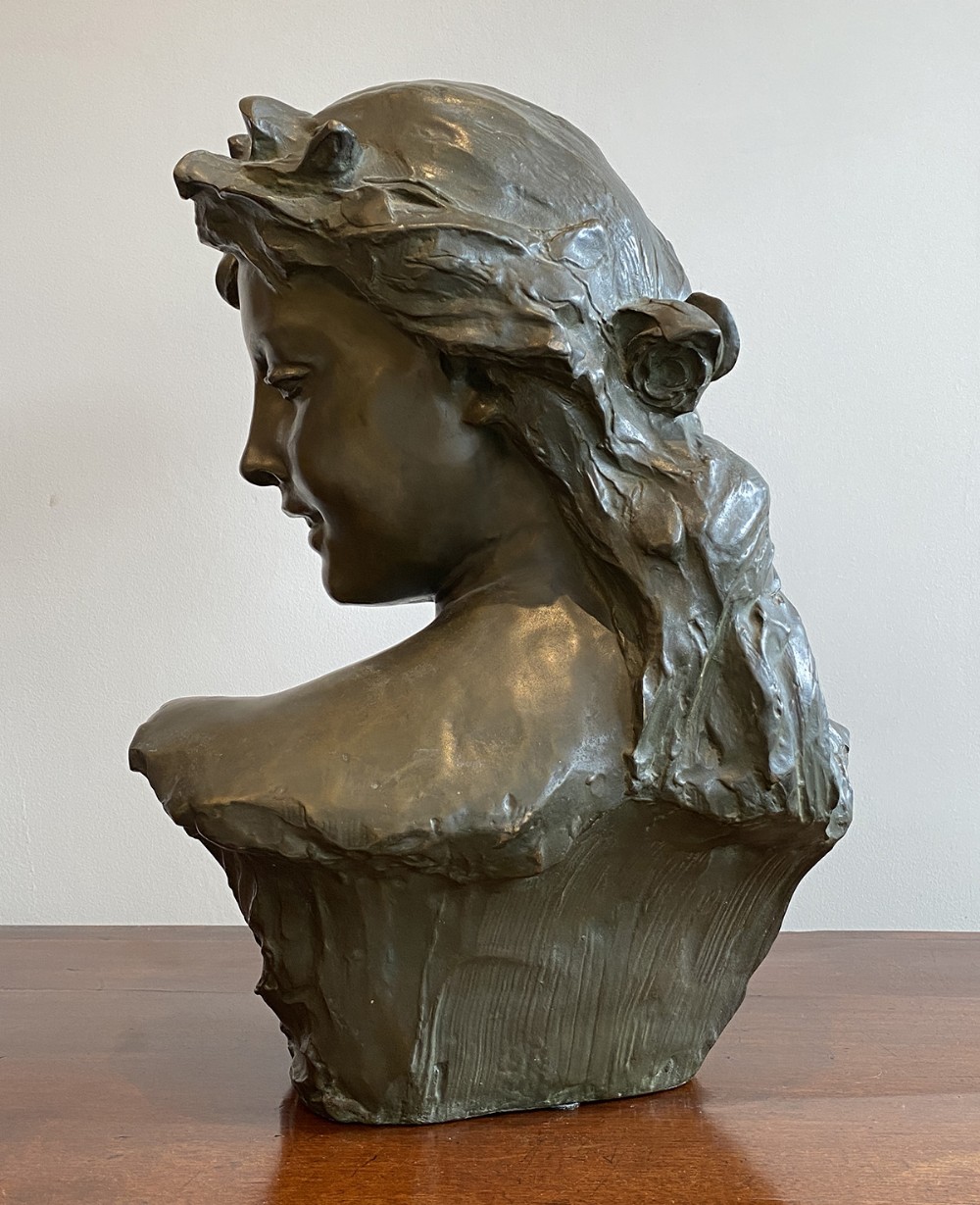
Rue des Fontenelles has dated this piece to the 19th Century.
Lambeaux studied at the Antwerp Academy of Fine Arts and was a pupil of Jean Geefs. He was part of a group of young artists, the "Van Beers clique", led by Jan van Beers. This group included the artists Piet Verhaert (1852–1908) and Alexander Struys (1852–1941).
His first work, War, was exhibited in 1871, and was followed by a long series of humorous groups, including Children Dancing, Say Good Morning, The Lucky Number and; An Accident (1875). He then went to Paris, where he executed The Beggar and The Blini Pauper for the Belgian salons, and produced The Kiss (1881), generally regarded as his masterpiece. Claire J. R. Colinet – who would have great success during her career in the Art Deco era – was one of Lambeaux's students during his time in Paris. After visiting Italy, where he was much impressed by the works of Jean Boulogne, he showed a strong predilection for effects of force and motion.
Other notable works include his Brabo fountain in Antwerp (1886), Robbing the Eagles Eyrie (1890), Drunkenness (1893), The Triumph of Woman, The Bitten Faun (which created a great stir at the Exposition Universelle at Liège in 1905), and The Human Passions, a colossal marble bas-relief, elaborated from a sketch exhibited in 1889.
Lambeaux was criticised when he exhibited the life-size model of Temple of Human Passions at the Salon Triennial in Ghent in 1889. The sculpture managed to attract fury and uproar
In 1887 Lambeaux was awarded the Knight in the Order of Leopold.
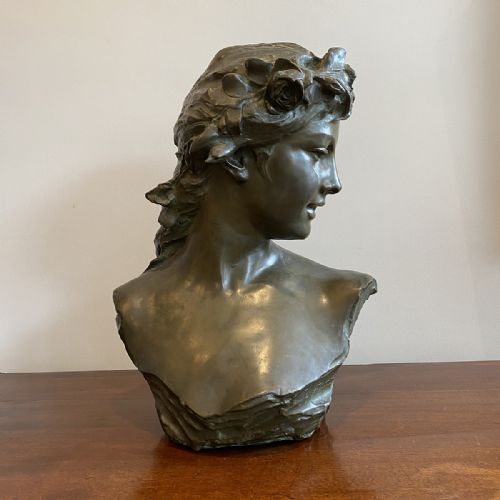
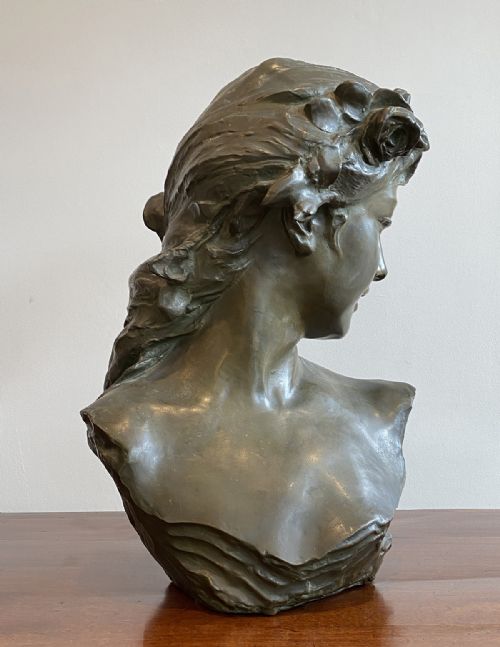
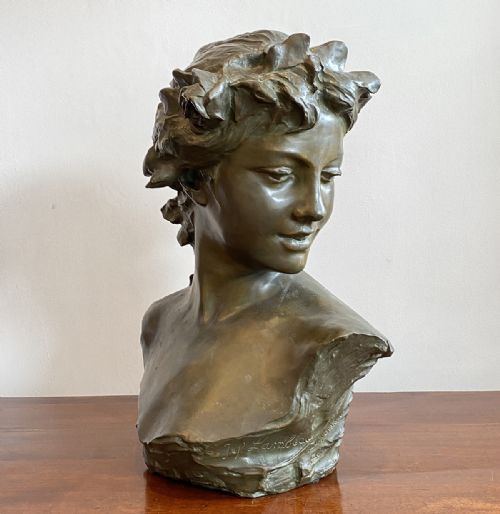
Dimensions - 47 cm x 24 x 35 cms
Rue des Fontenelles has dated this piece to the 19th Century.
Specialists in french antiiques, decorative objects and french and european paintings.
You can view the stock and full dealer information on the Rue des Fontenelles Profile Page
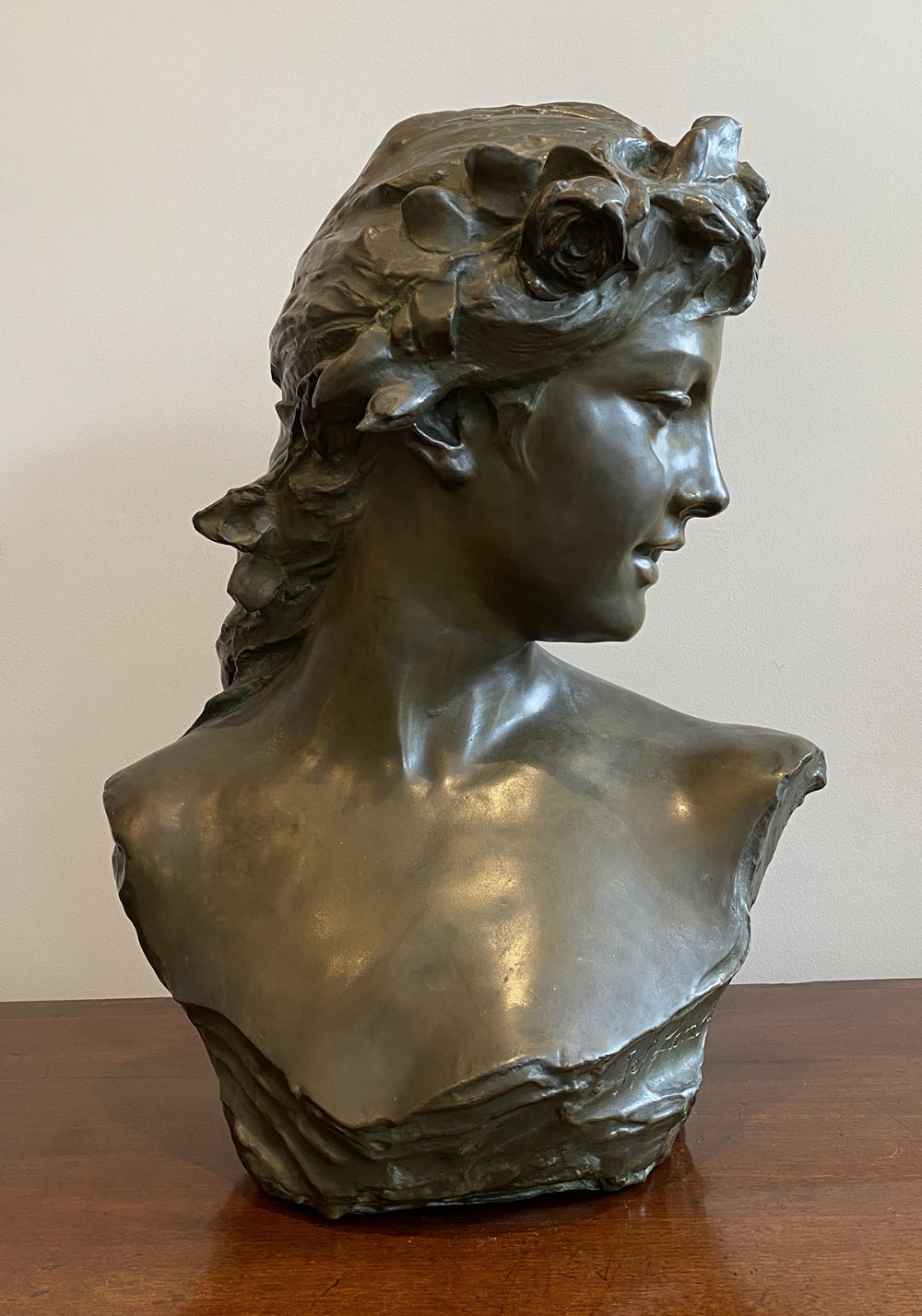
Bronze Sculpture of a Young Lady