Roy Precious - Antiques & Fine Art has dated this piece to the 17th Century.
This caused a blossoming of a particularly English style that was obsessed with surface, and the display of wealth through costume. It reached a brilliant climax during the second decade of the reign of James I, with artists such as William Larkin.

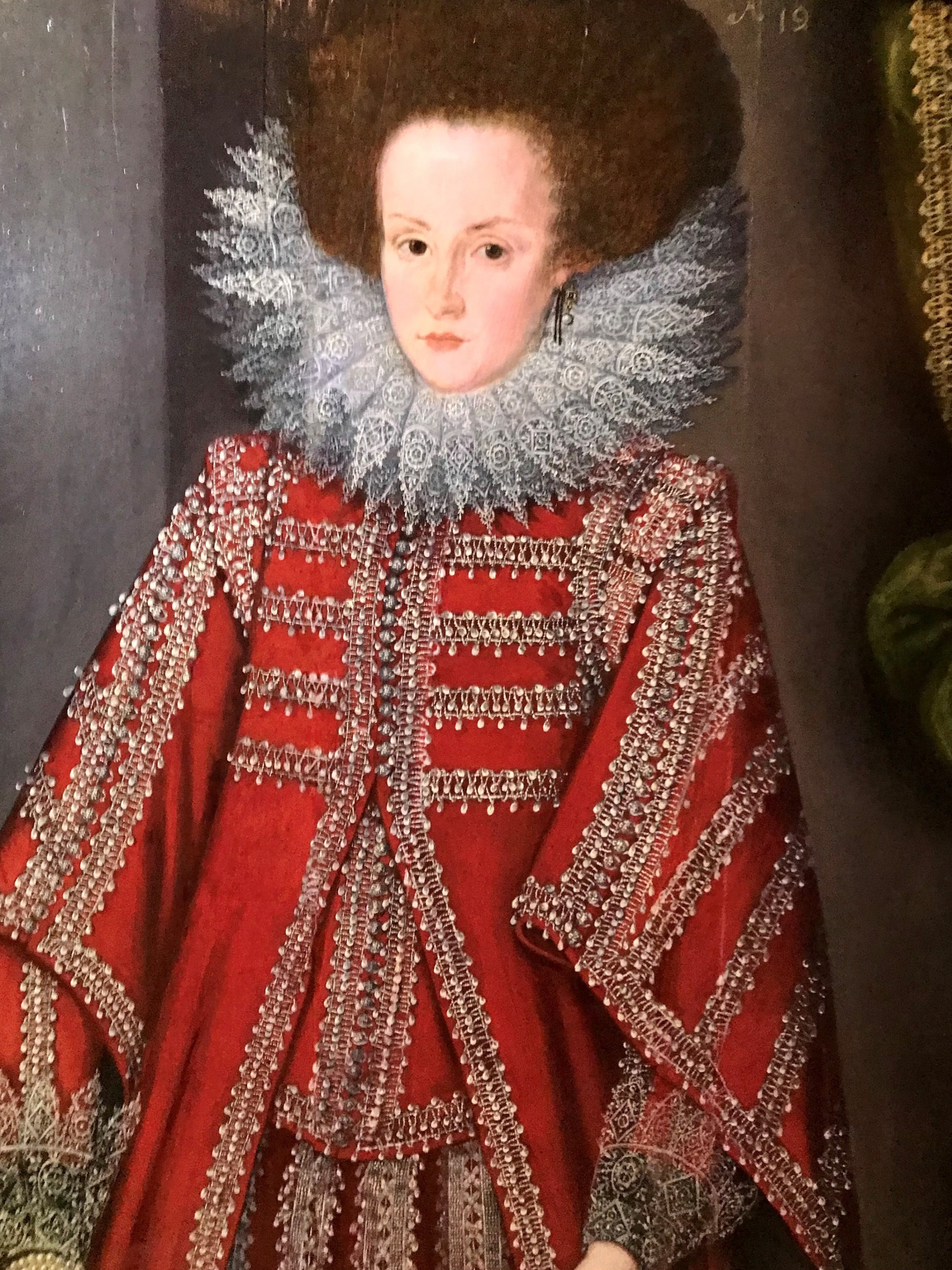
This is an extremely fine painting of a young aristocrat who displays her extraordinary wealth in her clothing. At this period clothing was a vital indicator of status and it was not uncommon for the aristocracy to wear garments that cost as much as a prosperous farm was worth.
It is impossible to overstate the importance of this display of status at this time.
Portraits were seen as constructions of identity and status in society, and are impossible to contemplate without acknowledging the presence and importance of fabrics, clothes, accessories and jewellery.
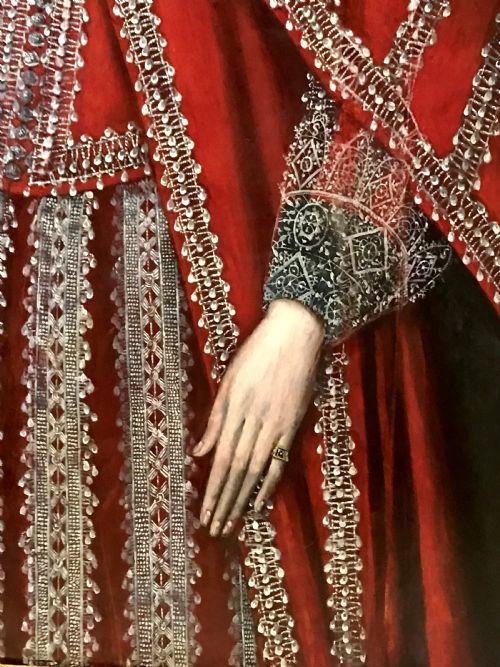
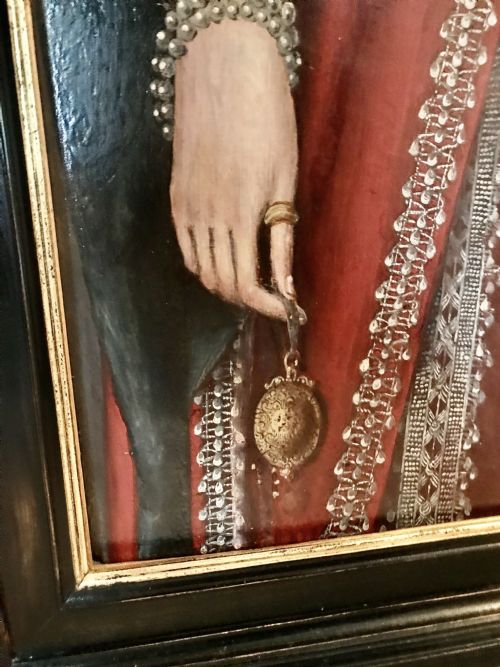
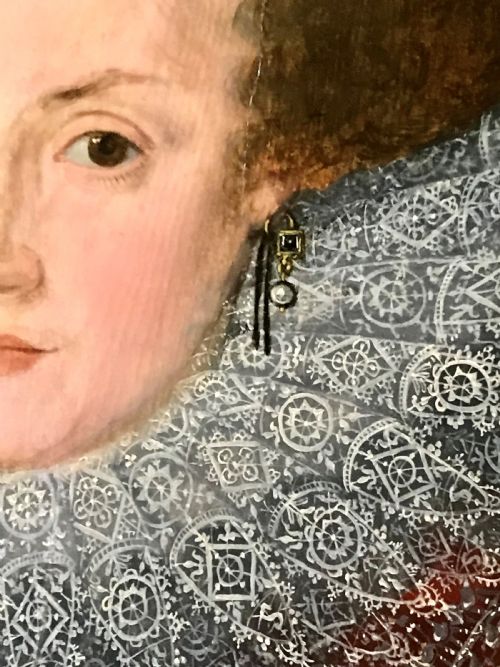
Red was a very expensive and fugitive dye and here the red dress is literally encrusted with diamonds and pearls; the reticella lace was also extremely costly. On the lady's right thumb is a heavy gold ring and she holds a gold locket decorated with a mythological face. This was probably a pomander containing sweet smelling herbs. On her left hand is a large diamond ring.
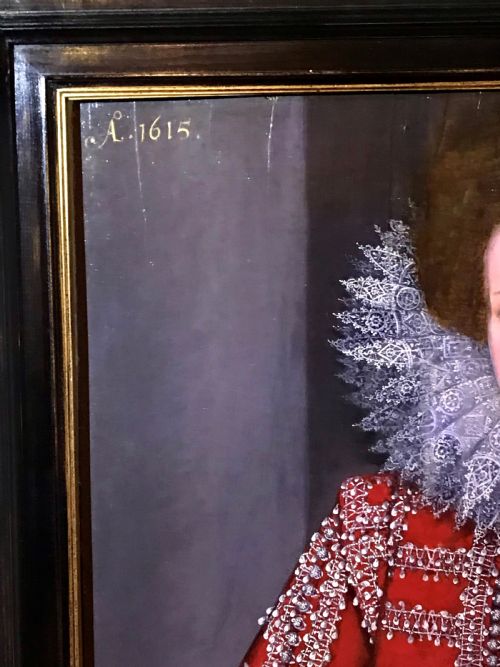
This portrait may well have been to commemorate the sitter's engagement or wedding; at this period wedding and engagement rings were worn on any finger.
The subject of Larkin's portraits stand rather stiffly and show no movement. Indeed it would be difficult for them to move in their complicated layers of finery so laboriously assembled and fastened together .. these were clothes for very grand occasions and ones in which to be immortalised in paint.
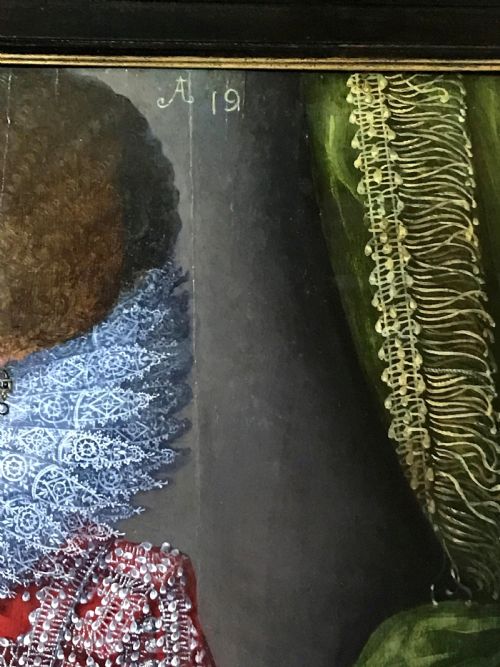
WILLIAM LARKIN (early 1580s – 1619) was an English painter active from 1609 until his death in 1619, known for his iconic portraits of members of the Court of James I of England. William Larkin was one of the most accomplished portrait painters of Jacobean England, yet little is known of him.
He was born in London in the early 1580s, and lived in the parishes of St Sepulchre-without-Newgate, Holborn, and St Anne, Blackfriars. He was a close neighbour of the eminent artist Robert Peake, portrait painter to Henry, Prince of Wales, and it well may have been Peake who introduced Larkin to painting. He became a Freeman of the Worshipful Company of Painter-Stainers on 7 July 1606 under the patronage of Lady Arbella Stuart and Edward Seymour, 1st Earl of Hertford.
About 40 portraits by Larkin have been identified, of courtiers and gentry, but he seems never to have painted members of the royal family. Documentary evidence of Larkin's work is found in the Diary of Lady Anne Clifford, who sat for him in 1619; in the Rutland Papers for 1617 and 1619; and in a seventeenth-century inventory of paintings at Claydon House including a portrait of Frances Carr, Countess of Somerset.
Larkin's work marks the last stage in a tradition of English portraiture traceable from the later work of Hans Holbein the Younger through Nicholas Hilliard in which the sitter is painted in flat, lightly modelled fashion. The deaths of Hilliard, Larkin, and fellow-portraitist Robert Peake the Elder in 1619 mark the end of this insular tradition in British art.
SIZE: 49 x 37 inches including the frame
PROVENANCE: Sold by Lane Fine Art, Pimlico, London in 1983 for £6375 (about £17500 in modern money).
West Sussex Private Collection.
Roy Precious - Antiques & Fine Art has dated this piece to the 17th Century.
Roy and nadine precious: specialists in portraiture from the 16th to the 20th century. Established in 1972.
You can view the stock and full dealer information on the Roy Precious - Antiques & Fine Art Profile Page
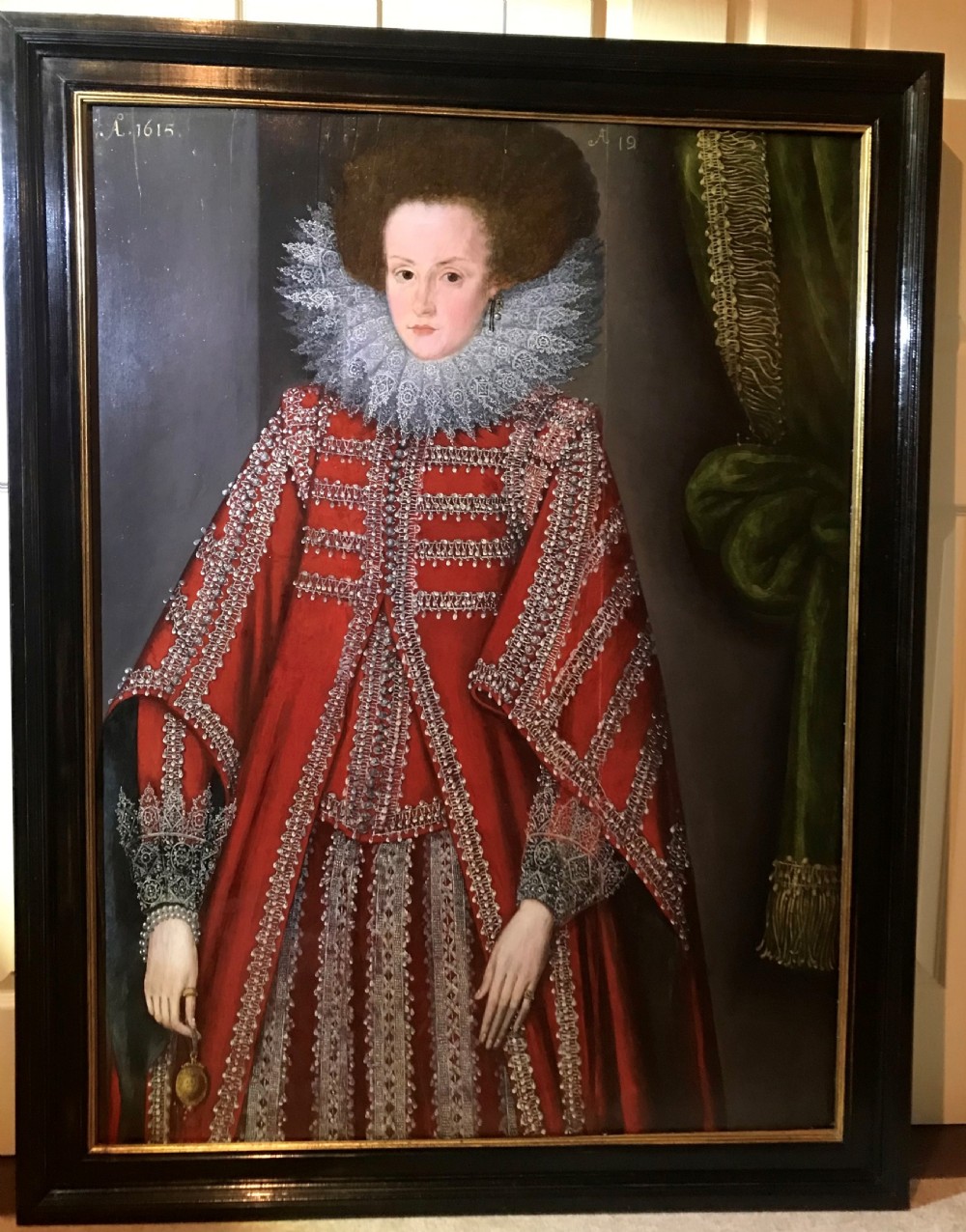

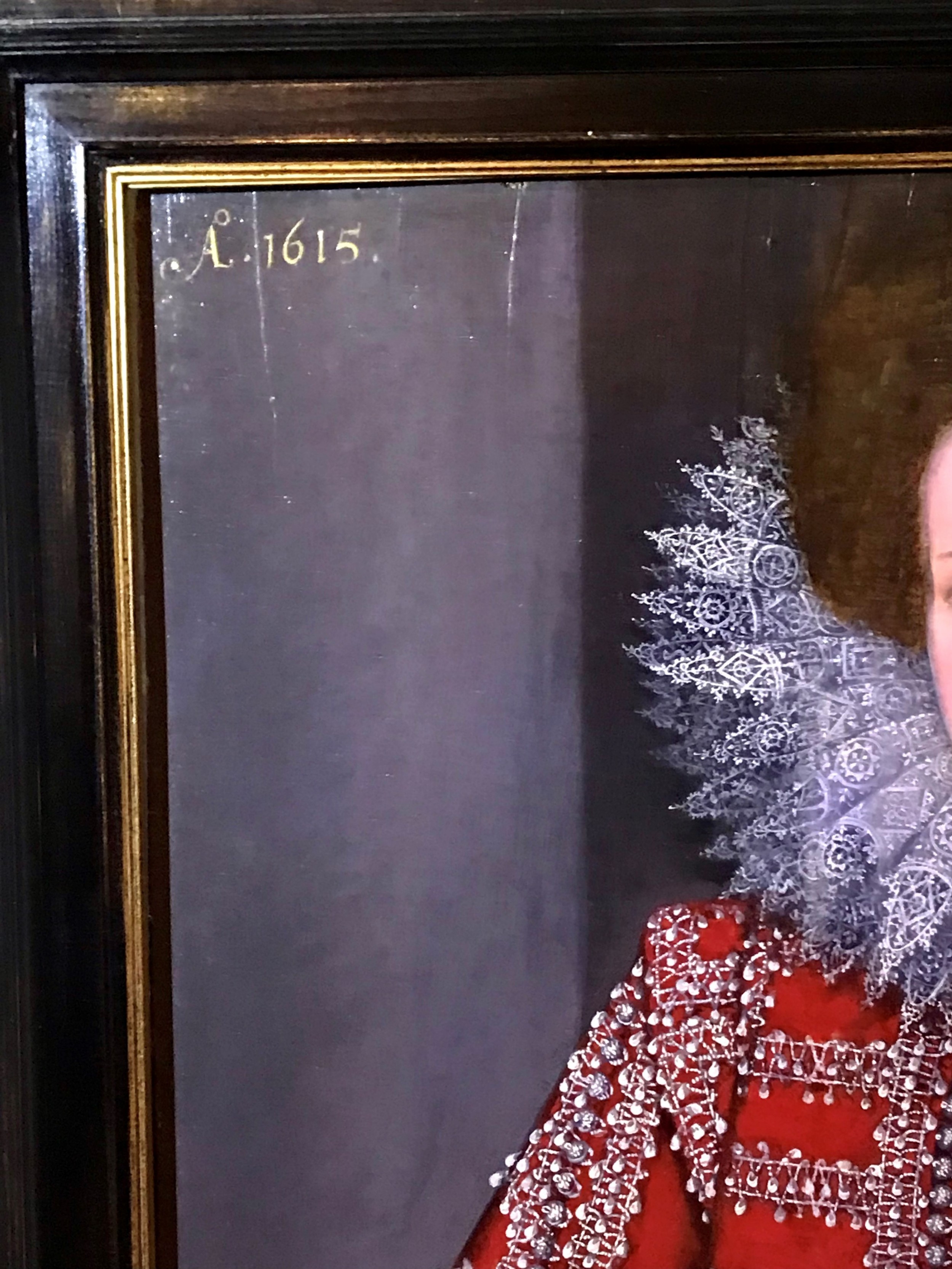
Portrait of a Young Lady 1615, by a Follower of William Larkin.