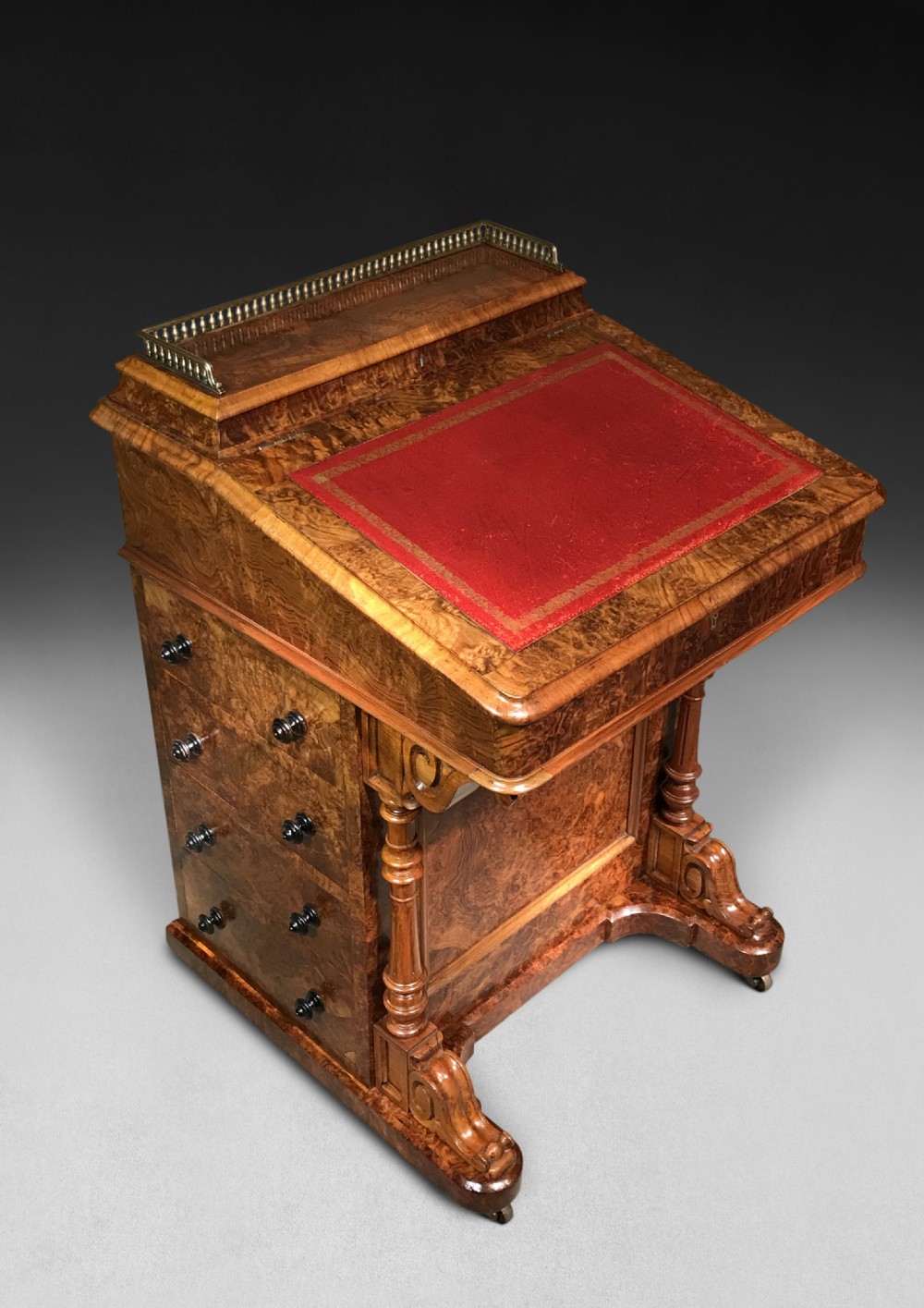
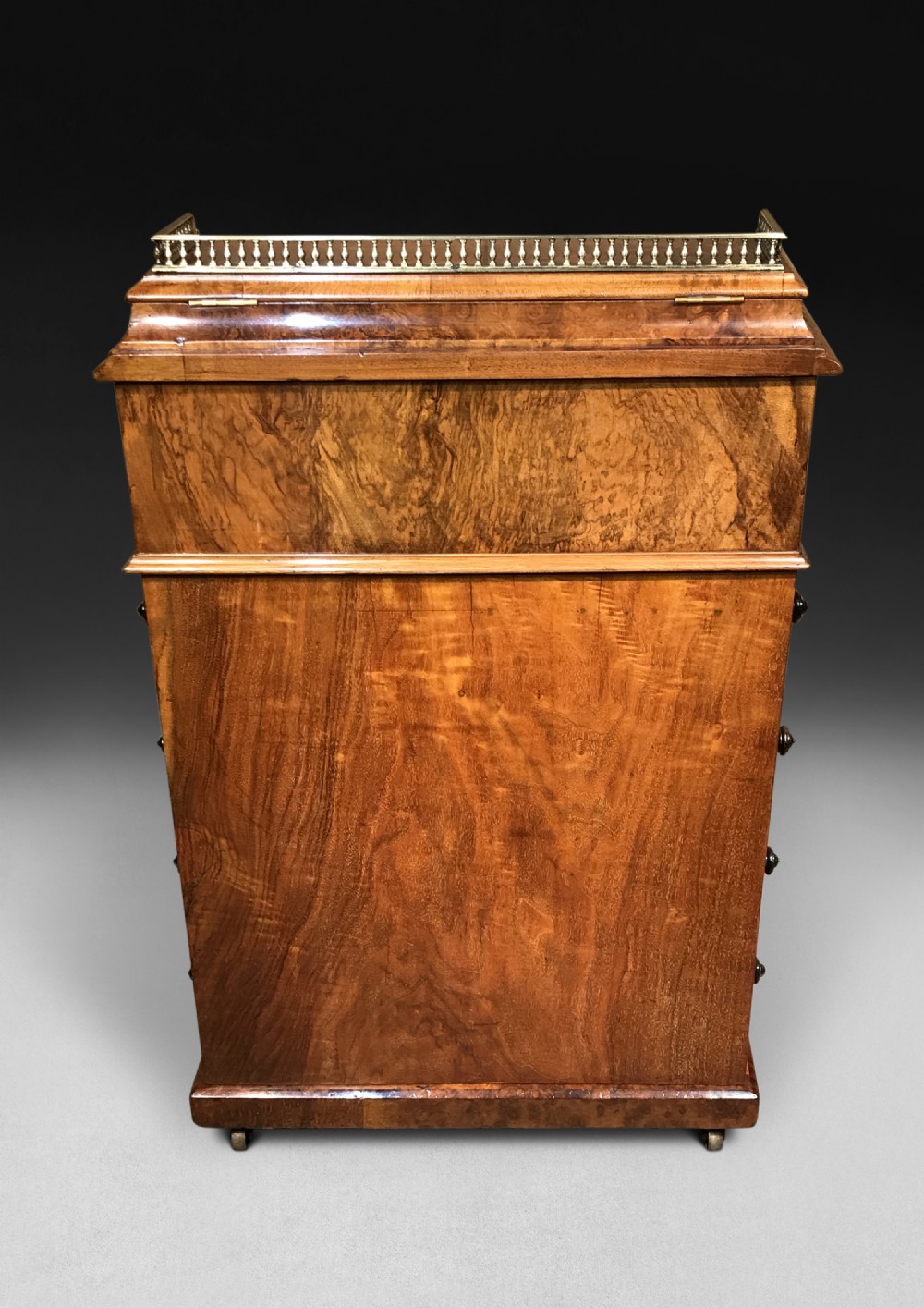
W.R. Harvey & Co. (Antiques) Ltd has dated this piece to the 19th Century.
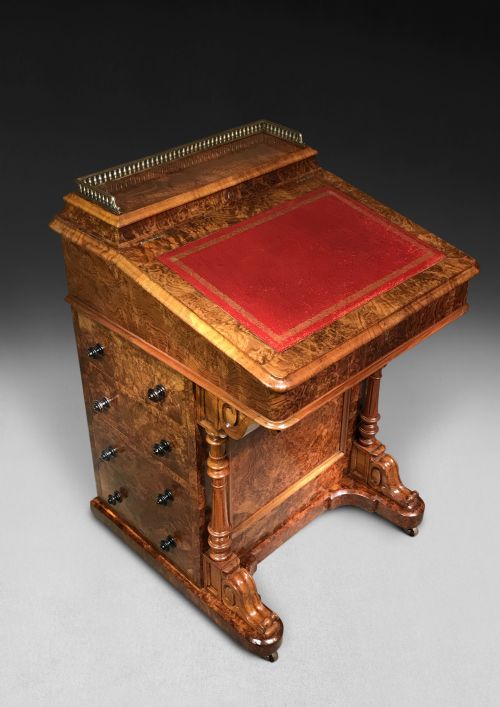
H:34.8”, 87 cms, W:22.4”, 56 cms, D:23.2”, 58 cms.
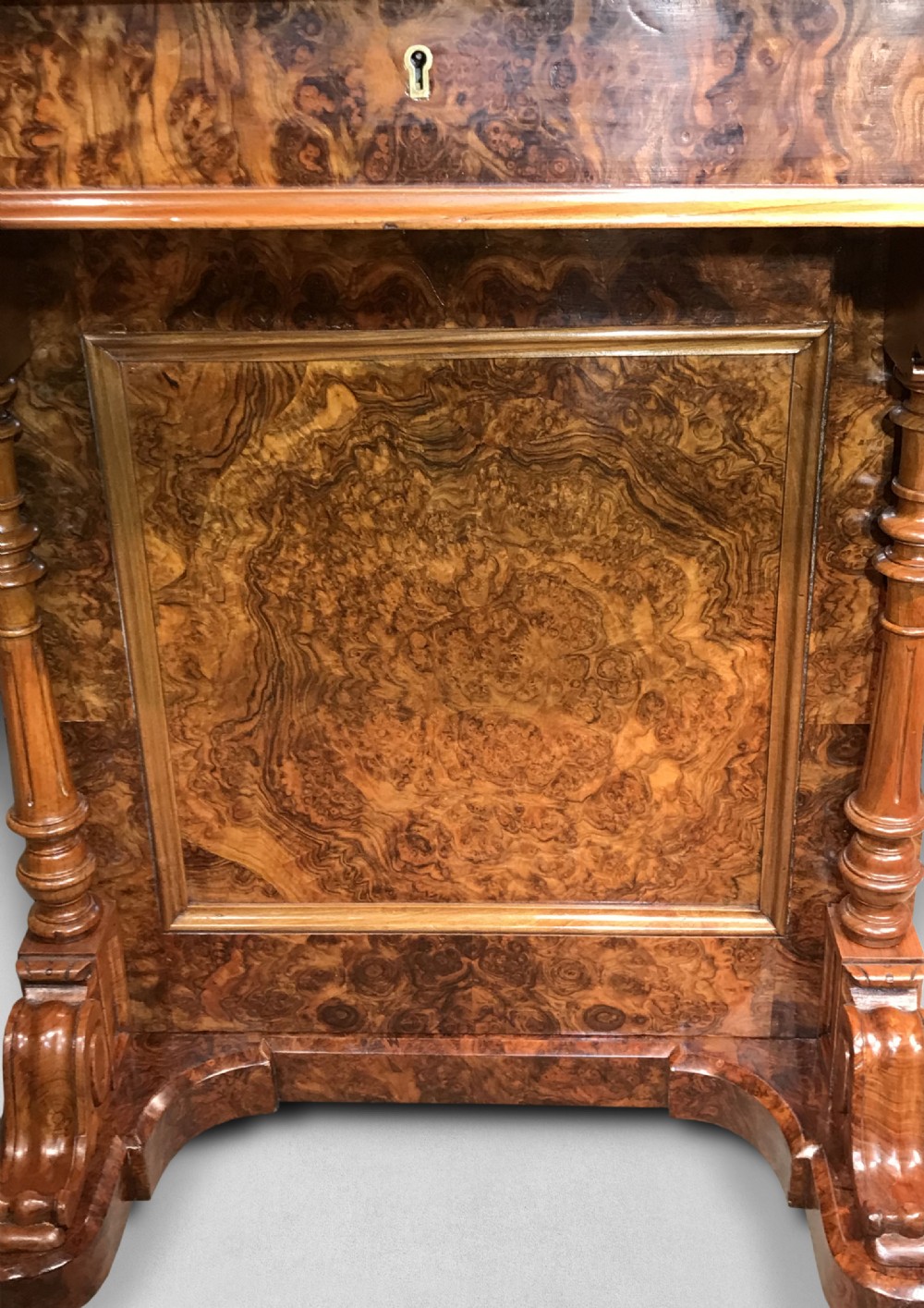
Note: the exceptional figuring and grain of the burr Walnut make this a rare example and are a testimony to the superb quality of this desk.
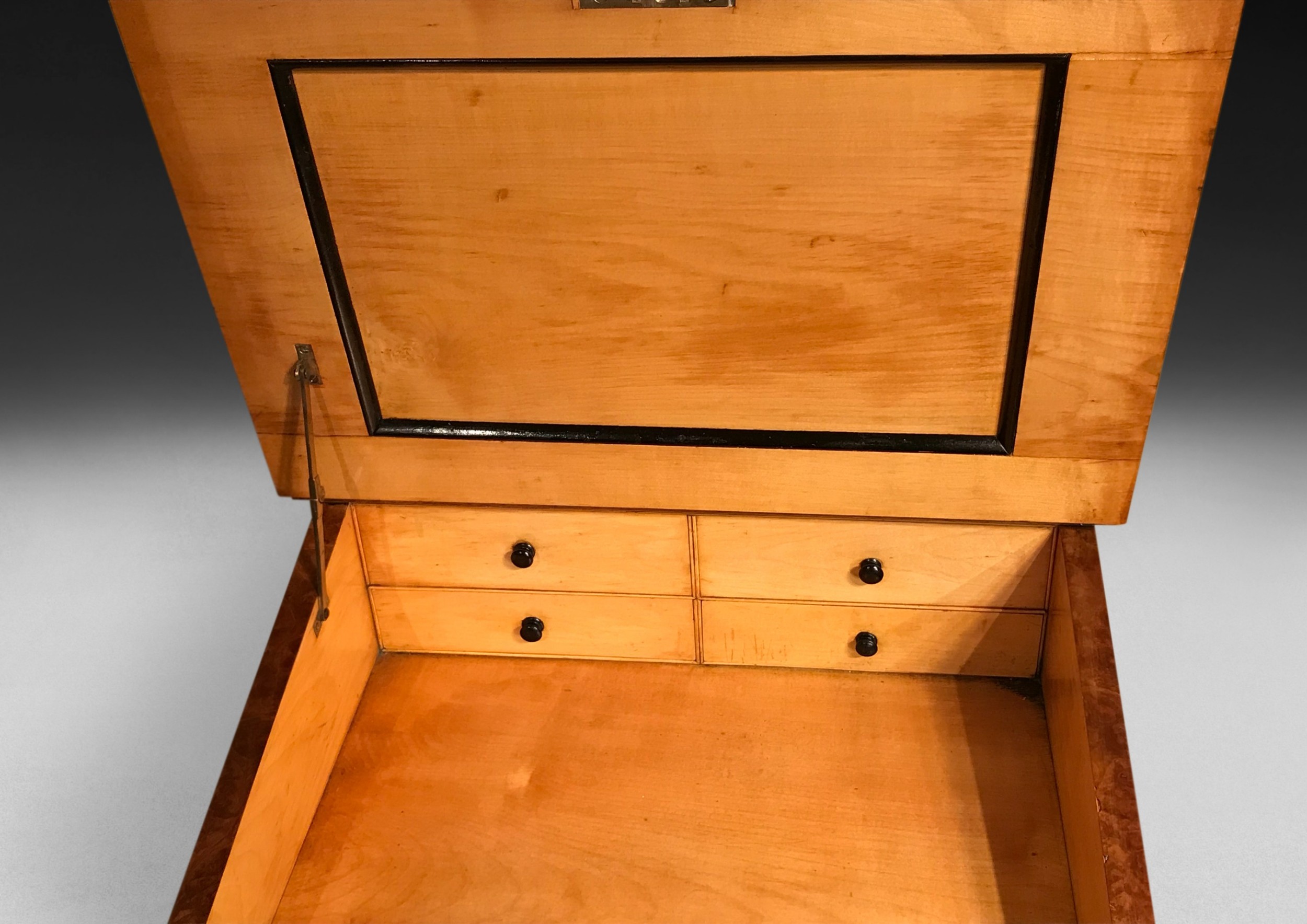
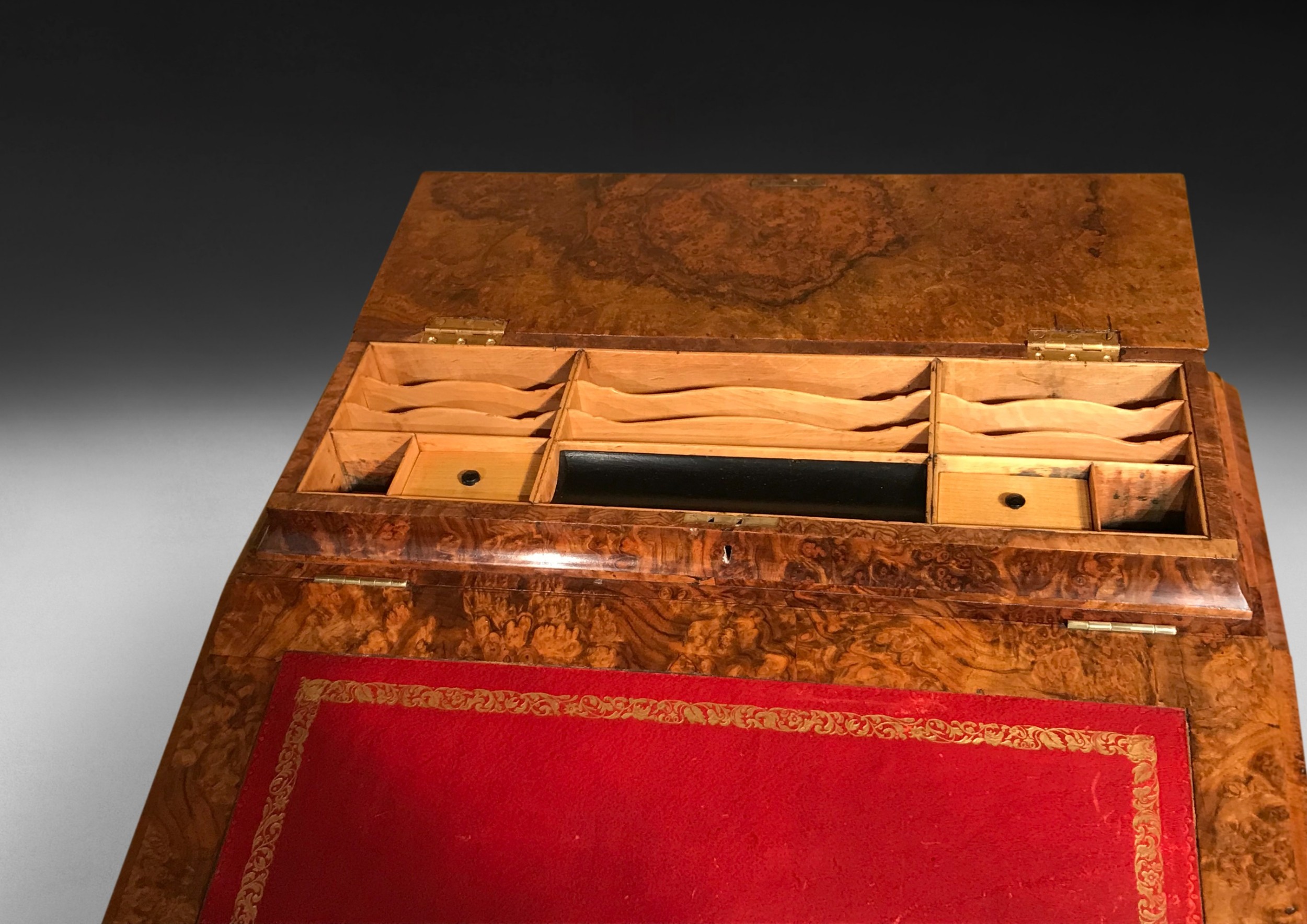
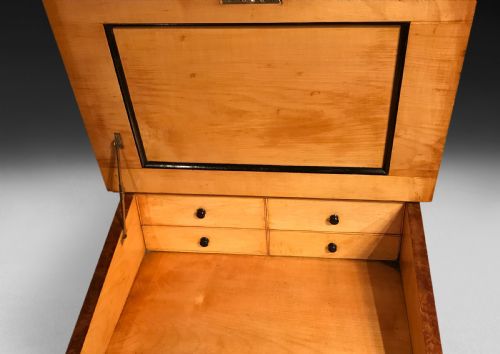
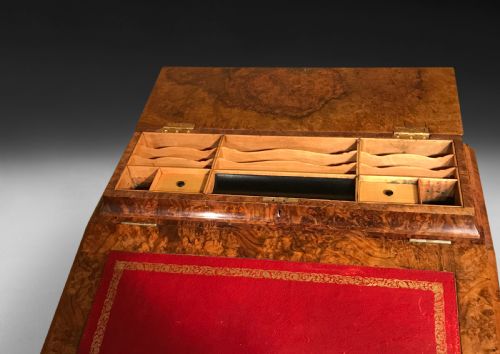
A Davenport desk, (sometimes originally known as a Devonport desk[1]) is a small desk with an inclined lifting desktop attached with hinges to the back of the body. Lifting the desktop accesses a large compartment with storage space for paper and other writing implements, and smaller spaces in the forms of small drawers and pigeonholes. The Davenport has drawers on one of its sides, which are sometimes concealed by a panel. This stack of side drawers holds up the back of the desk and most of its weight.
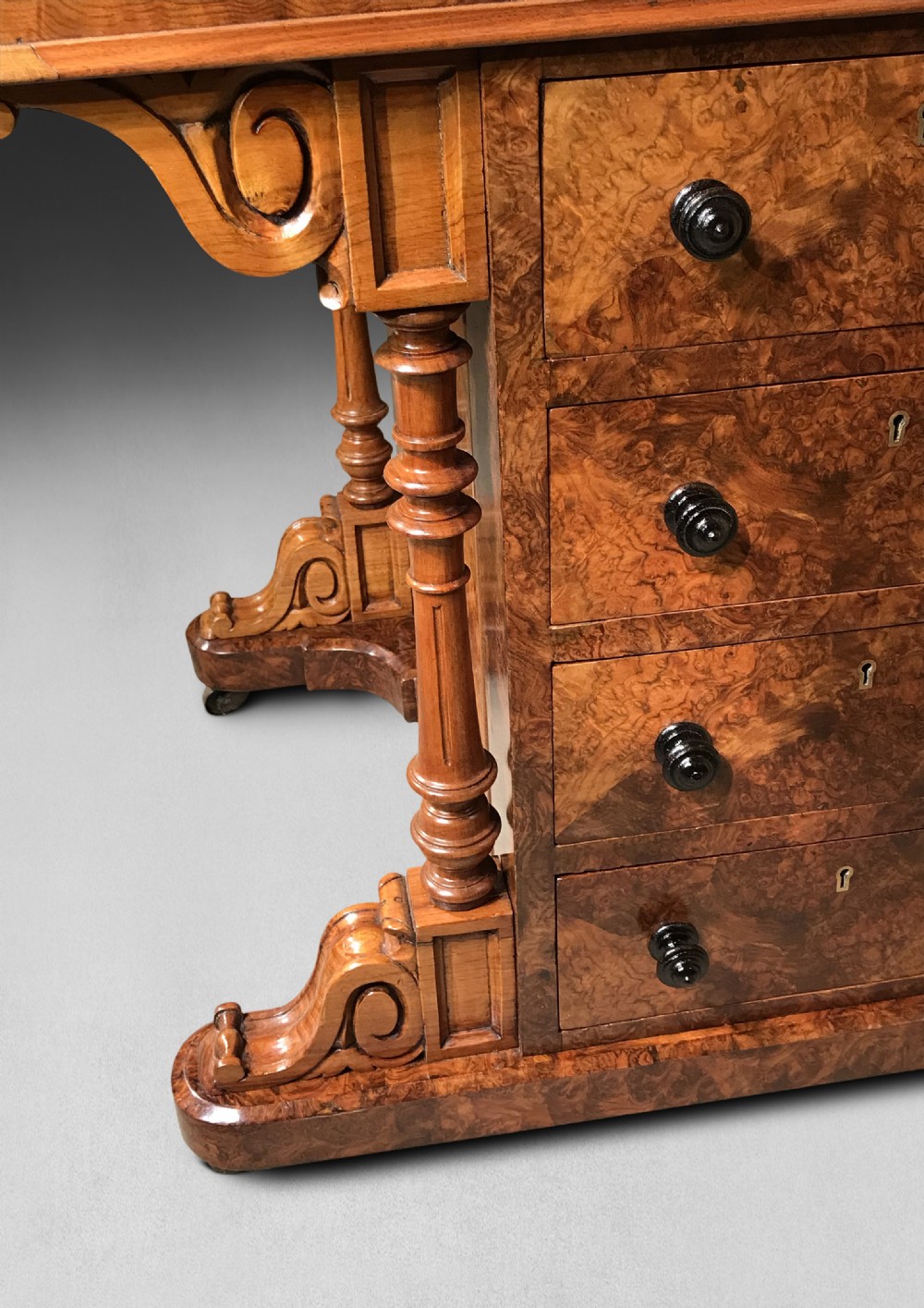
The front of the desk stands on thick legs or pillars which are often highly carved, Davenport desks of the 19th century had a variety of different leg designs.[2]
The desk shape is distinctive; its top part resembles an antique school desk while the bottom is like one of the two drawer-pedestals of a pedestal desk turned sideways. The addition of the two legs in front completes the effect.
This desk owes its name to a Captain Josiah Davenport (1771–1836) who was reputedly the first to commission the design, from Gillows of Lancaster, near the end of the 18th century. In a sense then it could also be considered a Campaign desk though there are no records indicating if Captain Davenport was in the British Army or the Royal Navy.[3] Josiah Davenport had a ship named the Cleopatra and he was a merchant mariner.
W.R. Harvey & Co. (Antiques) Ltd has dated this piece to the 19th Century.
Specialists in 17th-18th and early 19th century fine english furniture, art, clocks and other objets d'art
You can view the stock and full dealer information on the W.R. Harvey & Co. (Antiques) Ltd Profile Page
W.R. Harvey & Co. (Antiques) Ltd is a registered member of LAPADA
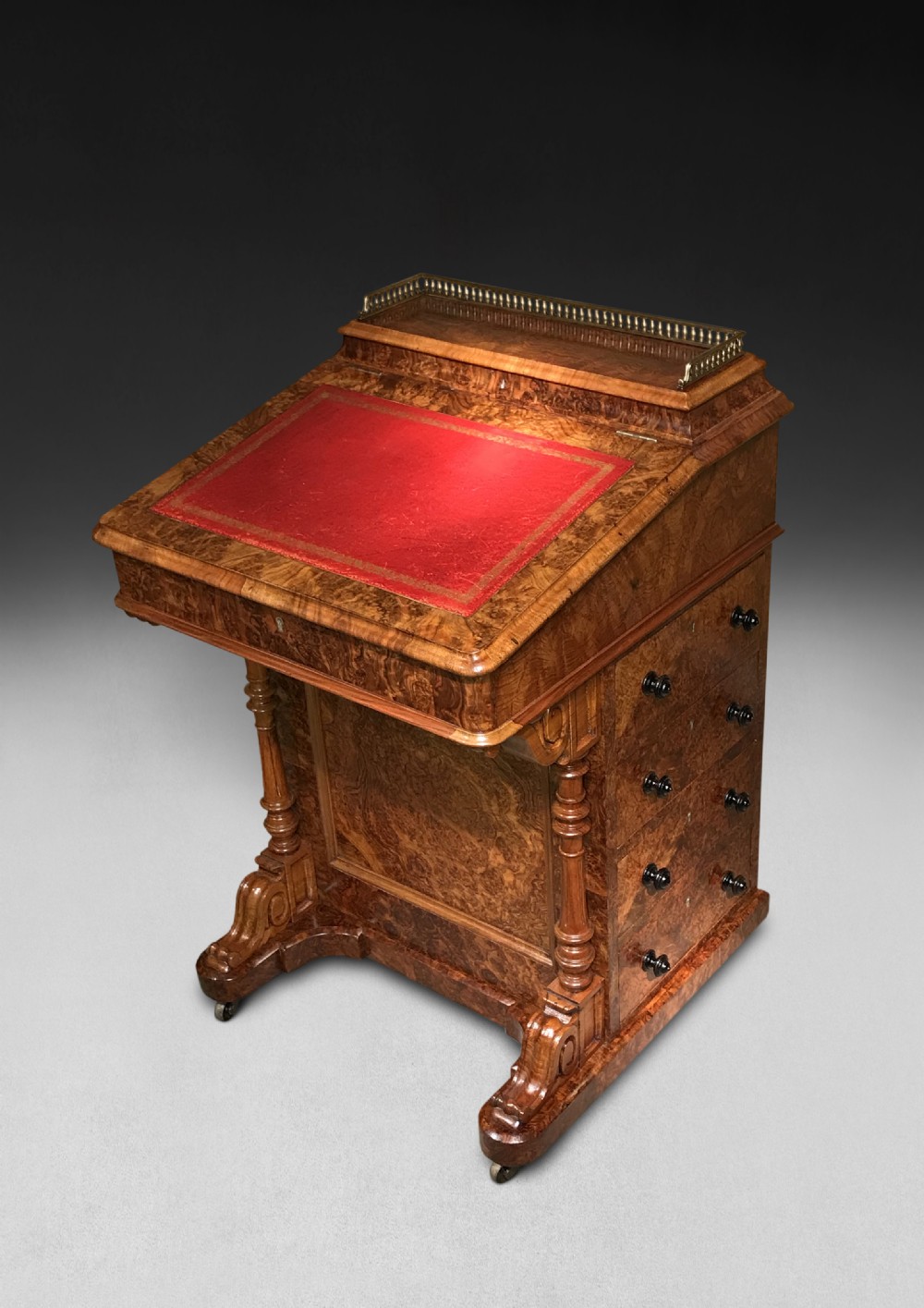
Mid 19th. Century Burr Walnut Davenport Desk