20,268  PAGES BROWSED TODAY PAGES TODAY 36  ANTIQUES UPLOADED TODAY NEW ARRIVALS
ID #SA868396
FOR SALE
£1,500
Email
Save
Attributed to Sir Thomas Lawrence, Pra, 1769 - 1830 Portrait of John Philpot Curran , 1750-1817 Irish Orator, Politician, Wit, Lawyer & Judge oil on Panel
Artware Fineart
for sale €1,755     $1,905
£1,500

Artware Fineart

Sellingantiques Verified Since Sep 2008
View Dealers Stock Page
Id #SA868396
PDF SHARE
SAVE

Attributed to Sir Thomas Lawrence, Pra, 1769 - 1830 Portrait of John Philpot Curran , 1750-1817 Irish Orator, Politician, Wit, Lawyer & Judge oil on Panel

18th century
For Sale by Artware Fineart
Description

Attributed to Sir Thomas Lawrence, PRA, 1769 - 1830

Portrait of John Philpot Curran , 1750-1817 Irish orator, politician, wit, lawyer & judge

oil on panel

John Philpot Curran (24 July 1750 – 14 October 1817) was an Irish orator, politician, wit, lawyer and judge, who held the office of Master of the Rolls in Ireland. He was renowned for his representation in 1780 of Father Neale, a Catholic priest horsewhipped by the Anglo-Irish Lord, Viscount Doneraile, and in the 1790s for his defence of United Irishmen facing capital charges of sedition and treason. His courtroom speeches were widely admired. Lord Byron was to say of Curran, "I have heard that man speak more poetry than I have seen written". Karl Marx described him as the greatest "people's advocate" of the eighteenth century.
Born in Newmarket, County Cork, he was the eldest of five children of James Curran, seneschal of the Newmarket manor court, and Sarah, née Philpot.

The Curran family were said to have originally been named Curwen, their ancestor having come from Cumberland as a soldier under Cromwell during the Cromwellian Conquest of Ireland and have originally settled in County Londonderry. Curran's grandfather was from Derry, but settled in Cork. The Philpot family occupation were Irish judges, lawyers, bishops, priests and noblemen.
A friend of the family, Rev. Nathaniel Boyse, arranged to have Curran educated at Midleton College, County Cork. Before his entry into Trinity College, he was examined by Rev. Charles Bunworth, who was so impressed by the young Curran that he offered him financial assistance for his studies.[7] He studied law at Trinity College Dublin.[8] (he was described as "the wildest, wittiest, dreamiest student") and continued his legal studies at King's Inns and the Middle Temple. He was called to the Irish Bar in 1775. Upon his first trial, his nerves got the better of him and he couldn't proceed. His short stature, boyish features, shrill voice and a stutter were said to have impacted his career, and earned him the nickname "Stuttering Jack Curran".

However, he could speak passionately in court on subjects close to his heart. He eventually overcame his nerves, and got rid of his speech impediment by constantly reciting Shakespeare and Bolingbroke in front of a mirror, and became a noted orator and wit.

His occasional tendency of challenging people to duels (he fought five in all) rather than compromise his values, along with his skilful oratory, quick wit and his championing of popular Irish causes such as Catholic Emancipation and the enlargement of the franchise, made him one of the most popular lawyers in Ireland. He also could speak Irish, still the language of the majority at that time. He wrote a large amount of humorous and romantic poetry.

The case which cemented Curran's popularity was that of Father Neale and St Leger St Leger, 1st Viscount Doneraile at the County Cork Assizes in 1780. Father Neale, an elderly Catholic priest in County Cork, criticised an adulterous parishioner. The adulterer's sister was mistress to Lord Doneraile, a cruel Protestant landlord. Doneraile demanded that Neale recant his criticism of his mistress' brother. When the priest stood by his principles, Doneraile horse-whipped him, secure in the confidence that a jury of the time would not convict a Protestant on charges brought forward by a Catholic. Curran, who had a passion for lost causes, represented the priest and won over the jury by setting aside the issue of religion. The jury awarded Curran's client 30 guineas. Doneraile challenged Curran to a duel, in which Doneraile fired and missed. Curran declined to fire.

The year 1796 saw Curran again attacking the character of a peer, the Earl of Westmeath, in a civil case. The circumstances were very different from the Doneraile case: Curran was defending another aristocrat,

Physical Dimensions
Height
35cm (13.78")
Width
30.5cm (12.01")
Depth
2cm (0.79")
Declaration

Artware Fineart has dated this Regency Oil Portrait Panel to the 18th Century.

Reference Numbers
Sellingantiques Reference
SA868396
Dealers Internal Reference
4453
Description
Attributed to Sir Thomas Lawrence, PRA, 1769 - 1830

Portrait of John Philpot Curran , 1750-1817 Irish orator, politician, wit, lawyer & judge

oil on panel

John Philpot Curran (24 July 1750 – 14 October 1817) was an Irish orator, politician, wit, lawyer and judge, who held the office of Master of the Rolls in Ireland.
Artware Fineart

He was renowned for his representation in 1780 of Father Neale, a Catholic priest horsewhipped by the Anglo-Irish Lord, Viscount Doneraile, and in the 1790s for his defence of United Irishmen facing capital charges of sedition and treason. His courtroom speeches were widely admired. Lord Byron was to say of Curran, "I have heard that man speak more poetry than I have seen written". Karl Marx described him as the greatest "people's advocate" of the eighteenth century.

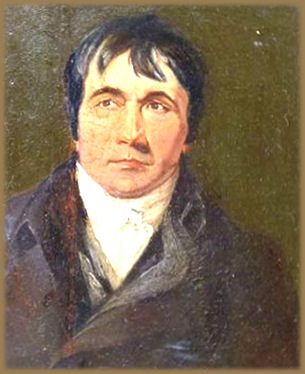
fig 1. An oil painting on wood panel depicting a gentleman wearing a dark coat and white cravat against a dark green backdrop.
fig 1. Attributed to Sir Thomas Lawrence, Pra, 1769 - 1830 Portrait of John Philpot Curran , 1750-1817 Irish Orator, Politician, Wit, Lawyer & Judge oil on Panel

Born in Newmarket, County Cork, he was the eldest of five children of James Curran, seneschal of the Newmarket manor court, and Sarah, née Philpot.

The Curran family were said to have originally been named Curwen, their ancestor having come from Cumberland as a soldier under Cromwell during the Cromwellian Conquest of Ireland and have originally settled in County Londonderry. Curran's grandfather was from Derry, but settled in Cork. The Philpot family occupation were Irish judges, lawyers, bishops, priests and noblemen.

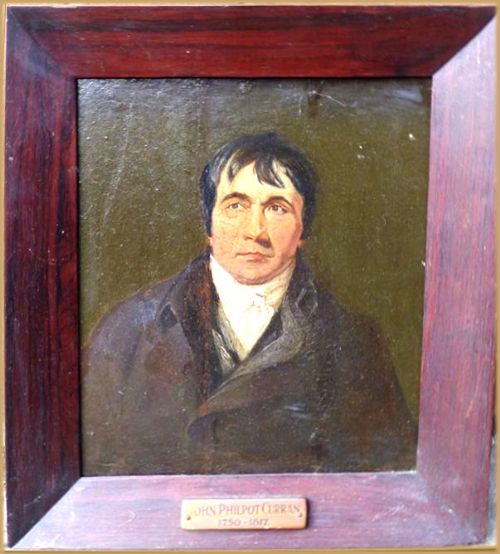
fig 2. An oil painting on wood panel depicting a gentleman wearing a dark coat and white cravat against a dark green backdrop.
fig 2. Attributed to Sir Thomas Lawrence, Pra, 1769 - 1830 Portrait of John Philpot Curran , 1750-1817 Irish Orator, Politician, Wit, Lawyer & Judge oil on Panel

A friend of the family, Rev. Nathaniel Boyse, arranged to have Curran educated at Midleton College, County Cork. Before his entry into Trinity College, he was examined by Rev. Charles Bunworth, who was so impressed by the young Curran that he offered him financial assistance for his studies.[7] He studied law at Trinity College Dublin.[8] (he was described as "the wildest, wittiest, dreamiest student") and continued his legal studies at King's Inns and the Middle Temple. He was called to the Irish Bar in 1775. Upon his first trial, his nerves got the better of him and he couldn't proceed. His short stature, boyish features, shrill voice and a stutter were said to have impacted his career, and earned him the nickname "Stuttering Jack Curran".

However, he could speak passionately in court on subjects close to his heart. He eventually overcame his nerves, and got rid of his speech impediment by constantly reciting Shakespeare and Bolingbroke in front of a mirror, and became a noted orator and wit.

His occasional tendency of challenging people to duels (he fought five in all) rather than compromise his values, along with his skilful oratory, quick wit and his championing of popular Irish causes such as Catholic Emancipation and the enlargement of the franchise, made him one of the most popular lawyers in Ireland. He also could speak Irish, still the language of the majority at that time. He wrote a large amount of humorous and romantic poetry.

The case which cemented Curran's popularity was that of Father Neale and St Leger St Leger, 1st Viscount Doneraile at the County Cork Assizes in 1780. Father Neale, an elderly Catholic priest in County Cork, criticised an adulterous parishioner. The adulterer's sister was mistress to Lord Doneraile, a cruel Protestant landlord. Doneraile demanded that Neale recant his criticism of his mistress' brother. When the priest stood by his principles, Doneraile horse-whipped him, secure in the confidence that a jury of the time would not convict a Protestant on charges brought forward by a Catholic. Curran, who had a passion for lost causes, represented the priest and won over the jury by setting aside the issue of religion. The jury awarded Curran's client 30 guineas. Doneraile challenged Curran to a duel, in which Doneraile fired and missed. Curran declined to fire.

The year 1796 saw Curran again attacking the character of a peer, the Earl of Westmeath, in a civil case. The circumstances were very different from the Doneraile case: Curran was defending another aristocrat,

Height
35cm (13.78")
Width
30.5cm (12.01")
Depth
2cm (0.79")
Date of Manufacture

Artware Fineart has dated this Regency Oil Portrait Panel to the 18th Century.

Reference Numbers
Sellingantiques Ref
SA868396
Dealers Internal Ref
4453
Artware Fineart
Sellingantiques verified Since Sep 2008
Dealer Profile

You can view the stock and full dealer information on the Artware Fineart Profile Page

PDF SHARE
SAVE
An oil painting on wood panel depicting a gentleman wearing a dark coat and white cravat against a dark green backdrop.
1 / 3
Archive I An oil painting on wood panel depicting a gentleman wearing a dark coat and white cravat against a dark green backdrop.

Attributed to Sir Thomas Lawrence, Pra, 1769 - 1830 Portrait of John Philpot Curran , 1750-1817 Irish Orator, Politician, Wit, Lawyer & Judge oil on Panel

Archive II An oil painting on wood panel depicting a gentleman wearing a dark coat and white cravat against a dark green backdrop. View II
Archive III An oil painting on wood panel depicting a gentleman wearing a dark coat and white cravat against a dark green backdrop. View III
Enlarged Archival View
Telephone 07958 699 645
Location
18 La Gare
51 Surrey Row
London
SE1 0BZ
United Kingdom
Verified Since Sep 2008
Items For Sale 243
Items Sold 223
Artware Fineart
Verified Since Sep 2008
View Dealer Info
Location: 18 La Gare , 51 Surrey Row , London , SE1 0BZ , United Kingdom
Verified
Sep 2008
For Sale
243
Sold
223
An oil painting on wood panel depicting a gentleman wearing a dark coat and white cravat against a dark green backdrop.
Attributed to Sir Thomas Lawrence, PRA, 1769 - 1830 Portrait of John Philpot Curran , 1750-1817 Irish orator, politician, wit, lawyer & judge oil on panel
Ref: SA868396
An oil painting on wood panel depicting a gentleman wearing a dark coat and white cravat against a dark green backdrop.
Detail View 1
Detail View 2
Archival Detail
Every single antique dealer on our platform is individually approved by our internal team. We verify their professional trade history, ethical standards, and photographic quality to ensure a secure, high-standard buying environment. Upon joining, every dealer agrees to a strict 9-point code of conduct. While issues can occasionally arise, our dealers typically resolve them swiftly and directly with the buyer. In fact, since our founding in 2002, Sellingantiques has only had to step in to help resolve an issue on roughly five occasions—a true testament to the quality of our dealers and their dedication to your happiness.
Our dealers are highly experienced in packing and shipping fragile, high-value antiques. Because you are in direct contact with the dealer, you will be able to easily go through all available shipping and insurance options together to ensure your item arrives safely.
Antiques are the ultimate green purchase. By choosing historical pieces over newly manufactured goods, you completely eliminate the carbon footprint of modern mass production while preserving exceptional, timeless craftsmanship.

Regency portraiture typically features dramatic contrast between light and shadow, expressive brushwork, muted backdrops, and detailed attention to formal period attire such as cravats and dark tailored coats.

Artists prepared seasoned wood panels, frequently oak or mahogany, applying layers of gesso ground before laying down oil pigments mixed with drying oils.

Authentic period pieces show age-appropriate craquelure across the paint surface, natural wood contraction or oxidation on the reverse of the panel, and period-correct pigments.

An antique portrait can be displayed as a focal feature above a fireplace, integrated into an eclectic gallery wall, or placed within a dark-toned library setting to create visual intrigue.

Keep panel paintings in a climate-controlled room away from direct sunlight, dampness, and heat sources to prevent the wood from warping, cracking, or splitting.
items
Add keywords to the filter
Price
£100
£250000
Era
Movements
Material
Origin
Stock Location
Freshness
Online Payments
Categories