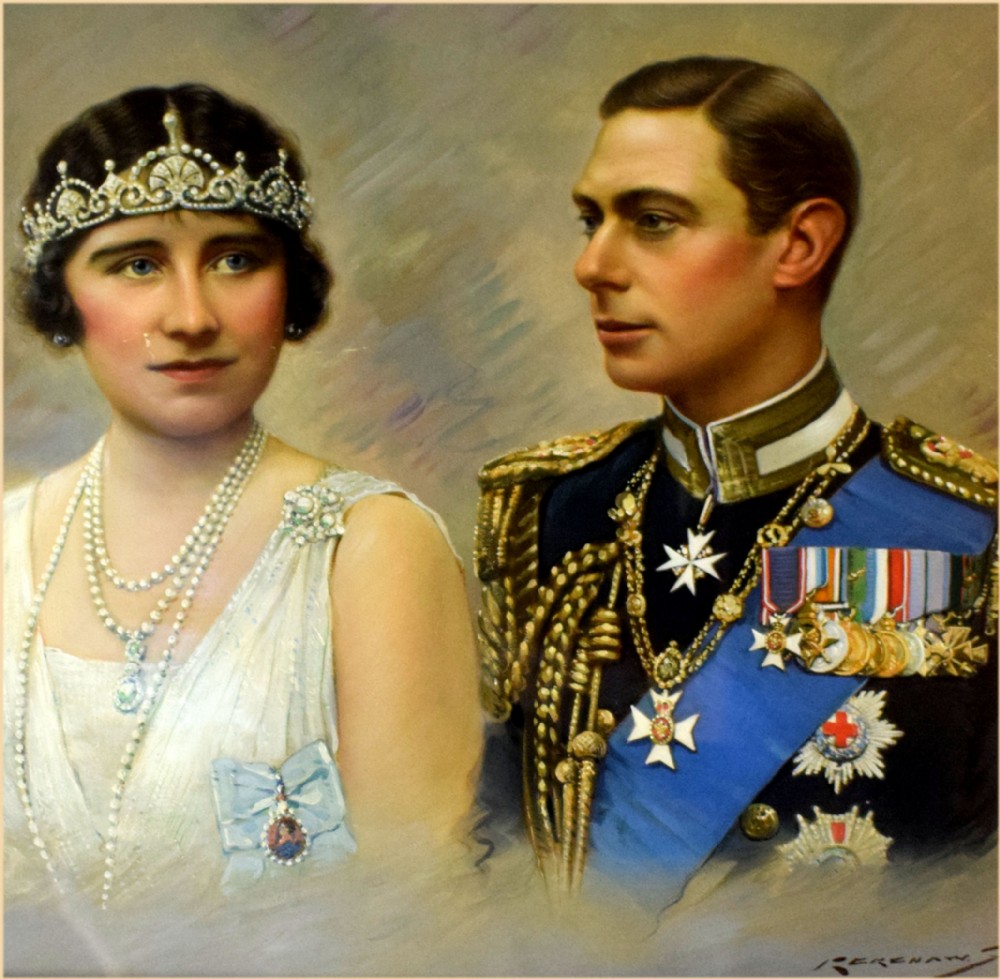
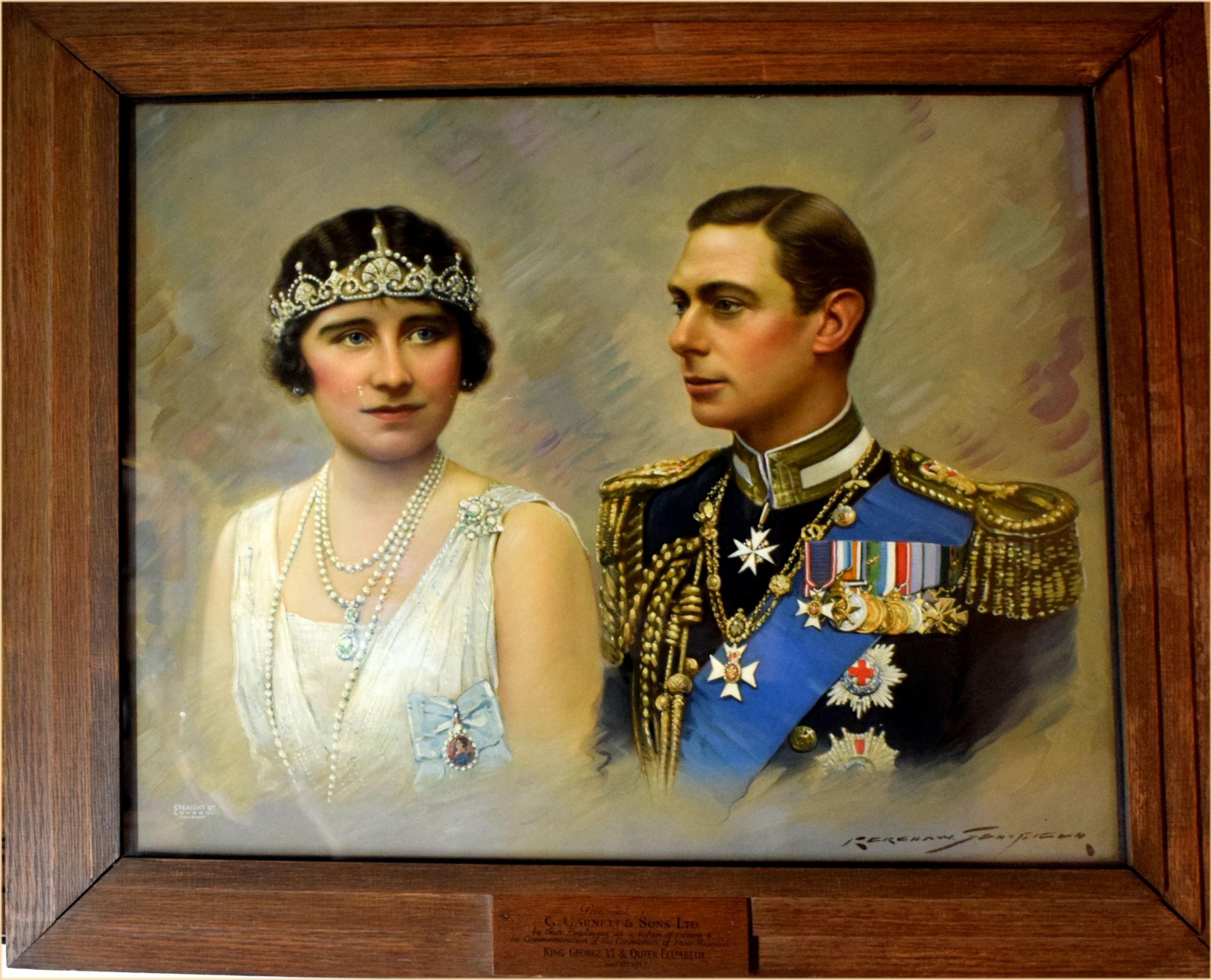
Artware Fineart has dated this Royal Family Oil Portrait to the 1920s.
Double Portrait of King George VI 1895-1952 & Queen Elizabeth 1900-2002
signed lower right , the stepped oak frame bearing presentation plaque to G.Garnett & Son Ltd,
oil on canvas
He was the second of the five sons and one daughter of the duke and duchess of York, who became prince and princess of Wales in 1901 and George V and Queen Mary in 1910. His birthday fell on the same day as the anniversary of the deaths of Prince Albert, the prince consort, in 1861 and Princess Alice in 1878, which upset his great-grandmother, Queen Victoria. The queen had failed to persuade the Yorks to give their first child (later Edward VIII) Albert as the first of his forenames but her request with respect to the second child was anticipated by the duke of York's father, the prince of Wales (later Edward VII), whose suggestion it was that the baby's first name be Albert and that the queen be his godmother (with six other royals). The baby was baptized at Sandringham on 17 February 1896 as Albert Frederick Arthur George, and was known in the family as Bertie.
Youth and education
Prince Albert was brought up at York Cottage—his home until 1923 with his elder brother, Prince Edward (later Edward VIII), and his sister, Princess Mary [see Mary (1897–1965)]. He was shy and sensitive and from about the age of seven developed a severe stammer, possibly compounded by being made to write with his right hand though he was naturally left-handed. His stammer emphasized the contrast with his outward-going elder brother, and it left him defenceless when his father dressed him down. He was knock-kneed, like his father and brothers, and was made to wear splints, initially by day and night. When the splints interfered with his school work, he was allowed to wear them at night only. Prince Albert attended the classes provided by Henry Peter Hansell, hired mainly for his sporting abilities. Though his only pupils were the royal children, Hansell's aim was to reproduce the atmosphere of a school, with the oldest child as ‘captain’. None made good progress. Prince Albert was slow to develop the resistance and determination needed for survival. His mathematics was especially poor. With his stammer, his splints, his gruff father, his distant mother, and his showy brother, it was not surprising that he was frequently in tears. The departure in 1907 of Prince Edward for the Royal Naval College at Osborne eased matters and in 1908 Prince Albert himself passed the entrance examination, including mathematics (a vital subject for naval officers), though Mr Hansell thought he had ‘failed to appreciate his position as “captain”’ in the Sandringham school (Wheeler-Bennett, 32). However, his French was good, and there were signs of development in his character. At Osborne and Dartmouth (1909–12) Prince Albert, like his brother, received the education of a naval officer. Prince Edward was heir to the throne from 1910, but Prince Albert was expected to follow a naval career, as his father had done. After taking some time to settle down, Prince Albert found friends and with them his stammer almost disappeared. Like his father, but unlike his brother Prince Edward, Prince Albert's naval friends from his cadet days were important to him in his later career.
Though personally more at ease, Prince Albert was never more than a mediocre student, sixty-eighth out of sixty-eight in the final examinations at Osborne. While at Dartmouth he took part in his father's coronation on 22 June 1910. He received a stern written warning from the new king about lack of effort in his academic work, and he gained something of a reputation at Dartmouth for skylark
Artware Fineart has dated this Royal Family Oil Portrait to the 1920s.
You can view the stock and full dealer information on the Artware Fineart Profile Page
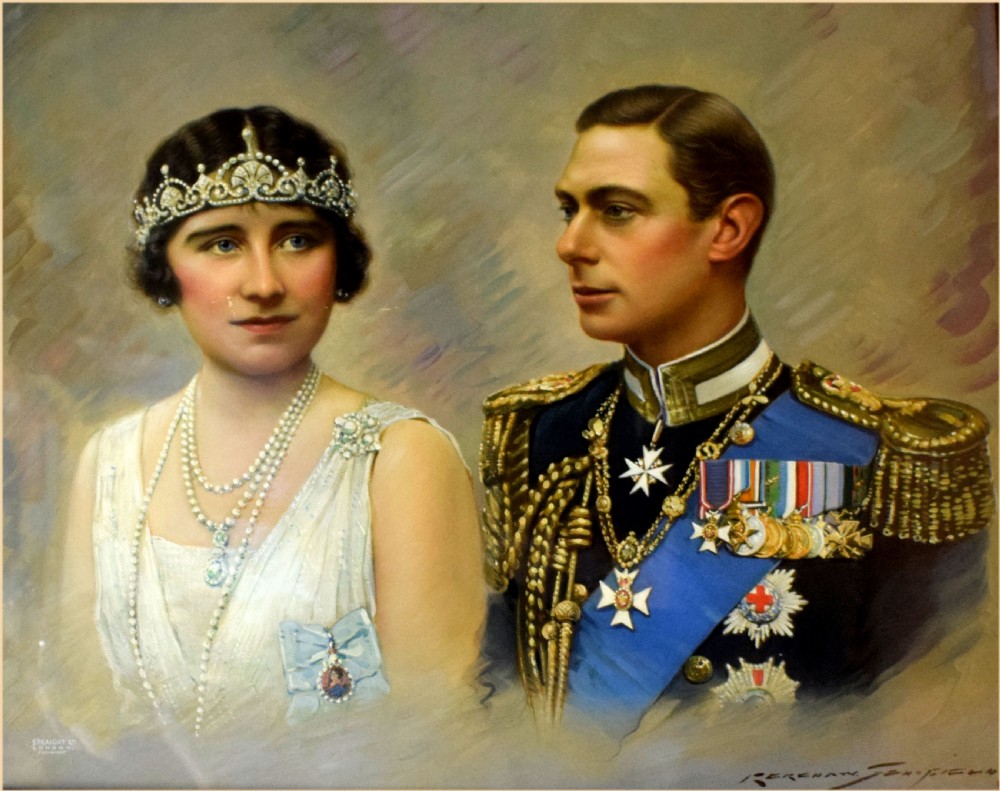
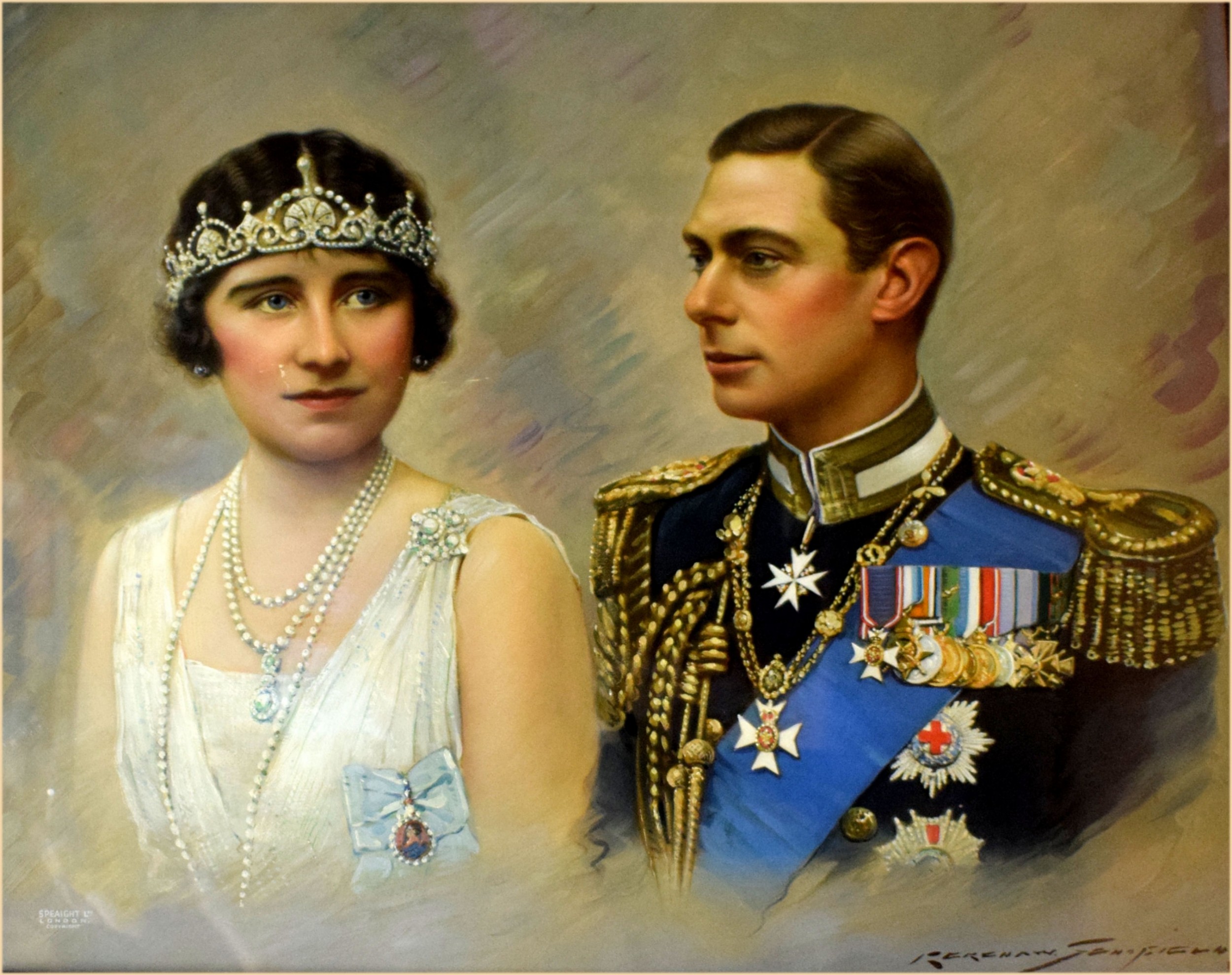
Kershaw Schofield, 1875-1941 Double Portrait of King George VI 1895-1952 & Queen Elizabeth 1900-2002 Signed/inscribed: Signed Lower Right , the Stepped Oak Frame Bearing Presentation Plaque to G.garnett & Son Ltd, oil on Canvas