Tinker & Toad has dated this piece to the Victorian era.
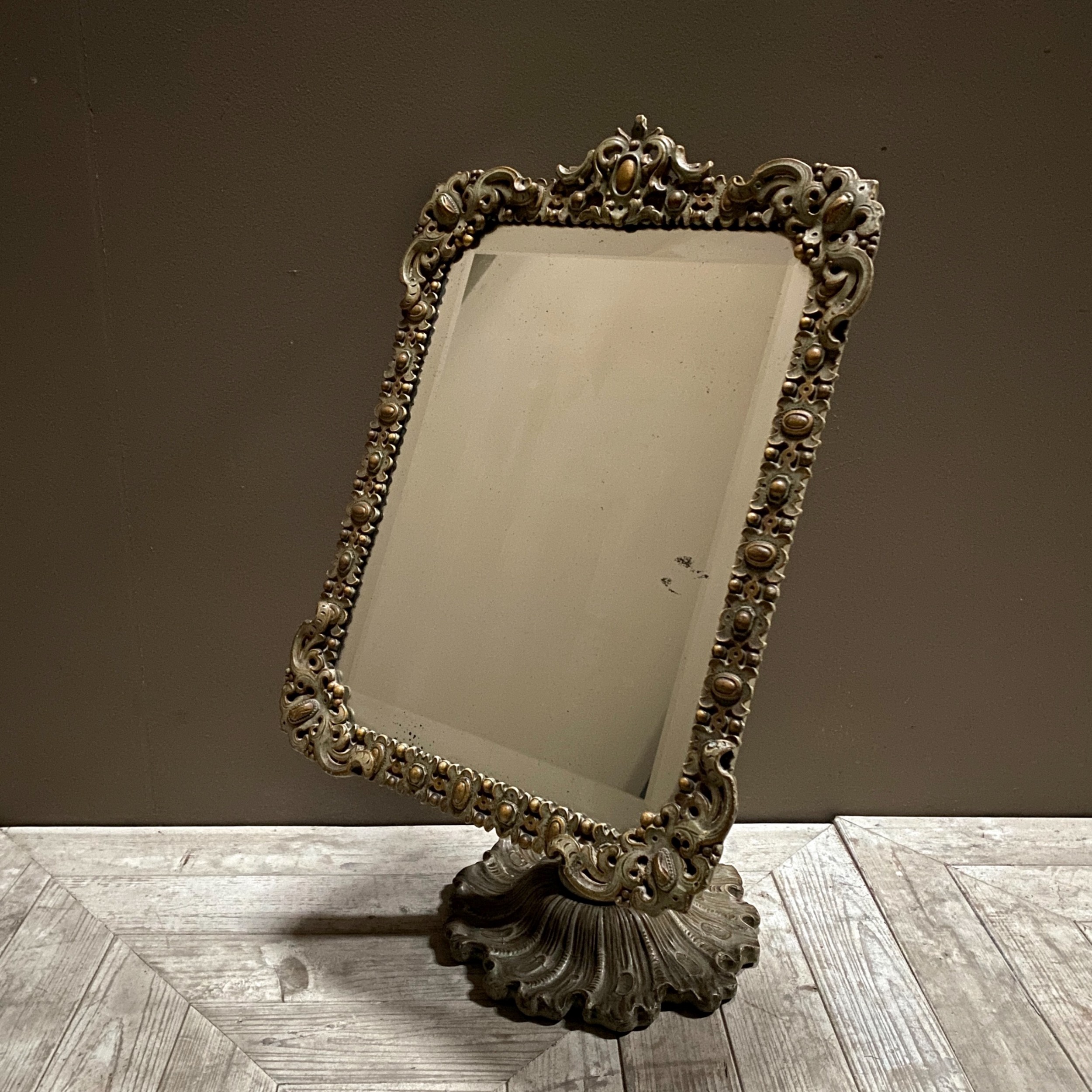
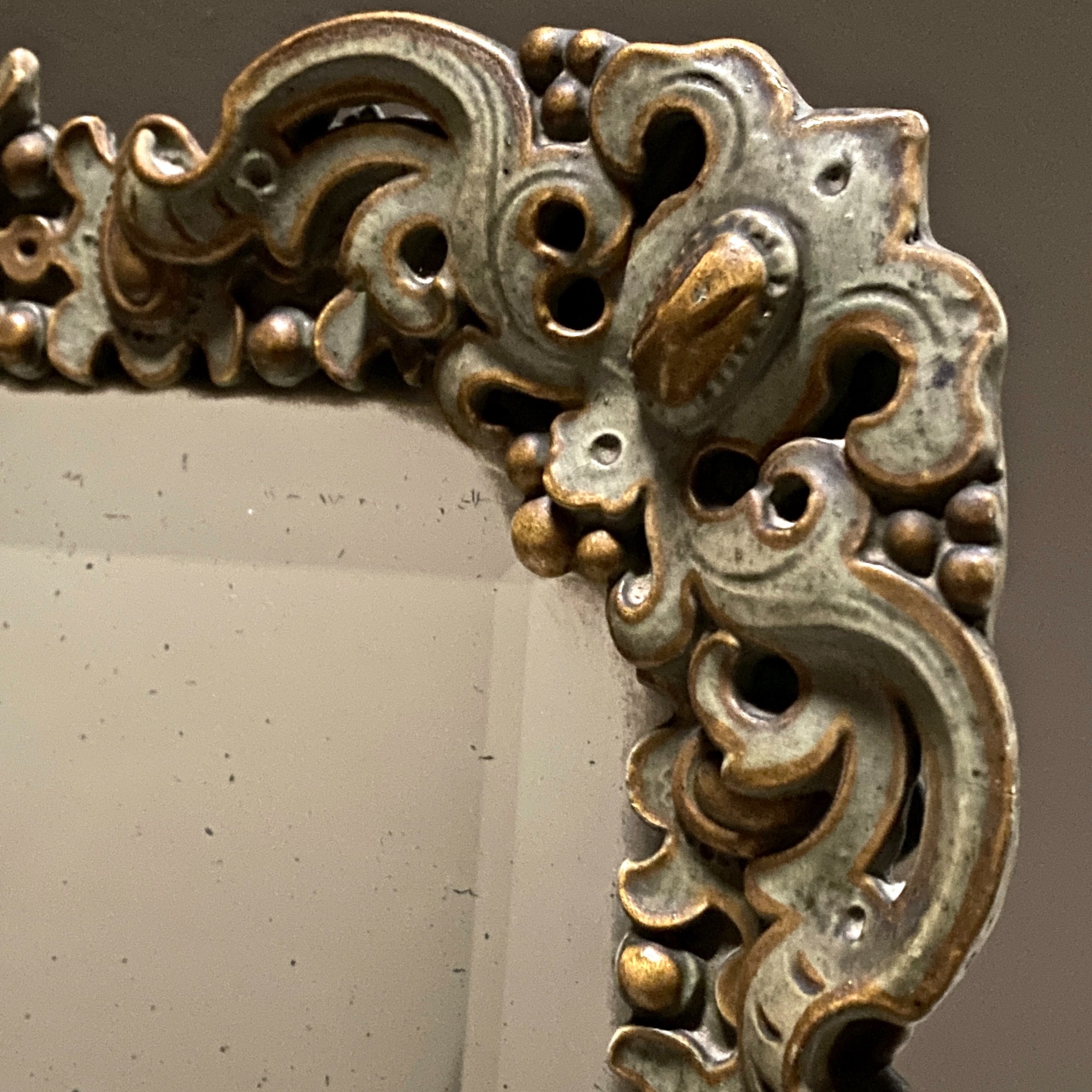
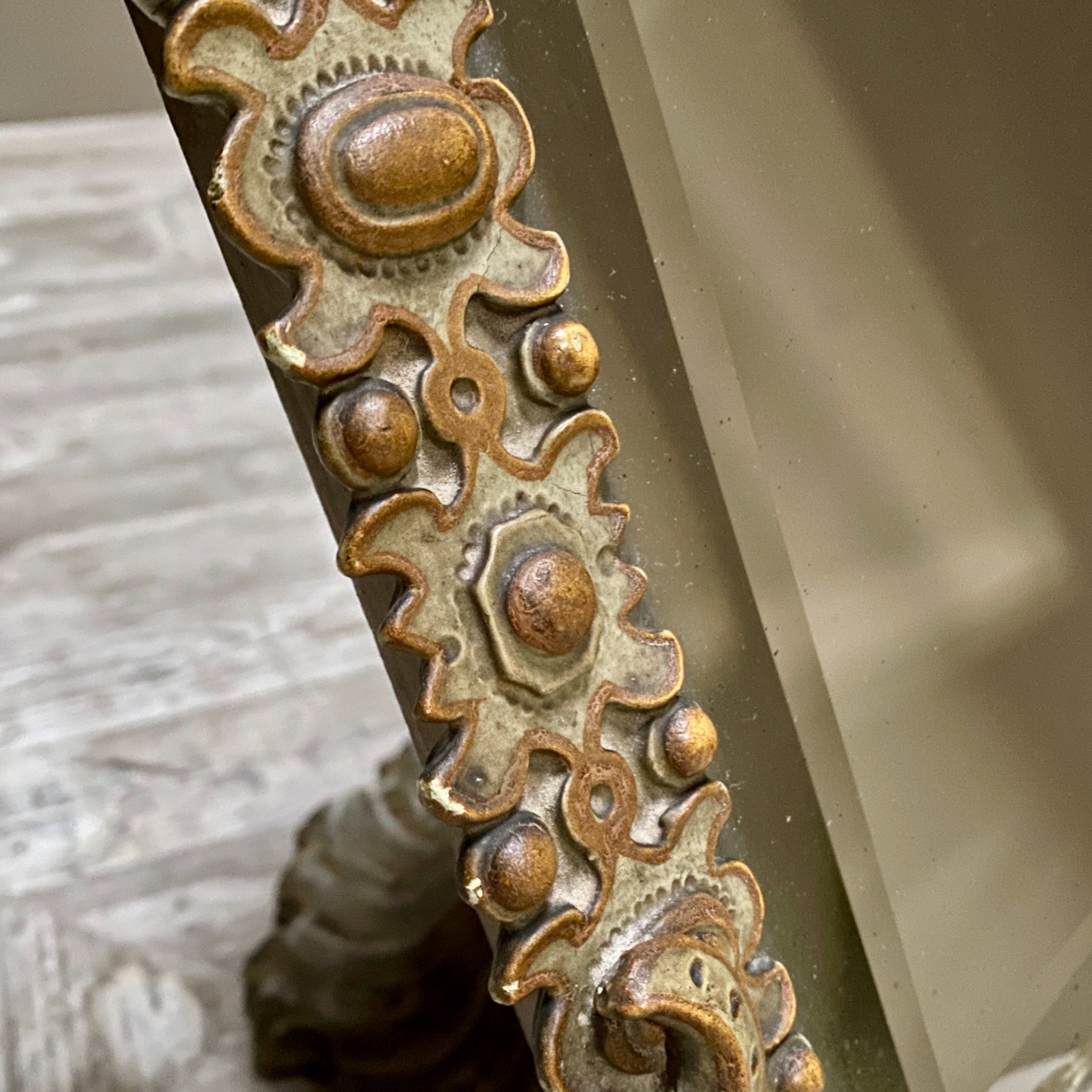
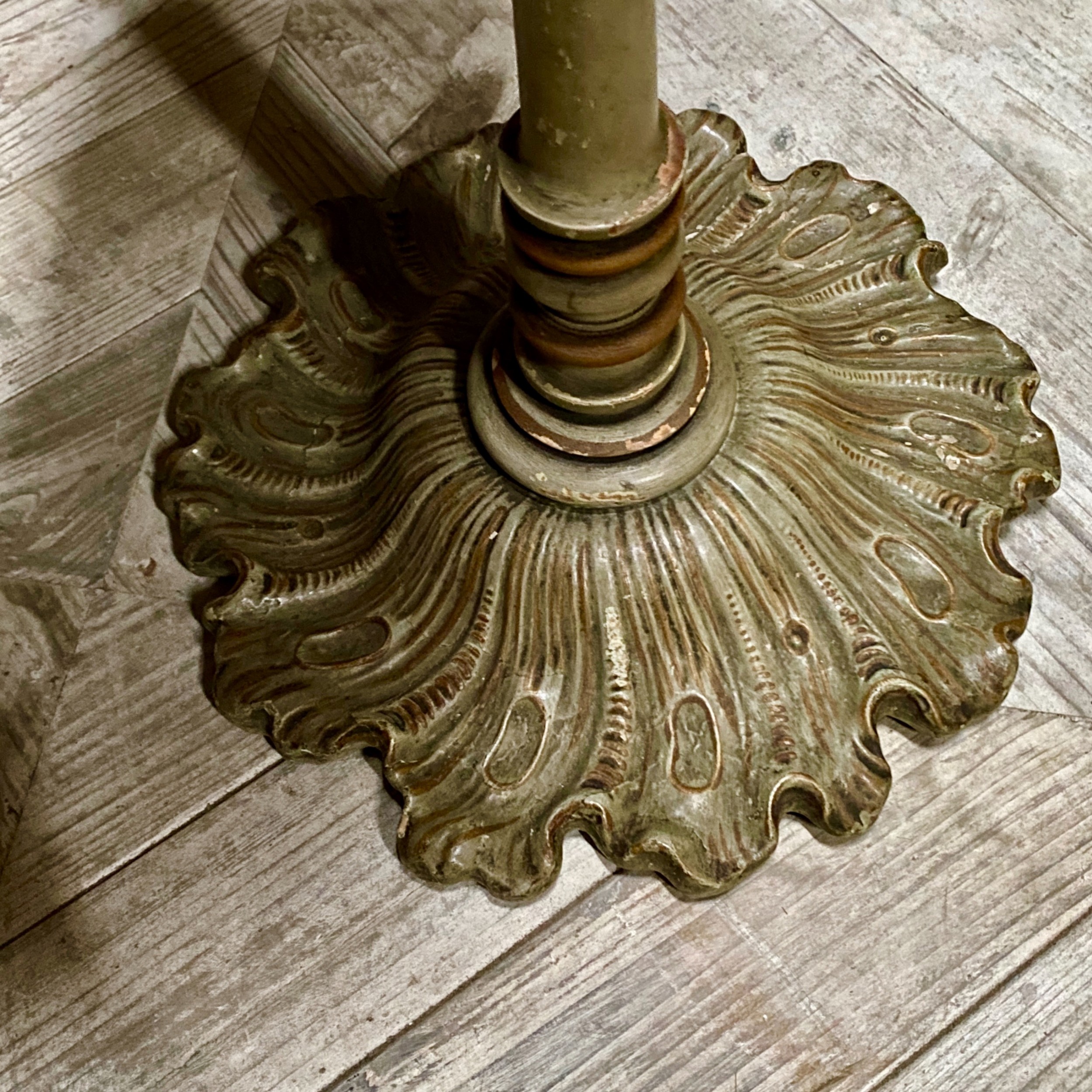
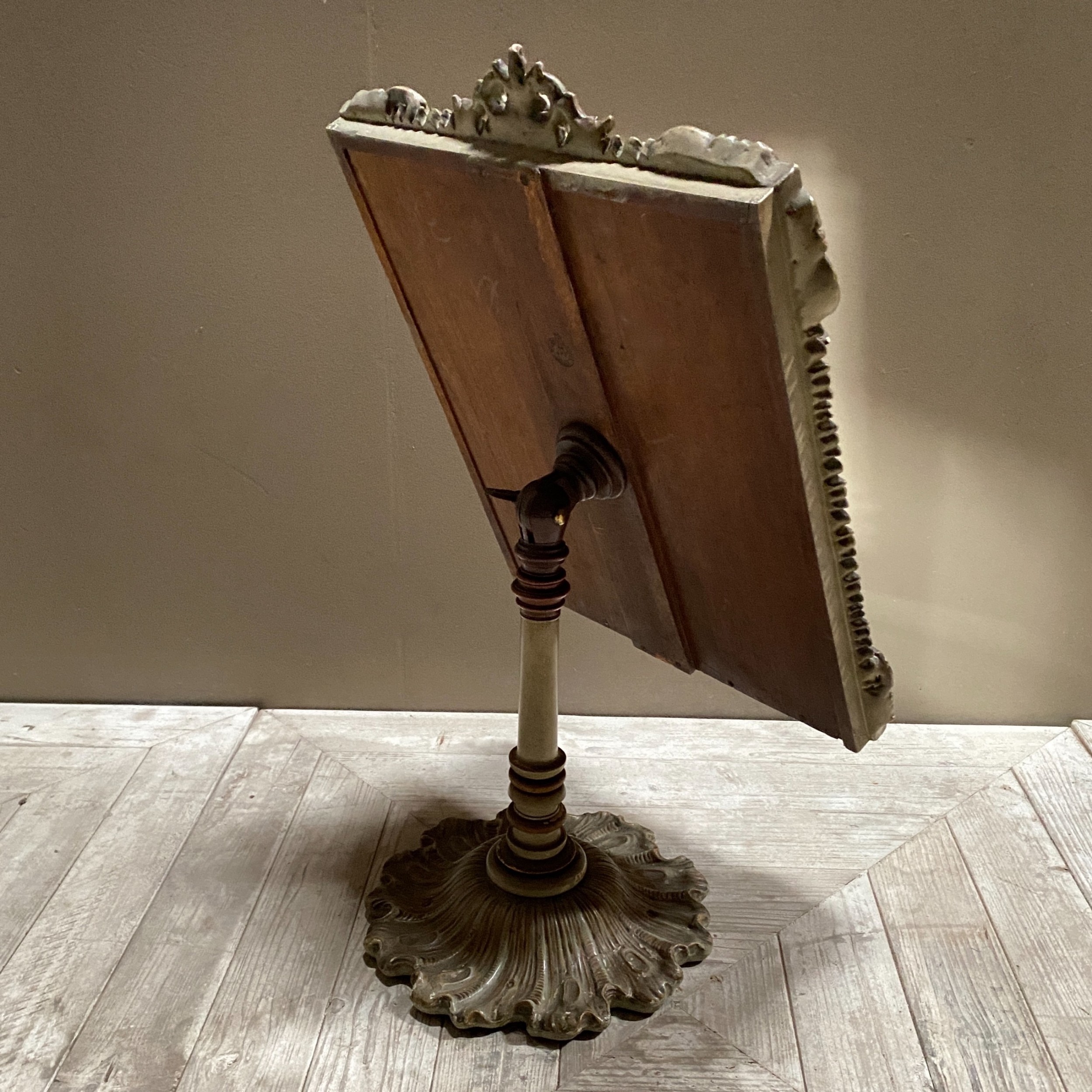
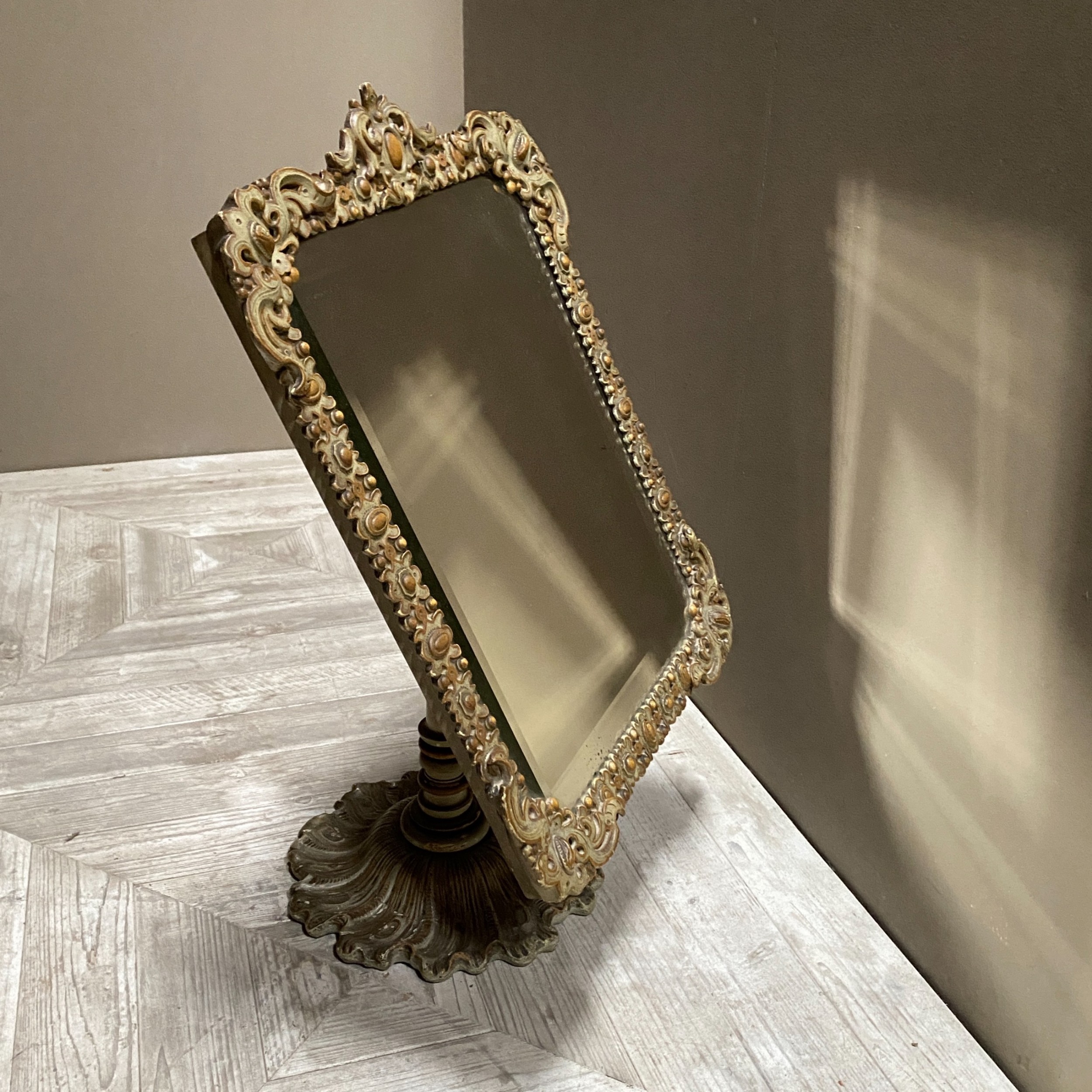
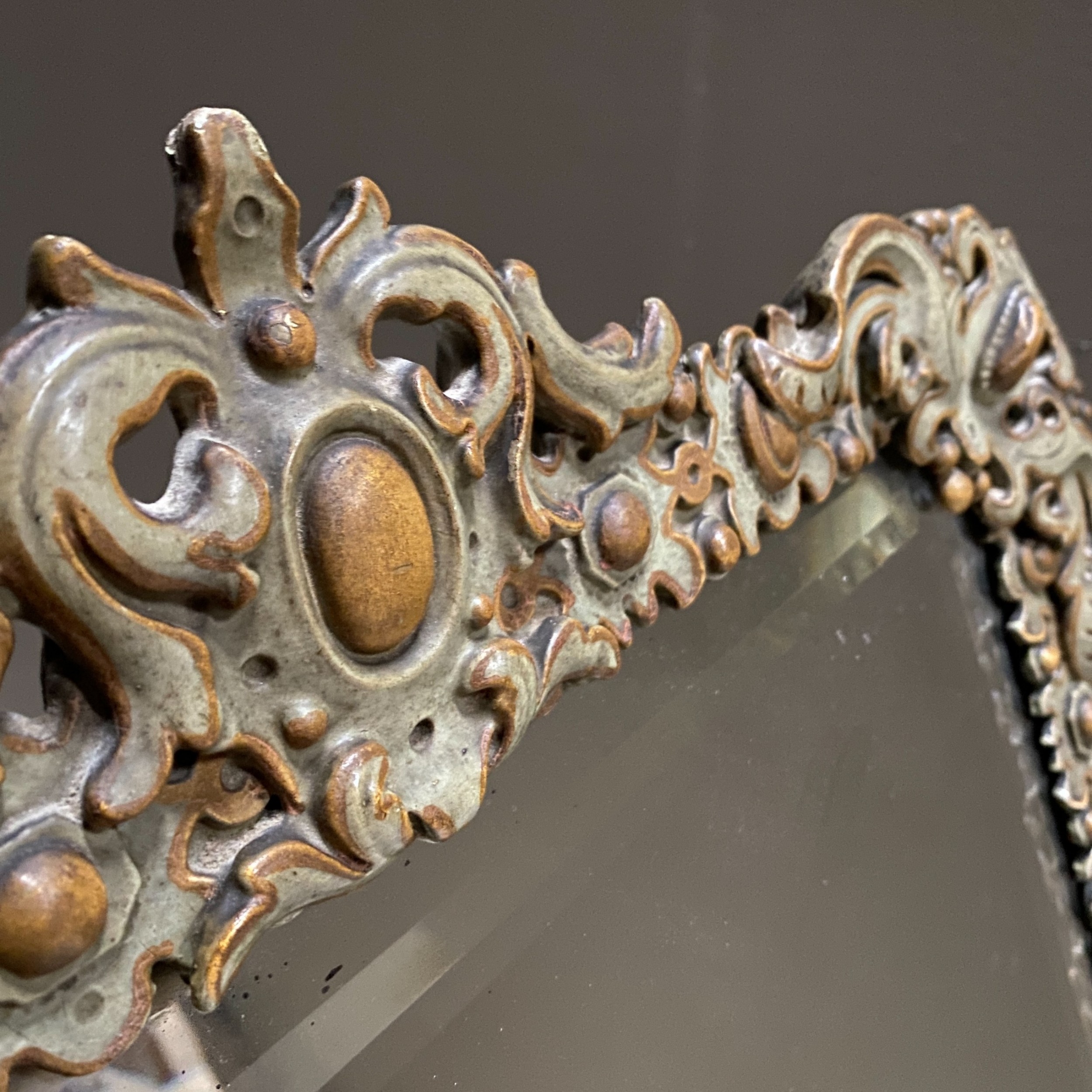
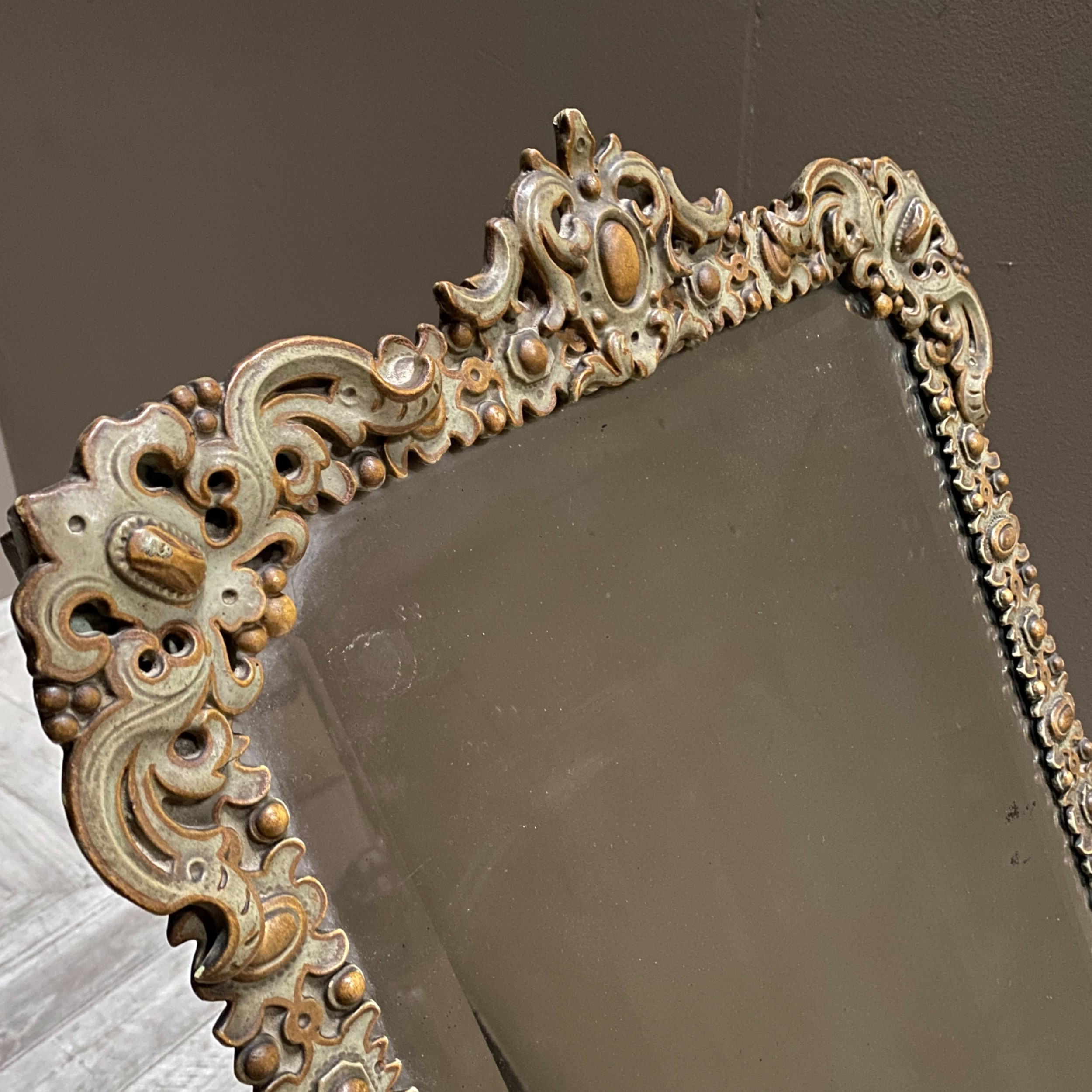
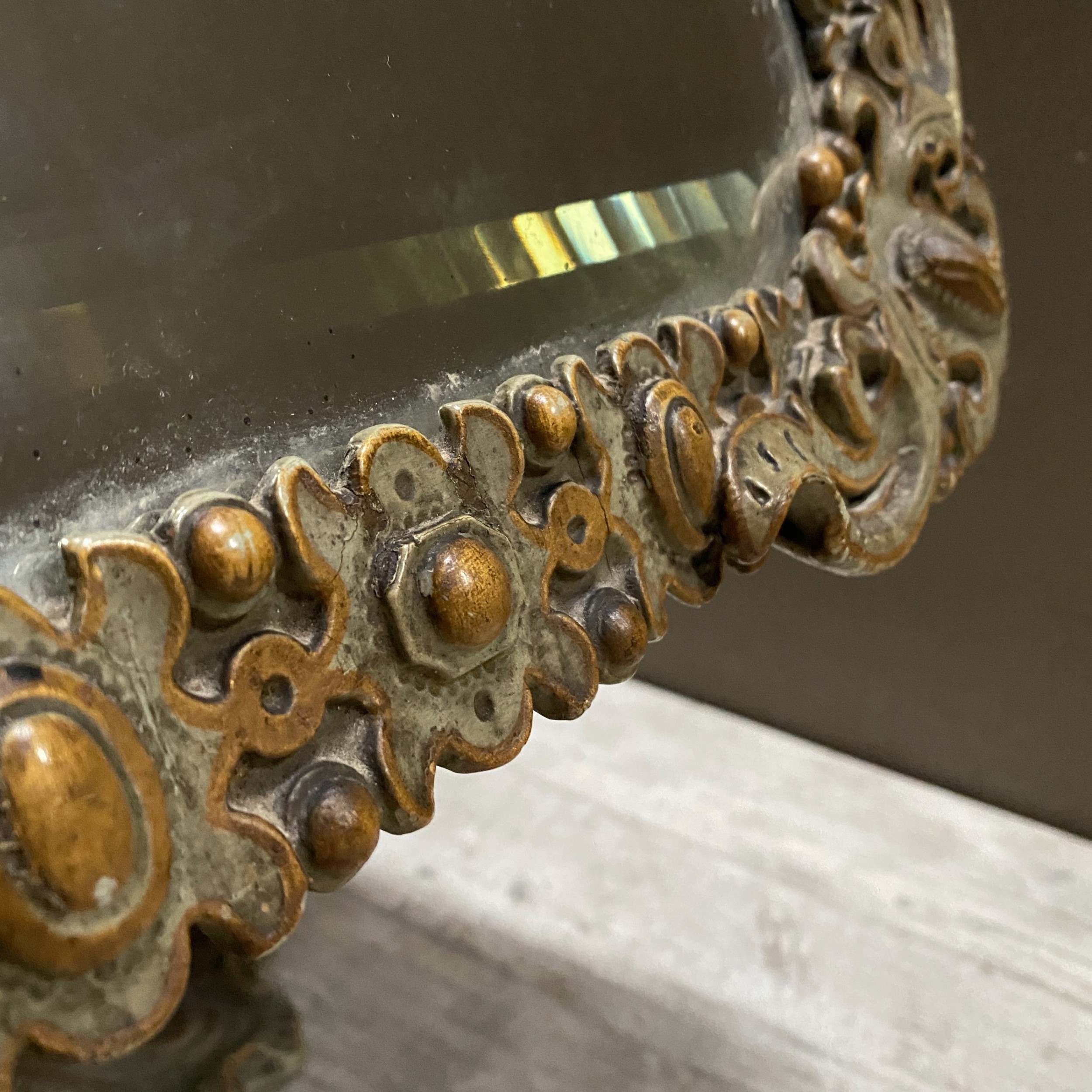
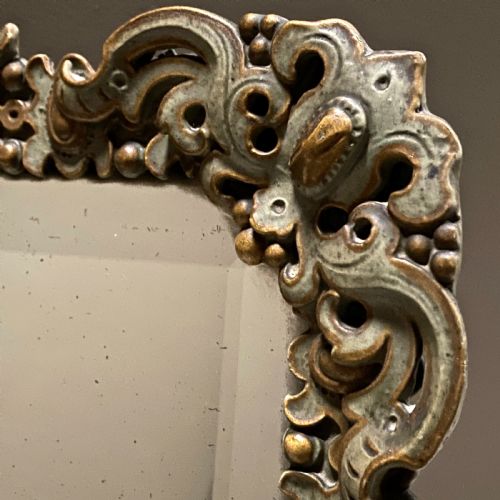
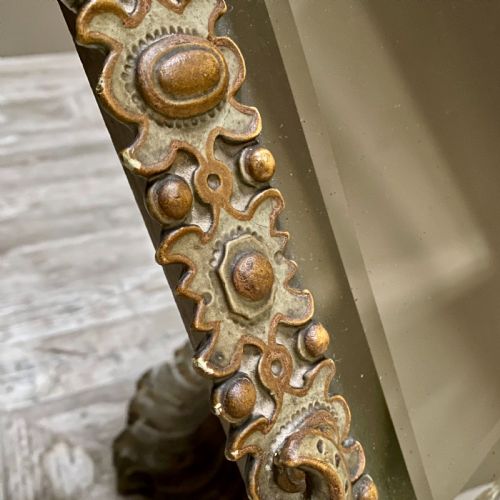
The stand terminates in a decorated circular scalloped base. The mirror frame is beautifully designed with floral crest and corners interspersed with cartouche decoration with cabochon style centres. Complete with its original bevelled mirror which has minimal foxing to the plate.
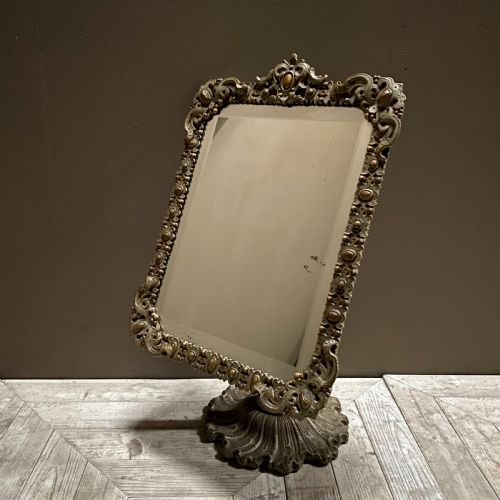
The mirror would grace any interior including a hospitality or retail space. Our favourite would be in a bedroom or bathroom as a make up or shaving mirror!
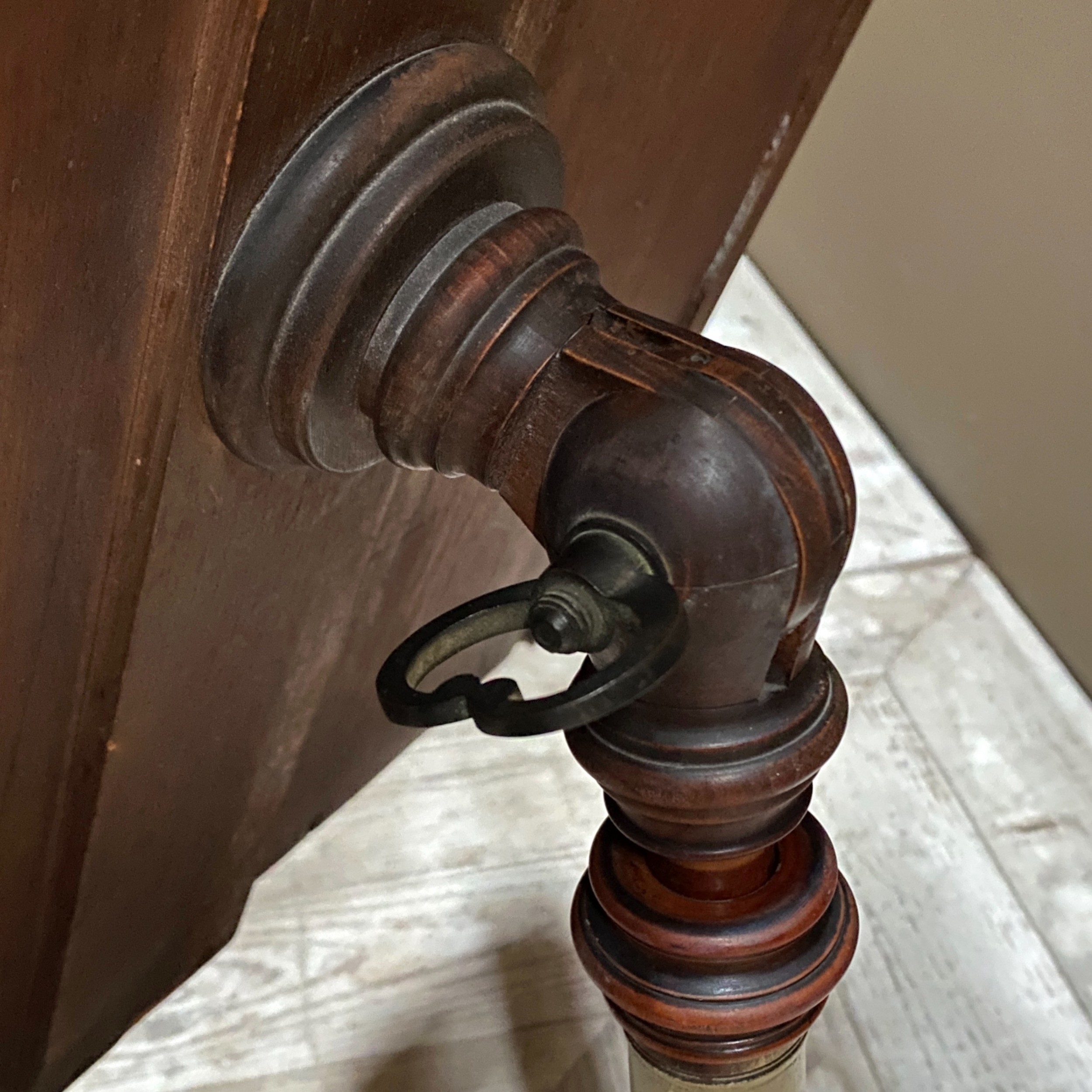
The mirrors base is roughly 34cm in diameter and the height given is the lower setting.
Bielefeld's life and work were quite incredible and sadly some what forgotten. A true genius who was not only an incredible designer but a true early entrepreneur of the Victorian age.
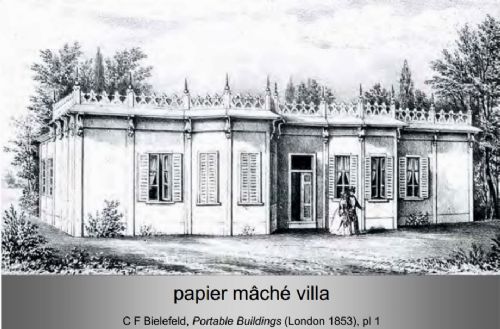
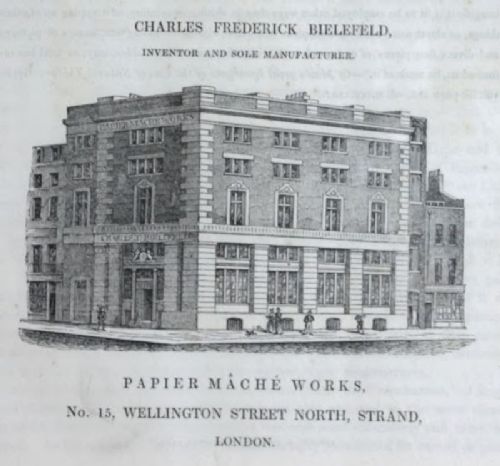
The use of papier-mâché was incredibly popular through the C18th and C19th and Charles Bielefield elevated its use to another level by improving its strength and uses during the mid 1800's from his factory in Wellington street, The Strand, London. His work can be found in mirrors in the Royal Collection Trust at Osborne House, Queen Victoria home on the Ice of Wight and The Drury Lane Theatre, London. In addition his work was included in many other buildings including the Reading Room of the British Museum and Parliament and most interestingly in the construction of ships cabins (due to it being able to stand the most air better) and actual complete villas in Melbourne Australia.
He produced a detailed catalogue around 1842 which can be viewed on the Internet Archive.
In 1852 Charles submitted a patent for improvements in the manufacture of sheets of papier mache. The patent is described as:
These improved processes are for the manufacture of pressed articles from pressured sheets instead of pulp, and for the production of such prepared sheets. The apparatus which the patentee uses in this manufacture consists of a table, having a rack on either side, by which it is traversed backwards and forwards under a roller, so supported as to give the required degree of pressure to the material, and at the same time capable of being varied in its elevation, in order to reduce or increase the amount of pressure; or it may be a weighted roller for the purpose. The material which the patentee prefers for the manufacture of sheets of papier mache, suitable for panels for cabins of steam-vessels and other like purposes, is given in the following proportions : — Mix with thirty parts of flour eighty parts of water, thoroughly incorporating the flour, so as to reduce the mixture to the consistency of paste, adding, at the same time, nine parts of alum and one of copperas. With this paste is then mixed fifteen parts of resin, previously dissolved by heat, adding, also, ten parts of boiled linseed oil and one of litharge. These ingredients having been mixed in the above order, are then mixed with about sixty parts of rag-dust, which the patentee finds the most economical, but other matters may be used, such as paper-makers half-stuff or pulp deprived of its moisture to such an extent as to be no longer fluid.
Tinker & Toad has dated this piece to the Victorian era.
You can view the stock and full dealer information on the Tinker & Toad Profile Page
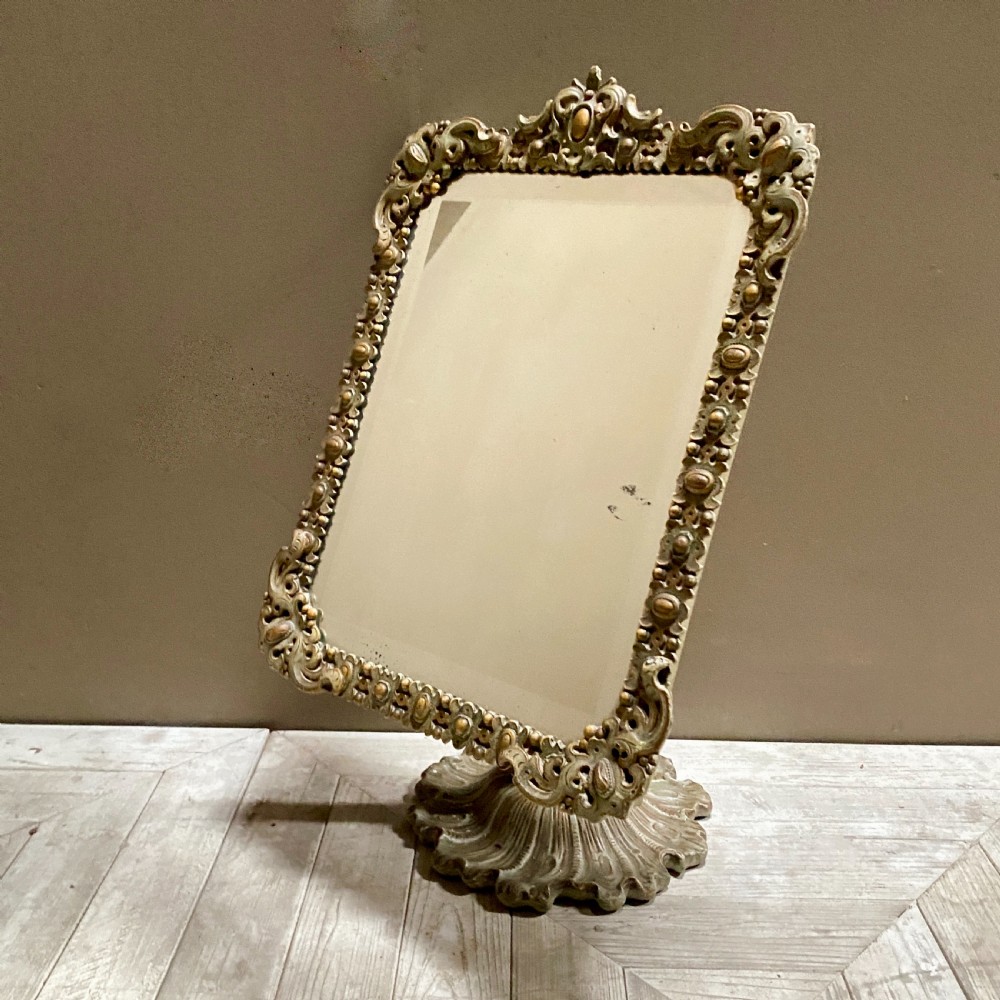
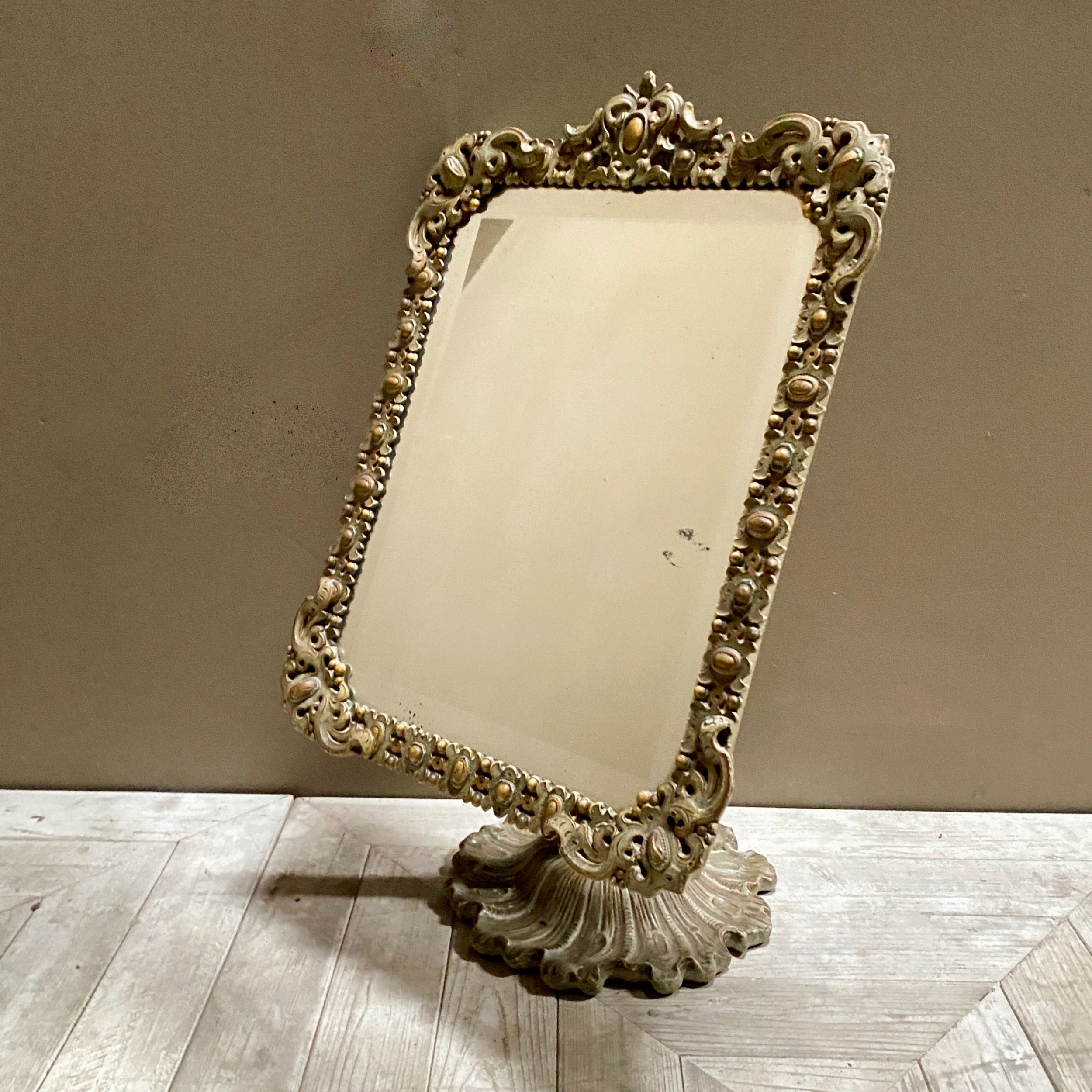
A Rare C19th Papier Mache Mirror Mirror on Stand by Charles Frederic Bielefeld