60,878  PAGES BROWSED TODAY PAGES TODAY 103  ANTIQUES UPLOADED TODAY NEW ARRIVALS
ID #SA837605
FOR SALE
£2,500
Email
Save
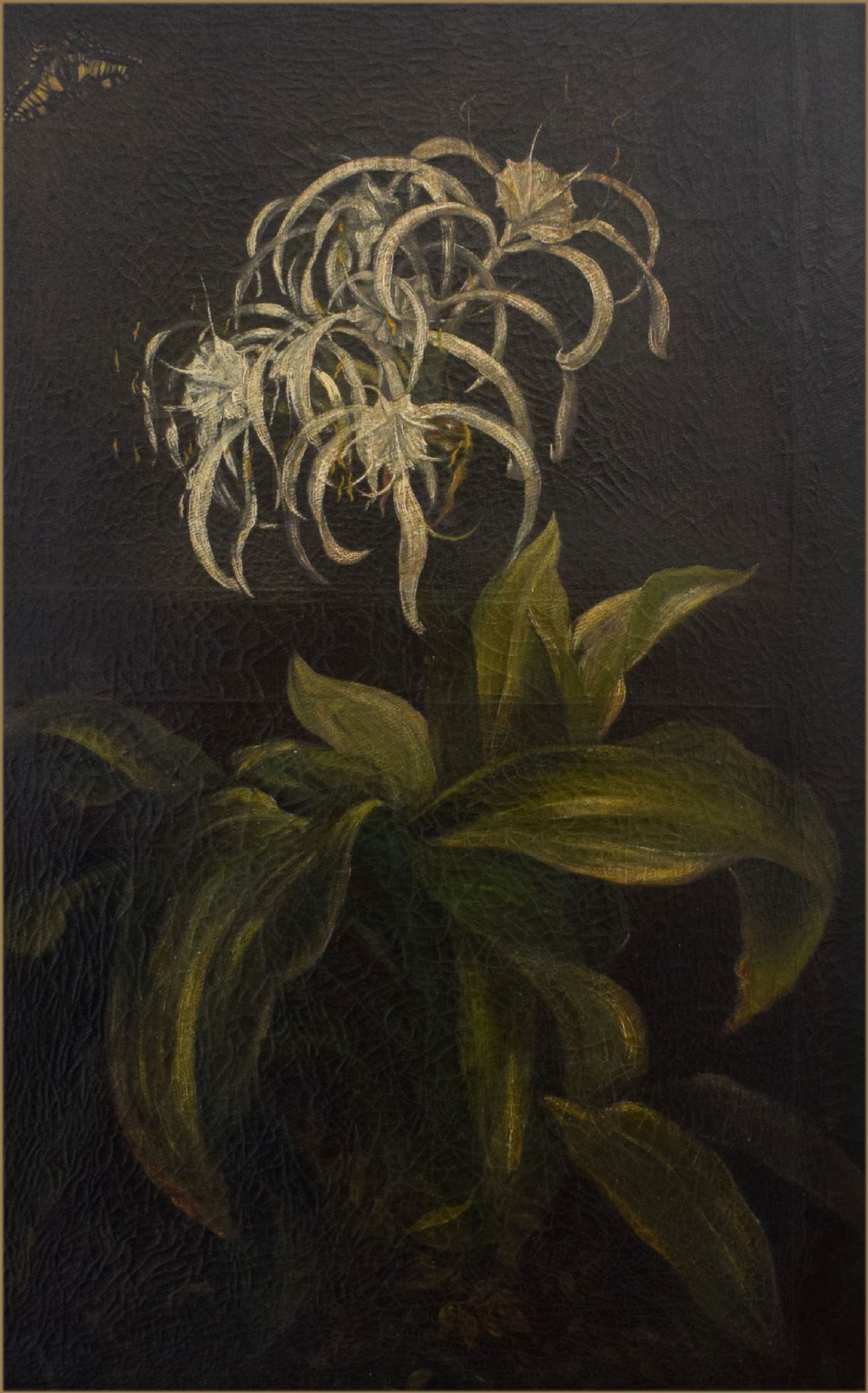
Circle of Pierre-joseph Redouté , 1759 –1840 A White Spider Lily and Butterfly
Artware Fineart
for sale €2,925     $3,175
£2,500

Artware Fineart

Sellingantiques Verified Since Sep 2008
View Dealers Stock Page
Id #SA837605
PDF SHARE
SAVE

Circle of Pierre-joseph Redouté , 1759 –1840 A White Spider Lily and Butterfly

18th century
For Sale by Artware Fineart
Description

Circle of Pierre-Joseph Redouté , 1759 –1840

A White Spider Lily and Butterfly

oil on canvas

87 x 53 cm.

Sometimes also called sea daffodil, or Peruvian daffodil, the white spider lily is unique and quite elegant. This plant reveals a very beautiful blooming during the entire summer season. It requires heat to grow in full earth: that’s why growing it in warmer oceanic climates is common.It’s known that flowers have meanings, which vary in different cultures. You can express your emotions and thoughts through them. This means you should be cautious when you present someone with a bouquet. However, this doesn’t mean everyone knows the language of flowers.
Back in the Victorian Era, flowers were used as a means of communications. People used them as codes for what they wanted to say. But don’t think that they were the only ones. The Chinese and Japanese incorporated flowers in their art in culture long before the British. There’s even a Japanese equivalent of the language of flowers — hanakotoba. The fragile beauties are dominant in their art, clothes, even in legal documents and the national symbol. Even the art of Ikebana is an expression of sentiments and emotions through a combination between nature and art. Here are some flowers and their meanings:
There are many species of lilies and they represent different things. The white lily is a symbol of chastity and purity. Lycoris is a genus of about 20 species of perennials in the family Amaryllidaceae, native to Eastern Asia, mainly China and Japan.Most species have flowers with narrow, strap-like petals and long stamens that give them their spidery appearance. The flowers come in many colors and will bring cheer to everyone who sees it!

The genus was named after the Roman actress and mistress of Mark Antony, Lycoris.The plants are often called Spider Lilies because of their shape. Lycoris symbolizes death and reincarnation.The most popular species in the genus is Lycoris radiata, commonly known as “Red Spider Lily”, “Red Magic Lily” or “Hurricane Lily”.The flowers appear on their own, unfettered by foliage and it’s always lovely to see these flowers because no leaves are present when the blooms appear.

In Japan, Lycoris radiata is known as “Higanbana“, which roughly means “The flower that blooms during the (fall) equinox”. It blooms around the time of the autumn equinox in late September to early fall all across Japan.The flower is also referred to as “Manjushage”, which means “The flower in heaven”. It is believed that its bright colors and striking appearance lead souls into the afterlife. Higanbana is one of the most iconic autumn flowers in Japan and is often seen in temple precincts and cemeteries. Japan’s largest Higanbana field is located at Kinchakuda, in Hidaka City, Saitama. It is one of the largest parks in Japan with over 5 million of these flowers blooming like fireworks against the soft blue sky. Most of the Lycoris species do not bloom like other plants. Instead, they bloom on flower stalks with no leaves present, hence the common name Surprise Lilies or Naked Ladies. The flowers appear on leafless stems in late summer, while the leaves die back before the flowers emerge or appear afterwards. The flowers appear from nowhere, since there is no foliage to indicate where the bulb is planted, so don’t be surprised if they magically pop up in the middle of the yard!

The bulbs of Lycoris radiata are used in traditional Chinese medicine. The plant is used to treat a variety of illnesses, including ulcers, swellings, stomach and liver problems, rheumatism and epilepsy. It has also been shown to have anticancer properties. They are extensively cultivated as ornamental plants in Eastern Asia.

The 18th century Botanical artist Pierre-Joseph Redouté 1759 –1840 painted many varities of Lilies including Spider Lilys.

Artist Biography

Pierre-Joseph Re

Physical Dimensions
Height
87cm (34.25")
Width
53cm (20.87")
Depth
1cm (0.39")
Declaration

Artware Fineart has dated this French Botanical Oil Painting to the 18th Century.

Reference Numbers
Sellingantiques Reference
SA837605
Dealers Internal Reference
4352
Description
Circle of Pierre-Joseph Redouté , 1759 –1840

A White Spider Lily and Butterfly

oil on canvas

87 x 53 cm.

Sometimes also called sea daffodil, or Peruvian daffodil, the white spider lily is unique and quite elegant.
Artware Fineart

This plant reveals a very beautiful blooming during the entire summer season. It requires heat to grow in full earth: that’s why growing it in warmer oceanic climates is common.It’s known that flowers have meanings, which vary in different cultures. You can express your emotions and thoughts through them. This means you should be cautious when you present someone with a bouquet. However, this doesn’t mean everyone knows the language of flowers.

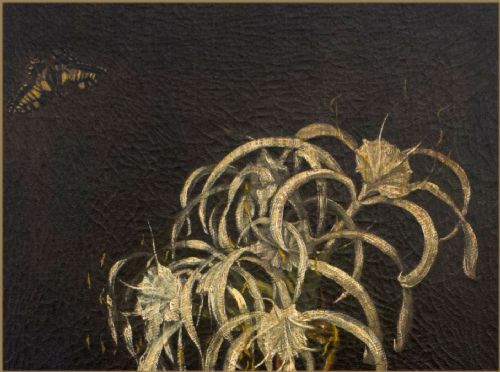
fig 1. An antique oil painting on canvas depicting a white spider lily with curved petals, green leaves, and a butterfly against a dark background.
fig 1. Circle of Pierre-joseph Redouté , 1759 –1840 A White Spider Lily and Butterfly

Back in the Victorian Era, flowers were used as a means of communications. People used them as codes for what they wanted to say. But don’t think that they were the only ones. The Chinese and Japanese incorporated flowers in their art in culture long before the British. There’s even a Japanese equivalent of the language of flowers — hanakotoba. The fragile beauties are dominant in their art, clothes, even in legal documents and the national symbol. Even the art of Ikebana is an expression of sentiments and emotions through a combination between nature and art. Here are some flowers and their meanings:

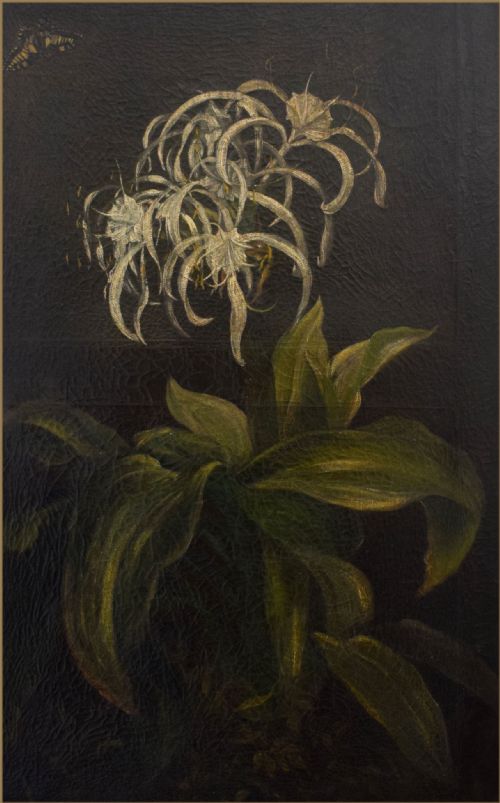
fig 2. An antique oil painting on canvas depicting a white spider lily with curved petals, green leaves, and a butterfly against a dark background.
fig 2. Circle of Pierre-joseph Redouté , 1759 –1840 A White Spider Lily and Butterfly

There are many species of lilies and they represent different things. The white lily is a symbol of chastity and purity. Lycoris is a genus of about 20 species of perennials in the family Amaryllidaceae, native to Eastern Asia, mainly China and Japan.Most species have flowers with narrow, strap-like petals and long stamens that give them their spidery appearance. The flowers come in many colors and will bring cheer to everyone who sees it!

The genus was named after the Roman actress and mistress of Mark Antony, Lycoris.The plants are often called Spider Lilies because of their shape. Lycoris symbolizes death and reincarnation.The most popular species in the genus is Lycoris radiata, commonly known as “Red Spider Lily”, “Red Magic Lily” or “Hurricane Lily”.The flowers appear on their own, unfettered by foliage and it’s always lovely to see these flowers because no leaves are present when the blooms appear.

In Japan, Lycoris radiata is known as “Higanbana“, which roughly means “The flower that blooms during the (fall) equinox”. It blooms around the time of the autumn equinox in late September to early fall all across Japan.The flower is also referred to as “Manjushage”, which means “The flower in heaven”. It is believed that its bright colors and striking appearance lead souls into the afterlife. Higanbana is one of the most iconic autumn flowers in Japan and is often seen in temple precincts and cemeteries. Japan’s largest Higanbana field is located at Kinchakuda, in Hidaka City, Saitama. It is one of the largest parks in Japan with over 5 million of these flowers blooming like fireworks against the soft blue sky. Most of the Lycoris species do not bloom like other plants. Instead, they bloom on flower stalks with no leaves present, hence the common name Surprise Lilies or Naked Ladies. The flowers appear on leafless stems in late summer, while the leaves die back before the flowers emerge or appear afterwards. The flowers appear from nowhere, since there is no foliage to indicate where the bulb is planted, so don’t be surprised if they magically pop up in the middle of the yard!

The bulbs of Lycoris radiata are used in traditional Chinese medicine. The plant is used to treat a variety of illnesses, including ulcers, swellings, stomach and liver problems, rheumatism and epilepsy. It has also been shown to have anticancer properties. They are extensively cultivated as ornamental plants in Eastern Asia.

The 18th century Botanical artist Pierre-Joseph Redouté 1759 –1840 painted many varities of Lilies including Spider Lilys.

Artist Biography

Pierre-Joseph Re

Height
87cm (34.25")
Width
53cm (20.87")
Depth
1cm (0.39")
Date of Manufacture

Artware Fineart has dated this French Botanical Oil Painting to the 18th Century.

Reference Numbers
Sellingantiques Ref
SA837605
Dealers Internal Ref
4352
Artware Fineart
Sellingantiques verified Since Sep 2008
Dealer Profile

You can view the stock and full dealer information on the Artware Fineart Profile Page
PDF SHARE
SAVE
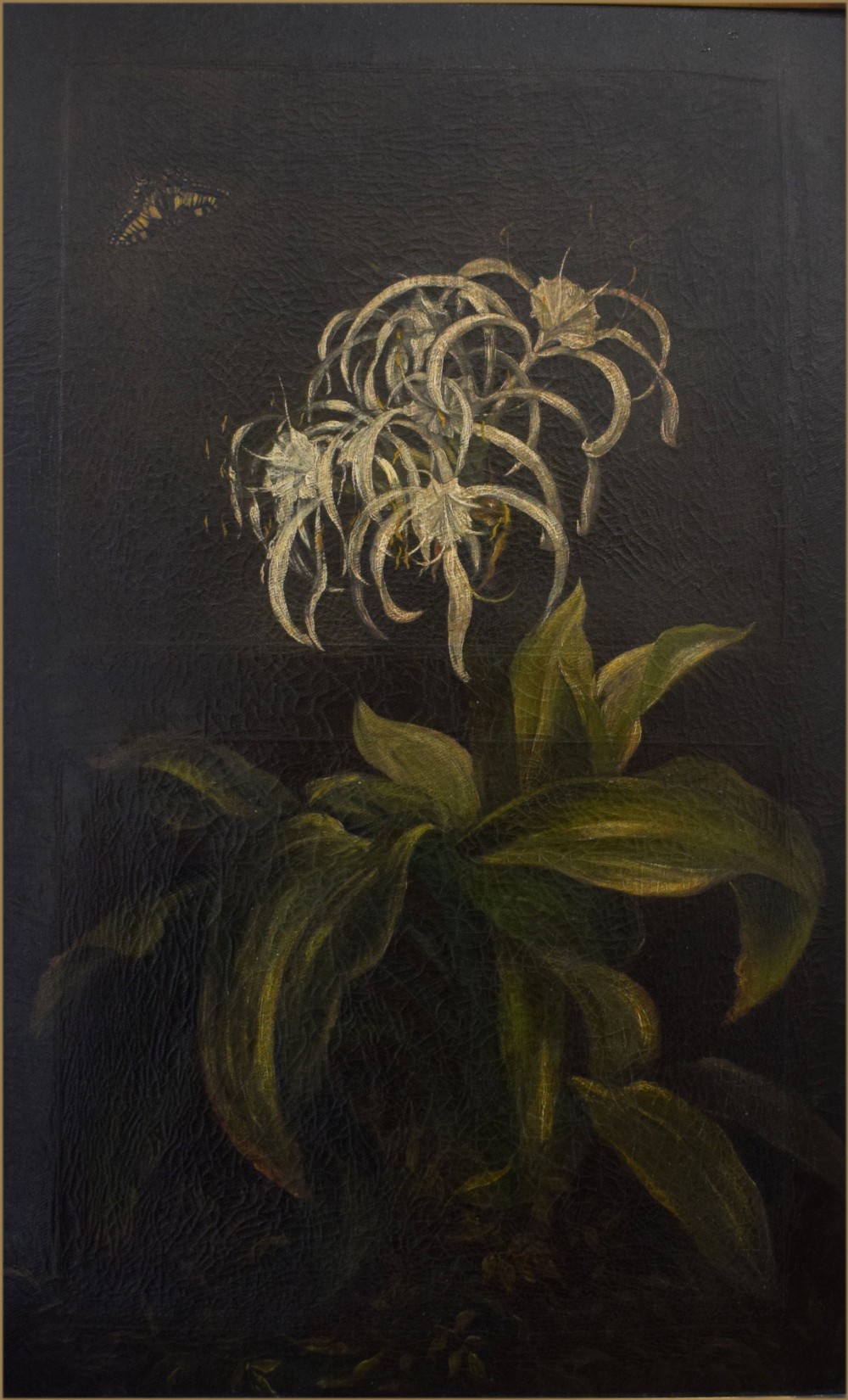
An antique oil painting on canvas depicting a white spider lily with curved petals, green leaves, and a butterfly against a dark background.
1 / 3
Archive I An antique oil painting on canvas depicting a white spider lily with curved petals, green leaves, and a butterfly against a dark background.

Circle of Pierre-joseph Redouté , 1759 –1840 A White Spider Lily and Butterfly
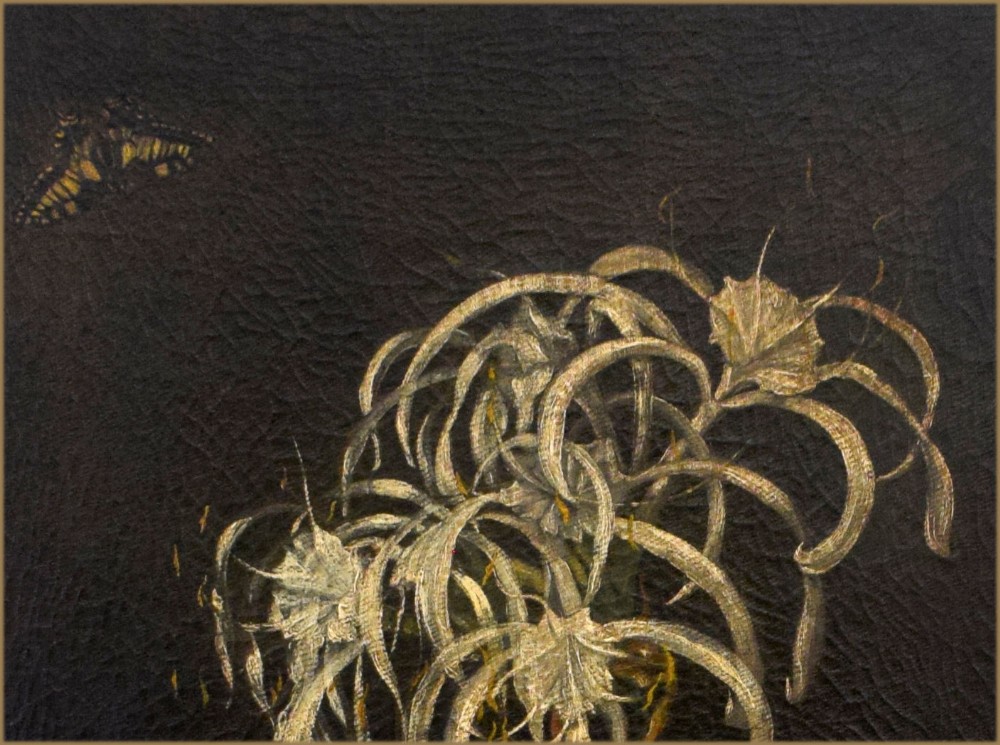
Archive II An antique oil painting on canvas depicting a white spider lily with curved petals, green leaves, and a butterfly against a dark background. View II
Archive III An antique oil painting on canvas depicting a white spider lily with curved petals, green leaves, and a butterfly against a dark background. View III
Enlarged Archival View
Telephone 07958 699 645
Location
18 La Gare
51 Surrey Row
London
SE1 0BZ
United Kingdom
Verified Since Sep 2008
Items For Sale 243
Items Sold 223
Artware Fineart
Verified Since Sep 2008
View Dealer Info
Location: 18 La Gare , 51 Surrey Row , London , SE1 0BZ , United Kingdom
Verified
Sep 2008
For Sale
243
Sold
223
An antique oil painting on canvas depicting a white spider lily with curved petals, green leaves, and a butterfly against a dark background.
Circle of Pierre-Joseph Redouté , 1759 –1840 A White Spider Lily and Butterfly
Ref: SA837605
An antique oil painting on canvas depicting a white spider lily with curved petals, green leaves, and a butterfly against a dark background.
Detail View 1
Detail View 2
Archival Detail
Every single antique dealer on our platform is individually approved by our internal team. We verify their professional trade history, ethical standards, and photographic quality to ensure a secure, high-standard buying environment. Upon joining, every dealer agrees to a strict 9-point code of conduct. While issues can occasionally arise, our dealers typically resolve them swiftly and directly with the buyer. In fact, since our founding in 2002, Sellingantiques has only had to step in to help resolve an issue on roughly five occasions—a true testament to the quality of our dealers and their dedication to your happiness.
Our dealers are highly experienced in packing and shipping fragile, high-value antiques. Because you are in direct contact with the dealer, you will be able to easily go through all available shipping and insurance options together to ensure your item arrives safely.
Antiques are the ultimate green purchase. By choosing historical pieces over newly manufactured goods, you completely eliminate the carbon footprint of modern mass production while preserving exceptional, timeless craftsmanship.

Botanical paintings from this era emphasise scientific precision paired with artistic refinement, often inspired by natural history expeditions. Works frequently display detailed floral anatomy, foliage, and pollinators set against neutral or dark contrasting backgrounds.

Artists utilised finely ground oil pigments bound with linseed or walnut oil, applied directly onto stretched linen canvas or wooden panels. Fine sable brushes were employed to achieve precise details in petals, stamens, and insect wings.

Authentic pieces exhibit precise anatomical structure, delicate layering of glazes, and subtle tonal gradations characteristic of Redoutes instructional methods. Period-correct craquelure patterns, canvas weave, and historical pigment composition also indicate age.

A dark botanical artwork serves as an ideal focal point when positioned above a sideboard, fireplace mantel, or framed by dark wood panelling. Pairing the artwork with warm brass picture lighting and muted wall paint accents its deep colour tones.

Display the painting away from direct sunlight, extreme humidity changes, and direct heat sources to prevent cracking or warping. Surface dust should be removed using a dry, soft-bristled brush, while formal cleaning should be entrusted to a professional conservator.
items
Add keywords to the filter
Price
£100
£250000
Era
Movements
Material
Origin
Stock Location
Freshness
Online Payments
Categories