30,445  PAGES BROWSED TODAY PAGES TODAY 74  ANTIQUES UPLOADED TODAY NEW ARRIVALS
ID #SA837597
FOR SALE
£1,500
Email
Save
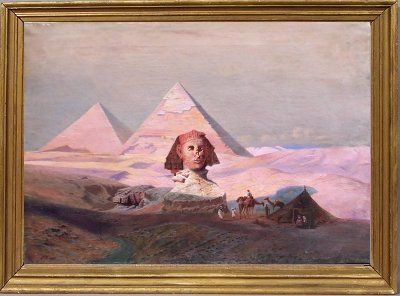
Hugo Vogel, 1855 - 1934 The Pyramids at Gizeh signed " H Vogel" oil on Canvas 76 X 50.80 Cm. ( 30 X 20 In.)
Artware Fineart
for sale €1,755     $1,905
£1,500

Artware Fineart

Sellingantiques Verified Since Sep 2008
View Dealers Stock Page
Id #SA837597
PDF SHARE
SAVE

Hugo Vogel, 1855 - 1934 The Pyramids at Gizeh signed " H Vogel" oil on Canvas 76 X 50.80 Cm. ( 30 X 20 In.)

19th century
For Sale by Artware Fineart
Description

Hugo Vogel, 1855 - 1934

The Pyramids at Gizeh

signed " H Vogel"

Oil on Canvas

76 x 50.80 cm. ( 30 x 20 in.)

Pyramids of Giza, Arabic Ahramat Al-Jizah, Giza also spelled Gizeh, three 4th-dynasty (c. 2575–c. 2465 bce) pyramids erected on a rocky plateau on the west bank of the Nile River near Al-Jizah (Giza) in northern Egypt. In ancient times they were included among the Seven Wonders of the World. The ancient ruins of theMemphis area, including the Pyramids of Giza, ?aqqarah, Dahshur, Abu Ruwaysh, and Abu ?ir, were collectively designated a UNESCO World Heritage site in 1979.
The designations of the pyramids—Khufu, Khafre, and Menkaure—correspond to the kings for whom they were built. The northernmost and oldest pyramid of the group was built for Khufu (Greek: Cheops), the second king of the 4th dynasty. Called the Great Pyramid, it is the largest of the three, the length of each side at the base averaging 755.75 feet (230 metres) and its original height being 481.4 feet (147 metres). The middle pyramid was built for Khafre (Greek: Chephren), the fourth of the eight kings of the 4th dynasty; the structure measures 707.75 feet (216 metres) on each side and was originally 471 feet (143 metres) high. The southernmost and last pyramid to be built was that of Menkaure (Greek: Mykerinus), the fifth king of the 4th dynasty; each side measures 356.5 feet (109 metres), and the structure’s completed height was 218 feet (66 metres). All three pyramids were plundered both internally and externally in ancient and medieval times. Thus, the grave goods originally deposited in the burial chambers are missing, and the pyramids no longer reach their original heights because they have been almost entirely stripped of their outer casings of smooth white limestone; the Great Pyramid, for example, is now only 451.4 feet (138 metres) high. That of Khafre retains the outer limestone casing only at its topmost portion. Constructed near each pyramid was a mortuary temple, which was linked via a sloping causeway to a valley temple on the edge of the Nile floodplain. Also nearby were subsidiary pyramids used for the burials of other members of the royal family.
Khufu’s pyramid is perhaps the most colossal single building ever erected on the planet. Its sides rise at an angle of 51°52' and are accurately oriented to the four cardinal points of the compass. The Great Pyramid’s core is made of yellowish limestone blocks, the outer casing (now almost completely gone) and the inner passages are of finer light-coloured limestone, and the interior burial chamber is built of huge blocks of granite. Approximately 2.3 million blocks of stone were cut, transported, and assembled to create the 5.75-million-ton structure, which is a masterpiece of technical skill and engineering ability. The internal walls as well as those few outer-casing stones that still remain in place show finer joints than any other masonry constructed in ancient Egypt.
The entrance to the Great Pyramid is on the north side, about 59 feet (18 metres) above ground level. A sloping corridor descends from it through the pyramid’s interior masonry, penetrates the rocky soil on which the structure rests, and ends in an unfinished underground chamber. From the descending corridor branches an ascending passageway that leads to a room known as the Queen’s Chamber and to a great slanting gallery that is 151 feet (46 metres) long. At the upper end of this gallery, a long and narrow passage gives access to the burial room proper, usually termed the King’s Chamber. This room is entirely lined and roofed with granite. From the chamber two narrow shafts run obliquely through the masonry to the exterior of the pyramid; it is not known whether they were designed for a religious purpose or were meant for ventilation. Above the King’s Chamber are five compartments separated by massive horizontal

Physical Dimensions
Height
76cm (29.92")
Width
51cm (20.08")
Depth
2cm (0.79")
Declaration

Artware Fineart has dated this Orientalist Oil Landscape Painting to the 19th Century.

Reference Numbers
Sellingantiques Reference
SA837597
Dealers Internal Reference
2824
Description
Hugo Vogel, 1855 - 1934

The Pyramids at Gizeh

signed " H Vogel"

Oil on Canvas

76 x 50.80 cm. ( 30 x 20 in.)

Pyramids of Giza, Arabic Ahramat Al-Jizah, Giza also spelled Gizeh, three 4th-dynasty (c. 2575–c.

2465 bce) pyramids erected on a rocky plateau on the west bank of the Nile River near Al-Jizah (Giza) in northern Egypt.
Artware Fineart

In ancient times they were included among the Seven Wonders of the World. The ancient ruins of theMemphis area, including the Pyramids of Giza, ?aqqarah, Dahshur, Abu Ruwaysh, and Abu ?ir, were collectively designated a UNESCO World Heritage site in 1979.

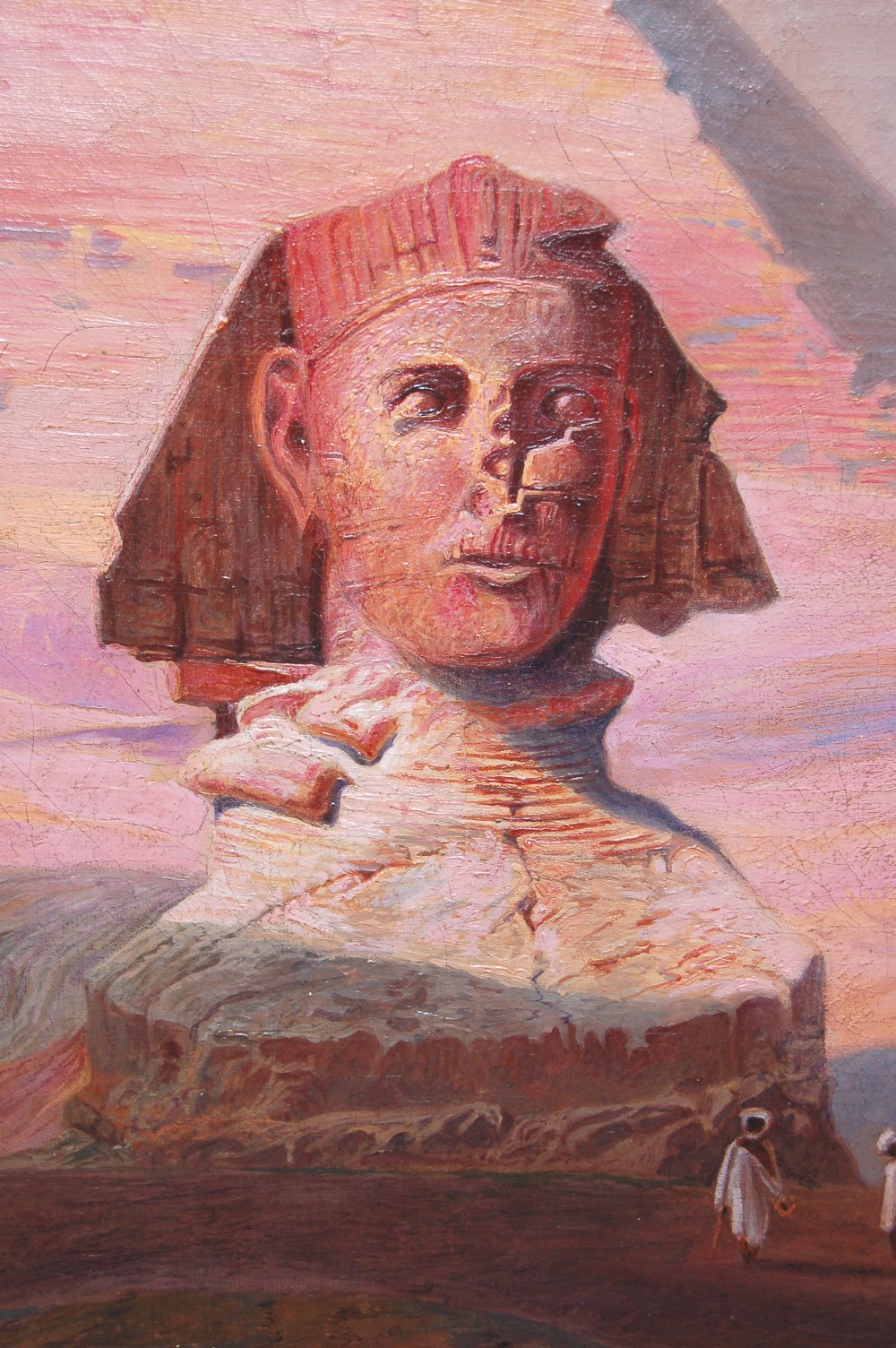
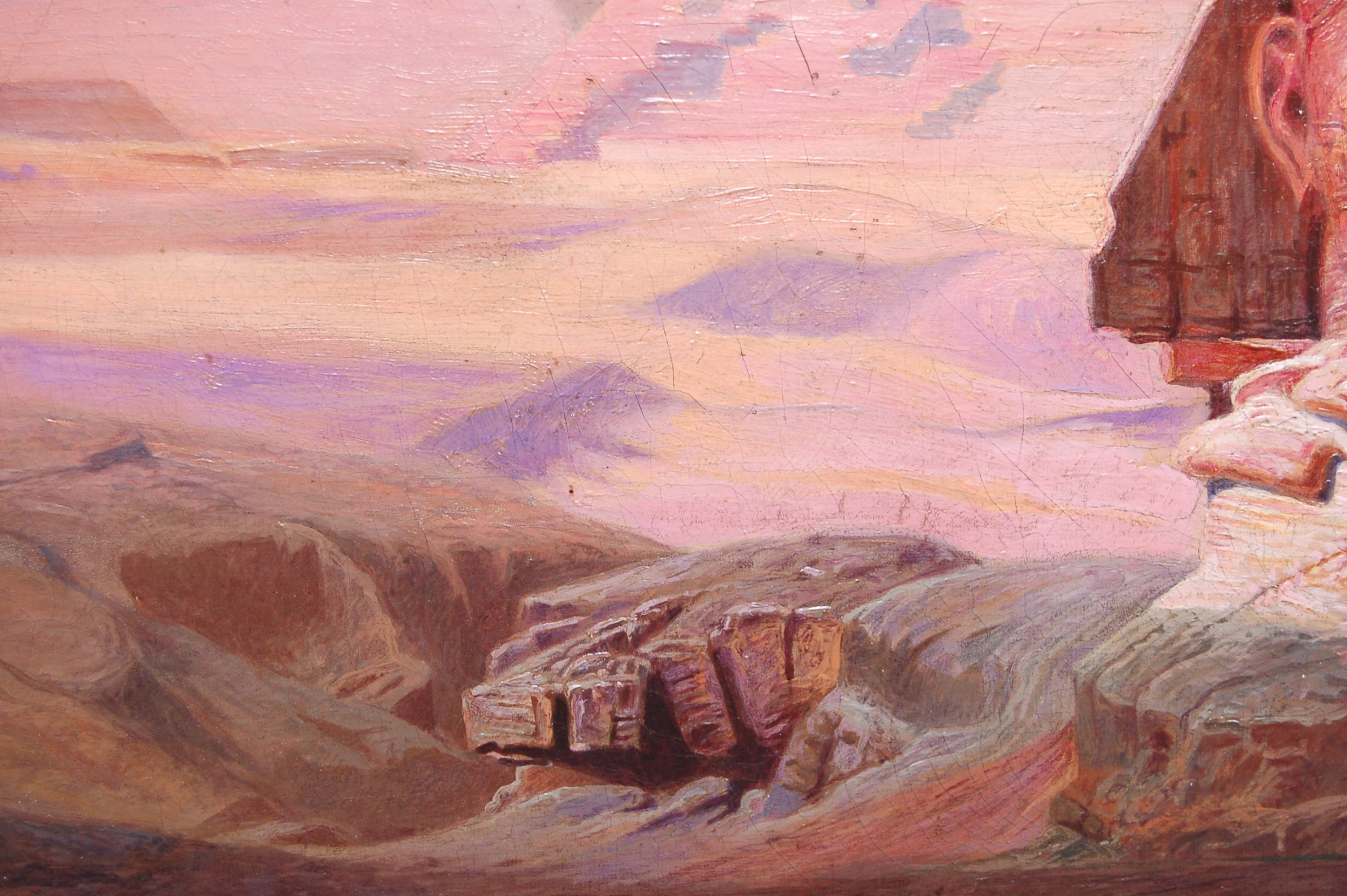
fig 1. An Orientalist oil painting on canvas depicting the Sphinx and the Pyramids of Giza set against a muted pink sky with figures and camels in the foreground.
fig 1. Hugo Vogel, 1855 - 1934 The Pyramids at Gizeh signed " H Vogel" oil on Canvas 76 X 50.80 Cm. ( 30 X 20 In.)

The designations of the pyramids—Khufu, Khafre, and Menkaure—correspond to the kings for whom they were built. The northernmost and oldest pyramid of the group was built for Khufu (Greek: Cheops), the second king of the 4th dynasty. Called the Great Pyramid, it is the largest of the three, the length of each side at the base averaging 755.75 feet (230 metres) and its original height being 481.4 feet (147 metres). The middle pyramid was built for Khafre (Greek: Chephren), the fourth of the eight kings of the 4th dynasty; the structure measures 707.75 feet (216 metres) on each side and was originally 471 feet (143 metres) high. The southernmost and last pyramid to be built was that of Menkaure (Greek: Mykerinus), the fifth king of the 4th dynasty; each side measures 356.5 feet (109 metres), and the structure’s completed height was 218 feet (66 metres). All three pyramids were plundered both internally and externally in ancient and medieval times. Thus, the grave goods originally deposited in the burial chambers are missing, and the pyramids no longer reach their original heights because they have been almost entirely stripped of their outer casings of smooth white limestone; the Great Pyramid, for example, is now only 451.4 feet (138 metres) high. That of Khafre retains the outer limestone casing only at its topmost portion. Constructed near each pyramid was a mortuary temple, which was linked via a sloping causeway to a valley temple on the edge of the Nile floodplain. Also nearby were subsidiary pyramids used for the burials of other members of the royal family.

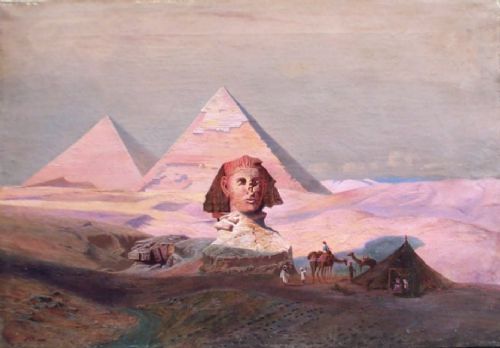
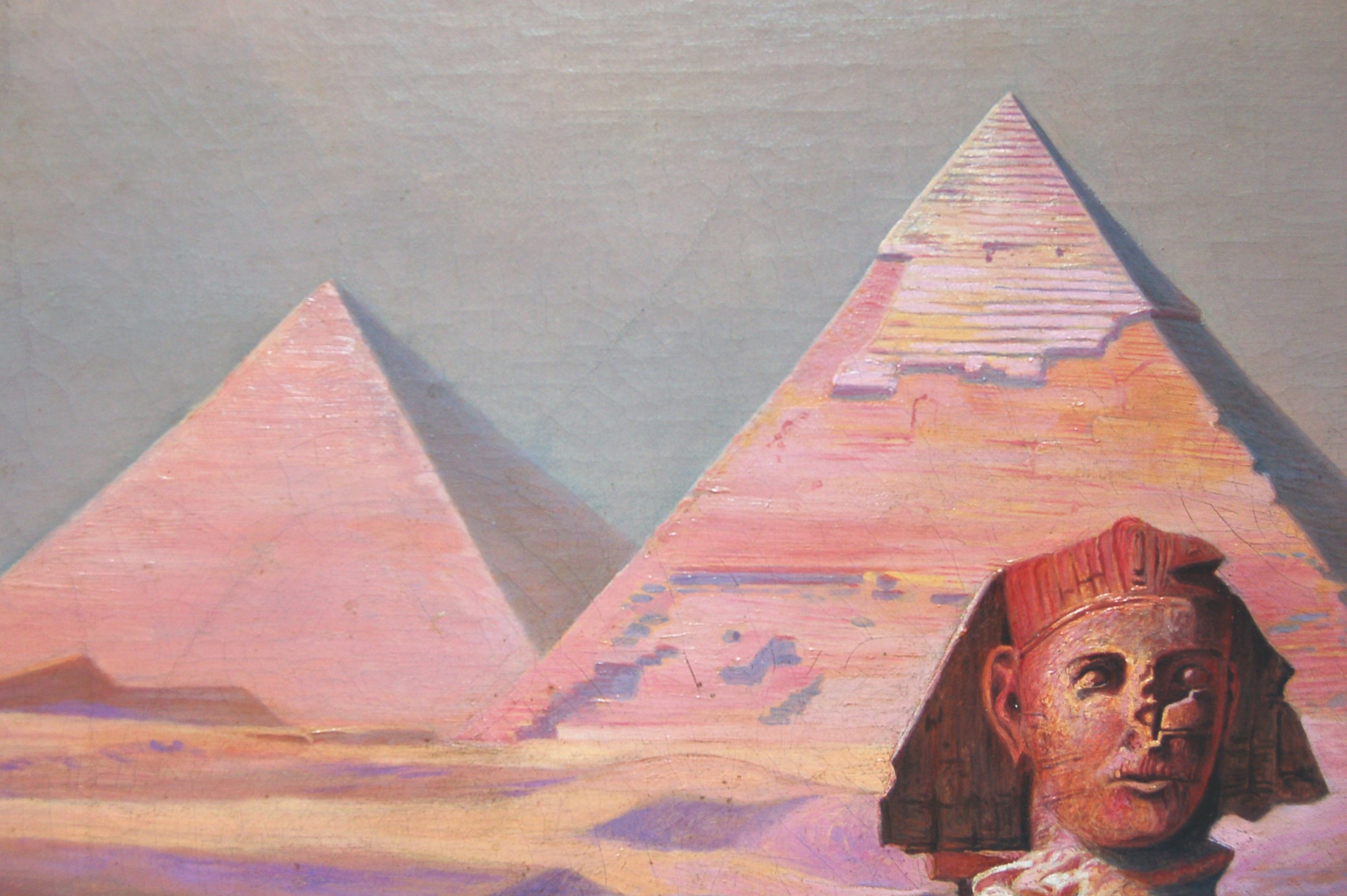
fig 2. An Orientalist oil painting on canvas depicting the Sphinx and the Pyramids of Giza set against a muted pink sky with figures and camels in the foreground.
fig 2. Hugo Vogel, 1855 - 1934 The Pyramids at Gizeh signed " H Vogel" oil on Canvas 76 X 50.80 Cm. ( 30 X 20 In.)

Khufu’s pyramid is perhaps the most colossal single building ever erected on the planet. Its sides rise at an angle of 51°52' and are accurately oriented to the four cardinal points of the compass. The Great Pyramid’s core is made of yellowish limestone blocks, the outer casing (now almost completely gone) and the inner passages are of finer light-coloured limestone, and the interior burial chamber is built of huge blocks of granite. Approximately 2.3 million blocks of stone were cut, transported, and assembled to create the 5.75-million-ton structure, which is a masterpiece of technical skill and engineering ability. The internal walls as well as those few outer-casing stones that still remain in place show finer joints than any other masonry constructed in ancient Egypt.

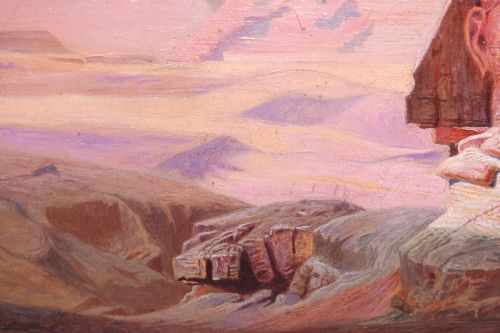
fig 3. An Orientalist oil painting on canvas depicting the Sphinx and the Pyramids of Giza set against a muted pink sky with figures and camels in the foreground.
fig 3. Hugo Vogel, 1855 - 1934 The Pyramids at Gizeh signed " H Vogel" oil on Canvas 76 X 50.80 Cm. ( 30 X 20 In.)

The entrance to the Great Pyramid is on the north side, about 59 feet (18 metres) above ground level. A sloping corridor descends from it through the pyramid’s interior masonry, penetrates the rocky soil on which the structure rests, and ends in an unfinished underground chamber. From the descending corridor branches an ascending passageway that leads to a room known as the Queen’s Chamber and to a great slanting gallery that is 151 feet (46 metres) long. At the upper end of this gallery, a long and narrow passage gives access to the burial room proper, usually termed the King’s Chamber. This room is entirely lined and roofed with granite. From the chamber two narrow shafts run obliquely through the masonry to the exterior of the pyramid; it is not known whether they were designed for a religious purpose or were meant for ventilation. Above the King’s Chamber are five compartments separated by massive horizontal

Height
76cm (29.92")
Width
51cm (20.08")
Depth
2cm (0.79")
Date of Manufacture

Artware Fineart has dated this Orientalist Oil Landscape Painting to the 19th Century.

Reference Numbers
Sellingantiques Ref
SA837597
Dealers Internal Ref
2824
Artware Fineart
Sellingantiques verified Since Sep 2008
Dealer Profile

You can view the stock and full dealer information on the Artware Fineart Profile Page

PDF SHARE
SAVE
An Orientalist oil painting on canvas depicting the Sphinx and the Pyramids of Giza set against a muted pink sky with figures and camels in the foreground.
1 / 6
Archive I An Orientalist oil painting on canvas depicting the Sphinx and the Pyramids of Giza set against a muted pink sky with figures and camels in the foreground.

Hugo Vogel, 1855 - 1934 The Pyramids at Gizeh signed " H Vogel" oil on Canvas 76 X 50.80 Cm. ( 30 X 20 In.)
Archive II An Orientalist oil painting on canvas depicting the Sphinx and the Pyramids of Giza set against a muted pink sky with figures and camels in the foreground. View II
Archive III An Orientalist oil painting on canvas depicting the Sphinx and the Pyramids of Giza set against a muted pink sky with figures and camels in the foreground. View III
Archive IV An Orientalist oil painting on canvas depicting the Sphinx and the Pyramids of Giza set against a muted pink sky with figures and camels in the foreground. View IV
Archive V An Orientalist oil painting on canvas depicting the Sphinx and the Pyramids of Giza set against a muted pink sky with figures and camels in the foreground. View V
Archive VI An Orientalist oil painting on canvas depicting the Sphinx and the Pyramids of Giza set against a muted pink sky with figures and camels in the foreground. View VI
Enlarged Archival View
Telephone 07958 699 645
Location
18 La Gare
51 Surrey Row
London
SE1 0BZ
United Kingdom
Verified Since Sep 2008
Items For Sale 243
Items Sold 223
Artware Fineart
Verified Since Sep 2008
View Dealer Info
Location: 18 La Gare , 51 Surrey Row , London , SE1 0BZ , United Kingdom
Verified
Sep 2008
For Sale
243
Sold
223
An Orientalist oil painting on canvas depicting the Sphinx and the Pyramids of Giza set against a muted pink sky with figures and camels in the foreground.
Hugo Vogel, 1855 - 1934 The Pyramids at Gizeh signed " H Vogel" Oil on Canvas 76 x 50.80 cm. ( 30 x 20 in.)
Ref: SA837597
An Orientalist oil painting on canvas depicting the Sphinx and the Pyramids of Giza set against a muted pink sky with figures and camels in the foreground.
Detail View 1
Detail View 2
Detail View 3
Detail View 4
Detail View 5
Archival Detail
Every single antique dealer on our platform is individually approved by our internal team. We verify their professional trade history, ethical standards, and photographic quality to ensure a secure, high-standard buying environment. Upon joining, every dealer agrees to a strict 9-point code of conduct. While issues can occasionally arise, our dealers typically resolve them swiftly and directly with the buyer. In fact, since our founding in 2002, Sellingantiques has only had to step in to help resolve an issue on roughly five occasions—a true testament to the quality of our dealers and their dedication to your happiness.
Our dealers are highly experienced in packing and shipping fragile, high-value antiques. Because you are in direct contact with the dealer, you will be able to easily go through all available shipping and insurance options together to ensure your item arrives safely.
Antiques are the ultimate green purchase. By choosing historical pieces over newly manufactured goods, you completely eliminate the carbon footprint of modern mass production while preserving exceptional, timeless craftsmanship.

Orientalist painting refers to a 19th-century academic movement where European artists depicted subject matter inspired by the Middle East and North Africa. Driven by heightened interest in travel and archaeological expeditions, artists focused on capturing local architecture, desert landscapes, and historical monuments.

19th-century fine art landscapes were primarily executed using oil paints ground from natural pigments mixed with linseed oil, applied onto stretched linen or cotton canvas. Artists frequently applied a ground coat of gesso before painting to ensure structural longevity.

Authenticity is verified through artist signatures, stretcher bar construction, canvas weave density, and natural age-related craquelure across the paint layer. Historical auction records, exhibition labels on the reverse, and provenance documentation further confirm attribution.

An Orientalist painting can serve as a focal point above a console table or mantelpiece, framed in a dark wood or gilded frame. Complementary earthy tones, muted textiles, and antique timber furniture highlight the warm palette typical of desert landscapes.

Paintings should be kept out of direct sunlight and maintained in a stable climate away from extreme humidity fluctuation. Professional surface cleaning and varnish reapplication should be undertaken exclusively by a qualified fine art conservator.
items
Add keywords to the filter
Price
£100
£250000
Era
Movements
Material
Origin
Stock Location
Freshness
Online Payments
Categories