18,863  PAGES BROWSED TODAY PAGES TODAY 36  ANTIQUES UPLOADED TODAY NEW ARRIVALS
ID #SA837558
FOR SALE
£3,000
Email
Save
Thomas Hudson, 1701 - 1779 Portrait of Thomas Heath (1705-1759) Alderman and Merchant of Exeter
Artware Fineart
for sale €3,510     $3,810
£3,000

Artware Fineart

Sellingantiques Verified Since Sep 2008
View Dealers Stock Page
Relevant Links
Id #SA837558
PDF SHARE
SAVE

Thomas Hudson, 1701 - 1779 Portrait of Thomas Heath (1705-1759) Alderman and Merchant of Exeter

18th century
For Sale by Artware Fineart
Description

Thomas Hudson, 1701 - 1779

Portrait of Thomas Heath (1705-1759) Alderman and Merchant of Exeter

Two handwritten labels on verso "Thomas Heath / Alderman of Exeter / Portrait of / Benjamin Heath / D.C.L. / B 1705 D 1759". "Thomas Heath / of Exeter / Alderman of Exeter / Portrait of / Benjamin Heath / D.C.L. / B 1705 D 1759"
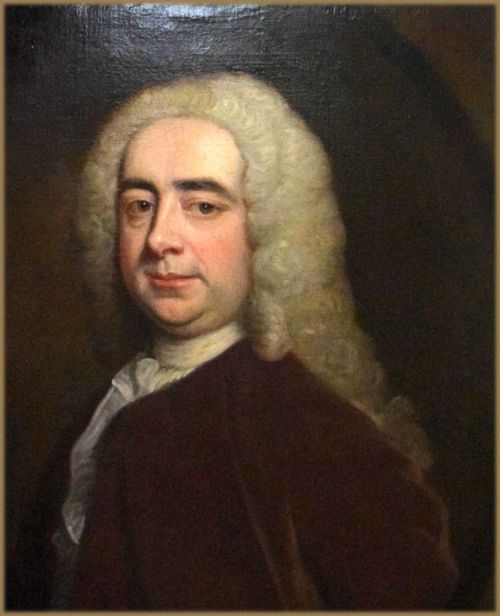
oil on canvas

30 x 25in. (76 x 64 cm.)

Thomas heath was born in 1705 and died in 1759. He had a brother, Benjamin who became a merchant and fuller in Exeter. He married Elizabeth Kelland. They had 5 children. One was a Thomas again. He was mentioned in his father's will in 1725 when he, Thomas, was still a minor. However, his birth date seems to be unknown although he was baptised on 11th October 1729 at St Leonard's, Exeter. He was a merchant and then an Alderman. He became Sheriff in 1732 and then Mayor in 1738 and 1749. He died on the 5th and buried on the 12th July, 1759. Thomas Heath had three wives: Anne Philip Pyne, m.19th December 1730 but died 29th December 1736. Next was Anne Maria Pyne, m.1737 and buried in St Leonards on 16th February 1754. Finally, there was Ann Gandy who he married on 17th July 1753. She was buried at St Leonard's, Exeter on 9th April 1754.

Benjamin Heath, 1704-1766, critic and book-collector, born at Exeter on 20 April 1704, was eldest son of Benjamin Heath, fuller and merchant of Exeter (born at Exeter about 1672, and died 28 May 1728), who married Elizabeth Kelland (buried at St. Leonard's, Exeter, in October 1723). His parents were probably nonconformists, as he was not baptised in St. Leonard's Church until 11 Oct. 1729, when both of them had died. He was educated at the Exeter grammar school, and is said to have been admitted as a student of the Middle Temple in 1721, and again in 1729. The family records assert that he completed his education at the university of Oxford, but his name does not appear in the printed matriculation lists. On his father's death he inherited the handsome fortune of 30,000l., and about 1730 set out on the ‘grand tour.’ His travels took him to Geneva, where he married Rose Marie, daughter of Jean Michelet, a Genevese merchant, on 12 Aug. 1732, less than two months after she had passed the age of fourteen. In 1725 he had been sworn as a freeman of the Weavers' Company at Exeter, but his taste was not for business or a profession, and when he returned to England he abandoned his intention of being called to the bar, and settled in Exeter, where his chief pleasures lay in literature and book-collecting. Dibdin prints in the ‘Bibliomania’ (pp. 554-62) a long letter written by Heath from that city in 1738, with a lengthy list of books that he wished to buy. In 1740 he made his first appearance as an author with ‘An Essay towards a Demonstrative Proof of the Divine Existence, Unity, and Attributes,’ dedicated to William Oliver, a physician at Bath. It is said to have followed the lines laid down in the ‘Living Temple’ of John Howe, the puritan divine. He was elected on 23 March 1752 to the post of town clerk of Exeter, and held it until his death. All his life he studied the classical writers, and the fruit of his labours was shown in the volume of ‘Notæ, sive Lectiones ad Æschyli, Sophoclis, Euripidis quæ supersunt dramata deperditorumque relliquias,’ which was published at Oxford in 1762. On 31 March in the same year the university of Oxford conferred on him the degree of D.C.L. Parr, in a letter to Gilbert Wakefield (WAKEFIELD, Memoirs, ii. 439), speaks with indignation of the ‘arrogant and contemptuous’ terms applied to Heath by the German scholar Hermann in his ‘Observationes Criticæ’ (p. 59), and his note on verse 1002 of the ‘Hecuba.’ Heath's object was to restore the metre of the Greek tragedies. At home his observations were highly valued, and he was asked to furnish the notes for the Greek tragedies in use

Physical Dimensions
Height
76cm (29.92")
Width
64cm (25.20")
Depth
1.5cm (0.59")
Declaration

Artware Fineart has dated this Georgian Oil Portrait Painting to the 18th Century.

Reference Numbers
Sellingantiques Reference
SA837558
Dealers Internal Reference
2476
Description
Thomas Hudson, 1701 - 1779

Portrait of Thomas Heath (1705-1759) Alderman and Merchant of Exeter

Two handwritten labels on verso "Thomas Heath / Alderman of Exeter / Portrait of / Benjamin Heath / D.
Artware Fineart

C.L. / B 1705 D 1759". "Thomas Heath / of Exeter / Alderman of Exeter / Portrait of / Benjamin Heath / D.C.L. / B 1705 D 1759"

fig 1. An 18th-century oil painting on canvas showing a gentleman in a powdered wig and dark velvet coat within a feigned oval frame.
fig 1. Thomas Hudson, 1701 - 1779 Portrait of Thomas Heath (1705-1759) Alderman and Merchant of Exeter

oil on canvas

30 x 25in. (76 x 64 cm.)

Thomas heath was born in 1705 and died in 1759. He had a brother, Benjamin who became a merchant and fuller in Exeter. He married Elizabeth Kelland. They had 5 children. One was a Thomas again. He was mentioned in his father's will in 1725 when he, Thomas, was still a minor. However, his birth date seems to be unknown although he was baptised on 11th October 1729 at St Leonard's, Exeter. He was a merchant and then an Alderman. He became Sheriff in 1732 and then Mayor in 1738 and 1749. He died on the 5th and buried on the 12th July, 1759. Thomas Heath had three wives: Anne Philip Pyne, m.19th December 1730 but died 29th December 1736. Next was Anne Maria Pyne, m.1737 and buried in St Leonards on 16th February 1754. Finally, there was Ann Gandy who he married on 17th July 1753. She was buried at St Leonard's, Exeter on 9th April 1754.

Benjamin Heath, 1704-1766, critic and book-collector, born at Exeter on 20 April 1704, was eldest son of Benjamin Heath, fuller and merchant of Exeter (born at Exeter about 1672, and died 28 May 1728), who married Elizabeth Kelland (buried at St. Leonard's, Exeter, in October 1723). His parents were probably nonconformists, as he was not baptised in St. Leonard's Church until 11 Oct. 1729, when both of them had died. He was educated at the Exeter grammar school, and is said to have been admitted as a student of the Middle Temple in 1721, and again in 1729. The family records assert that he completed his education at the university of Oxford, but his name does not appear in the printed matriculation lists. On his father's death he inherited the handsome fortune of 30,000l., and about 1730 set out on the ‘grand tour.’ His travels took him to Geneva, where he married Rose Marie, daughter of Jean Michelet, a Genevese merchant, on 12 Aug. 1732, less than two months after she had passed the age of fourteen. In 1725 he had been sworn as a freeman of the Weavers' Company at Exeter, but his taste was not for business or a profession, and when he returned to England he abandoned his intention of being called to the bar, and settled in Exeter, where his chief pleasures lay in literature and book-collecting. Dibdin prints in the ‘Bibliomania’ (pp. 554-62) a long letter written by Heath from that city in 1738, with a lengthy list of books that he wished to buy. In 1740 he made his first appearance as an author with ‘An Essay towards a Demonstrative Proof of the Divine Existence, Unity, and Attributes,’ dedicated to William Oliver, a physician at Bath. It is said to have followed the lines laid down in the ‘Living Temple’ of John Howe, the puritan divine. He was elected on 23 March 1752 to the post of town clerk of Exeter, and held it until his death. All his life he studied the classical writers, and the fruit of his labours was shown in the volume of ‘Notæ, sive Lectiones ad Æschyli, Sophoclis, Euripidis quæ supersunt dramata deperditorumque relliquias,’ which was published at Oxford in 1762. On 31 March in the same year the university of Oxford conferred on him the degree of D.C.L. Parr, in a letter to Gilbert Wakefield (WAKEFIELD, Memoirs, ii. 439), speaks with indignation of the ‘arrogant and contemptuous’ terms applied to Heath by the German scholar Hermann in his ‘Observationes Criticæ’ (p. 59), and his note on verse 1002 of the ‘Hecuba.’ Heath's object was to restore the metre of the Greek tragedies. At home his observations were highly valued, and he was asked to furnish the notes for the Greek tragedies in use

Height
76cm (29.92")
Width
64cm (25.20")
Depth
1.5cm (0.59")
Date of Manufacture

Artware Fineart has dated this Georgian Oil Portrait Painting to the 18th Century.

Reference Numbers
Sellingantiques Ref
SA837558
Dealers Internal Ref
2476
Artware Fineart
Sellingantiques verified Since Sep 2008
Dealer Profile

You can view the stock and full dealer information on the Artware Fineart Profile Page

Relevant Links
PDF SHARE
SAVE
An 18th-century oil painting on canvas showing a gentleman in a powdered wig and dark velvet coat within a feigned oval frame.
1 / 2
Archive I An 18th-century oil painting on canvas showing a gentleman in a powdered wig and dark velvet coat within a feigned oval frame.

Thomas Hudson, 1701 - 1779 Portrait of Thomas Heath (1705-1759) Alderman and Merchant of Exeter

Archive II An 18th-century oil painting on canvas showing a gentleman in a powdered wig and dark velvet coat within a feigned oval frame. View II
FURTHER BROWSING

Visitors also looked at these ⇣

Enlarged Archival View
Telephone 07958 699 645
Location
18 La Gare
51 Surrey Row
London
SE1 0BZ
United Kingdom
Verified Since Sep 2008
Items For Sale 243
Items Sold 223
Artware Fineart
Verified Since Sep 2008
View Dealer Info
Location: 18 La Gare , 51 Surrey Row , London , SE1 0BZ , United Kingdom
Verified
Sep 2008
For Sale
243
Sold
223
An 18th-century oil painting on canvas showing a gentleman in a powdered wig and dark velvet coat within a feigned oval frame.
Thomas Hudson, 1701 - 1779 Portrait of Thomas Heath (1705-1759) Alderman and Merchant of Exeter
Ref: SA837558
An 18th-century oil painting on canvas showing a gentleman in a powdered wig and dark velvet coat within a feigned oval frame.
Detail View 1
Archival Detail
Every single antique dealer on our platform is individually approved by our internal team. We verify their professional trade history, ethical standards, and photographic quality to ensure a secure, high-standard buying environment. Upon joining, every dealer agrees to a strict 9-point code of conduct. While issues can occasionally arise, our dealers typically resolve them swiftly and directly with the buyer. In fact, since our founding in 2002, Sellingantiques has only had to step in to help resolve an issue on roughly five occasions—a true testament to the quality of our dealers and their dedication to your happiness.
Our dealers are highly experienced in packing and shipping fragile, high-value antiques. Because you are in direct contact with the dealer, you will be able to easily go through all available shipping and insurance options together to ensure your item arrives safely.
Antiques are the ultimate green purchase. By choosing historical pieces over newly manufactured goods, you completely eliminate the carbon footprint of modern mass production while preserving exceptional, timeless craftsmanship.

Georgian portraiture in 18th-century Britain was characterised by formal compositions showcasing societal status, frequently depicting sitters in fine attire with realistic facial features and structured lighting.

Artists typically painted with oil pigments on stretched linen canvases, applying thin glazes to depict textures such as velvet or silk, finished with natural resin varnishes.

Authentic period portraits exhibit natural age cracking (craquelure) aligned with the canvas tension, historical stretching marks, and hand-forged tacks along the wooden stretcher frames.

Displaying a historic oil portrait above a focal point like a mantelpiece creates visual contrast when surrounded by contemporary architectural lines and minimalist furnishings.

Position the painting away from direct sunlight and fluctuating humidity, remove surface dust with a dry soft brush, and engage a professional conservator for varnish maintenance.
items
Add keywords to the filter
Price
£100
£250000
Era
Movements
Material
Origin
Stock Location
Freshness
Online Payments
Categories