23,247  PAGES BROWSED TODAY PAGES TODAY 36  ANTIQUES UPLOADED TODAY NEW ARRIVALS
ID #SA766365
FOR SALE
£4,500
Email
Save
George Frederick Clarke, 1823-1906 Portrait of Admiral Edmund Lyons, 1st Baron Lyons, Gcb, Gcmg, Kch, 1790–1858
Artware Fineart
for sale €5,265     $5,715
£4,500

Artware Fineart

Sellingantiques Verified Since Sep 2008
View Dealers Stock Page
Id #SA766365
PDF SHARE
SAVE

George Frederick Clarke, 1823-1906 Portrait of Admiral Edmund Lyons, 1st Baron Lyons, Gcb, Gcmg, Kch, 1790–1858

19th century
For Sale by Artware Fineart
Description

George Frederick Clarke, 1823-1906

Portrait of Admiral Edmund Lyons, 1st Baron Lyons, GCB, GCMG, KCH, 1790–1858

Portrait of Admiral Edmund Lyons

oil on canvas

101.60 x 76.20 cm ( 40 x 30 in.)

Provenance

Newbold Pacey Hall, Warwickshire
Notes

Admiral Edmund Lyons, 1st Baron Lyons, GCB, GCMG, KCH (21 November 1790 – 23 November 1858) was an eminent British Admiral of the Royal Navy, and an eminent British diplomat, who was responsible for encouraging the Crimean War, during which he was Commander-in-Chief of the Mediterranean Fleet, and for the securing the subsequent allied victory in the conflict, through his efforts at the Siege of Sevastopol (1854–1855) with both the Navy and the British Army.

As a consequence of his linguistic ability and favour with foreign aristocrats, Lyons was appointed to various diplomatic posts, including important ambassadorial positions in Sweden, Switzerland, and to the court of King King Otto of Greece. Lyons's temerity, ambition, and charisma, for which his white-blonde hair and pale complexion became a byword, made him popular with the High Commands of the Royal Navy and British Army and with the British aristocracy, with whom he maintained secret private correspondences to which his naval immediate superiors were not privy. His friendship with Fitzroy Somerset, 1st Baron Raglan facilitated the integration of deployments that ensured allied victory in the Crimean War.

Edmund Lyons was the father of the diplomat Richard Lyons, 1st Viscount Lyons, the British Ambassador to the USA who solved the Trent Affair, and later British Ambassador to France. Edmund's eldest brother was Vice-Admiral John Lyons (1787 - 1872), who was on board HMS Victory at the Battle of Trafalgar and who served as British Ambassador in Egypt, and his nephews included Sir Algernon McLennan Lyons, Admiral of the Fleet (1833 – 1908).

Edmund Lyons was born at Whitehayes House, Burton, near Christchurch, on 29 November 1790. He was the fourth son of Captain John Lyons, an owner of extensive sugar plantations in Antigua, whose British residence was at St. Austen's, Lymington, Hampshire, and Catherine (née Walrond), daughter of Maine Swete Walrond, 5th Marquis de Vallado. His brothers included Vice-Admiral John Lyons (1787 - 1872), who was on board HMS Victory at the Battle of Trafalgar and who served as British Ambassador in Egypt; Maine Walrond Lyons, (1798–1827), a lieutenant in the Royal Navy who was killed at Battle of Navarino; and Humphrey Lyons (1802–1873), a lieutenant-general in the Indian (Bombay) Army.

His nephews included Sir Algernon McLennan Lyons, Admiral of the Fleet (1833–1908), who served under him during the Crimean War, and Richard Lyons Pearson, Assistant Commissioner of the Metropolitan Police. His godparents were Sir Richard Hussey Bickerton and Lady Bickerton.

Lyons first went to sea on board HMS Terrible in 1798, when he was eight years old. He then returned to England to attend Hyde Abbey School near Winchester, which he attended until 1803, when he joined the Royal Navy and the crew of the frigate HMS Active, with which he remained for four years. He served at the passage of the Dardanelles, under Sir John Duckworth, in February 1807. He was posted to the West Indies later in 1807 and commissioned as a lieutenant in 1809, as which he participated in the capture of Banda Neira, for which he was mentioned for gallantryand promoted.

He then served as a flag-lieutenant, to Rear-Admiral Drury, aboard HMS Minden (74 guns). In 1810, he served in the 18-gun sloop HMS Barracouta notably at the capture, from the Dutch, on 9 August 1810, of Banda Neira in the Moluccas during the Invasion of the Spice Islands: Lyons was involved in the assault on Fort Belgica.

In 1811, a planned attack by the whole fleet on the heavily defended port of Fort Marrack, in the Sunda Strait, Batavia,

Physical Dimensions
Height
102cm (40.16")
Width
76cm (29.92")
Depth
3cm (1.18")
Declaration

Artware Fineart has dated this Victorian Naval Officer Portrait to the 19th Century.

Reference Numbers
Sellingantiques Reference
SA766365
Dealers Internal Reference
4356
Description
George Frederick Clarke, 1823-1906

Portrait of Admiral Edmund Lyons, 1st Baron Lyons, GCB, GCMG, KCH, 1790–1858

Portrait of Admiral Edmund Lyons

oil on canvas

101.60 x 76.20 cm ( 40 x 30 in.)

Provenance

Newbold Pacey Hall, Warwickshire

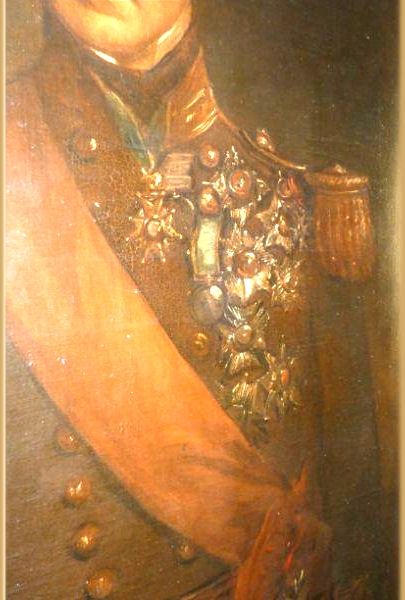
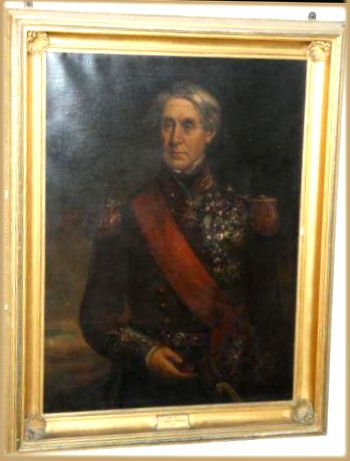
fig 1. A 19th-century oil painting depicting Admiral Edmund Lyons in a dark naval uniform with gold epaulettes, military medals, and a red sash.
fig 1. George Frederick Clarke, 1823-1906 Portrait of Admiral Edmund Lyons, 1st Baron Lyons, Gcb, Gcmg, Kch, 1790–1858

Notes

Admiral Edmund Lyons, 1st Baron Lyons, GCB, GCMG, KCH (21 November 1790 – 23 November 1858) was an eminent British Admiral of the Royal Navy, and an eminent British diplomat, who was responsible for encouraging the Crimean War, during which he was Commander-in-Chief of the Mediterranean Fleet, and for the securing the subsequent allied victory in the conflict, through his efforts at the Siege of Sevastopol (1854–1855) with both the Navy and the British Army.

As a consequence of his linguistic ability and favour with foreign aristocrats, Lyons was appointed to various diplomatic posts, including important ambassadorial positions in Sweden, Switzerland, and to the court of King King Otto of Greece. Lyons's temerity, ambition, and charisma, for which his white-blonde hair and pale complexion became a byword, made him popular with the High Commands of the Royal Navy and British Army and with the British aristocracy, with whom he maintained secret private correspondences to which his naval immediate superiors were not privy.
His friendship with Fitzroy Somerset, 1st Baron Raglan facilitated the integration of deployments that ensured allied victory in the Crimean War.
Artware Fineart
fig 2. A 19th-century oil painting depicting Admiral Edmund Lyons in a dark naval uniform with gold epaulettes, military medals, and a red sash.
fig 2. George Frederick Clarke, 1823-1906 Portrait of Admiral Edmund Lyons, 1st Baron Lyons, Gcb, Gcmg, Kch, 1790–1858

Edmund Lyons was the father of the diplomat Richard Lyons, 1st Viscount Lyons, the British Ambassador to the USA who solved the Trent Affair, and later British Ambassador to France. Edmund's eldest brother was Vice-Admiral John Lyons (1787 - 1872), who was on board HMS Victory at the Battle of Trafalgar and who served as British Ambassador in Egypt, and his nephews included Sir Algernon McLennan Lyons, Admiral of the Fleet (1833 – 1908).
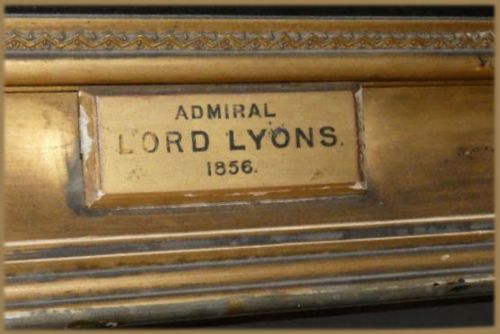
fig 3. A 19th-century oil painting depicting Admiral Edmund Lyons in a dark naval uniform with gold epaulettes, military medals, and a red sash.
fig 3. George Frederick Clarke, 1823-1906 Portrait of Admiral Edmund Lyons, 1st Baron Lyons, Gcb, Gcmg, Kch, 1790–1858

Edmund Lyons was born at Whitehayes House, Burton, near Christchurch, on 29 November 1790. He was the fourth son of Captain John Lyons, an owner of extensive sugar plantations in Antigua, whose British residence was at St. Austen's, Lymington, Hampshire, and Catherine (née Walrond), daughter of Maine Swete Walrond, 5th Marquis de Vallado. His brothers included Vice-Admiral John Lyons (1787 - 1872), who was on board HMS Victory at the Battle of Trafalgar and who served as British Ambassador in Egypt; Maine Walrond Lyons, (1798–1827), a lieutenant in the Royal Navy who was killed at Battle of Navarino; and Humphrey Lyons (1802–1873), a lieutenant-general in the Indian (Bombay) Army.

His nephews included Sir Algernon McLennan Lyons, Admiral of the Fleet (1833–1908), who served under him during the Crimean War, and Richard Lyons Pearson, Assistant Commissioner of the Metropolitan Police. His godparents were Sir Richard Hussey Bickerton and Lady Bickerton.

Lyons first went to sea on board HMS Terrible in 1798, when he was eight years old. He then returned to England to attend Hyde Abbey School near Winchester, which he attended until 1803, when he joined the Royal Navy and the crew of the frigate HMS Active, with which he remained for four years. He served at the passage of the Dardanelles, under Sir John Duckworth, in February 1807. He was posted to the West Indies later in 1807 and commissioned as a lieutenant in 1809, as which he participated in the capture of Banda Neira, for which he was mentioned for gallantryand promoted.

He then served as a flag-lieutenant, to Rear-Admiral Drury, aboard HMS Minden (74 guns). In 1810, he served in the 18-gun sloop HMS Barracouta notably at the capture, from the Dutch, on 9 August 1810, of Banda Neira in the Moluccas during the Invasion of the Spice Islands: Lyons was involved in the assault on Fort Belgica.

In 1811, a planned attack by the whole fleet on the heavily defended port of Fort Marrack, in the Sunda Strait, Batavia,

Height
102cm (40.16")
Width
76cm (29.92")
Depth
3cm (1.18")
Date of Manufacture

Artware Fineart has dated this Victorian Naval Officer Portrait to the 19th Century.

Reference Numbers
Sellingantiques Ref
SA766365
Dealers Internal Ref
4356
Artware Fineart
Sellingantiques verified Since Sep 2008
Dealer Profile

You can view the stock and full dealer information on the Artware Fineart Profile Page

PDF SHARE
SAVE
A 19th-century oil painting depicting Admiral Edmund Lyons in a dark naval uniform with gold epaulettes, military medals, and a red sash.
1 / 4
Archive I A 19th-century oil painting depicting Admiral Edmund Lyons in a dark naval uniform with gold epaulettes, military medals, and a red sash.

George Frederick Clarke, 1823-1906 Portrait of Admiral Edmund Lyons, 1st Baron Lyons, Gcb, Gcmg, Kch, 1790–1858

Archive II A 19th-century oil painting depicting Admiral Edmund Lyons in a dark naval uniform with gold epaulettes, military medals, and a red sash. View II
Archive III A 19th-century oil painting depicting Admiral Edmund Lyons in a dark naval uniform with gold epaulettes, military medals, and a red sash. View III
Archive IV A 19th-century oil painting depicting Admiral Edmund Lyons in a dark naval uniform with gold epaulettes, military medals, and a red sash. View IV
FURTHER BROWSING

Visitors also looked at these ⇣

Enlarged Archival View
Telephone 07958 699 645
Location
18 La Gare
51 Surrey Row
London
SE1 0BZ
United Kingdom
Verified Since Sep 2008
Items For Sale 243
Items Sold 223
Artware Fineart
Verified Since Sep 2008
View Dealer Info
Location: 18 La Gare , 51 Surrey Row , London , SE1 0BZ , United Kingdom
Verified
Sep 2008
For Sale
243
Sold
223
A 19th-century oil painting depicting Admiral Edmund Lyons in a dark naval uniform with gold epaulettes, military medals, and a red sash.
George Frederick Clarke, 1823-1906 Portrait of Admiral Edmund Lyons, 1st Baron Lyons, GCB, GCMG, KCH, 1790–1858
Ref: SA766365
A 19th-century oil painting depicting Admiral Edmund Lyons in a dark naval uniform with gold epaulettes, military medals, and a red sash.
Detail View 1
Detail View 2
Detail View 3
Archival Detail
Every single antique dealer on our platform is individually approved by our internal team. We verify their professional trade history, ethical standards, and photographic quality to ensure a secure, high-standard buying environment. Upon joining, every dealer agrees to a strict 9-point code of conduct. While issues can occasionally arise, our dealers typically resolve them swiftly and directly with the buyer. In fact, since our founding in 2002, Sellingantiques has only had to step in to help resolve an issue on roughly five occasions—a true testament to the quality of our dealers and their dedication to your happiness.
Our dealers are highly experienced in packing and shipping fragile, high-value antiques. Because you are in direct contact with the dealer, you will be able to easily go through all available shipping and insurance options together to ensure your item arrives safely.
Antiques are the ultimate green purchase. By choosing historical pieces over newly manufactured goods, you completely eliminate the carbon footprint of modern mass production while preserving exceptional, timeless craftsmanship.

19th-century British naval portraiture typically depicts high-ranking naval officers in formal dress uniforms, complete with official insignia, medals, and epaulettes, reflecting national maritime history during the Victorian era.

These portraits were painted using oil pigments bound with linseed or walnut oil onto stretched linen or cotton canvas, often prepared with a gesso ground prior to painting.

Authentic period portraits display natural craquelure across the paint surface, age-appropriate yellowing or darkening of the varnish, hand-crafted stretchers, and natural canvas oxidisation on the reverse.

A Victorian military portrait adds visual contrast to contemporary interiors when styled as a focal point in a dark-toned library, formal dining room, or alongside minimal modern furniture.

Position the painting away from direct sunlight, heating vents, and areas of high humidity. Dust gently using a dry brush, and consult a professional restorer for surface cleaning.
items
Add keywords to the filter
Price
£100
£250000
Era
Movements
Material
Origin
Stock Location
Freshness
Online Payments
Categories