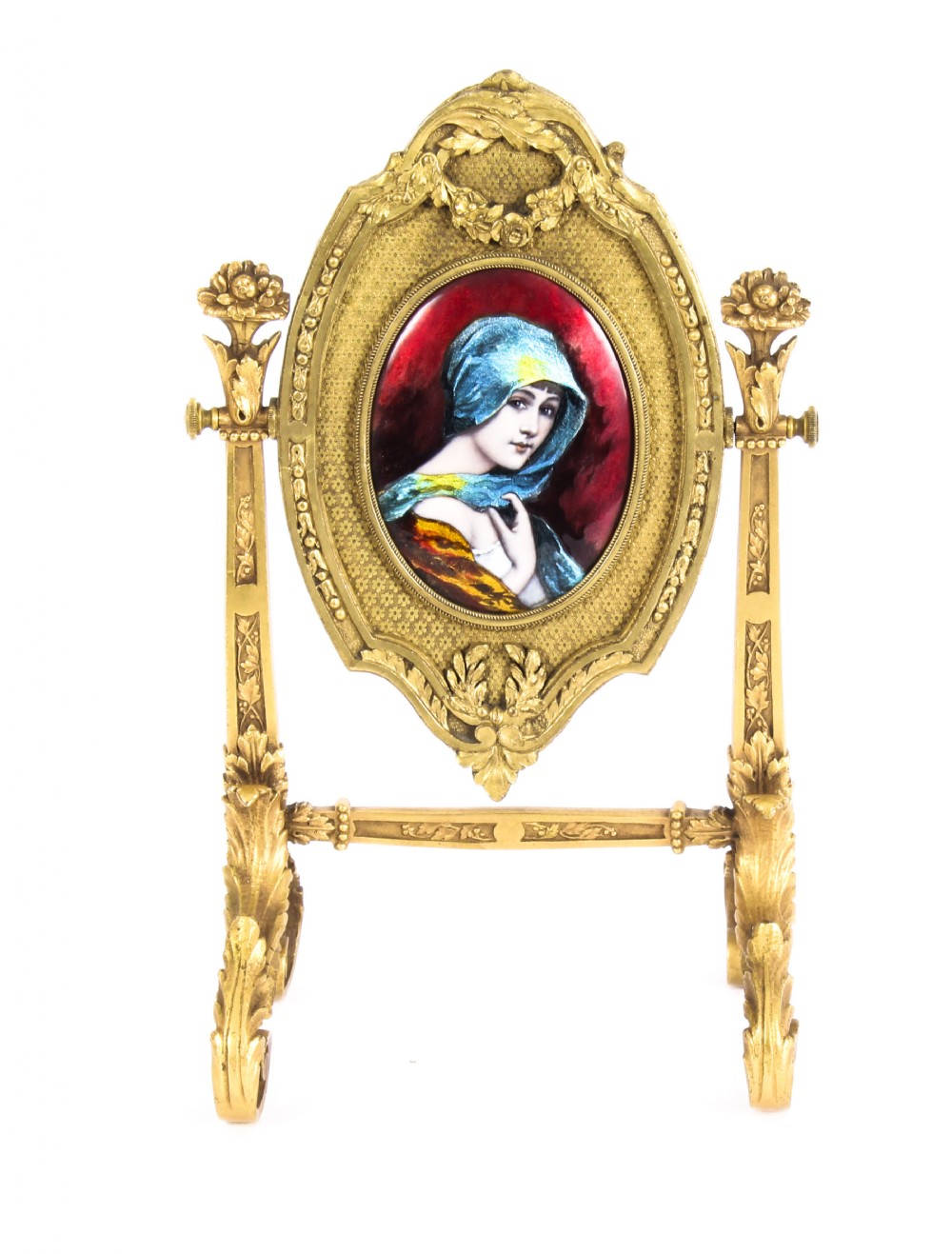
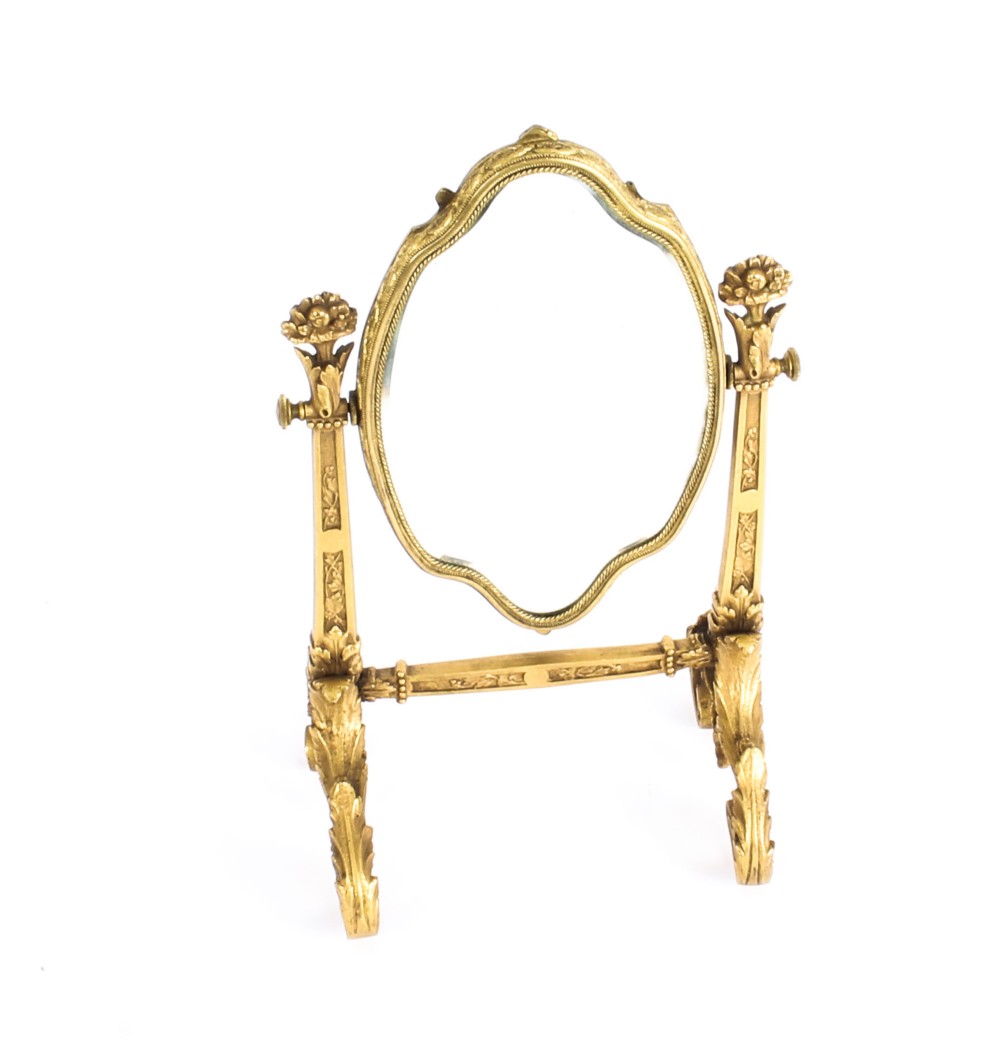
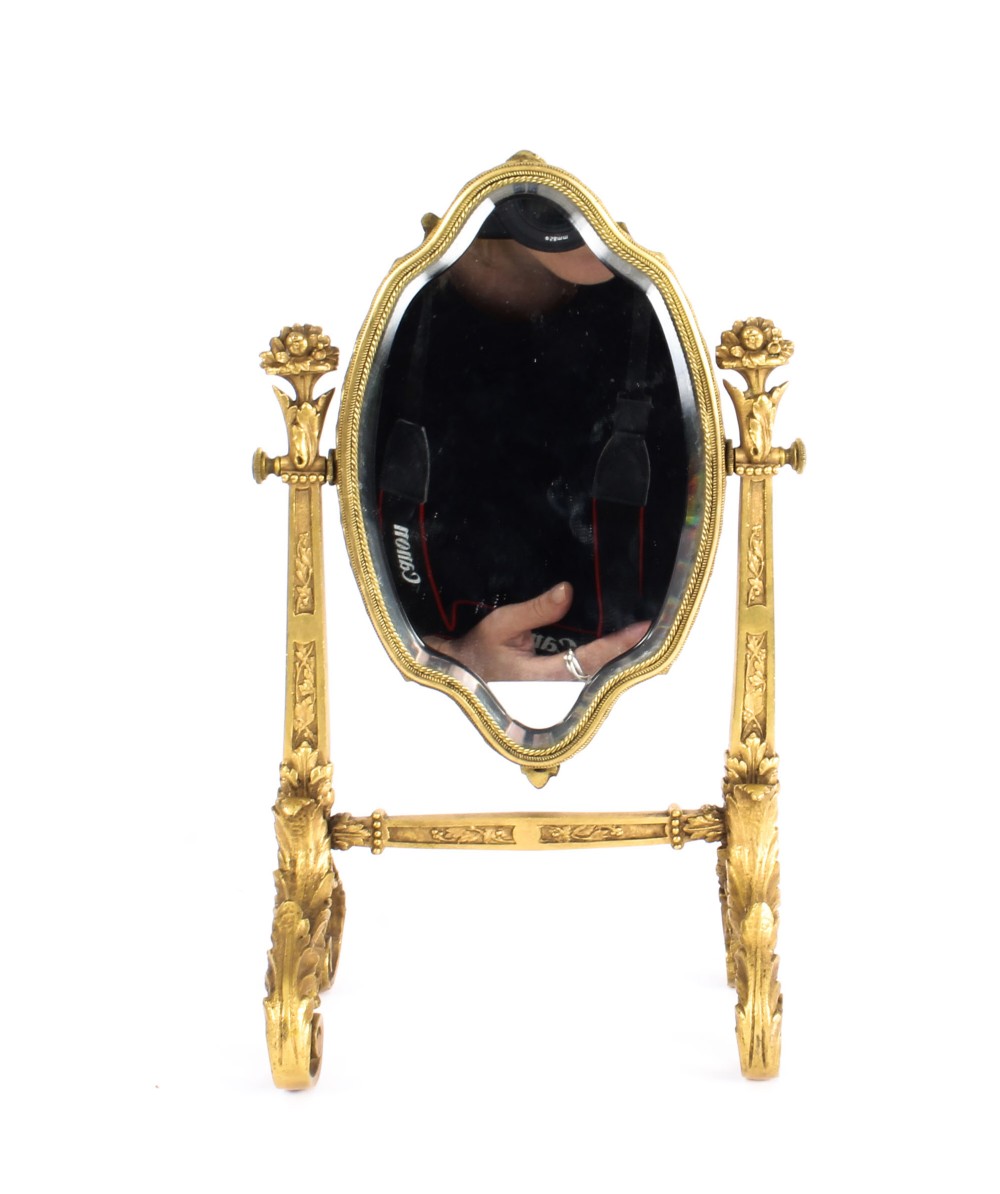
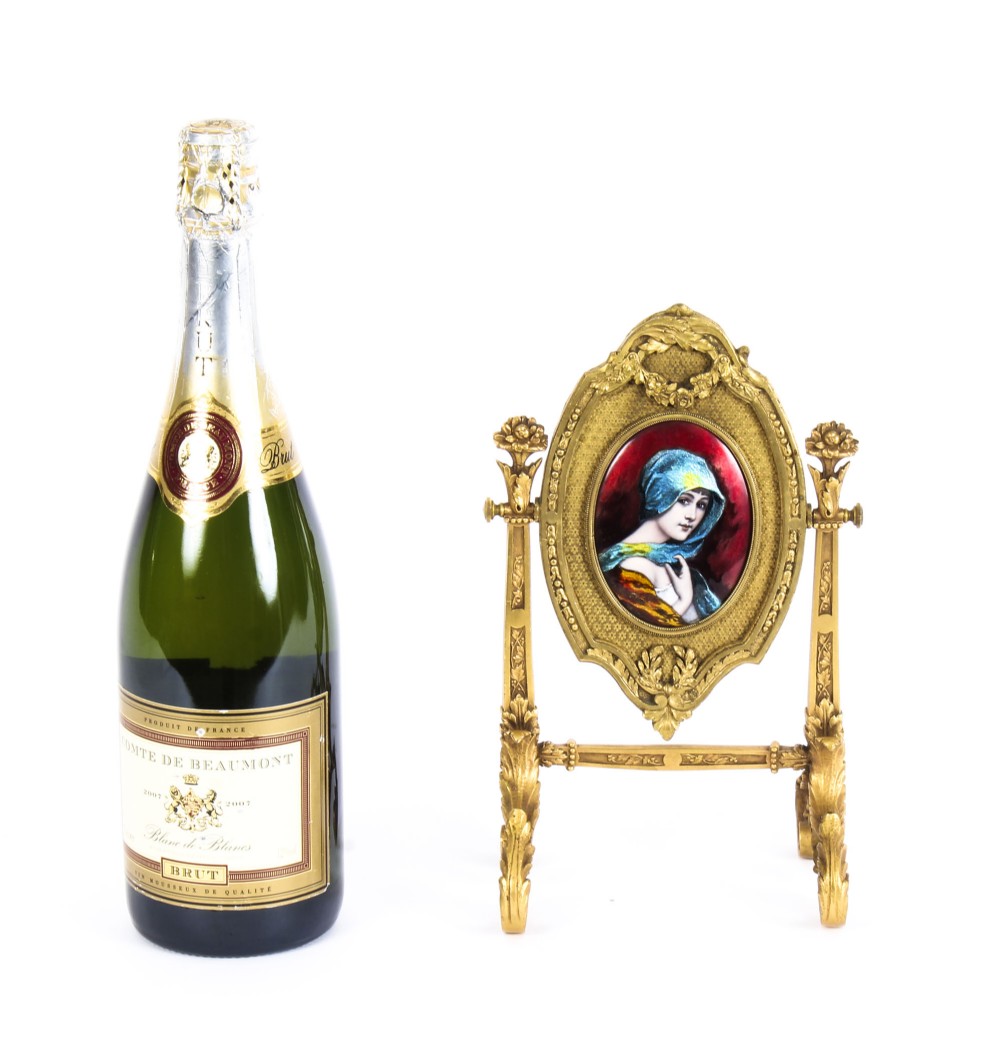
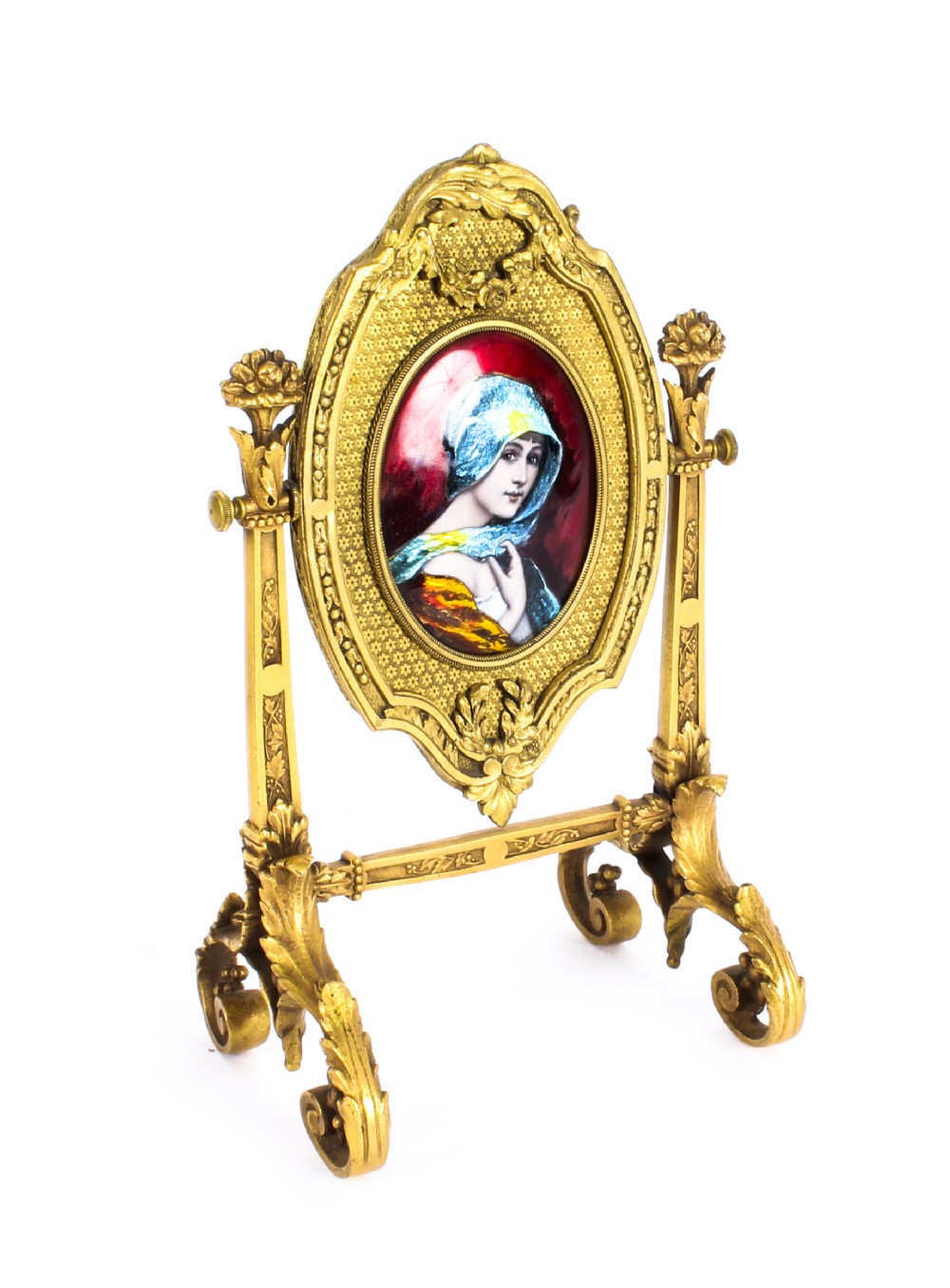
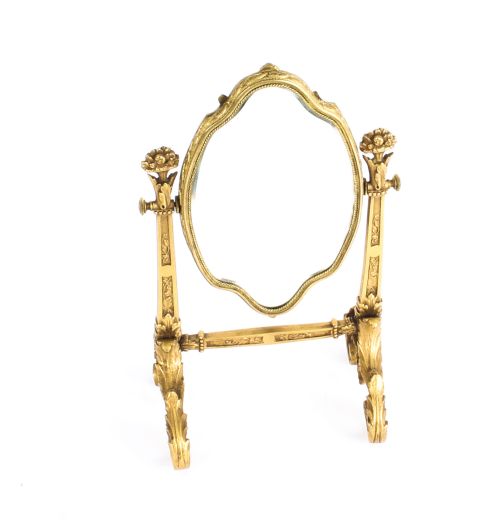
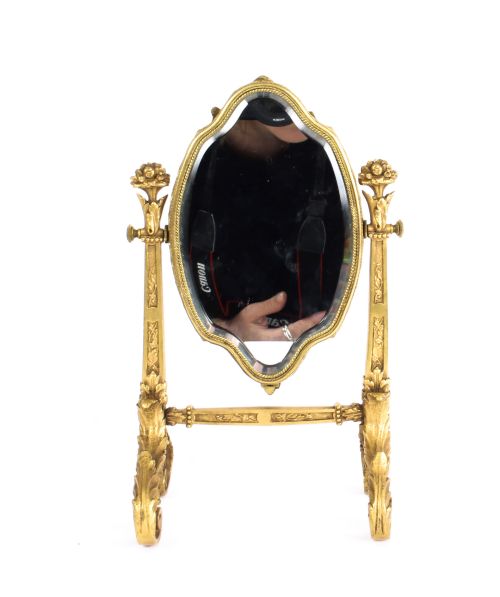
Regent Antiques has dated this French Ormolu Table Mirror to the 1880s.
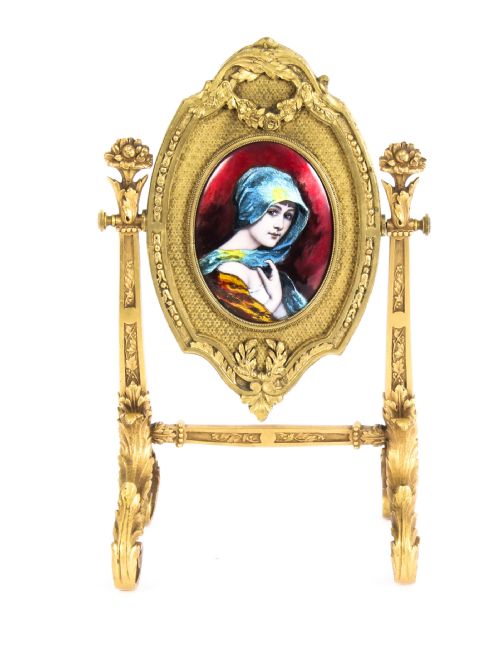
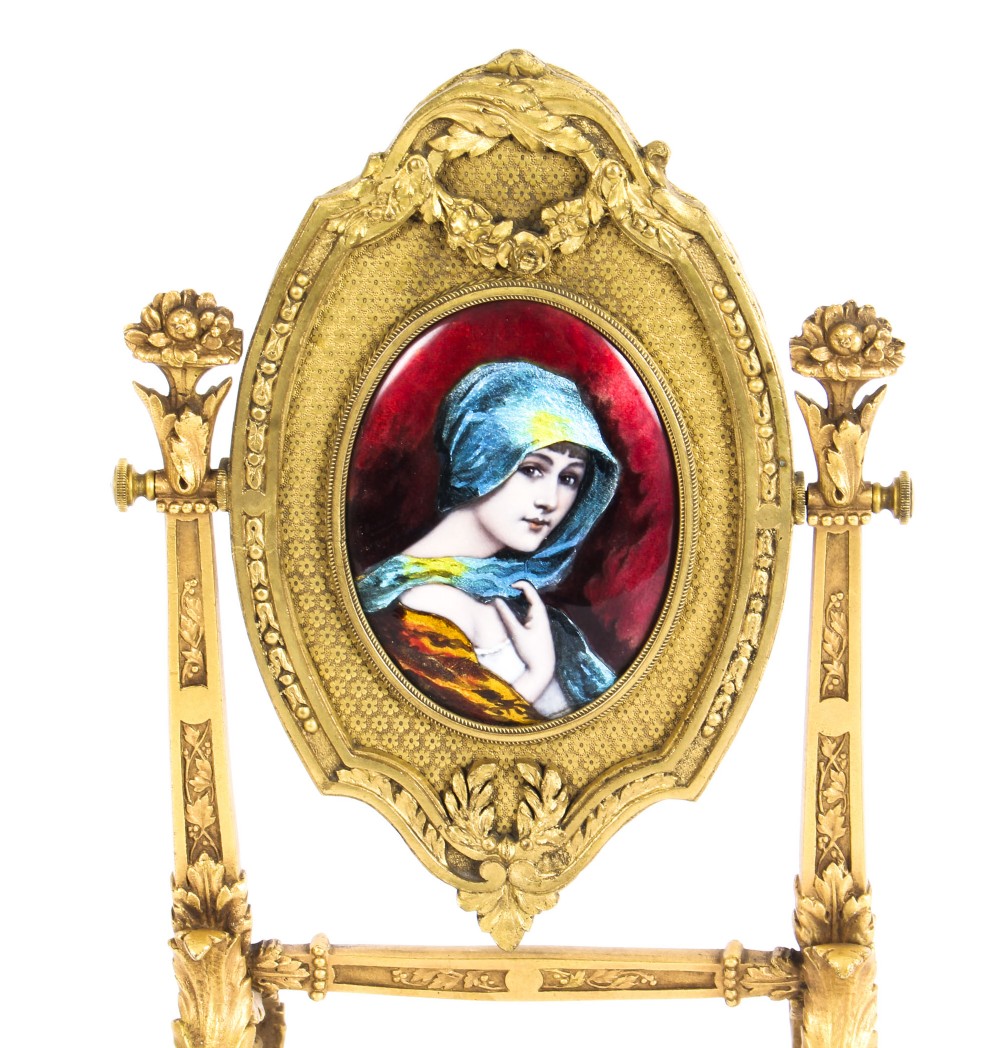
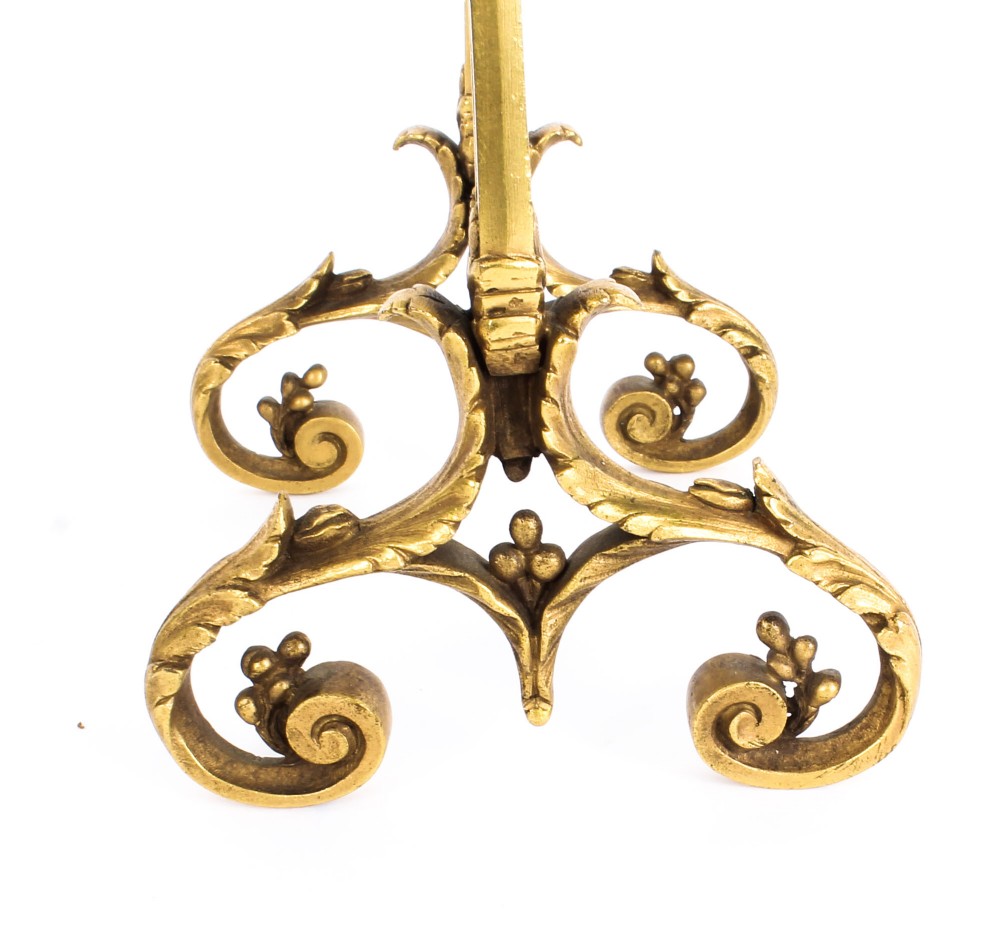
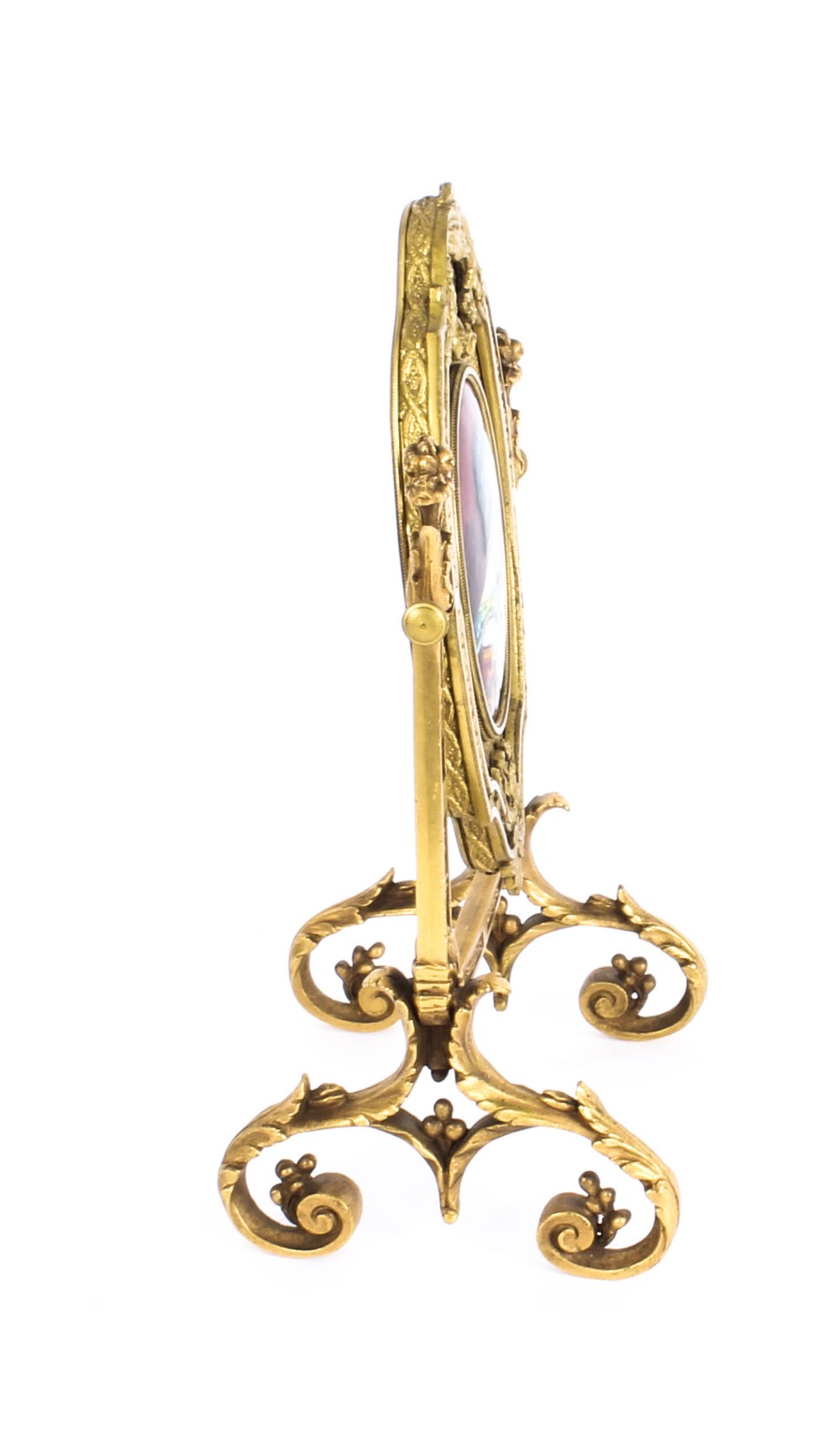
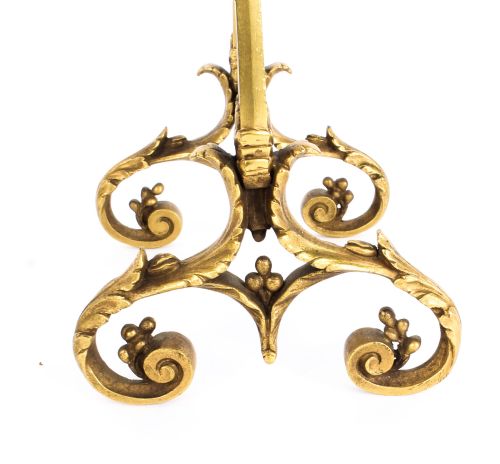
Acanthus leaves embellish the feet and legs and a posy of flowers adorns the top of the column at each side.
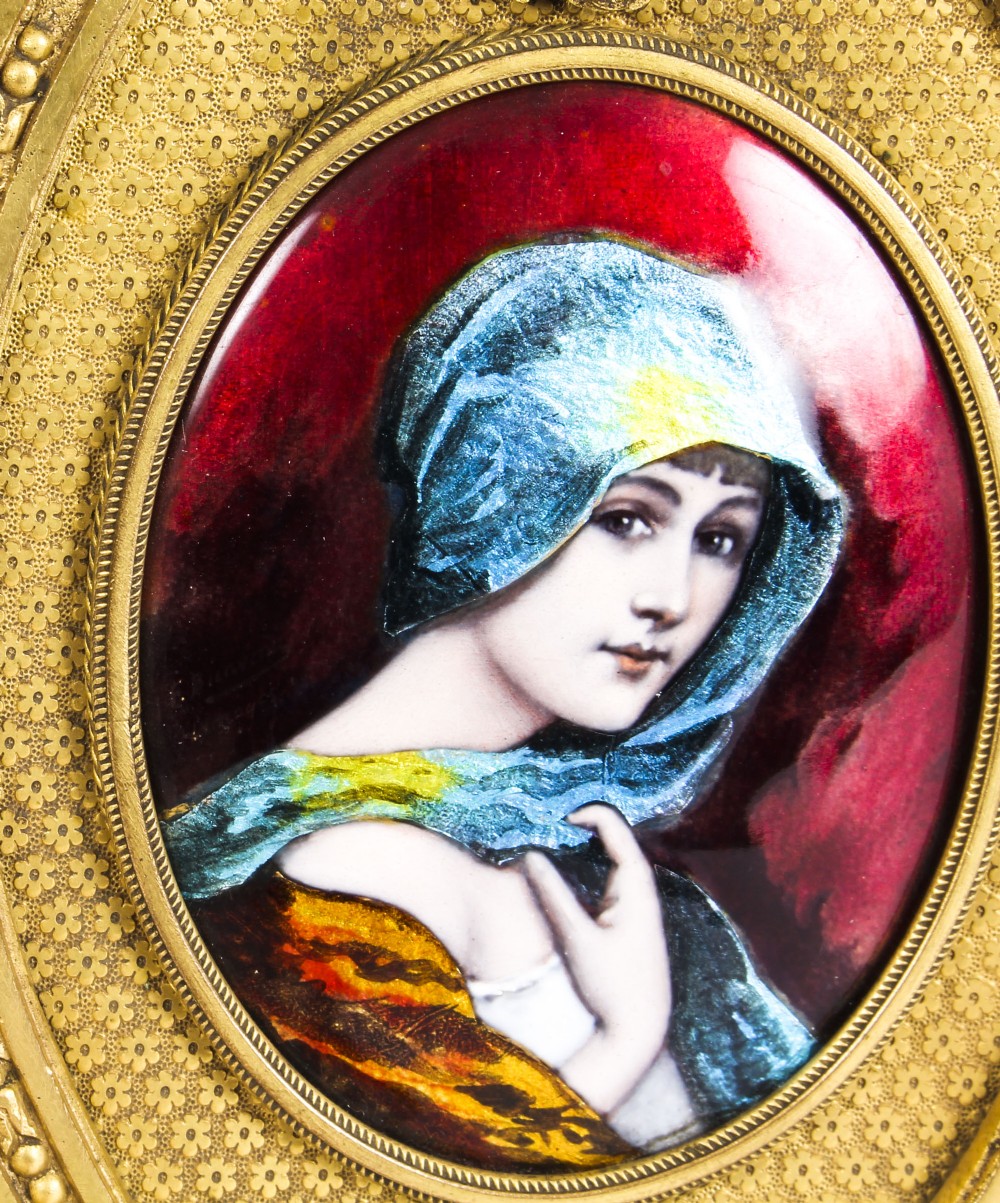
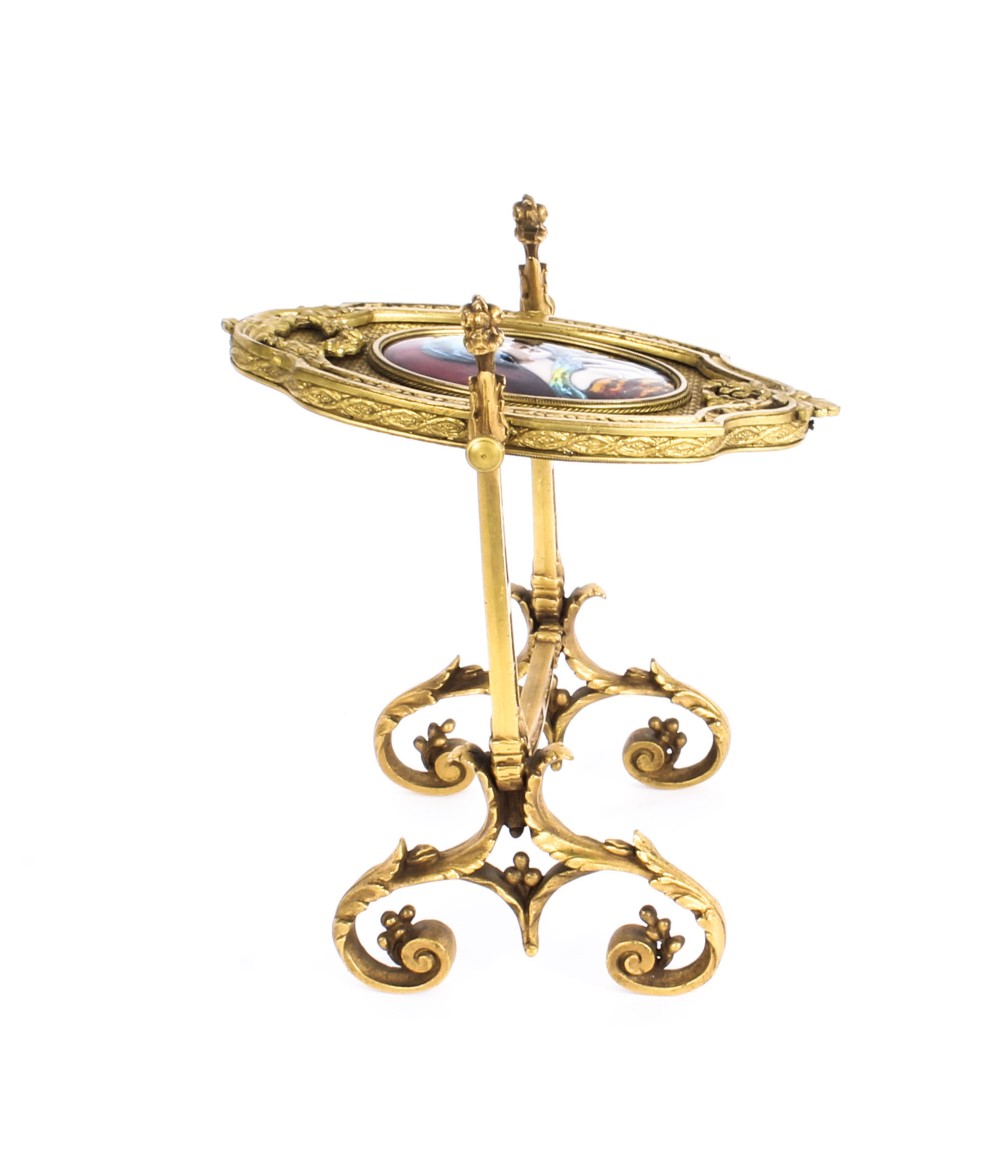
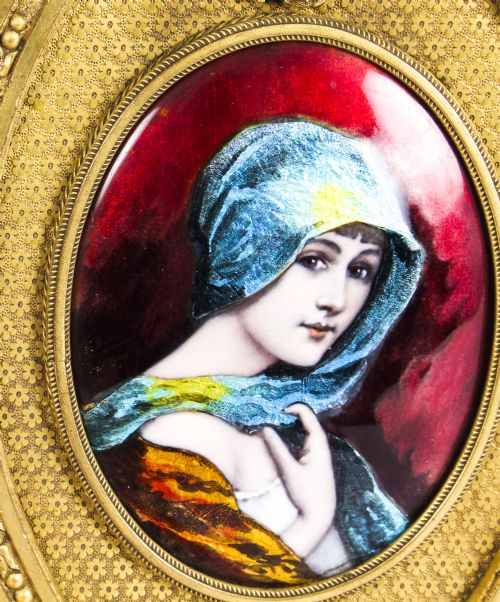
The richly coloured enamel portrait shows the subject with her head turned, almost looking over her shoulder and towards the viewer.
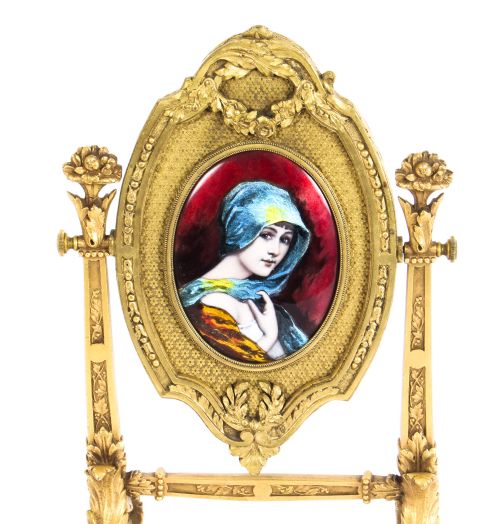
It is signed on the left hand side by the master emailleur F. Bienvenu, Limoges.
Condition:
In reallyexcellent condition having been beautifully cleaned in our workshops,, please see photos for confirmation.
Dimensions in cm:
Height 24 x Width 14 x Depth 11
Dimensions in inches:
Height 9.4 x Width 5.5 x Depth 4.3
Limoges enamel
has been produced at Limoges, in south-western France, over several centuries up to the present.
Ormolu - (from French 'or moulu', signifying ground or pounded gold) is an 18th-century English term for applying finely ground, high-carat gold in a mercury amalgam to an object of bronze.The mercury is driven off in a kiln leaving behind a gold-coloured veneer known as 'gilt bronze'.
The manufacture of true ormolu employs a process known as mercury-gilding or fire-gilding, in which a solution of nitrate of mercury is applied to a piece of copper, brass, or bronze, followed by the application of an amalgam of gold and mercury. The item was then exposed to extreme heat until the mercury burned off and the gold remained, adhered to the metal object.
After around 1830 because legislation had outlawed the use of mercury other techniques were used instead. Electroplating is the most common modern technique. Ormolu techniques are essentially the same as those used on silver, to produce silver-gilt..
Our reference: 09965
Regent Antiques has dated this French Ormolu Table Mirror to the 1880s.
We specialise in english and continental furniture, silver, porcelain and decorative items.
You can view the stock and full dealer information on the Regent Antiques Profile Page
Regent Antiques is a registered member of LAPADA CINOA
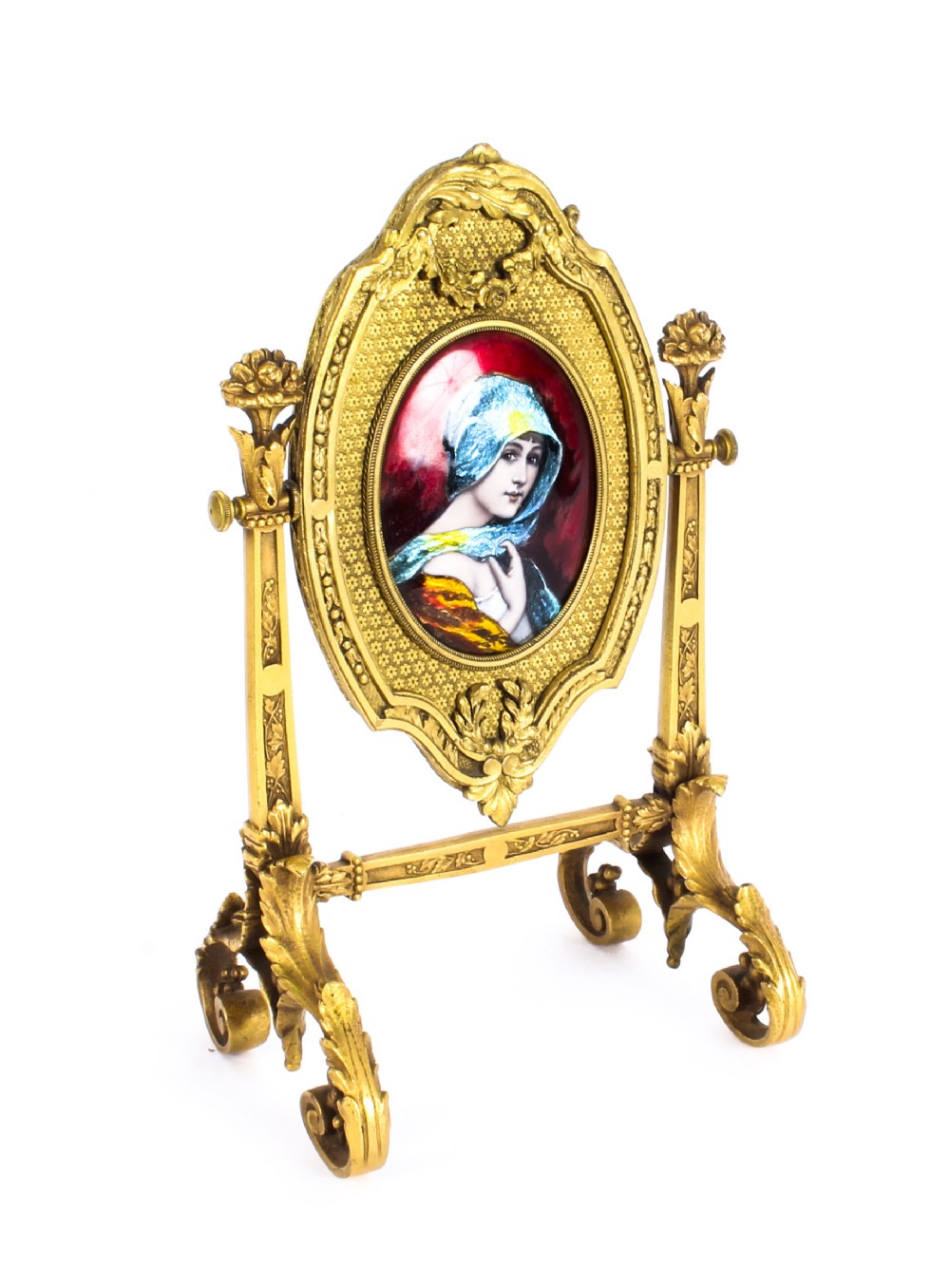
Antique French Ormolu & Limoges Enamel Table Mirror F.bienvue 19th C