57,445  PAGES BROWSED TODAY PAGES TODAY 103  ANTIQUES UPLOADED TODAY NEW ARRIVALS
ID #SA758849
FOR SALE
£2,200
Email
Save
Edward Bird , R.a., 1772 - 1819 Portrait of Henry Ricketts Circa 1783–1859 , Bristol Glass Maker as a Young Child
Artware Fineart
for sale €2,574     $2,794
£2,200

Artware Fineart

Sellingantiques Verified Since Sep 2008
View Dealers Stock Page
Id #SA758849
PDF SHARE
SAVE

Edward Bird , R.a., 1772 - 1819 Portrait of Henry Ricketts Circa 1783–1859 , Bristol Glass Maker as a Young Child

18th century
For Sale by Artware Fineart
Description

Edward Bird , R.A., 1772 - 1819

Portrait of Henry Ricketts circa 1783–1859 , Bristol Glass Maker as a Young Child

Signed/Inscribed:

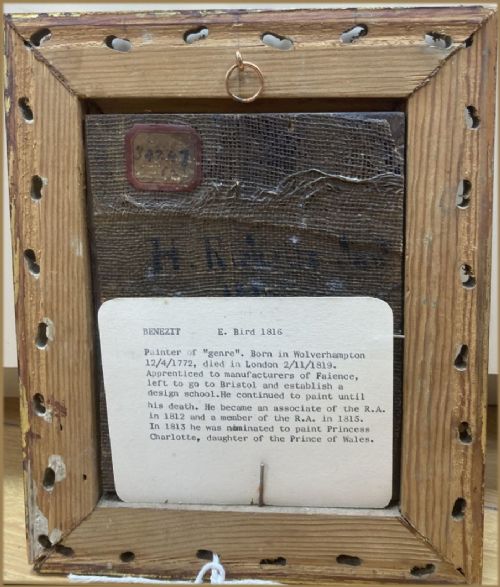
inscribed on the reverse " Henry Ricketts "

oil on panel

15 x 11.50 cm.

Henry Ricketts was a Bristol glass-maker who devised an innovative bottle-mould in 1821. His three-part mould enabled bottles to be blown to exactly the same size and capacity every time. It revolutionised production and energised the local industry. Ricketts set up his own bottle-making company which continued until 1923.
The Ricketts family was involved in the glass business for almost a century, beginning in 1789, when Jacob Ricketts and his brother, Richard, operated the Phoenix Glass Works at Temple Gate, Bristol, England. After a few changes, the firm became Henry Ricketts & Co., probably to celebrate the invention of a mechanical mold system that used three-piece mold and had a “washer” baseplate allowing embossing on the bases – by Jacob’s son, Henry, although son, Richard (not to be confused with his uncle, Richard, Jacob’s brother), took over the business, soon partnering with William Powell, who continued to run the operation after Richard’s death in 1856 – producing Codd-stoppered bottles until 1923.

Although they were deeply involved in the tobacco trade (a subject not relevant to this research area), the Ricketts family glass holdings began and remained in Bristol, England, centered during the entire period on three glass houses along Cheese Lane (later Avon St.). The firm expanded several times, eventually becoming the only glass house in Bristol. As is often the case in glass history, several researchers from 1876 to 2015 have presented confused (and confusing) portrayals of the relationships between these plants, none with a full understanding of the early conditions – which set the stage for all the subsequent changes – until the most recent study by Gregory et al. (2019). Phoenix Glass Works, Bristol, England (1785-1811) A group of local businessmen, composed primarily of soap manufacturers, built the first glass house along Cheese Lane ca. 1715 to produce bottles – frequently called the Soap Boilers’ glass factory. A few years later, the same group constructed a second, nearby plant to create crown window glass – a second Soap Boilers’ plant. Robert Hixon assembled another group of businessmen, including hoop-makers, merchants, and other investors, to open a third plant – another bottle house – often known as the Hoopers glass house – in 1720 (Gregory et al. 2019:5). This set the stage for local glass production. 237 Gregory et al. (2019:5) reported that the partners involved in the ownership of the three factories changed repeatedly during the 18th century, although he provided no details. At some point, the crown window glass factory evolved into a flint (colorless) plant, producing tableware. This became the Phoenix Glass Works. A merger of the Redcliff Backs [only about a mile west of the Phoenix; only mentioned by this source] and the Phoenix Glass Works was completed in 1802 to become Ricketts, Evans and the Ricketts Glass Company.
Henry Ricketts replaced Richard Ricketts as a partner, Richard, brother of Jacob and father of Henry’s wife, Elizabeth, having retired in 1801. Henry’s wife was also his cousin. Jacob presented Henry with £500 when he married Elizabeth in 1805 as well as £1,000 as Henry became a partner in the business (Burton 2015:191). The firm became Henry Ricketts & Co. in 1811. 238 Henry Ricketts & Co., Bristol, England (ca. 1811-1851) The partnership reorganized as Henry Ricketts & Co. in 1811, with Jacob W. Ricketts, his son Henry Ricketts, David Evans and John Cave as partners, also acquiring a lease on “the Soapboilers’ Glass-house on Avon Street, formerly Cheese Lane,” St. Philips, at the same time (Burton 2015:191). The Soapboilers’ Glass-house” referred to by

Physical Dimensions
Height
15cm (5.91")
Width
11.5cm (4.53")
Depth
1cm (0.39")
Declaration

Artware Fineart has dated this Georgian Child Portrait Painting to the 18th Century.

Reference Numbers
Sellingantiques Reference
SA758849
Dealers Internal Reference
4354
Description
Edward Bird , R.A., 1772 - 1819

Portrait of Henry Ricketts circa 1783–1859 , Bristol Glass Maker as a Young Child

Signed/Inscribed:

inscribed on the reverse " Henry Ricketts "

oil on panel

15 x 11.50 cm.

Henry Ricketts was a Bristol glass-maker who devised an innovative bottle-mould in 1821. His three-part mould enabled bottles to be blown to exactly the same size and capacity every time. It revolutionised production and energised the local industry. Ricketts set up his own bottle-making company which continued until 1923.

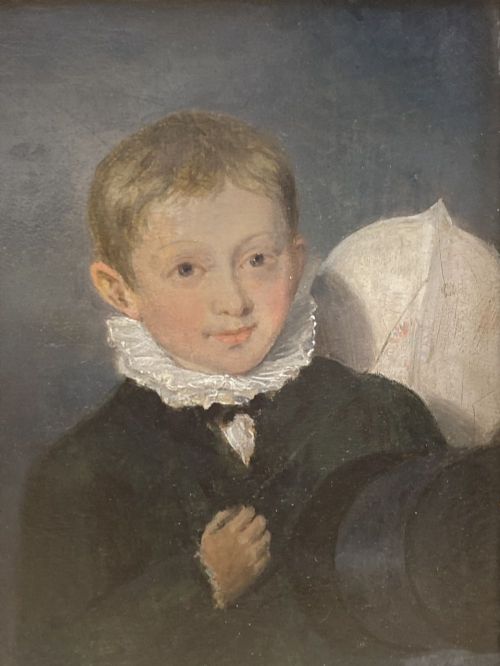
fig 1. An antique oil portrait painting depicting a young child with short fair hair wearing a dark coat and a white ruffled collar against a dark blue background.
fig 1. Edward Bird , R.a., 1772 - 1819 Portrait of Henry Ricketts Circa 1783–1859 , Bristol Glass Maker as a Young Child

The Ricketts family was involved in the glass business for almost a century, beginning in 1789, when Jacob Ricketts and his brother, Richard, operated the Phoenix Glass Works at Temple Gate, Bristol, England. After a few changes, the firm became Henry Ricketts & Co., probably to celebrate the invention of a mechanical mold system that used three-piece mold and had a “washer” baseplate allowing embossing on the bases – by Jacob’s son, Henry, although son, Richard (not to be confused with his uncle, Richard, Jacob’s brother), took over the business, soon partnering with William Powell, who continued to run the operation after Richard’s death in 1856 – producing Codd-stoppered bottles until 1923.

Although they were deeply involved in the tobacco trade (a subject not relevant to this research area), the Ricketts family glass holdings began and remained in Bristol, England, centered during the entire period on three glass houses along Cheese Lane (later Avon St.). The firm expanded several times, eventually becoming the only glass house in Bristol. As is often the case in glass history, several researchers from 1876 to 2015 have presented confused (and confusing) portrayals of the relationships between these plants, none with a full understanding of the early conditions – which set the stage for all the subsequent changes – until the most recent study by Gregory et al. (2019).

Phoenix Glass Works, Bristol, England (1785-1811) A group of local businessmen, composed primarily of soap manufacturers, built the first glass house along Cheese Lane ca.
Artware Fineart

1715 to produce bottles – frequently called the Soap Boilers’ glass factory. A few years later, the same group constructed a second, nearby plant to create crown window glass – a second Soap Boilers’ plant. Robert Hixon assembled another group of businessmen, including hoop-makers, merchants, and other investors, to open a third plant – another bottle house – often known as the Hoopers glass house – in 1720 (Gregory et al. 2019:5). This set the stage for local glass production. 237 Gregory et al. (2019:5) reported that the partners involved in the ownership of the three factories changed repeatedly during the 18th century, although he provided no details. At some point, the crown window glass factory evolved into a flint (colorless) plant, producing tableware. This became the Phoenix Glass Works. A merger of the Redcliff Backs [only about a mile west of the Phoenix; only mentioned by this source] and the Phoenix Glass Works was completed in 1802 to become Ricketts, Evans and the Ricketts Glass Company.

fig 2. An antique oil portrait painting depicting a young child with short fair hair wearing a dark coat and a white ruffled collar against a dark blue background.
fig 2. Edward Bird , R.a., 1772 - 1819 Portrait of Henry Ricketts Circa 1783–1859 , Bristol Glass Maker as a Young Child

Henry Ricketts replaced Richard Ricketts as a partner, Richard, brother of Jacob and father of Henry’s wife, Elizabeth, having retired in 1801. Henry’s wife was also his cousin. Jacob presented Henry with £500 when he married Elizabeth in 1805 as well as £1,000 as Henry became a partner in the business (Burton 2015:191). The firm became Henry Ricketts & Co. in 1811. 238 Henry Ricketts & Co., Bristol, England (ca. 1811-1851) The partnership reorganized as Henry Ricketts & Co. in 1811, with Jacob W. Ricketts, his son Henry Ricketts, David Evans and John Cave as partners, also acquiring a lease on “the Soapboilers’ Glass-house on Avon Street, formerly Cheese Lane,” St. Philips, at the same time (Burton 2015:191). The Soapboilers’ Glass-house” referred to by

Height
15cm (5.91")
Width
11.5cm (4.53")
Depth
1cm (0.39")
Date of Manufacture

Artware Fineart has dated this Georgian Child Portrait Painting to the 18th Century.

Reference Numbers
Sellingantiques Ref
SA758849
Dealers Internal Ref
4354
Artware Fineart
Sellingantiques verified Since Sep 2008
Dealer Profile

You can view the stock and full dealer information on the Artware Fineart Profile Page

PDF SHARE
SAVE
An antique oil portrait painting depicting a young child with short fair hair wearing a dark coat and a white ruffled collar against a dark blue background.
1 / 4
Archive I An antique oil portrait painting depicting a young child with short fair hair wearing a dark coat and a white ruffled collar against a dark blue background.

Edward Bird , R.a., 1772 - 1819 Portrait of Henry Ricketts Circa 1783–1859 , Bristol Glass Maker as a Young Child
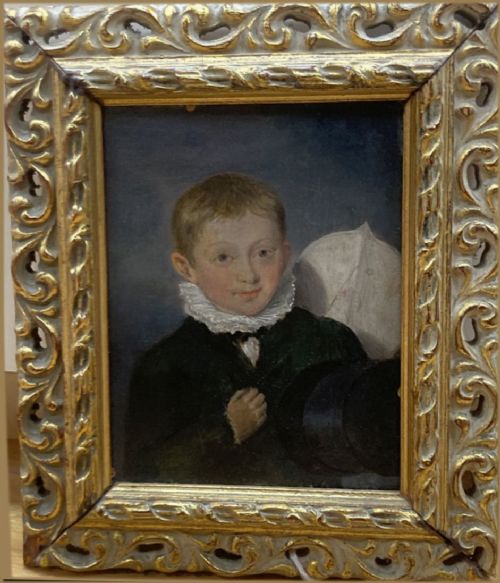
Archive II An antique oil portrait painting depicting a young child with short fair hair wearing a dark coat and a white ruffled collar against a dark blue background. View II
Archive III An antique oil portrait painting depicting a young child with short fair hair wearing a dark coat and a white ruffled collar against a dark blue background. View III
Archive IV An antique oil portrait painting depicting a young child with short fair hair wearing a dark coat and a white ruffled collar against a dark blue background. View IV
Enlarged Archival View
Telephone 07958 699 645
Location
18 La Gare
51 Surrey Row
London
SE1 0BZ
United Kingdom
Verified Since Sep 2008
Items For Sale 243
Items Sold 223
Artware Fineart
Verified Since Sep 2008
View Dealer Info
Location: 18 La Gare , 51 Surrey Row , London , SE1 0BZ , United Kingdom
Verified
Sep 2008
For Sale
243
Sold
223
An antique oil portrait painting depicting a young child with short fair hair wearing a dark coat and a white ruffled collar against a dark blue background.
Edward Bird , R.A., 1772 - 1819 Portrait of Henry Ricketts circa 1783–1859 , Bristol Glass Maker as a Young Child
Ref: SA758849
An antique oil portrait painting depicting a young child with short fair hair wearing a dark coat and a white ruffled collar against a dark blue background.
Detail View 1
Detail View 2
Detail View 3
Archival Detail
Every single antique dealer on our platform is individually approved by our internal team. We verify their professional trade history, ethical standards, and photographic quality to ensure a secure, high-standard buying environment. Upon joining, every dealer agrees to a strict 9-point code of conduct. While issues can occasionally arise, our dealers typically resolve them swiftly and directly with the buyer. In fact, since our founding in 2002, Sellingantiques has only had to step in to help resolve an issue on roughly five occasions—a true testament to the quality of our dealers and their dedication to your happiness.
Our dealers are highly experienced in packing and shipping fragile, high-value antiques. Because you are in direct contact with the dealer, you will be able to easily go through all available shipping and insurance options together to ensure your item arrives safely.
Antiques are the ultimate green purchase. By choosing historical pieces over newly manufactured goods, you completely eliminate the carbon footprint of modern mass production while preserving exceptional, timeless craftsmanship.

Georgian portraiture, spanning the eighteenth and early nineteenth centuries, is characterised by formal compositions, realistic depictions of period attire, and understated background tones.

Artists primarily applied oil pigments onto stretched woven linen canvas or wooden panels, bound with linseed oil and finished with natural varnish.

Original period works often exhibit subtle craquelure across the paint layer, natural age-related oxidisation, and period-correct stretcher bars or canvas linings.

A historical portrait functions well as a focal piece positioned above a sideboard, mantelpiece, or within an eclectic gallery wall in contemporary and traditional settings.

Keep the canvas away from direct sunlight, excess moisture, and fluctuating temperatures, dusting the frame gently with a soft brush without liquid cleaners.
items
Add keywords to the filter
Price
£100
£250000
Era
Movements
Material
Origin
Stock Location
Freshness
Online Payments
Categories