32,028  PAGES BROWSED TODAY PAGES TODAY 90  ANTIQUES UPLOADED TODAY NEW ARRIVALS
ID #SA758841
FOR SALE
£1,200
Email
Save
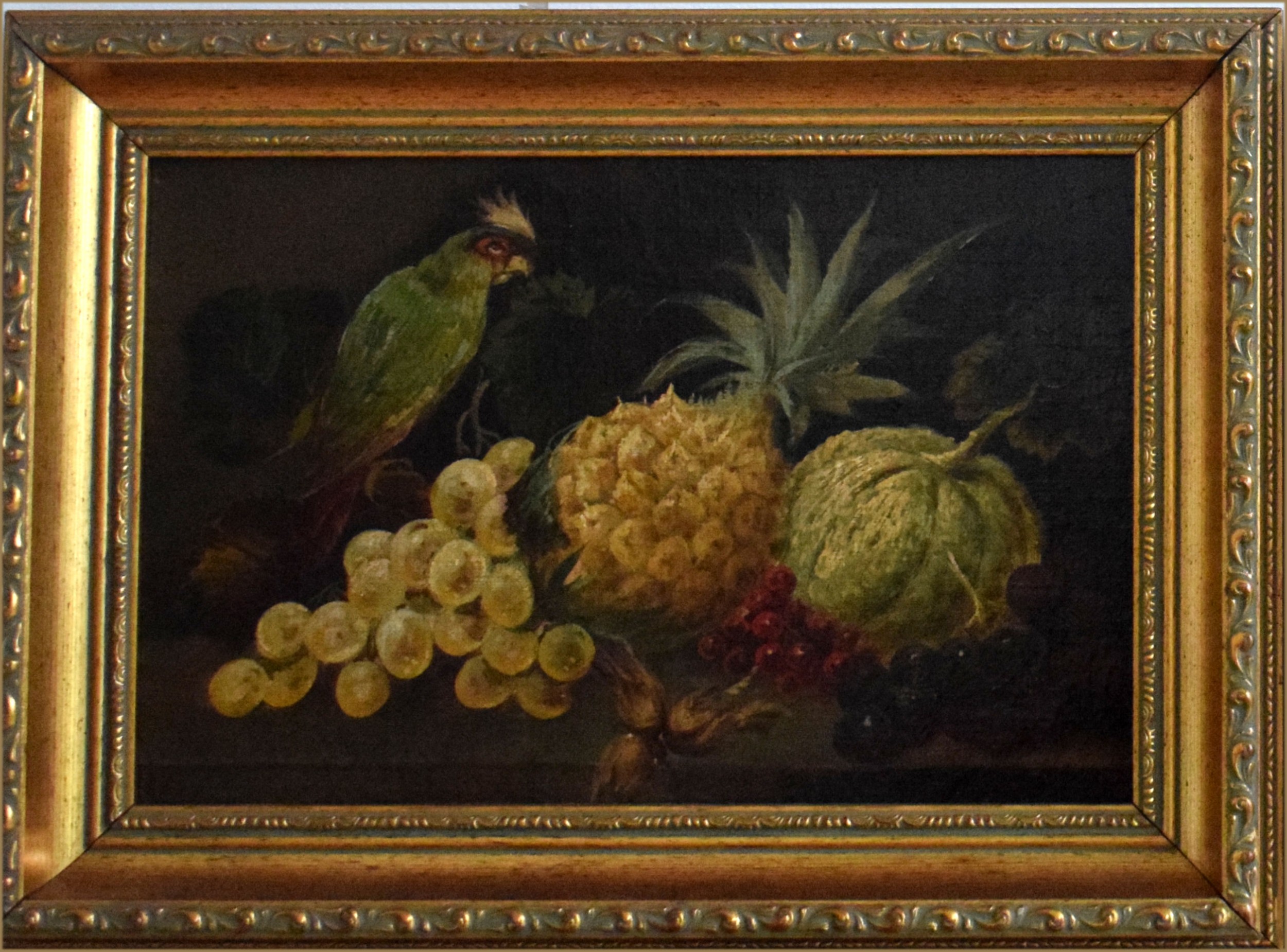
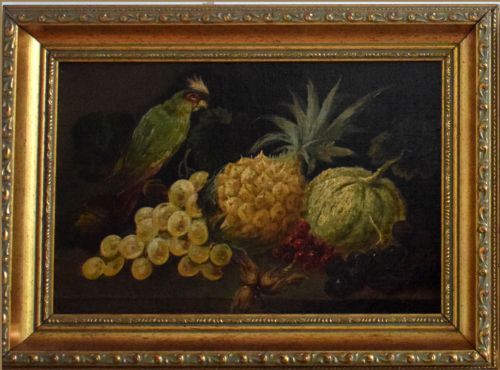
George Lance, 1802 - 1864 A Still Life of a White Fronted Amazon Parrot with Grapes, a Pineapple, Mellon, Hazel Nuts and Red and Black Currants oil on Canvas
Artware Fineart
for sale €1,404     $1,524
£1,200

Artware Fineart

Sellingantiques Verified Since Sep 2008
View Dealers Stock Page
Id #SA758841
PDF SHARE
SAVE

George Lance, 1802 - 1864 A Still Life of a White Fronted Amazon Parrot with Grapes, a Pineapple, Mellon, Hazel Nuts and Red and Black Currants oil on Canvas

19th century
For Sale by Artware Fineart
Description

George Lance, 1802 - 1864

A Still life of a White Fronted Amazon Parrot with Grapes, a Pineapple, Mellon, Hazel Nuts and Red and Black Currants

oil on canvas

20.50 x 31 cm.

The white-fronted amazon, at about 25 cm (9.8 in) long, is the smallest of the amazon parrots. This species is named for the bright white patch of feathers on its forehead, although the amount of white varies from individual to individual. They have mostly green plumage with some blue colouring on their outspread wings. They have bright red colouring around their eyes (in some individuals almost like spectacles) and blue colouring behind the patch of white on their foreheads. Together with the red-spectacled amazon and the yellow-lored amazon, it is the only amazon species in which adult males and females easily can be distinguished by external appearance (sexual dimorphism): Males have bright red feathers on their "shoulders" (alula), while females have green "shoulders". Juveniles have pale grey irises and less red on their face and the white area is replaced with a smaller yellowish area.
The white-fronted amazon is native to Central America and Mexico; and is most often seen in small flocks of up to 20 birds. They are seen in a variety of different habitats from wet regions such as rainforests, to drier areas such as cactus savannahs. In the wild, they are not shy and people are often able to approach them. Flocks may congregate and people have seen groups that number into the hundreds. These groups may also contain flocks from other species such as the red-lored amazon. A population has been seen in southern Texas, probably escapees, and a small feral population has been observed living in southern California . Introduced breeding populations have also been reported in Puerto Rico .
The white-fronted amazon nests in tree cavities. Their breeding season is usually in the spring, starting in February and ending in the summer (in June and July in most areas). After breeding, the female will lay an average of three to four white eggs. Eggs are incubated for about 26 days and chicks leave the nest at the age of about 60 days from hatching.
Artist Biography

Lance was born at the old manor-house in Little Easton in Essex. His father was William Lance who had previously served in a regiment of light horse and was at the time of Lance's birth an adjutant in the Essex yeomanry; afterwards he became the inspector of the Bow Street horse-patrol. His mother, Louisa Lucy (née) Constable, with whom his father had eloped from boarding-school, was the daughter of Colonel Constable of Beverley in Yorkshire.Although Lance showed a predilection for art at a very early age, his friends placed him, when under the age of fourteen, in a factory in Leeds. However, the uncongenial work injured his health and he returned to London. Wandering one day into the British Museum, he casually started a conversation with Charles Landseer, who happened to be drawing there. On learning that Landseer was a pupil of Benjamin Haydon, he went early next morning to that painter's residence, and asked to become a pupil. Haydon replied that if his drawings promised future success he would instruct him for nothing. Not many days later Lance, still under fourteen, entered Haydon's studio, and remained there seven years, at the same time studying in the schools of the Royal Academy. While designing a picture inspired by Homer's 'Iliad', he decided, before putting on the colours, to paint some fruit and vegetables, in order to improve his execution. His work attracted the notice of Sir George Beaumont, who purchased it, and this success led him to paint another fruit-piece, which he sold to the Earl of Shaftesbury. He then painted two fruit-pieces for the Duke of Bedford as decorations for a summer-house at Woburn Abbey, and his work proved so profitable that he decided to devote himself to the painting of still-life.

Physical Dimensions
Height
20.5cm (8.07")
Width
31cm (12.20")
Depth
2cm (0.79")
Declaration

Artware Fineart has dated this Victorian Still Life Painting to the 19th Century.

Reference Numbers
Sellingantiques Reference
SA758841
Dealers Internal Reference
4345
Description
George Lance, 1802 - 1864
A Still life of a White Fronted Amazon Parrot with Grapes, a Pineapple, Mellon, Hazel Nuts and Red and Black Currants.
Artware Fineart

oil on canvas

20.50 x 31 cm.

The white-fronted amazon, at about 25 cm (9.8 in) long, is the smallest of the amazon parrots. This species is named for the bright white patch of feathers on its forehead, although the amount of white varies from individual to individual. They have mostly green plumage with some blue colouring on their outspread wings. They have bright red colouring around their eyes (in some individuals almost like spectacles) and blue colouring behind the patch of white on their foreheads. Together with the red-spectacled amazon and the yellow-lored amazon, it is the only amazon species in which adult males and females easily can be distinguished by external appearance (sexual dimorphism): Males have bright red feathers on their "shoulders" (alula), while females have green "shoulders". Juveniles have pale grey irises and less red on their face and the white area is replaced with a smaller yellowish area.

fig 1. An oil painting depicting a green parrot perched near a cluster of fruit including a pineapple, melon, and grapes set against a dark background.
fig 1. George Lance, 1802 - 1864 A Still Life of a White Fronted Amazon Parrot with Grapes, a Pineapple, Mellon, Hazel Nuts and Red and Black Currants oil on Canvas

The white-fronted amazon is native to Central America and Mexico; and is most often seen in small flocks of up to 20 birds. They are seen in a variety of different habitats from wet regions such as rainforests, to drier areas such as cactus savannahs. In the wild, they are not shy and people are often able to approach them. Flocks may congregate and people have seen groups that number into the hundreds. These groups may also contain flocks from other species such as the red-lored amazon. A population has been seen in southern Texas, probably escapees, and a small feral population has been observed living in southern California . Introduced breeding populations have also been reported in Puerto Rico .

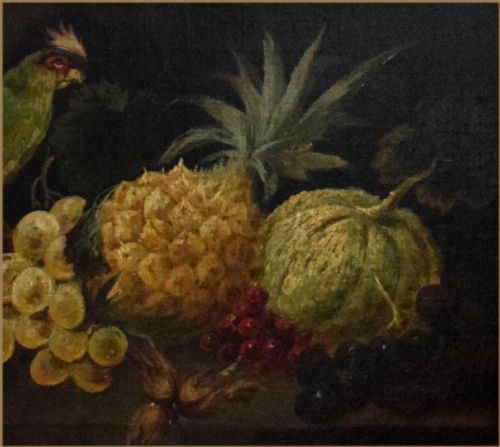
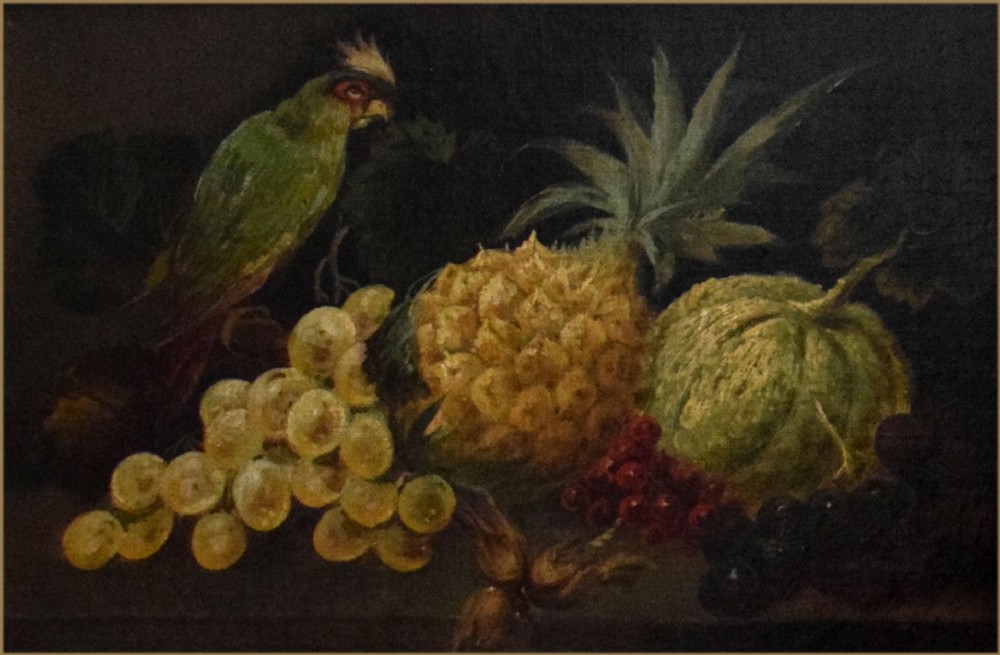
fig 2. An oil painting depicting a green parrot perched near a cluster of fruit including a pineapple, melon, and grapes set against a dark background.
fig 2. George Lance, 1802 - 1864 A Still Life of a White Fronted Amazon Parrot with Grapes, a Pineapple, Mellon, Hazel Nuts and Red and Black Currants oil on Canvas

The white-fronted amazon nests in tree cavities. Their breeding season is usually in the spring, starting in February and ending in the summer (in June and July in most areas). After breeding, the female will lay an average of three to four white eggs. Eggs are incubated for about 26 days and chicks leave the nest at the age of about 60 days from hatching.

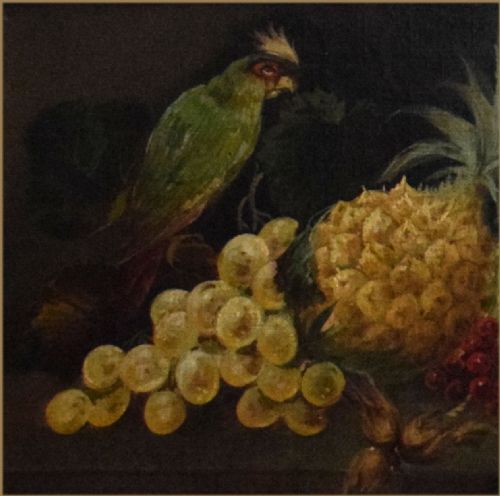
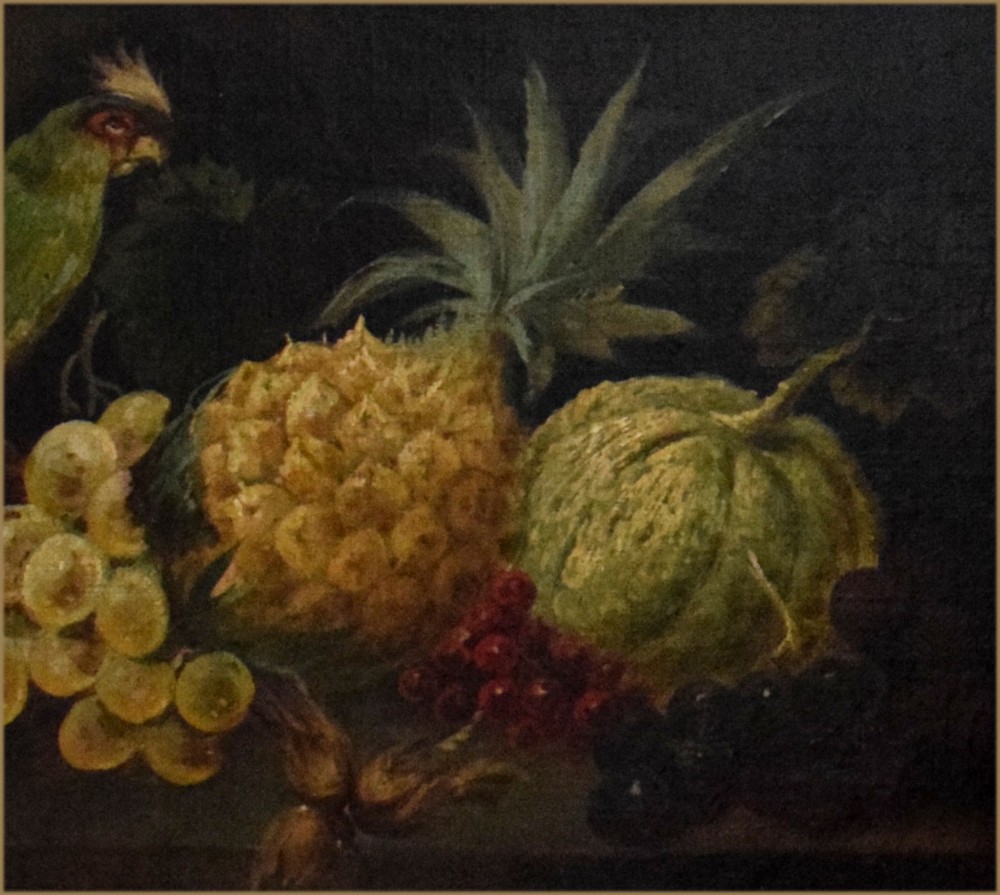
fig 3. An oil painting depicting a green parrot perched near a cluster of fruit including a pineapple, melon, and grapes set against a dark background.
fig 3. George Lance, 1802 - 1864 A Still Life of a White Fronted Amazon Parrot with Grapes, a Pineapple, Mellon, Hazel Nuts and Red and Black Currants oil on Canvas

Artist Biography

Lance was born at the old manor-house in Little Easton in Essex. His father was William Lance who had previously served in a regiment of light horse and was at the time of Lance's birth an adjutant in the Essex yeomanry; afterwards he became the inspector of the Bow Street horse-patrol. His mother, Louisa Lucy (née) Constable, with whom his father had eloped from boarding-school, was the daughter of Colonel Constable of Beverley in Yorkshire.Although Lance showed a predilection for art at a very early age, his friends placed him, when under the age of fourteen, in a factory in Leeds. However, the uncongenial work injured his health and he returned to London. Wandering one day into the British Museum, he casually started a conversation with Charles Landseer, who happened to be drawing there. On learning that Landseer was a pupil of Benjamin Haydon, he went early next morning to that painter's residence, and asked to become a pupil. Haydon replied that if his drawings promised future success he would instruct him for nothing. Not many days later Lance, still under fourteen, entered Haydon's studio, and remained there seven years, at the same time studying in the schools of the Royal Academy. While designing a picture inspired by Homer's 'Iliad', he decided, before putting on the colours, to paint some fruit and vegetables, in order to improve his execution. His work attracted the notice of Sir George Beaumont, who purchased it, and this success led him to paint another fruit-piece, which he sold to the Earl of Shaftesbury. He then painted two fruit-pieces for the Duke of Bedford as decorations for a summer-house at Woburn Abbey, and his work proved so profitable that he decided to devote himself to the painting of still-life.

Height
20.5cm (8.07")
Width
31cm (12.20")
Depth
2cm (0.79")
Date of Manufacture

Artware Fineart has dated this Victorian Still Life Painting to the 19th Century.

Reference Numbers
Sellingantiques Ref
SA758841
Dealers Internal Ref
4345
Artware Fineart
Sellingantiques verified Since Sep 2008
Dealer Profile

You can view the stock and full dealer information on the Artware Fineart Profile Page
PDF SHARE
SAVE
An oil painting depicting a green parrot perched near a cluster of fruit including a pineapple, melon, and grapes set against a dark background.
1 / 5
Archive I An oil painting depicting a green parrot perched near a cluster of fruit including a pineapple, melon, and grapes set against a dark background.

George Lance, 1802 - 1864 A Still Life of a White Fronted Amazon Parrot with Grapes, a Pineapple, Mellon, Hazel Nuts and Red and Black Currants oil on Canvas
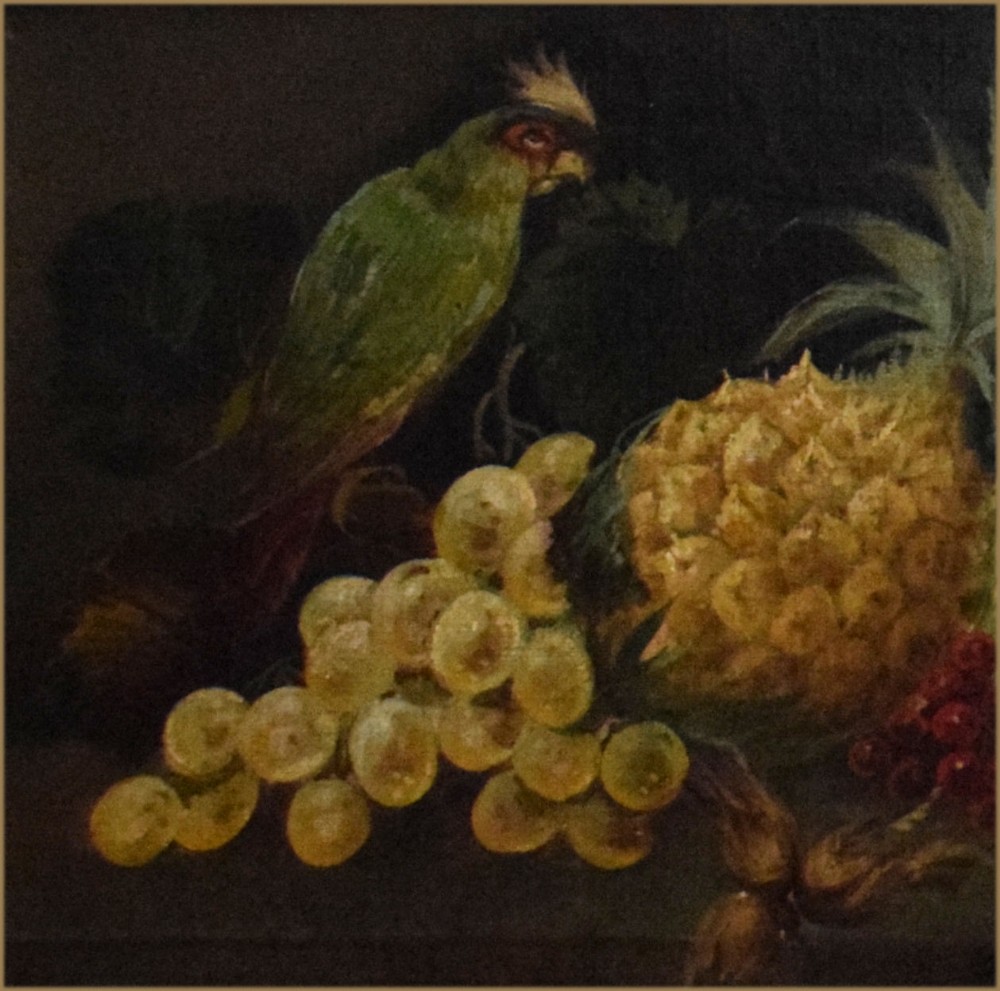
Archive II An oil painting depicting a green parrot perched near a cluster of fruit including a pineapple, melon, and grapes set against a dark background. View II
Archive III An oil painting depicting a green parrot perched near a cluster of fruit including a pineapple, melon, and grapes set against a dark background. View III
Archive IV An oil painting depicting a green parrot perched near a cluster of fruit including a pineapple, melon, and grapes set against a dark background. View IV
Archive V An oil painting depicting a green parrot perched near a cluster of fruit including a pineapple, melon, and grapes set against a dark background. View V
Enlarged Archival View
Telephone 07958 699 645
Location
18 La Gare
51 Surrey Row
London
SE1 0BZ
United Kingdom
Verified Since Sep 2008
Items For Sale 243
Items Sold 223
Artware Fineart
Verified Since Sep 2008
View Dealer Info
Location: 18 La Gare , 51 Surrey Row , London , SE1 0BZ , United Kingdom
Verified
Sep 2008
For Sale
243
Sold
223
An oil painting depicting a green parrot perched near a cluster of fruit including a pineapple, melon, and grapes set against a dark background.
George Lance, 1802 - 1864 A Still life of a White Fronted Amazon Parrot with Grapes, a Pineapple, Mellon, Hazel Nuts and Red and Black Currants oil on canvas
Ref: SA758841
An oil painting depicting a green parrot perched near a cluster of fruit including a pineapple, melon, and grapes set against a dark background.
Detail View 1
Detail View 2
Detail View 3
Detail View 4
Archival Detail
Every single antique dealer on our platform is individually approved by our internal team. We verify their professional trade history, ethical standards, and photographic quality to ensure a secure, high-standard buying environment. Upon joining, every dealer agrees to a strict 9-point code of conduct. While issues can occasionally arise, our dealers typically resolve them swiftly and directly with the buyer. In fact, since our founding in 2002, Sellingantiques has only had to step in to help resolve an issue on roughly five occasions—a true testament to the quality of our dealers and their dedication to your happiness.
Our dealers are highly experienced in packing and shipping fragile, high-value antiques. Because you are in direct contact with the dealer, you will be able to easily go through all available shipping and insurance options together to ensure your item arrives safely.
Antiques are the ultimate green purchase. By choosing historical pieces over newly manufactured goods, you completely eliminate the carbon footprint of modern mass production while preserving exceptional, timeless craftsmanship.

Victorian still life paintings often feature elaborate compositions of fruit, game, or exotic flora and fauna, reflecting the eras interest in natural history, exploration, and botanical abundance.

Artists typically used oil pigments bound with linseed oil applied onto hand-stretched linen or cotton canvas, supported by wooden stretcher bars and finished with protective varnish.

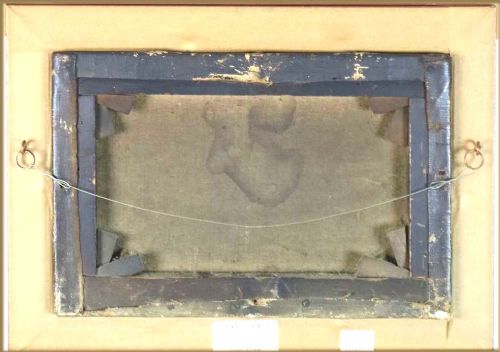
Authentic pieces generally display natural age-related craquelure across the paint layer, canvas oxidisation on the reverse, and historical stretcher construction without modern staples.

Position the artwork above a neutral sideboard or mantelpiece to create an engaging focal point that contrasts traditional painterly detail with clean architectural lines.

Display the artwork away from direct sunlight, high humidity, and direct heat sources, dusting the surface gently with a dry, soft-haired brush rather than liquid cleansers.
items
Add keywords to the filter
Price
£100
£250000
Era
Movements
Material
Origin
Stock Location
Freshness
Online Payments
Categories