12,535  PAGES BROWSED TODAY PAGES TODAY 36  ANTIQUES UPLOADED TODAY NEW ARRIVALS
ID #SA753644
FOR SALE
£8,950
Email Buy
Save
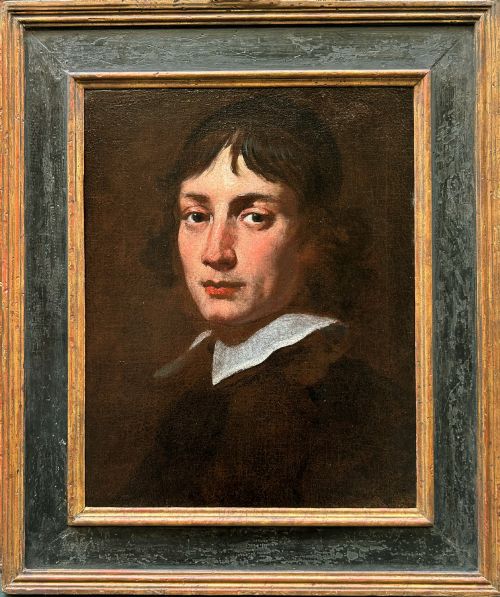
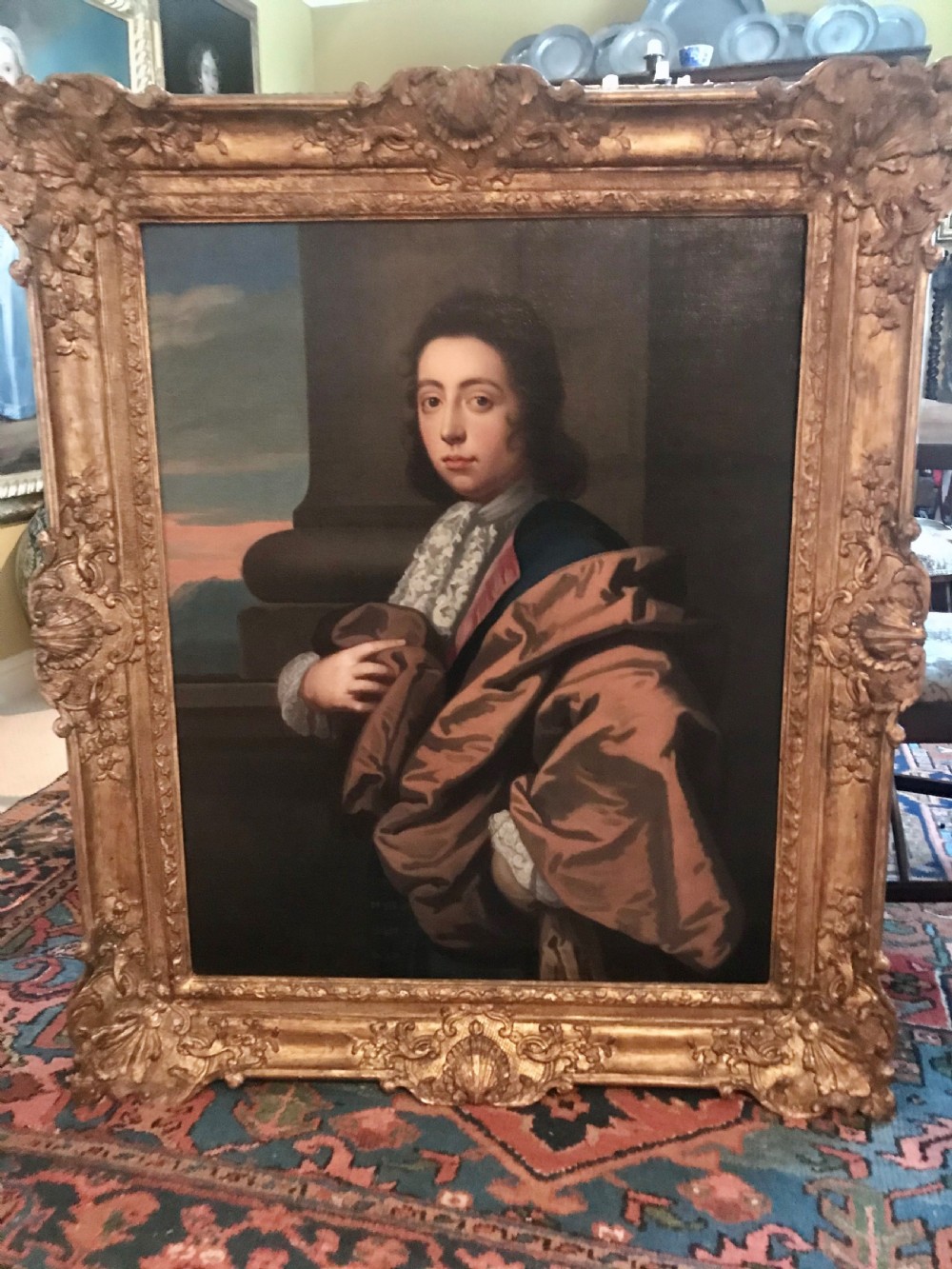
Portrait of a Young Gentleman C.1660; Attributed to John Greenhill.
Roy Precious - Antiques & Fine Art
for sale €10,472     $11,367
£8,950
Roy Precious - Antiques & Fine Art

Roy Precious - Antiques & Fine Art

Sellingantiques Verified Since Mar 2003
View Dealers Stock Page
  • About Us
    Roy and nadine precious: specialists in portraiture from the 16th to the 20th century. Established in 1972.
Id #SA753644
PDF SHARE
SAVE

Portrait of a Young Gentleman C.1660; Attributed to John Greenhill.

17th century
Description

Oil on canvas now in a 19th century gilt frame in 18th century style.

The handsome young sitter wears his own hair; the periwig was just coming into fashion and not all the gentry wore them at first. His cravat looks to be of Bruges lace .. very costly, and a la mode. He also wears, wrapped around him, an Indian silk tea gown; these were also highly fashionable and hugely expensive. So much so that, for his portrait, Samuel Pepys hired one, as he couldn't afford to buy.

The young gentleman stands in the classic and much favoured elegant pose, his elbow rests on the plinth of a huge column; this was not just an artistic conceit, but symbolic. The column represents the sitter in that he is the pillar of his House or family; clearly he was the one who was, or soon to become, the head of the family.

JOHN GREENHILL (c.1642-1676), was an English born portrait painter whose initial training is unknown but who rivalled the leading London artists of the seventeenth century.

The Restoration of King Charles II (1630-85) stimulated an upheaval within the cultural sphere, in particular artistic patronage. Portrait painters such as Sir Peter Lely quickly found favour amongst the highest ranks of society, and as a result many continental artists migrated to England in a bid to win the patronage of the monarch, prosperous courtiers and powerful statesmen. Greenhill was amongst very few English artists able to compete with the popularity and skill of foreign artists and just one month before his premature death, he was still considered one of the most talented portrait painters of the age.

Of all the artists to emerge from the studio of Sir Peter Lely (1618-80) – the dominant artist in England in the late seventeenth century – John Greenhill was, as George Vertue noted, “the most excellent.” He is known to have joined Lely’s studio by 1662, but seems to have left fairly soon afterwards to establish his own practice. Vertue claimed that Lely was jealous of his pupil’s ability. He was commissioned to paint a number of leading figures of the court, including Anne, Duchess of York, and even the King. However, his dissolute lifestyle led to the end of promising career – he died barely into his thirties, after falling into a flooded gutter, drunk, in Long Acre, leaving a wife and young family behind.

SIZE:46 x 39 x 3.25 inches including the frame.

PROVENANCE: Private Collection, Surrey.

Physical Dimensions
Height
117cm (46.06")
Width
99cm (38.98")
Depth
8cm (3.15")
Declaration

Roy Precious - Antiques & Fine Art has dated this 17th Century Oil Portrait to the 17th Century.

Reference Numbers
Sellingantiques Reference
SA753644
Dealers Internal Reference
9195/6
Description
Oil on canvas now in a 19th century gilt frame in 18th century style.
The handsome young sitter wears his own hair; the periwig was just coming into fashion and not all the gentry wore them at first.
Roy Precious - Antiques & Fine Art

His cravat looks to be of Bruges lace .. very costly, and a la mode. He also wears, wrapped around him, an Indian silk tea gown; these were also highly fashionable and hugely expensive. So much so that, for his portrait, Samuel Pepys hired one, as he couldn't afford to buy.

fig 1. A seventeenth-century oil painting depicting a young gentleman in brown drapery and lace cravat set in a deeply carved giltwood frame.
fig 1. Portrait of a Young Gentleman C.1660; Attributed to John Greenhill.

The young gentleman stands in the classic and much favoured elegant pose, his elbow rests on the plinth of a huge column; this was not just an artistic conceit, but symbolic. The column represents the sitter in that he is the pillar of his House or family; clearly he was the one who was, or soon to become, the head of the family.

fig 2. A seventeenth-century oil painting depicting a young gentleman in brown drapery and lace cravat set in a deeply carved giltwood frame.
fig 2. Portrait of a Young Gentleman C.1660; Attributed to John Greenhill.

JOHN GREENHILL (c.1642-1676), was an English born portrait painter whose initial training is unknown but who rivalled the leading London artists of the seventeenth century.

The Restoration of King Charles II (1630-85) stimulated an upheaval within the cultural sphere, in particular artistic patronage. Portrait painters such as Sir Peter Lely quickly found favour amongst the highest ranks of society, and as a result many continental artists migrated to England in a bid to win the patronage of the monarch, prosperous courtiers and powerful statesmen. Greenhill was amongst very few English artists able to compete with the popularity and skill of foreign artists and just one month before his premature death, he was still considered one of the most talented portrait painters of the age.

fig 3. A seventeenth-century oil painting depicting a young gentleman in brown drapery and lace cravat set in a deeply carved giltwood frame.
fig 3. Portrait of a Young Gentleman C.1660; Attributed to John Greenhill.

Of all the artists to emerge from the studio of Sir Peter Lely (1618-80) – the dominant artist in England in the late seventeenth century – John Greenhill was, as George Vertue noted, “the most excellent.” He is known to have joined Lely’s studio by 1662, but seems to have left fairly soon afterwards to establish his own practice. Vertue claimed that Lely was jealous of his pupil’s ability. He was commissioned to paint a number of leading figures of the court, including Anne, Duchess of York, and even the King. However, his dissolute lifestyle led to the end of promising career – he died barely into his thirties, after falling into a flooded gutter, drunk, in Long Acre, leaving a wife and young family behind.

SIZE:46 x 39 x 3.25 inches including the frame.

PROVENANCE: Private Collection, Surrey.

Height
117cm (46.06")
Width
99cm (38.98")
Depth
8cm (3.15")
Date of Manufacture

Roy Precious - Antiques & Fine Art has dated this 17th Century Oil Portrait to the 17th Century.

Reference Numbers
Sellingantiques Ref
SA753644
Dealers Internal Ref
9195/6
Roy Precious - Antiques & Fine Art
Sellingantiques verified Since Mar 2003

Roy and nadine precious: specialists in portraiture from the 16th to the 20th century. Established in 1972.

Dealer Profile

You can view the stock and full dealer information on the Roy Precious - Antiques & Fine Art Profile Page
PDF SHARE
SAVE
A seventeenth-century oil painting depicting a young gentleman in brown drapery and lace cravat set in a deeply carved giltwood frame.
1 / 6
Archive I A seventeenth-century oil painting depicting a young gentleman in brown drapery and lace cravat set in a deeply carved giltwood frame.

Portrait of a Young Gentleman C.1660; Attributed to John Greenhill.

Archive II A seventeenth-century oil painting depicting a young gentleman in brown drapery and lace cravat set in a deeply carved giltwood frame. View II
Archive III A seventeenth-century oil painting depicting a young gentleman in brown drapery and lace cravat set in a deeply carved giltwood frame. View III
Archive IV A seventeenth-century oil painting depicting a young gentleman in brown drapery and lace cravat set in a deeply carved giltwood frame. View IV
Archive V A seventeenth-century oil painting depicting a young gentleman in brown drapery and lace cravat set in a deeply carved giltwood frame. View V
Archive VI A seventeenth-century oil painting depicting a young gentleman in brown drapery and lace cravat set in a deeply carved giltwood frame. View VI
FURTHER BROWSING

Visitors also looked at these ⇣

Enlarged Archival View
Location
Wiltshire
United Kingdom
Dealer Profile Page sellingantiques.co.uk/rp
Verified Since Mar 2003
Items For Sale 95
Items Sold 679
Roy Precious - Antiques & Fine Art
Verified Since Mar 2003
View Dealer Info
Location: Wiltshire, United Kingdom
Verified
Mar 2003
For Sale
95
Sold
679
A seventeenth-century oil painting depicting a young gentleman in brown drapery and lace cravat set in a deeply carved giltwood frame.
Portrait of a Young Gentleman c.1660; Attributed to John Greenhill.
Ref: SA753644
A seventeenth-century oil painting depicting a young gentleman in brown drapery and lace cravat set in a deeply carved giltwood frame.
Detail View 1
Detail View 2
Detail View 3
Detail View 4
Detail View 5
Archival Detail
Every single antique dealer on our platform is individually approved by our internal team. We verify their professional trade history, ethical standards, and photographic quality to ensure a secure, high-standard buying environment. Upon joining, every dealer agrees to a strict 9-point code of conduct. While issues can occasionally arise, our dealers typically resolve them swiftly and directly with the buyer. In fact, since our founding in 2002, Sellingantiques has only had to step in to help resolve an issue on roughly five occasions—a true testament to the quality of our dealers and their dedication to your happiness.
Our dealers are highly experienced in packing and shipping fragile, high-value antiques. Because you are in direct contact with the dealer, you will be able to easily go through all available shipping and insurance options together to ensure your item arrives safely.
Antiques are the ultimate green purchase. By choosing historical pieces over newly manufactured goods, you completely eliminate the carbon footprint of modern mass production while preserving exceptional, timeless craftsmanship.

Restoration portraiture, dating from around 1660 onwards in Britain, often features sitters in relaxed poses with dramatic fabric drapery, lace collars, and dark or architectural backgrounds influenced by continental Baroque techniques.

Painters during this period utilised hand-ground mineral pigments mixed with linseed oil, applied onto stretched linen canvas, and framed within carved pine or oak moulding finished in gold leaf.

Authentic pieces generally exhibit age-appropriate craquelure across the paint surface, historic stretcher bars or original canvas lining, and hand-carved giltwood framing showing natural oxidisation.

A substantial framed portrait works well as a central focal point above a fireplace mantelpiece or console sideboard, creating visual contrast when paired with contemporary furniture.

Keep the artwork away from direct sunlight, heating vents, and moisture. Clean gently with a soft feather duster and consult a professional conservator for any structural repairs or paint restoration.
items
Add keywords to the filter
Price
£100
£250000
Era
Movements
Material
Origin
Stock Location
Freshness
Online Payments
Categories