John Irvine , 1805-1888
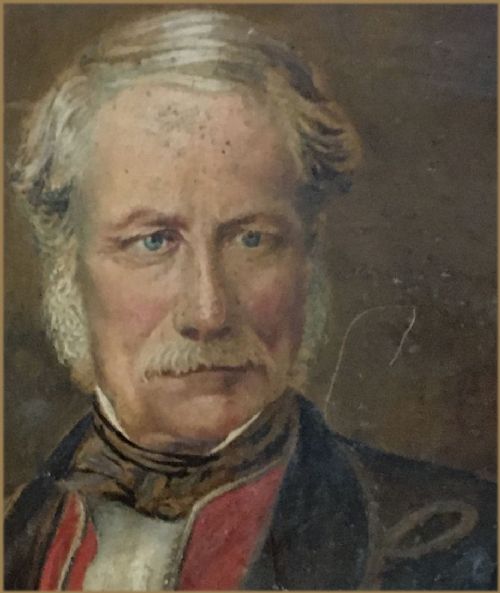
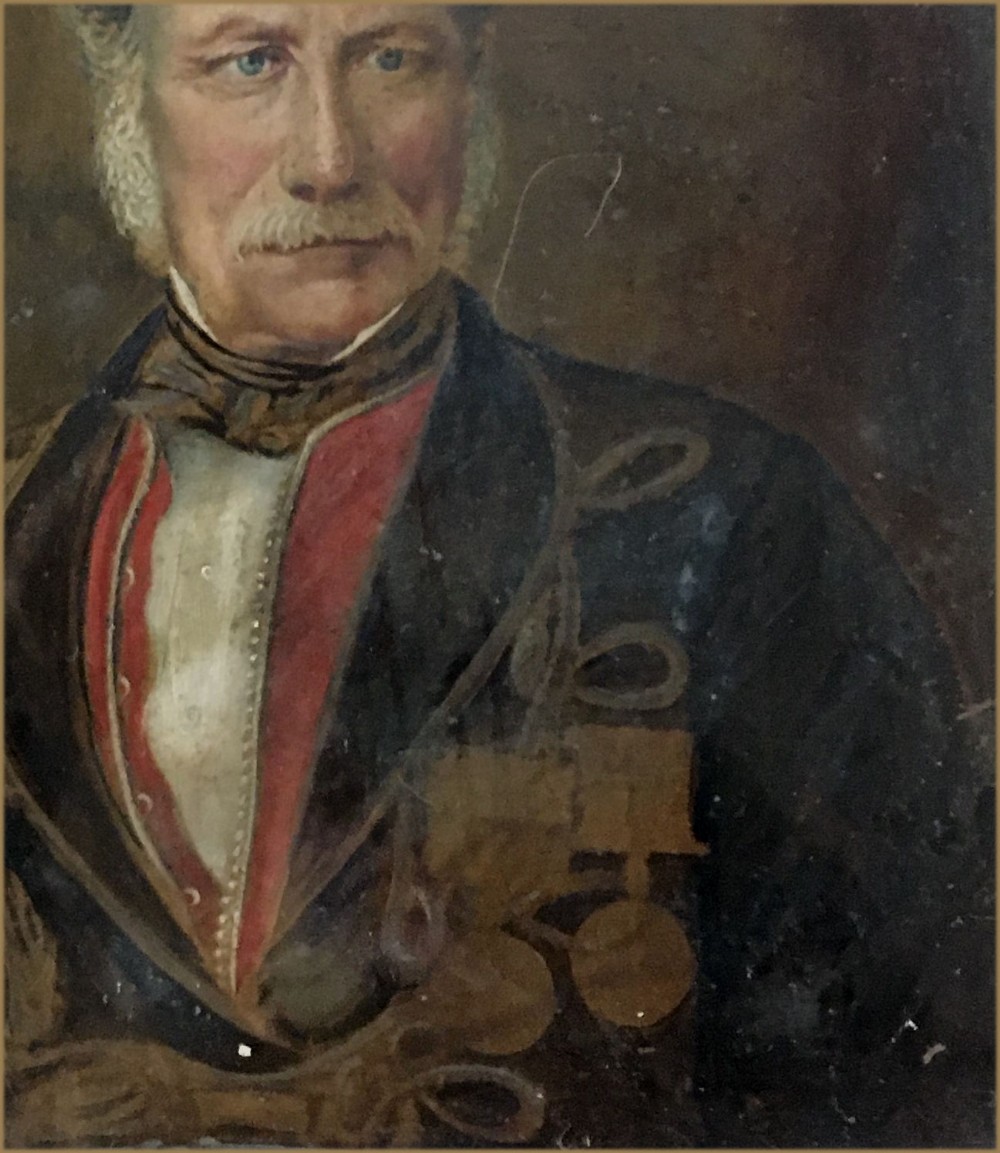
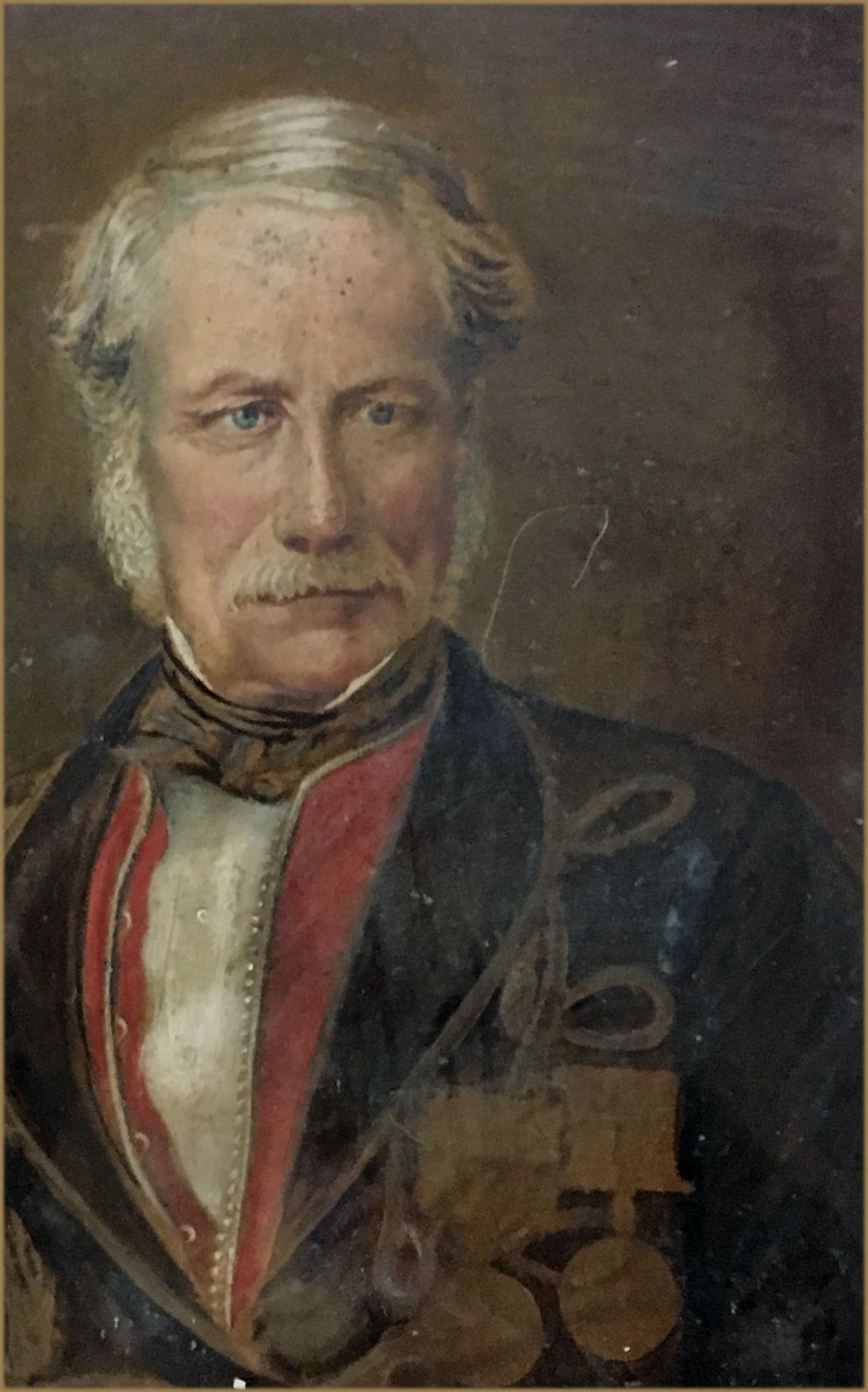
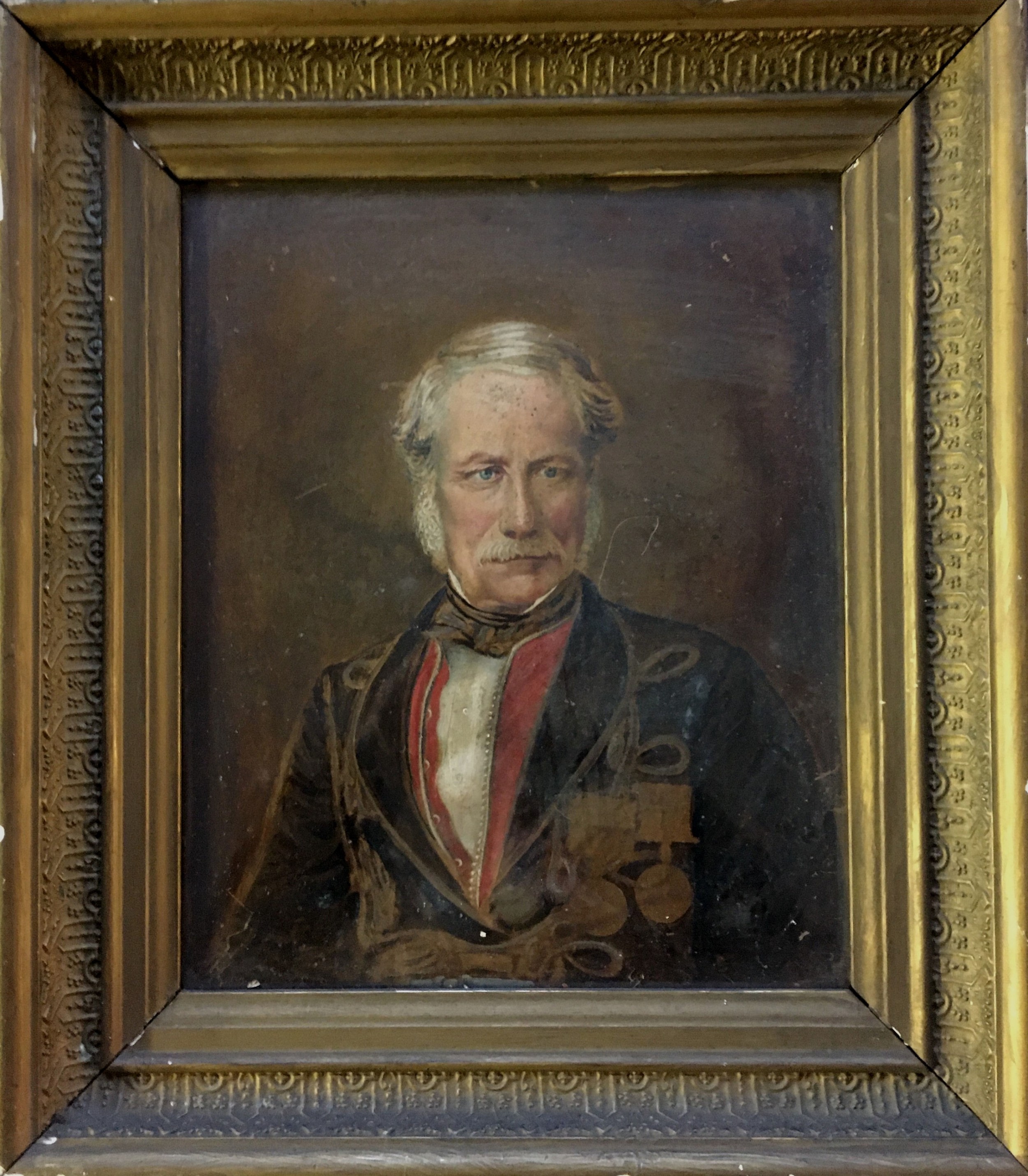
Portrait of Sir John Larkin Cheese Richardson (1810-1878) in Military dress
oil on board
30.50 x 25 cm.
John Larkins Cheese Richardson, the son of Robert Richardson and his wife, Mary Anne Romney, was born on 4 August 1810 in Bengal, India, and was baptised at Calcutta. His father, an East India Company civil servant, managed a raw silk factory at Kumarkhali. After education at the East India Company College at Addiscombe, near Croydon, in Surrey, England, Richardson joined the Bengal Horse Artillery in 1839. On 11 February 1834 at Agra he married Charlotte Laing, who, after bearing three children, died in 1842.
Richardson fought in the Afghanistan campaign of 1842. He distinguished himself in the storming of the hill fort of Istalif, being wounded and later decorated for gallantry. He was commissioned as captain in 1843, took part in the First Sikh War of 1845–46, and served as a staff officer until his retirement from the East India Company in 1
...851. While Richardson was serving in India, Henry Havelock, the hero of Lucknow, had recruited him to his band of evangelicals and he remained an evangelical all his life, as well as being a devoted Anglican.
In 1848 Richardson, whose lifelong passion for farming had been shown in 1842 with his subscription to The Farmer, began thinking of retirement to a farming life in one of the colonies. He took two years'' sick leave in Cape Town, but, disliking South Africa, next considered New Zealand. In 1852, having retired to England, he sailed for New Zealand on the Slains Castle with his 10-year-old son for a preliminary view, leaving his daughters at school. He travelled extensively by foot, horse and canoe in the provinces of Wellington and Taranaki, and in Otago, where he decided to settle. Returning to England, in 1854 he published a witty and informative travel book, A summer''s excursion in New Zealand,…by an Old Bengalee, and also a long, serious narrative poem, The first Christian martyr of the New Zealand church.
After three years in England acquiring necessary practical skills and collecting farm equipment, Richardson in 1856 sailed with his children in the Strathmore, bringing 20 tons of chattels. He bought 150 acres in South Otago by the Puerua River, built a thatched hut, and with his young son and one farm labourer set about clearing and fencing his farm, Willowmead. In 1858 he finished building a handsome two-storeyed homestead, which is still in use.
Richardson was aged 46 on his return to New Zealand, where he was known as Major Richardson. He was unhurried in manner and of cultivated speech; in appearance upright, thin and fair, with piercing blue eyes, alive with intelligence and humour. This humour was inseparable from his make-up. His entrance brought any gathering to life, and the pages of the Otago Witness were soon enlivened by his informative letters and articles on many topics, all spiced with his very individual brand of wit. Yet there was in his nature an underlying strain of pessimism, which later was no asset to him as a politician.
His soldiering background was always apparent, and as early as 1860 he began his successful efforts to found a series of volunteer rifle corps. This was connected, not with the wars in the North Island, but with a fear of aggression by Britain''s enemies – France or America. In fact, he respected and sympathised with the Maori, who, he said, ''to this hour…have been treated as a thing of nought''. The Treaty of Waitangi, he said, was ''the veriest sham and delusion'', ''a triumph of art over innocence.''
Richardson always claimed to prefer his Willowmead retreat to public life, yet his impetuous and emotional involvement in the issues of the day drew him into politics. The welfare of small farmers and the equitable distribution of land, linked to immigration, were his lasting obsessions
Internal Reference: 4351
Antique ID Number (AIDN): SA747773
Dateline of this antique is 19th Century
Height is 30.5cm (12.0inches)Width is 25cm (9.8inches)Depth is 0cm (0.0inches)




Thank you.
Your comment has been sent to Sellingantiques.