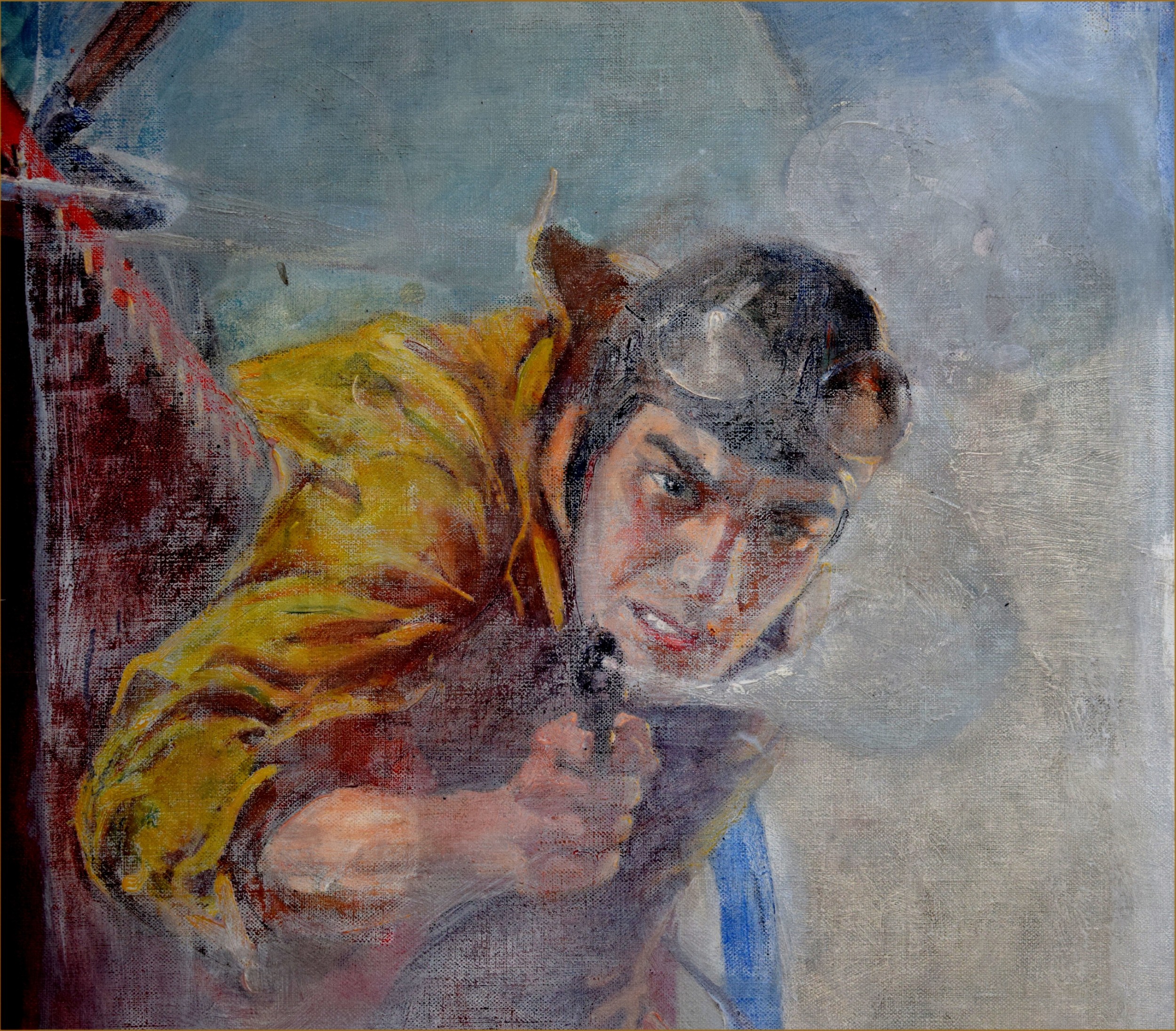
Artware Fineart has dated this Aviation Oil Painting Illustration to the 1920s.
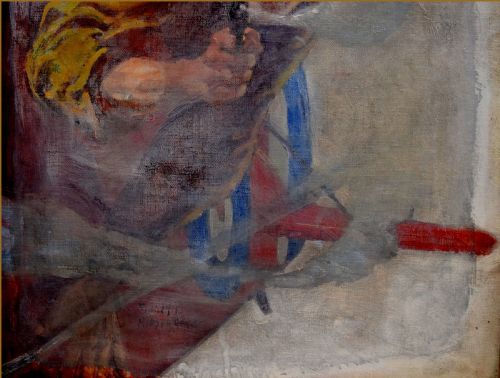
Air Ace shooting his Pistol from the cockpit at the Enemy
signed
oil on canvas
89 x 69 cm
Pulp magazines, the popular, inexpensive fiction publications that were read and enjoyed by millions, reached their zenith in the 1930s, though the genre began in earnest in 1896 with The Argosy, a monthly magazine that was printed on low-cost pulp paper. Not a solely American institution, pulp magazines were preceded by the weekly issues of “penny dreadfuls” that were popular in England from the 1830s to the 1890s, so named because of the low price and subject matter of crime and horror.
Part of the popularity of the penny dreadfuls can be attributed to the affordability of the magazines. Because they were printed on cheap pulp paper, they were much less expensive than the high quality, serialized novels of authors like Sir Arthur Conan Doyle and Charles Dickens.
Similar in style to the penny dreadfuls, dime novels became popular in America beginning in the 1860s. The pocket-sized paperback books included reprints of previously published stories in a small format. Eventually, the dime novels featured more newly-authored pieces as sales of the publications grew. The first pulp magazine, The Argosy, was published in October 1896, though the magazine had been published as a children’s weekly since 1882. The first monthly issue of The Argosy was printed on cheap wood pulp paper, was aimed at an adult audience, included purely fictional content, and only cost ten cents. The margin of profit was large enough that the magazine could include much more content that similar periodicals. According to historian Robert Sampson, the magazine’s circulation increased from 9,000 copies in 1894, to 80,000 following its format change in 1896 to nearly 500,000 in 1907 (Yesterday's Faces: Dangerous Horizons, p.11). Other publishers took note of The Argosy’s success, and additional pulp magazines soon appeared on newsstands. The Popular Magazine debuted in 1903 and often featured cover art by famed illustrator N.C. Wyeth. The All-Story Magazine and Blue Book launched in 1905. Other notable pulp magazines being published were Adventure in 1910, Black Mask in 1920, Love Story in 1921, Weird Tales in 1923, and Amazing Stories in 1926.
Pulp magazines were so named because of the inexpensive paper the stories were printed on, in contrast to the more respectable “glossies” such as Collier’s, Life, and The Saturday Evening Post. Presented on newsstands alongside scores of glossies, pulp magazines were able to catch the eye of passersby with their colorful, action-packed, scintillating, and often lurid cover art. To make the pulp magazines more visible, the covers featured artwork by some of today’s most regarded illustrators, including J.C. Leyendecker, Dean Cornwell, N.C. Wyeth, Everett Raymond Kinstler, Tom Lovell, and Frank Schoonover.
Though some pulp magazines provided a mix of stories each month, many catered to certain themes, such as Adventure, Crime, Horror, Romance, Science-Fiction, Sex, Sports, War, and Western.
You could explore adventure on the sea, in the jungle, or in Asia with magazines such as Adventure, Blue Book, The Mysterious Wu Fang, Doc Savage, and Jungle Stories. For stories on crime, spies, or heroes, you could purchase Detective Story Magazine, Dime Detective Magazine, The Black Mask, Spy Stories, Strange Detective Mysteries, or The Shadow. If horror was your interest, you could purchase Weird Tales, Terror Tales, Dime Mystery Magazine, and Horror Stories. Romance magazines catered to women and included titles like Love Story Magazine, Rangeland Romances, Romance, and New Love. Science-Fiction (or Fantasy, as it was called then) could be found in books like Amazing
Artware Fineart has dated this Aviation Oil Painting Illustration to the 1920s.
You can view the stock and full dealer information on the Artware Fineart Profile Page

Sidney Riesenberg, 1885 - 1971 Air Ace Shooting His Pistol from the Cockpit at the Enemy