42,920  PAGES BROWSED TODAY PAGES TODAY 98  ANTIQUES UPLOADED TODAY NEW ARRIVALS
ID #SA712886
FOR SALE
£7,500
Email
Save
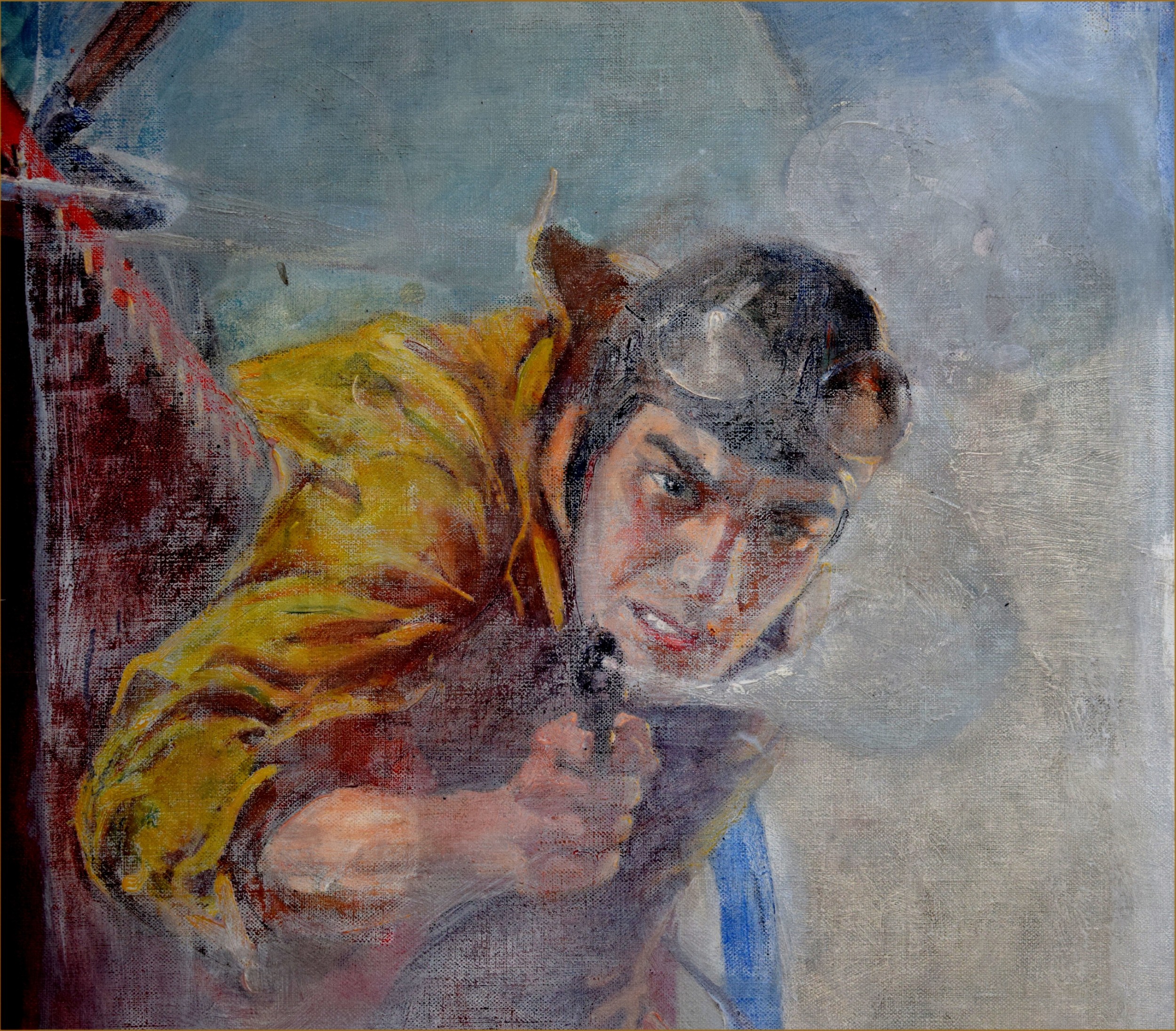
Sidney Riesenberg, 1885 - 1971 Air Ace Shooting His Pistol from the Cockpit at the Enemy
Artware Fineart
for sale €8,775     $9,525
£7,500

Artware Fineart

Sellingantiques Verified Since Sep 2008
View Dealers Stock Page
Relevant Links
Id #SA712886
PDF SHARE
SAVE

Sidney Riesenberg, 1885 - 1971 Air Ace Shooting His Pistol from the Cockpit at the Enemy

1900 - 1920
For Sale by Artware Fineart
Description

Sidney Riesenberg, 1885 - 1971

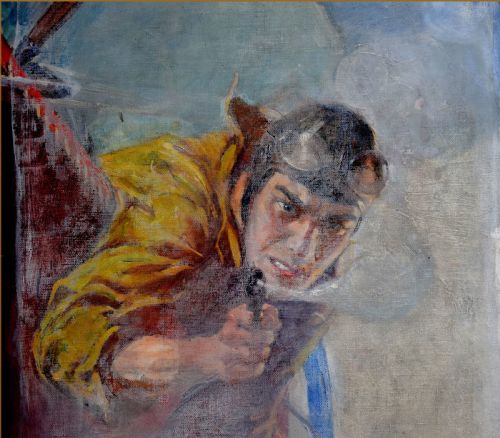
Air Ace shooting his Pistol from the cockpit at the Enemy

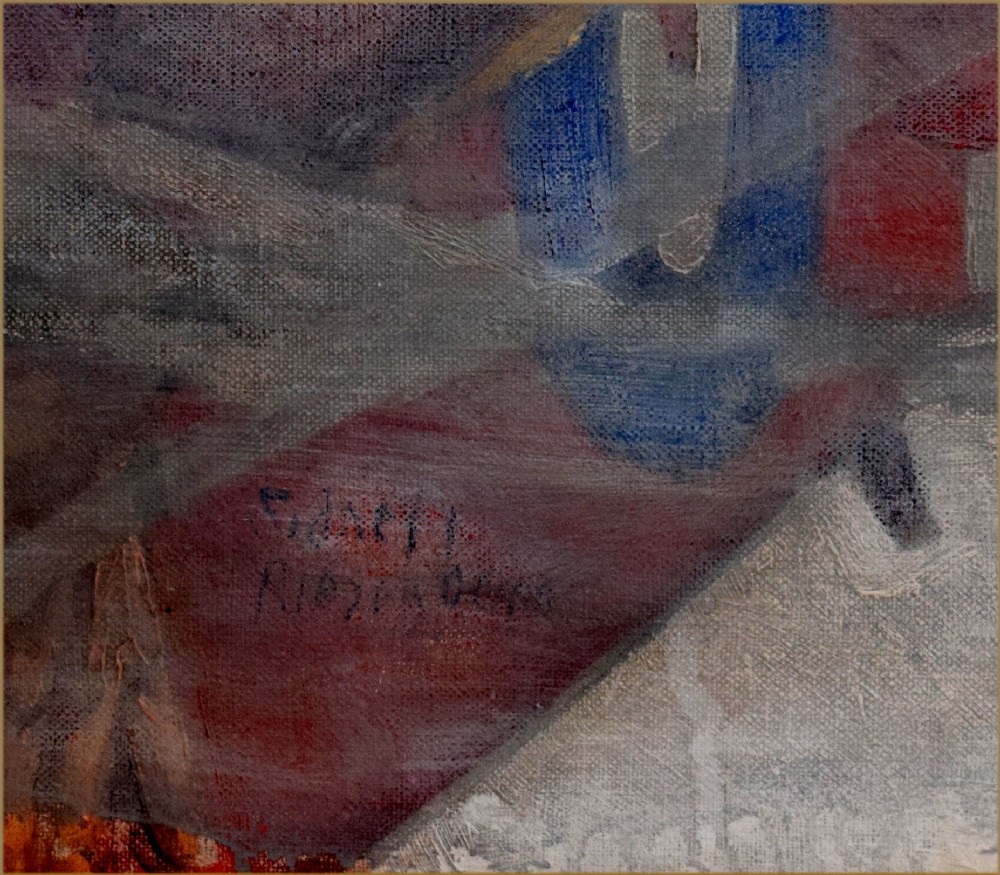
signed

oil on canvas

89 x 69 cm

Pulp magazines, the popular, inexpensive fiction publications that were read and enjoyed by millions, reached their zenith in the 1930s, though the genre began in earnest in 1896 with The Argosy, a monthly magazine that was printed on low-cost pulp paper. Not a solely American institution, pulp magazines were preceded by the weekly issues of “penny dreadfuls” that were popular in England from the 1830s to the 1890s, so named because of the low price and subject matter of crime and horror. Industrialization and improvements in printing allowed the increasingly literate working class affordable reading material. Part of the popularity of the penny dreadfuls can be attributed to the affordability of the magazines. Because they were printed on cheap pulp paper, they were much less expensive than the high quality, serialized novels of authors like Sir Arthur Conan Doyle and Charles Dickens.
Similar in style to the penny dreadfuls, dime novels became popular in America beginning in the 1860s. The pocket-sized paperback books included reprints of previously published stories in a small format. Eventually, the dime novels featured more newly-authored pieces as sales of the publications grew. The first pulp magazine, The Argosy, was published in October 1896, though the magazine had been published as a children’s weekly since 1882. The first monthly issue of The Argosy was printed on cheap wood pulp paper, was aimed at an adult audience, included purely fictional content, and only cost ten cents. The margin of profit was large enough that the magazine could include much more content that similar periodicals. According to historian Robert Sampson, the magazine’s circulation increased from 9,000 copies in 1894, to 80,000 following its format change in 1896 to nearly 500,000 in 1907 (Yesterday's Faces: Dangerous Horizons, p.11). Other publishers took note of The Argosy’s success, and additional pulp magazines soon appeared on newsstands. The Popular Magazine debuted in 1903 and often featured cover art by famed illustrator N.C. Wyeth. The All-Story Magazine and Blue Book launched in 1905. Other notable pulp magazines being published were Adventure in 1910, Black Mask in 1920, Love Story in 1921, Weird Tales in 1923, and Amazing Stories in 1926.
Pulp magazines were so named because of the inexpensive paper the stories were printed on, in contrast to the more respectable “glossies” such as Collier’s, Life, and The Saturday Evening Post. Presented on newsstands alongside scores of glossies, pulp magazines were able to catch the eye of passersby with their colorful, action-packed, scintillating, and often lurid cover art. To make the pulp magazines more visible, the covers featured artwork by some of today’s most regarded illustrators, including J.C. Leyendecker, Dean Cornwell, N.C. Wyeth, Everett Raymond Kinstler, Tom Lovell, and Frank Schoonover.
Though some pulp magazines provided a mix of stories each month, many catered to certain themes, such as Adventure, Crime, Horror, Romance, Science-Fiction, Sex, Sports, War, and Western.

You could explore adventure on the sea, in the jungle, or in Asia with magazines such as Adventure, Blue Book, The Mysterious Wu Fang, Doc Savage, and Jungle Stories. For stories on crime, spies, or heroes, you could purchase Detective Story Magazine, Dime Detective Magazine, The Black Mask, Spy Stories, Strange Detective Mysteries, or The Shadow. If horror was your interest, you could purchase Weird Tales, Terror Tales, Dime Mystery Magazine, and Horror Stories. Romance magazines catered to women and included titles like Love Story Magazine, Rangeland Romances, Romance, and New Love. Science-Fiction (or Fantasy, as it was called then) could be found in books like Amazing

Physical Dimensions
Height
89cm (35.04")
Width
61cm (24.02")
Declaration

Artware Fineart has dated this Aviation Oil Painting Illustration to the 1920s.

Reference Numbers
Sellingantiques Reference
SA712886
Dealers Internal Reference
3586
Description
Sidney Riesenberg, 1885 - 1971

Air Ace shooting his Pistol from the cockpit at the Enemy

signed

oil on canvas

89 x 69 cm

Pulp magazines, the popular, inexpensive fiction publications that were read and enjoyed by millions, reached their zenith in the 1930s, though the genre began in earnest in 1896 with The Argosy, a monthly magazine that was printed on low-cost pulp paper. Not a solely American institution, pulp magazines were preceded by the weekly issues of “penny dreadfuls” that were popular in England from the 1830s to the 1890s, so named because of the low price and subject matter of crime and horror.

Industrialization and improvements in printing allowed the increasingly literate working class affordable reading material.
Artware Fineart

Part of the popularity of the penny dreadfuls can be attributed to the affordability of the magazines. Because they were printed on cheap pulp paper, they were much less expensive than the high quality, serialized novels of authors like Sir Arthur Conan Doyle and Charles Dickens.

fig 1. An early 20th-century oil painting depicting an aviator leaning from a biplane cockpit firing a pistol, rendered in shades of yellow, grey, and brown.
fig 1. Sidney Riesenberg, 1885 - 1971 Air Ace Shooting His Pistol from the Cockpit at the Enemy

Similar in style to the penny dreadfuls, dime novels became popular in America beginning in the 1860s. The pocket-sized paperback books included reprints of previously published stories in a small format. Eventually, the dime novels featured more newly-authored pieces as sales of the publications grew. The first pulp magazine, The Argosy, was published in October 1896, though the magazine had been published as a children’s weekly since 1882. The first monthly issue of The Argosy was printed on cheap wood pulp paper, was aimed at an adult audience, included purely fictional content, and only cost ten cents. The margin of profit was large enough that the magazine could include much more content that similar periodicals. According to historian Robert Sampson, the magazine’s circulation increased from 9,000 copies in 1894, to 80,000 following its format change in 1896 to nearly 500,000 in 1907 (Yesterday's Faces: Dangerous Horizons, p.11). Other publishers took note of The Argosy’s success, and additional pulp magazines soon appeared on newsstands. The Popular Magazine debuted in 1903 and often featured cover art by famed illustrator N.C. Wyeth. The All-Story Magazine and Blue Book launched in 1905. Other notable pulp magazines being published were Adventure in 1910, Black Mask in 1920, Love Story in 1921, Weird Tales in 1923, and Amazing Stories in 1926.

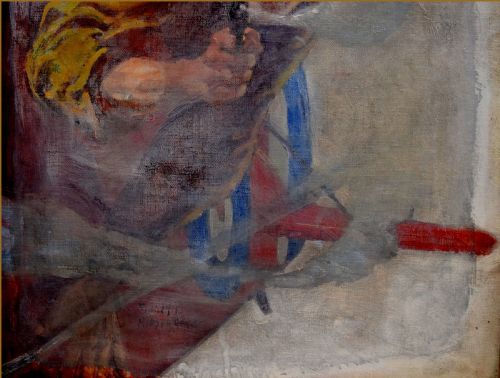
fig 2. An early 20th-century oil painting depicting an aviator leaning from a biplane cockpit firing a pistol, rendered in shades of yellow, grey, and brown.
fig 2. Sidney Riesenberg, 1885 - 1971 Air Ace Shooting His Pistol from the Cockpit at the Enemy

Pulp magazines were so named because of the inexpensive paper the stories were printed on, in contrast to the more respectable “glossies” such as Collier’s, Life, and The Saturday Evening Post. Presented on newsstands alongside scores of glossies, pulp magazines were able to catch the eye of passersby with their colorful, action-packed, scintillating, and often lurid cover art. To make the pulp magazines more visible, the covers featured artwork by some of today’s most regarded illustrators, including J.C. Leyendecker, Dean Cornwell, N.C. Wyeth, Everett Raymond Kinstler, Tom Lovell, and Frank Schoonover.

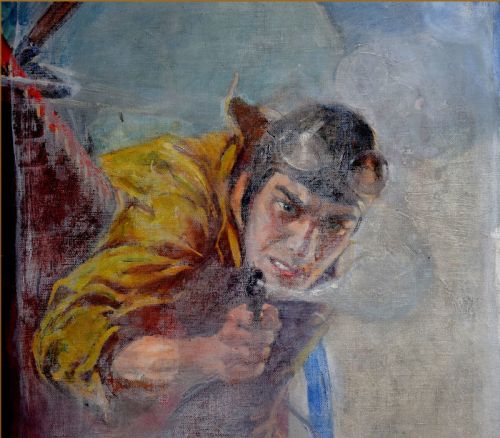
fig 3. An early 20th-century oil painting depicting an aviator leaning from a biplane cockpit firing a pistol, rendered in shades of yellow, grey, and brown.
fig 3. Sidney Riesenberg, 1885 - 1971 Air Ace Shooting His Pistol from the Cockpit at the Enemy

Though some pulp magazines provided a mix of stories each month, many catered to certain themes, such as Adventure, Crime, Horror, Romance, Science-Fiction, Sex, Sports, War, and Western.

You could explore adventure on the sea, in the jungle, or in Asia with magazines such as Adventure, Blue Book, The Mysterious Wu Fang, Doc Savage, and Jungle Stories. For stories on crime, spies, or heroes, you could purchase Detective Story Magazine, Dime Detective Magazine, The Black Mask, Spy Stories, Strange Detective Mysteries, or The Shadow. If horror was your interest, you could purchase Weird Tales, Terror Tales, Dime Mystery Magazine, and Horror Stories. Romance magazines catered to women and included titles like Love Story Magazine, Rangeland Romances, Romance, and New Love. Science-Fiction (or Fantasy, as it was called then) could be found in books like Amazing

Height
89cm (35.04")
Width
61cm (24.02")
Date of Manufacture

Artware Fineart has dated this Aviation Oil Painting Illustration to the 1920s.

Reference Numbers
Sellingantiques Ref
SA712886
Dealers Internal Ref
3586
Artware Fineart
Sellingantiques verified Since Sep 2008
Dealer Profile

You can view the stock and full dealer information on the Artware Fineart Profile Page

Relevant Links
PDF SHARE
SAVE
An early 20th-century oil painting depicting an aviator leaning from a biplane cockpit firing a pistol, rendered in shades of yellow, grey, and brown.
1 / 5
Archive I An early 20th-century oil painting depicting an aviator leaning from a biplane cockpit firing a pistol, rendered in shades of yellow, grey, and brown.

Sidney Riesenberg, 1885 - 1971 Air Ace Shooting His Pistol from the Cockpit at the Enemy
Archive II An early 20th-century oil painting depicting an aviator leaning from a biplane cockpit firing a pistol, rendered in shades of yellow, grey, and brown. View II
Archive III An early 20th-century oil painting depicting an aviator leaning from a biplane cockpit firing a pistol, rendered in shades of yellow, grey, and brown. View III
Archive IV An early 20th-century oil painting depicting an aviator leaning from a biplane cockpit firing a pistol, rendered in shades of yellow, grey, and brown. View IV
Archive V An early 20th-century oil painting depicting an aviator leaning from a biplane cockpit firing a pistol, rendered in shades of yellow, grey, and brown. View V
Enlarged Archival View
Telephone 07958 699 645
Location
18 La Gare
51 Surrey Row
London
SE1 0BZ
United Kingdom
Verified Since Sep 2008
Items For Sale 243
Items Sold 223
Artware Fineart
Verified Since Sep 2008
View Dealer Info
Location: 18 La Gare , 51 Surrey Row , London , SE1 0BZ , United Kingdom
Verified
Sep 2008
For Sale
243
Sold
223
An early 20th-century oil painting depicting an aviator leaning from a biplane cockpit firing a pistol, rendered in shades of yellow, grey, and brown.
Sidney Riesenberg, 1885 - 1971 Air Ace shooting his Pistol from the cockpit at the Enemy
Ref: SA712886
An early 20th-century oil painting depicting an aviator leaning from a biplane cockpit firing a pistol, rendered in shades of yellow, grey, and brown.
Detail View 1
Detail View 2
Detail View 3
Detail View 4
Archival Detail
Every single antique dealer on our platform is individually approved by our internal team. We verify their professional trade history, ethical standards, and photographic quality to ensure a secure, high-standard buying environment. Upon joining, every dealer agrees to a strict 9-point code of conduct. While issues can occasionally arise, our dealers typically resolve them swiftly and directly with the buyer. In fact, since our founding in 2002, Sellingantiques has only had to step in to help resolve an issue on roughly five occasions—a true testament to the quality of our dealers and their dedication to your happiness.
Our dealers are highly experienced in packing and shipping fragile, high-value antiques. Because you are in direct contact with the dealer, you will be able to easily go through all available shipping and insurance options together to ensure your item arrives safely.
Antiques are the ultimate green purchase. By choosing historical pieces over newly manufactured goods, you completely eliminate the carbon footprint of modern mass production while preserving exceptional, timeless craftsmanship.

Early 20th-century aviation illustration focused on dynamic narrative scenes of aerial warfare, pioneering flight, and pilot portraits, popularized by periodicals, pulp magazines, and war effort posters.

Illustrators primarily used oil paints or gouache on heavy stretched linen canvas, illustrators board, or wooden panels to ensure durability during the commercial photomechanical reproduction process.

Authenticity is evaluated through artist signatures, period-appropriate stretcher bars, natural canvas ageing, historical publication records, and characteristic brush technique associated with known illustrators.

Dramatic historical artwork pairs effectively with rich wood paneling, dark leather upholstery, and muted neutral wall tones to create a focal point in a study or library setting.

Keep the canvas away from direct heat sources and high humidity, avoid direct sunlight to prevent paint fading, and clean gentle surface dust exclusively with a soft, dry natural bristle brush.
items
Add keywords to the filter
Price
£100
£250000
Era
Movements
Material
Origin
Stock Location
Freshness
Online Payments
Categories