8,328  PAGES BROWSED TODAY PAGES TODAY 36  ANTIQUES UPLOADED TODAY NEW ARRIVALS
ID #SA676460
FOR SALE
£3,500
Email
Save
Dutch School 18th, Century a Young Man Arranging Game in Larder
Artware Fineart
for sale €4,095     $4,445
£3,500

Artware Fineart

Sellingantiques Verified Since Sep 2008
View Dealers Stock Page
Id #SA676460
PDF SHARE
SAVE

Dutch School 18th, Century a Young Man Arranging Game in Larder

18th century
For Sale by Artware Fineart
Description

Dutch School 18th, Century

A Young Man arranging Game in Larder

oil on canvas

43.18 x 50.80 cm. (17 x 20 in.)

A game larder, also sometimes known as a deer or venison larder, deer, venison or game house, game pantry or game store, is a small domestic outbuilding where the carcasses of game, including deer, game birds, hares and rabbits, are hung to mature in a cool environment. A feature of large country houses in Britain and parts of northern Europe from the 18th century, game larders continue to be used by shooting estates.

A separate building for storing game during the maturation process improves ventilation, while reducing the odour problem. Most large country houses in Britain had a game larder, and numerous examples built between the early 18th and early 20th centuries survive. The structure also existed in other European countries where hunting or shooting game was popular, including Germany and Austria–Hungary.

Game larders were usually situated near the kitchen.The usual English design is single storey, sometimes octagonal, and usually of brick or stone construction; ventilation is provided by louvred roof lanterns and louvred or mesh-covered unglazed windows.Some game larders had separate rooms for small and large game. A stone or slate floor helped to cool the room. By the early 20th century, refrigeration via cooling pipes was employed. Game larders were sometimes combined with other outbuildings, especially ice houses, as for example atElvaston Castle in Derbyshire and Raith Park in Fife. In central Europe, ice houses were themselves sometimes used for storing deer carcasses. Rails or beams were used to support deer on hooks, with roof-suspended racks, sometimes on pulleys, for small game. Shelves, possibly of marble, were also used. Another necessary fixture described by Victorian architectRobert Kerr is a dresser topped with slate or marble for meat preparation. A relatively early example is the game larder at Farnborough Hall, Warwickshire, which dates from around 1750 and is thought to be by Sanderson Miller; the hexagonal rendered-brick structure has a loggia with Tuscan columns and is surmounted with a wooden cupola. An example of an unornamented square game larder stands at Studley Park in Yorkshire; built in limestone, it dates from the late 18th century.The square stone game larder at Rydal Hall in Cumbria has a timber upper storey reached by an external staircase. Although most extant game larders are built in stone or brick, some timber examples have survived. Examples include the structures at Brodsworth Hall, Yorkshire, Audley End House, Essex, and the Bird Game Larder at Ardverikie House, Badenoch and Strathspey.

Physical Dimensions
Height
43cm (16.93")
Width
51cm (20.08")
Depth
2cm (0.79")
Declaration

Artware Fineart has dated this Dutch Game Still Life to the 18th Century.

Reference Numbers
Sellingantiques Reference
SA676460
Dealers Internal Reference
3240
Description
Dutch School 18th, Century

A Young Man arranging Game in Larder

oil on canvas

43.18 x 50.80 cm. (17 x 20 in.)

A game larder, also sometimes known as a deer or venison larder, deer, venison or game house, game pantry or game store, is a small domestic outbuilding where the carcasses of game, including deer, game birds, hares and rabbits, are hung to mature in a cool environment.
A feature of large country houses in Britain and parts of northern Europe from the 18th century, game larders continue to be used by shooting estates.
Artware Fineart
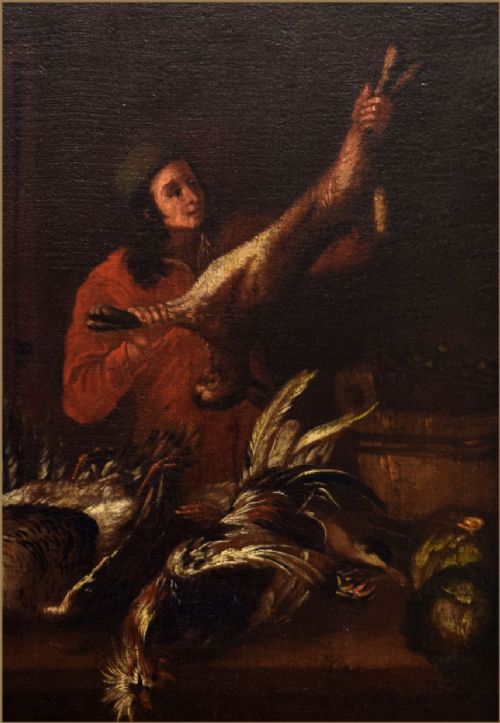
fig 1. An 18th-century Dutch School oil painting depicting a figure in a red garment arranging game birds and an animal head inside a dark larder.
fig 1. Dutch School 18th, Century a Young Man Arranging Game in Larder

A separate building for storing game during the maturation process improves ventilation, while reducing the odour problem. Most large country houses in Britain had a game larder, and numerous examples built between the early 18th and early 20th centuries survive. The structure also existed in other European countries where hunting or shooting game was popular, including Germany and Austria–Hungary.
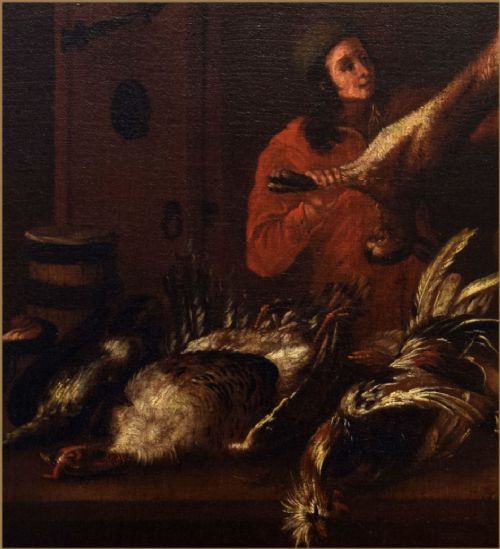
fig 2. An 18th-century Dutch School oil painting depicting a figure in a red garment arranging game birds and an animal head inside a dark larder.
fig 2. Dutch School 18th, Century a Young Man Arranging Game in Larder

Game larders were usually situated near the kitchen.The usual English design is single storey, sometimes octagonal, and usually of brick or stone construction; ventilation is provided by louvred roof lanterns and louvred or mesh-covered unglazed windows.Some game larders had separate rooms for small and large game. A stone or slate floor helped to cool the room. By the early 20th century, refrigeration via cooling pipes was employed. Game larders were sometimes combined with other outbuildings, especially ice houses, as for example atElvaston Castle in Derbyshire and Raith Park in Fife. In central Europe, ice houses were themselves sometimes used for storing deer carcasses. Rails or beams were used to support deer on hooks, with roof-suspended racks, sometimes on pulleys, for small game. Shelves, possibly of marble, were also used. Another necessary fixture described by Victorian architectRobert Kerr is a dresser topped with slate or marble for meat preparation. A relatively early example is the game larder at Farnborough Hall, Warwickshire, which dates from around 1750 and is thought to be by Sanderson Miller; the hexagonal rendered-brick structure has a loggia with Tuscan columns and is surmounted with a wooden cupola. An example of an unornamented square game larder stands at Studley Park in Yorkshire; built in limestone, it dates from the late 18th century.The square stone game larder at Rydal Hall in Cumbria has a timber upper storey reached by an external staircase. Although most extant game larders are built in stone or brick, some timber examples have survived. Examples include the structures at Brodsworth Hall, Yorkshire, Audley End House, Essex, and the Bird Game Larder at Ardverikie House, Badenoch and Strathspey.

Height
43cm (16.93")
Width
51cm (20.08")
Depth
2cm (0.79")
Date of Manufacture

Artware Fineart has dated this Dutch Game Still Life to the 18th Century.

Reference Numbers
Sellingantiques Ref
SA676460
Dealers Internal Ref
3240
Artware Fineart
Sellingantiques verified Since Sep 2008
Dealer Profile

You can view the stock and full dealer information on the Artware Fineart Profile Page
PDF SHARE
SAVE
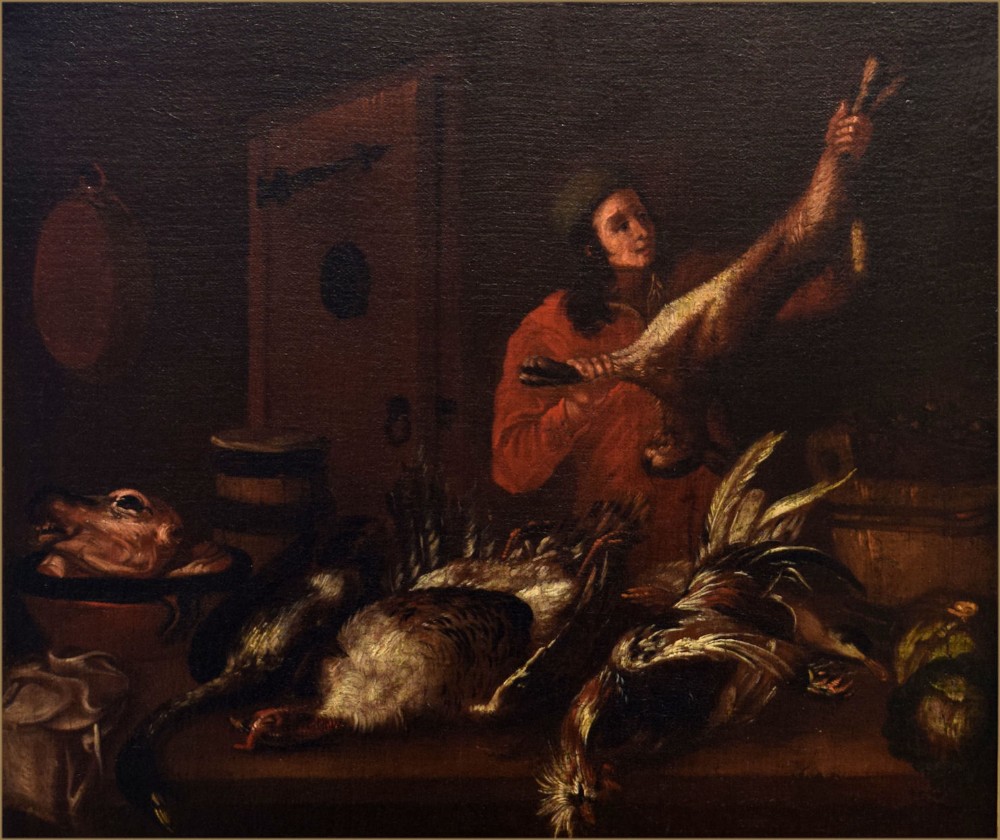
An 18th-century Dutch School oil painting depicting a figure in a red garment arranging game birds and an animal head inside a dark larder.
1 / 5
Archive I An 18th-century Dutch School oil painting depicting a figure in a red garment arranging game birds and an animal head inside a dark larder.

Dutch School 18th, Century A Young Man arranging Game in Larder
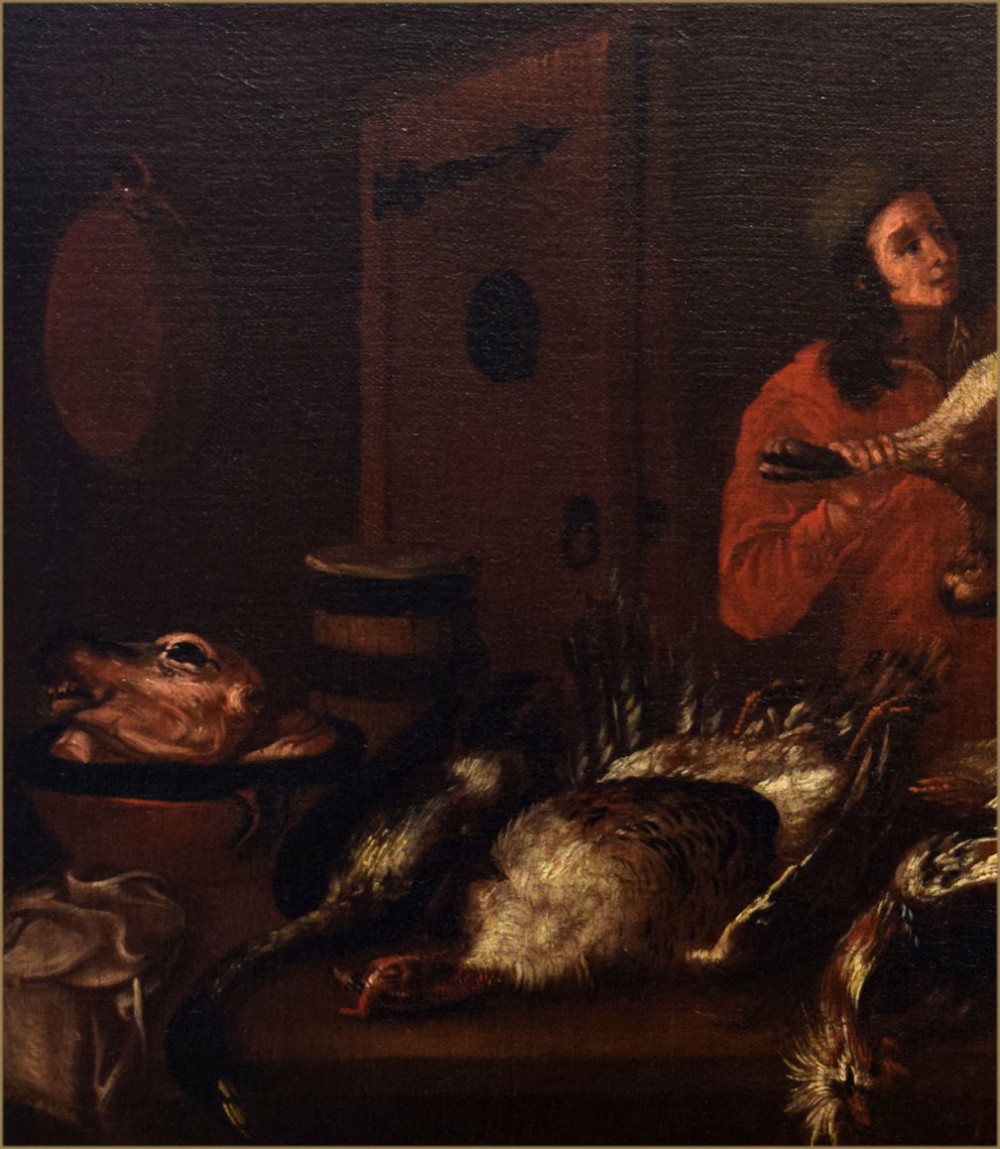
Archive II An 18th-century Dutch School oil painting depicting a figure in a red garment arranging game birds and an animal head inside a dark larder. View II
Archive III An 18th-century Dutch School oil painting depicting a figure in a red garment arranging game birds and an animal head inside a dark larder. View III
Archive IV An 18th-century Dutch School oil painting depicting a figure in a red garment arranging game birds and an animal head inside a dark larder. View IV
Archive V An 18th-century Dutch School oil painting depicting a figure in a red garment arranging game birds and an animal head inside a dark larder. View V
Enlarged Archival View
Telephone 07958 699 645
Location
18 La Gare
51 Surrey Row
London
SE1 0BZ
United Kingdom
Verified Since Sep 2008
Items For Sale 243
Items Sold 223
Artware Fineart
Verified Since Sep 2008
View Dealer Info
Location: 18 La Gare , 51 Surrey Row , London , SE1 0BZ , United Kingdom
Verified
Sep 2008
For Sale
243
Sold
223
An 18th-century Dutch School oil painting depicting a figure in a red garment arranging game birds and an animal head inside a dark larder.
Dutch School 18th, Century A Young Man arranging Game in Larder
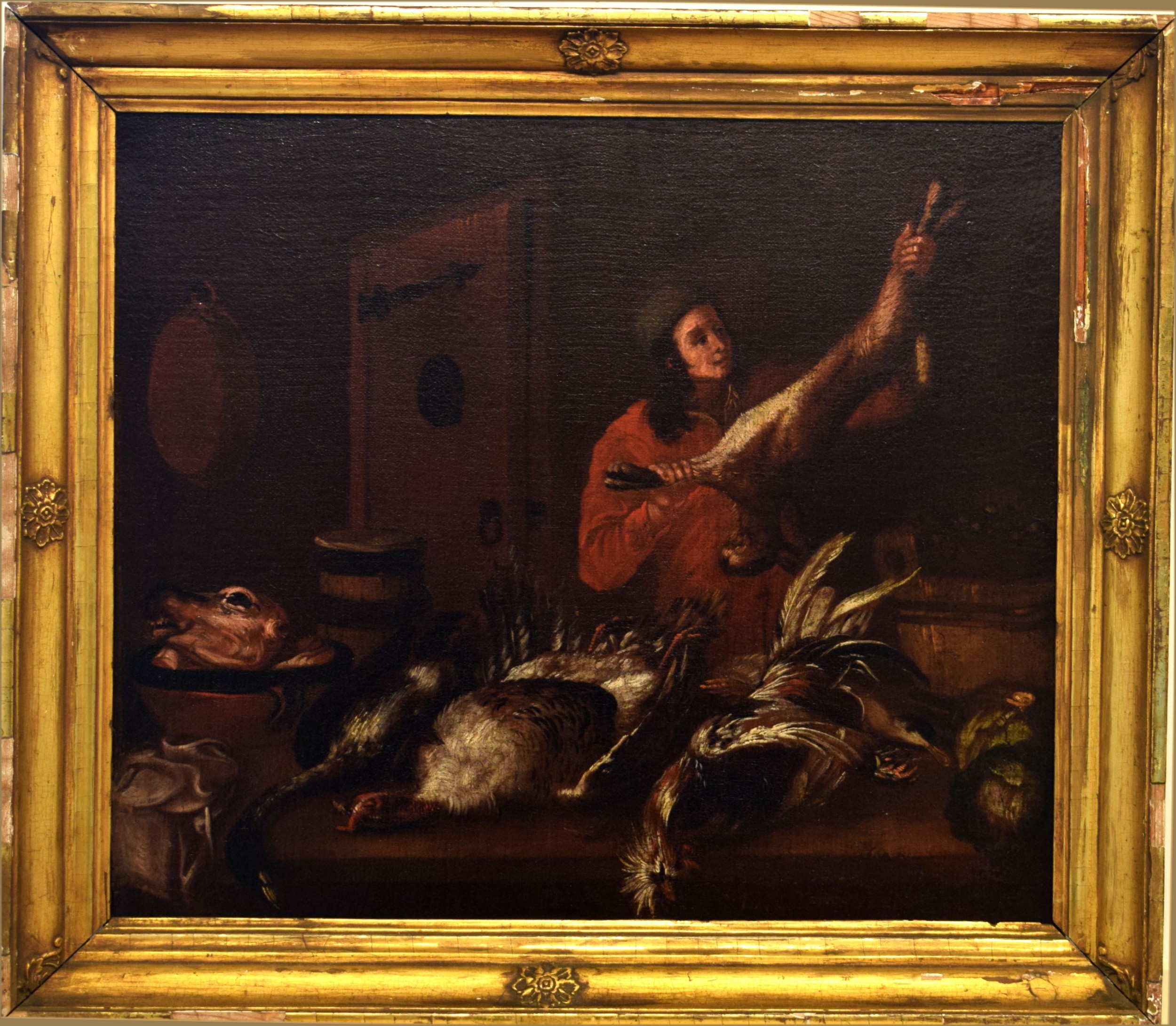
Ref: SA676460
An 18th-century Dutch School oil painting depicting a figure in a red garment arranging game birds and an animal head inside a dark larder.
Detail View 1
Detail View 2
Detail View 3
Detail View 4
Archival Detail
Every single antique dealer on our platform is individually approved by our internal team. We verify their professional trade history, ethical standards, and photographic quality to ensure a secure, high-standard buying environment. Upon joining, every dealer agrees to a strict 9-point code of conduct. While issues can occasionally arise, our dealers typically resolve them swiftly and directly with the buyer. In fact, since our founding in 2002, Sellingantiques has only had to step in to help resolve an issue on roughly five occasions—a true testament to the quality of our dealers and their dedication to your happiness.
Our dealers are highly experienced in packing and shipping fragile, high-value antiques. Because you are in direct contact with the dealer, you will be able to easily go through all available shipping and insurance options together to ensure your item arrives safely.
Antiques are the ultimate green purchase. By choosing historical pieces over newly manufactured goods, you completely eliminate the carbon footprint of modern mass production while preserving exceptional, timeless craftsmanship.

Dutch School paintings of the 18th century frequently portrayed everyday genre scenes, larders, and game still lifes, characterised by dramatic light contrasts and realistic textures.

Artworks from this era were typically executed using hand-ground mineral pigments bound with linseed oil on stretched linen canvas or timber panels.

Authentic period paintings generally display natural craquelure patterns across the paint surface, historic wood stretcher construction, and characteristic canvas oxidisation on the reverse.

Dark genre oil paintings can be highlighted using focused picture lighting and framed with traditional gilt or dark timber moulding, serving as a focal point above a console table or mantelpiece.

Canvas paintings require stable humidity levels away from direct sunlight and heat sources, and surface cleaning should strictly be conducted by a professional art conservator.
items
Add keywords to the filter
Price
£100
£250000
Era
Movements
Material
Origin
Stock Location
Freshness
Online Payments
Categories