32,694  PAGES BROWSED TODAY PAGES TODAY 90  ANTIQUES UPLOADED TODAY NEW ARRIVALS
ID #SA675408
SOLD
Email
Save
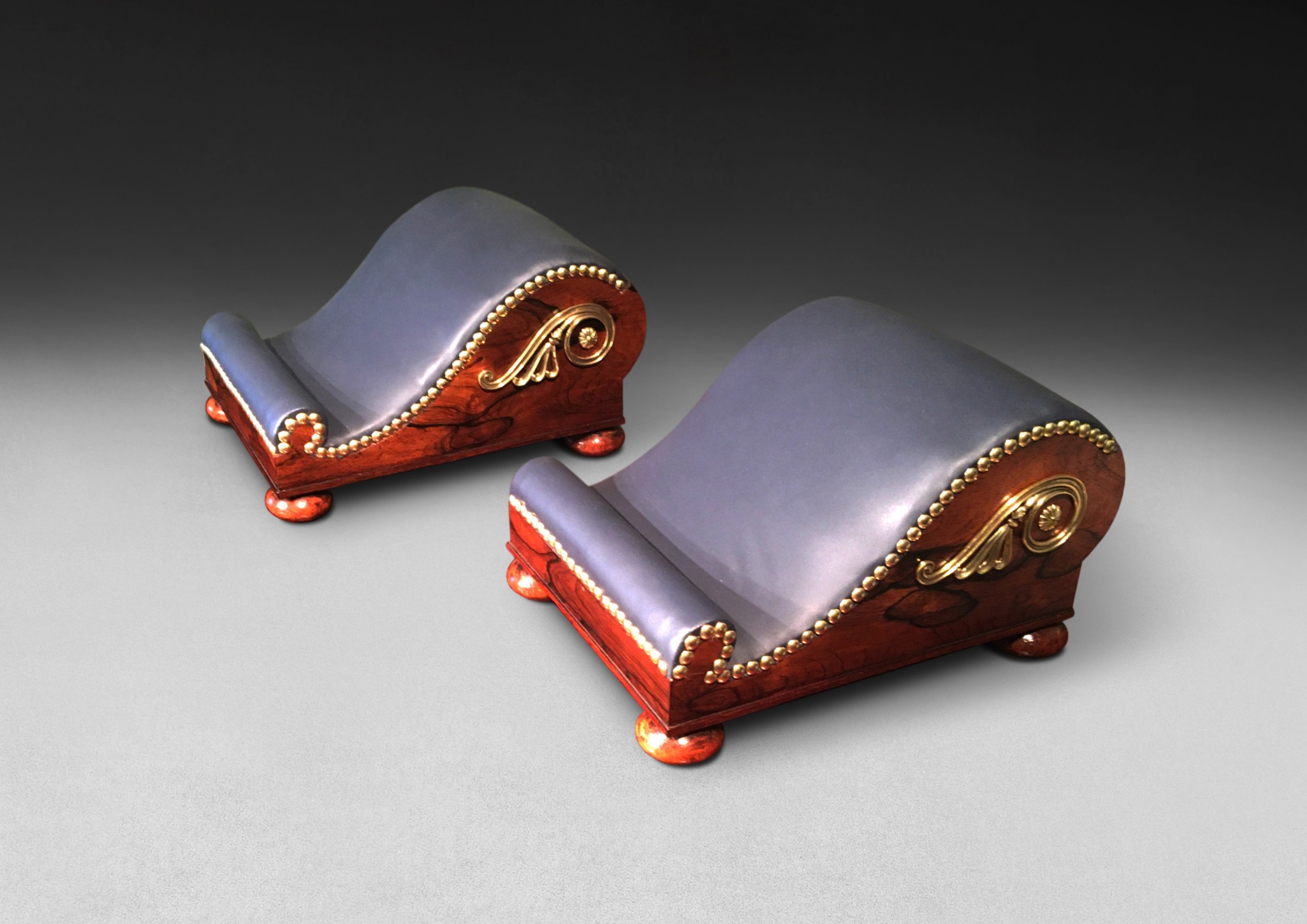
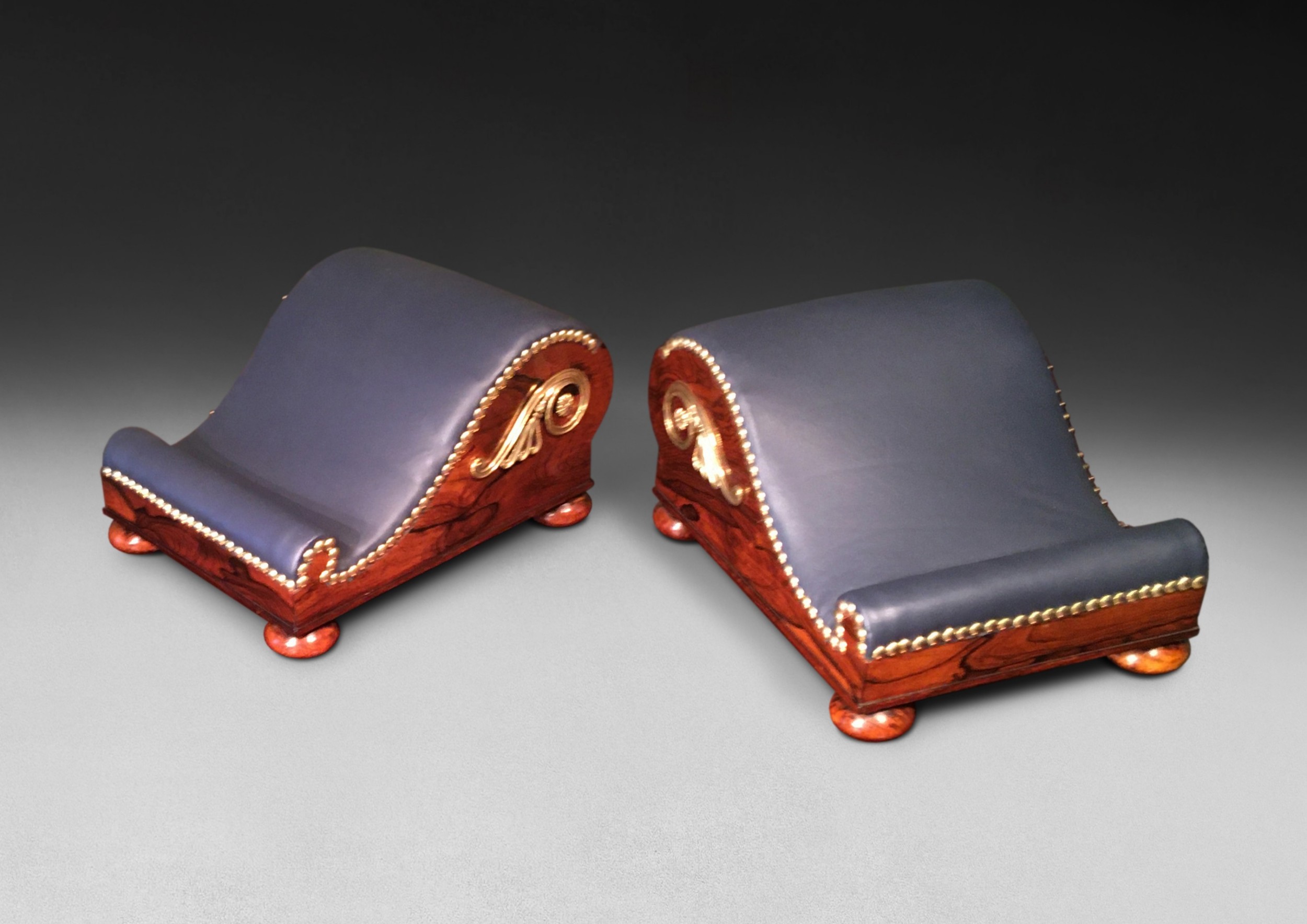
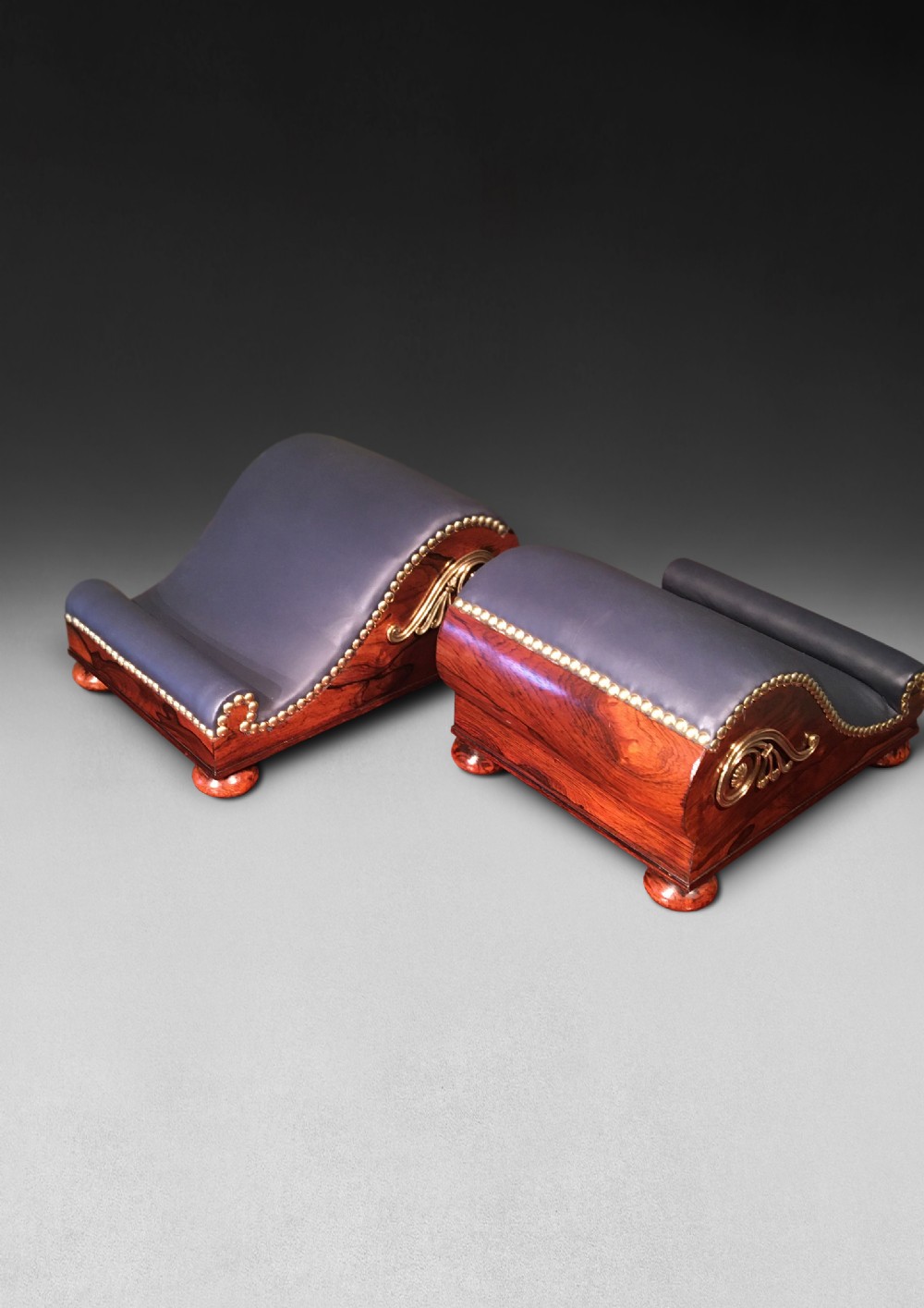
Pair of Regency Rosewood and Brass Gout Stools of Scrolling Form with Leather Upholstered Foot Rests
W.R. Harvey & Co. (Antiques) Ltd
sold SA675408
Sorry, but this item has been sold.
W.R. Harvey & Co. (Antiques) Ltd

W.R. Harvey & Co. (Antiques) Ltd

Sellingantiques Verified Since Sep 2016
View Dealers Stock Page
  • About Us
    Specialists in 17th-18th and early 19th century fine english furniture, art, clocks and other objets d'art
  • Trade Associations
    W.R. Harvey & Co. (Antiques) Ltd is a registered member of LAPADA 
Id #SA675408
PDF SHARE
SAVE

Pair of Regency Rosewood and Brass Gout Stools of Scrolling Form with Leather Upholstered Foot Rests

19th century
Description

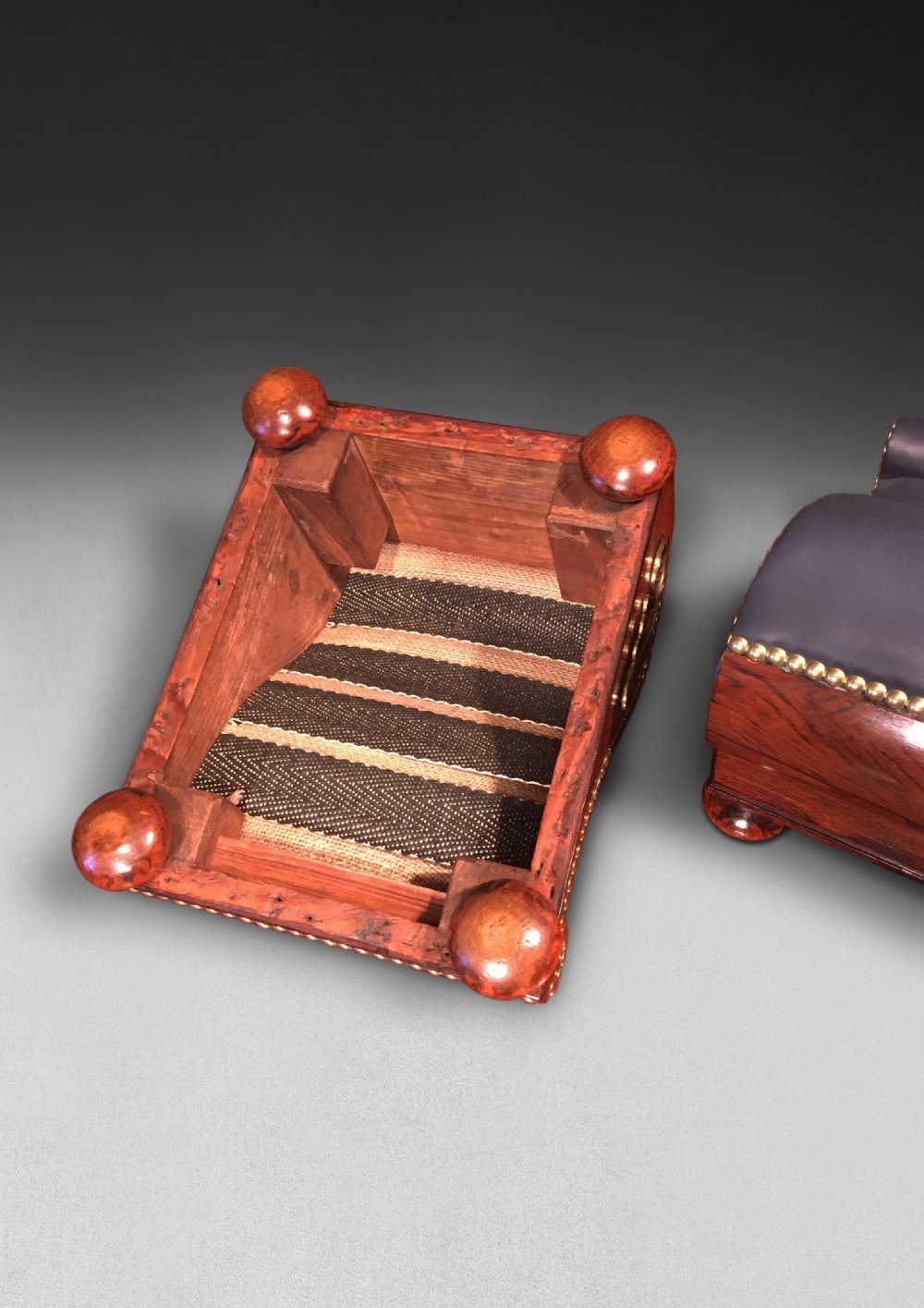
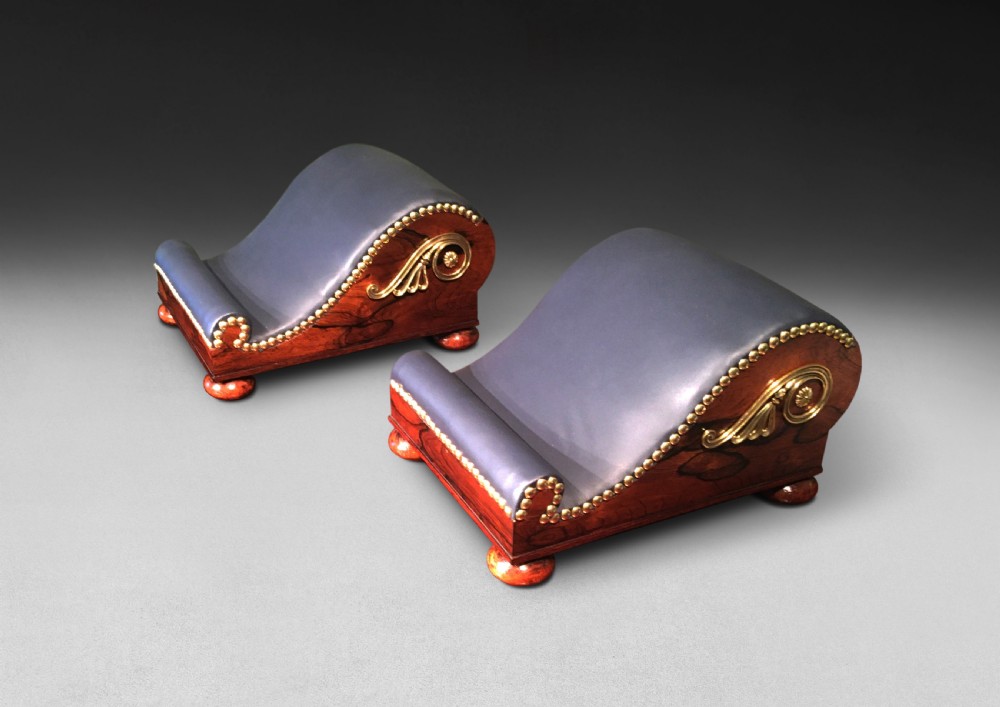
Pair of Regency Rosewood and Brass Gout Stools of scrolling form with leather upholstered foot rests, scrolling brass appliques and raised on bun feet.

Circa. 1820

H: 7”, 18 cms, W: 10”, 25.5 cms, D:13.5 ”, 34.5 cms.
See “Ackermann’s Regency Furniture and Interiors” Plate 58 Footstools for this scrolling example and described in the 1813 text: ”This article possesses advantages that are not immediately seen on the first inspection, independent of the chasteness of the design: the angle of inclination given to the surface, receives the foot in its natural and most easy position; while the smaller part of the scroll serves as a stay for the heel and prevents the whole from being propelled forward; and in reversing the situation of the stool, by having the smaller scroll from you, it answers the purpose of a jambier or what is commonly called a comfort and ease. They have been finished for drawing rooms in rose-wood with or-molu ornaments, and carved and gilt trusses and feet; also in bronze and gold, and in mat and burnished gold, covered with plain and painted velvets. The Chinese and Gothic are designs after the same plan.”

The term "gout" was initially used by Randolphus of Bocking, around 1200 AD. It is derived from the Latin word gutta, meaning "a drop" (of liquid). Gout has been known since antiquity. Historically, it was referred to as "the king of diseases and the disease of kings" or "rich man's disease". The first documentation of the disease is from Egypt in 2,600 BC in a description of arthritis of the big toe. Greek physician Hippocrates around 400 BC commented on it noting its absence in eunuchs and premenopausal women. In 1683, Thomas Sydenham, an English physician, described its occurrence in the early hours of the morning and its predilection for older males: "Gouty patients are, generally, either old men or men who have so worn themselves out in youth as to have brought on a premature old age—of such dissolute habits none being more common than the premature and excessive indulgence in venery and the like exhausting passions.
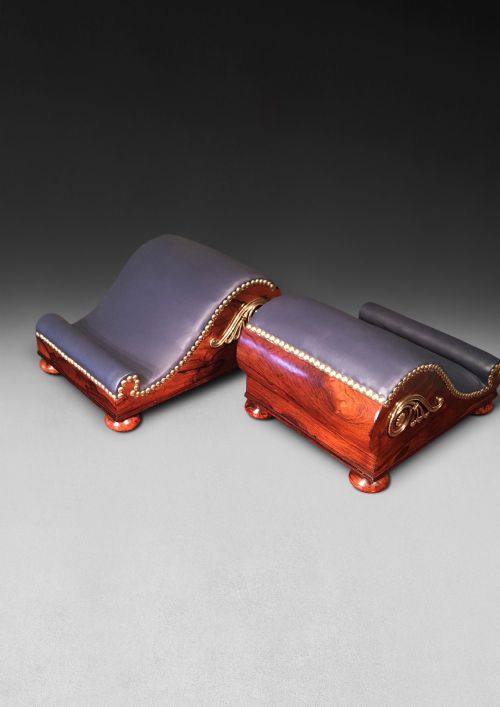
The links to alcohol and rich food have often been written about and throughout the 18th and 19th. centuries Gout was predominantly linked with a high lifestyle and who better to personify this than The Prince Regent and all the flamboyance of the Regency Period so well displayed in this pair of footstools.
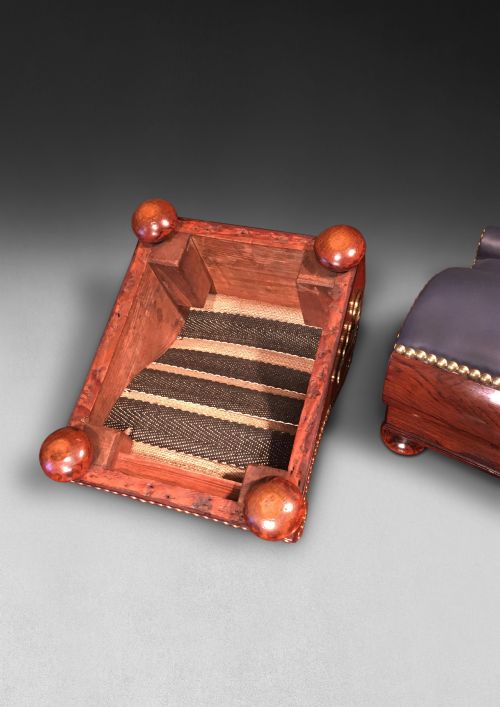
I refer to the Annals Of Rheumatic Diseases and an article published in 1962, "GOUT IN THE TIME AND PERSON OF GEORGE IV:

A CASE HISTORY* by E. G. L. BYWATERS

Our hero, George Augustus Frederick, who was born in 1762 and died in 1830 at the age of 68, was fortunate enough from the historian's viewpoint to live in a period when everyone wrote memoirs and diaries and interminable letters: with no telephone or television, what else was there to do? From the historical viewpoint, no patient has been so fully, lavishly, and fiendishly documented: from the scientific viewpoint he lived through an age which saw a revolution in thought about medicine and chemistry.
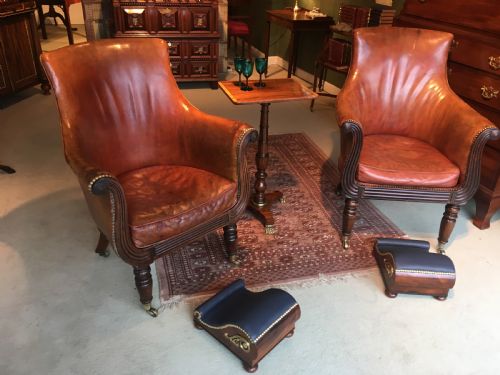
The First Attack: Of prime interest is a print found in New York, which antedates any mention of gout; it depicts the after-results of a party at Oatlands, the

Duke of York's seat at Weybridge in Surrey, on November 13, 1811, where the Prince Regent (as he now was, since his father's second loss of sanity)

suffered an accident and hurt his ankle. This was no ordinary sprain, however, although it was regarded so at the time. Red and exquisitely painful, it kept him in bed on 1,200 drops of laudanum a day for a fortnight. The physician, an obvious Scotsman (doctors being, even at that time, one of Scotland's major exports) is probably Sir Walter Farquhar. He told Lady Melbourne, on November 21, 1811, that the Regent had "broke a tendon in his foot with such violence that he fell

Physical Dimensions
Height
18cm (7.09")
Width
25.5cm (10.04")
Depth
34.5cm (13.58")
Declaration

W.R. Harvey & Co. (Antiques) Ltd has dated this piece to the 19th Century.

Reference Numbers
Sellingantiques Reference
SA675408
Dealers Internal Reference
10802
Dealers Notes

We offer free delivery within the UK. For deliveries Worldwide, please contact us for a quote and we will get back to you within 12 hours.

If you would like to view the item in person, our showrooms are open Monday to Saturday 9.30 - 5.30 and by appointment on Sunday.

Any questions, please contact us as soon as possible. We will endeavour to get you an answer within 24 hours - and hopefully much quicker!

Description
Pair of Regency Rosewood and Brass Gout Stools of scrolling form with leather upholstered foot rests, scrolling brass appliques and raised on bun feet.

Circa. 1820

H: 7”, 18 cms, W: 10”, 25.5 cms, D:13.5 ”, 34.5 cms.

fig 1. Pair of Regency Rosewood and Brass Gout Stools of scrolling form with leather upholstered foot rests
fig 1. Pair of Regency Rosewood and Brass Gout Stools of Scrolling Form with Leather Upholstered Foot Rests

See “Ackermann’s Regency Furniture and Interiors” Plate 58 Footstools for this scrolling example and described in the 1813 text: ”This article possesses advantages that are not immediately seen on the first inspection, independent of the chasteness of the design: the angle of inclination given to the surface, receives the foot in its natural and most easy position; while the smaller part of the scroll serves as a stay for the heel and prevents the whole from being propelled forward; and in reversing the situation of the stool, by having the smaller scroll from you, it answers the purpose of a jambier or what is commonly called a comfort and ease. They have been finished for drawing rooms in rose-wood with or-molu ornaments, and carved and gilt trusses and feet; also in bronze and gold, and in mat and burnished gold, covered with plain and painted velvets. The Chinese and Gothic are designs after the same plan.”

The term "gout" was initially used by Randolphus of Bocking, around 1200 AD. It is derived from the Latin word gutta, meaning "a drop" (of liquid). Gout has been known since antiquity.

Historically, it was referred to as "the king of diseases and the disease of kings" or "rich man's disease".
W.R. Harvey & Co. (Antiques) Ltd

The first documentation of the disease is from Egypt in 2,600 BC in a description of arthritis of the big toe. Greek physician Hippocrates around 400 BC commented on it noting its absence in eunuchs and premenopausal women. In 1683, Thomas Sydenham, an English physician, described its occurrence in the early hours of the morning and its predilection for older males: "Gouty patients are, generally, either old men or men who have so worn themselves out in youth as to have brought on a premature old age—of such dissolute habits none being more common than the premature and excessive indulgence in venery and the like exhausting passions.

fig 2. Pair of Regency Rosewood and Brass Gout Stools of scrolling form with leather upholstered foot rests
fig 2. Pair of Regency Rosewood and Brass Gout Stools of Scrolling Form with Leather Upholstered Foot Rests

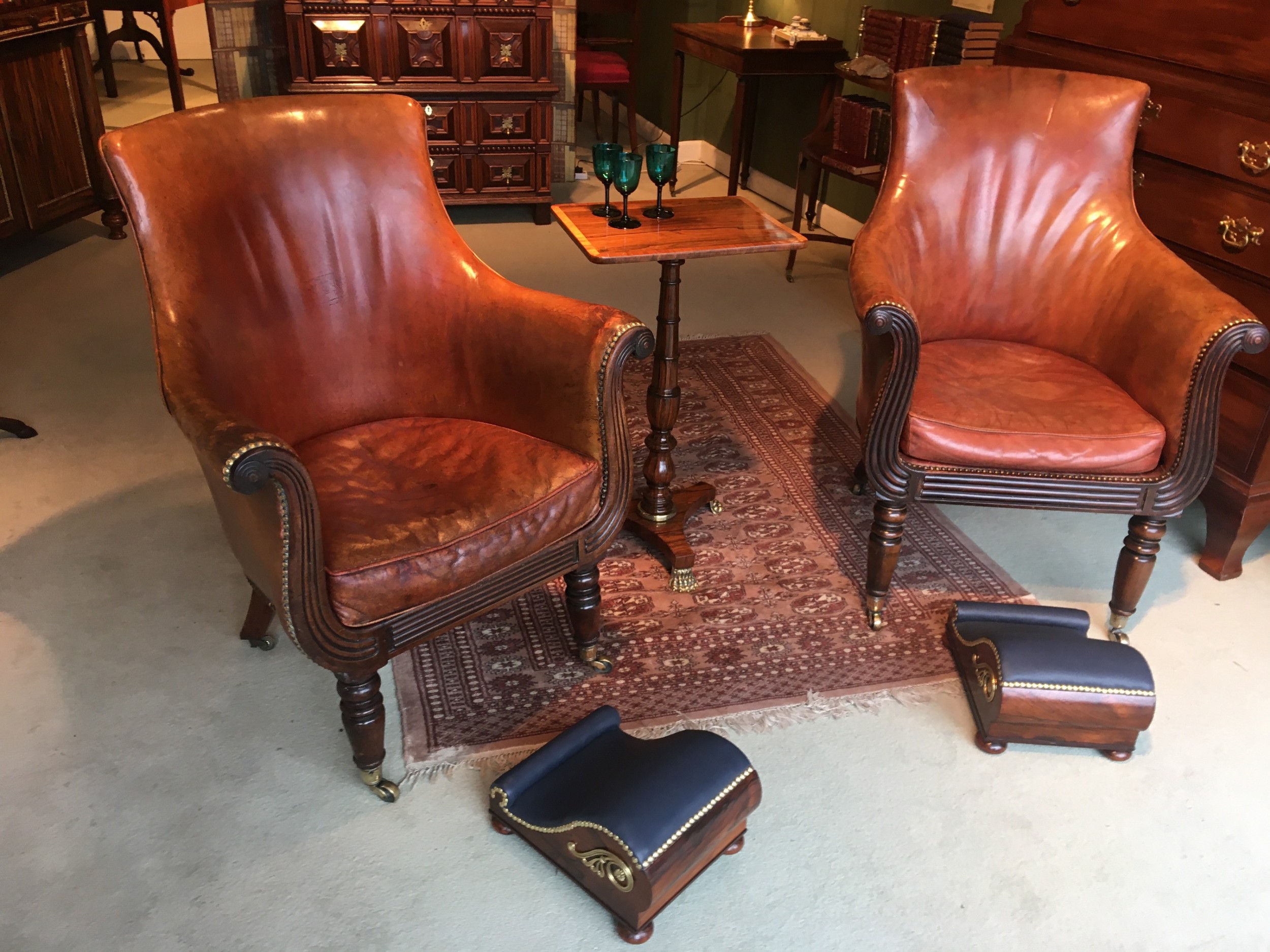
The links to alcohol and rich food have often been written about and throughout the 18th and 19th. centuries Gout was predominantly linked with a high lifestyle and who better to personify this than The Prince Regent and all the flamboyance of the Regency Period so well displayed in this pair of footstools.

fig 3. Pair of Regency Rosewood and Brass Gout Stools of scrolling form with leather upholstered foot rests
fig 3. Pair of Regency Rosewood and Brass Gout Stools of Scrolling Form with Leather Upholstered Foot Rests

I refer to the Annals Of Rheumatic Diseases and an article published in 1962, "GOUT IN THE TIME AND PERSON OF GEORGE IV:

A CASE HISTORY* by E. G. L. BYWATERS

Our hero, George Augustus Frederick, who was born in 1762 and died in 1830 at the age of 68, was fortunate enough from the historian's viewpoint to live in a period when everyone wrote memoirs and diaries and interminable letters: with no telephone or television, what else was there to do? From the historical viewpoint, no patient has been so fully, lavishly, and fiendishly documented: from the scientific viewpoint he lived through an age which saw a revolution in thought about medicine and chemistry.

fig 4. Pair of Regency Rosewood and Brass Gout Stools of scrolling form with leather upholstered foot rests
fig 4. Pair of Regency Rosewood and Brass Gout Stools of Scrolling Form with Leather Upholstered Foot Rests

The First Attack: Of prime interest is a print found in New York, which antedates any mention of gout; it depicts the after-results of a party at Oatlands, the

Duke of York's seat at Weybridge in Surrey, on November 13, 1811, where the Prince Regent (as he now was, since his father's second loss of sanity)

suffered an accident and hurt his ankle. This was no ordinary sprain, however, although it was regarded so at the time. Red and exquisitely painful, it kept him in bed on 1,200 drops of laudanum a day for a fortnight. The physician, an obvious Scotsman (doctors being, even at that time, one of Scotland's major exports) is probably Sir Walter Farquhar. He told Lady Melbourne, on November 21, 1811, that the Regent had "broke a tendon in his foot with such violence that he fell

Height
18cm (7.09")
Width
25.5cm (10.04")
Depth
34.5cm (13.58")
Date of Manufacture

W.R. Harvey & Co. (Antiques) Ltd has dated this piece to the 19th Century.

Reference Numbers
Sellingantiques Ref
SA675408
Dealers Internal Ref
10802
W.R. Harvey & Co. (Antiques) Ltd
Sellingantiques verified Since Sep 2016

Specialists in 17th-18th and early 19th century fine english furniture, art, clocks and other objets d'art

Dealer Profile

You can view the stock and full dealer information on the W.R. Harvey & Co. (Antiques) Ltd Profile Page

Trade Associations

W.R. Harvey & Co. (Antiques) Ltd is a registered member of LAPADA 
PDF SHARE
SAVE
Pair of Regency Rosewood and Brass Gout Stools of scrolling form with leather upholstered foot rests
1 / 5
Archive I Pair of Regency Rosewood and Brass Gout Stools of scrolling form with leather upholstered foot rests

Pair of Regency Rosewood and Brass Gout Stools of Scrolling Form with Leather Upholstered Foot Rests
Archive II Pair of Regency Rosewood and Brass Gout Stools of scrolling form with leather upholstered foot rests View II
Archive III Pair of Regency Rosewood and Brass Gout Stools of scrolling form with leather upholstered foot rests View III
Archive IV Pair of Regency Rosewood and Brass Gout Stools of scrolling form with leather upholstered foot rests View IV
Archive V Pair of Regency Rosewood and Brass Gout Stools of scrolling form with leather upholstered foot rests View V
Enlarged Archival View
Telephone 01993 706501
Location
86 Corn Street
Witney
Oxfordshire
OX28 6BU
United Kingdom
Verified Since Sep 2016
Items For Sale 112
Items Sold 543
W.R. Harvey & Co. (Antiques) Ltd
Verified Since Sep 2016
View Dealer Info
Location: 86 Corn Street, Witney, Oxfordshire, OX28 6BU, United Kingdom
Verified
Sep 2016
For Sale
112
Sold
543
Pair of Regency Rosewood and Brass Gout Stools of scrolling form with leather upholstered foot rests
Ref: SA675408
Pair of Regency Rosewood and Brass Gout Stools of scrolling form with leather upholstered foot rests
Detail View 1
Detail View 2
Detail View 3
Detail View 4
Archival Detail
Every single antique dealer on our platform is individually approved by our internal team. We verify their professional trade history, ethical standards, and photographic quality to ensure a secure, high-standard buying environment. Upon joining, every dealer agrees to a strict 9-point code of conduct. While issues can occasionally arise, our dealers typically resolve them swiftly and directly with the buyer. In fact, since our founding in 2002, Sellingantiques has only had to step in to help resolve an issue on roughly five occasions—a true testament to the quality of our dealers and their dedication to your happiness.
Our dealers are highly experienced in packing and shipping fragile, high-value antiques. Because you are in direct contact with the dealer, you will be able to easily go through all available shipping and insurance options together to ensure your item arrives safely.
Antiques are the ultimate green purchase. By choosing historical pieces over newly manufactured goods, you completely eliminate the carbon footprint of modern mass production while preserving exceptional, timeless craftsmanship.
items
Add keywords to the filter
Price
£100
£250000
Era
Movements
Material
Origin
Stock Location
Freshness
Online Payments
Categories