18,834  PAGES BROWSED TODAY PAGES TODAY 70  ANTIQUES UPLOADED TODAY NEW ARRIVALS
ID #SA674985
FOR SALE
£7,950
Email Buy
Save
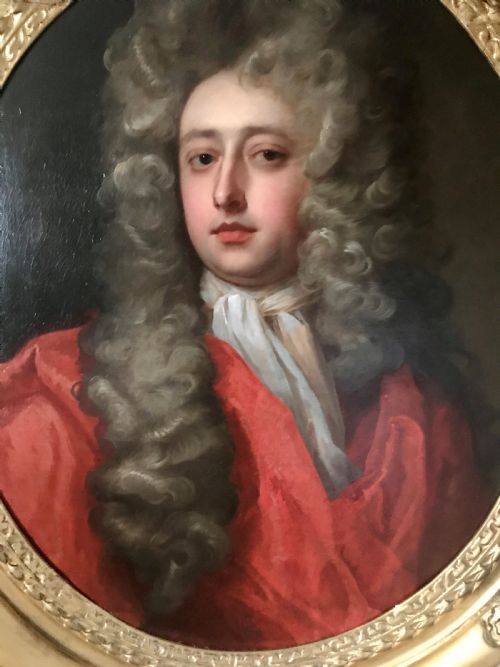
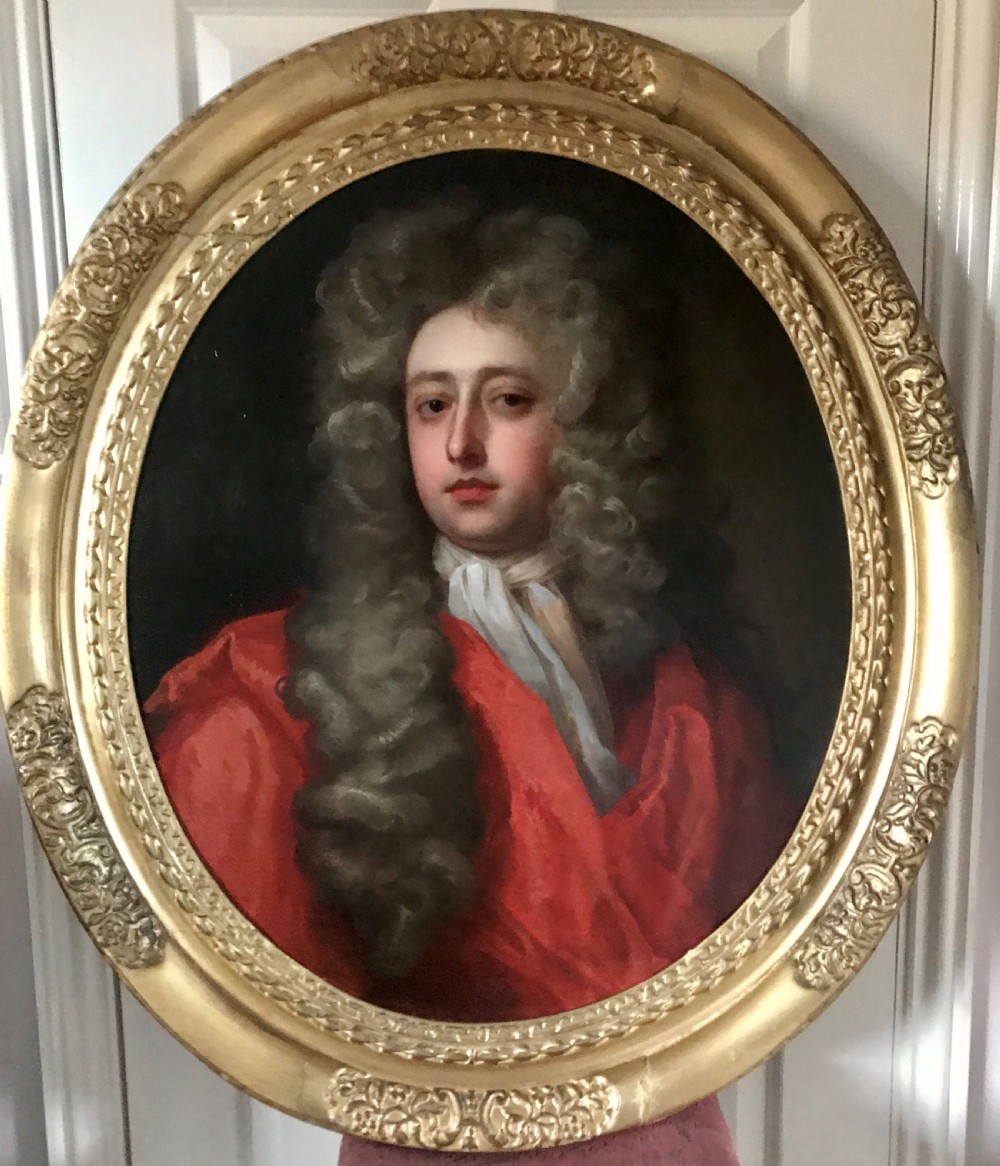
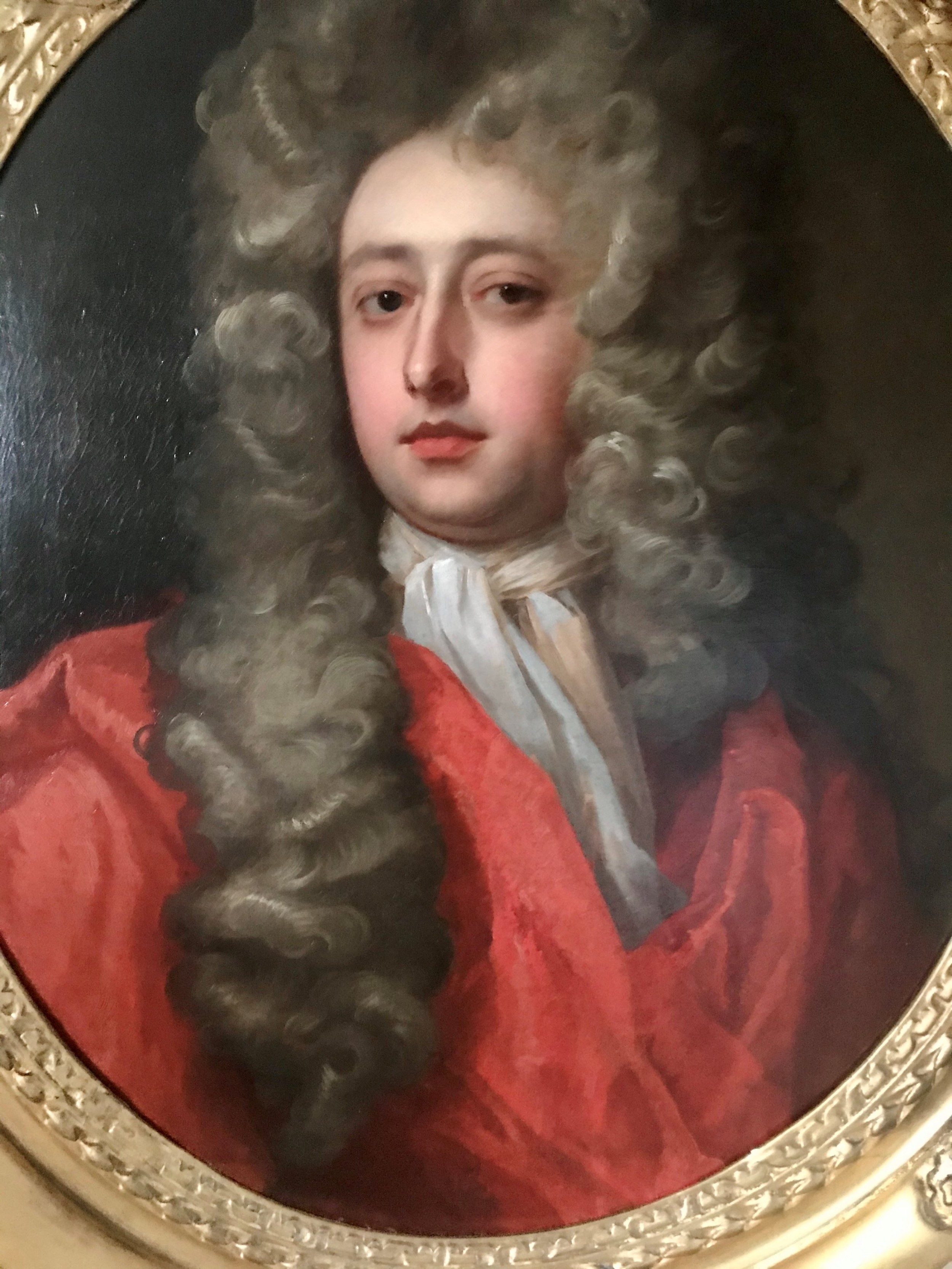
Portrait of the Hon. William Feilding C.1710; by Michael Dahl.
Roy Precious - Antiques & Fine Art
for sale €9,302     $10,097
£7,950
Roy Precious - Antiques & Fine Art

Roy Precious - Antiques & Fine Art

Sellingantiques Verified Since Mar 2003
View Dealers Stock Page
  • About Us
    Roy and nadine precious: specialists in portraiture from the 16th to the 20th century. Established in 1972.
Id #SA674985
PDF SHARE
SAVE

Portrait of the Hon. William Feilding C.1710; by Michael Dahl.

18th century
Description

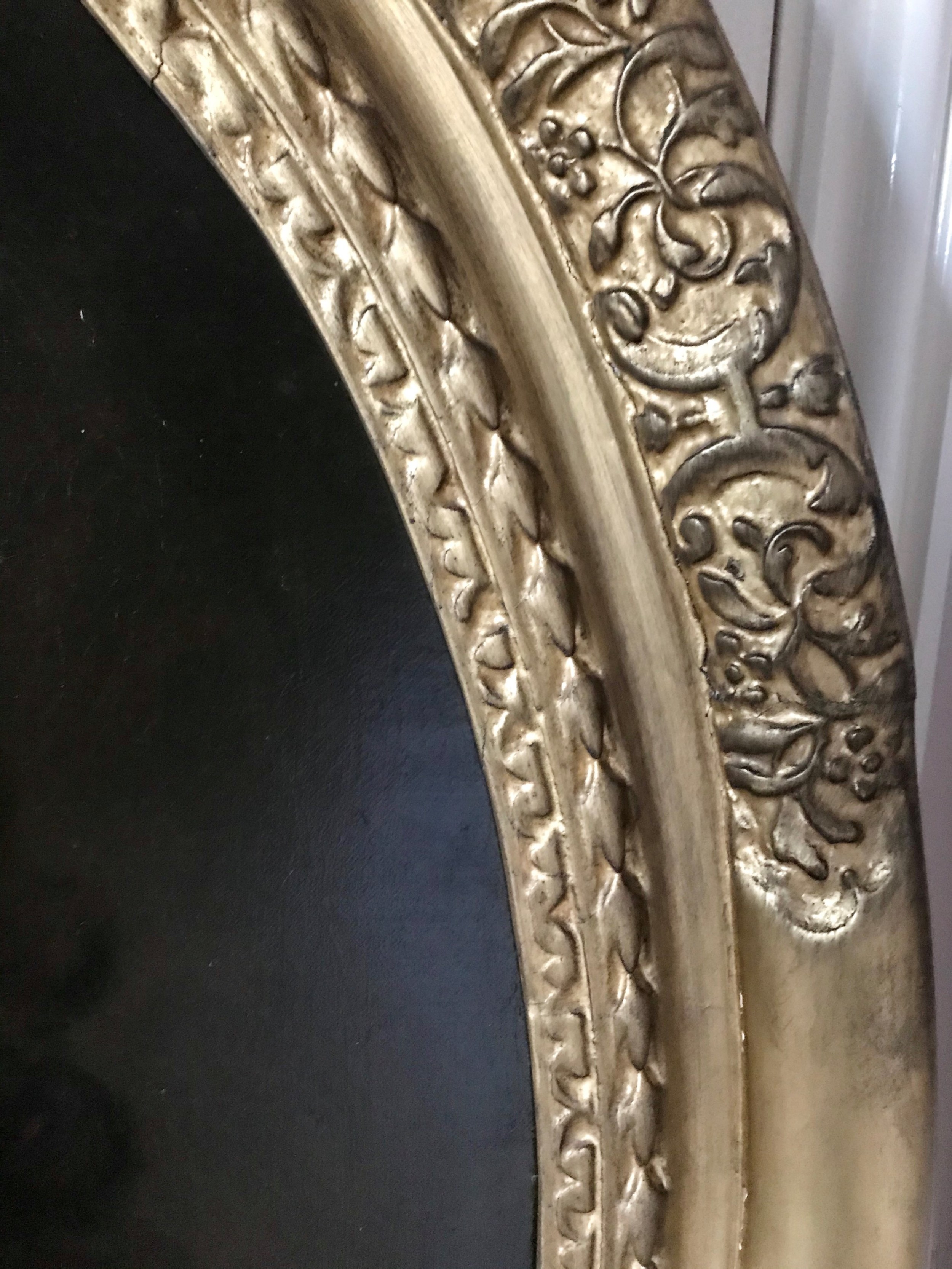
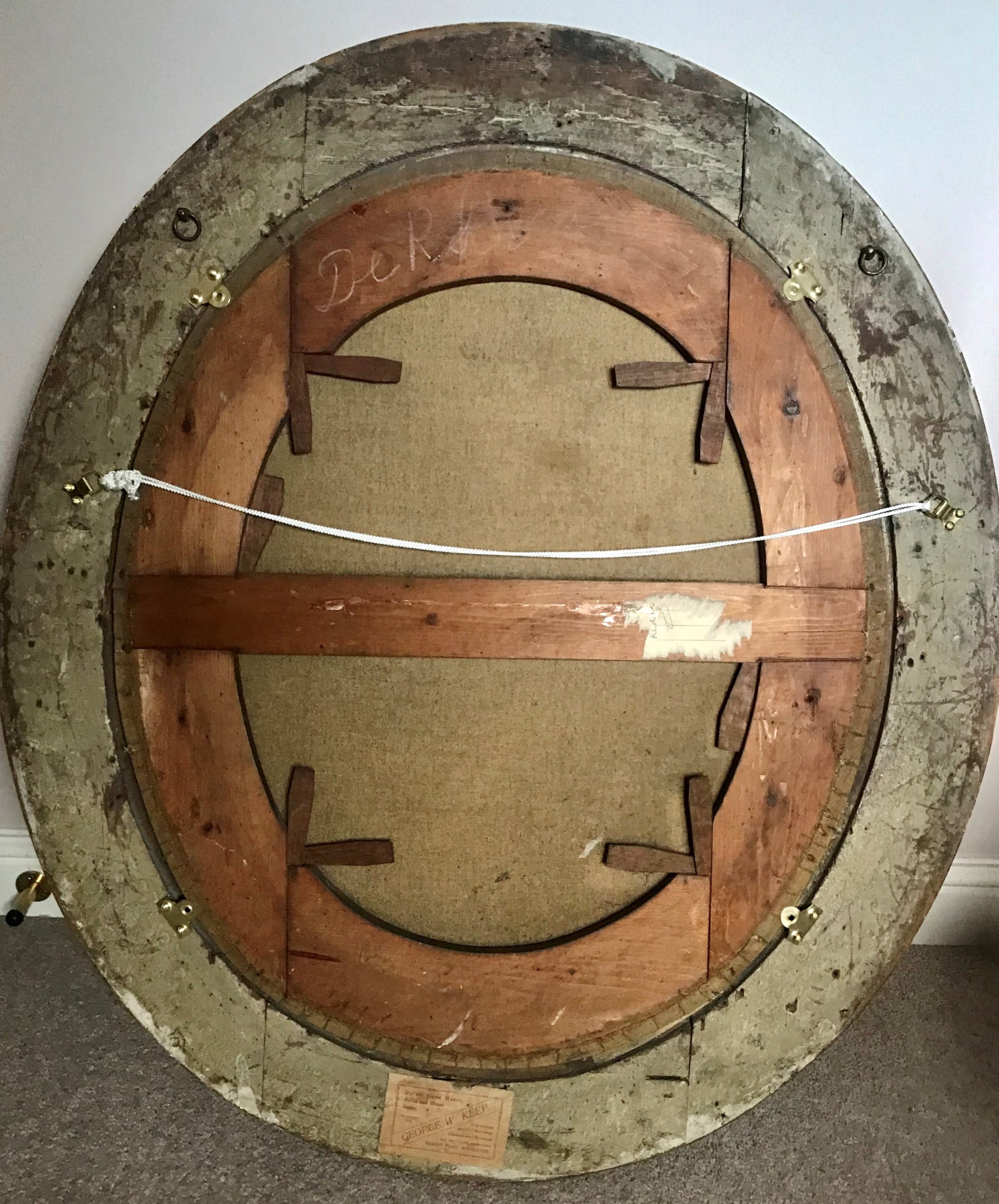
Oil on canvas in fine carved and giltwood period frame.

The Honourable WILLIAM FEILDING (1669-1723), of Ashtead, Surrey and Duke Street, Westminster

Born 1669, 2nd son of William Feilding, 3rd Earl of Denbigh. Educated Eton c.1680–6; Queen’s, Oxford 1686.

Feilding, who in 1704 had bought an office with a salary of £500 p.a., made a highly advantageous marriage the following year to a wealthy widow, Lady Diana, daughter of Francis Newport, 1st Earl of Bradford, with a parliamentary seat at her disposal. She had title during her lifetime to the estates of her first husband (with no surviving children to complicate matters) and thereby enjoyed the nomination of one Member at Castle Rising. Feilding obtained the seat in 1705 when a family friend chose to sit elsewhere. Although himself the younger brother of a Tory peer, Feilding was now connected with various Court Whigs among his wife’s kinsmen and her first husband’s friends. He also came into contact with Robert Walpole II, who controlled the other seat at Castle Rising, but this association was not particularly friendly, as the Howard and Walpole interests co-existed in the borough uneasily and in a constant atmosphere of mutual distrust.
In Parliament Feilding was a Whig, with leanings towards the Court. On 18 Feb. 1706 he voted with the ministry over the regency bill. He was marked as a Whig in two lists of 1708. In the same year he resigned his office of lieutenant of the yeomen of the guard. Having supported the naturalization of the Palatines in 1709, the following year he voted for the impeachment of Dr Sacheverell, and on 7 Dec. 1711 he voted for the ‘No Peace without Spain’ motion. He opposed the French commerce bill on 18 June 1713 and voted against the expulsion of Richard Steele on 18 Mar. 1714. In the Worsley list he was classified as a Whig.
Feilding was appointed Clerk of the Green Cloth in 1716, most probably through the interest of his wife’s family, the Newports, both at Court and with their Shropshire ally Sir William Forester. This was a most important position, responsible for organising royal journeys and assisting in the administration and finance of the Royal Household. Feilding died at Epsom on 21 Sept. 1723 and was buried at Ashtead. ‘I regret him prodigiously’, wrote his niece, Lady Mary Wortley Montagu, on hearing of his death. His wife outlived him.
{Much of this information from The History of Parliament: the House of Commons 1690-1715, ed. D. Hayton, E. Cruickshanks, S. Handley, 2002.}

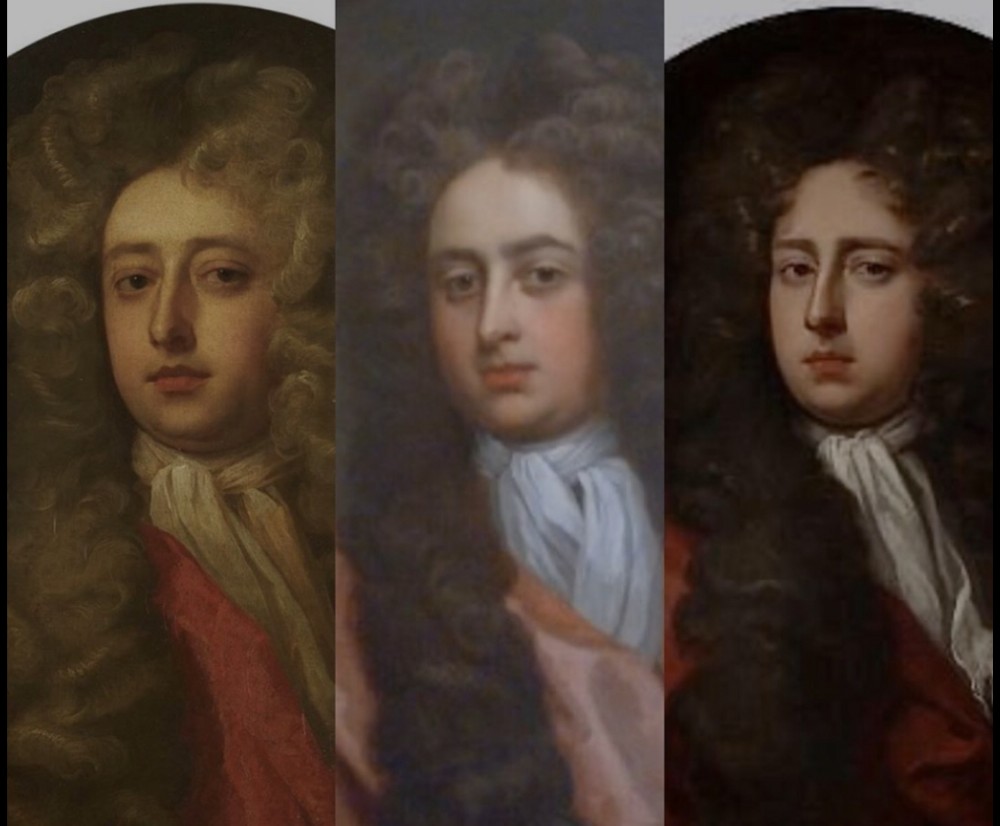
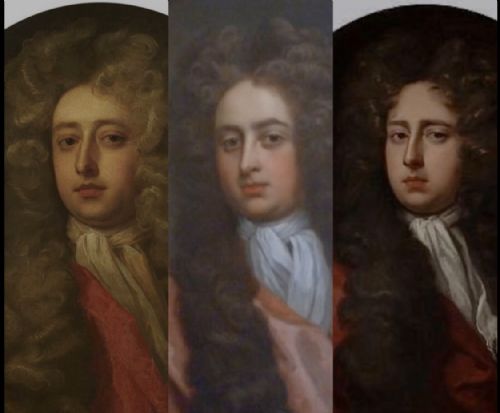
IMAGE 5 shows a studio portrait of Feilding on the right, inscribed with his name and further information. (We owned and sold this portrait in 2007.) In the centre of that image is another portrait of Fielding by Dahl (owned and sold by us in 2012), far left is this portrait, before cleaning. It was quite common for noblemen to return to their favourite artist for more portraits over the years; Studio copies were also made as gifts for relatives.
MICHAEL DAHL (1659-1743) was born in Stockholm; after studying in Paris, Rome and Frankfurt he settled in London in 1689. He soon became the best patronised portrait painter in England after Kneller. He was much employed at the Court painting many portraits; a great patron of the 1690s was the Duke of Somerset, for whom he painted the series of portraits of Court ladies known as the 'Petworth Beauties'.
His style is extremely close to Kneller but his interpretation of character is less brash and more human.

SIZE: 38 x 32.75 x 2 inches including the frame.

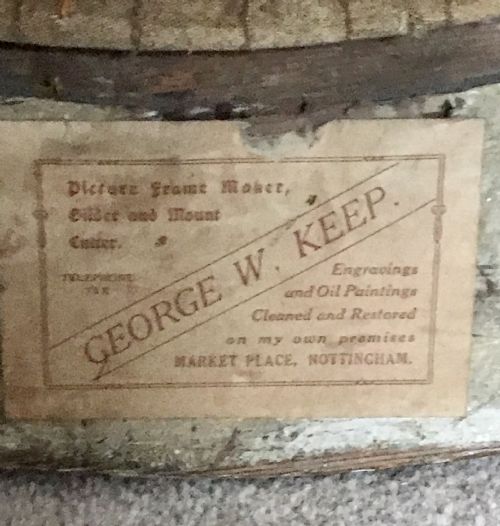
PROVENANCE: *Sold about 30 years ago as of William Churchill, 1st Duke of Marlborough, attributed to Kneller.

*Derbyshire Private Collection since then, as of Duke of Marlborough.

Physical Dimensions
Height
96.5cm (37.99")
Width
83cm (32.68")
Depth
5cm (1.97")
Declaration

Roy Precious - Antiques & Fine Art has dated this Queen Anne Oil Portrait to the 18th Century.

Reference Numbers
Sellingantiques Reference
SA674985
Dealers Internal Reference
9164
Description
Oil on canvas in fine carved and giltwood period frame.

The Honourable WILLIAM FEILDING (1669-1723), of Ashtead, Surrey and Duke Street, Westminster

Born 1669, 2nd son of William Feilding, 3rd Earl of Denbigh. Educated Eton c.1680–6; Queen’s, Oxford 1686.

Feilding, who in 1704 had bought an office with a salary of £500 p.a.

, made a highly advantageous marriage the following year to a wealthy widow, Lady Diana, daughter of Francis Newport, 1st Earl of Bradford, with a parliamentary seat at her disposal.
Roy Precious - Antiques & Fine Art

She had title during her lifetime to the estates of her first husband (with no surviving children to complicate matters) and thereby enjoyed the nomination of one Member at Castle Rising. Feilding obtained the seat in 1705 when a family friend chose to sit elsewhere. Although himself the younger brother of a Tory peer, Feilding was now connected with various Court Whigs among his wife’s kinsmen and her first husband’s friends. He also came into contact with Robert Walpole II, who controlled the other seat at Castle Rising, but this association was not particularly friendly, as the Howard and Walpole interests co-existed in the borough uneasily and in a constant atmosphere of mutual distrust.

fig 1. An oval oil portrait of a gentleman in a long powdered wig and red drapery, housed within a carved giltwood frame.
fig 1. Portrait of the Hon. William Feilding C.1710; by Michael Dahl.

In Parliament Feilding was a Whig, with leanings towards the Court. On 18 Feb. 1706 he voted with the ministry over the regency bill. He was marked as a Whig in two lists of 1708. In the same year he resigned his office of lieutenant of the yeomen of the guard. Having supported the naturalization of the Palatines in 1709, the following year he voted for the impeachment of Dr Sacheverell, and on 7 Dec. 1711 he voted for the ‘No Peace without Spain’ motion. He opposed the French commerce bill on 18 June 1713 and voted against the expulsion of Richard Steele on 18 Mar. 1714. In the Worsley list he was classified as a Whig.

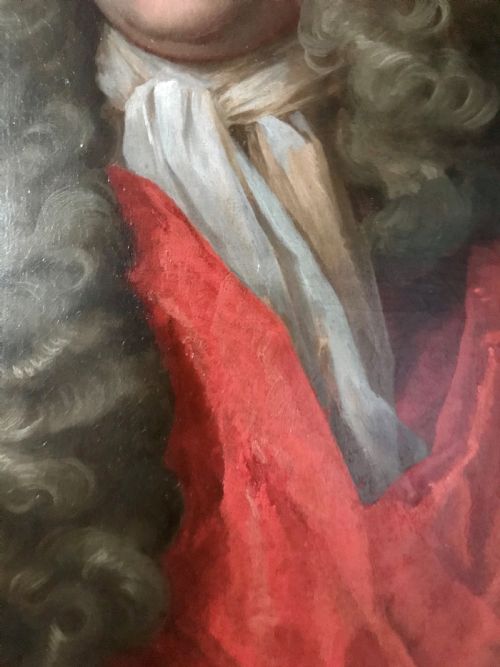
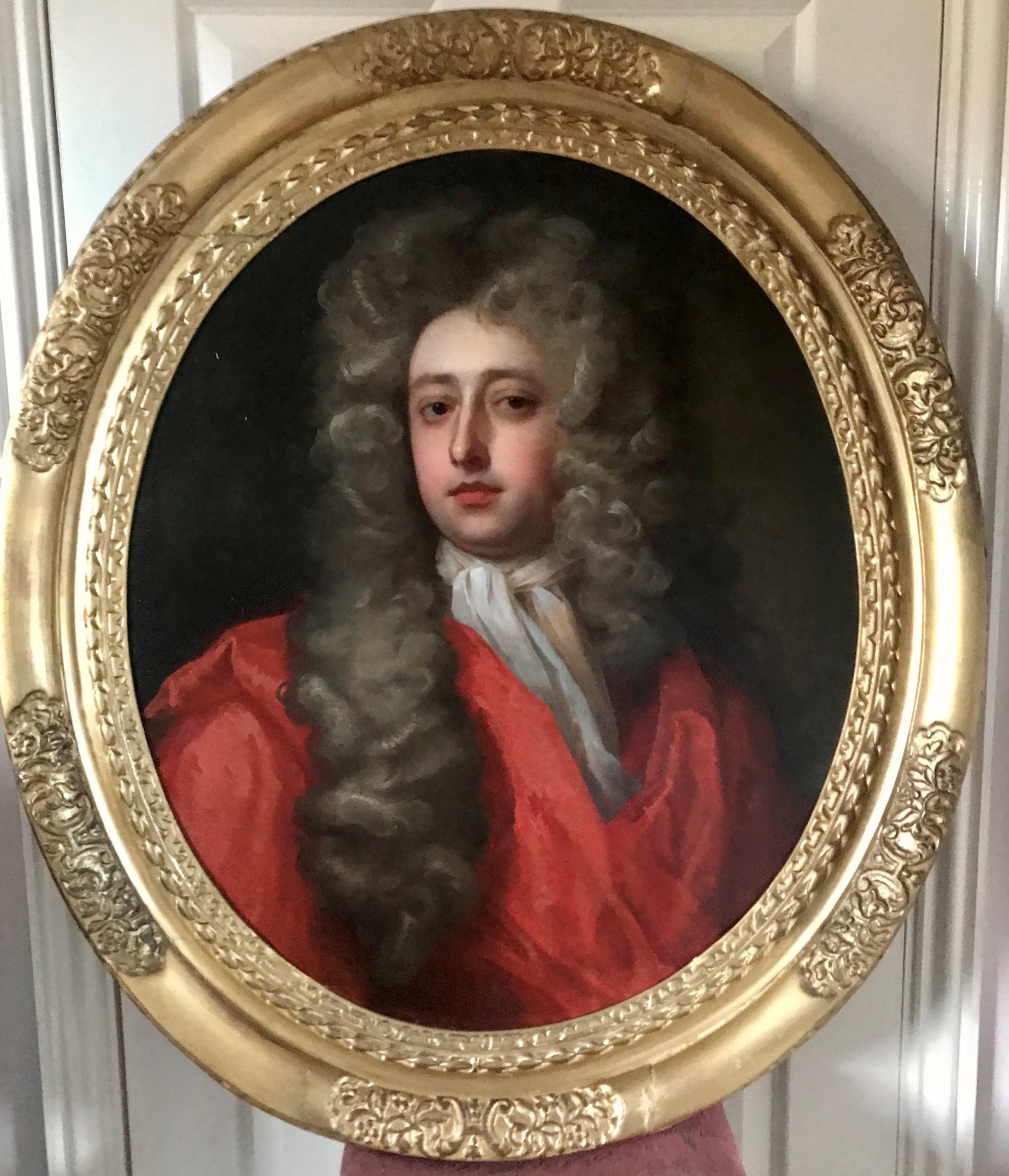
fig 2. An oval oil portrait of a gentleman in a long powdered wig and red drapery, housed within a carved giltwood frame.
fig 2. Portrait of the Hon. William Feilding C.1710; by Michael Dahl.

Feilding was appointed Clerk of the Green Cloth in 1716, most probably through the interest of his wife’s family, the Newports, both at Court and with their Shropshire ally Sir William Forester. This was a most important position, responsible for organising royal journeys and assisting in the administration and finance of the Royal Household. Feilding died at Epsom on 21 Sept. 1723 and was buried at Ashtead. ‘I regret him prodigiously’, wrote his niece, Lady Mary Wortley Montagu, on hearing of his death. His wife outlived him.

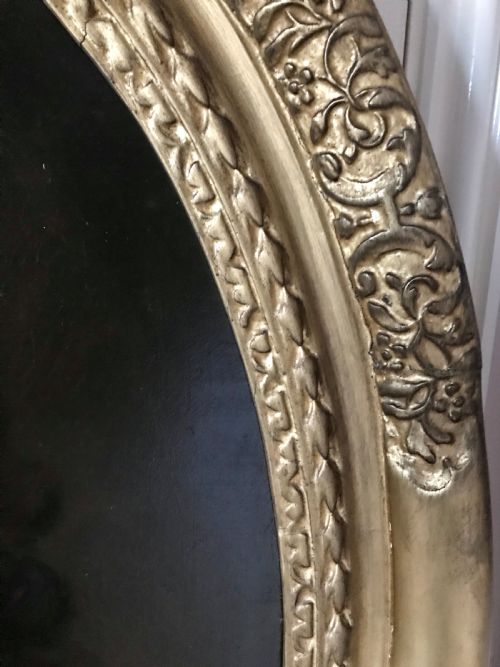
fig 3. An oval oil portrait of a gentleman in a long powdered wig and red drapery, housed within a carved giltwood frame.
fig 3. Portrait of the Hon. William Feilding C.1710; by Michael Dahl.

{Much of this information from The History of Parliament: the House of Commons 1690-1715, ed. D. Hayton, E. Cruickshanks, S. Handley, 2002.}

IMAGE 5 shows a studio portrait of Feilding on the right, inscribed with his name and further information. (We owned and sold this portrait in 2007.) In the centre of that image is another portrait of Fielding by Dahl (owned and sold by us in 2012), far left is this portrait, before cleaning. It was quite common for noblemen to return to their favourite artist for more portraits over the years; Studio copies were also made as gifts for relatives.

fig 4. An oval oil portrait of a gentleman in a long powdered wig and red drapery, housed within a carved giltwood frame.
fig 4. Portrait of the Hon. William Feilding C.1710; by Michael Dahl.

MICHAEL DAHL (1659-1743) was born in Stockholm; after studying in Paris, Rome and Frankfurt he settled in London in 1689. He soon became the best patronised portrait painter in England after Kneller. He was much employed at the Court painting many portraits; a great patron of the 1690s was the Duke of Somerset, for whom he painted the series of portraits of Court ladies known as the 'Petworth Beauties'.

fig 5. An oval oil portrait of a gentleman in a long powdered wig and red drapery, housed within a carved giltwood frame.
fig 5. Portrait of the Hon. William Feilding C.1710; by Michael Dahl.

His style is extremely close to Kneller but his interpretation of character is less brash and more human.

SIZE: 38 x 32.75 x 2 inches including the frame.

PROVENANCE: *Sold about 30 years ago as of William Churchill, 1st Duke of Marlborough, attributed to Kneller.

Derbyshire Private Collection since then, as of Duke of Marlborough.

Height
96.5cm (37.99")
Width
83cm (32.68")
Depth
5cm (1.97")
Date of Manufacture

Roy Precious - Antiques & Fine Art has dated this Queen Anne Oil Portrait to the 18th Century.

Reference Numbers
Sellingantiques Ref
SA674985
Dealers Internal Ref
9164
Roy Precious - Antiques & Fine Art
Sellingantiques verified Since Mar 2003

Roy and nadine precious: specialists in portraiture from the 16th to the 20th century. Established in 1972.

Dealer Profile

You can view the stock and full dealer information on the Roy Precious - Antiques & Fine Art Profile Page
PDF SHARE
SAVE
An oval oil portrait of a gentleman in a long powdered wig and red drapery, housed within a carved giltwood frame.
1 / 7
Archive I An oval oil portrait of a gentleman in a long powdered wig and red drapery, housed within a carved giltwood frame.

Portrait of the Hon. William Feilding c.1710; by Michael Dahl.
Archive II An oval oil portrait of a gentleman in a long powdered wig and red drapery, housed within a carved giltwood frame. View II
Archive III An oval oil portrait of a gentleman in a long powdered wig and red drapery, housed within a carved giltwood frame. View III
Archive IV An oval oil portrait of a gentleman in a long powdered wig and red drapery, housed within a carved giltwood frame. View IV
Archive V An oval oil portrait of a gentleman in a long powdered wig and red drapery, housed within a carved giltwood frame. View V
Archive VI An oval oil portrait of a gentleman in a long powdered wig and red drapery, housed within a carved giltwood frame. View VI
Archive VII An oval oil portrait of a gentleman in a long powdered wig and red drapery, housed within a carved giltwood frame. View VII
FURTHER BROWSING

Visitors also looked at these ⇣

Enlarged Archival View
Location
Wiltshire
United Kingdom
Dealer Profile Page sellingantiques.co.uk/rp
Verified Since Mar 2003
Items For Sale 95
Items Sold 679
Roy Precious - Antiques & Fine Art
Verified Since Mar 2003
View Dealer Info
Location: Wiltshire, United Kingdom
Verified
Mar 2003
For Sale
95
Sold
679
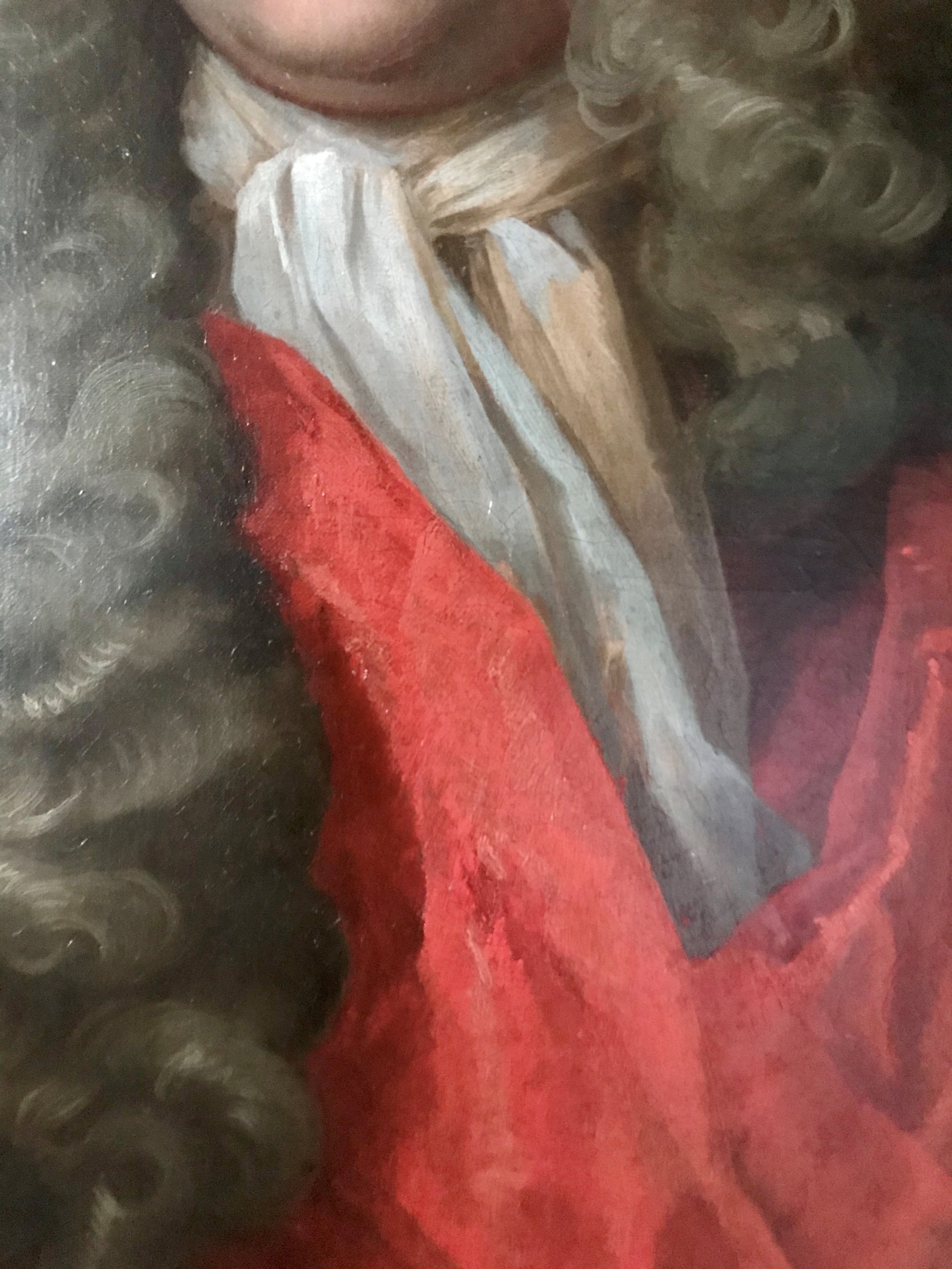
An oval oil portrait of a gentleman in a long powdered wig and red drapery, housed within a carved giltwood frame.
Portrait of the Hon. William Feilding c.1710; by Michael Dahl.
Ref: SA674985
An oval oil portrait of a gentleman in a long powdered wig and red drapery, housed within a carved giltwood frame.
Detail View 1
Detail View 2
Detail View 3
Detail View 4
Detail View 5
Detail View 6
Archival Detail
Every single antique dealer on our platform is individually approved by our internal team. We verify their professional trade history, ethical standards, and photographic quality to ensure a secure, high-standard buying environment. Upon joining, every dealer agrees to a strict 9-point code of conduct. While issues can occasionally arise, our dealers typically resolve them swiftly and directly with the buyer. In fact, since our founding in 2002, Sellingantiques has only had to step in to help resolve an issue on roughly five occasions—a true testament to the quality of our dealers and their dedication to your happiness.
Our dealers are highly experienced in packing and shipping fragile, high-value antiques. Because you are in direct contact with the dealer, you will be able to easily go through all available shipping and insurance options together to ensure your item arrives safely.
Antiques are the ultimate green purchase. By choosing historical pieces over newly manufactured goods, you completely eliminate the carbon footprint of modern mass production while preserving exceptional, timeless craftsmanship.

Portraiture from the early 18th century in Britain was heavily influenced by Baroque artistic style, often featuring sitters in theatrical drapery, formal attire, and voluminous wigs against dark backdrops to display social standing.

Period portraits were executed using oil-based pigments applied to woven linen canvas, supported by wooden stretchers and housed in hand-carved or moulded timber frames coated in gesso and gold leaf.

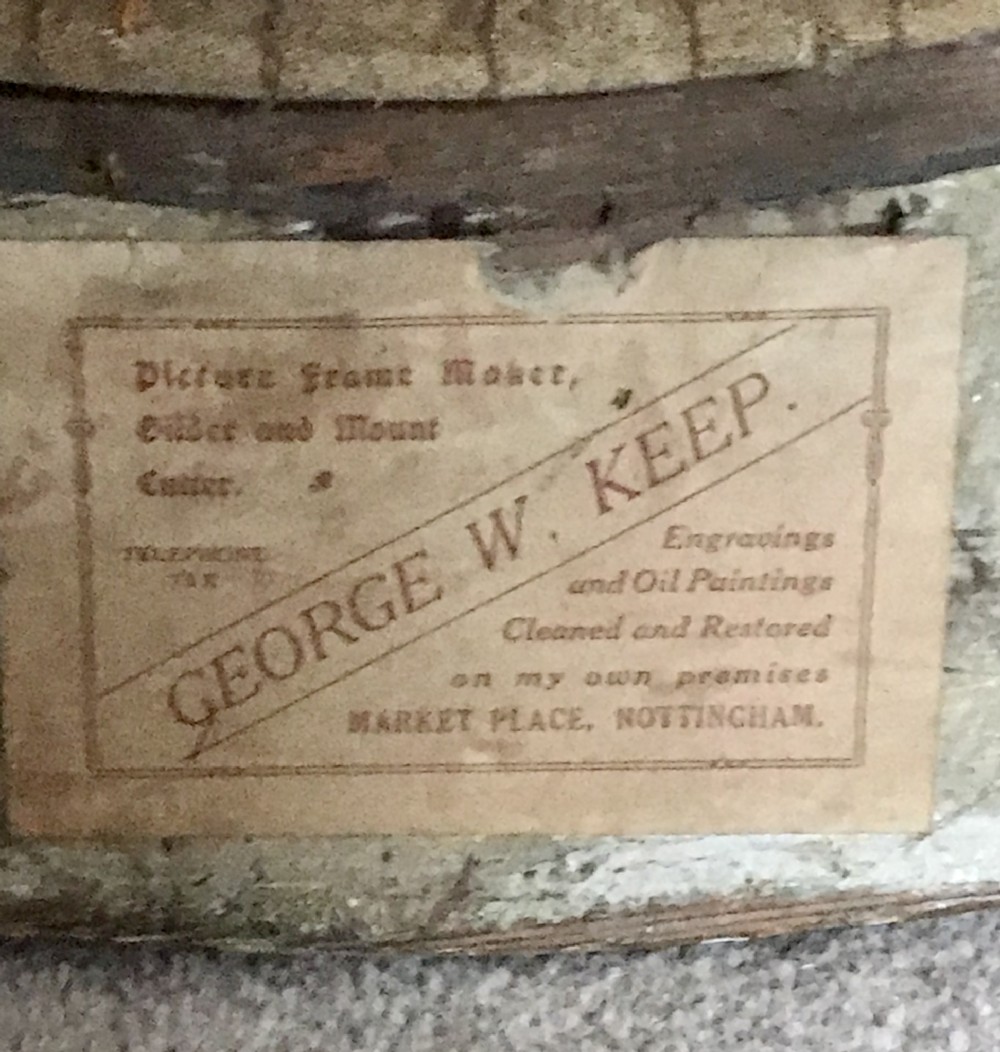
Authentic period oil paintings exhibit natural age-related craquelure across the paint surface, hand-hammered stretcher keys, hand-carved frame joints, and historical oxidation on the rear of the canvas.

Position the portrait as a focal point above a fireplace mantel, console table, or sideboard, combining historic oil artwork with contemporary lighting or modern timber furniture to create visual balance.

Display the artwork away from direct sunlight, dampness, and fluctuating heat sources, dusting the frame gently with a soft, dry brush and consulting a professional conservator for canvas cleaning.
items
Add keywords to the filter
Price
£100
£250000
Era
Movements
Material
Origin
Stock Location
Freshness
Online Payments
Categories