25,721  PAGES BROWSED TODAY PAGES TODAY 75  ANTIQUES UPLOADED TODAY NEW ARRIVALS
ID #SA661088
SOLD
Email
Save
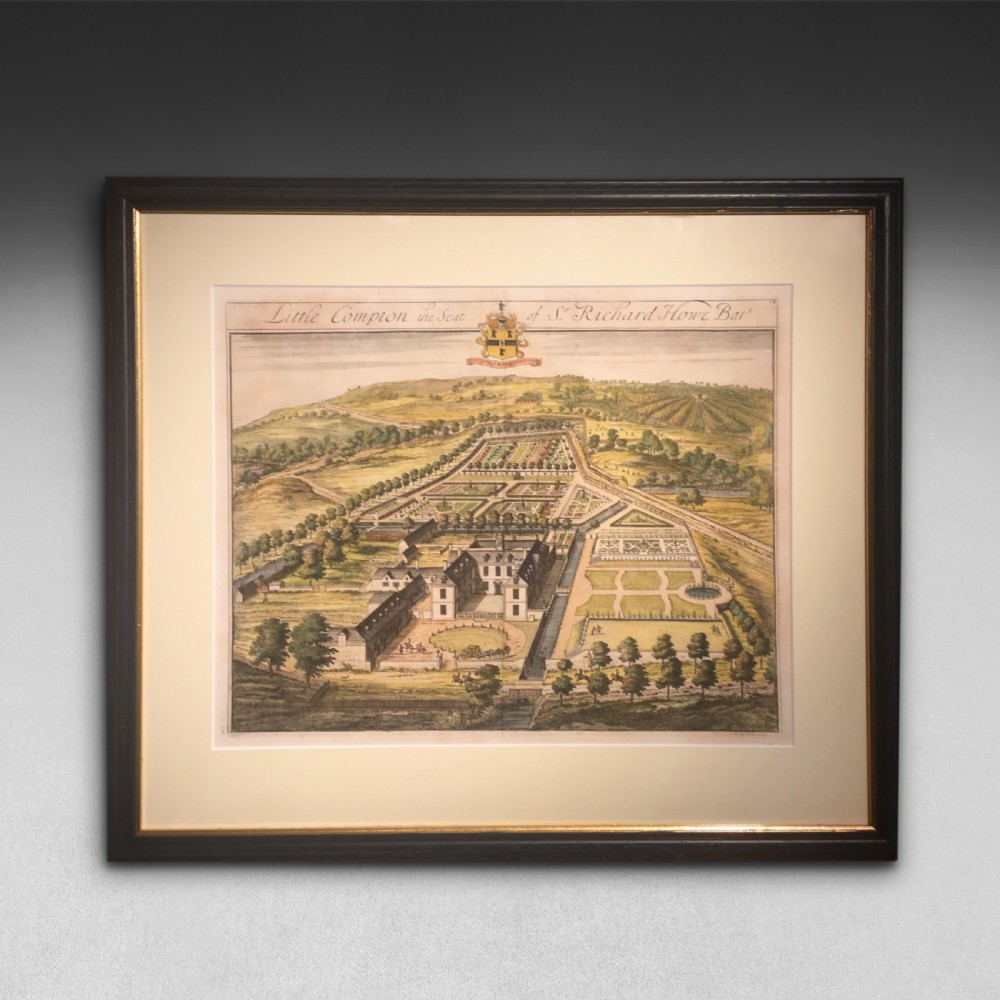
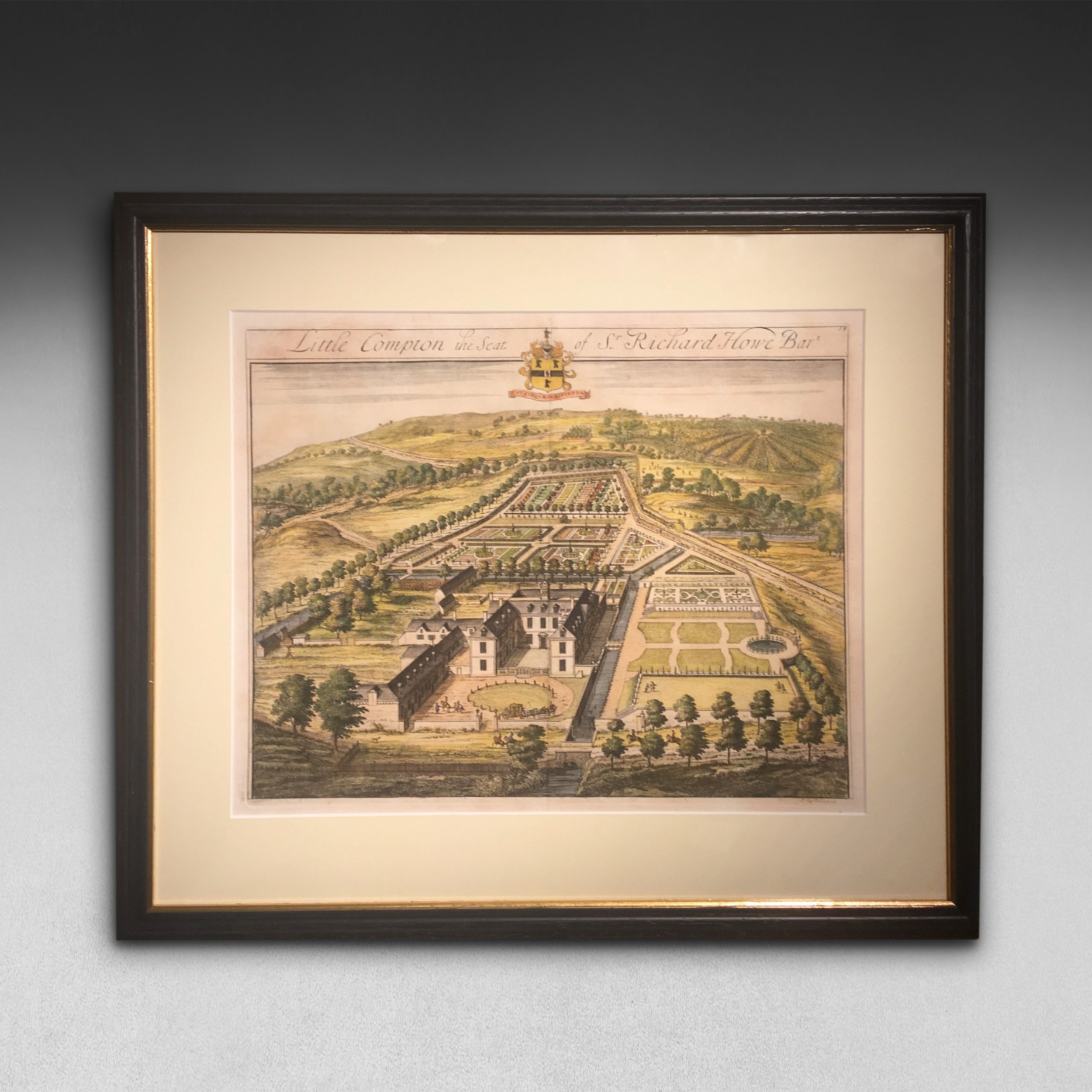
Early 18th. Century Johannes Kip Engraving of Little Compton.
W.R. Harvey & Co. (Antiques) Ltd
sold SA661088
Sorry, but this item has been sold.
W.R. Harvey & Co. (Antiques) Ltd

W.R. Harvey & Co. (Antiques) Ltd

Sellingantiques Verified Since Sep 2016
View Dealers Stock Page
  • About Us
    Specialists in 17th-18th and early 19th century fine english furniture, art, clocks and other objets d'art
  • Trade Associations
    W.R. Harvey & Co. (Antiques) Ltd is a registered member of LAPADA 
Id #SA661088
PDF SHARE
SAVE

Early 18th. Century Johannes Kip Engraving of Little Compton.

18th century
Description

Early 18th. Century Kip Engraving of Little Compton.

An early 18th. Century hand coloured engraving of Little Compton, the seat of Sir Richard Howe by Johannes Kip.

Circa 1710

H: 21.25”, 54cms, W:24.5”, 62.3cms, D: 1”, 2.5 cms.

Johannes Kip (1653 – 1722) was a Dutch draughtsman, engraver, and print dealer who was active in England after producing works for the court of William of Orange in Amsterdam. Following the Glorious Revolution of 1688, Kip accompanied the Court to England and settled in Westminster where he conducted a thriving print selling business from his house in St. John’s Street. He also worked for various London publishers producing engravings, largely for book illustrations. His most important works were the execution of the illustrations for Britannia Illustrata, 1708; The Ancient and Present State of Gloucestershire, 1712, and Le Nouveau Theatre de la Grande Bretagne, 1715

Sir Richard Grobham Howe 1651-1730 of Little Compton, Withington, and Chedworth, Glos., and Wishford, Wilts.

Constituency Dates

HINDON Oct. 1679 – Jan. 1681, TAMWORTH 1685 – 1687, CIRENCESTER 1690 – 1698, WILTSHIRE Feb. – Nov. 1701

WILTSHIRE 1702 – 1727

Family and Education : bc.1651, 2nd but o. surv. s. of Sir Richard Grobham Howe, 2nd Bt.* educ. Christ Church, Oxf. matric. 13 July 1667, aged 16. m. 12 Aug. 1673, Mary, da. of Sir Henry Frederick Thynne, 1st Bt., of Kempsford, Glos., p. suc. fa. as 3rd Bt. 3 May 1703.1

Offices Held: Dir. Mine Adventurers’ Co 1710

Biography:

Howe was initially a supporter of Exclusion, but his political views soon afterwards moved towards Toryism. Having served for other family boroughs in earlier Parliaments, he was returned in 1690 for Cirencester on the strength of his own interest, based on his estate some six miles away at Chedworth. In the new Parliament he was classed in two lists by Lord Carmarthen (Sir Thomas Osborne†) as a Court supporter. His activities as recorded in the Journals cannot usually be distinguished from those of his first cousin John Grobham Howe except where his christian name is used, although it can be assumed that most references must be to his prominent cousin. On 13 Oct. 1690 Howe brought a complaint of privilege to the attention of the House, but it was not accorded a report by the privileges committee. Noted by Carmarthen in December as likely to support him in the event of an attack on his ministerial position, he featured as a supporter of the Country opposition in Robert Harley’s* analysis of the House compiled in April 1691. He was appointed on 31 Oct. to assist in preparing the bill for securing the rights of corporations. On 19 Jan. 1693 he initiated a debate against a bill to stimulate the woollen industry, claiming that its main purpose was to serve the interests of the Blackwell Hall factors. The following session he was appointed to drafting committees on bills to remove legal constraints on the clothing trade (14 Nov. 1693), and for the apprehension of highwaymen (18 Nov.).

Howe successfully contested Cirencester again in 1695. His continuing opposition to the Court is illustrated by the record of his behaviour in 1696. He was forecast in January as likely to oppose the Court over the proposed council of trade, refused to sign the Association in February, and voted against fixing the price of guineas at 22s. in March. In the next session, on 25 Nov., he voted against the attainder of Sir John Fenwick†. That winter he was turned off the Gloucestershire commission of the peace for his reticence in signing the Association. On 5 Dec. he was named to a committee to investigate deficiencies of funds granted by Parliament, though by the 17th it was necessary for him to obtain leave of absence to attend his sick family. In December 1697 he told his brother-in-law and former electoral patron, the

Physical Dimensions
Height
54cm (21.26")
Width
62.3cm (24.53")
Depth
2.5cm (0.98")
Declaration

W.R. Harvey & Co. (Antiques) Ltd has dated this piece to the 1700s.

Reference Numbers
Sellingantiques Reference
SA661088
Dealers Internal Reference
409E
Dealers Notes

We offer free delivery within the UK. For deliveries Worldwide, please contact us for a quote and we will get back to you within 12 hours.

If you would like to view the item in person, our showrooms are open Monday to Saturday 9.30 - 5.30 and by appointment on Sunday.

Any questions, please contact us as soon as possible. We will endeavour to get you an answer within 24 hours - and hopefully much quicker!

Description
Early 18th. Century Kip Engraving of Little Compton.

An early 18th. Century hand coloured engraving of Little Compton, the seat of Sir Richard Howe by Johannes Kip.

Circa 1710

H: 21.25”, 54cms, W:24.5”, 62.3cms, D: 1”, 2.5 cms.

Johannes Kip (1653 – 1722) was a Dutch draughtsman, engraver, and print dealer who was active in England after producing works for the court of William of Orange in Amsterdam.
W.R. Harvey & Co. (Antiques) Ltd

Following the Glorious Revolution of 1688, Kip accompanied the Court to England and settled in Westminster where he conducted a thriving print selling business from his house in St. John’s Street. He also worked for various London publishers producing engravings, largely for book illustrations. His most important works were the execution of the illustrations for Britannia Illustrata, 1708; The Ancient and Present State of Gloucestershire, 1712, and Le Nouveau Theatre de la Grande Bretagne, 1715

Sir Richard Grobham Howe 1651-1730 of Little Compton, Withington, and Chedworth, Glos., and Wishford, Wilts.

Constituency Dates

HINDON Oct. 1679 – Jan. 1681, TAMWORTH 1685 – 1687, CIRENCESTER 1690 – 1698, WILTSHIRE Feb. – Nov. 1701

WILTSHIRE 1702 – 1727

Family and Education : bc.1651, 2nd but o. surv. s. of Sir Richard Grobham Howe, 2nd Bt.* educ. Christ Church, Oxf. matric. 13 July 1667, aged 16. m. 12 Aug. 1673, Mary, da. of Sir Henry Frederick Thynne, 1st Bt., of Kempsford, Glos., p. suc. fa. as 3rd Bt. 3 May 1703.1

Offices Held: Dir. Mine Adventurers’ Co 1710

Biography:

Howe was initially a supporter of Exclusion, but his political views soon afterwards moved towards Toryism. Having served for other family boroughs in earlier Parliaments, he was returned in 1690 for Cirencester on the strength of his own interest, based on his estate some six miles away at Chedworth. In the new Parliament he was classed in two lists by Lord Carmarthen (Sir Thomas Osborne†) as a Court supporter. His activities as recorded in the Journals cannot usually be distinguished from those of his first cousin John Grobham Howe except where his christian name is used, although it can be assumed that most references must be to his prominent cousin. On 13 Oct. 1690 Howe brought a complaint of privilege to the attention of the House, but it was not accorded a report by the privileges committee. Noted by Carmarthen in December as likely to support him in the event of an attack on his ministerial position, he featured as a supporter of the Country opposition in Robert Harley’s* analysis of the House compiled in April 1691. He was appointed on 31 Oct. to assist in preparing the bill for securing the rights of corporations. On 19 Jan. 1693 he initiated a debate against a bill to stimulate the woollen industry, claiming that its main purpose was to serve the interests of the Blackwell Hall factors. The following session he was appointed to drafting committees on bills to remove legal constraints on the clothing trade (14 Nov. 1693), and for the apprehension of highwaymen (18 Nov.).

Howe successfully contested Cirencester again in 1695. His continuing opposition to the Court is illustrated by the record of his behaviour in 1696. He was forecast in January as likely to oppose the Court over the proposed council of trade, refused to sign the Association in February, and voted against fixing the price of guineas at 22s. in March. In the next session, on 25 Nov., he voted against the attainder of Sir John Fenwick†. That winter he was turned off the Gloucestershire commission of the peace for his reticence in signing the Association. On 5 Dec. he was named to a committee to investigate deficiencies of funds granted by Parliament, though by the 17th it was necessary for him to obtain leave of absence to attend his sick family. In December 1697 he told his brother-in-law and former electoral patron, the

Height
54cm (21.26")
Width
62.3cm (24.53")
Depth
2.5cm (0.98")
Date of Manufacture

W.R. Harvey & Co. (Antiques) Ltd has dated this piece to the 1700s.

Reference Numbers
Sellingantiques Ref
SA661088
Dealers Internal Ref
409E
W.R. Harvey & Co. (Antiques) Ltd
Sellingantiques verified Since Sep 2016

Specialists in 17th-18th and early 19th century fine english furniture, art, clocks and other objets d'art

Dealer Profile

You can view the stock and full dealer information on the W.R. Harvey & Co. (Antiques) Ltd Profile Page

Trade Associations

W.R. Harvey & Co. (Antiques) Ltd is a registered member of LAPADA 
PDF SHARE
SAVE
Early 18th. Century Johannes Kip Engraving of Little Compton.
1 / 1
Archive I Early 18th. Century Johannes Kip Engraving of Little Compton.

Early 18th. Century Johannes Kip Engraving of Little Compton.

Enlarged Archival View
Telephone 01993 706501
Location
86 Corn Street
Witney
Oxfordshire
OX28 6BU
United Kingdom
Verified Since Sep 2016
Items For Sale 112
Items Sold 543
W.R. Harvey & Co. (Antiques) Ltd
Verified Since Sep 2016
View Dealer Info
Location: 86 Corn Street, Witney, Oxfordshire, OX28 6BU, United Kingdom
Verified
Sep 2016
For Sale
112
Sold
543
Early 18th. Century Johannes Kip Engraving of Little Compton.
Ref: SA661088
Early 18th. Century Johannes Kip Engraving of Little Compton.
Archival Detail
Every single antique dealer on our platform is individually approved by our internal team. We verify their professional trade history, ethical standards, and photographic quality to ensure a secure, high-standard buying environment. Upon joining, every dealer agrees to a strict 9-point code of conduct. While issues can occasionally arise, our dealers typically resolve them swiftly and directly with the buyer. In fact, since our founding in 2002, Sellingantiques has only had to step in to help resolve an issue on roughly five occasions—a true testament to the quality of our dealers and their dedication to your happiness.
Our dealers are highly experienced in packing and shipping fragile, high-value antiques. Because you are in direct contact with the dealer, you will be able to easily go through all available shipping and insurance options together to ensure your item arrives safely.
Antiques are the ultimate green purchase. By choosing historical pieces over newly manufactured goods, you completely eliminate the carbon footprint of modern mass production while preserving exceptional, timeless craftsmanship.
items
Add keywords to the filter
Price
£100
£250000
Era
Movements
Material
Origin
Stock Location
Freshness
Online Payments
Categories