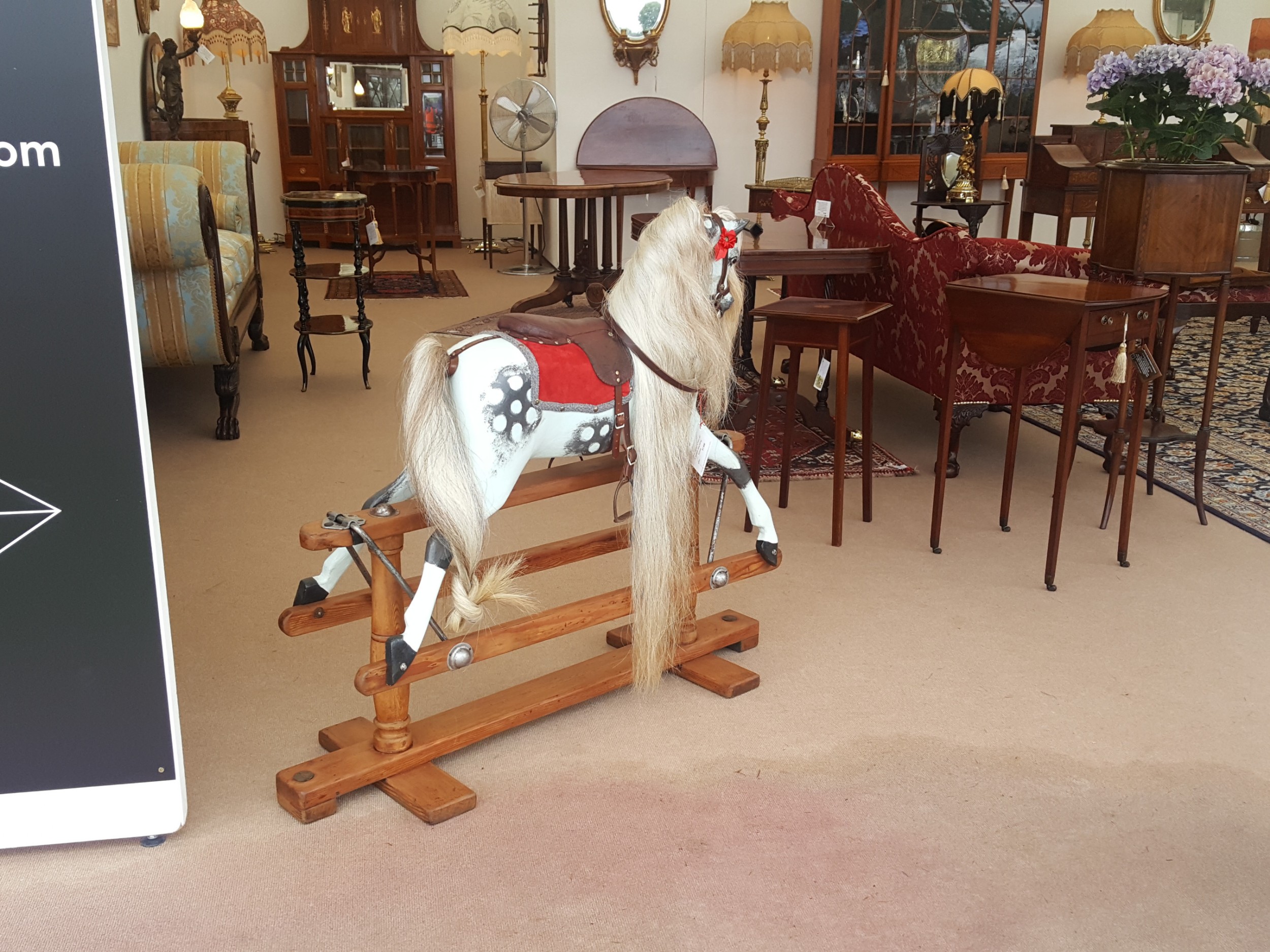
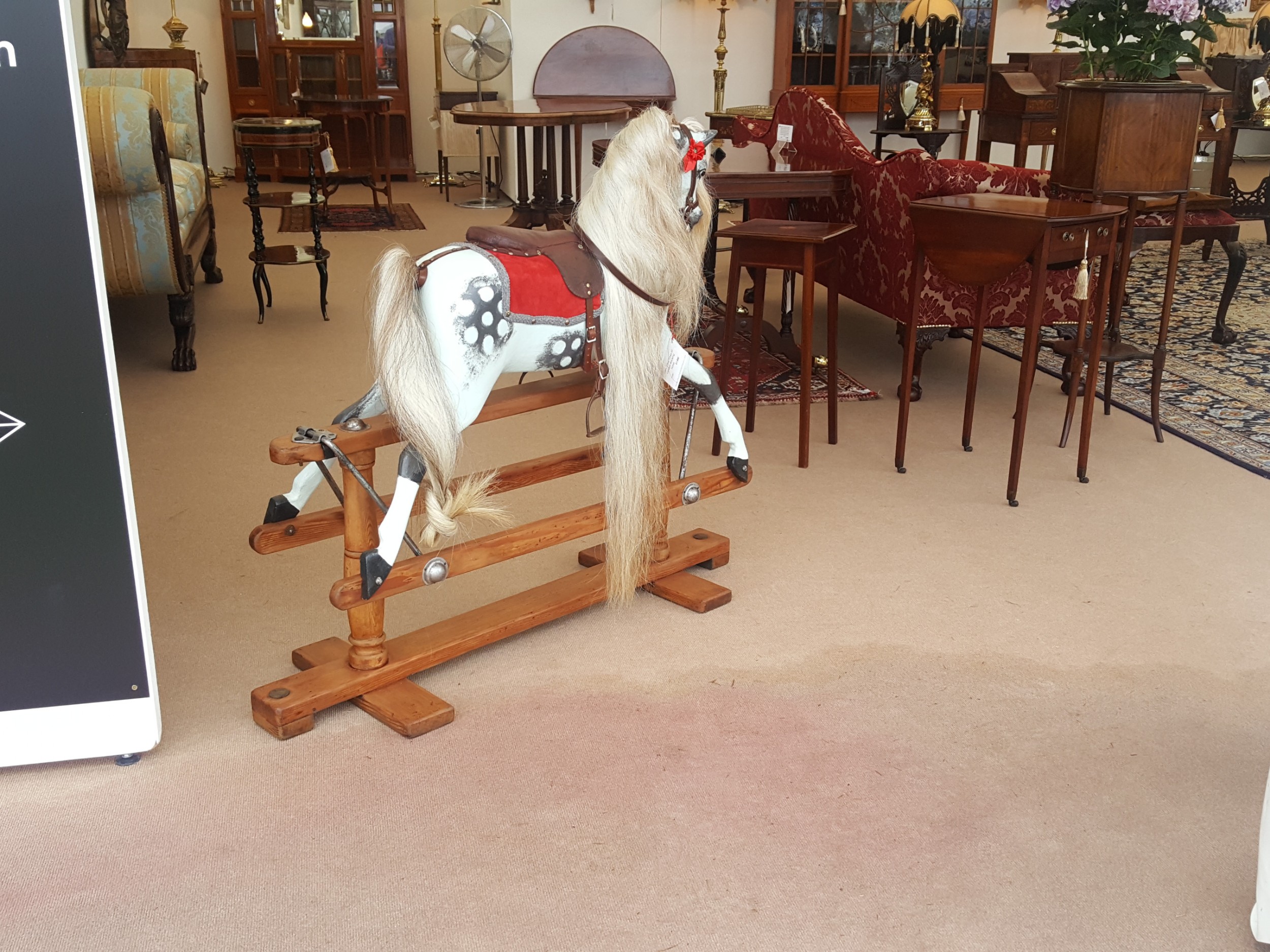
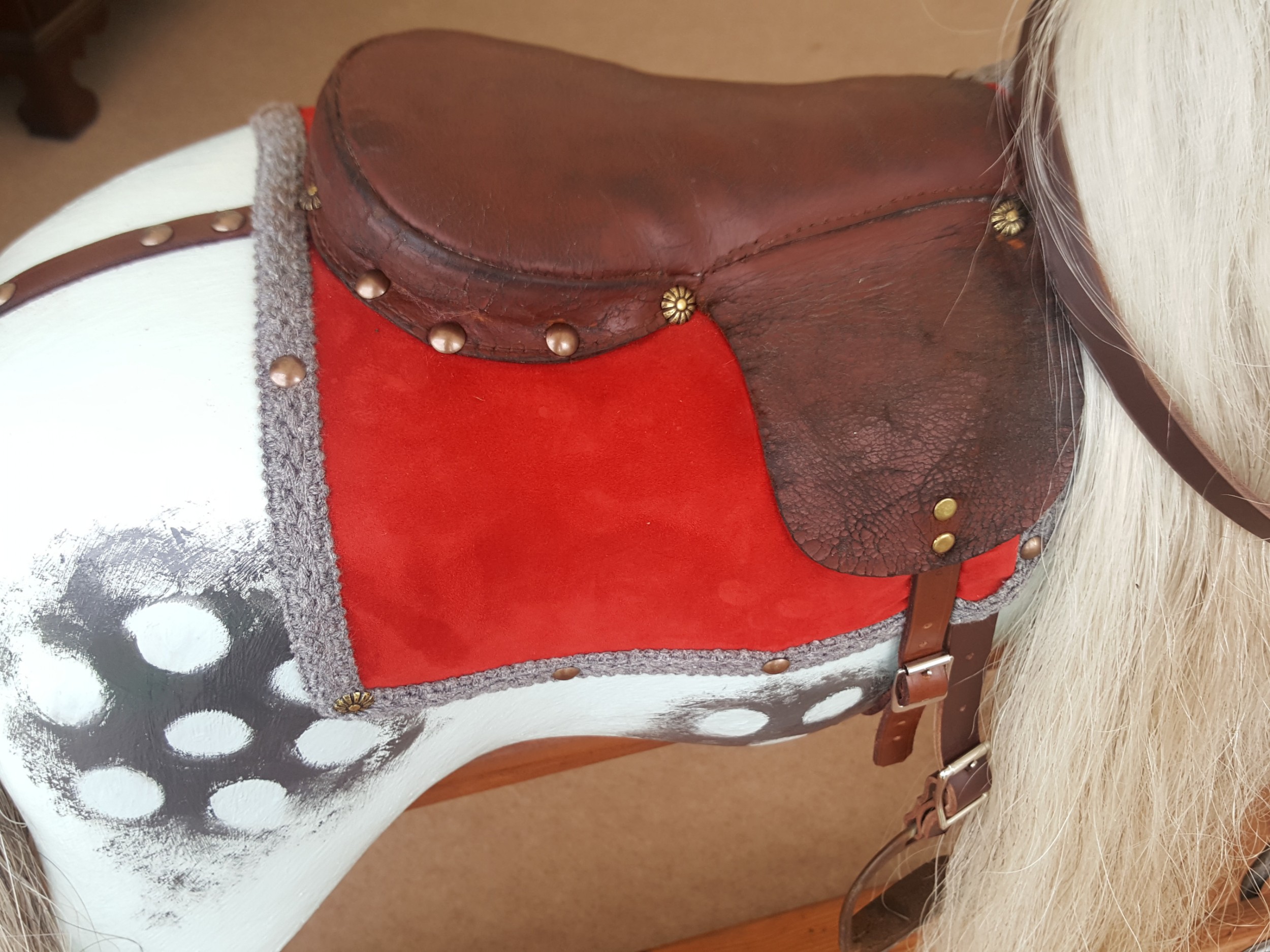
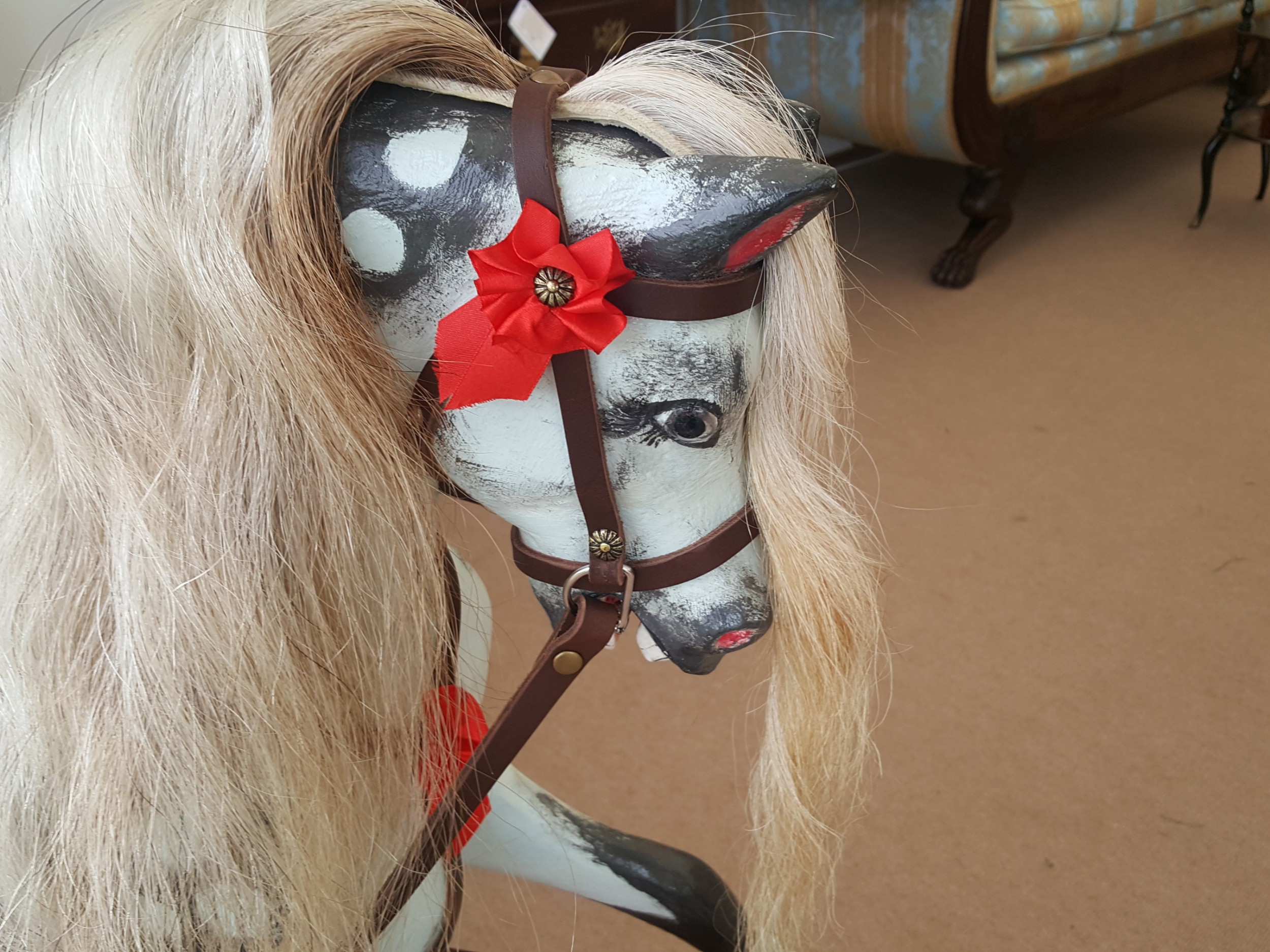
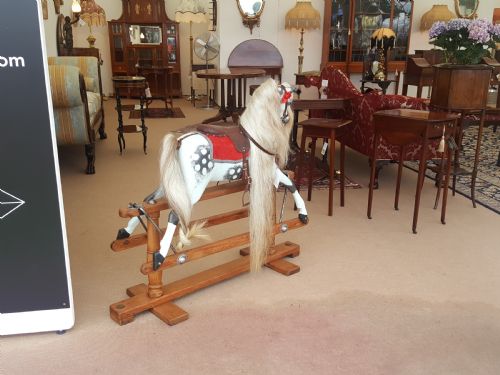
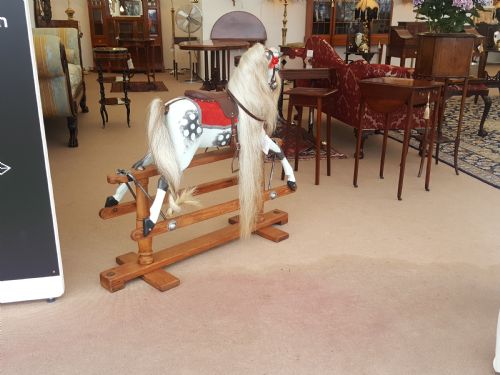
Church Street Antiques & Interiors has dated this piece to the 1920s.
LINES ROCKING HORSES .......
In 1876 Joseph, aged 28, with outside experience in the toy trade joined his brother George who was already making wooden rocking horses. In the same year they established premises at 457 Calendonian Road (in the Steam Works Factory).
As the business continued to grow, other factories were taken over or rented and in the late nineteenth century the premises of G & J Lines were claimed to be the large toy factory in Britain.
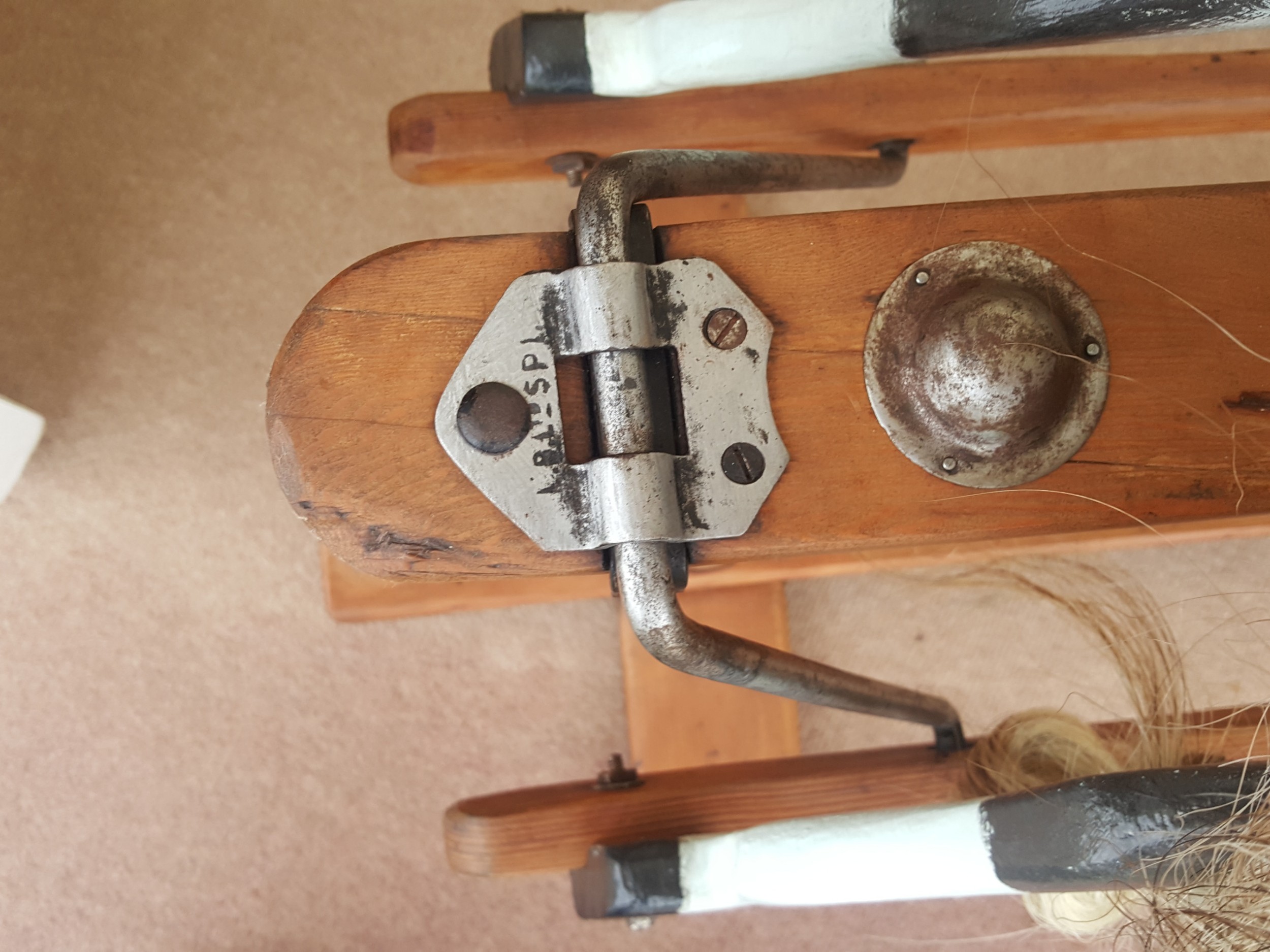
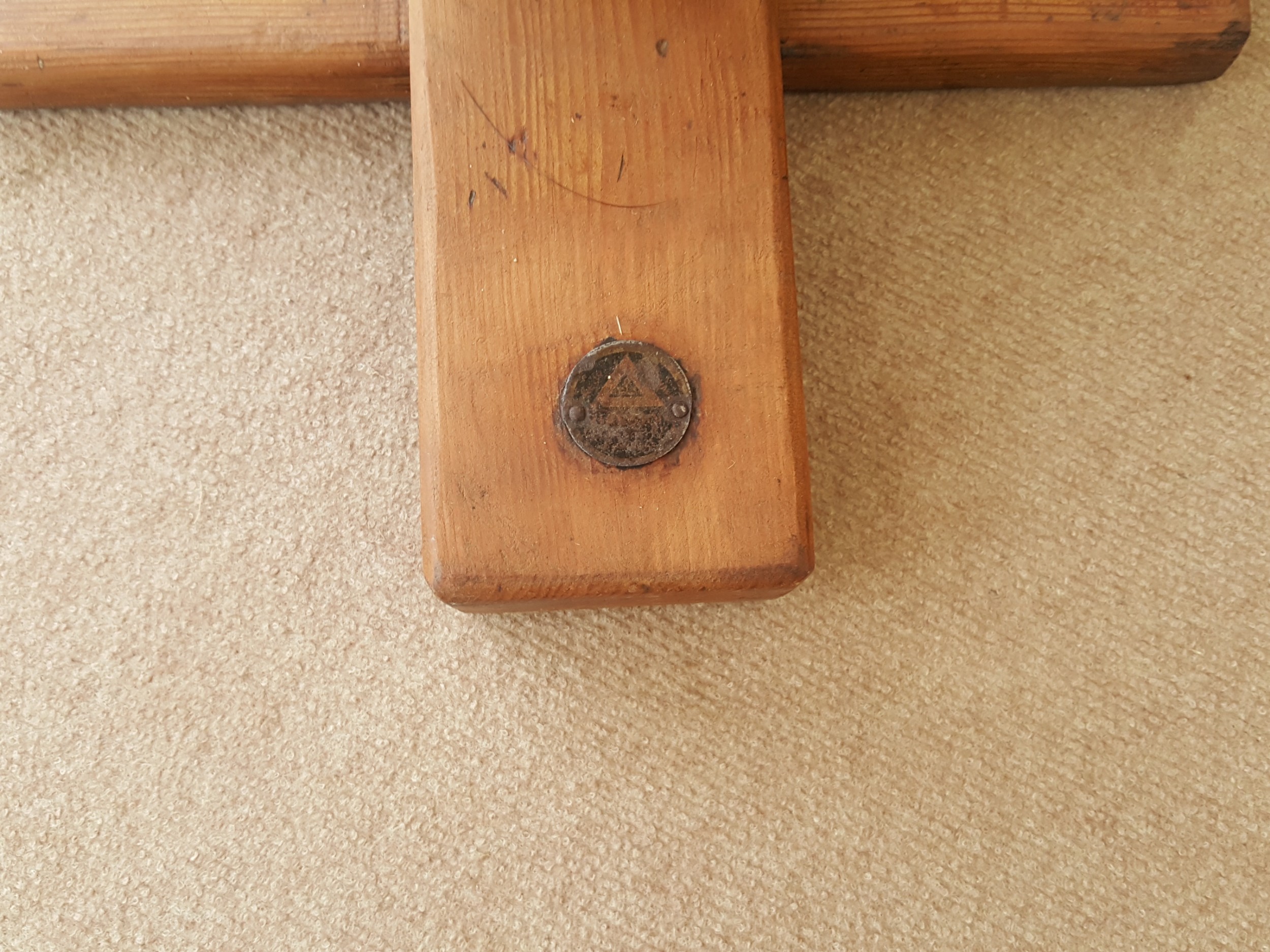
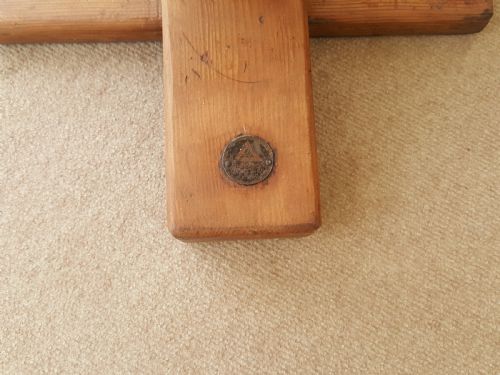
Many of their horses carried their trademark: a thin metal disc stamped with a thistle. Their horses were sold by Gamages, Hamleys and Selfridges.
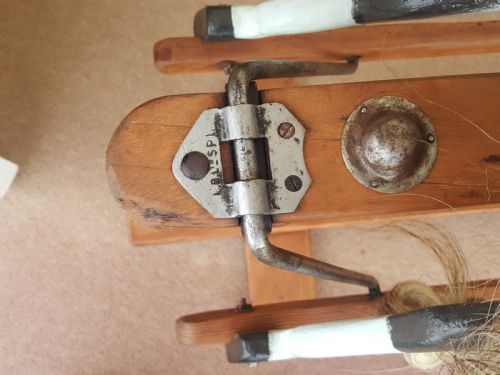
One of the brothers, Joseph retired in 1900 and his place was taken by his nephew with the same name Joseph, the eldest son of the other brother George. The nephew Joseph, together with his two brothers, set up a second enterprise after the end of the First World War, Lines Brothers (1919-1972): their horses are marked Triang or Triangtois and were made in the traditional manner, not only in their large British factories but also in their Australian and Canadian subsidiaries.
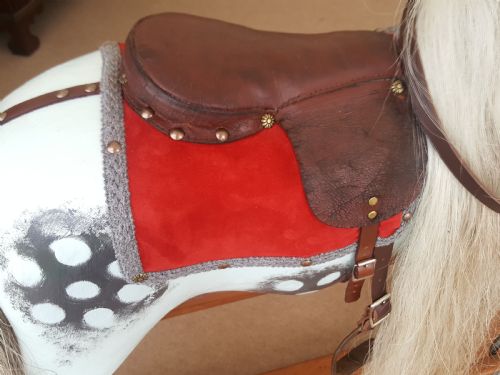
G & J Lines produced rocking horses, 'gallopers and ostriches' for fairground rides ie like the Savages fairgrounds rides, life size dummy horses for tailors and saddles, horses' heads for pubs and shops, tricycle horses, stool horses, pole horses, horse and carts and other large wooden toys.
Earlier models of wheeled toys had wooden wheels, later models had metal wheels made in Birmingham.
In 1914, the five ramshackles and scattered workshops occupied by G & J Lines were replaced by one large factory at Tottenham. Mr. G Lines' three younger sons set up their own factory in the Old Kent Road in 1919. Their trade name Triangtois and later Triang dates from 1927.
Church Street Antiques & Interiors has dated this piece to the 1920s.
You can view the stock and full dealer information on the Church Street Antiques & Interiors Profile Page
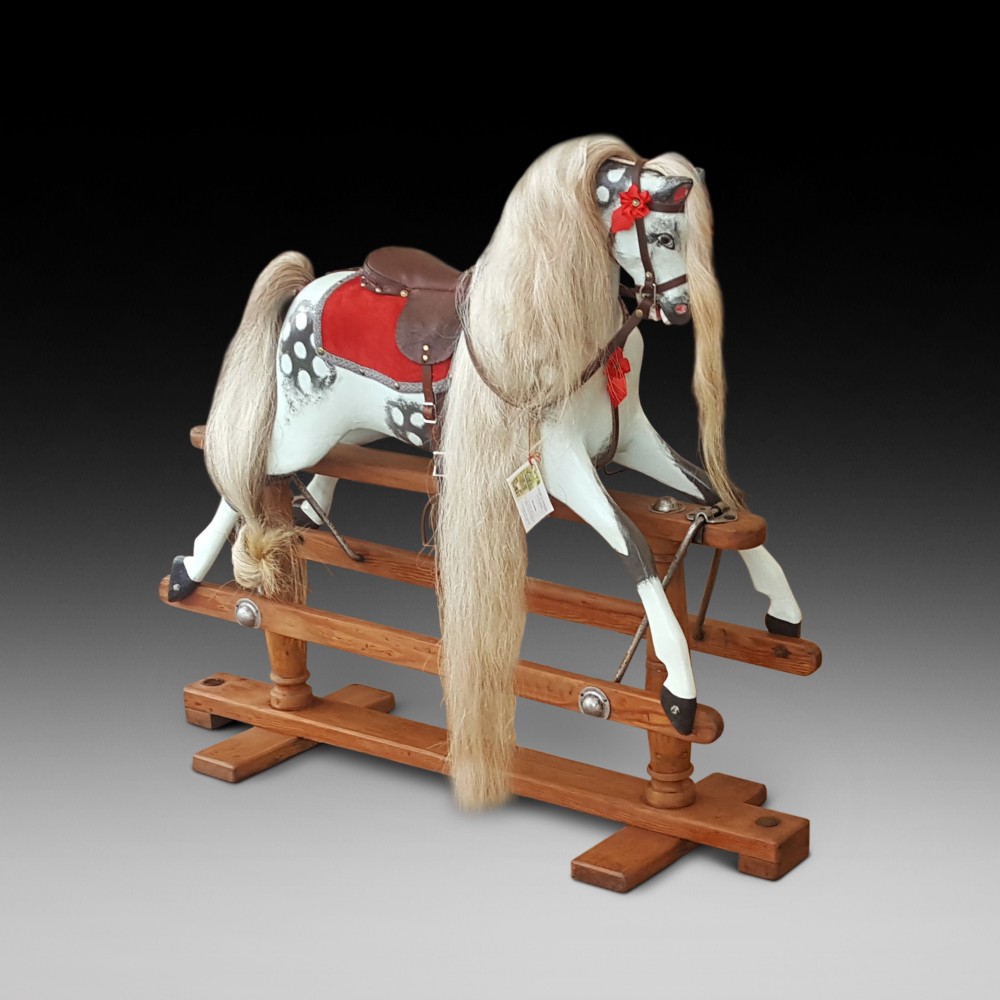
Early 20thc Lines of London Rocking Horse