60,930  PAGES BROWSED TODAY PAGES TODAY 0  ANTIQUES UPLOADED TODAY NEW ARRIVALS
ID #SA637978
FOR SALE
£3,500
Email
Save
George Hayter, 1792 - 1871 Portrait of Charles Christopher Pepys, 1st Earl of Cottenham (1781-1851)
Artware Fineart
for sale €4,095     $4,445
£3,500

Artware Fineart

Sellingantiques Verified Since Sep 2008
View Dealers Stock Page
Id #SA637978
PDF SHARE
SAVE

George Hayter, 1792 - 1871 Portrait of Charles Christopher Pepys, 1st Earl of Cottenham (1781-1851)

19th century
For Sale by Artware Fineart
Description

George Hayter, 1792 - 1871

Portrait of Charles Christopher Pepys, 1st Earl of Cottenham (1781-1851)

Signed/Inscribed:

inscribed on the reverse

oil on panel

33 x 28 cm.
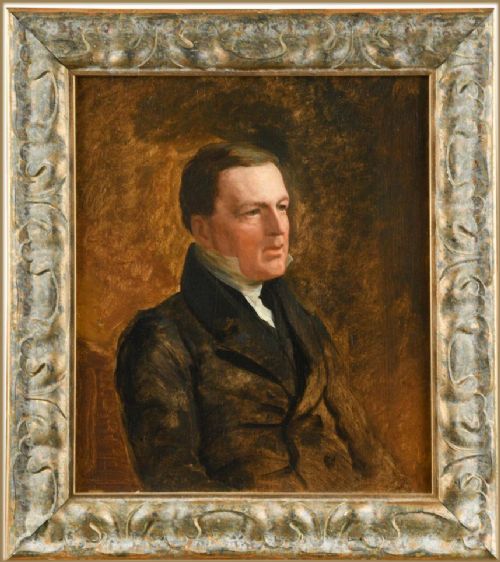
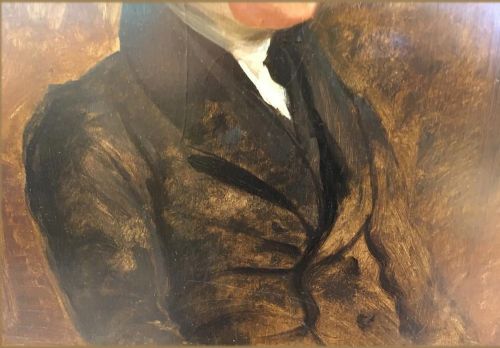
The present portrait is a study for Hayter's great painting 'The House of Commons', painted 1833-43, now in the National Portrait Gallery.

Notes

Charles Christopher Pepys, 1st Earl of Cottenham, PC, QC (/'p?p?s/; 29 April 1781 – 29 April 1851) was an English lawyer, judge and politician. He was twice Lord Chancellor of Great Britain.

Background and education
Cottenham was born on 29 April 1781 in Wimpole Street, Cavendish Square, London the second son of three sons of Sir William Pepys, 1st Baronet, a master in chancery, who was descended from John Pepys, of Cottenham, Cambridgeshire, a great-uncle of Samuel Pepys the diarist. Pepys was educated at Harrow School and at Trinity College, Cambridge, where he did not sit for the tripos but was content to graduate LLB in 1803. Contemporaries remembered him as a short,
stout, sturdy, thickset boy, of blunt speech and cold disposition, aiming at no distinction, making few friends … None could say that he was clever; some of his schoolfellows pronounced him dull. His dark, searching eyes, massive forehead and expressive lips, refuted the charge.
He never lost his 'air of independence and determination which indicated an inward consciousness of superiority' (Le Marchant, 59–60).

Pepys was called to the bar of Lincoln's Inn in 1804.

Legal and political career

Pepys was admitted a student of Lincoln's Inn on 26 January 1801 and was called to the bar on 23 November 1804, the same day as the future Viscount Melbourne. In 1837 he became treasurer of his inn. Like many of his distinguished contemporaries, he was a pupil of the famous special pleader, William Tidd. His fellow pupil, John Campbell, later Lord Campbell, described him as 'the greatest ornament of our [Tidd's] Bar' (Life of John, Lord Campbell, 1.138). He decided to practise at the emerging chancery bar (he was among the first generation of chancery lawyers who did not go circuit), so, having taken chambers in 16 Old Square, Lincoln's Inn, he began his study of equity with Sir Samuel Romilly. The fact that his father was a master in chancery must have helped his practice. Within five years of his call, his father wrote to Hannah More: 'The success of my second son at the Chancery Bar has been most rapid, and highly gratifying to me' (Gaussen, 2.295). His professional success came from his total dedication to his equity practice and his disdain for society; in later life his only recreation was foreign travel. A chancery advocate did not have to be an Erskine or a Scarlett. Pepys had a clear mind, reasoned cogently, was rarely repetitious, and 'never forgot that he was addressing a single judge and that judge a professional man' (Law Review, 14, 1853, 354).

Pepys's practice at the bar prospered, enabling him on 30 June 1821 to marry Caroline Elizabeth (1802–1868), the second daughter of William Wingfield KC, then chief justice of the Brecon circuit, and to become another master in chancery. On 24 August 1826 he received his silk gown from Lord Lyndhurst and became a bencher of his inn in November that year. Four years later he was appointed solicitor-general to Queen Adelaide, retaining that post until May 1832.

Whiggism was in Pepys's blood; his maternal grandfather had been the chancellor of the exchequer in the Rockingham administration in 1765. Though he had shown little political ambition, in July 1831 he entered the House of Commons as the member for Higham Ferrers, a seat which he exchanged the following September for Lord Fitzwilliam's borough of Malton. In the house he rarely spoke, and then on purely legal questions; his first speech, on 31 October 1831, was on the Bankruptcy Bi

Physical Dimensions
Height
33cm (12.99")
Width
28cm (11.02")
Depth
1cm (0.39")
Declaration

Artware Fineart has dated this Antique Oil Portrait Painting to the 19th Century.

Reference Numbers
Sellingantiques Reference
SA637978
Dealers Internal Reference
4157
Description
George Hayter, 1792 - 1871

Portrait of Charles Christopher Pepys, 1st Earl of Cottenham (1781-1851)

Signed/Inscribed:

inscribed on the reverse

oil on panel

33 x 28 cm.

The present portrait is a study for Hayter's great painting 'The House of Commons', painted 1833-43, now in the National Portrait Gallery.
Artware Fineart
fig 1. A 19th-century oil portrait depicting a male figure in profile wearing a dark coat and high white cravat against a warm brown background.
fig 1. George Hayter, 1792 - 1871 Portrait of Charles Christopher Pepys, 1st Earl of Cottenham (1781-1851)

Notes

Charles Christopher Pepys, 1st Earl of Cottenham, PC, QC (/'p?p?s/; 29 April 1781 – 29 April 1851) was an English lawyer, judge and politician. He was twice Lord Chancellor of Great Britain.

Background and education

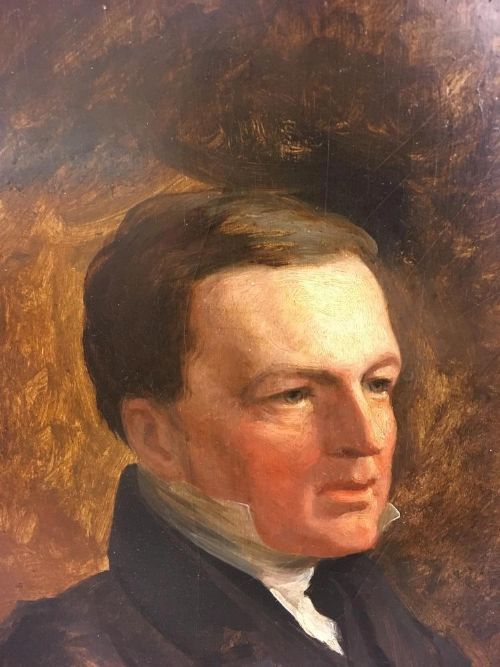
fig 2. A 19th-century oil portrait depicting a male figure in profile wearing a dark coat and high white cravat against a warm brown background.
fig 2. George Hayter, 1792 - 1871 Portrait of Charles Christopher Pepys, 1st Earl of Cottenham (1781-1851)

Cottenham was born on 29 April 1781 in Wimpole Street, Cavendish Square, London the second son of three sons of Sir William Pepys, 1st Baronet, a master in chancery, who was descended from John Pepys, of Cottenham, Cambridgeshire, a great-uncle of Samuel Pepys the diarist. Pepys was educated at Harrow School and at Trinity College, Cambridge, where he did not sit for the tripos but was content to graduate LLB in 1803. Contemporaries remembered him as a short,

fig 3. A 19th-century oil portrait depicting a male figure in profile wearing a dark coat and high white cravat against a warm brown background.
fig 3. George Hayter, 1792 - 1871 Portrait of Charles Christopher Pepys, 1st Earl of Cottenham (1781-1851)

stout, sturdy, thickset boy, of blunt speech and cold disposition, aiming at no distinction, making few friends … None could say that he was clever; some of his schoolfellows pronounced him dull. His dark, searching eyes, massive forehead and expressive lips, refuted the charge.

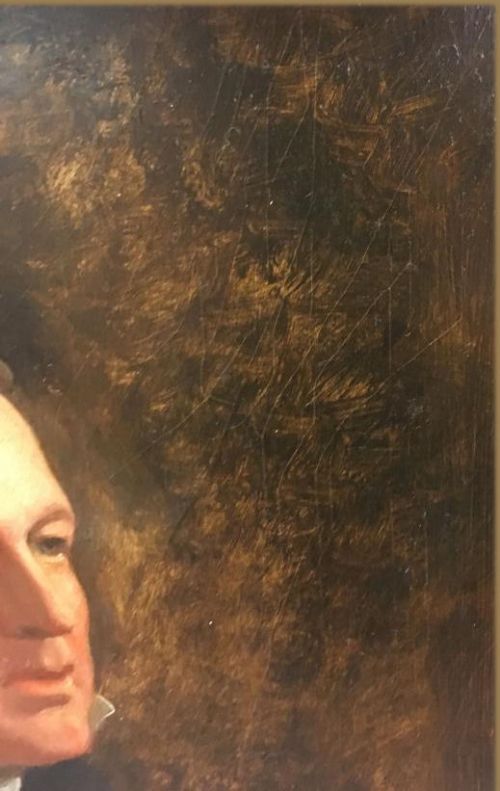
fig 4. A 19th-century oil portrait depicting a male figure in profile wearing a dark coat and high white cravat against a warm brown background.
fig 4. George Hayter, 1792 - 1871 Portrait of Charles Christopher Pepys, 1st Earl of Cottenham (1781-1851)

He never lost his 'air of independence and determination which indicated an inward consciousness of superiority' (Le Marchant, 59–60).

Pepys was called to the bar of Lincoln's Inn in 1804.

Legal and political career

Pepys was admitted a student of Lincoln's Inn on 26 January 1801 and was called to the bar on 23 November 1804, the same day as the future Viscount Melbourne. In 1837 he became treasurer of his inn. Like many of his distinguished contemporaries, he was a pupil of the famous special pleader, William Tidd. His fellow pupil, John Campbell, later Lord Campbell, described him as 'the greatest ornament of our [Tidd's] Bar' (Life of John, Lord Campbell, 1.138). He decided to practise at the emerging chancery bar (he was among the first generation of chancery lawyers who did not go circuit), so, having taken chambers in 16 Old Square, Lincoln's Inn, he began his study of equity with Sir Samuel Romilly. The fact that his father was a master in chancery must have helped his practice. Within five years of his call, his father wrote to Hannah More: 'The success of my second son at the Chancery Bar has been most rapid, and highly gratifying to me' (Gaussen, 2.295). His professional success came from his total dedication to his equity practice and his disdain for society; in later life his only recreation was foreign travel. A chancery advocate did not have to be an Erskine or a Scarlett. Pepys had a clear mind, reasoned cogently, was rarely repetitious, and 'never forgot that he was addressing a single judge and that judge a professional man' (Law Review, 14, 1853, 354).

Pepys's practice at the bar prospered, enabling him on 30 June 1821 to marry Caroline Elizabeth (1802–1868), the second daughter of William Wingfield KC, then chief justice of the Brecon circuit, and to become another master in chancery. On 24 August 1826 he received his silk gown from Lord Lyndhurst and became a bencher of his inn in November that year. Four years later he was appointed solicitor-general to Queen Adelaide, retaining that post until May 1832.

Whiggism was in Pepys's blood; his maternal grandfather had been the chancellor of the exchequer in the Rockingham administration in 1765. Though he had shown little political ambition, in July 1831 he entered the House of Commons as the member for Higham Ferrers, a seat which he exchanged the following September for Lord Fitzwilliam's borough of Malton. In the house he rarely spoke, and then on purely legal questions; his first speech, on 31 October 1831, was on the Bankruptcy Bi

Height
33cm (12.99")
Width
28cm (11.02")
Depth
1cm (0.39")
Date of Manufacture

Artware Fineart has dated this Antique Oil Portrait Painting to the 19th Century.

Reference Numbers
Sellingantiques Ref
SA637978
Dealers Internal Ref
4157
Artware Fineart
Sellingantiques verified Since Sep 2008
Dealer Profile

You can view the stock and full dealer information on the Artware Fineart Profile Page

PDF SHARE
SAVE
A 19th-century oil portrait depicting a male figure in profile wearing a dark coat and high white cravat against a warm brown background.
1 / 5
Archive I A 19th-century oil portrait depicting a male figure in profile wearing a dark coat and high white cravat against a warm brown background.

George Hayter, 1792 - 1871 Portrait of Charles Christopher Pepys, 1st Earl of Cottenham (1781-1851)

Archive II A 19th-century oil portrait depicting a male figure in profile wearing a dark coat and high white cravat against a warm brown background. View II
Archive III A 19th-century oil portrait depicting a male figure in profile wearing a dark coat and high white cravat against a warm brown background. View III
Archive IV A 19th-century oil portrait depicting a male figure in profile wearing a dark coat and high white cravat against a warm brown background. View IV
Archive V A 19th-century oil portrait depicting a male figure in profile wearing a dark coat and high white cravat against a warm brown background. View V
FURTHER BROWSING

Visitors also looked at these ⇣

Enlarged Archival View
Telephone 07958 699 645
Location
18 La Gare
51 Surrey Row
London
SE1 0BZ
United Kingdom
Verified Since Sep 2008
Items For Sale 243
Items Sold 223
Artware Fineart
Verified Since Sep 2008
View Dealer Info
Location: 18 La Gare , 51 Surrey Row , London , SE1 0BZ , United Kingdom
Verified
Sep 2008
For Sale
243
Sold
223
A 19th-century oil portrait depicting a male figure in profile wearing a dark coat and high white cravat against a warm brown background.
George Hayter, 1792 - 1871 Portrait of Charles Christopher Pepys, 1st Earl of Cottenham (1781-1851)
Ref: SA637978
A 19th-century oil portrait depicting a male figure in profile wearing a dark coat and high white cravat against a warm brown background.
Detail View 1
Detail View 2
Detail View 3
Detail View 4
Archival Detail
Every single antique dealer on our platform is individually approved by our internal team. We verify their professional trade history, ethical standards, and photographic quality to ensure a secure, high-standard buying environment. Upon joining, every dealer agrees to a strict 9-point code of conduct. While issues can occasionally arise, our dealers typically resolve them swiftly and directly with the buyer. In fact, since our founding in 2002, Sellingantiques has only had to step in to help resolve an issue on roughly five occasions—a true testament to the quality of our dealers and their dedication to your happiness.
Our dealers are highly experienced in packing and shipping fragile, high-value antiques. Because you are in direct contact with the dealer, you will be able to easily go through all available shipping and insurance options together to ensure your item arrives safely.
Antiques are the ultimate green purchase. By choosing historical pieces over newly manufactured goods, you completely eliminate the carbon footprint of modern mass production while preserving exceptional, timeless craftsmanship.

19th-century British portraiture often features formal depictions of notable political or aristocratic figures, marked by detailed facial expression, atmospheric backgrounds, and dark, sophisticated colour palettes typical of the Regency and Victorian eras.

Artists primarily executed portraits using oil pigments bound with linseed oil on stretched linen canvas or hardwood panels, followed by a protective layer of natural varnish.

Authenticity is evaluated through fine craquelure patterns across the varnish layer, historical canvas stretcher marks, period timber backing, and brushwork techniques consistent with artists of the era.

A 19th-century portrait functions well as a focal piece positioned above a mantelpiece, integrated into an eclectic gallery wall, or displayed within a traditional study setting to add historical depth.

Keep the artwork clear of direct sunlight, extreme humidity shifts, and direct heat sources. Dust the surface gently with a soft dry brush and consult a professional conservator for surface cleaning or varnish removal.
items
Add keywords to the filter
Price
£100
£250000
Era
Movements
Material
Origin
Stock Location
Freshness
Online Payments
Categories